On June 8, 1610, in the murky waters of the James River near Mulberry Island in what is now Virginia, a handful of skeletal English colonists aboard two battered pinnaces—the *Deliverance* and the *Patience*—were sailing away from certain death. They had just abandoned Jamestown, the first permanent English settlement in North America, after enduring the infamous "Starving Time" of the previous winter. Their leader, Sir Thomas Gates, had given the order to quit. The fort was in ruins, the fields barren, the storehouse empty, and the survivors—barely 60 out of nearly 500—were ghosts of men, women, and children, their bodies wracked by hunger, disease, and despair. They were heading toward Newfoundland, hoping to flag down fishing ships and limp back to England, conceding that the dream of a New World colony was over.
But fate, or as they called it, Providence, had other plans. As their small flotilla stemmed the tide near Mulberry Island, a longboat approached from downriver. Aboard it was Captain Edward Brewster, dispatched by the newly arrived Lord Governor Thomas West, twelfth Baron De La Warr (better known today as Lord Delaware). De La Warr's relief fleet had reached the mouth of the James River just days earlier, carrying supplies, fresh settlers, and a determination to enforce the Virginia Company's vision. The encounter on June 8 wasn't just a random meeting on the river—it was the literal and figurative pivot that prevented the abandonment of Jamestown and ensured the English foothold in North America endured. Without it, the story of the United States might have unfolded very differently, perhaps under French, Spanish, or no European flag at all in that corner of the continent. This is the gripping, often harrowing tale of that distant June 8 event—a story of unimaginable suffering, leadership failures, near-cannibalism, and one timely intervention that changed history. We'll dive deep into the context, the horrors of the Starving Time, the desperate abandonment, the miraculous rendezvous, and the immediate aftermath. Then, we'll extract hard-won lessons for today, framed in a unique, no-fluff action plan that stands apart from generic self-help by drawing directly from the raw mechanics of colonial survival: disciplined systems, adaptive leadership, and relentless forward momentum even when every instinct screams "quit."
### The Fragile Beginnings: Jamestown's Rocky Foundations (1607–1609)
To understand the miracle of June 8, 1610, we must go back to May 1607, when 104 Englishmen and boys stepped ashore at a swampy peninsula on the James River, about 60 miles up from the Chesapeake Bay. Chosen for its defensive position—surrounded on three sides by water and defensible against Spanish threats—the site was a strategic compromise but an environmental nightmare. Brackish water, poor drainage, mosquito-infested marshes, and proximity to powerful Native American groups under the paramount chief Powhatan (Wahunsenacawh) made it far from ideal.
The colonists weren't farmers or hardy pioneers for the most part. Many were "gentlemen" unaccustomed to manual labor, soldiers, craftsmen, and adventurers lured by promises of gold and quick riches. They arrived under the Virginia Company of London's charter, expecting to trade with locals, find precious metals, and establish a profitable outpost. Initial relations with the Powhatan Confederacy were mixed—some trading, some skirmishes. Captain John Smith, a pragmatic and tough leader, emerged as a key figure. His famous (and debated) encounter with Pocahontas helped secure some food, and his "he that will not work shall not eat" policy kept the colony limping along through the first brutal winters.
By early 1608, after the "first supply" arrived with more settlers and meager provisions, the population rebounded somewhat, only for a fire to destroy much of the settlement. The "second supply" brought the first two English women. But tensions escalated. Smith was injured in a gunpowder accident and forced back to England in late 1609. Without his firm hand, leadership fractured. John Ratcliffe, the new president, was captured and tortured to death by Powhatans. Food raids turned deadly. A severe drought—the worst in 770 years according to tree-ring data—devastated crops. The Powhatans, also strained, shifted from trade to siege warfare as the First Anglo-Powhatan War began.
This is the gripping, often harrowing tale of that distant June 8 event—a story of unimaginable suffering, leadership failures, near-cannibalism, and one timely intervention that changed history. We'll dive deep into the context, the horrors of the Starving Time, the desperate abandonment, the miraculous rendezvous, and the immediate aftermath. Then, we'll extract hard-won lessons for today, framed in a unique, no-fluff action plan that stands apart from generic self-help by drawing directly from the raw mechanics of colonial survival: disciplined systems, adaptive leadership, and relentless forward momentum even when every instinct screams "quit."
### The Fragile Beginnings: Jamestown's Rocky Foundations (1607–1609)
To understand the miracle of June 8, 1610, we must go back to May 1607, when 104 Englishmen and boys stepped ashore at a swampy peninsula on the James River, about 60 miles up from the Chesapeake Bay. Chosen for its defensive position—surrounded on three sides by water and defensible against Spanish threats—the site was a strategic compromise but an environmental nightmare. Brackish water, poor drainage, mosquito-infested marshes, and proximity to powerful Native American groups under the paramount chief Powhatan (Wahunsenacawh) made it far from ideal.
The colonists weren't farmers or hardy pioneers for the most part. Many were "gentlemen" unaccustomed to manual labor, soldiers, craftsmen, and adventurers lured by promises of gold and quick riches. They arrived under the Virginia Company of London's charter, expecting to trade with locals, find precious metals, and establish a profitable outpost. Initial relations with the Powhatan Confederacy were mixed—some trading, some skirmishes. Captain John Smith, a pragmatic and tough leader, emerged as a key figure. His famous (and debated) encounter with Pocahontas helped secure some food, and his "he that will not work shall not eat" policy kept the colony limping along through the first brutal winters.
By early 1608, after the "first supply" arrived with more settlers and meager provisions, the population rebounded somewhat, only for a fire to destroy much of the settlement. The "second supply" brought the first two English women. But tensions escalated. Smith was injured in a gunpowder accident and forced back to England in late 1609. Without his firm hand, leadership fractured. John Ratcliffe, the new president, was captured and tortured to death by Powhatans. Food raids turned deadly. A severe drought—the worst in 770 years according to tree-ring data—devastated crops. The Powhatans, also strained, shifted from trade to siege warfare as the First Anglo-Powhatan War began.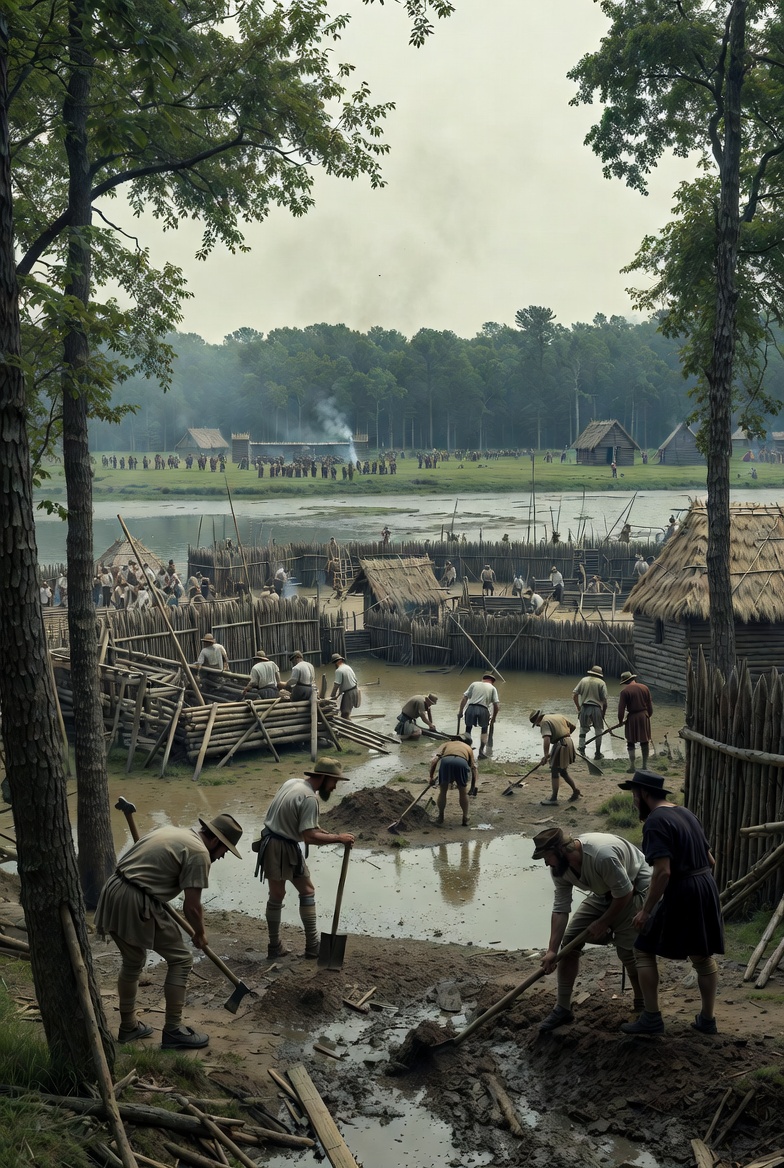 Then came the disastrous "third supply" in 1609. A fleet of nine ships left England in June, carrying hundreds of new colonists and vital provisions. A massive hurricane scattered them. The flagship *Sea Venture*, carrying leaders like Sir Thomas Gates and Sir George Somers, wrecked on Bermuda reefs. Miraculously, all 150 aboard survived and spent nine months building two new ships from local cedar and salvaged materials. The other ships limped to Jamestown with passengers but few supplies, swelling the population to around 500 just as winter set in—without the expected food stores.
### The Starving Time: Winter 1609–1610, A Hell on Earth
The winter that followed was apocalyptic. Powhatan's warriors encircled the fort, picking off anyone who ventured out for food or firewood. Hunting, fishing, and foraging became suicide missions. The colonists devoured their livestock—horses, dogs, cats—then rats, mice, snakes, and even leather from boots and belts. They boiled starch for laundry. Archaeological evidence and contemporary accounts confirm the horror escalated to cannibalism. In one verified case, the remains of a 14-year-old girl (dubbed "Jane" by excavators) showed cut marks consistent with butchering for meat, her skull and leg bones found in a kitchen trash deposit alongside animal bones. George Percy, who led during this period, recorded a man killing and salting his wife for food before being executed. Corpses were dug up and consumed.
Percy described the survivors as "anatomies" crying out in starvation. Disease—dysentery, scurvy, typhoid—ran rampant in the filthy, brackish conditions. By spring 1610, only about 60 remained alive out of nearly 500. The fort was a ruin: palisades torn down for fuel, houses burned, gates off hinges. The siege lifted somewhat in May when the *Sea Venture* survivors—Gates, Somers, and others, including a young John Rolfe—finally arrived on May 23 aboard the *Deliverance* and *Patience*. They expected a thriving colony. Instead, they found living skeletons and despair.
Then came the disastrous "third supply" in 1609. A fleet of nine ships left England in June, carrying hundreds of new colonists and vital provisions. A massive hurricane scattered them. The flagship *Sea Venture*, carrying leaders like Sir Thomas Gates and Sir George Somers, wrecked on Bermuda reefs. Miraculously, all 150 aboard survived and spent nine months building two new ships from local cedar and salvaged materials. The other ships limped to Jamestown with passengers but few supplies, swelling the population to around 500 just as winter set in—without the expected food stores.
### The Starving Time: Winter 1609–1610, A Hell on Earth
The winter that followed was apocalyptic. Powhatan's warriors encircled the fort, picking off anyone who ventured out for food or firewood. Hunting, fishing, and foraging became suicide missions. The colonists devoured their livestock—horses, dogs, cats—then rats, mice, snakes, and even leather from boots and belts. They boiled starch for laundry. Archaeological evidence and contemporary accounts confirm the horror escalated to cannibalism. In one verified case, the remains of a 14-year-old girl (dubbed "Jane" by excavators) showed cut marks consistent with butchering for meat, her skull and leg bones found in a kitchen trash deposit alongside animal bones. George Percy, who led during this period, recorded a man killing and salting his wife for food before being executed. Corpses were dug up and consumed.
Percy described the survivors as "anatomies" crying out in starvation. Disease—dysentery, scurvy, typhoid—ran rampant in the filthy, brackish conditions. By spring 1610, only about 60 remained alive out of nearly 500. The fort was a ruin: palisades torn down for fuel, houses burned, gates off hinges. The siege lifted somewhat in May when the *Sea Venture* survivors—Gates, Somers, and others, including a young John Rolfe—finally arrived on May 23 aboard the *Deliverance* and *Patience*. They expected a thriving colony. Instead, they found living skeletons and despair.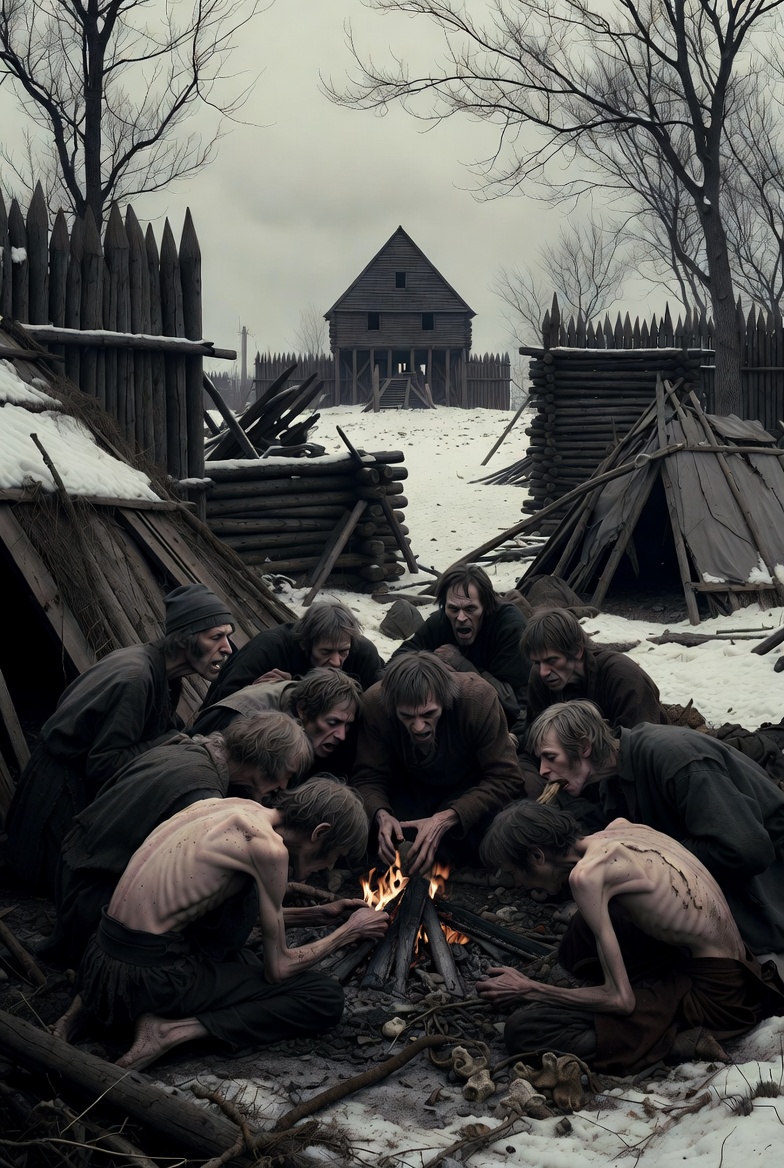 Gates assessed the situation and made the only logical call: abandon Jamestown. On June 7, 1610, the survivors boarded the ships with what little they could carry, burying some ordnance, preserving the town unburned as a symbolic farewell, and sailed down the James River toward the Chesapeake and eventual return to England. It seemed the grand experiment was over.
### June 8, 1610: The Rendezvous at Mulberry Island – Providence Intervenes
As the small fleet reached Mulberry Island (near modern-day Newport News), they spotted a longboat coming upstream. It was Captain Brewster from Lord De La Warr's fleet. De La Warr, appointed governor under the second charter, had departed England in April with three ships, supplies, a doctor, and reinforcements. His arrival at the mouth of the James coincided perfectly with the abandonment.
De La Warr's orders were clear: turn them back. The letters from the governor demanded they return to Jamestown and rebuild under new leadership. Gates, though reluctant, complied. The wind favored them, and by nightfall on June 8, they had relanded at the fort. De La Warr himself arrived fully on June 10, kneeling in prayer on the shore before taking command with martial law, strict discipline, and fresh resources.
This wasn't luck alone. It was the result of persistent investment by the Virginia Company, Smith's earlier writings sparking renewed interest in England, and the Bermuda castaways' ingenuity in building ships. But the timing on June 8 was providential. Had the colonists left a day earlier or the relief fleet arrived later, Jamestown would likely have been deserted, its lessons lost, and English colonization delayed or redirected.
### Aftermath: Martial Law, Tobacco, and Survival
De La Warr imposed harsh order: work details, fortifications, renewed (often brutal) engagements with the Powhatans. He fell ill and left in 1611, but his deputy Sir Thomas Dale continued the regime. John Rolfe's experiments with tobacco (starting around 1612) provided the cash crop that made the colony economically viable, attracting more settlers and shifting from survival to expansion. The 1619 arrival of the first Africans (as indentured servants initially), the House of Burgesses, and other developments followed. Jamestown endured, paving the way for the broader English colonies.
The human cost was staggering—hundreds dead, trauma that echoed in survivor accounts for years. Yet the resilience born from that June 8 pivot echoes through American history: from underdog comebacks to the stubborn persistence that built a nation.
### Applying the Jamestown Pivot: A Unique "River Rendezvous" Plan for Modern Resilience
The Starving Time and June 8 rescue weren't about positive thinking or vision boards. They were about enduring brutal reality through systems, timely external support, adaptive command, and refusing the easy exit. Here's how to apply this to your life today—not with fluffy affirmations, but a gritty, military-style protocol that's refreshingly different from online self-help echo chambers. This "Mulberry Island Protocol" treats personal or professional crises like a besieged fort: inventory ruthlessly, abandon only as a calculated last resort, seek/accept the "relief fleet," and rebuild with iron discipline.
Gates assessed the situation and made the only logical call: abandon Jamestown. On June 7, 1610, the survivors boarded the ships with what little they could carry, burying some ordnance, preserving the town unburned as a symbolic farewell, and sailed down the James River toward the Chesapeake and eventual return to England. It seemed the grand experiment was over.
### June 8, 1610: The Rendezvous at Mulberry Island – Providence Intervenes
As the small fleet reached Mulberry Island (near modern-day Newport News), they spotted a longboat coming upstream. It was Captain Brewster from Lord De La Warr's fleet. De La Warr, appointed governor under the second charter, had departed England in April with three ships, supplies, a doctor, and reinforcements. His arrival at the mouth of the James coincided perfectly with the abandonment.
De La Warr's orders were clear: turn them back. The letters from the governor demanded they return to Jamestown and rebuild under new leadership. Gates, though reluctant, complied. The wind favored them, and by nightfall on June 8, they had relanded at the fort. De La Warr himself arrived fully on June 10, kneeling in prayer on the shore before taking command with martial law, strict discipline, and fresh resources.
This wasn't luck alone. It was the result of persistent investment by the Virginia Company, Smith's earlier writings sparking renewed interest in England, and the Bermuda castaways' ingenuity in building ships. But the timing on June 8 was providential. Had the colonists left a day earlier or the relief fleet arrived later, Jamestown would likely have been deserted, its lessons lost, and English colonization delayed or redirected.
### Aftermath: Martial Law, Tobacco, and Survival
De La Warr imposed harsh order: work details, fortifications, renewed (often brutal) engagements with the Powhatans. He fell ill and left in 1611, but his deputy Sir Thomas Dale continued the regime. John Rolfe's experiments with tobacco (starting around 1612) provided the cash crop that made the colony economically viable, attracting more settlers and shifting from survival to expansion. The 1619 arrival of the first Africans (as indentured servants initially), the House of Burgesses, and other developments followed. Jamestown endured, paving the way for the broader English colonies.
The human cost was staggering—hundreds dead, trauma that echoed in survivor accounts for years. Yet the resilience born from that June 8 pivot echoes through American history: from underdog comebacks to the stubborn persistence that built a nation.
### Applying the Jamestown Pivot: A Unique "River Rendezvous" Plan for Modern Resilience
The Starving Time and June 8 rescue weren't about positive thinking or vision boards. They were about enduring brutal reality through systems, timely external support, adaptive command, and refusing the easy exit. Here's how to apply this to your life today—not with fluffy affirmations, but a gritty, military-style protocol that's refreshingly different from online self-help echo chambers. This "Mulberry Island Protocol" treats personal or professional crises like a besieged fort: inventory ruthlessly, abandon only as a calculated last resort, seek/accept the "relief fleet," and rebuild with iron discipline.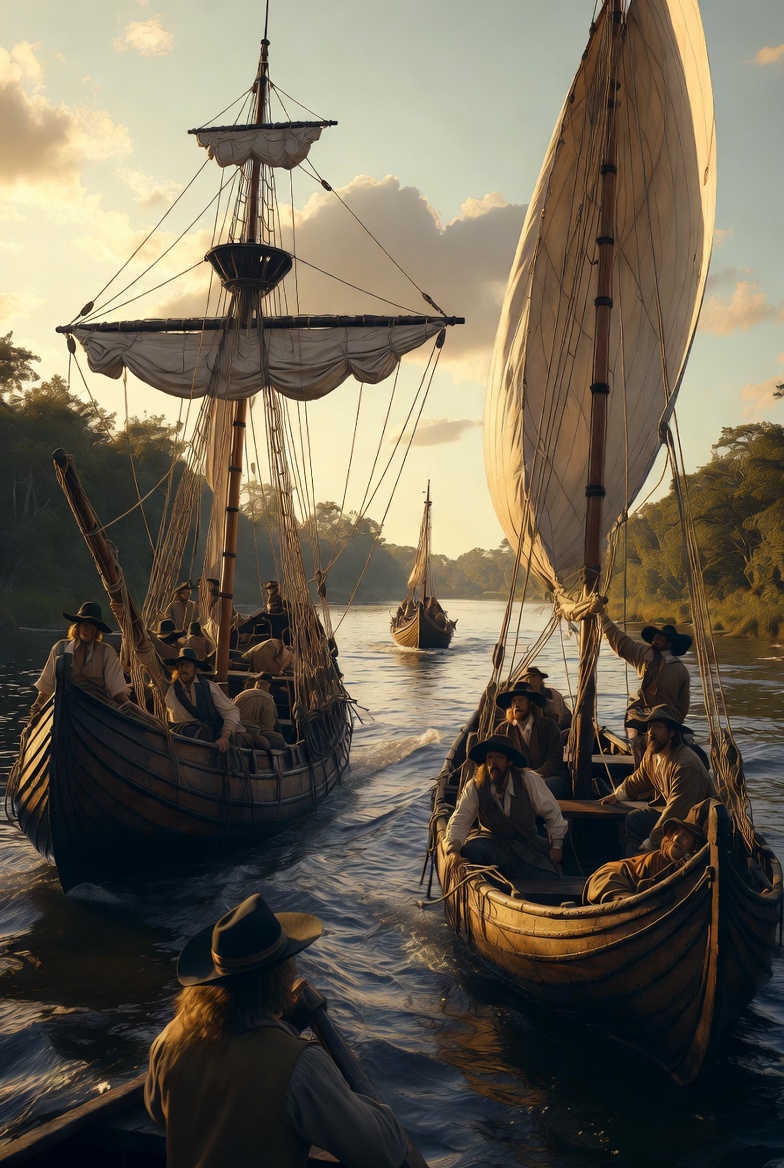 - **Ruthless Starving Time Audit (Weekly)**: Like the colonists cataloging their dwindling stores, list every "resource" in your life—time, money, energy, relationships, skills. Quantify waste (e.g., hours on low-value scrolling equivalent to "eating leather"). Cut it mercilessly. Unlike generic decluttering, assign "siege priorities": what keeps you alive (core skills/income) vs. what invites Powhatan raids (distractions that drain without return). Track in a simple ledger; review brutally every Sunday.
- **No-Exit Commitment Threshold**: Gates almost quit permanently. Set a predefined "abandon ship" point based on data, not emotion—e.g., "only after 90 days of maximum effort with zero progress on three key metrics." Until then, treat quitting as the enemy. Post a visible reminder of your "June 8 letter" (a written declaration of purpose signed and dated). This flips the script on "follow your bliss" advice by enforcing endurance as the default.
- **Active Relief Fleet Scouting**: Don't wait passively like the starving colonists. Actively signal for help—network with mentors, seek specific resources, or pivot alliances *before* total collapse. De La Warr didn't magically appear; the Company kept investing. Build a "longboat list" of 5–10 potential supporters or opportunities; reach one weekly with a clear ask. Unique twist: treat it like a military resupply request—specific, urgent, reciprocal.
- **Martial Law Daily Structure**: De La Warr brought order. Implement a non-negotiable daily "fort routine": fixed wake time, work blocks with zero tolerance for idleness (use a timer like a drumbeat), and evening "roll call" reviewing wins/losses. Incorporate "Smith's Law"—tie consumption (rewards, leisure) directly to production. No work, no eat. This bypasses motivation hacks by making discipline environmental and enforced.
- **Tobacco Pivot Adaptation**: Rolfe turned failure into fortune by experimenting with a new crop. When one approach starves you, test "cash crop" alternatives aggressively—side skills, niche markets, or reframed strengths. Dedicate 10% of effort weekly to deliberate experimentation. Measure not by immediate joy but by viability after 3–6 months. This is anti-hustle culture: focused, evidence-based mutation, not scattered grinding.
- **Ruthless Starving Time Audit (Weekly)**: Like the colonists cataloging their dwindling stores, list every "resource" in your life—time, money, energy, relationships, skills. Quantify waste (e.g., hours on low-value scrolling equivalent to "eating leather"). Cut it mercilessly. Unlike generic decluttering, assign "siege priorities": what keeps you alive (core skills/income) vs. what invites Powhatan raids (distractions that drain without return). Track in a simple ledger; review brutally every Sunday.
- **No-Exit Commitment Threshold**: Gates almost quit permanently. Set a predefined "abandon ship" point based on data, not emotion—e.g., "only after 90 days of maximum effort with zero progress on three key metrics." Until then, treat quitting as the enemy. Post a visible reminder of your "June 8 letter" (a written declaration of purpose signed and dated). This flips the script on "follow your bliss" advice by enforcing endurance as the default.
- **Active Relief Fleet Scouting**: Don't wait passively like the starving colonists. Actively signal for help—network with mentors, seek specific resources, or pivot alliances *before* total collapse. De La Warr didn't magically appear; the Company kept investing. Build a "longboat list" of 5–10 potential supporters or opportunities; reach one weekly with a clear ask. Unique twist: treat it like a military resupply request—specific, urgent, reciprocal.
- **Martial Law Daily Structure**: De La Warr brought order. Implement a non-negotiable daily "fort routine": fixed wake time, work blocks with zero tolerance for idleness (use a timer like a drumbeat), and evening "roll call" reviewing wins/losses. Incorporate "Smith's Law"—tie consumption (rewards, leisure) directly to production. No work, no eat. This bypasses motivation hacks by making discipline environmental and enforced.
- **Tobacco Pivot Adaptation**: Rolfe turned failure into fortune by experimenting with a new crop. When one approach starves you, test "cash crop" alternatives aggressively—side skills, niche markets, or reframed strengths. Dedicate 10% of effort weekly to deliberate experimentation. Measure not by immediate joy but by viability after 3–6 months. This is anti-hustle culture: focused, evidence-based mutation, not scattered grinding.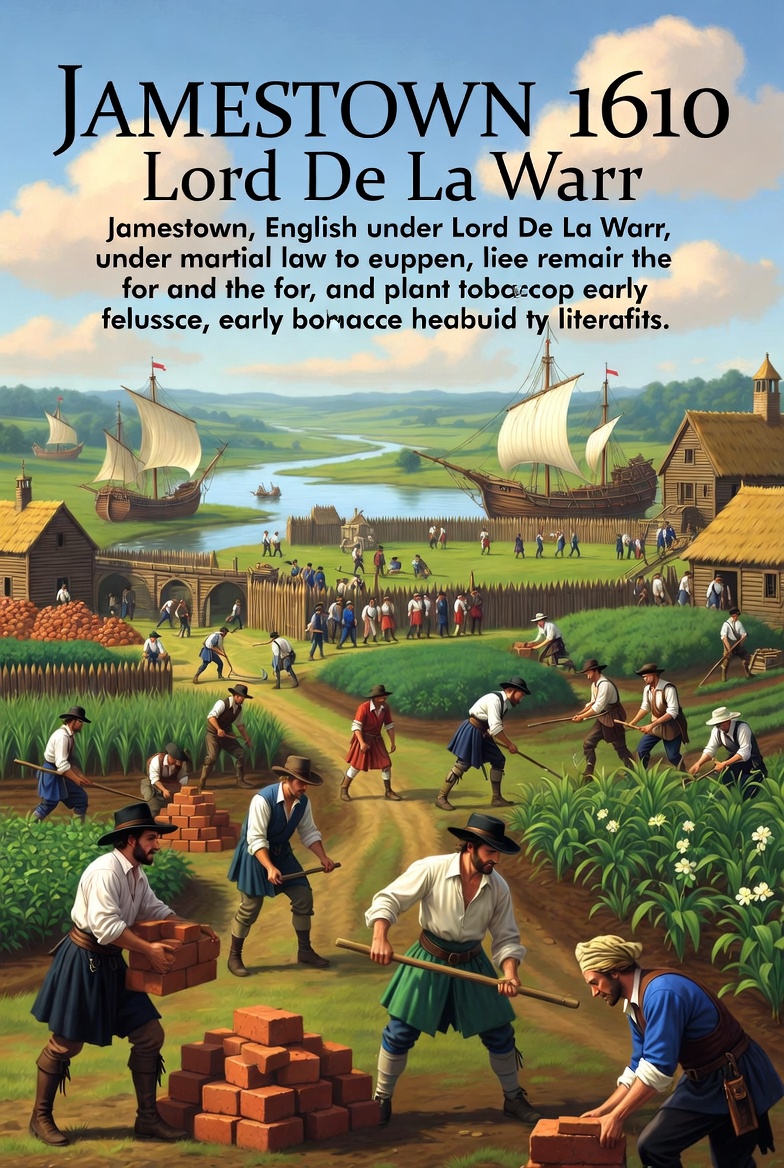 - **Post-Rendezvous Rebuild Cadence**: After any "June 8" win (a breakthrough, new opportunity), immediately impose structure: clean the "fort" (fix foundational messes), drill defenses (skill-building), and expand cautiously. Celebrate minimally—then work. Track population "growth" (progress metrics) monthly to sustain momentum.
This protocol isn't about overnight transformation or manifesting. It's engineered for the long Starving Time winters we all face—job loss, health crises, creative blocks, financial sieges. By treating life like Jamestown in 1610, you build antifragility: the ability to not just survive the abandonment impulse but to seize the relief when it arrives and turn the colony profitable. The colonists who relanded on June 8 didn't know tobacco or Burgesses lay ahead; they just knew quitting that day would end the story. Yours doesn't have to either. Hold the fort. The river might bring your deliverance sooner than you think.
- **Post-Rendezvous Rebuild Cadence**: After any "June 8" win (a breakthrough, new opportunity), immediately impose structure: clean the "fort" (fix foundational messes), drill defenses (skill-building), and expand cautiously. Celebrate minimally—then work. Track population "growth" (progress metrics) monthly to sustain momentum.
This protocol isn't about overnight transformation or manifesting. It's engineered for the long Starving Time winters we all face—job loss, health crises, creative blocks, financial sieges. By treating life like Jamestown in 1610, you build antifragility: the ability to not just survive the abandonment impulse but to seize the relief when it arrives and turn the colony profitable. The colonists who relanded on June 8 didn't know tobacco or Burgesses lay ahead; they just knew quitting that day would end the story. Yours doesn't have to either. Hold the fort. The river might bring your deliverance sooner than you think.