Picture this: It’s May 16, 1220. England is still reeling from the chaos of King John’s disastrous reign—the man who lost half of France, signed the Magna Carta under duress, and died leaving a nine-year-old boy on the throne amid baronial revolts and French invasions. The boy, Henry III, is now thirteen, fresh from a hasty wartime coronation at Gloucester and about to receive the full royal treatment at Westminster. But the day before his grand second coronation, he doesn’t throw a feast or review troops. No. He picks up a ceremonial hammer and lays the foundation stone for a new Lady Chapel at the east end of Westminster Abbey. One small, deliberate act. One boyish hand steadying a block of stone. And from that single gesture—dismissed by many contemporaries as just another pious whim—sprang the Gothic masterpiece we still gawk at today: the soaring vaults, the pointed arches, the royal mausoleum that has crowned and buried English monarchs for eight centuries.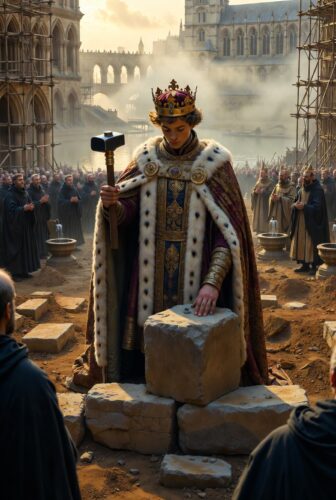 This wasn’t some quick renovation. This was the spark of a vision that would consume decades, drain treasuries, outlast wars, and redefine what a king—and a kingdom—could leave behind. Ninety percent of what follows is the raw, gritty, hilarious, and awe-inspiring history of that moment and its seismic ripple effects. The remaining ten percent? A brutally practical, zero-fluff plan that turns this medieval cornerstone ritual into your personal anti-self-help weapon against a world that wants you to scroll, quit, and forget your own legacy. No vision boards. No “manifestation journals.” Just mason-level strategy that actually works because it’s forged in the same stubborn fire that built Westminster.
Let’s travel back. To understand why a teenage king would bother with a chapel foundation on a random May morning, you have to meet the abbey’s original architect: Edward the Confessor. Rewind to the 1040s. England is a patchwork of Anglo-Saxon kingdoms still licking wounds from Viking raids. Edward, son of Æthelred the Unready and Emma of Normandy, had spent his youth in exile in Normandy, soaking up grand Romanesque architecture and a deep piety that bordered on the mystical. When he finally claimed the throne in 1042, he didn’t just want a palace—he wanted a monument to God and his own sanctity. On Thorney Island, a marshy, thorn-covered spit in the Thames (hence “Westminster”), stood a modest Benedictine monastery founded around 960 by Dunstan and King Edgar. Edward tore it down and rebuilt on a colossal scale: England’s first cruciform church, with a central tower, transepts, and a nave long enough to impress even the Normans. Consecrated on December 28, 1065—just days before Edward’s death on January 5, 1066—it was a statement. He was buried there a week later. His widow Edith joined him in 1075.
This wasn’t some quick renovation. This was the spark of a vision that would consume decades, drain treasuries, outlast wars, and redefine what a king—and a kingdom—could leave behind. Ninety percent of what follows is the raw, gritty, hilarious, and awe-inspiring history of that moment and its seismic ripple effects. The remaining ten percent? A brutally practical, zero-fluff plan that turns this medieval cornerstone ritual into your personal anti-self-help weapon against a world that wants you to scroll, quit, and forget your own legacy. No vision boards. No “manifestation journals.” Just mason-level strategy that actually works because it’s forged in the same stubborn fire that built Westminster.
Let’s travel back. To understand why a teenage king would bother with a chapel foundation on a random May morning, you have to meet the abbey’s original architect: Edward the Confessor. Rewind to the 1040s. England is a patchwork of Anglo-Saxon kingdoms still licking wounds from Viking raids. Edward, son of Æthelred the Unready and Emma of Normandy, had spent his youth in exile in Normandy, soaking up grand Romanesque architecture and a deep piety that bordered on the mystical. When he finally claimed the throne in 1042, he didn’t just want a palace—he wanted a monument to God and his own sanctity. On Thorney Island, a marshy, thorn-covered spit in the Thames (hence “Westminster”), stood a modest Benedictine monastery founded around 960 by Dunstan and King Edgar. Edward tore it down and rebuilt on a colossal scale: England’s first cruciform church, with a central tower, transepts, and a nave long enough to impress even the Normans. Consecrated on December 28, 1065—just days before Edward’s death on January 5, 1066—it was a statement. He was buried there a week later. His widow Edith joined him in 1075.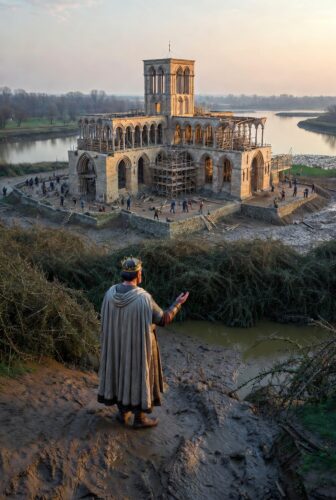 The abbey wasn’t just a church. It became the symbolic heart of the realm. William the Conqueror insisted on being crowned there on Christmas Day 1066, even as London burned around him. Subsequent kings followed suit. By the 12th century the site had become a royal peculiar—exempt from the Bishop of London’s meddling—and a pilgrimage magnet after Edward’s canonization in 1161. His tomb was opened in 1103, revealing an incorrupt body (medieval marketing gold). Miracles piled up. Pilgrims left offerings. The monks grew fat on the proceeds.
But by 1220 the old Romanesque pile was showing its age. Norman arches felt squat and heavy compared to the new French Gothic cathedrals rising across the Channel—Reims, Amiens, Chartres—with their daring pointed arches, ribbed vaults, and flying buttresses that let walls soar toward heaven like stone prayers. Henry III had visited France, admired Sainte-Chapelle, and decided England needed its own architectural flex. More importantly, he worshipped Edward the Confessor as the ideal king: peaceful, just, saintly. Henry’s own father, John, had been the opposite—tyrannical, excommunicated, a battlefield disaster. Henry wanted to atone, to legitimize his shaky Plantagenet line, and to create a royal necropolis where future kings would be crowned and buried alongside a saint. Laying that foundation stone on May 16, 1220, wasn’t symbolism; it was political theology carved in stone.
The ceremony itself must have been pure medieval theater. Picture the boy king, still gangly, surrounded by regents like William Marshal (the “greatest knight” who had just died months earlier) and the papal legate. Monks chanted. Bishops sprinkled holy water. Henry, dressed in robes too big for him, placed the stone with his own hands—probably a block of Reigate sandstone from Surrey quarries. No fanfare of trumpets recorded, but the message was clear: this abbey would be rebuilt in the new style, bigger, brighter, holier. The Lady Chapel would sit at the east end, a jewel box for the Virgin Mary and, eventually, Edward’s new shrine. Funds were tight—the abbey’s own coffers couldn’t cover a full rebuild yet—so only the chapel foundation advanced at first. But the seed was planted.
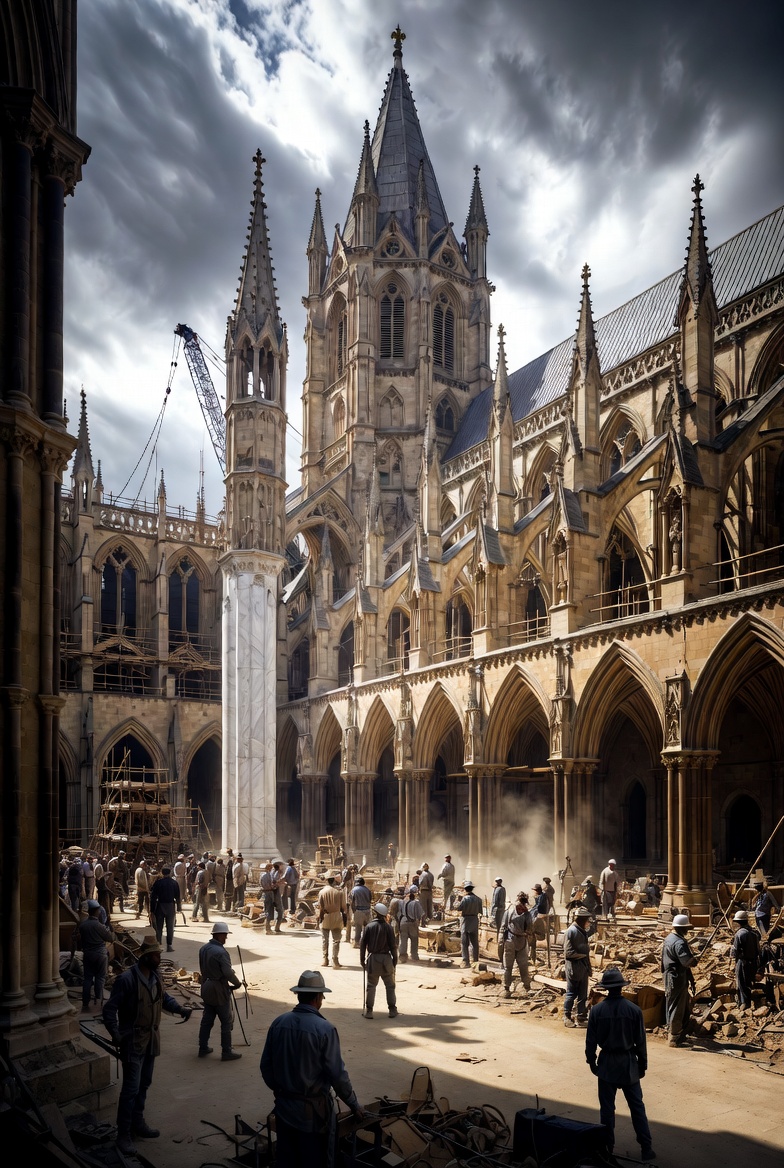
Fast-forward twenty-five years. Henry is now in his thirties, married to Eleanor of Provence, and finally wielding real power after a long regency. On July 6, 1245, he orders the eastern half of Edward’s old abbey demolished. Master mason Henry of Reynes (likely brought from France or trained in the new style) takes charge. Up to four hundred workers swarm the site: stonecutters, carvers, glaziers, carpenters. Stone arrives by boat from Caen in Normandy and Reigate. Polished Purbeck marble from Dorset gleams for columns. The design borrows French grandeur but keeps English quirks—single aisles instead of double, a long nave, lavish sculptural decoration. Flying buttresses let the walls climb to nearly 102 feet at the vault, the tallest Gothic ceiling in England. Rose windows, ribbed vaults, pointed arches everywhere. The east end becomes a chevet of radiating chapels around the high altar, perfect for processions and coronations.
The abbey wasn’t just a church. It became the symbolic heart of the realm. William the Conqueror insisted on being crowned there on Christmas Day 1066, even as London burned around him. Subsequent kings followed suit. By the 12th century the site had become a royal peculiar—exempt from the Bishop of London’s meddling—and a pilgrimage magnet after Edward’s canonization in 1161. His tomb was opened in 1103, revealing an incorrupt body (medieval marketing gold). Miracles piled up. Pilgrims left offerings. The monks grew fat on the proceeds.
But by 1220 the old Romanesque pile was showing its age. Norman arches felt squat and heavy compared to the new French Gothic cathedrals rising across the Channel—Reims, Amiens, Chartres—with their daring pointed arches, ribbed vaults, and flying buttresses that let walls soar toward heaven like stone prayers. Henry III had visited France, admired Sainte-Chapelle, and decided England needed its own architectural flex. More importantly, he worshipped Edward the Confessor as the ideal king: peaceful, just, saintly. Henry’s own father, John, had been the opposite—tyrannical, excommunicated, a battlefield disaster. Henry wanted to atone, to legitimize his shaky Plantagenet line, and to create a royal necropolis where future kings would be crowned and buried alongside a saint. Laying that foundation stone on May 16, 1220, wasn’t symbolism; it was political theology carved in stone.
The ceremony itself must have been pure medieval theater. Picture the boy king, still gangly, surrounded by regents like William Marshal (the “greatest knight” who had just died months earlier) and the papal legate. Monks chanted. Bishops sprinkled holy water. Henry, dressed in robes too big for him, placed the stone with his own hands—probably a block of Reigate sandstone from Surrey quarries. No fanfare of trumpets recorded, but the message was clear: this abbey would be rebuilt in the new style, bigger, brighter, holier. The Lady Chapel would sit at the east end, a jewel box for the Virgin Mary and, eventually, Edward’s new shrine. Funds were tight—the abbey’s own coffers couldn’t cover a full rebuild yet—so only the chapel foundation advanced at first. But the seed was planted.
Fast-forward twenty-five years. Henry is now in his thirties, married to Eleanor of Provence, and finally wielding real power after a long regency. On July 6, 1245, he orders the eastern half of Edward’s old abbey demolished. Master mason Henry of Reynes (likely brought from France or trained in the new style) takes charge. Up to four hundred workers swarm the site: stonecutters, carvers, glaziers, carpenters. Stone arrives by boat from Caen in Normandy and Reigate. Polished Purbeck marble from Dorset gleams for columns. The design borrows French grandeur but keeps English quirks—single aisles instead of double, a long nave, lavish sculptural decoration. Flying buttresses let the walls climb to nearly 102 feet at the vault, the tallest Gothic ceiling in England. Rose windows, ribbed vaults, pointed arches everywhere. The east end becomes a chevet of radiating chapels around the high altar, perfect for processions and coronations. Construction wasn’t a straight line. Money hemorrhaged—estimates put Henry’s total abbey spending at over £45,000, the modern equivalent of tens of millions. Barons grumbled about taxes. The First Barons’ War had barely cooled; Simon de Montfort’s later rebellion loomed. Henry’s piety sometimes bordered on obsession. He wept openly at sermons. He commissioned the unique Cosmati pavement in 1268—a swirling Italian mosaic of colored marble, porphyry, and glass depicting the universe and the date of the world’s end. (It’s still there, one of the finest medieval floors in Europe.) In 1269 the eastern end, transepts, and choir were complete enough for Edward’s bones to be moved to a glittering new shrine on October 13. The church was consecrated that same day. Henry’s own tomb—Purbeck marble with Cosmati inlays and a gilt bronze effigy by William Torel—would wait nearby after his death in 1272.
The old Norman nave stubbornly hung on for another century, a half-Gothic, half-Romanesque Frankenstein until Abbot Nicholas Litlyngton used bequests (including from Cardinal Simon Langham) to finish it in the 1380s under master mason Henry Yevele. Henry VII later demolished the original Lady Chapel and replaced it with the breathtaking Perpendicular fan-vaulted masterpiece we call the Henry VII Chapel (1503–1519), but the 1220 seed had already flowered. The abbey survived the Dissolution of the Monasteries, became a royal peculiar under Elizabeth I, and evolved into “England’s Valhalla”—burial place for 18 monarchs, poets, scientists, warriors. Forty coronations since 1066. Sixteen royal weddings. It has witnessed everything from the murder of Thomas Becket’s assassins seeking sanctuary to the silent vigil over Queen Elizabeth II’s coffin.
The humor in all this? Medieval kings were gloriously human. Henry III once raged at a mason for slow progress, then rewarded him anyway because the vault looked heavenly. Workers carved cheeky grotesques into the bosses—monkeys, dragons, even a man pulling a face. Barons revolted over the cost, yet the abbey’s beauty silenced critics for centuries. Henry’s heart was shipped to Fontevraud Abbey in France per his dying wish, a final romantic gesture to his Angevin ancestors. His tomb effigy, when the plate was removed centuries later, revealed medieval graffiti: scratched heads, a bird, a six-pointed flower—workmen leaving their mark like modern tourists.
Politically, the rebuild was genius. It tied the monarchy to sainthood, centralized coronations, and gave England a visual rival to French cathedrals. Culturally, it fused piety, power, and craftsmanship into a national symbol. Architecturally, it proved that one foundation stone, laid with intent, could outlast plagues, fires, wars, and revolutions. The abbey has been bombed, scaffolded, restored, and still stands—proof that patient, visionary building beats short-term glory every time.
Construction wasn’t a straight line. Money hemorrhaged—estimates put Henry’s total abbey spending at over £45,000, the modern equivalent of tens of millions. Barons grumbled about taxes. The First Barons’ War had barely cooled; Simon de Montfort’s later rebellion loomed. Henry’s piety sometimes bordered on obsession. He wept openly at sermons. He commissioned the unique Cosmati pavement in 1268—a swirling Italian mosaic of colored marble, porphyry, and glass depicting the universe and the date of the world’s end. (It’s still there, one of the finest medieval floors in Europe.) In 1269 the eastern end, transepts, and choir were complete enough for Edward’s bones to be moved to a glittering new shrine on October 13. The church was consecrated that same day. Henry’s own tomb—Purbeck marble with Cosmati inlays and a gilt bronze effigy by William Torel—would wait nearby after his death in 1272.
The old Norman nave stubbornly hung on for another century, a half-Gothic, half-Romanesque Frankenstein until Abbot Nicholas Litlyngton used bequests (including from Cardinal Simon Langham) to finish it in the 1380s under master mason Henry Yevele. Henry VII later demolished the original Lady Chapel and replaced it with the breathtaking Perpendicular fan-vaulted masterpiece we call the Henry VII Chapel (1503–1519), but the 1220 seed had already flowered. The abbey survived the Dissolution of the Monasteries, became a royal peculiar under Elizabeth I, and evolved into “England’s Valhalla”—burial place for 18 monarchs, poets, scientists, warriors. Forty coronations since 1066. Sixteen royal weddings. It has witnessed everything from the murder of Thomas Becket’s assassins seeking sanctuary to the silent vigil over Queen Elizabeth II’s coffin.
The humor in all this? Medieval kings were gloriously human. Henry III once raged at a mason for slow progress, then rewarded him anyway because the vault looked heavenly. Workers carved cheeky grotesques into the bosses—monkeys, dragons, even a man pulling a face. Barons revolted over the cost, yet the abbey’s beauty silenced critics for centuries. Henry’s heart was shipped to Fontevraud Abbey in France per his dying wish, a final romantic gesture to his Angevin ancestors. His tomb effigy, when the plate was removed centuries later, revealed medieval graffiti: scratched heads, a bird, a six-pointed flower—workmen leaving their mark like modern tourists.
Politically, the rebuild was genius. It tied the monarchy to sainthood, centralized coronations, and gave England a visual rival to French cathedrals. Culturally, it fused piety, power, and craftsmanship into a national symbol. Architecturally, it proved that one foundation stone, laid with intent, could outlast plagues, fires, wars, and revolutions. The abbey has been bombed, scaffolded, restored, and still stands—proof that patient, visionary building beats short-term glory every time.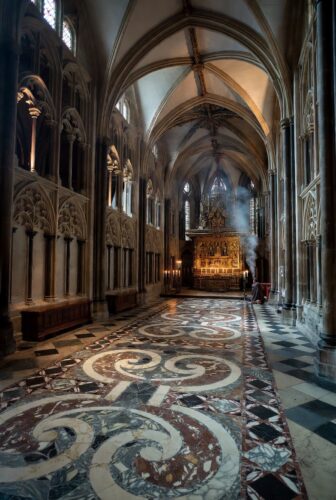 Now, fast-forward to you in 2026. Your life probably feels more like King John’s chaotic reign than Henry’s cathedral. Distractions pull in every direction. Goals crumble under “urgent” emails. Legacies feel impossible when rent is due. But that single May 16, 1220 act whispers a truth: the grandest monuments start with one deliberate, public commitment when no one is watching the full blueprint yet.
Here’s how the outcome of Henry III’s foundation ritual benefits you today—applied directly to your individual life with ruthless specificity:
- **You stop chasing quick wins and start laying “indestructible cornerstones”**: Henry didn’t rebuild the whole abbey in a weekend. He laid one stone and committed publicly. In your life, pick one non-negotiable “foundation stone” project—writing the first chapter of that book, launching the micro-business, mending that family rift—and announce it to one trusted witness the way Henry did before bishops. The public commitment creates the same gravitational pull that turned a boy’s whim into a Gothic icon.
- **You weaponize devotion against distraction**: Henry’s obsessive love for Edward the Confessor kept him focused amid baronial revolts. Translate that: choose one “saint” value (integrity, creativity, family) and treat it like a shrine. Guard it with daily rituals the way monks guarded Edward’s bones. Modern chaos becomes background noise.
- **You embrace expensive, long-term craftsmanship over cheap hacks**: The abbey cost a fortune and took generations. Your version? Invest real time/money in skills or relationships that compound. Skip the $9.99 course that promises overnight success; fund the slow apprenticeship that builds a cathedral.
- **You build a “mausoleum of meaning” that outlives you**: Henry wanted to be buried near his saint. You create a personal legacy archive—journals, projects, mentorship records—so future you (or your kids) can visit and feel the weight of your intention.
- **You turn political (or personal) turmoil into fuel**: Barons rebelled; Henry built anyway. Life throws layoffs, breakups, health scares? Use them as the “demolition phase” before your 1245-level rebuild.
The detailed, quick, unique plan—no other self-help guru is selling this because it’s too medieval, too stubborn, and too effective. I call it **The Cornerstone Covenant: A 7-Day Mason’s Ignition Protocol**. It’s not a 30-day challenge. It’s a one-week blood oath to lay your first stone, then guard it like Henry guarded his shrine. Do it once, and the rest of your life becomes the slow, glorious construction phase.
Now, fast-forward to you in 2026. Your life probably feels more like King John’s chaotic reign than Henry’s cathedral. Distractions pull in every direction. Goals crumble under “urgent” emails. Legacies feel impossible when rent is due. But that single May 16, 1220 act whispers a truth: the grandest monuments start with one deliberate, public commitment when no one is watching the full blueprint yet.
Here’s how the outcome of Henry III’s foundation ritual benefits you today—applied directly to your individual life with ruthless specificity:
- **You stop chasing quick wins and start laying “indestructible cornerstones”**: Henry didn’t rebuild the whole abbey in a weekend. He laid one stone and committed publicly. In your life, pick one non-negotiable “foundation stone” project—writing the first chapter of that book, launching the micro-business, mending that family rift—and announce it to one trusted witness the way Henry did before bishops. The public commitment creates the same gravitational pull that turned a boy’s whim into a Gothic icon.
- **You weaponize devotion against distraction**: Henry’s obsessive love for Edward the Confessor kept him focused amid baronial revolts. Translate that: choose one “saint” value (integrity, creativity, family) and treat it like a shrine. Guard it with daily rituals the way monks guarded Edward’s bones. Modern chaos becomes background noise.
- **You embrace expensive, long-term craftsmanship over cheap hacks**: The abbey cost a fortune and took generations. Your version? Invest real time/money in skills or relationships that compound. Skip the $9.99 course that promises overnight success; fund the slow apprenticeship that builds a cathedral.
- **You build a “mausoleum of meaning” that outlives you**: Henry wanted to be buried near his saint. You create a personal legacy archive—journals, projects, mentorship records—so future you (or your kids) can visit and feel the weight of your intention.
- **You turn political (or personal) turmoil into fuel**: Barons rebelled; Henry built anyway. Life throws layoffs, breakups, health scares? Use them as the “demolition phase” before your 1245-level rebuild.
The detailed, quick, unique plan—no other self-help guru is selling this because it’s too medieval, too stubborn, and too effective. I call it **The Cornerstone Covenant: A 7-Day Mason’s Ignition Protocol**. It’s not a 30-day challenge. It’s a one-week blood oath to lay your first stone, then guard it like Henry guarded his shrine. Do it once, and the rest of your life becomes the slow, glorious construction phase.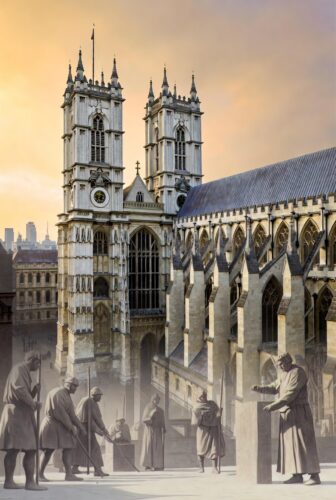 **Day 1 – The Public Hammer Strike**: Write your “foundation stone” commitment on real paper (not a phone note). One sentence: “On [date], I lay the first stone of [your specific legacy project].” Read it aloud to one living witness (spouse, friend, even a voice memo if you must). Sign it. Date it. This mirrors Henry’s ceremonial act—no take-backs.
**Day 2 – Recruit Your Guild**: Identify two “master masons”—people who will check your progress weekly without sugarcoating. Give them veto power over excuses. Unlike generic accountability buddies, they must swear the same covenant for their own project. Mutual medieval patronage beats one-way coaching.
**Day 3 – Demolish the Old Nave**: List every half-built, rotting “Romanesque” habit or project dragging you down. Burn the list (safely). Henry demolished the east end to make space; you clear mental real estate.
**Day 4 – Source Your Materials**: Gather three non-negotiable resources (books, tools, time blocks) that match your project’s scale. No more free YouTube rabbit holes. Buy the good stone.
**Day 5 – Install the Cosmati Pavement**: Design one daily 13-minute ritual (the number nods to Henry’s century) that visually reminds you of the big vision. Sketch it. Could be a photo of your future “shrine,” a physical object on your desk, or a phone wallpaper of Westminster’s vault. Make it beautiful—beauty kept Henry going.
**Day 6 – Consecrate the Choir**: Spend the day doing the first tangible micro-action on the project. Lay the literal or metaphorical first brick. Post zero progress pics online; this is sacred, not content.
**Day 7 – Crown the Vision**: Review the week with your guild. Celebrate like a medieval banquet (good food, no screens). Set the next quarterly “consecration date” when a bigger section must be complete. Repeat the protocol only when the next major phase demands it—never more than twice a year. This prevents burnout and forces real scale.
This plan is unique because it treats your life like a cathedral under construction: public, expensive, devotional, multi-generational, and gloriously imperfect. No apps. No endless streaks. Just one stone, laid with the same teenage king’s audacity, that forces the rest of the building to rise around it. Henry III died in 1272 with the nave unfinished, yet tourists still gasp at his work 800 years later. Your version won’t be a tourist trap—it’ll be the quiet monument that lets you die knowing you built something that laughs at time.
So tomorrow, on whatever “May 16” your calendar shows, pick up the hammer. The stone is waiting. The abbey inside you is ready to rise. Start small. Finish eternal.
**Day 1 – The Public Hammer Strike**: Write your “foundation stone” commitment on real paper (not a phone note). One sentence: “On [date], I lay the first stone of [your specific legacy project].” Read it aloud to one living witness (spouse, friend, even a voice memo if you must). Sign it. Date it. This mirrors Henry’s ceremonial act—no take-backs.
**Day 2 – Recruit Your Guild**: Identify two “master masons”—people who will check your progress weekly without sugarcoating. Give them veto power over excuses. Unlike generic accountability buddies, they must swear the same covenant for their own project. Mutual medieval patronage beats one-way coaching.
**Day 3 – Demolish the Old Nave**: List every half-built, rotting “Romanesque” habit or project dragging you down. Burn the list (safely). Henry demolished the east end to make space; you clear mental real estate.
**Day 4 – Source Your Materials**: Gather three non-negotiable resources (books, tools, time blocks) that match your project’s scale. No more free YouTube rabbit holes. Buy the good stone.
**Day 5 – Install the Cosmati Pavement**: Design one daily 13-minute ritual (the number nods to Henry’s century) that visually reminds you of the big vision. Sketch it. Could be a photo of your future “shrine,” a physical object on your desk, or a phone wallpaper of Westminster’s vault. Make it beautiful—beauty kept Henry going.
**Day 6 – Consecrate the Choir**: Spend the day doing the first tangible micro-action on the project. Lay the literal or metaphorical first brick. Post zero progress pics online; this is sacred, not content.
**Day 7 – Crown the Vision**: Review the week with your guild. Celebrate like a medieval banquet (good food, no screens). Set the next quarterly “consecration date” when a bigger section must be complete. Repeat the protocol only when the next major phase demands it—never more than twice a year. This prevents burnout and forces real scale.
This plan is unique because it treats your life like a cathedral under construction: public, expensive, devotional, multi-generational, and gloriously imperfect. No apps. No endless streaks. Just one stone, laid with the same teenage king’s audacity, that forces the rest of the building to rise around it. Henry III died in 1272 with the nave unfinished, yet tourists still gasp at his work 800 years later. Your version won’t be a tourist trap—it’ll be the quiet monument that lets you die knowing you built something that laughs at time.
So tomorrow, on whatever “May 16” your calendar shows, pick up the hammer. The stone is waiting. The abbey inside you is ready to rise. Start small. Finish eternal.