

In the sweltering early summer of 721, as the sun beat down on the fertile plains of southern Gaul, a city teetered on the brink of surrender. Toulouse, the proud capital of the Duchy of Aquitaine, had endured nearly three months of relentless siege. Its walls, scarred by siege engines and the constant thud of projectiles, housed a population pushed to the edge of starvation and despair. Outside, the disciplined ranks of the Umayyad Caliphate's army—battle-hardened Arabs and Berbers fresh from conquering Visigothic Spain—encircled the city like a noose. Their commander, al-Samh ibn Malik al-Khawlani, the wāli (governor-general) of al-Andalus, smelled victory. His forces had already seized Narbonne, establishing a beachhead north of the Pyrenees. The road to the Atlantic and deeper into Frankish territories seemed wide open.


But on June 9, everything changed. Duke Odo the Great (also known as Eudes or Eudo) of Aquitaine, who had slipped away earlier to rally reinforcements, returned with a combined force of Aquitanians, Gascons, and Frankish allies. What followed was not just a battle, but a masterclass in opportunistic warfare that shattered the Umayyad momentum and earned Odo the epithet "the Great." This wasn't the flashier, more celebrated clash at Tours/Poitiers eleven years later under Charles Martel. No, the Battle of Toulouse on this very date in 721 was the true pivot point—the first decisive check on Umayyad expansion into Western Europe, a gritty underdog victory that bought Europe crucial breathing room and reshaped the continent's destiny.
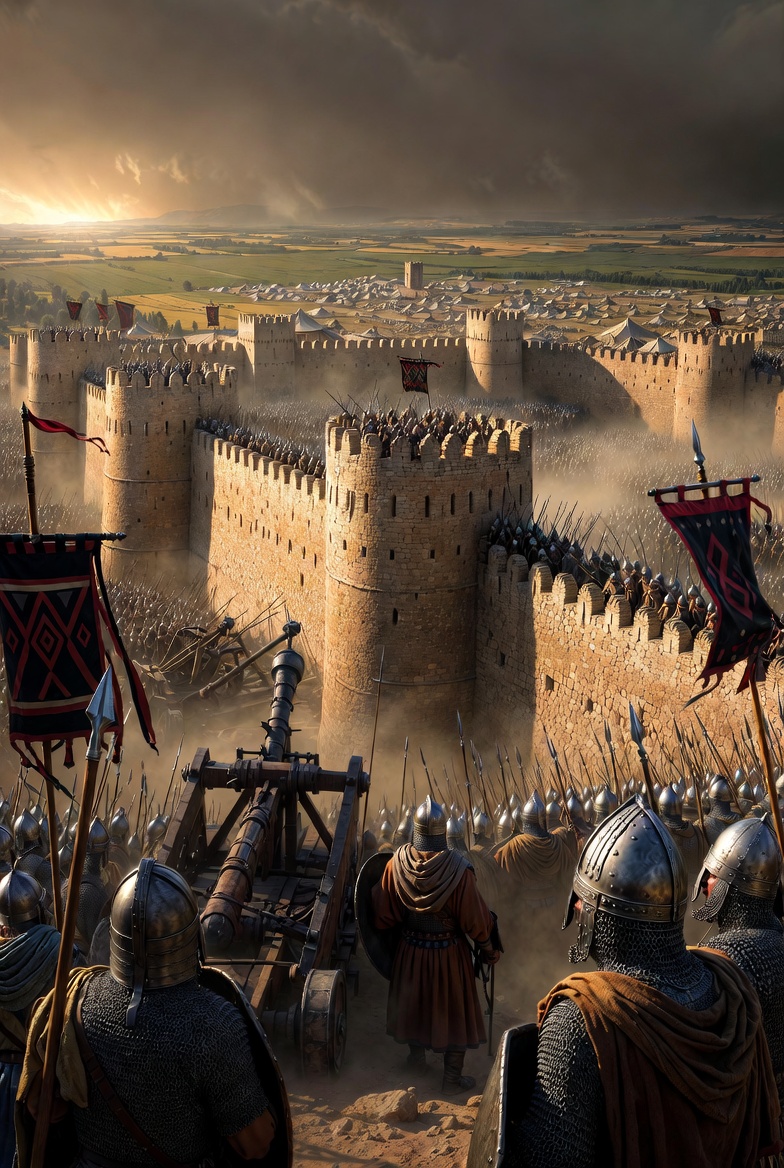
To understand why this obscure (yet pivotal) event on June 9 deserves your attention more than a thousand generic history lessons, we must dive deep into the world of the early 8th century. This was an era of collapsing empires, clashing faiths, and ambitious warlords. The Umayyad Caliphate, centered in Damascus, was at its zenith. Having swept across North Africa and toppled the Visigothic Kingdom in Iberia by 711–718, they eyed Gaul (modern France) as the next prize. Al-Samh, a capable administrator and military leader, assembled a formidable host of Arabs, Berbers, and local recruits. Their army included infantry, cavalry, siege trains, and even Basque slingers— a multicultural force built for conquest. The campaign began in earnest around 719–720. Umayyad troops crossed the Pyrenees, captured Narbonne (a key port and former Visigothic stronghold), and fortified it as their base in Septimania. From there, al-Samh pushed westward along the Garonne River valley, devastating the countryside, raiding monasteries, and subduing towns. His strategic goal was clear: seize Toulouse, Aquitaine's economic and political heart, then fan out to control the rich lands stretching to the Atlantic. This would link al-Andalus directly with potential gains in Gaul, creating a vast Muslim domain from the Mediterranean to the western seas. Contemporary sources, though often exaggerated for propaganda, paint a picture of methodical terror and ambition. Toulouse itself was no pushover. An ancient city with roots in Roman times and earlier Celtic settlements, it sat at a vital crossroads. Its defenses were formidable, and its citizens, a mix of Gallo-Romans, Visigoths, and locals, were fiercely independent. But after weeks of siege—starvation setting in, disease spreading, morale crumbling—the end seemed near. Duke Odo, the ruler of Aquitaine and Gascony (Vasconia), faced a nightmare. His duchy was semi-autonomous, nominally under loose Frankish suzerainty but practically independent. He had clashed with the rising Carolingian Franks to the north before and couldn't fully trust them. When the Umayyads arrived, Odo wasn't caught napping inside the city. He left to seek aid, a calculated risk that would define his legacy. Odo first appealed to Charles Martel, the powerful Mayor of the Palace in Austrasia (the eastern Frankish heartland). But Charles, locked in his own struggles against Saxon foes and internal rivals, turned a deaf ear. He may have even seen Odo's predicament as an opportunity to weaken a southern rival. Undeterred, Odo rallied his own Aquitanian levies, Gascon warriors (fierce Basque fighters known for their mountain prowess and slinging skills), and whatever Frankish contingents he could muster from southern settlements—perhaps naturalized Franks from the Lower Rhone area. Estimates of army sizes are wildly inflated in medieval chronicles (one Arab source claims Odo fielded 300,000 and slew 375,000 foes, numbers that are logistically impossible), but the scale was significant for the era. Odo's force was likely several thousand strong, a respectable coalition for 8th-century warfare.The return to Toulouse in early June was perfectly timed. The Umayyads, overconfident after months of unchallenged siege, had grown lax. Instead of maintaining robust outer defenses or constant scouting, they focused on the city walls, assuming no relief was coming. Their camp was vulnerable. On June 9, Odo struck with devastating coordination. Aquitanian forces assaulted the besiegers from the rear, while defenders inside Toulouse sortied out. It was a classic pincer movement, reminiscent of Hannibal's tactics at Cannae centuries earlier, though executed with the desperate energy of men fighting for their homes. Chaos erupted. The surprised Umayyads, many resting or unprepared without full armor, broke under the first onslaught. Odo's troops cut through them mercilessly. Al-Samh himself was wounded (possibly by a spear) and fled with a remnant of his army, only to die shortly afterward. His lieutenant, Abd al-Rahman al-Ghafiqi (who would later lead the raid culminating at Tours), managed to rally some survivors and retreat to Narbonne. The Umayyad siege engines, supplies, and prestige were shattered. Toulouse was saved. The victory was total. Pope Gregory II hailed Odo as a champion of Christianity, sending gifts and blessings (including, according to the *Liber Pontificalis*, three consecrated sponges or baskets of bread that miraculously protected those who ate from them during the fight—a charming medieval legend blending faith and morale). Odo's renown spread. He had achieved what no one else had: a decisive field victory against the seemingly unstoppable Umayyad tide in Western Europe. Arab chroniclers later referred to the site as Balat al-Shuhada (Plateau of the Martyrs), commemorating their fallen for centuries. The battle bought Europe more than a decade of relative respite. To appreciate the broader context, consider the Umayyad Caliphate's momentum. By the early 8th century, they controlled an empire stretching from India to Spain. Their armies were mobile, motivated by faith, booty, and discipline. In Iberia, they had exploited Visigothic civil wars. In Gaul, internal Frankish divisions (between Austrasia, Neustria, and semi-independent duchies like Aquitaine) created openings. Yet Odo's stand disrupted this. It forced the Umayyads to reorganize in al-Andalus, focus on consolidating gains rather than endless northward pushes, and limit themselves to raids for years. Subsequent incursions, like those reaching Autun in 725, were hit-and-run rather than conquest. The Battle of Toulouse gave Charles Martel time to consolidate power, train veterans, and prepare for 732. Without it, the story of Europe might have looked very different—no Carolingian Renaissance, altered Christian-Muslim frontiers, and perhaps a very different medieval world.
Odo's life adds layers of complexity and humanity to the tale. Ruling from roughly 700 to 735, he navigated a treacherous political landscape. He fought Franks, allied pragmatically with Muslim leaders at times (even marrying his daughter Lampegia to a Berber rebel named Munuza to counter Charles Martel), and defended his people's autonomy. His realm spanned from the Loire to the Pyrenees, a rich, culturally diverse area blending Roman, Gothic, and local traditions. Toulouse was its beating heart—a hub of trade, agriculture, and resilience. Odo wasn't a flawless hero; he suffered defeats later, notably at Bordeaux against renewed Umayyad raids, and eventually retired or died around 735–740, succeeded by his son Hunald. But on June 9, 721, he embodied the underdog who turns the tables through preparation, timing, and audacity. The battle's tactics reward close study. Odo's decision to abandon the city temporarily wasn't cowardice—it was strategic genius. By avoiding entrapment, he preserved his mobility. His coalition-building, despite rivalries, shows pragmatic leadership. The pincer attack exploited enemy overconfidence, a timeless military sin. Terrain around Toulouse—rivers, hills like Pech-David—likely played a role in channeling the assault. Medieval warfare was brutal: close-quarters slaughter, no quarter given in the heat of pursuit, the psychological shock of a "lost" cause suddenly reversed. Odo's forces, fighting for hearth and home, had the edge in motivation once surprise was achieved. Historians debate its macro-significance. Some emphasize Tours/Poitiers (732) as the decisive hammer blow, where Charles Martel earned his "Hammer" nickname. But many, including modern analysts and Arab sources, see Toulouse as the genuine stopper. It prevented permanent Umayyad footholds deeper in Gaul, preserved Aquitaine's independence longer, and allowed Frankish power to mature. It also fostered early cultural exchanges in the south, with treaties and interactions between Christian and Muslim communities in Septimania and beyond. For 450 years, Muslim memorials honored the "martyrs" of Toulouse, underscoring its impact. Diving deeper into the Umayyad side reveals a sophisticated machine. Al-Samh wasn't a mere raider; he was a governor integrating conquered territories, building garrisons, and administering justice. His army reflected the Caliphate's diversity: Arab elites, Berber warriors (key to Iberian conquests), and mercenaries. Logistics for a prolonged siege—supply lines over the Pyrenees, siege artillery—highlight their organizational prowess. The defeat stung because it exposed vulnerabilities in overextended campaigns far from Damascus. Internal Umayyad politics, Berber unrest, and distance from the caliphal core would later contribute to their decline in the west. On the Aquitanian side, the victory bolstered local identity. Toulouse emerged stronger, its legends of resistance enduring. Odo's papal recognition elevated his status, even as he balanced Frankish pressures. The miracle story of the blessed bread speaks to how faith intertwined with warfare—troops sharing consecrated portions for protection, emerging unscathed amid carnage. Whether literal or symbolic, it boosted morale in an age where divine favor was as crucial as steel. Fast-forward through the centuries, and June 9, 721, stands as a testament to resilience amid empire-sized threats. It wasn't inevitable. One leader's choices—leaving to gather strength, striking at the perfect moment—altered history. In an era of fragmented powers, Odo proved that localized determination could thwart global ambitions.
Now, applying this epic pivot to your individual life: Imagine your personal "siege"—that prolonged challenge draining your resources, testing your limits. Whether it's career stagnation, health battles, financial pressure, creative blocks, or relational strain, the lessons from Toulouse offer a blueprint far removed from cookie-cutter self-help mantras like "just hustle harder" or vague positivity. This is about strategic withdrawal, coalition-building in unlikely places, and the decisive counterstrike. **Unique, Actionable Plan: The "Toulouse Protocol" – A 30-Day Siege-Breaker for Personal Victory** - **Day 1-3: The Calculated Exit (Strategic Withdrawal, Not Retreat)**: Like Odo leaving Toulouse, identify your "city" under siege (e.g., a toxic job, unhealthy habit loop, or overwhelming project). Step back deliberately—not quitting, but preserving energy. Journal the siege's duration and your resources. Avoid the trap of staying trapped. Unique twist: Schedule a "scouting mission"—a short trip, course, or consultation outside your usual environment to gain perspective. No social media venting; treat it as military reconnaissance. - **Day 4-10: Rally Unlikely Allies (Coalition Warfare)**: Odo didn't rely solely on his core forces; he pulled in Gascons and Franks despite rivalries. Map your network: Who has complementary skills or shared interests, even past "enemies"? Reach out with specific value exchanges (e.g., "I'll handle X if you advise on Y"). Avoid generic networking—craft "treaties" like Odo's pragmatic alliances. Track three potential allies and initiate one low-stakes collaboration. This builds resilience beyond solo effort, turning isolation into strength. - **Day 11-20: Fortify and Scout Vulnerabilities (Preparation Amid Pressure)**: While the "city" holds, study your opponent's (the problem's) overconfidence. Analyze patterns in your challenge—when does it slacken? Build internal defenses: daily micro-habits (e.g., 20-minute skill drills, nutrition tweaks for energy). Use Odo's timing: simulate scenarios. Unique element: Create a "miracle bread" ritual—a tangible symbol (a note, object, or daily affirmation rooted in past small wins) to boost morale during drills. Measure progress quantitatively, not just feel-good vibes. - **Day 21-25: The Pincer Strike (Coordinated Counterattack)**: On your "June 9," launch the assault. Combine external action (the ally support) with internal sortie (direct confrontation or pivot). Make it specific: If it's debt, negotiate one major term while cutting a category ruthlessly. If creative block, release a imperfect prototype while leveraging feedback loops. Emphasize surprise and momentum—act when the "besieger" least expects (e.g., after a period of routine). Celebrate small routs publicly to demoralize the problem.
- **Day 26-30: Consolidate and Honor the Fallen (Aftermath Integration)**: Like Odo's papal gifts and long-term independence, secure gains. Document lessons, reward your "troops" (self and allies), and prepare for raids (setbacks). Establish new boundaries (garrisons). Review what worked macro-historically: bought time. Plan the next campaign. Unique motivational anchor: Name your victory after a personal "Toulouse"—a date, symbol, or motto reminding you that one well-timed strike changes trajectories. Share the story anonymously online to inspire others, creating your own legacy ripple. This protocol stands apart because it's historical mechanics applied surgically—not motivational fluff, but battle-tested sequencing with built-in adaptability. It acknowledges friction (rivalries, overconfidence) and rewards realism. Odo didn't win by wishing; he won by maneuvering when others froze. Apply it, and your "Umayyad siege" becomes the setup for your greatest epithet: survivor, strategist, champion. The echoes of June 9, 721, resonate because they prove ordinary (or semi-autonomous) leaders can defy empires. In your life, the distant past isn't dusty—it's a forge for today's steel. Embrace the siege-breaker within. History doesn't repeat, but its habits of victory endure. What siege will you break next?