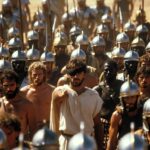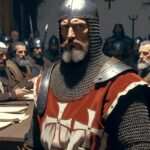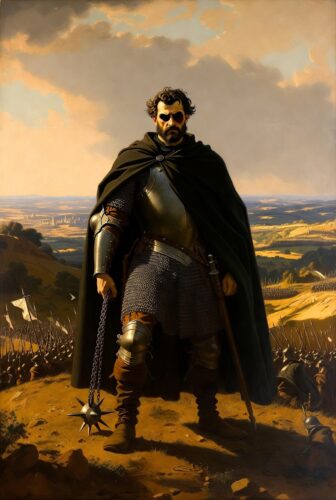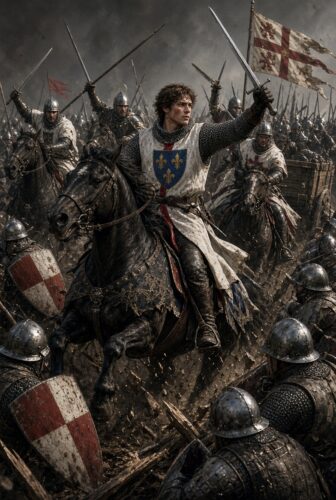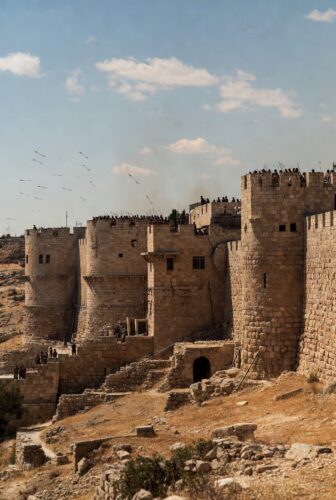

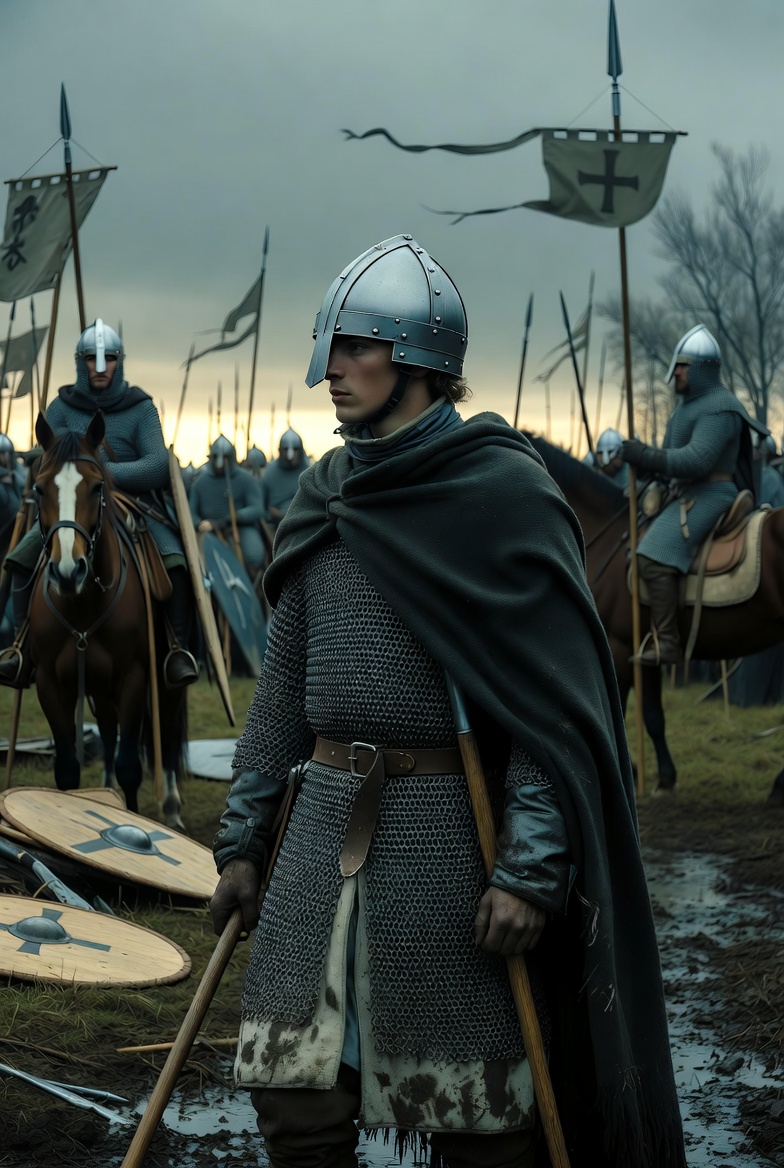
On a warm summer day in the year 881, in a stretch of northern French countryside that most modern maps barely bother to name, a young king named Louis III and his brother Carloman II met a host of Northmen in open battle. The place was Saucourt-en-Vimeu, a modest settlement in the Vimeu region near the Somme, not far from the modern towns of Abbeville and Eu. The date was August 3. The result, according to the contemporary Annals of Fulda, was a rare and bloody Frankish victory in which thousands of Viking warriors fell. The battle was so striking that within months an anonymous poet—almost certainly a cleric—composed a short, vigorous Old High German poem known as the Ludwigslied, or Song of Ludwig, to celebrate it. That poem survives. The young king did not live long enough to exploit the win. Yet the event itself remains one of the clearest examples in early medieval history of a defender choosing the moment, the ground, and the method with deliberate care rather than reacting in panic to endless raids.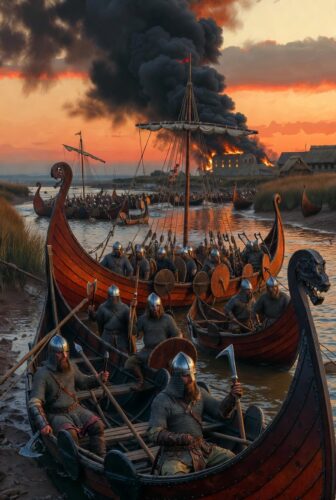
To understand why August 3, 881, mattered, you have to step back into the fractured world of the late Carolingian Empire. After the Treaty of Verdun in 843, the once-unified realm of Charlemagne had been divided among his grandsons. West Francia—the rough ancestor of modern France—passed through several short-lived rulers. Louis II, known as the Stammerer, died in 879. His two sons, Louis III and Carloman II, were still teenagers when they inherited a kingdom already under severe pressure from Scandinavian raiders. These Northmen, mostly Danes operating in large, mobile fleets, had been probing and plundering the Frankish coasts and rivers for decades. They were not a single organized army bent on conquest in the classical sense. They were opportunistic, seasonal predators who preferred soft targets: monasteries rich in portable wealth, undefended river towns, and regions where royal authority was thin.
The years immediately before Saucourt had been especially hard. In 880 a Viking force had been checked by Louis the Younger of East Francia at Thimeon near Charleroi. The survivors simply shifted their attention westward. In November 880 they seized Kortrijk. In December they burned and looted Arras and Cambrai. By the summer of 881 they had pushed deeper, sacking the important monastic centers of Amiens and Corbie. These were not hit-and-run pinpricks. The raiders established temporary bases, collected tribute when they could, and moved with the confidence of men who had grown used to Frankish disorganization. Local counts and bishops sent frantic appeals. The countryside emptied as peasants fled or submitted. The young kings, ruling jointly, faced the classic early-medieval dilemma: their military resources were feudal and seasonal, their authority contested by ambitious nobles, and the enemy refused to stand still long enough for a conventional response.
Louis III was roughly twenty years old. Contemporary sources describe him as energetic and personally brave. The Ludwigslied portrays him in almost hagiographic terms: a fatherless youth whom God Himself adopted as guardian, granted a throne and a warrior following, and then tested by allowing the heathen to cross the sea. The poem frames the Viking raids as divine punishment for Frankish sins—greed, betrayal, the breakdown of proper order—yet also as the occasion for God’s mercy. When the Northmen oppress the people, the Lord commands Louis to ride at once. Louis answers that he will obey even if death stands in the way. He raises the banner, gathers his men, and rides through the kingdom toward the invaders, giving thanks as he goes.
The actual military sequence on the ground was more pragmatic than the poem’s theology. Louis and Carloman assembled the ost—the campaign army of vassals and their retainers. They positioned themselves to intercept the raiders who were returning laden with booty from their summer operations. Scouts reported the Northmen moving through the Vimeu. The Franks chose ground near Saucourt where the terrain favored a pitched fight rather than the open pursuit or river ambush the Vikings preferred. On August 3 the two forces met.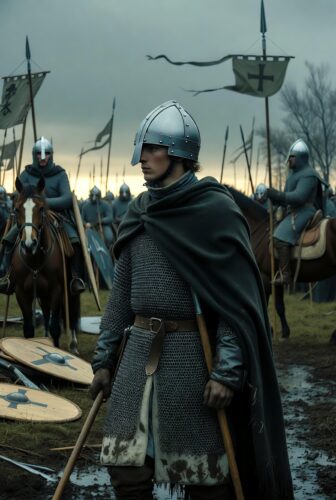
What followed was unusual. Viking war bands excelled at surprise, mobility, and the sudden concentration of force against weak points. They disliked formal battles against prepared heavy infantry and cavalry on ground of the enemy’s choosing. At Saucourt the Franks forced exactly that kind of engagement. According to the Annals of Fulda, some nine thousand Northmen were killed—an enormous figure that almost certainly includes exaggeration, yet even a more modest total would have represented a severe blow to a raiding fleet that could not easily replace experienced fighters. Frankish losses were lighter but not negligible; one account mentions roughly a hundred dead in a temporary reverse when a group of Vikings counter-attacked from a villa and briefly threw the Frankish ranks into disorder. Louis himself is said to have dismounted, steadied his men, and restored the advance. By the end of the day the raiders were broken. Many fled toward their ships or temporary camps. The Franks recovered a portion of the plundered goods.
The Ludwigslied captures the emotional texture of the victory in its closing stanzas. Louis rides against the enemy, strikes and stabs, pours out a bitter drink for the heathen. God’s power is praised. The king is blessed in battle, always present where he is needed. The poem ends with a prayer that the Lord preserve him in honor. It is one of the earliest surviving vernacular historical poems in a Germanic language and one of the few contemporary celebrations of a Carolingian success against the Vikings. Its Christian framing is thorough: the raids are a scourge sent to correct sin; the victory is a gift granted to a king who serves God zealously. Yet beneath the theology lies a practical military lesson. The Franks had stopped reacting to every raid and had instead waited, concentrated, and forced a decision on ground and at a moment that favored them.
The aftermath was bittersweet and short. Louis III died the following year, in 882, from injuries sustained in a riding accident—according to one colorful later tradition, while chasing a girl through a doorway on horseback. He was still in his early twenties. Carloman continued alone for a time before his own early death. The victory at Saucourt did not end Viking activity in West Francia. The survivors shifted their operations eastward into Lotharingia and continued to extract tribute and loot for years. The Great Army that had terrorized England and the Continent in the 860s and 870s was not destroyed. Yet Saucourt demonstrated that a determined Frankish force, properly led and timed, could still inflict a decisive battlefield defeat. It was one of the clearer proofs that the Northmen were not invincible when denied the advantages of surprise and dispersal.
The location itself has remained relatively quiet in popular memory. Saucourt-en-Vimeu is a small place. A local cross once marked the site of the triumph, later restored by neighboring communes. The battle never acquired the mythic weight of Tours or the drama of later Norman conquests. It sits in the middle of a long, grinding century of raids, a single bright episode of successful defense. That very obscurity makes it useful. Famous victories attract layers of later interpretation and political spin. Saucourt remains close to its sources: the dry entries in the Annals of Fulda, the vivid but theologically charged Ludwigslied, and the scattered notices in other Carolingian chronicles.
The broader context of the ninth century helps explain both the stakes and the limits of the success. The Carolingian world was already showing the strains that would eventually produce the feudal principalities of the tenth and eleventh centuries. Royal resources were stretched. Aristocratic families pursued their own interests. Monasteries, once centers of learning and wealth, became preferred targets precisely because they were poorly defended and rich in silver and relics. The Vikings did not invent the idea of raiding; they perfected a maritime version of it that exploited the political fragmentation of the post-Carolingian order. A victory like Saucourt could blunt a particular campaign, recover some prestige, and buy time. It could not by itself reverse the deeper structural weaknesses.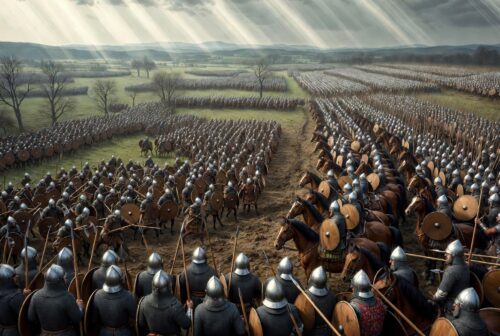
Louis III’s personal story adds another layer. Orphaned young, raised under the guardianship of powerful figures, he shared power with his brother in a system that had no stable mechanism for joint rule. The poem presents him as a king who serves God and is therefore rewarded. In practical terms he was a young commander who managed to assemble a force, choose a moment, and fight a battle the Vikings would rather have avoided. The combination of piety and hard-headed timing is what the sources emphasize. The Ludwigslied does not claim that prayer alone scattered the enemy. It claims that a king who answered the call and led from the front received divine favor in the fight.
That combination—patient observation of the enemy’s pattern, concentration of force, selection of favorable ground, and decisive commitment when the moment arrived—is the historical core of August 3, 881. The Franks did not chase every raid. They did not disperse their strength trying to guard every monastery. They waited until the raiders were heavy with booty and moving along a predictable route, then struck in a place where the Northmen’s usual advantages were neutralized. The result was a clear tactical success in an era when such successes were scarce.
The poem’s survival is itself remarkable. Written in Old High German while Louis was still alive or very shortly after his death, it was copied into a manuscript that also contains the Old French Sequence of Saint Eulalia. The same scribe worked on both. The Ludwigslied therefore stands at a linguistic and cultural crossroads, a vernacular celebration of a West Frankish king composed in a language associated more with the eastern kingdoms. Its existence reminds us that the memory of the battle mattered enough to be fixed in verse almost immediately.
In the centuries that followed, Saucourt slipped into the background of larger narratives. The Viking Age continued. The Carolingian dynasty faded. New powers rose. Yet the specific sequence of events on that August day remains intact in the sources: a young king, a concentrated Frankish force, a rare pitched battle, a heavy butcher’s bill for the raiders, a poem that framed the whole episode as both punishment and mercy, and a victory that could not be fully exploited because the victor’s life was cut short.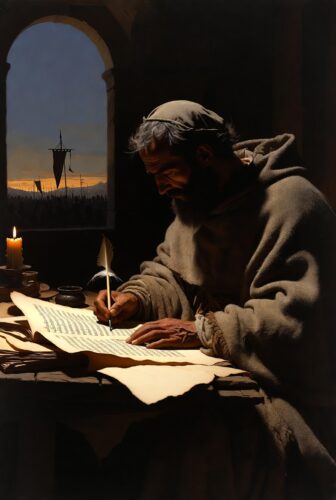
The historical details are dense because the moment itself was dense. The raids of 880–881 were not abstract. They meant burned monasteries, displaced peasants, interrupted trade, and a visible erosion of royal prestige. The decision to fight at Saucourt was not inevitable. Many Frankish leaders in similar situations paid tribute or avoided open battle. Louis and Carloman chose differently. They accepted the risk of a formal engagement and won it. The Annals of Fulda recorded the scale. The Ludwigslied recorded the meaning. Together they preserve one of the sharper snapshots of successful defense against the Northmen in the late ninth century.
That snapshot still carries practical force. The outcome of August 3, 881, was not permanent security for West Francia. It was a temporary restoration of initiative, a demonstration that the raiders could be forced into a fight they did not want, and a reminder that timing and ground matter more than constant reaction. The young king who achieved it did not live to build on it. The poem that celebrated him outlived both the king and the immediate strategic situation. The pattern itself—observe the enemy’s rhythm, refuse to chase every probe, concentrate when the moment is right, strike on chosen ground, and accept that even a clear win may open only a limited window—remains available for individual application.
Here is how that pattern translates into a personal method that has nothing in common with the usual lists of morning routines, gratitude journals, or vision boards circulating online. Call it the Saucourt Sequence. It is deliberately short, physical, and tied to the actual logic of the battle rather than to generic self-improvement language.
– Map your recurring “raids.” For one full week, keep a bare record of the interruptions, demands, or problems that repeatedly pull you off your main work. Do not analyze them. Simply note the time, the source, and whether they arrived when you were already tired or scattered. This is the equivalent of the Frankish scouts watching the Viking routes. The goal is pattern recognition, not emotional processing.
– Designate a single physical “Vimeu.” Choose one ordinary space in your daily environment—a particular chair, a stretch of sidewalk, a corner of a room—and treat it for seven days as the only place where you will make any decision about those recurring interruptions. Outside that space you defer. Inside it you decide. The constraint forces concentration the way the chosen ground at Saucourt forced the Northmen to fight on Frankish terms.
– Practice the deliberate delay. When a familiar raid appears, you do not answer it immediately. You move to the designated space and wait a fixed interval—ten minutes, twenty, whatever is long enough to feel uncomfortable but short enough to be practical. During the wait you do nothing except observe the impulse to react. This is the opposite of productivity advice that tells you to handle things at once. It trains the muscle the Franks used when they refused to chase every raid.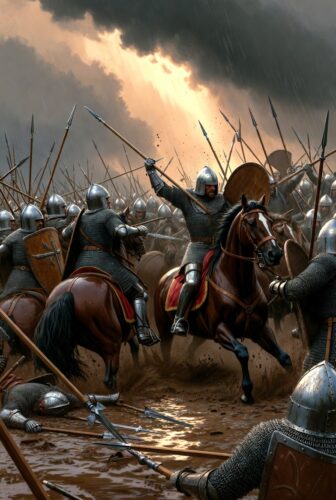
– Stage a single pitched response. At the end of the week, select the one recurring interruption that has cost you the most. Prepare a complete, finite action that resolves or permanently reduces it. Execute that action in the designated space, in one continuous block of time, without multitasking. Do not expand the scope. Finish it. This mirrors the decision to force a decisive engagement rather than continue a war of attrition.
– Write the private Ludwigslied. On the same day you complete the pitched response, write a short, factual account of what you observed, what you delayed, and what you finished. Use plain language. Include one sentence that frames the episode as both a correction of earlier scatter and a recovery of initiative. Do not share it. The poem’s value was that it fixed the meaning quickly while the facts were still clear. Your version does the same for your own record.
– Accept the short window. Immediately after the pitched response, identify one concrete follow-up that must be completed within forty-eight hours if the gain is to be kept. Schedule it and do it. Louis III’s victory bought time; his early death showed how quickly the advantage could evaporate. The Sequence builds the same realism into the method.
– Repeat only when a new pattern appears. Do not turn the Sequence into a permanent lifestyle. Use it when the density of interruptions rises again. The historical event was a single, well-timed blow, not a standing army reform. The personal version stays effective only if it remains occasional and specific.
The Sequence is deliberately narrow. It does not promise transformation of character or the elimination of all difficulty. It trains one capacity that the sources show Louis III exercised on August 3, 881: the ability to stop reacting, choose the ground, and force a decision when the moment favors you. The Vikings at Saucourt were not destroyed as a people. They were stopped in that campaign because the Franks refused to fight on Viking terms. The same refusal, practiced in small and concrete ways, remains available. The muddy field in the Vimeu is long gone. The logic that produced a victory there is not.
Share: