
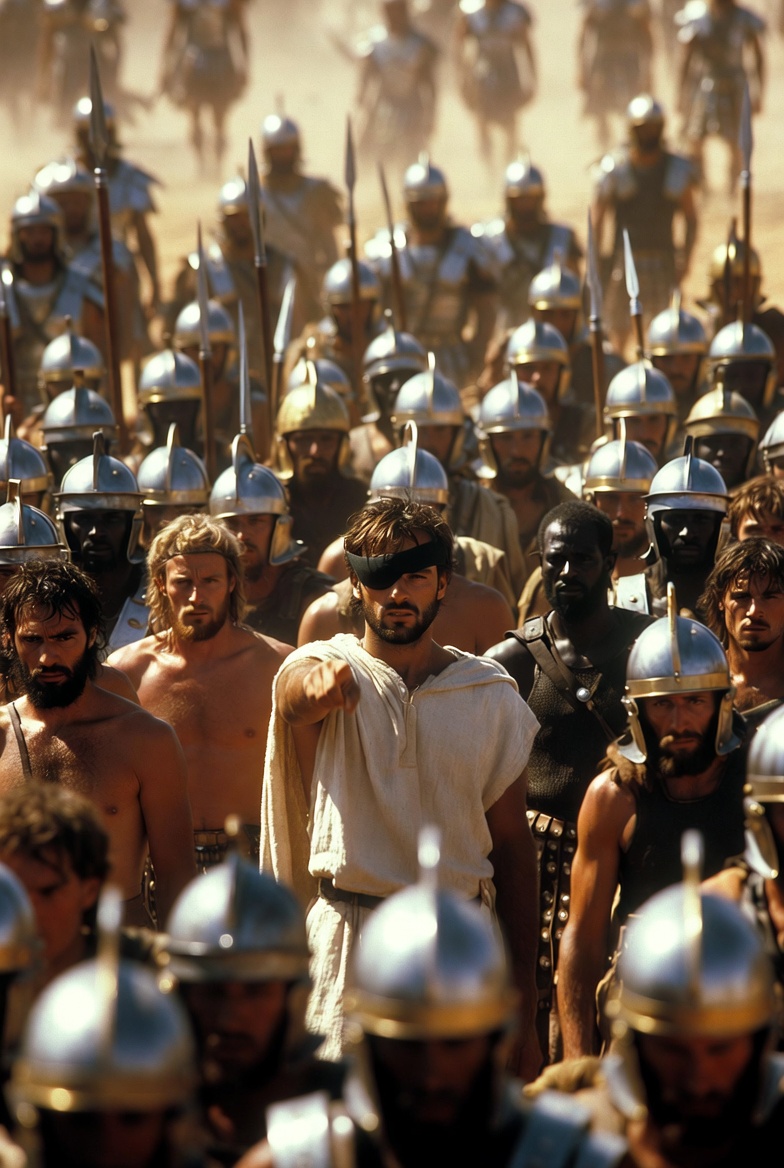
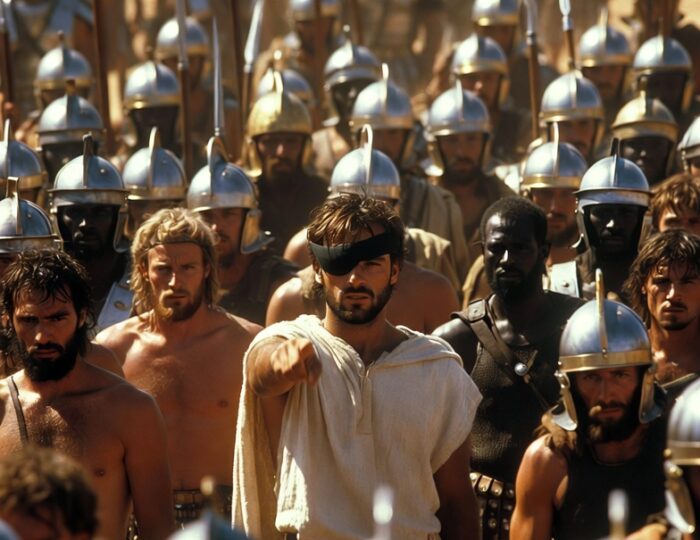
On a blistering August morning in 216 BC, near a nondescript grain depot called Cannae in the flat, sun-scorched plains of Apulia in southeastern Italy, the Roman Republic fielded the largest army it had ever assembled. Roughly eighty thousand men—eight full legions plus their Italian allies—stood ready to crush the invader who had already humiliated them twice. Opposite them stood a smaller, polyglot force of about fifty thousand under a one-eyed Carthaginian general named Hannibal Barca. By sunset, between fifty and seventy thousand Romans lay dead or dying in a space so compressed that the survivors later claimed men had suffocated standing upright, unable to fall. The day remains one of the purest demonstrations of tactical genius in the entire record of human warfare and one of the starkest illustrations that winning the battle and winning the war are not the same thing.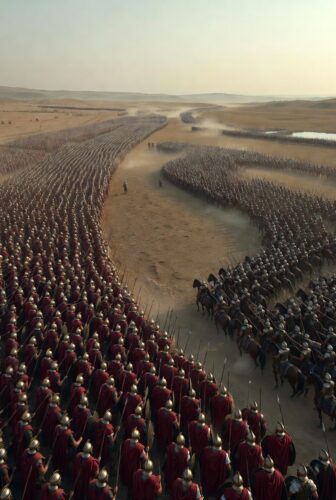
The Second Punic War had already been raging for two years. In 218 BC Hannibal had done the impossible: he marched an army that included war elephants out of Spain, across the Pyrenees, through southern Gaul, and over the Alps into northern Italy. The crossing cost him roughly half his men and all but one of the elephants, yet he arrived with a hard core of veterans and a reputation that preceded him like a cold wind. At the Trebia River in December 218 he ambushed and shattered a Roman army. The following spring at Lake Trasimene he trapped another Roman force against the water and killed or captured nearly the entire command, including the consul Gaius Flaminius. Rome responded by appointing Quintus Fabius Maximus as dictator. Fabius refused to fight. He shadowed Hannibal, burned the countryside ahead of him, cut off foraging parties, and waited for the invader’s army to waste away from hunger and disease. The strategy was sound. The Roman people hated it. They called Fabius “Cunctator”—the Delayer—and elected two new consuls for 216 BC who promised to finish the war in a single decisive battle.
Those consuls were Lucius Aemilius Paullus, a cautious aristocrat of proven experience, and Gaius Terentius Varro, a novus homo of more aggressive temper. The Senate authorized an unprecedented force: eight legions instead of the usual four. Polybius, writing a little more than fifty years later and drawing on the lost contemporary history of Fabius Pictor, states that each legion was raised to five thousand infantry and three hundred cavalry, with an equal number of Italian allies. Modern reconstructions place the total Roman strength near eighty-six thousand men. Hannibal’s army, after two years of campaigning, numbered around forty thousand infantry and ten thousand cavalry—Libyans, Iberians, Gauls, Numidians, and Balearic slingers, many of them already equipped with captured Roman arms and armor.
In the early summer of 216 Hannibal seized the Roman supply depot at Cannae on the Aufidus (modern Ofanto) River. The move was calculated. Grain was critical in the heat of an Apulian August, and the river was the only reliable water source for miles. The Roman army marched south to recover the depot. For several days the two forces shadowed each other across the river. On the first of August Hannibal offered battle; Paullus, whose day it was to command, declined. The next day command rotated to Varro. Varro accepted.
The battlefield was a narrow plain bounded on one side by the river and on the other by low hills. Hannibal deployed with the river protecting his left. He placed his Iberian and Gallic cavalry under his brother Hasdrubal on that left wing, opposite the Roman citizen cavalry. On his right he posted the lighter Numidian horsemen under Hanno or Maharbal. The infantry center was arranged in a deliberate crescent: Gauls and Spaniards in the middle, advanced forward, with the more disciplined Libyan heavy infantry held back on either flank in echelon. Hannibal and his brother Mago took their places in the center among the Gauls. The formation looked weak. It was designed to look weak.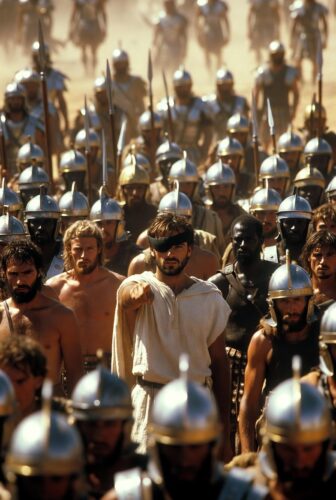
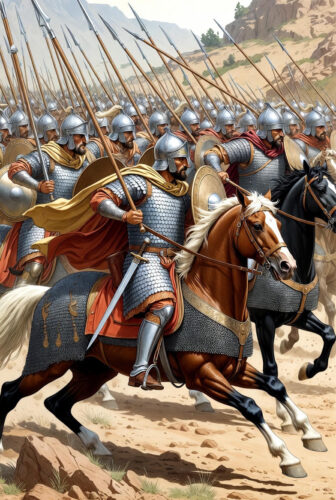
The Romans massed their heavy infantry into an unusually deep and narrow column, intending to smash straight through the enemy center by sheer weight. Their cavalry was outnumbered and outclassed. As the armies closed, the hot libeccio wind blowing from the south carried dust into the faces of the Romans, who were forced to face into it. Skirmishers exchanged missiles. Then the cavalry wings collided.
On the Roman right, Hasdrubal’s heavier Iberian and Gallic horsemen smashed into the Roman cavalry in what Polybius called a “truly barbaric” fight—men leaping from their horses to fight on foot in a swirling mass. The Romans broke and fled. Hasdrubal’s riders did not pursue far; they wheeled and rode around behind the Roman infantry. On the opposite wing the Numidians pinned the allied Italian cavalry with their usual hit-and-run tactics until Hasdrubal’s victorious troopers arrived to finish the job. The Roman cavalry was effectively eliminated within the first phase of the battle.
Meanwhile the infantry centers met. The Roman column drove forward exactly as Hannibal had hoped. The Gallic and Spanish center gave ground, not in a panicked rout but in a controlled, elastic retreat. The crescent inverted. The Romans, sensing victory, pressed deeper into the pocket, their ranks compressing as the men on the flanks crowded toward the center where the fighting seemed hottest. The Libyan infantry on the Carthaginian wings, still fresh and still in formation, now faced inward. They advanced. The trap closed.
What followed was less a battle than a progressive compression and annihilation. Polybius describes the Romans packed so tightly that they could no longer raise their shields or swing their swords. The rear ranks pushed forward while the front ranks were already dying. Cavalry struck from behind. The Libyans cut inward from the flanks. Dust, heat, thirst, and the press of bodies turned the pocket into a killing ground that lasted for hours. Livy records that some men were found after the battle with their heads buried in the earth, having apparently dug small pits and smothered themselves rather than wait for the sword. Others begged the Carthaginians to finish them. By late afternoon the killing was largely done.
Casualty figures vary by source. Polybius gives seventy thousand Roman dead, ten thousand captured, and perhaps three thousand escaped. Livy, writing later and with more Roman patriotic filtering, offers roughly forty-eight thousand dead and nineteen thousand captured. Even the lower number is catastrophic. Among the dead were the consul Paullus, the previous year’s consuls Servilius and Atilius, eighty senators or men of senatorial rank, and a huge proportion of the equestrian order. Rome had lost perhaps one-fifth of its military-age male population in a single afternoon. The survivors who escaped—Varro among them with a handful of cavalry—reached the nearby towns of Venusia and Canusium in small, shattered groups.
When the news reached Rome, the city went into collective shock. Women crowded the temples. The Senate ordered the Sibylline Books consulted. Human sacrifices of a peculiarly archaic kind were performed—four people buried alive in the Forum Boarium. Mourning was limited by decree to thirty days. The draft age was lowered. Criminals and even slaves were enrolled and promised freedom for service. Fabius Maximus was recalled to influence. Most importantly, the Senate refused Hannibal’s offer to ransom the prisoners. The message was deliberate: Rome would not negotiate from a position of weakness, and it would not pay for its own dead.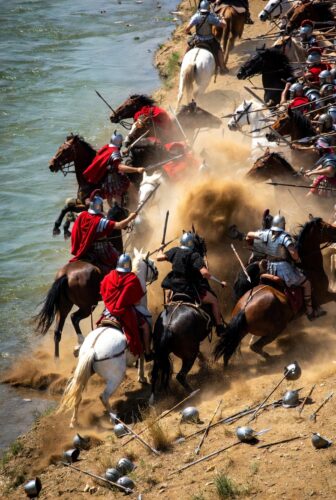
Hannibal’s cavalry commander Maharbal is said to have urged an immediate march on Rome itself. Livy records the famous exchange: Maharbal claimed that in five days they could dine on the Capitoline; Hannibal hesitated; Maharbal replied that the gods did not give everything to one man—Hannibal knew how to win a victory but not how to use one. Whether the anecdote is exact or not, the strategic reality was clear. Hannibal’s army was exhausted, short of siege equipment, and still deep in hostile territory. Many of Rome’s Italian allies remained loyal. Capua and some southern cities did defect, and Philip V of Macedon later opened a second front, but the core of the Roman alliance held. Hannibal would spend the next thirteen years in Italy winning more battles and never quite forcing a decision. Rome, bleeding but unbroken, raised new legions, adopted a modified Fabian strategy of avoiding another Cannae, and eventually took the war to Africa under Scipio Africanus. In 202 BC at Zama, Scipio defeated Hannibal using a version of the same envelopment tactics the Carthaginian had taught them.
The tactical lesson of Cannae is still taught in military academies: the double envelopment, the deliberate use of a weak center to draw an enemy into a killing pocket, the coordination of cavalry and infantry in successive phases. Yet the larger historical lesson is more interesting. Hannibal achieved the most complete battlefield victory of the ancient world and still lost the war. Rome suffered the most complete battlefield disaster of the ancient world and still won the war. The difference lay not in courage—both sides displayed extraordinary courage—but in institutional resilience, the ability to absorb catastrophic loss without negotiating away the future, and the refusal to let a single afternoon of slaughter dictate the terms of existence.
That difference is what remains useful more than two millennia later.
The outcome of August 2, 216 BC offers a precise, non-generic way to handle moments when your own resources feel outmatched and your momentum has carried you too far into a disadvantageous position. The value is not vague inspiration. It is a specific operational sequence derived from the mechanics of the battle and the Roman response.
– Map your current “center” with ruthless honesty. Identify the one area of effort, commitment, or emotional investment that has become overextended and is now drawing disproportionate pressure from outside forces. This is the equivalent of the Roman deep infantry column: strong in theory, vulnerable in practice because it has abandoned flexibility.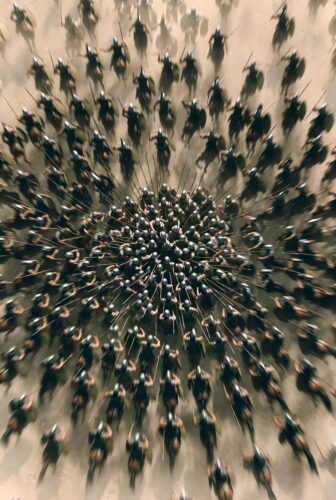
– Deliberately invert that center for a fixed, short period. Reduce visible effort in that area by a measured amount—enough to look like retreat to external pressures, not enough to abandon the position. The goal is to change the geometry of the engagement so that the pressure advances into a space you have already prepared.
– Pre-position your “Libyan infantry.” Identify two or three supporting strengths—skills, relationships, physical capacities, or financial buffers—that are currently underused and place them on the flanks of the overextended center. These must be ready to move inward the moment the external pressure commits.
– Eliminate your equivalent of the Roman cavalry first. Identify the high-mobility threats or distractions that can strike your rear once the main engagement begins—uncontrolled information streams, reactive social obligations, or secondary goals that siphon attention. Neutralize or quarantine them before the main action.
– Refuse the ransom. When the compressed phase produces losses—missed opportunities, temporary setbacks, social friction—do not pay to recover the exact previous state. Rebuild only from what actually survived the engagement. The Roman Senate’s refusal to ransom the prisoners at Cannae was not cruelty; it was the decision that preserved long-term capacity.
– Convert the survivors into the next formation. The Romans formed two new legions from the men who escaped Cannae. Do the same with whatever remains after the controlled collapse: the clarified priorities, the tested relationships, the proven buffers. These become the core of the next cycle rather than a return to the previous overextended shape.
The full sequence is called the Controlled Crescent Drill. It is executed over seven consecutive days and is deliberately non-inspirational.
Day 1: Written inventory of the overextended center and the two flanking strengths. No action yet.
Day 2: Physical reduction of effort in the center by a fixed, measurable percentage (time, money, or attention). Record the external pressures that advance into the space.
Day 3: Activate the first flanking strength in a limited, visible way that does not yet close the pocket.
Day 4: Neutralize or quarantine the highest-mobility distraction for forty-eight hours.
Day 5: Allow the external pressures to fully commit into the reduced center. Do not reinforce.
Day 6: Close the flanks. Apply the prepared strengths inward against the now-committed pressures.
Day 7: Inventory what actually survived. Discard the impulse to restore the pre-drill state. Design the next formation exclusively from the survivors.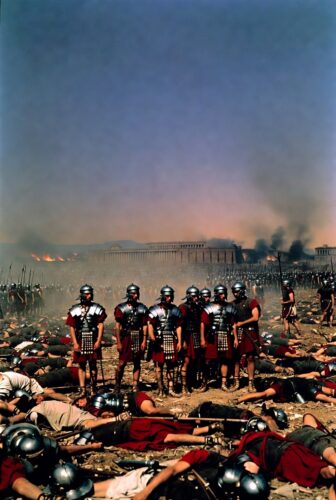
The drill is not a metaphor for general resilience. It is a mechanical re-enactment of the geometry that destroyed the Roman army and the institutional decision that allowed Rome to continue. Most people who encounter overwhelming pressure either reinforce the center until it breaks or abandon the position entirely. The Controlled Crescent Drill does neither. It changes the shape of the engagement so that the pressure itself supplies the energy for its own containment, then rebuilds exclusively from what the containment left intact.
Hannibal won the afternoon of August 2, 216 BC more completely than almost any commander in history. Rome won the war that followed. The difference was not luck, divine favor, or superior numbers in the long run. It was the capacity to treat a catastrophic day as data rather than destiny, to refuse the easy transaction that would have restored the previous equilibrium at the cost of future capacity, and to form the next army from the men who walked away from the dust. That capacity is still available. The plain at Cannae is long gone under modern farmland, but the geometry of the crescent and the refusal to ransom remain exactly as useful as they were on the day the largest army Rome had ever raised ceased to exist between sunrise and sunset.
Share: