Picture this: It's June 16, 1487, in a sleepy corner of Nottinghamshire, England. The River Trent snakes lazily through the countryside, cows munch indifferently on the grass, and two armies are about to turn a perfectly good farming field into one of the bloodiest footnotes in English history. No grand speeches like at Agincourt, no Shakespearean drama (yet), just gritty, arrow-riddled chaos that quietly slammed the door on three decades of civil war. This wasn't Bosworth Field—the one everyone remembers with its dramatic king-slaying and "my kingdom for a horse" vibes. No, this was Stoke Field, the true finale of the Wars of the Roses, where a ragtag army of Irish kerns, German mercenaries, and die-hard Yorkists bet everything on a 10-year-old imposter named Lambert Simnel.
While Henry VII's victory here doesn't get the Hollywood treatment, it secured the Tudor dynasty in a way that echoes through centuries. For over 4000 words of pure historical meat (with a lean motivational chaser at the end), we'll dive deep into the mud, the mercenaries, the boy-king farce, and the tactical brilliance that ended an era. Then, we'll extract razor-sharp, non-fluffy lessons you can weaponize in your own life—because history isn't just dusty dates; it's a masterclass in turning near-disaster into dynasty-level dominance. Buckle up; this story has pretenders, plots, polearms, and a surprising amount of kitchen humor.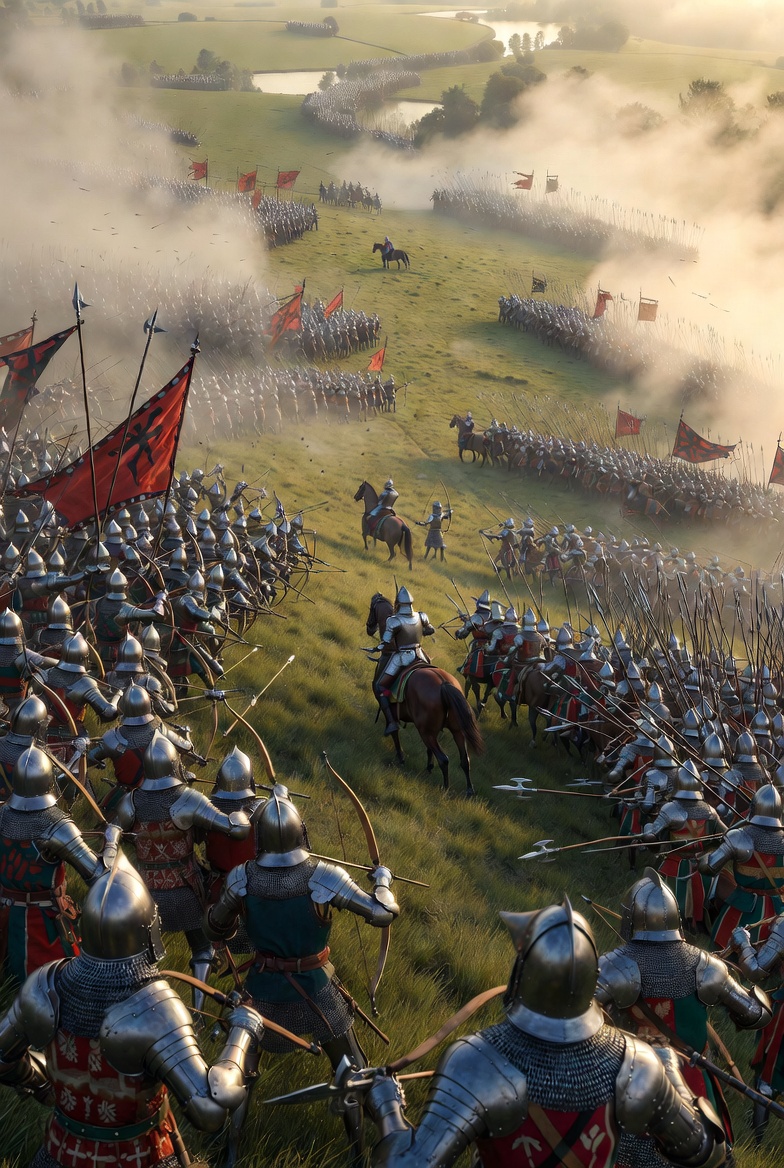 ### The Bloody Backdrop: Wars of the Roses in a Nutshell (or a Very Sharp Rose Thorn)
To understand Stoke Field, you need the full chaotic saga. The Wars of the Roses (1455–1487, give or take) weren't some polite floral disagreement. They were a brutal, on-again-off-again family feud between the Houses of Lancaster (red rose) and York (white rose), both claiming the English throne through descent from Edward III. Kings rose and fell like poorly stacked dominoes: Henry VI (mad, saintly, or just unlucky), Edward IV (charismatic warrior), the brief Edward V (one of the Princes in the Tower mystery), and Richard III (the hunchbacked villain of legend, though historians debate the scoliosis and PR spin).
By 1485, the wars had dragged on for 30 years, draining the nobility, ravaging the countryside, and leaving England exhausted. Battles like Towton (1461, one of the bloodiest in English history with tens of thousands dead in a snowstorm), Barnet, Tewkesbury, and Bosworth had seen thousands slaughtered. Feudal levies, professional retainers, longbowmen, and the occasional foreign mercenary turned English fields into slaughterhouses. Families were torn apart; loyalties shifted with the wind (or the latest bribe). The average peasant probably just wanted to plant crops without an army trampling them.
Enter Henry Tudor, a Lancastrian with a thin claim to the throne—his mother was a Beaufort, legitimized but barred from succession, and his father was Welsh. Exiled in Brittany and France, Henry landed at Milford Haven in 1485 with a motley crew of exiles and French mercenaries. At Bosworth Field on August 22, 1485, he faced Richard III. The battle hinged on treachery: Lord Stanley and his brother switched sides mid-fight, surrounding and killing Richard. Henry was crowned on the battlefield, married Elizabeth of York to unite the roses, and tried to project stability. But Yorkist embers still glowed.
Henry's reign started shakily. He faced plots, pretenders, and noble suspicions. He was smart, cautious, and ruthless when needed—more accountant-king than warrior-poet. He built up his finances, centralized power, and used spies effectively. But in early 1487, the biggest threat yet materialized.
### Enter the Boy-King Farce: Lambert Simnel, the Ultimate Pretender
The star of this rebellion? Not a battle-hardened noble, but a kid from Oxford named Lambert Simnel. His mentor, a priest named Richard Symonds (or Simons), spotted the boy's resemblance to the Yorkist princes and hatched a scheme. Initially, Simnel may have been passed off as Richard, Duke of York (one of the missing Princes in the Tower), but the plot pivoted to Edward, Earl of Warwick—son of George, Duke of Clarence (executed by his brother Edward IV for treason). The real Warwick was safely locked in the Tower of London by Henry VII, a prudent move to neutralize rivals.
Symonds trained the boy to act regal. Word spread among Yorkist exiles. Key player: John de la Pole, Earl of Lincoln. Nephew of both Edward IV and Richard III, Lincoln had been named Richard's heir. He outwardly reconciled with Henry but secretly seethed. Another was Francis Lovell, Viscount Lovell, a loyal Ricardian who had escaped earlier troubles. They connected with Margaret of York, Duchess of Burgundy—sister to Edward IV and Richard III, and a fierce Yorkist partisan with deep pockets and connections to the Holy Roman Empire.
### The Bloody Backdrop: Wars of the Roses in a Nutshell (or a Very Sharp Rose Thorn)
To understand Stoke Field, you need the full chaotic saga. The Wars of the Roses (1455–1487, give or take) weren't some polite floral disagreement. They were a brutal, on-again-off-again family feud between the Houses of Lancaster (red rose) and York (white rose), both claiming the English throne through descent from Edward III. Kings rose and fell like poorly stacked dominoes: Henry VI (mad, saintly, or just unlucky), Edward IV (charismatic warrior), the brief Edward V (one of the Princes in the Tower mystery), and Richard III (the hunchbacked villain of legend, though historians debate the scoliosis and PR spin).
By 1485, the wars had dragged on for 30 years, draining the nobility, ravaging the countryside, and leaving England exhausted. Battles like Towton (1461, one of the bloodiest in English history with tens of thousands dead in a snowstorm), Barnet, Tewkesbury, and Bosworth had seen thousands slaughtered. Feudal levies, professional retainers, longbowmen, and the occasional foreign mercenary turned English fields into slaughterhouses. Families were torn apart; loyalties shifted with the wind (or the latest bribe). The average peasant probably just wanted to plant crops without an army trampling them.
Enter Henry Tudor, a Lancastrian with a thin claim to the throne—his mother was a Beaufort, legitimized but barred from succession, and his father was Welsh. Exiled in Brittany and France, Henry landed at Milford Haven in 1485 with a motley crew of exiles and French mercenaries. At Bosworth Field on August 22, 1485, he faced Richard III. The battle hinged on treachery: Lord Stanley and his brother switched sides mid-fight, surrounding and killing Richard. Henry was crowned on the battlefield, married Elizabeth of York to unite the roses, and tried to project stability. But Yorkist embers still glowed.
Henry's reign started shakily. He faced plots, pretenders, and noble suspicions. He was smart, cautious, and ruthless when needed—more accountant-king than warrior-poet. He built up his finances, centralized power, and used spies effectively. But in early 1487, the biggest threat yet materialized.
### Enter the Boy-King Farce: Lambert Simnel, the Ultimate Pretender
The star of this rebellion? Not a battle-hardened noble, but a kid from Oxford named Lambert Simnel. His mentor, a priest named Richard Symonds (or Simons), spotted the boy's resemblance to the Yorkist princes and hatched a scheme. Initially, Simnel may have been passed off as Richard, Duke of York (one of the missing Princes in the Tower), but the plot pivoted to Edward, Earl of Warwick—son of George, Duke of Clarence (executed by his brother Edward IV for treason). The real Warwick was safely locked in the Tower of London by Henry VII, a prudent move to neutralize rivals.
Symonds trained the boy to act regal. Word spread among Yorkist exiles. Key player: John de la Pole, Earl of Lincoln. Nephew of both Edward IV and Richard III, Lincoln had been named Richard's heir. He outwardly reconciled with Henry but secretly seethed. Another was Francis Lovell, Viscount Lovell, a loyal Ricardian who had escaped earlier troubles. They connected with Margaret of York, Duchess of Burgundy—sister to Edward IV and Richard III, and a fierce Yorkist partisan with deep pockets and connections to the Holy Roman Empire.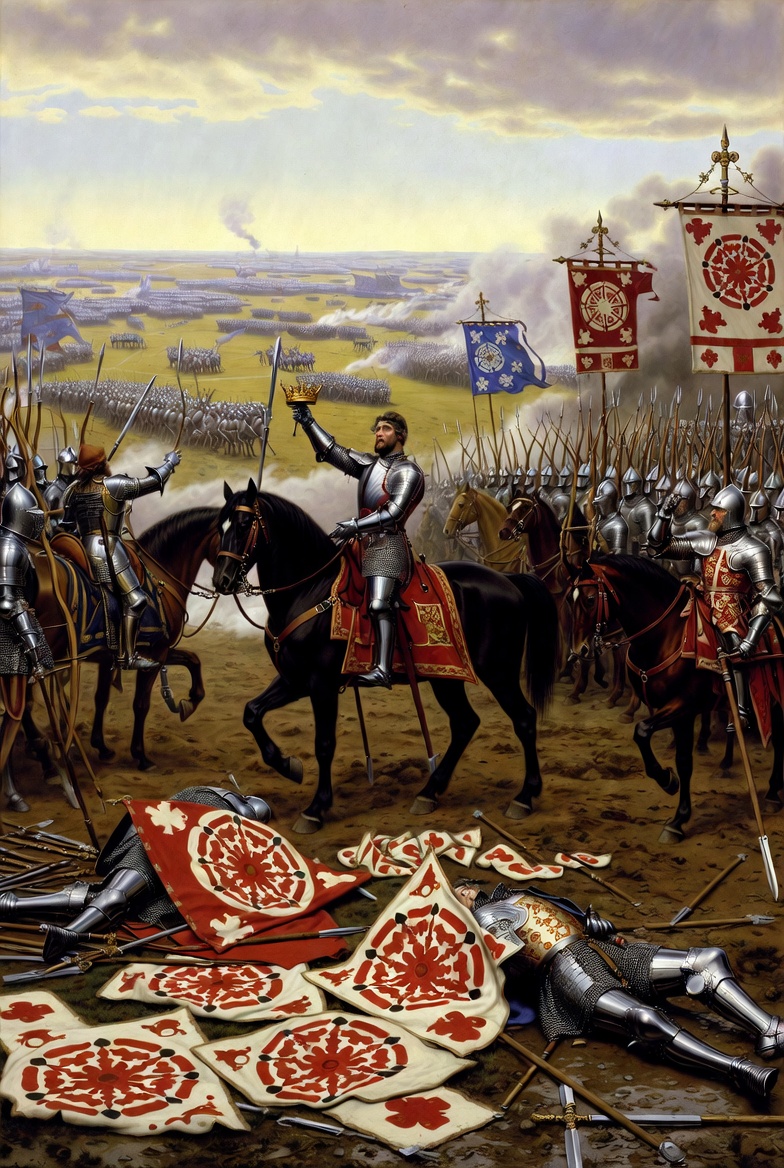 Margaret bankrolled the effort and hired Martin Schwartz (or Swart), a battle-hardened German mercenary captain. Schwartz brought 1,500–2,000 Landsknechts—professional infantry armed with pikes, halberds, crossbows, early handguns, and swords. These weren't your average conscripts; they were continental veterans using innovative "pike square" tactics that were revolutionizing European warfare. Think disciplined blocks of pikemen shrugging off cavalry charges. Mixed in were Swiss and some Scots.
In March 1487, Lincoln fled Henry's court to Burgundy. The plotters sailed to Ireland, a Yorkist hotbed where English control was loose and resentment of Tudor rule high. On May 4, they landed in Dublin. With support from the powerful Geraldine (FitzGerald) family—especially Gerald FitzGerald, 8th Earl of Kildare, and his brother Thomas—they rallied Irish lords. On May 24, in Christ Church Cathedral, Dublin, young Simnel was crowned "King Edward VI" with a makeshift crown (legend says borrowed from a statue of the Virgin Mary). A parliament was even convened in his name. It was theater, but effective for recruiting.
The Yorkist army swelled with about 4,500 Irish kerns—lightly armed, fast-moving infantry wielding darts, spears, and knives. Brave and enthusiastic, but poorly armored and untrained for set-piece battles. Total force: around 8,000 men. Lincoln, Lovell, Schwartz, and Thomas FitzGerald led them. Simnel was the figurehead puppet.
### The March South: A High-Stakes Blitz Through England
On or around June 4, the invaders sailed from Ireland and landed near Furness in Lancashire (or possibly the Isle of Man area). They hoped for a massive Yorkist uprising in the north, traditional Ricardian heartland. Sir Thomas Broughton and local gentry joined with some retainers. The army marched rapidly south—over 200 miles in five days, an impressive pace for a medieval force with baggage.
Early success: Near Bramham Moor, Lovell led a night attack defeating a small Lancastrian force under Clifford. They outmaneuvered the Earl of Northumberland's northern army with a diversion at York. Skirmishes through Sherwood Forest slowed them but didn't stop the advance. Henry VII, no fool, had been gathering intelligence. He summoned forces, reinforced by Lord Strange and Rhys ap Thomas from Wales. His army grew to perhaps 12,000–15,000, better equipped and led by veterans like Jasper Tudor (his uncle, Earl of Bedford) and John de Vere, 13th Earl of Oxford (the Bosworth hero).
Henry moved deliberately from Coventry toward Nottingham. By June 14–15, royal forces were converging. The Yorkists, realizing time was against them and popular support wasn't surging, pushed toward Newark. On June 15, Henry camped near them. The stage was set for East Stoke.
Margaret bankrolled the effort and hired Martin Schwartz (or Swart), a battle-hardened German mercenary captain. Schwartz brought 1,500–2,000 Landsknechts—professional infantry armed with pikes, halberds, crossbows, early handguns, and swords. These weren't your average conscripts; they were continental veterans using innovative "pike square" tactics that were revolutionizing European warfare. Think disciplined blocks of pikemen shrugging off cavalry charges. Mixed in were Swiss and some Scots.
In March 1487, Lincoln fled Henry's court to Burgundy. The plotters sailed to Ireland, a Yorkist hotbed where English control was loose and resentment of Tudor rule high. On May 4, they landed in Dublin. With support from the powerful Geraldine (FitzGerald) family—especially Gerald FitzGerald, 8th Earl of Kildare, and his brother Thomas—they rallied Irish lords. On May 24, in Christ Church Cathedral, Dublin, young Simnel was crowned "King Edward VI" with a makeshift crown (legend says borrowed from a statue of the Virgin Mary). A parliament was even convened in his name. It was theater, but effective for recruiting.
The Yorkist army swelled with about 4,500 Irish kerns—lightly armed, fast-moving infantry wielding darts, spears, and knives. Brave and enthusiastic, but poorly armored and untrained for set-piece battles. Total force: around 8,000 men. Lincoln, Lovell, Schwartz, and Thomas FitzGerald led them. Simnel was the figurehead puppet.
### The March South: A High-Stakes Blitz Through England
On or around June 4, the invaders sailed from Ireland and landed near Furness in Lancashire (or possibly the Isle of Man area). They hoped for a massive Yorkist uprising in the north, traditional Ricardian heartland. Sir Thomas Broughton and local gentry joined with some retainers. The army marched rapidly south—over 200 miles in five days, an impressive pace for a medieval force with baggage.
Early success: Near Bramham Moor, Lovell led a night attack defeating a small Lancastrian force under Clifford. They outmaneuvered the Earl of Northumberland's northern army with a diversion at York. Skirmishes through Sherwood Forest slowed them but didn't stop the advance. Henry VII, no fool, had been gathering intelligence. He summoned forces, reinforced by Lord Strange and Rhys ap Thomas from Wales. His army grew to perhaps 12,000–15,000, better equipped and led by veterans like Jasper Tudor (his uncle, Earl of Bedford) and John de Vere, 13th Earl of Oxford (the Bosworth hero).
Henry moved deliberately from Coventry toward Nottingham. By June 14–15, royal forces were converging. The Yorkists, realizing time was against them and popular support wasn't surging, pushed toward Newark. On June 15, Henry camped near them. The stage was set for East Stoke.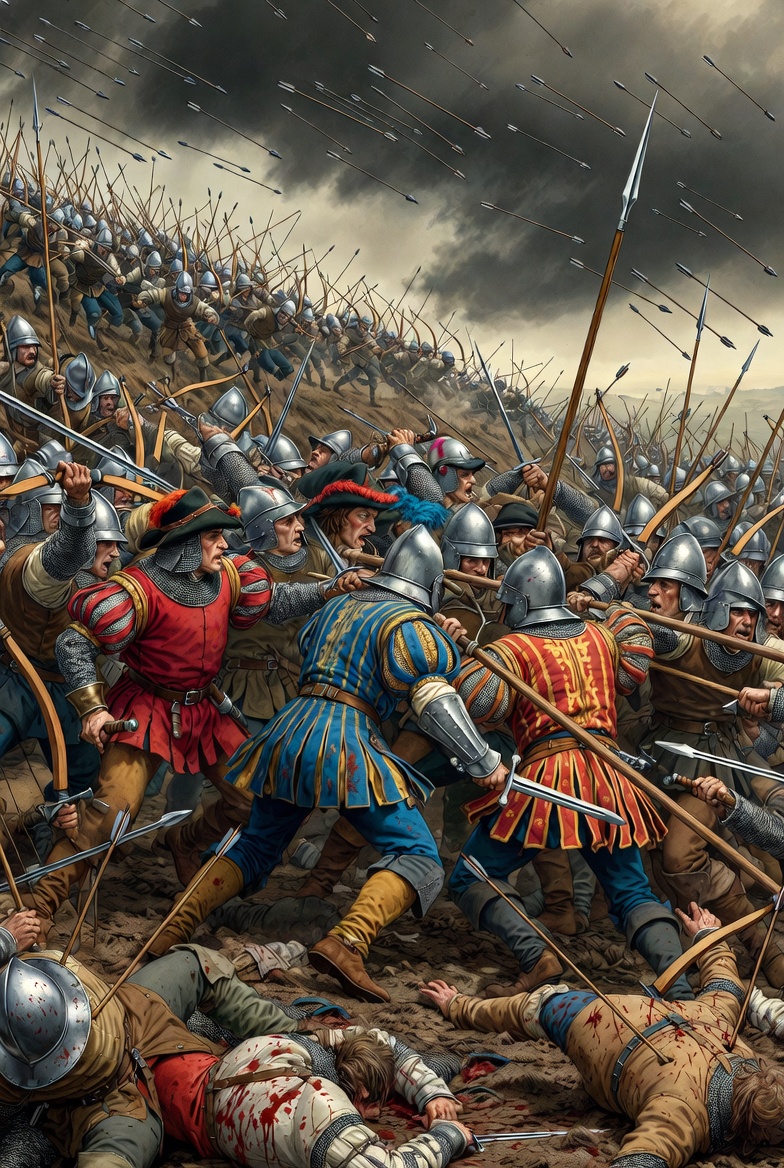 ### June 16, 1487: Chaos on Rampire Hill and the Red Gutter
Dawn broke over rolling hills south of the River Trent, near the village of East Stoke. The Yorkists occupied a strong position on Rampire Hill (or a brow overlooking the area), with the river on three sides—protecting flanks but trapping them if things went south. Their right anchored on Burham Furlong. Lincoln arrayed them in a concentrated formation: German Landsknechts in the center with pikes and firearms, Irish on the wings, English retainers mixed in.
Henry's army approached in three "battles" (divisions). But the vanguard under Oxford—around 6,000 men, including longbowmen, billmen, and cavalry under Scales and Savage—arrived first around 9 a.m. Henry and the rest were still marching up. Unusual lights in the sky (perhaps an aurora or atmospheric oddity) spooked some royal troops, causing minor desertions, but Oxford rallied them.
The Yorkists, outnumbered overall but with a strong vanguard and high ground, chose aggression. They charged downhill to smash Oxford before reinforcements arrived. Arrows flew in deadly volleys from English longbowmen— the weapon that had won Crécy and Agincourt. Unarmored Irish kerns suffered horribly, "cut down in increasing numbers." The Germans, with better protection and pikes, pressed hard in close combat. Hand-to-hand fighting with bills, halberds, swords, and polearms raged for over three hours.
Oxford's men were shaken but held. Reinforcements from Henry's main force trickled in, directed by Jasper Tudor. Attrition favored the Tudors. The Yorkist line buckled. Commanders fell: Lincoln, Schwartz, and FitzGerald died fighting. The broken rebels fled toward the Trent down a ravine still called the Red Gutter today—many cornered and slaughtered. Casualties: Yorkists lost up to 4,000; Tudors perhaps 300–3,000. It was attritional and brutal, with the terrain preventing easy retreat.
Lovell may have escaped (possibly to Scotland), vanishing into legend—one theory has him dying in a secret room at his home. Simnel was captured easily, the ultimate forgotten mascot.
### Aftermath: Mercy, Mop-Up, and Tudor Consolidation
Henry arrived post-battle. He knighted supporters on the field, raised his standard at Burham Furlong (marked today by a stone memorial with a "Burrand Bush"). Inquiries followed: few executions, many fines—classic Henry parsimony and control. Simnel was pardoned, put to work in the royal kitchens turning spits (a job with real "roast" irony for a fake king), later becoming a falconer. He lived into the 1530s. Symonds was imprisoned but not killed. Irish nobles largely forgiven for practical governance reasons.
Stoke Field ended major Yorkist military threats. Henry faced Perkin Warbeck later, but no more pitched battles like this. The Tudor grip tightened. England moved toward stability, exploration, and eventually the Renaissance under Henry VIII and Elizabeth I. The Wars of the Roses, with their estimated tens of thousands dead and noble houses decimated, finally petered out in a muddy Nottinghamshire meadow.
Historians note the battle's relative obscurity—victors write history, and Henry preferred quiet consolidation over glorifying a near-miss. Sources are patchy: the *Great Chronicle of London*, Molinet's account, and later chronicles. Archaeology and English Heritage confirm the site: rolling arable land, traces of the fight in the landscape.
### June 16, 1487: Chaos on Rampire Hill and the Red Gutter
Dawn broke over rolling hills south of the River Trent, near the village of East Stoke. The Yorkists occupied a strong position on Rampire Hill (or a brow overlooking the area), with the river on three sides—protecting flanks but trapping them if things went south. Their right anchored on Burham Furlong. Lincoln arrayed them in a concentrated formation: German Landsknechts in the center with pikes and firearms, Irish on the wings, English retainers mixed in.
Henry's army approached in three "battles" (divisions). But the vanguard under Oxford—around 6,000 men, including longbowmen, billmen, and cavalry under Scales and Savage—arrived first around 9 a.m. Henry and the rest were still marching up. Unusual lights in the sky (perhaps an aurora or atmospheric oddity) spooked some royal troops, causing minor desertions, but Oxford rallied them.
The Yorkists, outnumbered overall but with a strong vanguard and high ground, chose aggression. They charged downhill to smash Oxford before reinforcements arrived. Arrows flew in deadly volleys from English longbowmen— the weapon that had won Crécy and Agincourt. Unarmored Irish kerns suffered horribly, "cut down in increasing numbers." The Germans, with better protection and pikes, pressed hard in close combat. Hand-to-hand fighting with bills, halberds, swords, and polearms raged for over three hours.
Oxford's men were shaken but held. Reinforcements from Henry's main force trickled in, directed by Jasper Tudor. Attrition favored the Tudors. The Yorkist line buckled. Commanders fell: Lincoln, Schwartz, and FitzGerald died fighting. The broken rebels fled toward the Trent down a ravine still called the Red Gutter today—many cornered and slaughtered. Casualties: Yorkists lost up to 4,000; Tudors perhaps 300–3,000. It was attritional and brutal, with the terrain preventing easy retreat.
Lovell may have escaped (possibly to Scotland), vanishing into legend—one theory has him dying in a secret room at his home. Simnel was captured easily, the ultimate forgotten mascot.
### Aftermath: Mercy, Mop-Up, and Tudor Consolidation
Henry arrived post-battle. He knighted supporters on the field, raised his standard at Burham Furlong (marked today by a stone memorial with a "Burrand Bush"). Inquiries followed: few executions, many fines—classic Henry parsimony and control. Simnel was pardoned, put to work in the royal kitchens turning spits (a job with real "roast" irony for a fake king), later becoming a falconer. He lived into the 1530s. Symonds was imprisoned but not killed. Irish nobles largely forgiven for practical governance reasons.
Stoke Field ended major Yorkist military threats. Henry faced Perkin Warbeck later, but no more pitched battles like this. The Tudor grip tightened. England moved toward stability, exploration, and eventually the Renaissance under Henry VIII and Elizabeth I. The Wars of the Roses, with their estimated tens of thousands dead and noble houses decimated, finally petered out in a muddy Nottinghamshire meadow.
Historians note the battle's relative obscurity—victors write history, and Henry preferred quiet consolidation over glorifying a near-miss. Sources are patchy: the *Great Chronicle of London*, Molinet's account, and later chronicles. Archaeology and English Heritage confirm the site: rolling arable land, traces of the fight in the landscape.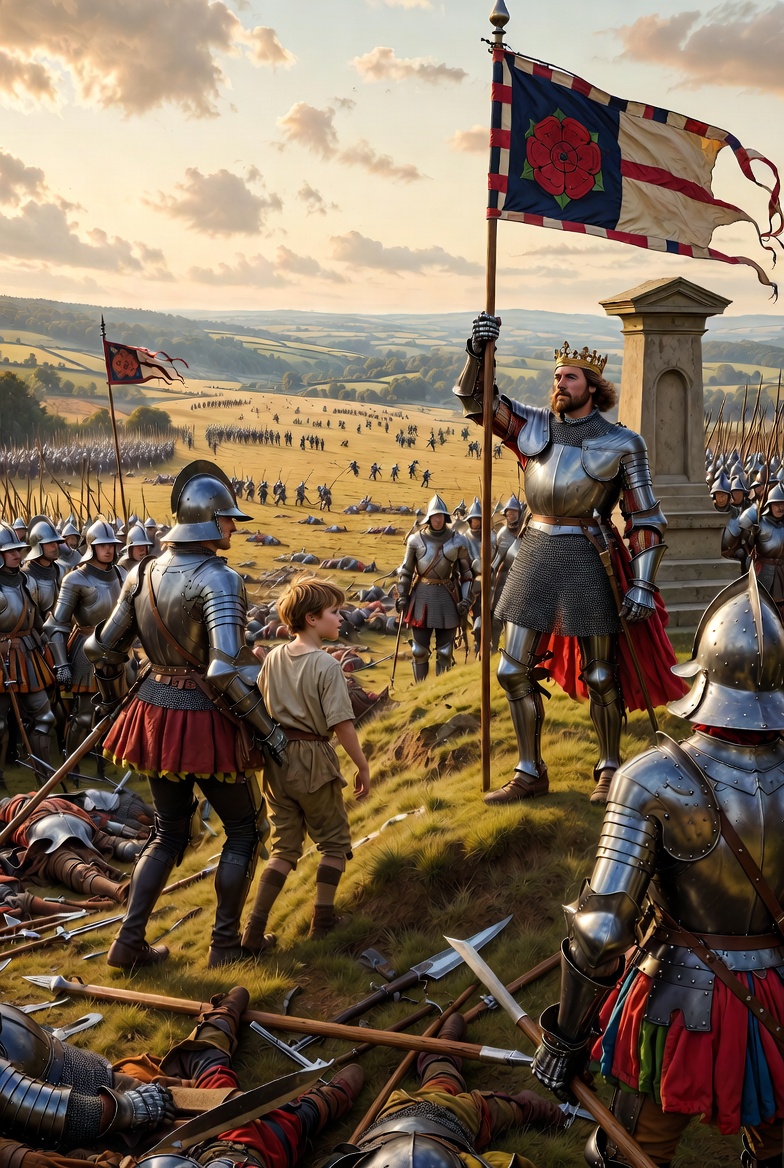 The human cost was immense. Mercenaries "filled with arrows like hedgehogs." Irish levies mowed down. English families losing sons on both sides. Yet, out of the carnage came relative peace. Henry VII's reign laid foundations for modern England: strong central government, naval power, economic prudence.
### From Medieval Mayhem to Modern Mastery: Applying Stoke's Lessons
History's 90% done—now the 10% payoff. Stoke wasn't just a battle; it was a masterclass in resilience, preparation, adaptability, and turning imposters (internal doubts, external saboteurs) into irrelevance. Here's how that outcome benefits you today, distilled into very specific, actionable insights unlike generic self-help platitudes:
- **Recognize and Neutralize Your Personal "Pretenders" Early**: Just as Henry locked up the real Warwick and exposed Simnel as a puppet, audit your life for fake threats or self-sabotaging voices. That "I'm not good enough" narrative? It's a Lambert Simnel—harmless if unmasked. Bullet-point exercise: List three "pretender" doubts holding you back (e.g., "I'll never advance in my career"). For each, gather "evidence" like Henry did via spies—past wins, skills, feedback. Burn the list metaphorically. Repeat quarterly. This builds unshakeable legitimacy in your own rule.
- **Build a Coalition Like Henry's Veterans, Not a Fragile Rebel Mob**: Lincoln relied on mercenaries and light Irish troops—flashy but brittle. Henry had experienced captains (Oxford, Jasper) and steady reinforcements. In life: Cultivate 3–5 "vanguard allies" (mentors, reliable friends, skills partners) who show up when the charge comes. Specific plan: Schedule monthly "council" coffees or calls. Invest in one high-value skill (e.g., public speaking via Toastmasters) as your "longbow volley" for opportunities. Avoid lone-wolf marches; they end in Red Gutters.
- **Choose Defensible Ground and Strike with Overwhelming Attrition**: Yorkists held high ground but charged prematurely. Oxford held formation, absorbed the assault, and let numbers/tactics grind them down. Today: Don't rush big decisions (career shifts, investments) from weak positions. Map your "terrain"—strengths, resources. When challenged (layoff, setback), rally reserves (savings, networks) and counter with sustained effort. Bullet: For any goal, break into daily "arrow volleys" (e.g., 30-min focused work blocks) instead of all-or-nothing charges. Track in a simple journal; celebrate small holdings of the line.
- **Embrace Calculated Mercy and Financial Prudence**: Henry's clemency to Simnel and fines over mass executions stabilized his rule cheaply. Translate: After "victories" (promotions, recoveries), don't burn bridges ruthlessly. Negotiate, forgive strategically, but secure your position (contracts, boundaries). Finance parallel: Henry's treasury focus—build your "war chest" with automatic 10–20% savings from every win. Use windfalls for reinforcements, not celebrations alone.
- **Adapt Tactics to the Era's Weapons**: Longbows trumped pikes in that terrain. Modern equivalent: Leverage current tools (AI for research, networks for intel) over outdated methods. Specific: In job hunts or projects, use data "volleys" (analytics, feedback loops) to outrange competitors.
The human cost was immense. Mercenaries "filled with arrows like hedgehogs." Irish levies mowed down. English families losing sons on both sides. Yet, out of the carnage came relative peace. Henry VII's reign laid foundations for modern England: strong central government, naval power, economic prudence.
### From Medieval Mayhem to Modern Mastery: Applying Stoke's Lessons
History's 90% done—now the 10% payoff. Stoke wasn't just a battle; it was a masterclass in resilience, preparation, adaptability, and turning imposters (internal doubts, external saboteurs) into irrelevance. Here's how that outcome benefits you today, distilled into very specific, actionable insights unlike generic self-help platitudes:
- **Recognize and Neutralize Your Personal "Pretenders" Early**: Just as Henry locked up the real Warwick and exposed Simnel as a puppet, audit your life for fake threats or self-sabotaging voices. That "I'm not good enough" narrative? It's a Lambert Simnel—harmless if unmasked. Bullet-point exercise: List three "pretender" doubts holding you back (e.g., "I'll never advance in my career"). For each, gather "evidence" like Henry did via spies—past wins, skills, feedback. Burn the list metaphorically. Repeat quarterly. This builds unshakeable legitimacy in your own rule.
- **Build a Coalition Like Henry's Veterans, Not a Fragile Rebel Mob**: Lincoln relied on mercenaries and light Irish troops—flashy but brittle. Henry had experienced captains (Oxford, Jasper) and steady reinforcements. In life: Cultivate 3–5 "vanguard allies" (mentors, reliable friends, skills partners) who show up when the charge comes. Specific plan: Schedule monthly "council" coffees or calls. Invest in one high-value skill (e.g., public speaking via Toastmasters) as your "longbow volley" for opportunities. Avoid lone-wolf marches; they end in Red Gutters.
- **Choose Defensible Ground and Strike with Overwhelming Attrition**: Yorkists held high ground but charged prematurely. Oxford held formation, absorbed the assault, and let numbers/tactics grind them down. Today: Don't rush big decisions (career shifts, investments) from weak positions. Map your "terrain"—strengths, resources. When challenged (layoff, setback), rally reserves (savings, networks) and counter with sustained effort. Bullet: For any goal, break into daily "arrow volleys" (e.g., 30-min focused work blocks) instead of all-or-nothing charges. Track in a simple journal; celebrate small holdings of the line.
- **Embrace Calculated Mercy and Financial Prudence**: Henry's clemency to Simnel and fines over mass executions stabilized his rule cheaply. Translate: After "victories" (promotions, recoveries), don't burn bridges ruthlessly. Negotiate, forgive strategically, but secure your position (contracts, boundaries). Finance parallel: Henry's treasury focus—build your "war chest" with automatic 10–20% savings from every win. Use windfalls for reinforcements, not celebrations alone.
- **Adapt Tactics to the Era's Weapons**: Longbows trumped pikes in that terrain. Modern equivalent: Leverage current tools (AI for research, networks for intel) over outdated methods. Specific: In job hunts or projects, use data "volleys" (analytics, feedback loops) to outrange competitors.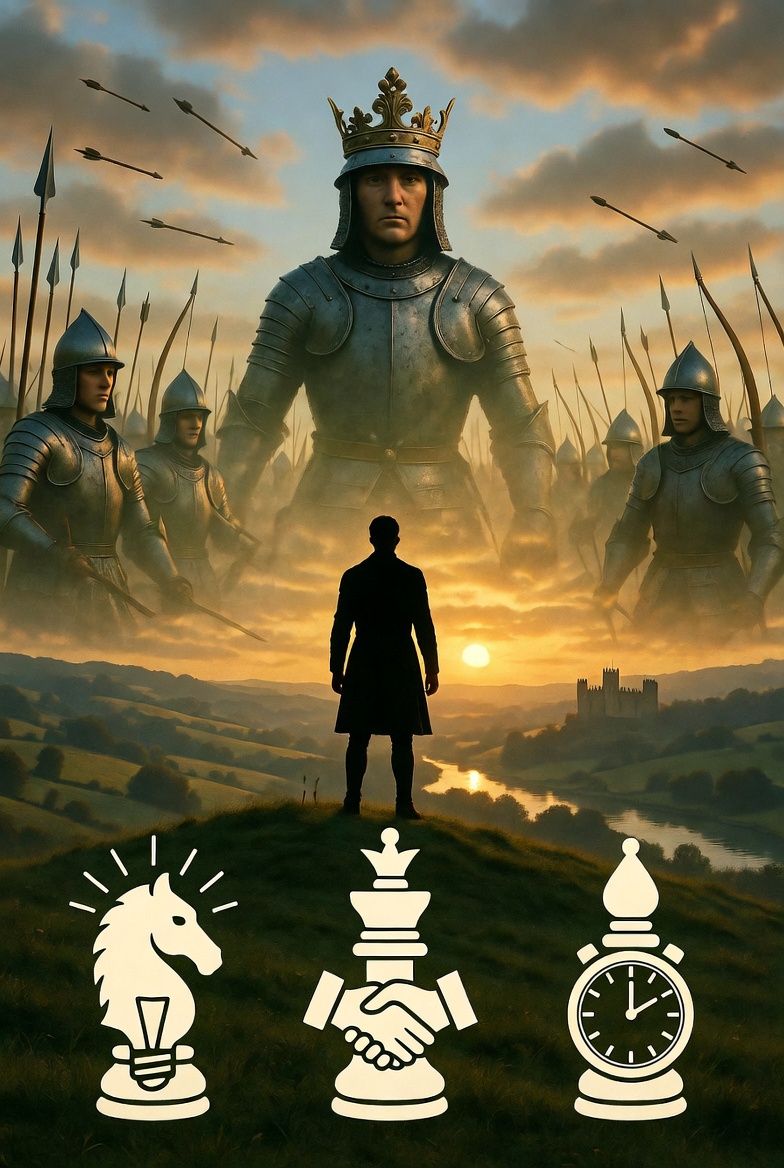 ### Your Detailed, Quick, Unique "Stoke Protocol" Plan: The Pretender-Proof 30-Day Dynasty Builder
This isn't vision-board nonsense or hustle porn. It's a battlefield-tested, anti-fragile system inspired by Stoke's grind: rapid march, decisive stand, consolidation. Do it once, adapt forever. Unique twist: It incorporates "mercenary audits" (external help) and "Red Gutter reviews" (learning from routs) while forcing kitchen-level humility (like Simnel's spit-turning).
**Week 1: The March (Intelligence and Mobilization – 7 Days)**
- Day 1: Map your "England" – current throne (life domains: career, health, relationships). Identify 2–3 pretenders (doubts, bad habits, toxic influences).
- Days 2–4: Recruit "Lincoln-level plotters" but flip them—interview 3 potential allies/mentors. Offer value first. Gather intel via books/podcasts on your field.
- Days 5–7: Assemble "army"—daily 45-min skill drill + physical march (walk/run). Log like a chronicler. End with a "Dublin coronation" ritual: Affirm your real claim in writing.
**Week 2: The Vanguard Clash (Engagement – 7 Days)**
- Charge your hill: Pick one major goal (e.g., pitch, fitness milestone). Break into Oxford-style formation: 3 daily actions. Use "arrow volleys"—focused 25-min Pomodoros.
- Face the downhill assault: When resistance hits (procrastination, criticism), hold with pre-planned responses (e.g., "Evidence log" review). Track casualties (setbacks) but reinforce immediately.
- Mid-week: Mercenary audit—hire cheap external help (Fiverr task, coach session) for one weak flank.
**Week 3: Attrition and Reinforcement (Grind – 7 Days)**
- Sustain the line: Layer in Henry's reinforcements—add one new habit daily (e.g., networking message). Measure progress numerically.
- Rally troops: Public accountability (tell one person your goal). Use terrain advantage—schedule around peak energy.
- Humor injection: End days with "kitchen duty"—a humble task (cleaning, cooking) to stay grounded like Simnel.
**Week 4: Aftermath and Standard-Raising (Consolidation – 7+ Days)**
- Knight your wins: Celebrate specifically (not vaguely). List new "bannerets."
- Red Gutter review: Analyze what fled or died—adjust ruthlessly but mercifully. Fine internal saboteurs (cut one bad habit).
- Secure the dynasty: Plan next "campaign" with built-in spies (weekly review). Build buffer (savings, skills).
- Long-term loop: Repeat quarterly. After 90 days, your "Tudor stability" compounds—pretenders become kitchen staff.
This protocol is quick (30 days core), unique (battle-mapped humility + attrition focus, no crystals or 5AM cults), and funny in execution (imagine narrating your day as a herald). It works because it mirrors reality: Life throws mercenary charges and river traps. Master the stand, and you forge peace.
Stoke Field reminds us that even after Bosworth "wins," real security comes from finishing the job with intelligence, adaptability, and grace under pressure. The meadow is quiet now, but its lesson roars: Expose the pretenders, hold the line, build something lasting. Your personal dynasty awaits—march on.
### Your Detailed, Quick, Unique "Stoke Protocol" Plan: The Pretender-Proof 30-Day Dynasty Builder
This isn't vision-board nonsense or hustle porn. It's a battlefield-tested, anti-fragile system inspired by Stoke's grind: rapid march, decisive stand, consolidation. Do it once, adapt forever. Unique twist: It incorporates "mercenary audits" (external help) and "Red Gutter reviews" (learning from routs) while forcing kitchen-level humility (like Simnel's spit-turning).
**Week 1: The March (Intelligence and Mobilization – 7 Days)**
- Day 1: Map your "England" – current throne (life domains: career, health, relationships). Identify 2–3 pretenders (doubts, bad habits, toxic influences).
- Days 2–4: Recruit "Lincoln-level plotters" but flip them—interview 3 potential allies/mentors. Offer value first. Gather intel via books/podcasts on your field.
- Days 5–7: Assemble "army"—daily 45-min skill drill + physical march (walk/run). Log like a chronicler. End with a "Dublin coronation" ritual: Affirm your real claim in writing.
**Week 2: The Vanguard Clash (Engagement – 7 Days)**
- Charge your hill: Pick one major goal (e.g., pitch, fitness milestone). Break into Oxford-style formation: 3 daily actions. Use "arrow volleys"—focused 25-min Pomodoros.
- Face the downhill assault: When resistance hits (procrastination, criticism), hold with pre-planned responses (e.g., "Evidence log" review). Track casualties (setbacks) but reinforce immediately.
- Mid-week: Mercenary audit—hire cheap external help (Fiverr task, coach session) for one weak flank.
**Week 3: Attrition and Reinforcement (Grind – 7 Days)**
- Sustain the line: Layer in Henry's reinforcements—add one new habit daily (e.g., networking message). Measure progress numerically.
- Rally troops: Public accountability (tell one person your goal). Use terrain advantage—schedule around peak energy.
- Humor injection: End days with "kitchen duty"—a humble task (cleaning, cooking) to stay grounded like Simnel.
**Week 4: Aftermath and Standard-Raising (Consolidation – 7+ Days)**
- Knight your wins: Celebrate specifically (not vaguely). List new "bannerets."
- Red Gutter review: Analyze what fled or died—adjust ruthlessly but mercifully. Fine internal saboteurs (cut one bad habit).
- Secure the dynasty: Plan next "campaign" with built-in spies (weekly review). Build buffer (savings, skills).
- Long-term loop: Repeat quarterly. After 90 days, your "Tudor stability" compounds—pretenders become kitchen staff.
This protocol is quick (30 days core), unique (battle-mapped humility + attrition focus, no crystals or 5AM cults), and funny in execution (imagine narrating your day as a herald). It works because it mirrors reality: Life throws mercenary charges and river traps. Master the stand, and you forge peace.
Stoke Field reminds us that even after Bosworth "wins," real security comes from finishing the job with intelligence, adaptability, and grace under pressure. The meadow is quiet now, but its lesson roars: Expose the pretenders, hold the line, build something lasting. Your personal dynasty awaits—march on.