On June 15, 1312, in the rolling valley near the village of Rozgony (today’s Rozhanovce in Slovakia), not far from the loyal city of Kassa (Košice), a battle unfolded that the *Chronicon Pictum*—Hungary’s illuminated chronicle—called the cruelest clash since the Mongol hordes ravaged Europe decades earlier. King Charles Robert of Anjou, a young outsider king fighting to reclaim his fractured realm from rapacious oligarchs, faced off against the heavily armored forces of the powerful Aba family and their allies. What began as a desperate royal gamble ended in a decisive, bloody triumph that broke the back of noble overmighty lords and laid the foundation for a stronger, more centralized Hungarian kingdom.
This wasn’t some grand set-piece with thousands of knights charging across open fields in cinematic glory. It was messy, improvised, rain-soaked chaos in a narrow river valley where terrain, timing, loyalty, and sheer bloody-minded persistence turned the tide. The king’s army took heavy losses. Standards fell. Leaders on both sides died in the melee. But Charles Robert’s forces—bolstered by urban militias, disciplined foreign knights, and Saxon allies—refused to break. By the end of the day, key Aba commanders lay dead, their army scattered, and the path to royal authority was pried open with swords and spears.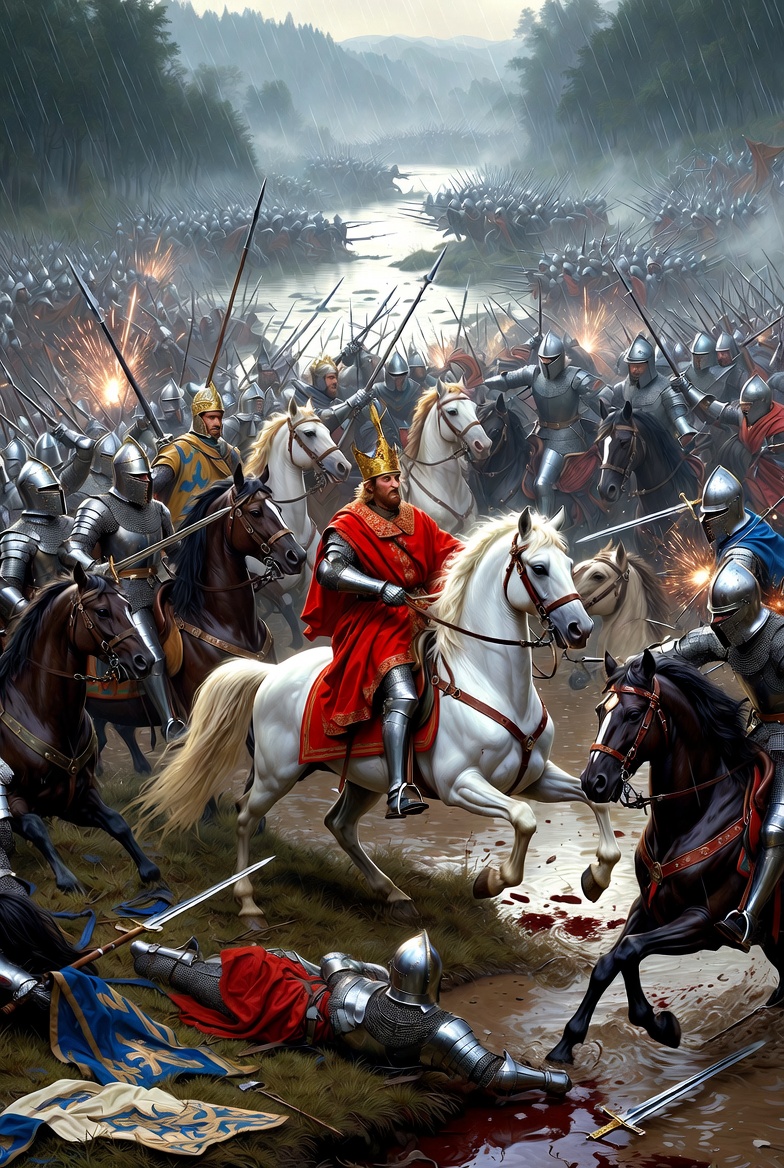 ### The Fractured Kingdom: Oligarchs Run Wild
To understand Rozgony, you have to rewind to the late 13th century in the Kingdom of Hungary. After the Árpád dynasty died out in 1301, the realm descended into chaos. Powerful magnates—oligarchs or “little kings”—carved up territories like warlords. They controlled castles, collected taxes, raised private armies, and basically ignored the nominal king. Matthew Csák III dominated the northwest (modern western and northern Slovakia areas), while the Aba family (also called Omode or Amade lineage) ruled the northeast with iron fists. These families weren’t just rich nobles; they operated semi-independent principalities, forging alliances, minting coins, and waging private wars.
Enter Charles Robert (Caroberto), from the French Angevin (Anjou) house. He was a teenager when he arrived in Hungary around 1300, backed by the papacy and distant relatives. His claim was legitimate but shaky. The oligarchs saw him as a puppet or nuisance. Early years were humiliating: he was crowned multiple times in different places with makeshift regalia because the real crown was held by rivals. He bounced between loyal pockets of support while the magnates played kingmaker. By 1312, Charles had secured some alliances, including with the Knights Hospitaller (Order of Saint John) and Saxon settlers in Szepes (Spiš) county, known for their discipline and loyalty to the crown.
The immediate spark for Rozgony was the Aba family’s aggression. Palatine Amade Aba had died earlier, but his sons—Nicholas (Miklós), David (Dávid), and the formidable “Great” or “Beautiful” Aba (Nagy Aba)—continued the family’s defiant ways. They besieged the royal-loyal city of Kassa, a prosperous trading hub. Charles Robert couldn’t let it fall; losing a key economic and strategic center would doom his unification efforts. He marched to relieve the siege.
### Maneuvering into the Valley Trap
The Abas were no fools. They had numerical superiority in heavy cavalry and held strong positions. As Charles’s forces approached, the rebels broke off the Kassa siege and positioned themselves advantageously on a hill overlooking the Torysa (Tarca) River valley near Rozgony. The royal army was forced into the lower, more confined ground—disadvantageous for maneuver, especially with infantry playing a bigger role.
According to chronicles, the battle kicked off around or just after a Mass attended by the royal troops. The Abas launched a surprise or aggressive assault. Demetrius Balassa (or Balassa Demeter), a key Aba commander, led the charge into the royal center. It turned into a brutal, close-quarters bloodbath. Knights hacked at each other with swords and maces; horses screamed; banners toppled. The royal standard itself was captured or lost at one point, forcing Charles Robert to fight under the Hospitaller banner—a humiliating but defiant symbol.
The Abas pressed their advantage, but overextended. Their flanks weakened as they poured into the center. This is where royal reinforcements shone: the Hospitaller knights, known for elite discipline, hammered one flank. Urban militia from Kassa arrived in the nick of time for a flanking attack. Saxon infantry and other loyal troops held the line stubbornly. The king’s forces counterattacked fiercely.
### The Fractured Kingdom: Oligarchs Run Wild
To understand Rozgony, you have to rewind to the late 13th century in the Kingdom of Hungary. After the Árpád dynasty died out in 1301, the realm descended into chaos. Powerful magnates—oligarchs or “little kings”—carved up territories like warlords. They controlled castles, collected taxes, raised private armies, and basically ignored the nominal king. Matthew Csák III dominated the northwest (modern western and northern Slovakia areas), while the Aba family (also called Omode or Amade lineage) ruled the northeast with iron fists. These families weren’t just rich nobles; they operated semi-independent principalities, forging alliances, minting coins, and waging private wars.
Enter Charles Robert (Caroberto), from the French Angevin (Anjou) house. He was a teenager when he arrived in Hungary around 1300, backed by the papacy and distant relatives. His claim was legitimate but shaky. The oligarchs saw him as a puppet or nuisance. Early years were humiliating: he was crowned multiple times in different places with makeshift regalia because the real crown was held by rivals. He bounced between loyal pockets of support while the magnates played kingmaker. By 1312, Charles had secured some alliances, including with the Knights Hospitaller (Order of Saint John) and Saxon settlers in Szepes (Spiš) county, known for their discipline and loyalty to the crown.
The immediate spark for Rozgony was the Aba family’s aggression. Palatine Amade Aba had died earlier, but his sons—Nicholas (Miklós), David (Dávid), and the formidable “Great” or “Beautiful” Aba (Nagy Aba)—continued the family’s defiant ways. They besieged the royal-loyal city of Kassa, a prosperous trading hub. Charles Robert couldn’t let it fall; losing a key economic and strategic center would doom his unification efforts. He marched to relieve the siege.
### Maneuvering into the Valley Trap
The Abas were no fools. They had numerical superiority in heavy cavalry and held strong positions. As Charles’s forces approached, the rebels broke off the Kassa siege and positioned themselves advantageously on a hill overlooking the Torysa (Tarca) River valley near Rozgony. The royal army was forced into the lower, more confined ground—disadvantageous for maneuver, especially with infantry playing a bigger role.
According to chronicles, the battle kicked off around or just after a Mass attended by the royal troops. The Abas launched a surprise or aggressive assault. Demetrius Balassa (or Balassa Demeter), a key Aba commander, led the charge into the royal center. It turned into a brutal, close-quarters bloodbath. Knights hacked at each other with swords and maces; horses screamed; banners toppled. The royal standard itself was captured or lost at one point, forcing Charles Robert to fight under the Hospitaller banner—a humiliating but defiant symbol.
The Abas pressed their advantage, but overextended. Their flanks weakened as they poured into the center. This is where royal reinforcements shone: the Hospitaller knights, known for elite discipline, hammered one flank. Urban militia from Kassa arrived in the nick of time for a flanking attack. Saxon infantry and other loyal troops held the line stubbornly. The king’s forces counterattacked fiercely.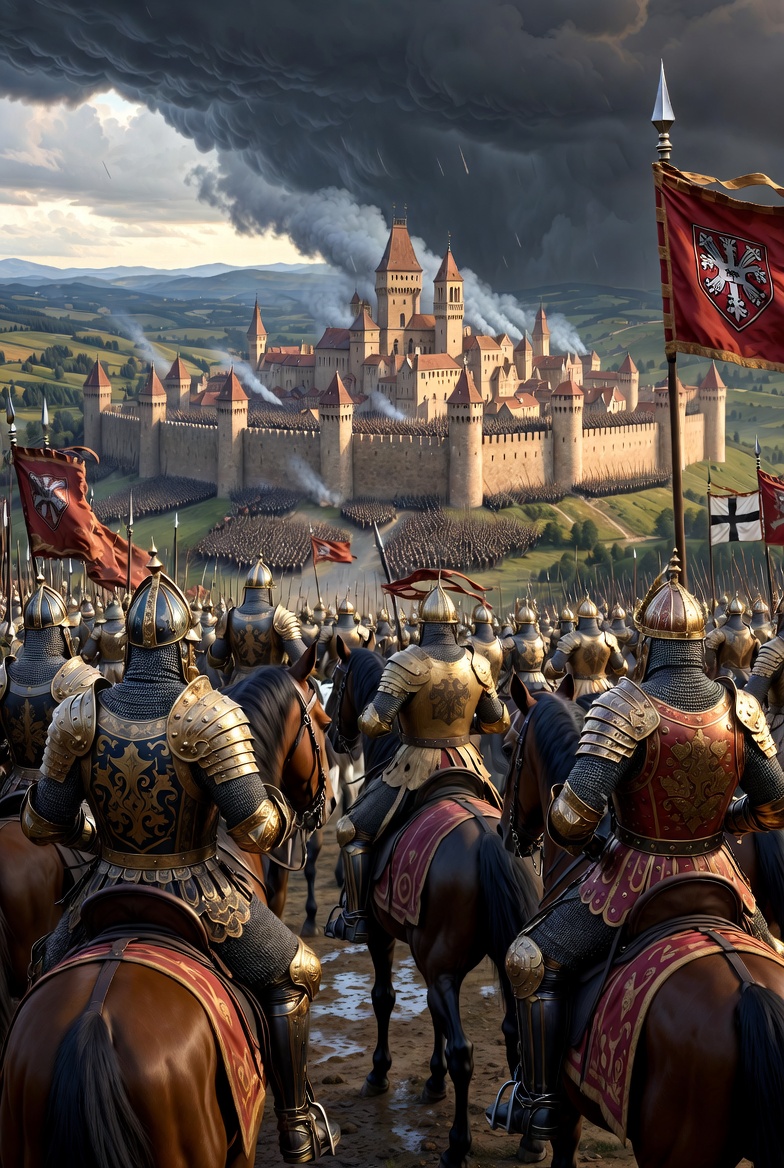 Casualties mounted horrifically. On the Aba side, leaders fell one by one: Demetrius Balassa, Great Aba, Nicholas Aba, and David Aba were all slain. Without commanders, the rebel army disintegrated. The royal side lost many too—chronicles note heavy knightly deaths—but the strategic victory was total. The Abas’ eastern dominance crumbled. Their castles were later systematically reduced. Matthew Csák, the other major oligarch, was weakened indirectly and faced further pressure.
The *Chronicon Pictum* depicts the clash vividly: Charles Robert on a white horse in red, jousting or leading charges near Kassa’s symbolic castle. It wasn’t pretty propaganda; it captured the desperation. This was medieval realpolitik at its rawest— no chivalric romance, just survival through adaptability.
### Deeper Context: The Anjou Restoration and Medieval Power Plays
Charles Robert’s campaign wasn’t isolated. It fit into broader European patterns. The Angevin dynasty linked Hungary to Naples and French influence, bringing administrative reforms, economic policies favoring towns and trade, and a vision of royal supremacy over feudal fragmentation. The Battle of Rozgony was a turning point in his “wars for centralized power.” Subsequent years saw him consolidate: defeating Csák’s remnants, reforming coinage (introducing the gold florin), promoting mining and commerce, and building alliances with the Church and burghers.
Humorously, imagine the oligarchs’ arrogance. These “little kings” had grown fat on unchecked power for years, treating the young foreign king like a temporary annoyance. They probably toasted to his inevitable failure the night before. Then, in the valley mud, their heavy cavalry—symbol of noble prestige—got bogged down against a more flexible royal force that mixed infantry, disciplined orders, and timely urban allies. It’s like a medieval startup founder getting outmaneuvered by a leaner, hungrier operation that actually delivered value to its “customers” (loyal subjects and towns).
The battle also highlighted evolving warfare. While heavy cavalry dominated, disciplined infantry and combined arms (knights + foot soldiers + militia) proved decisive in confined terrain. It foreshadowed later shifts across Europe where professional or motivated common forces challenged aristocratic monopolies on violence.
### Aftermath: From Valley Carnage to Enduring Legacy
Rozgony didn’t end all resistance overnight, but it was the decisive crack. The Aba power structure collapsed in the east. Charles Robert’s prestige soared. He went on to rule effectively until 1342, leaving a more stable Hungary that his son Louis the Great would expand dramatically. The victory symbolized the triumph of legitimate central authority over predatory regionalism—a theme echoed in countless histories of state-building.
Archaeological and local memory in Rozhanovce preserves echoes. The site remains a quiet reminder in the Slovak countryside, far from tourist trails, where once swords rang and blood soaked the earth. The *Chronicon Pictum*’s illumination keeps the drama alive: colorful, dramatic, almost cartoonish in its medieval style, yet conveying the high stakes.
### Applying the Rozgony Lesson: Your Personal Valley Showdown
History isn’t dusty trivia—it’s a brutal mirror. The Battle of Rozgony teaches that when oligarchs (your internal bad habits, external toxic influences, or overwhelming obstacles) besiege your “Kassa” (core goals, stability, potential), you don’t negotiate endlessly or retreat. You march, adapt to bad terrain, hold the line under fire, and strike when flanks expose. Here’s how that ancient slaughter translates to crushing modern personal fragmentation with ruthless specificity—far from generic “mindset shifts” or vision-board fluff.
Casualties mounted horrifically. On the Aba side, leaders fell one by one: Demetrius Balassa, Great Aba, Nicholas Aba, and David Aba were all slain. Without commanders, the rebel army disintegrated. The royal side lost many too—chronicles note heavy knightly deaths—but the strategic victory was total. The Abas’ eastern dominance crumbled. Their castles were later systematically reduced. Matthew Csák, the other major oligarch, was weakened indirectly and faced further pressure.
The *Chronicon Pictum* depicts the clash vividly: Charles Robert on a white horse in red, jousting or leading charges near Kassa’s symbolic castle. It wasn’t pretty propaganda; it captured the desperation. This was medieval realpolitik at its rawest— no chivalric romance, just survival through adaptability.
### Deeper Context: The Anjou Restoration and Medieval Power Plays
Charles Robert’s campaign wasn’t isolated. It fit into broader European patterns. The Angevin dynasty linked Hungary to Naples and French influence, bringing administrative reforms, economic policies favoring towns and trade, and a vision of royal supremacy over feudal fragmentation. The Battle of Rozgony was a turning point in his “wars for centralized power.” Subsequent years saw him consolidate: defeating Csák’s remnants, reforming coinage (introducing the gold florin), promoting mining and commerce, and building alliances with the Church and burghers.
Humorously, imagine the oligarchs’ arrogance. These “little kings” had grown fat on unchecked power for years, treating the young foreign king like a temporary annoyance. They probably toasted to his inevitable failure the night before. Then, in the valley mud, their heavy cavalry—symbol of noble prestige—got bogged down against a more flexible royal force that mixed infantry, disciplined orders, and timely urban allies. It’s like a medieval startup founder getting outmaneuvered by a leaner, hungrier operation that actually delivered value to its “customers” (loyal subjects and towns).
The battle also highlighted evolving warfare. While heavy cavalry dominated, disciplined infantry and combined arms (knights + foot soldiers + militia) proved decisive in confined terrain. It foreshadowed later shifts across Europe where professional or motivated common forces challenged aristocratic monopolies on violence.
### Aftermath: From Valley Carnage to Enduring Legacy
Rozgony didn’t end all resistance overnight, but it was the decisive crack. The Aba power structure collapsed in the east. Charles Robert’s prestige soared. He went on to rule effectively until 1342, leaving a more stable Hungary that his son Louis the Great would expand dramatically. The victory symbolized the triumph of legitimate central authority over predatory regionalism—a theme echoed in countless histories of state-building.
Archaeological and local memory in Rozhanovce preserves echoes. The site remains a quiet reminder in the Slovak countryside, far from tourist trails, where once swords rang and blood soaked the earth. The *Chronicon Pictum*’s illumination keeps the drama alive: colorful, dramatic, almost cartoonish in its medieval style, yet conveying the high stakes.
### Applying the Rozgony Lesson: Your Personal Valley Showdown
History isn’t dusty trivia—it’s a brutal mirror. The Battle of Rozgony teaches that when oligarchs (your internal bad habits, external toxic influences, or overwhelming obstacles) besiege your “Kassa” (core goals, stability, potential), you don’t negotiate endlessly or retreat. You march, adapt to bad terrain, hold the line under fire, and strike when flanks expose. Here’s how that ancient slaughter translates to crushing modern personal fragmentation with ruthless specificity—far from generic “mindset shifts” or vision-board fluff.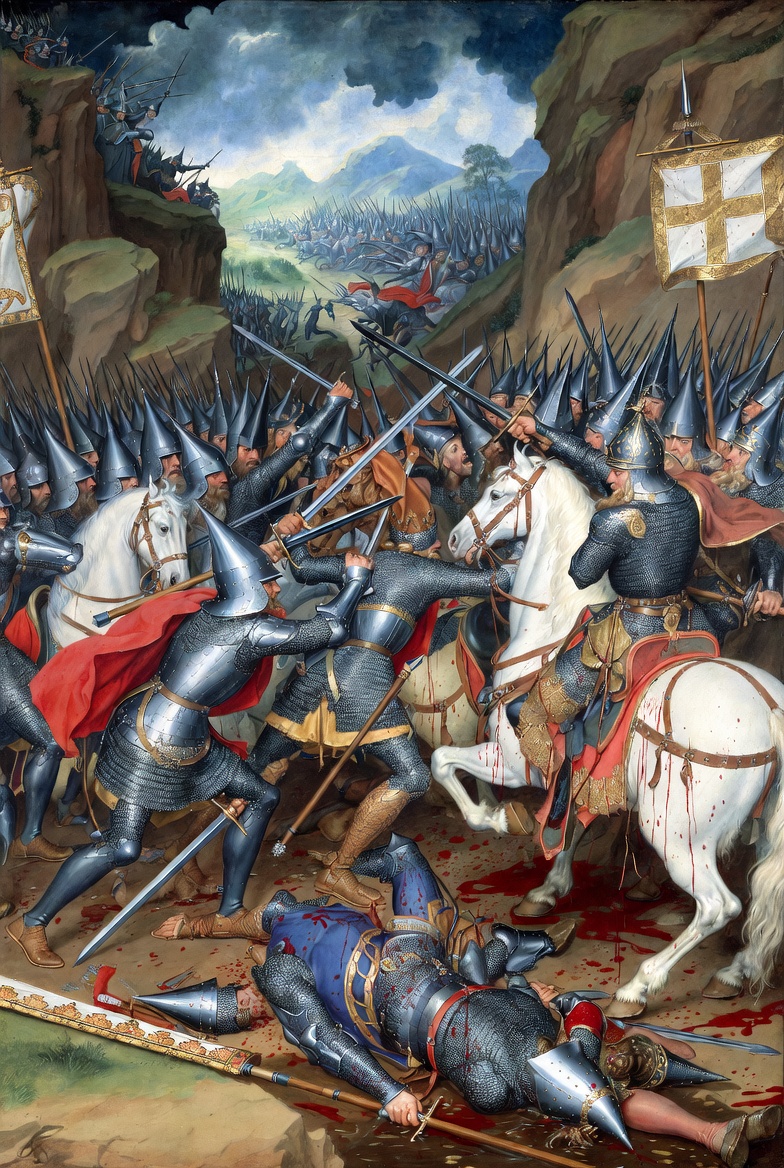 - **Identify Your Oligarchs Precisely**: List the top 3-5 “Abas” in your life—specific behaviors, people, or systems draining your resources (e.g., doom-scrolling 2+ hours daily on platform X, a draining relationship sucking 10+ hours/week, or procrastination on high-leverage tasks like skill-building that costs you $Y monthly in lost opportunity). Unlike vague self-help, assign names, metrics, and castles (strongholds) they control. Charles mapped his enemies’ territories; you audit yours with a spreadsheet or journal entry today.
- **Relieve the Siege on Your Loyal Strongholds**: Protect your “Kassa”—non-negotiable anchors like daily non-negotiable workout blocks, core income streams, or key relationships. When Abas threaten (e.g., a habit derailing sleep), mobilize immediately like Charles. Set micro-rules: “No screens after 9 PM or I pay $50 to a hated cause.” Build alliances—your “Hospitallers” could be accountability partners, apps with streaks, or routines that compound (e.g., 20-minute focused work sprints tied to Saxon-like disciplined trades).
- **Embrace the Disadvantageous Valley**: Life rarely gives ideal terrain. When forced into a bad spot (job loss, health flare, financial dip), don’t rage against it—use the confinement. Charles’s valley limited enemy maneuvers too. Translate: In a “valley” week, double down on high-density actions (e.g., one deep 4-hour focus block daily on income-generating output instead of scattered busywork). Infantry wins here: consistent small forces (habits) beat flashy cavalry (motivational spikes).
- **Fight Under a Borrowed Banner When Yours Falls**: Standards drop. Ego takes hits. Charles grabbed the Hospitaller flag and kept swinging. When your “royal banner” (perfect plan, reputation, motivation) fails, adopt a proven proxy—e.g., copy a strict routine from a historical figure or mentor verbatim for 30 days. No shame; it’s tactical. Track it publicly or with a witness for extra pressure.
- **Exploit Overextended Flanks with Reinforcements**: Abas weakened edges while piling into the center. Monitor your battles: when an obstacle overcommits (e.g., a distraction spirals), hit weak points hard. Call in reinforcements—unexpected allies like community forums, cheap tools, or rest days that recharge. Kassa’s militia arrived late but decisive; schedule your “urban reinforcements” (e.g., weekly review calling a friend for advice).
- **Accept Heavy Losses for Strategic Annihilation**: Rozgony hurt the royal army, but decapitated the enemy leadership. In life, sacrifice short-term comfort (e.g., cutting luxury spending or social events) to eliminate root threats. Measure success by enemy leaders felled (habits broken permanently), not zero casualties. Celebrate the rout: after a win, immediately press the advantage by securing new “castles” (e.g., automating a process that frees time).
- **Identify Your Oligarchs Precisely**: List the top 3-5 “Abas” in your life—specific behaviors, people, or systems draining your resources (e.g., doom-scrolling 2+ hours daily on platform X, a draining relationship sucking 10+ hours/week, or procrastination on high-leverage tasks like skill-building that costs you $Y monthly in lost opportunity). Unlike vague self-help, assign names, metrics, and castles (strongholds) they control. Charles mapped his enemies’ territories; you audit yours with a spreadsheet or journal entry today.
- **Relieve the Siege on Your Loyal Strongholds**: Protect your “Kassa”—non-negotiable anchors like daily non-negotiable workout blocks, core income streams, or key relationships. When Abas threaten (e.g., a habit derailing sleep), mobilize immediately like Charles. Set micro-rules: “No screens after 9 PM or I pay $50 to a hated cause.” Build alliances—your “Hospitallers” could be accountability partners, apps with streaks, or routines that compound (e.g., 20-minute focused work sprints tied to Saxon-like disciplined trades).
- **Embrace the Disadvantageous Valley**: Life rarely gives ideal terrain. When forced into a bad spot (job loss, health flare, financial dip), don’t rage against it—use the confinement. Charles’s valley limited enemy maneuvers too. Translate: In a “valley” week, double down on high-density actions (e.g., one deep 4-hour focus block daily on income-generating output instead of scattered busywork). Infantry wins here: consistent small forces (habits) beat flashy cavalry (motivational spikes).
- **Fight Under a Borrowed Banner When Yours Falls**: Standards drop. Ego takes hits. Charles grabbed the Hospitaller flag and kept swinging. When your “royal banner” (perfect plan, reputation, motivation) fails, adopt a proven proxy—e.g., copy a strict routine from a historical figure or mentor verbatim for 30 days. No shame; it’s tactical. Track it publicly or with a witness for extra pressure.
- **Exploit Overextended Flanks with Reinforcements**: Abas weakened edges while piling into the center. Monitor your battles: when an obstacle overcommits (e.g., a distraction spirals), hit weak points hard. Call in reinforcements—unexpected allies like community forums, cheap tools, or rest days that recharge. Kassa’s militia arrived late but decisive; schedule your “urban reinforcements” (e.g., weekly review calling a friend for advice).
- **Accept Heavy Losses for Strategic Annihilation**: Rozgony hurt the royal army, but decapitated the enemy leadership. In life, sacrifice short-term comfort (e.g., cutting luxury spending or social events) to eliminate root threats. Measure success by enemy leaders felled (habits broken permanently), not zero casualties. Celebrate the rout: after a win, immediately press the advantage by securing new “castles” (e.g., automating a process that frees time).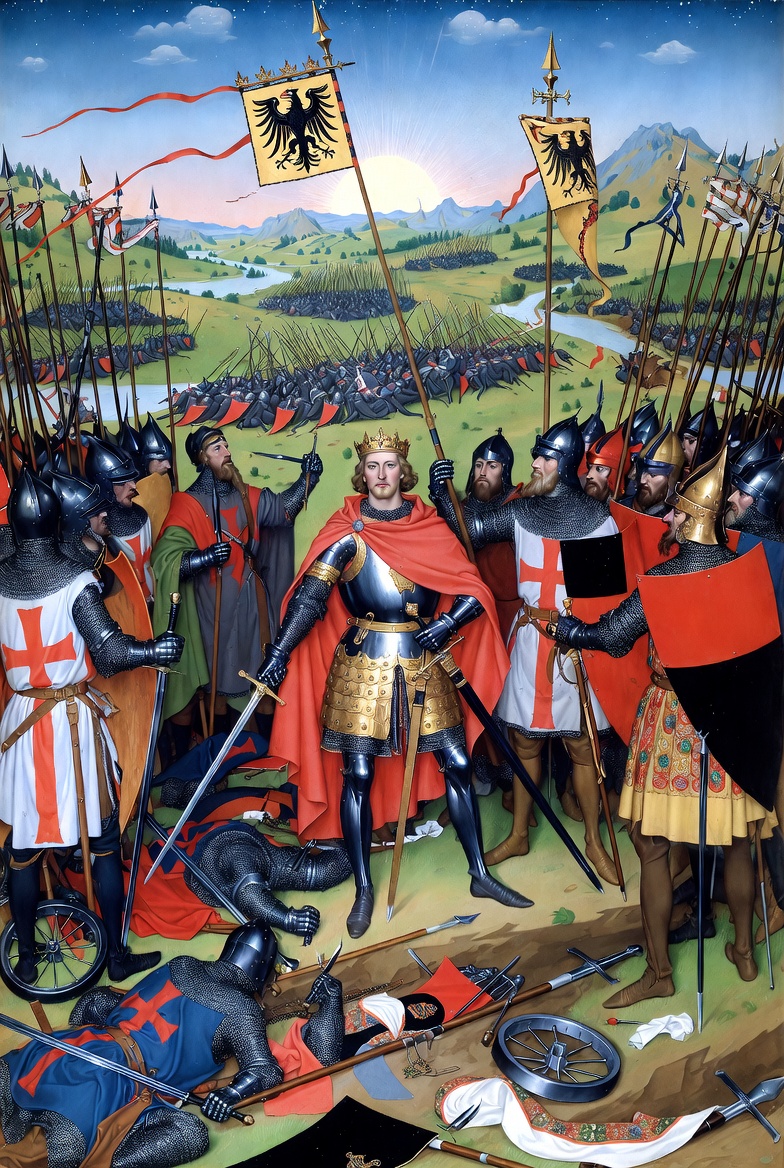 ### The Unique Rozgony Pivot Plan: Valley Warfare Protocol (Not Your Average Self-Help)
Forget 30-day challenges or affirmations. This is a campaign manual inspired directly by the 1312 mechanics—terrain-aware, alliance-driven, decapitation-focused, and iterative. It’s designed for fractured lives in chaotic times, emphasizing persistent royal authority over noble chaos. Execute in phases, like Charles’s unification wars.
**Phase 1: Recon and Mustering (Days 1-3)**
Map your kingdom: Draw or list territories (health, wealth, relationships, skills). Identify sieges (urgent threats) and oligarch strongholds. Must er loyal forces: commit 3 unbreakable daily anchors (e.g., 30-min movement, 1 focused work block, evening reflection). Recruit allies—tell one trusted person your exact battle plan for external pressure.
**Phase 2: March to Relief (Days 4-14)**
Relieve the primary siege. Pick one “Kassa” and defend it ferociously with valley tactics: confine actions to high-ground equivalents (e.g., Pomodoro in a distraction-free setup). Log daily “skirmishes” in a simple chronicle (notebook or app). When hit with surprise attack (craving, distraction), counter with pre-planned Hospitaller move (e.g., 10 push-ups or 5-minute breathing reset). Aim for one decisive flanking win per week.
**Phase 3: The Melee and Decapitation (Ongoing, Review Every 15th)**
Engage fully. Track losses honestly but focus on enemy command deaths (e.g., “Doom-scroll oligarch slain—replaced with reading block”). Use combined arms: mix brute discipline (infantry habits) with elite tools (apps/mentors as knights). On the 15th of each month (Rozgony anniversary nod), audit: What banners fell? What new ground claimed? Press advantages immediately—convert one victory into a permanent fortification (habit automation, new skill milestone).
**Phase 4: Consolidation and Expansion**
Like post-Rozgony Hungary, stabilize wins before next campaign. Reward with strategic investments (e.g., tool that scales a strength). Iterate: weaker “Abas” get lighter treatment; persistent ones demand full valley commitment. Measure by centralization—how much of your life answers to your “kingly” intent vs. scattered lords.
### The Unique Rozgony Pivot Plan: Valley Warfare Protocol (Not Your Average Self-Help)
Forget 30-day challenges or affirmations. This is a campaign manual inspired directly by the 1312 mechanics—terrain-aware, alliance-driven, decapitation-focused, and iterative. It’s designed for fractured lives in chaotic times, emphasizing persistent royal authority over noble chaos. Execute in phases, like Charles’s unification wars.
**Phase 1: Recon and Mustering (Days 1-3)**
Map your kingdom: Draw or list territories (health, wealth, relationships, skills). Identify sieges (urgent threats) and oligarch strongholds. Must er loyal forces: commit 3 unbreakable daily anchors (e.g., 30-min movement, 1 focused work block, evening reflection). Recruit allies—tell one trusted person your exact battle plan for external pressure.
**Phase 2: March to Relief (Days 4-14)**
Relieve the primary siege. Pick one “Kassa” and defend it ferociously with valley tactics: confine actions to high-ground equivalents (e.g., Pomodoro in a distraction-free setup). Log daily “skirmishes” in a simple chronicle (notebook or app). When hit with surprise attack (craving, distraction), counter with pre-planned Hospitaller move (e.g., 10 push-ups or 5-minute breathing reset). Aim for one decisive flanking win per week.
**Phase 3: The Melee and Decapitation (Ongoing, Review Every 15th)**
Engage fully. Track losses honestly but focus on enemy command deaths (e.g., “Doom-scroll oligarch slain—replaced with reading block”). Use combined arms: mix brute discipline (infantry habits) with elite tools (apps/mentors as knights). On the 15th of each month (Rozgony anniversary nod), audit: What banners fell? What new ground claimed? Press advantages immediately—convert one victory into a permanent fortification (habit automation, new skill milestone).
**Phase 4: Consolidation and Expansion**
Like post-Rozgony Hungary, stabilize wins before next campaign. Reward with strategic investments (e.g., tool that scales a strength). Iterate: weaker “Abas” get lighter treatment; persistent ones demand full valley commitment. Measure by centralization—how much of your life answers to your “kingly” intent vs. scattered lords.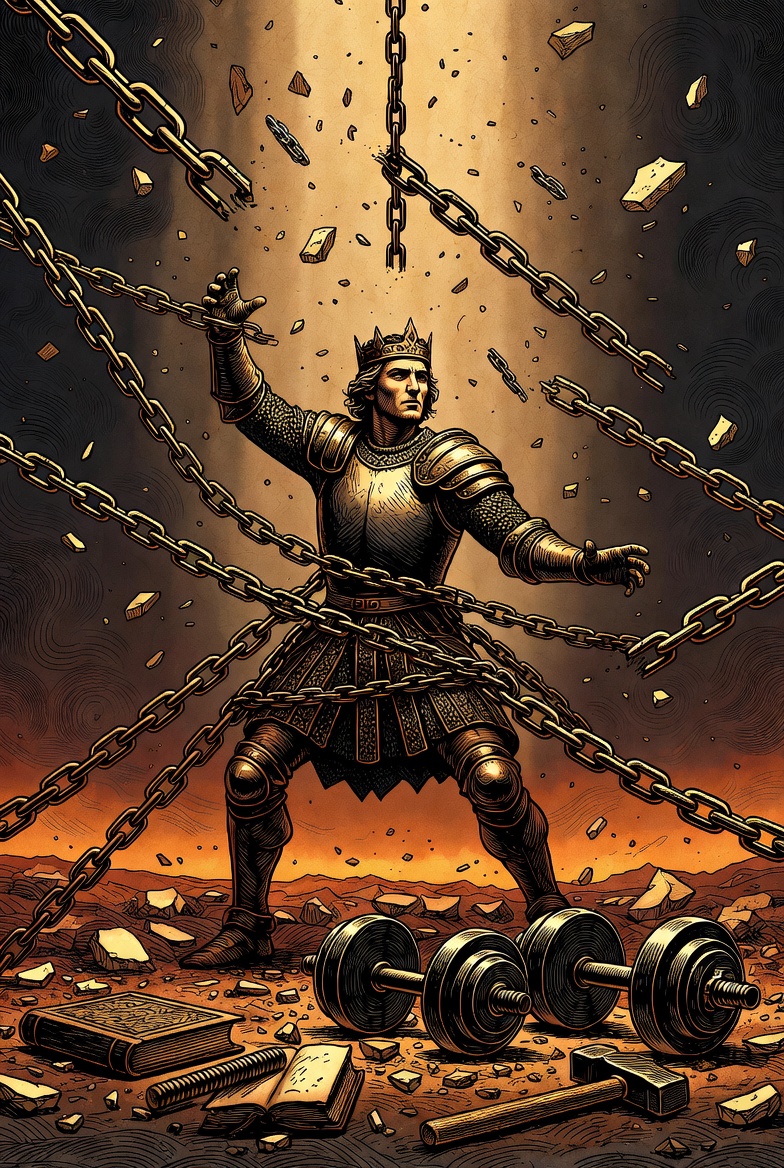 This protocol is unique because it treats personal growth as medieval statecraft: messy, costly, terrain-dependent, but ultimately empowering if you wield the sword of persistence. No fluffy universality—just gritty adaptation that turns underdog kings into unifiers. Charles Robert didn’t wish for better circumstances; he fought in the valley he got and redrew the map.
The fields of Rozgony ran red on that June 15 centuries ago, but out of the slaughter rose a more coherent realm. Your June 15—today—can mark the same pivot. March. Adapt. Hold. Strike. The oligarchs of your life are overextended; their flanks are yours for the taking. The valley awaits—claim it.
This protocol is unique because it treats personal growth as medieval statecraft: messy, costly, terrain-dependent, but ultimately empowering if you wield the sword of persistence. No fluffy universality—just gritty adaptation that turns underdog kings into unifiers. Charles Robert didn’t wish for better circumstances; he fought in the valley he got and redrew the map.
The fields of Rozgony ran red on that June 15 centuries ago, but out of the slaughter rose a more coherent realm. Your June 15—today—can mark the same pivot. March. Adapt. Hold. Strike. The oligarchs of your life are overextended; their flanks are yours for the taking. The valley awaits—claim it.