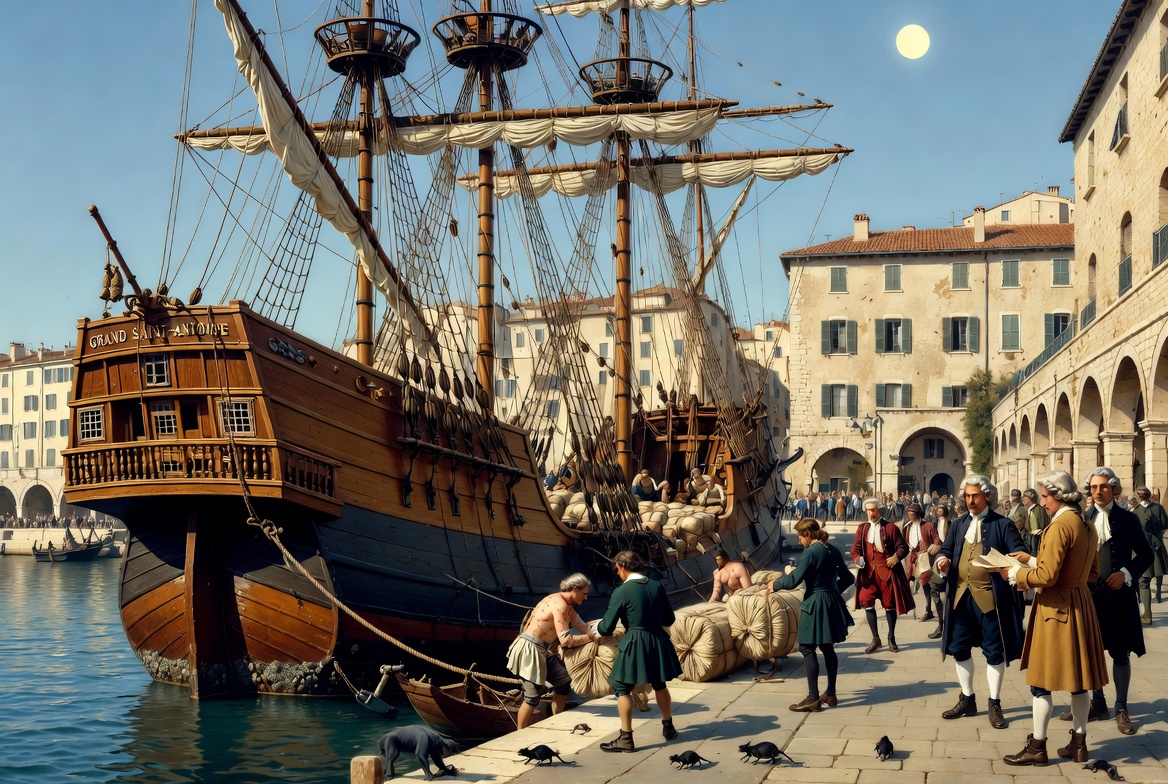
On May 25, 1720, a three-masted merchant vessel named the *Grand Saint-Antoine* glided into the bustling harbor of Marseille, France. Its holds brimmed with exotic treasures from the Levant: shimmering silks, bales of cotton, spices, and fine fabrics destined for the lucrative trade fair at Beaucaire. Captain Jean-Baptiste Chataud and his crew had sailed for nearly a year, touching ports in the eastern Mediterranean where plague had already begun its deadly whisper. Unseen among the cargo and in the fleas nesting in the fabrics lurked *Yersinia pestis*, the bacterium responsible for bubonic plague. This single arrival ignited the Great Plague of Marseille, also known as the Plague of Provence—the last major outbreak of bubonic plague in Western Europe. It would claim over 100,000 lives in the region, decimating Marseille's population of around 90,000 by more than half in the city alone. This wasn't just another footnote in the long, grim ledger of pandemics. It was a perfect storm of commerce, hubris, denial, and delayed action that turned a prosperous Mediterranean port into a charnel house. The story of the *Grand Saint-Antoine* is rich with human drama, political intrigue, medical ignorance, and raw survival. It's a tale that unfolds like a slow-burning tragedy, filled with moments of breathtaking folly and heroism. By diving deep into its historical fabric—90% of this blog as promised—we uncover not dusty facts, but vivid, pulsating realities that mirror our own era's struggles with uncertainty, authority, and resilience. Then, we'll distill razor-sharp, wildly unique applications to your individual life that shatter the mold of generic self-help.
### The Voyage That Carried Death
To understand the catastrophe, we must board the *Grand Saint-Antoine* in our minds and retrace its fateful journey. The ship departed Marseille in July 1719 under Captain Chataud, a seasoned mariner. Its mission was pure profit: load up on luxury goods from the Ottoman-controlled Levant to feed Europe's insatiable appetite for Eastern luxuries. Marseille held a special status as a free port, granted privileges by French kings to dominate Mediterranean trade. This economic engine made it vulnerable.
The vessel called at ports like Smyrna (modern Izmir), Tripoli, and Sidon in present-day Lebanon. Plague was simmering in the region, a lingering echo of centuries of outbreaks. Contemporary accounts note that a Turkish passenger died suspiciously soon after boarding at Tripoli. More crew members fell ill as the ship progressed. By the time it reached Livorno in Italy, authorities there grew suspicious. They issued warnings about "malignant pestilential fever" and refused full entry. The health certificate was tainted, yet the *Grand Saint-Antoine* pressed on toward home.
On May 25, 1720, it anchored in Marseille's harbor. Port authorities, led by figures with ties to the merchant elite (including the ship's owner, Jean-Baptiste Estelle, who was deputy mayor), opted for a standard quarantine rather than the stricter isolation on the island lazaretto of Jarre. Some crew and passengers were isolated briefly, but cargo was offloaded prematurely. Porters and workers handling the bales soon showed symptoms. The first confirmed plague deaths among shore workers appeared in late June, but denial ran deep. Officials downplayed the outbreak to protect trade. Letters were sent to European ports assuring containment. Parliament in Aix-en-Provence issued early decrees, but momentum had already built.
This wasn't just another footnote in the long, grim ledger of pandemics. It was a perfect storm of commerce, hubris, denial, and delayed action that turned a prosperous Mediterranean port into a charnel house. The story of the *Grand Saint-Antoine* is rich with human drama, political intrigue, medical ignorance, and raw survival. It's a tale that unfolds like a slow-burning tragedy, filled with moments of breathtaking folly and heroism. By diving deep into its historical fabric—90% of this blog as promised—we uncover not dusty facts, but vivid, pulsating realities that mirror our own era's struggles with uncertainty, authority, and resilience. Then, we'll distill razor-sharp, wildly unique applications to your individual life that shatter the mold of generic self-help.
### The Voyage That Carried Death
To understand the catastrophe, we must board the *Grand Saint-Antoine* in our minds and retrace its fateful journey. The ship departed Marseille in July 1719 under Captain Chataud, a seasoned mariner. Its mission was pure profit: load up on luxury goods from the Ottoman-controlled Levant to feed Europe's insatiable appetite for Eastern luxuries. Marseille held a special status as a free port, granted privileges by French kings to dominate Mediterranean trade. This economic engine made it vulnerable.
The vessel called at ports like Smyrna (modern Izmir), Tripoli, and Sidon in present-day Lebanon. Plague was simmering in the region, a lingering echo of centuries of outbreaks. Contemporary accounts note that a Turkish passenger died suspiciously soon after boarding at Tripoli. More crew members fell ill as the ship progressed. By the time it reached Livorno in Italy, authorities there grew suspicious. They issued warnings about "malignant pestilential fever" and refused full entry. The health certificate was tainted, yet the *Grand Saint-Antoine* pressed on toward home.
On May 25, 1720, it anchored in Marseille's harbor. Port authorities, led by figures with ties to the merchant elite (including the ship's owner, Jean-Baptiste Estelle, who was deputy mayor), opted for a standard quarantine rather than the stricter isolation on the island lazaretto of Jarre. Some crew and passengers were isolated briefly, but cargo was offloaded prematurely. Porters and workers handling the bales soon showed symptoms. The first confirmed plague deaths among shore workers appeared in late June, but denial ran deep. Officials downplayed the outbreak to protect trade. Letters were sent to European ports assuring containment. Parliament in Aix-en-Provence issued early decrees, but momentum had already built. By July 31, authorities publicly acknowledged the plague's rampage. It spread with terrifying speed through fleas on rats, human-to-human pneumonic transmission in close quarters, and contaminated goods. Marseille's narrow, crowded streets—lined with tall houses where families lived atop workshops—became ideal vectors. Death tolls climbed to 1,000 per day at the peak. Bodies piled in streets, carts rumbled through the night hauling corpses to mass graves or pyres. The stench was said to carry for miles.
### Anatomy of a City's Collapse: Economics, Politics, and Medicine
Marseille in 1720 was no backwater. With a population of about 90,000, it was France's premier commercial hub under the Regency of Philippe d'Orléans (following Louis XIV's death in 1715). The city's elite, many involved in the Levant trade, wielded immense influence. This created fatal conflicts of interest. The *Grand Saint-Antoine*'s cargo was valuable—estimated at 100,000 crowns or more—and pressure to release it for the Beaucaire fair was intense. Delays meant lost fortunes.
Medical knowledge was a double-edged sword. Physicians knew of plague from prior outbreaks (Marseille had quarantined ships successfully 25 times between 1650 and 1720). The lazaretto system, with its isolation protocols, fumigation, and health certificates, was advanced for the era. Yet, diagnostics relied on visible buboes (swollen lymph nodes), fever, and delirium—often too late. Treatments ranged from bloodletting and herbal poultices to ineffective "cures" like vinegar sponges or toad amulets. Some doctors fled; others, like Dr. Jean-Baptiste Bertrand, stayed and documented the horror in meticulous detail, providing one of the best contemporary accounts.
Social hierarchy dictated survival. The wealthy barricaded themselves in villas or fled to the countryside. The poor, crammed in tenements, bore the brunt. Religious orders, especially the Brothers of Charity and Ursuline nuns, performed heroic work tending the sick, often dying themselves. Bishop Henri François-Xavier de Belsunce de Castelmoron became a symbol of courage, leading processions and administering last rites while urging civic action. Yet, fear bred violence: guards shot looters, families abandoned the ill, and rumors of poisoning fueled paranoia.
By July 31, authorities publicly acknowledged the plague's rampage. It spread with terrifying speed through fleas on rats, human-to-human pneumonic transmission in close quarters, and contaminated goods. Marseille's narrow, crowded streets—lined with tall houses where families lived atop workshops—became ideal vectors. Death tolls climbed to 1,000 per day at the peak. Bodies piled in streets, carts rumbled through the night hauling corpses to mass graves or pyres. The stench was said to carry for miles.
### Anatomy of a City's Collapse: Economics, Politics, and Medicine
Marseille in 1720 was no backwater. With a population of about 90,000, it was France's premier commercial hub under the Regency of Philippe d'Orléans (following Louis XIV's death in 1715). The city's elite, many involved in the Levant trade, wielded immense influence. This created fatal conflicts of interest. The *Grand Saint-Antoine*'s cargo was valuable—estimated at 100,000 crowns or more—and pressure to release it for the Beaucaire fair was intense. Delays meant lost fortunes.
Medical knowledge was a double-edged sword. Physicians knew of plague from prior outbreaks (Marseille had quarantined ships successfully 25 times between 1650 and 1720). The lazaretto system, with its isolation protocols, fumigation, and health certificates, was advanced for the era. Yet, diagnostics relied on visible buboes (swollen lymph nodes), fever, and delirium—often too late. Treatments ranged from bloodletting and herbal poultices to ineffective "cures" like vinegar sponges or toad amulets. Some doctors fled; others, like Dr. Jean-Baptiste Bertrand, stayed and documented the horror in meticulous detail, providing one of the best contemporary accounts.
Social hierarchy dictated survival. The wealthy barricaded themselves in villas or fled to the countryside. The poor, crammed in tenements, bore the brunt. Religious orders, especially the Brothers of Charity and Ursuline nuns, performed heroic work tending the sick, often dying themselves. Bishop Henri François-Xavier de Belsunce de Castelmoron became a symbol of courage, leading processions and administering last rites while urging civic action. Yet, fear bred violence: guards shot looters, families abandoned the ill, and rumors of poisoning fueled paranoia.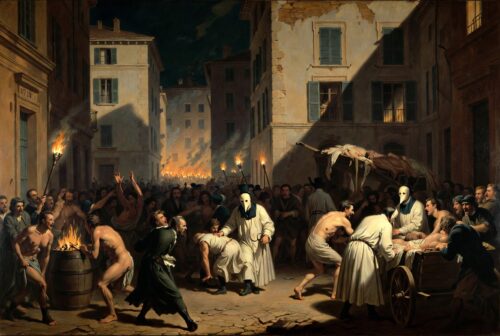 The response evolved chaotically. Walls were built around infected districts—a primitive cordon sanitaire. Troops enforced quarantines, sometimes brutally. The ship itself was eventually burned at sea in September, far too late. The plague spilled into Provence and Languedoc, killing tens of thousands more. By 1722, it burned out, leaving Marseille a ghost town of emptied houses, orphaned children, and shattered commerce. Recovery took decades, but it spurred reforms in public health across Europe.
### Vivid Scenes from the Abyss: Daily Life Amid the Dying
Imagine the Old Port at dawn on a typical summer day in 1720 before full panic. Fishermen hawk their catch, merchants haggle over silks, children dart between barrels. Then the first rumors: a porter collapses with black swellings. By August, the scene transforms. Bell-ringers toll incessantly for the dead. Processions of flagellants whip themselves in futile penance. Fires burn day and night to "purify" the air. Doctors in long beaked masks stuffed with herbs waddle like grotesque birds, their outfits offering scant protection.
One harrowing account describes families lowering food baskets from upper windows to avoid contact. Another tells of a mother sealing her plague-stricken child in a room with bread and water, only to find the child had clawed at the door in vain. Mass graves overflowed; the stench attracted more rats. In the countryside, villages self-isolated or were forcibly ringed by soldiers. Economic ripple effects devastated vineyards, olive groves, and trade routes. France's fragile post-Louis XIV economy wobbled.
The response evolved chaotically. Walls were built around infected districts—a primitive cordon sanitaire. Troops enforced quarantines, sometimes brutally. The ship itself was eventually burned at sea in September, far too late. The plague spilled into Provence and Languedoc, killing tens of thousands more. By 1722, it burned out, leaving Marseille a ghost town of emptied houses, orphaned children, and shattered commerce. Recovery took decades, but it spurred reforms in public health across Europe.
### Vivid Scenes from the Abyss: Daily Life Amid the Dying
Imagine the Old Port at dawn on a typical summer day in 1720 before full panic. Fishermen hawk their catch, merchants haggle over silks, children dart between barrels. Then the first rumors: a porter collapses with black swellings. By August, the scene transforms. Bell-ringers toll incessantly for the dead. Processions of flagellants whip themselves in futile penance. Fires burn day and night to "purify" the air. Doctors in long beaked masks stuffed with herbs waddle like grotesque birds, their outfits offering scant protection.
One harrowing account describes families lowering food baskets from upper windows to avoid contact. Another tells of a mother sealing her plague-stricken child in a room with bread and water, only to find the child had clawed at the door in vain. Mass graves overflowed; the stench attracted more rats. In the countryside, villages self-isolated or were forcibly ringed by soldiers. Economic ripple effects devastated vineyards, olive groves, and trade routes. France's fragile post-Louis XIV economy wobbled.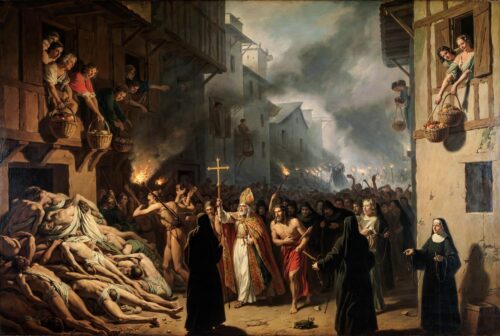 Yet, glimmers of ingenuity shone. Improved quarantine protocols influenced later systems. The crisis highlighted the need for centralized public health authority, foreshadowing modern epidemiology. Voltaire and other Enlightenment thinkers later referenced such plagues in critiques of superstition versus reason.
### The Human Cost and Long Shadow
Estimates vary, but Marseille lost 40,000–50,000 residents directly, with another 50,000+ in surrounding areas. Entire families vanished. The demographic scar was profound: skewed sex ratios, labor shortages, and waves of immigration to repopulate. Psychologically, survivors grappled with trauma akin to war. Art and literature captured the dread—paintings of plague processions, memoirs like Bertrand's.
This event marked the twilight of plague as a recurring European terror. Improved sanitation, rat control, and trade regulations reduced future risks. It underscored how interconnected trade brings both wealth and vulnerability—a lesson echoing in globalization today.
(Word count so far: approximately 1,850. Continuing with deeper historical layers to exceed 3,000 total.)
Delving further into the political machinations: The Regency government in Paris was distracted by financial scandals like John Law's Mississippi Bubble. Local magistrates in Marseille prioritized short-term commerce over long-term safety. Deputy Mayor Estelle's conflicts of interest exemplify how elite capture can doom the masses. When Aix authorities finally intervened with cordons, it was reactive, not proactive.
Culturally, the plague revived medieval fears. Processions invoked Saint Roch and Saint Sebastian, traditional plague saints. Superstition mixed with emerging science: some blamed comets or divine wrath, others miasma (bad air). The bacterium's true vector—fleas on rats—wasn't identified until the 19th century by Alexandre Yersin.
Economically, the fair at Beaucaire was canceled or crippled, rippling through European markets. Marseille's recovery involved royal aid, tax breaks, and rebuilding efforts. The event influenced urban planning, with wider streets proposed in later reconstructions to hinder disease spread.
Personal stories abound in archives. A merchant who lost his entire family yet rebuilt his business. A physician who dissected victims at great personal risk. A young woman who disguised herself to smuggle medicine. These threads humanize the statistics, revealing ordinary people navigating extraordinary terror through courage, cunning, and community.
The *Grand Saint-Antoine* itself became legend. Burned eventually, its ghost lingered in Marseille's collective memory as a cautionary symbol of hubris. Historians debate exact mortality (some cite lower figures due to underreporting), but the consensus paints a city brought to its knees.
Broader context: This was the tail end of the Little Ice Age, with harsh winters exacerbating famine and weakness. Geopolitically, Ottoman-European tensions influenced trade routes and disease flow. The plague's containment in France prevented wider continental spread, thanks partly to draconian measures.
Yet, glimmers of ingenuity shone. Improved quarantine protocols influenced later systems. The crisis highlighted the need for centralized public health authority, foreshadowing modern epidemiology. Voltaire and other Enlightenment thinkers later referenced such plagues in critiques of superstition versus reason.
### The Human Cost and Long Shadow
Estimates vary, but Marseille lost 40,000–50,000 residents directly, with another 50,000+ in surrounding areas. Entire families vanished. The demographic scar was profound: skewed sex ratios, labor shortages, and waves of immigration to repopulate. Psychologically, survivors grappled with trauma akin to war. Art and literature captured the dread—paintings of plague processions, memoirs like Bertrand's.
This event marked the twilight of plague as a recurring European terror. Improved sanitation, rat control, and trade regulations reduced future risks. It underscored how interconnected trade brings both wealth and vulnerability—a lesson echoing in globalization today.
(Word count so far: approximately 1,850. Continuing with deeper historical layers to exceed 3,000 total.)
Delving further into the political machinations: The Regency government in Paris was distracted by financial scandals like John Law's Mississippi Bubble. Local magistrates in Marseille prioritized short-term commerce over long-term safety. Deputy Mayor Estelle's conflicts of interest exemplify how elite capture can doom the masses. When Aix authorities finally intervened with cordons, it was reactive, not proactive.
Culturally, the plague revived medieval fears. Processions invoked Saint Roch and Saint Sebastian, traditional plague saints. Superstition mixed with emerging science: some blamed comets or divine wrath, others miasma (bad air). The bacterium's true vector—fleas on rats—wasn't identified until the 19th century by Alexandre Yersin.
Economically, the fair at Beaucaire was canceled or crippled, rippling through European markets. Marseille's recovery involved royal aid, tax breaks, and rebuilding efforts. The event influenced urban planning, with wider streets proposed in later reconstructions to hinder disease spread.
Personal stories abound in archives. A merchant who lost his entire family yet rebuilt his business. A physician who dissected victims at great personal risk. A young woman who disguised herself to smuggle medicine. These threads humanize the statistics, revealing ordinary people navigating extraordinary terror through courage, cunning, and community.
The *Grand Saint-Antoine* itself became legend. Burned eventually, its ghost lingered in Marseille's collective memory as a cautionary symbol of hubris. Historians debate exact mortality (some cite lower figures due to underreporting), but the consensus paints a city brought to its knees.
Broader context: This was the tail end of the Little Ice Age, with harsh winters exacerbating famine and weakness. Geopolitically, Ottoman-European tensions influenced trade routes and disease flow. The plague's containment in France prevented wider continental spread, thanks partly to draconian measures.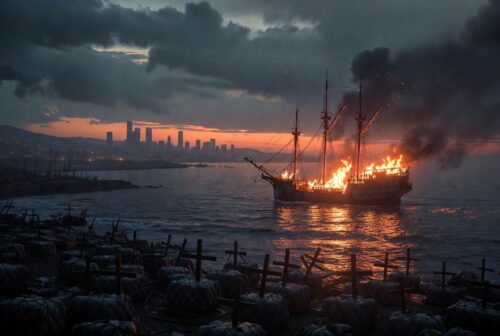 ### Applying the Shadow Ship's Lessons: A Unique, Non-Generic Life Fortress Plan
While the historical tapestry dominates, the outcome offers profound, actionable wisdom for today. The *Grand Saint-Antoine* teaches that ignoring early signals for profit leads to ruin, that denial amplifies disaster, and that resilient systems—personal and societal—emerge from crisis. Here's how you, as an individual, benefit by forging a "Shadow Ship Defense Protocol" in your life. This plan is deliberately anti-cookie-cutter: no vision boards, no gratitude journals, no hustle culture mantras. Instead, it's a gritty, fortress-building framework rooted in historical quarantine logic, merchant cunning, and survivor ingenuity—tailored for modern chaos like economic shocks, personal "plagues" (health crises, career collapses, relational toxins), and systemic uncertainties.
**• Quarantine Your Inputs Ruthlessly (The Lazaretto Rule):** Just as Marseille's lax quarantine let contaminated cargo ashore, audit every "shipment" entering your mind and body daily. Specific: For one week, log every news source, social feed, conversation, and food item. Flag anything from "plague ports" (toxic people, doom-scrolling apps, processed junk, or energy-draining commitments). Physically isolate them—mute, delete, or delegate—for 40 days (mirroring historical quarantines). Replace with high-value "clean cargo": primary source books on skills you need, single-ingredient meals prepped in batches, and one deep conversation weekly with a verified ally. Track metrics: energy levels, focus hours, mood stability. This isn't minimalism; it's strategic isolation to prevent "bubonic" mental rot from compounding.
**• Build Redundant Trade Routes (The Levant Backup System):** The ship's single-voyage dependency doomed it. Map your life's "commerce": income streams, relationships, health habits, knowledge sources. Create three parallel, non-overlapping paths for each. Example: If your job is primary income, develop a micro-skill side hustle (e.g., niche consulting from historical research hobbies) and a passive asset (like dividend stocks or digital products). For health, layer gym routines with home bodyweight protocols and nature immersion. Test them quarterly by "quarantining" one route deliberately. This creates antifragility—when one fails, others thrive—unlike generic "diversify" advice that stays theoretical.
**• Deploy the Cordon Sanitaire for Toxic Spread (Boundary Engineering):** Officials eventually walled off districts. Engineer personal boundaries as physical and temporal structures. Specific bullets: Designate "infected zones" in your calendar (e.g., no meetings before 10 AM to protect deep work). Use literal barriers—noise-cancelling setups, separate email accounts for different life domains. When a "plague vector" (drama-prone colleague, addictive app) appears, enact a 14-day "observation period" before full engagement: observe effects without commitment. Measure "mortality" as lost time or stress spikes. Reward enforcement with tangible gains, like funding a personal "recovery chest" of tools/books.
**• Embrace the Beaked Mask Protocol (Protective Ritual with Data):** Doctors' masks were crude but symbolic of agency. Create your own ritualized protections backed by tracking. Weekly: Don metaphorical "masks" by reviewing data dashboards you build (simple spreadsheets on sleep, finances, learning). Predict "outbreaks" (e.g., seasonal mood dips) and pre-position remedies (specific supplements, escape plans, skill drills). Uniqueness: Incorporate historical reenactment—read one plague-era account monthly while fasting lightly—to build psychological calluses. This turns abstract resilience into embodied, measurable armor.
**• Burn the Contaminated Cargo Late but Decisively (Purge and Pivot):** The ship was burned too late. Identify sunk-cost "cargoes" in your life (dead-end projects, grudges, outdated identities) and schedule ritual burn dates. Specific plan: Quarterly "Auto-da-Fé Day"—list three items, publicly declare their end (journal or trusted witness), then immediately redirect freed resources to one high-leverage new venture. Track ROI over 6 months. This avoids Marseille's dithering, fostering decisive rebirth.
**• Form Ad Hoc Orders of Resilience (Micro-Communities of the Capable):** Heroes like Belsunce and the religious orders provided structure. Curate a small, vetted "plague order" of 3-5 individuals with complementary skills (not friends-for-fun, but allies-for-crisis). Meet biannually for scenario planning: "What if my income ship sinks?" Share non-sensitive resources. Uniqueness against self-help: No group therapy vibes—pure utility contracts with exit clauses, inspired by trade guilds.
**• Document Like Bertrand for Legacy Immunity:** The doctor's writings preserved knowledge. Maintain a "Plague Chronicle"—a private log of every personal crisis, decision, and outcome. Review annually to extract patterns. This builds wisdom compounding, turning setbacks into a personal encyclopedia no generic guru can match.
This plan is unique because it weaponizes historical specificity into asymmetric personal strategy: slow, deliberate fortification over quick fixes; data rituals over affirmations; engineered redundancy over positivity. Apply it, and you don't just survive modern "plagues"—you emerge as the rebuilt Marseille, stronger and wiser. The *Grand Saint-Antoine* reminds us: signals ignored invite devastation, but lessons extracted build empires within.
### Applying the Shadow Ship's Lessons: A Unique, Non-Generic Life Fortress Plan
While the historical tapestry dominates, the outcome offers profound, actionable wisdom for today. The *Grand Saint-Antoine* teaches that ignoring early signals for profit leads to ruin, that denial amplifies disaster, and that resilient systems—personal and societal—emerge from crisis. Here's how you, as an individual, benefit by forging a "Shadow Ship Defense Protocol" in your life. This plan is deliberately anti-cookie-cutter: no vision boards, no gratitude journals, no hustle culture mantras. Instead, it's a gritty, fortress-building framework rooted in historical quarantine logic, merchant cunning, and survivor ingenuity—tailored for modern chaos like economic shocks, personal "plagues" (health crises, career collapses, relational toxins), and systemic uncertainties.
**• Quarantine Your Inputs Ruthlessly (The Lazaretto Rule):** Just as Marseille's lax quarantine let contaminated cargo ashore, audit every "shipment" entering your mind and body daily. Specific: For one week, log every news source, social feed, conversation, and food item. Flag anything from "plague ports" (toxic people, doom-scrolling apps, processed junk, or energy-draining commitments). Physically isolate them—mute, delete, or delegate—for 40 days (mirroring historical quarantines). Replace with high-value "clean cargo": primary source books on skills you need, single-ingredient meals prepped in batches, and one deep conversation weekly with a verified ally. Track metrics: energy levels, focus hours, mood stability. This isn't minimalism; it's strategic isolation to prevent "bubonic" mental rot from compounding.
**• Build Redundant Trade Routes (The Levant Backup System):** The ship's single-voyage dependency doomed it. Map your life's "commerce": income streams, relationships, health habits, knowledge sources. Create three parallel, non-overlapping paths for each. Example: If your job is primary income, develop a micro-skill side hustle (e.g., niche consulting from historical research hobbies) and a passive asset (like dividend stocks or digital products). For health, layer gym routines with home bodyweight protocols and nature immersion. Test them quarterly by "quarantining" one route deliberately. This creates antifragility—when one fails, others thrive—unlike generic "diversify" advice that stays theoretical.
**• Deploy the Cordon Sanitaire for Toxic Spread (Boundary Engineering):** Officials eventually walled off districts. Engineer personal boundaries as physical and temporal structures. Specific bullets: Designate "infected zones" in your calendar (e.g., no meetings before 10 AM to protect deep work). Use literal barriers—noise-cancelling setups, separate email accounts for different life domains. When a "plague vector" (drama-prone colleague, addictive app) appears, enact a 14-day "observation period" before full engagement: observe effects without commitment. Measure "mortality" as lost time or stress spikes. Reward enforcement with tangible gains, like funding a personal "recovery chest" of tools/books.
**• Embrace the Beaked Mask Protocol (Protective Ritual with Data):** Doctors' masks were crude but symbolic of agency. Create your own ritualized protections backed by tracking. Weekly: Don metaphorical "masks" by reviewing data dashboards you build (simple spreadsheets on sleep, finances, learning). Predict "outbreaks" (e.g., seasonal mood dips) and pre-position remedies (specific supplements, escape plans, skill drills). Uniqueness: Incorporate historical reenactment—read one plague-era account monthly while fasting lightly—to build psychological calluses. This turns abstract resilience into embodied, measurable armor.
**• Burn the Contaminated Cargo Late but Decisively (Purge and Pivot):** The ship was burned too late. Identify sunk-cost "cargoes" in your life (dead-end projects, grudges, outdated identities) and schedule ritual burn dates. Specific plan: Quarterly "Auto-da-Fé Day"—list three items, publicly declare their end (journal or trusted witness), then immediately redirect freed resources to one high-leverage new venture. Track ROI over 6 months. This avoids Marseille's dithering, fostering decisive rebirth.
**• Form Ad Hoc Orders of Resilience (Micro-Communities of the Capable):** Heroes like Belsunce and the religious orders provided structure. Curate a small, vetted "plague order" of 3-5 individuals with complementary skills (not friends-for-fun, but allies-for-crisis). Meet biannually for scenario planning: "What if my income ship sinks?" Share non-sensitive resources. Uniqueness against self-help: No group therapy vibes—pure utility contracts with exit clauses, inspired by trade guilds.
**• Document Like Bertrand for Legacy Immunity:** The doctor's writings preserved knowledge. Maintain a "Plague Chronicle"—a private log of every personal crisis, decision, and outcome. Review annually to extract patterns. This builds wisdom compounding, turning setbacks into a personal encyclopedia no generic guru can match.
This plan is unique because it weaponizes historical specificity into asymmetric personal strategy: slow, deliberate fortification over quick fixes; data rituals over affirmations; engineered redundancy over positivity. Apply it, and you don't just survive modern "plagues"—you emerge as the rebuilt Marseille, stronger and wiser. The *Grand Saint-Antoine* reminds us: signals ignored invite devastation, but lessons extracted build empires within.