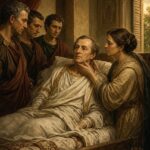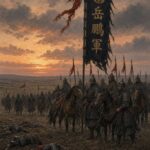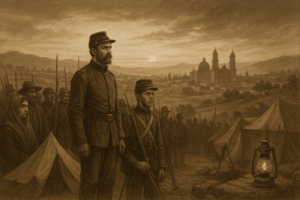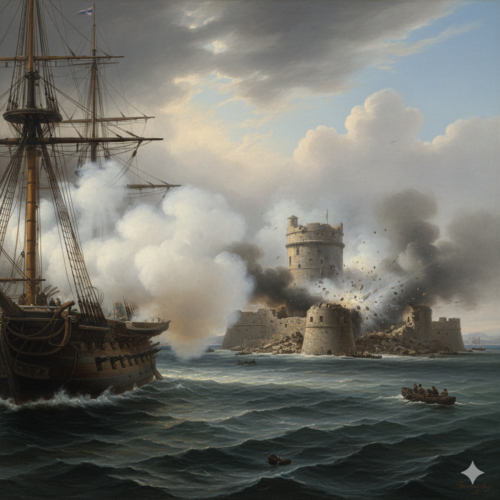

Seventy-five years after the fighting stopped, a Byzantine historian named Leo the Deacon walked the plain near Anchialus on the Black Sea coast and still saw the bones. Tens of thousands of them. Roman bones. Unburied, uncollected, lying where the men had fallen or drowned or been cut down while running. The field itself had become a kind of open-air ossuary. Leo wrote that the piles were still visible, a permanent and embarrassing monument to one of the worst disasters ever suffered by a Byzantine field army. The date of that disaster was 20 August 917. The place was the Achelous River, a modest stream near the fortress of Anchialus (modern Pomorie in Bulgaria). The victor was a man the Byzantines themselves had once educated and half-admired: Simeon, the third son of Boris I, the ruler who had Christianized the Bulgars, a man who had spent roughly a decade in Constantinople studying rhetoric, Aristotle, Demosthenes, theology, and the entire apparatus of Byzantine high culture until the chroniclers called him “the half-Greek.”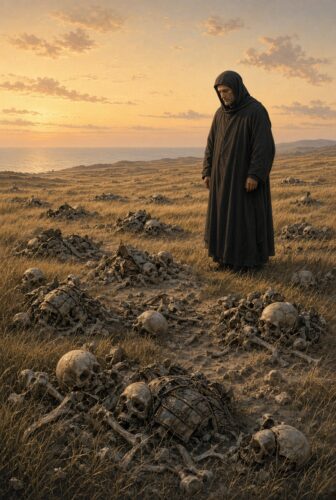
That half-Greek scholar, riding a white horse that would be killed under him that same day, turned the educational gift of his former hosts into the instrument of their near-annihilation.
### The Making of a Dangerous Student
Simeon was born around 864 or 865, shortly after his father Boris had forced Christianity on Bulgaria. As a younger son he was not the designated heir. Boris intended him for the church. Around the age of thirteen or fourteen the boy was sent to Constantinople. He lived there for something like ten years. He studied at the prestigious Magnaura school, absorbed Greek to the point of fluency, and immersed himself in the rhetorical and philosophical curriculum that produced Byzantine officials and emperors. He took monastic vows for a time. He translated religious texts. When he returned to Bulgaria around 888 he settled at the monastery near Preslav and continued the work of turning Greek learning into Slavonic literature. The court of Preslav under his later rule would become one of the great centers of early medieval Slavic culture precisely because its ruler had been formed inside the enemy’s own intellectual machine.
Then politics intervened. Boris retired to a monastery. The elder brother Vladimir proved a disaster, attempting a pagan reaction. Boris emerged long enough to depose and blind him. Simeon, the educated younger son, took the throne in 893. He was no longer a monk. He was a ruler who understood Byzantine diplomacy, Byzantine military theory, Byzantine vanity, and Byzantine weakness better than many of the men who sat in the palace at Constantinople.
The relationship between Bulgaria and Byzantium had been regulated by tribute after earlier wars. When Emperor Leo VI died in 912, his brother Alexander refused to continue the payments. Simeon saw opportunity. Alexander himself died almost immediately. The infant Constantine VII was left under a shifting regency. For a brief moment it seemed a diplomatic solution might work: the patriarch Nicholas Mystikos arranged a kind of ceremonial recognition and even floated the idea that one of Simeon’s daughters might marry the young emperor. Simeon began styling himself tsar and using the Greek imperial title *basileus*. Then the regency shifted. Constantine’s mother Zoe took power, repudiated the marriage arrangement, and prepared for war. Simeon answered with raids into Thrace. Adrianople opened its gates to him in 914. The stage was set for a decisive confrontation.
### The Byzantine Counter-Stroke That Walked into the Hills
By 917 the Byzantine government decided the Bulgarian problem required a full solution. A large army was assembled under Leo Phokas the Elder, a member of the powerful military family that would later produce emperors. Estimates of its size vary, but contemporary and near-contemporary accounts make clear it was a major expedition, drawing on the professional tagmata and thematic troops, including reinforcements from Asia Minor. The navy under Romanos Lekapenos was to cooperate along the Black Sea coast and the Danube. Attempts were made to bring Pechenegs and Magyars into the alliance; those efforts largely failed, partly because Bulgarian diplomacy undercut them. The plan was ambitious: land near Anchialus, push inland, link with northern allies, and break Bulgarian power in the eastern Balkans.
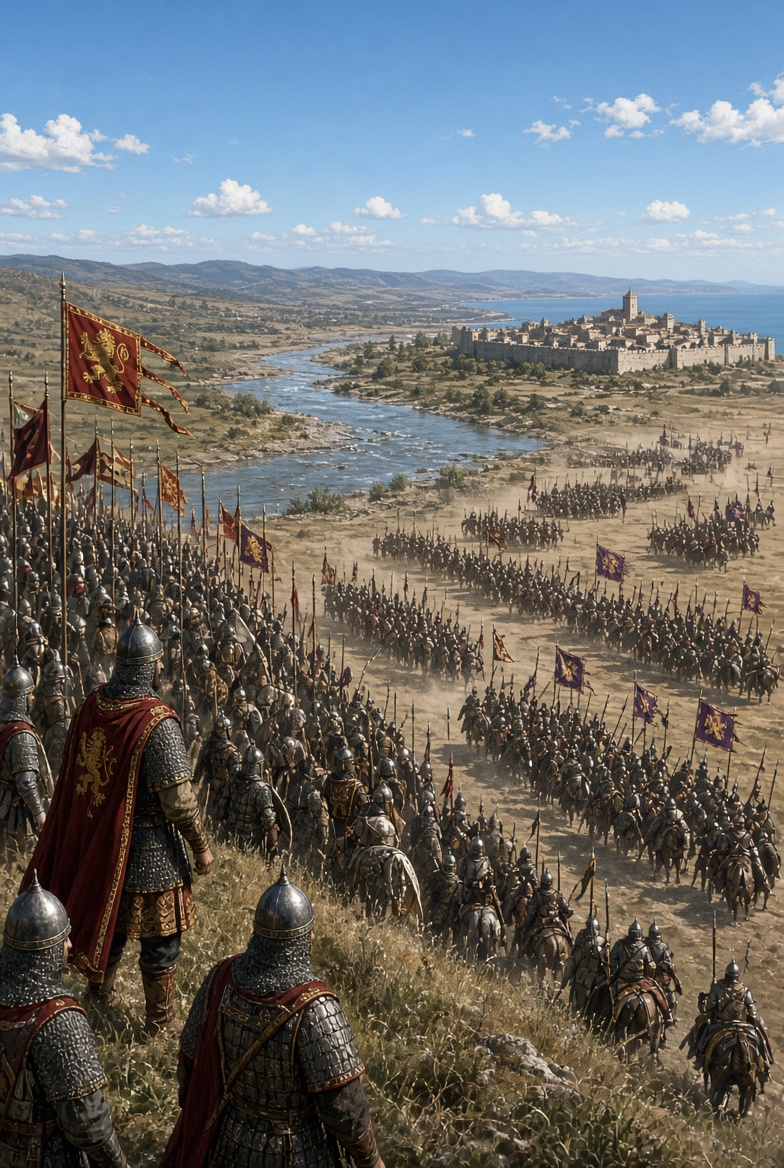
The army advanced and camped near the fortress. Simeon, who had been watching, concentrated his own forces on the heights overlooking the Achelous. Modern estimates put the Bulgarian army at roughly half the Byzantine strength or less—perhaps 15,000 against a larger imperial host—but numbers in medieval sources are always slippery. What mattered more was positioning and timing. Simeon placed strong forces on the wings, left a deliberately weaker center, and kept a substantial cavalry reserve hidden behind the hills under his personal command. He was using the classic technique of inviting an overconfident advance into a killing ground.
On the morning of 20 August the Byzantines attacked. Their heavy cavalry drove hard into the Bulgarian center. The fighting was fierce enough that the Bulgarian line gave ground and began to fall back across the river. The imperial troops, smelling victory, pressed the pursuit. Formations loosened. Discipline frayed. At some point a rumor swept the Byzantine ranks that Leo Phokas himself had been killed. Whether the rumor was planted or spontaneous hardly matters. Panic is contagious in a close-order army that believes its commander is dead.
Simeon saw the disorder. He ordered his main force to halt its withdrawal and stand. Then he led the hidden cavalry in a sudden strike against the Byzantine left and rear. The white horse went down under him in the fighting; he continued on foot or on another mount. Bulgarian infantry pressed from the front. The Byzantine army, already strung out in pursuit, collapsed into a rout. Men were cut down on the plain, drowned in the river, or hunted through the broken ground. Commanders including Constantine Lips and John Grapson fell. Leo Phokas escaped to Mesembria and later by ship, but the army he had brought north largely ceased to exist as a fighting force.
Leo the Deacon, writing decades later, recorded the lasting physical evidence: the field near Anchialus still covered with heaps of Roman bones when he knew it. Theophanes Continuatus ranked the disaster among the gravest in Byzantine military history. It was not merely a lost battle. It was the kind of catastrophe that leaves a landscape scarred for generations.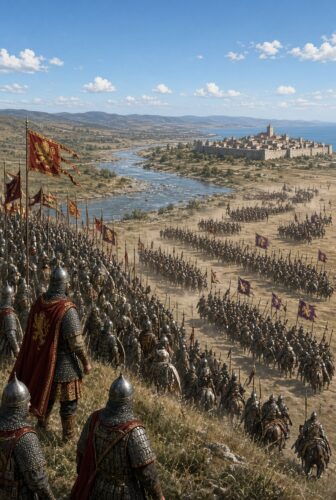
### Aftermath and the Price of Recognition
The survivors fled toward Constantinople. Simeon pursued. At Katasyrtai, not far from the capital, the remnants were defeated again in a night action. The road to the city itself appeared open, yet the massive walls and the remaining fleet still protected the imperial heart. Simeon could not take Constantinople by storm. What he could do was force political recognition. He entered the city in some accounts under controlled conditions and was acknowledged with the imperial title. The marriage alliance he wanted still eluded him; Zoe refused. Byzantine internal politics continued to churn. Romanos Lekapenos eventually seized power, confined Zoe to a monastery, and managed the long aftermath.
Simeon spent the remaining years of his reign consolidating Balkan hegemony, campaigning against Serbs and others, and turning Preslav into a genuine cultural capital. He never sat on the throne in Constantinople, but for a generation Bulgaria was the dominant power on the peninsula outside the city walls and the southern extremities. When he died in 927 his son Peter secured a peace that included tribute, formal recognition of the imperial title, and autocephaly for the Bulgarian church. The victory at the Achelous had bought decades of equality and cultural flowering.
The bones on the field remained a quiet rebuke. An empire that had educated its future enemy had been broken by a man who understood its methods better than many of its own generals.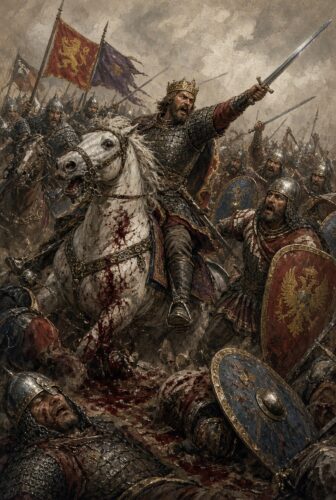
### What the Bones Still Teach
The decisive fact of 20 August 917 is not merely that a smaller army defeated a larger one. It is that a man formed inside the adversary’s intellectual system used that very formation against it. Simeon had studied Byzantine rhetoric, strategy, and court culture. He knew how Byzantine armies moved, how their commanders thought about prestige and rumor, how fragile cohesion becomes when the chain of command appears broken. He did not invent a new form of warfare from nothing. He turned the tools of the dominant culture into instruments of its temporary humiliation.
That principle travels.
A person living today benefits from the historical fact by treating every dominant system—corporate, academic, technological, cultural—as a library that can be entered, mastered, and then selectively inverted. The outcome of Achelous was not romantic resistance. It was superior application of the opponent’s own knowledge at the precise moment the opponent’s internal coordination failed.
**Specific applications drawn directly from the event:**
– Master the language and categories of the current power structure so thoroughly that its practitioners begin to regard you as one of them, the way Byzantines called Simeon half-Greek. Fluency creates access and lowers defensive suspicion.
– Study the operational doctrine of the dominant force until you can predict the sequence of its advances and the points at which overconfidence produces disorder. Simeon watched the Byzantine army commit to pursuit and then struck the moment formations loosened.
– Maintain a hidden reserve of capability that is not visible in the early stages of engagement. The cavalry behind the hills was decisive precisely because it was not committed until the enemy had already expended itself.
– Recognize that rumor and perceived leader failure can collapse an organization faster than pure combat strength. The reported death of Leo Phokas did more damage than many actual casualties.
– Accept that total conquest of the adversary’s capital may remain impossible even after a crushing field victory; the value of the victory may lie instead in forced recognition and long-term autonomy.
– Convert educational capital acquired inside the dominant culture into independent institutional strength (Preslav’s literary and ecclesiastical flowering) rather than remaining a permanent subordinate.
**The Achelous Counter-Library Plan**
This is not a generic productivity system. It is a deliberate, time-bounded campaign modeled on the sequence Simeon followed: enter the library, internalize it, wait for the moment of overextension, strike with a hybrid method the original owners did not expect, then consolidate recognition rather than endless war.
Phase 1 (Days 1–30): Library Infiltration
Choose one domain in which another person, institution, or platform currently holds clear advantage over you. Acquire its primary texts, internal documents if accessible, recorded lectures, process manuals, and public self-descriptions. Read them not as a critic but as a student preparing for examination. Produce daily written summaries in the exact vocabulary and categories the domain itself uses. The goal is to reach the point at which a native practitioner would accept your summaries as accurate.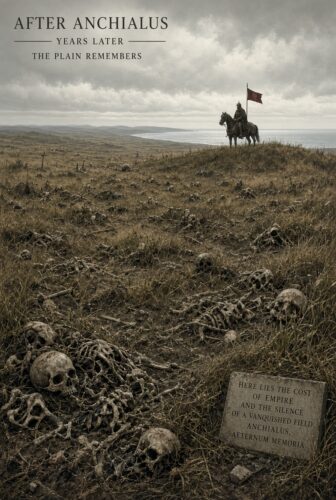
Phase 2 (Days 31–60): Doctrine Mapping
Diagram the sequence by which the dominant actor normally advances: how it recruits, how it allocates resources, how it responds to challenge, where its prestige is most fragile, and which internal signals (public statements, leadership changes, product launches) historically precede disorder. Identify the modern equivalent of the “rumor that the commander is dead”—the single piece of information that, if believed, would cause coordinated action to fray.
Phase 3 (Days 61–90): Reserve Construction
While continuing surface-level engagement on the dominant actor’s terms, quietly build a parallel capability that combines the best of their methods with one element they cannot easily copy (a speed advantage, a distribution channel they ignore, a synthesis of two fields they keep separate, a cost structure they cannot match). Do not announce it. Keep the reserve literally or figuratively behind the hills.
Phase 4 (The Strike Window):
Wait for a genuine moment of internal disorder on their side—leadership transition, public failure, overcommitment to a prestige project, or the spread of a credibility-damaging rumor. At that moment deploy the reserve capability in a concentrated action aimed at the left flank of their current advance. The goal is not annihilation. It is to force recognition of a new equilibrium in which your autonomy or equal standing is the cheapest resolution for them.
Phase 5 (Consolidation):
After the initial success, stop short of attempting to occupy their symbolic capital. Convert the temporary advantage into durable institutional recognition—contracts, titles, independent platforms, or formal acknowledgments of parity. Then shift energy into building the cultural and productive capacity that makes the new position self-sustaining, exactly as Simeon poured resources into Preslav’s intellectual life rather than endless sieges of Constantinople.
The plan is unique because it refuses the usual self-help insistence on constant visible action or pure originality. It requires deliberate apprenticeship inside the enemy’s system, patient non-commitment of strength, and a willingness to let the opponent’s own momentum create the opening. It treats education not as self-improvement theater but as reconnaissance. It measures success not by total victory but by the forced concession of title and the long, quiet flowering that follows.
The bones at Anchialus remained visible for three-quarters of a century because no one bothered to clear them. Empires prefer not to look too closely at the places where their own educated sons turned the curriculum against the classroom. On 20 August 917 a former student on a white horse taught that lesson in the most permanent medium available: the unburied dead. The lesson still holds.
Share: