
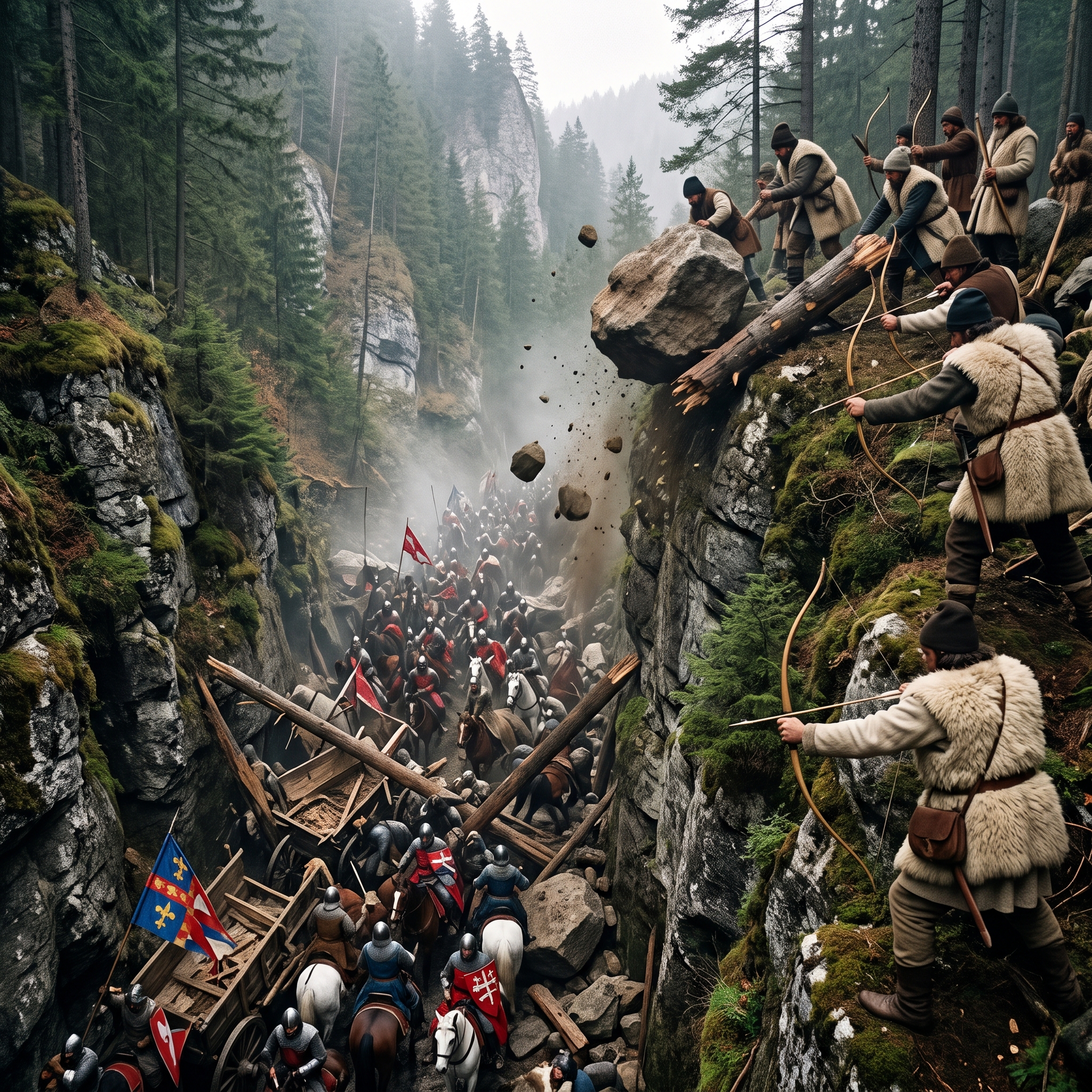
On the freezing, mist-choked afternoon of November 12, 1330, the most powerful monarch in Central Europe was not sitting on a velvet throne, signing treaties, or dining on roasted swan. He was scrambling desperately through the mud and pine needles of a narrow Carpathian mountain gorge, wearing the blood-stained, battered armor of a dead bodyguard.
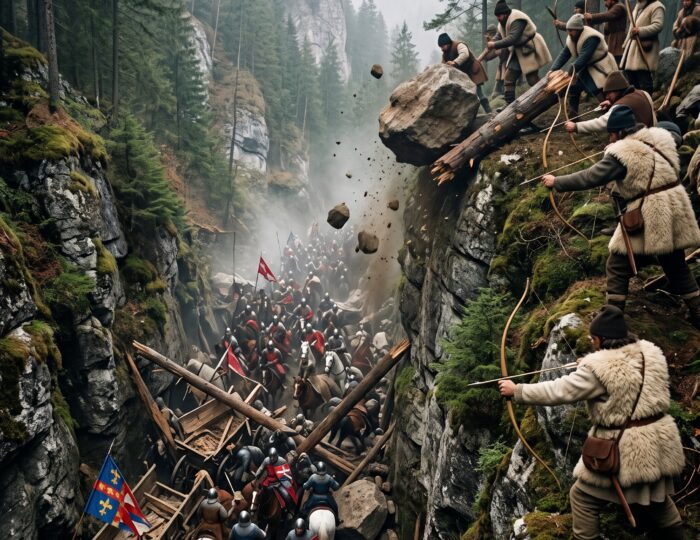
Behind him, echoing off the sheer limestone cliffs of what is now southern Romania, was the sound of thirty thousand of the finest heavy cavalrymen, armored knights, and royal retainers in Christendom being systematically pulverized by boulders, uprooted pine trees, and iron-tipped arrows. Above him, perched along the jagged ridgelines like mountain goats in sheepskin coats, stood a ragged coalition of Wallachian shepherds, archers, and local hill-fighters led by a man the king had publicly mocked just weeks earlier as a mere “shepherd of my sheep”.
That four-day slaughter, which reached its catastrophic climax on November 12, 1330, is known to history as the Battle of Posada.
In the grand, glossy textbooks of Western civilization, Posada barely gets a passing nod compared to Agincourt, Crécy, or Waterloo. Yet, in the brutal arithmetic of real-world strategy, November 12, 1330, is one of the most violently instructive days in human history. It is the day a regional superpower walked into a canyon fueled entirely by ego, linear thinking, and contempt for an underdog—and walked out stripped of its army, its treasury, its royal seal, and its imperial ambitions. More importantly, it is the exact day an independent Romanian state was forged out of granite, gravity, and asymmetric genius.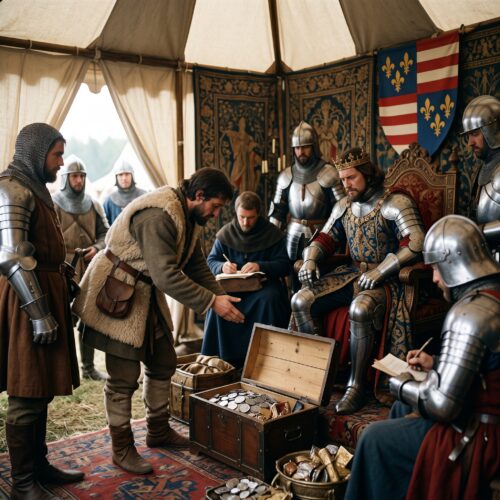
If you have ever felt outgunned by a massive corporation, cornered by a bureaucratic bully, outspent by a wealthier competitor, or trapped in a life situation where the “rules of engagement” were clearly written by someone holding a much bigger sword, then what happened in that Carpathian ravine nearly seven hundred years ago is not just medieval trivia. It is your personal operating manual.
Let us take a deep, unvarnished dive into the mud, arrogance, and sheer tactical brilliance of November 12, 1330—and then turn that medieval ambush into a modern, anti-fluff survival strategy you can deploy before sunset.
Act I: The Angevin Peacock and the “Shepherd” of the Carpathians
To understand why thirty thousand heavily armored Hungarians ended up trapped in a rocky death-funnel in November 1330, you first have to understand the staggering, almost comical size of King Charles I of Hungary’s ego.
Born Charles Robert of Anjou in Naples in 1288, Charles was a scion of one of Europe’s most prestigious royal houses—the Capetian House of Anjou, directly descended from the kings of France and tied by blood to the thrones of Naples, Sicily, and Jerusalem. When he arrived in Hungary as a teenager to claim a fractured, chaotic crown, nobody gave him much of a chance. The Hungarian kingdom was effectively carved up by rogue oligarchs—petty warlords who minted their own coins, commanded private armies, and treated the monarchy like a decorative paperweight.
To his credit, Charles Robert was no weakling. Over twenty grueling years of civil war, backroom bribery, and ruthless military campaigns, he crushed the oligarchs one by one. By the late 1320s, he had transformed Hungary into a centralized, gold-rich juggernaut. Hungary produced the lion’s share of Europe’s gold and silver at the time, and Charles used that glittering river of bullion to build a glittering, Western-style feudal war machine. He wore French-tailored silks over Milanese steel, surrounded himself with chivalric knights, and viewed the world through the lens of conventional medieval warfare: big horses, thick plate armor, open fields, and overwhelming brute force.
To the south and east of Charles’s gleaming kingdom, across the towering, jagged wall of the Southern Carpathian Mountains (often called the Transylvanian Alps), lay a rugged, forested, fiercely independent region known to Hungarians as Terra Transalpina—”the land beyond the mountains.” To the people who actually lived there, it was Țara Românească—Wallachia.
Wallachia in the early fourteenth century was the geopolitical equivalent of a scrappy, self-taught mechanic working out of a two-car garage next to a billion-dollar aerospace conglomerate. It was a newly unified patchwork of small valleys, highland pastures, and vital trade routes connecting the Danube River to Transylvania and the Black Sea. And the man who had stitched those valleys together was Voivode Basarab I.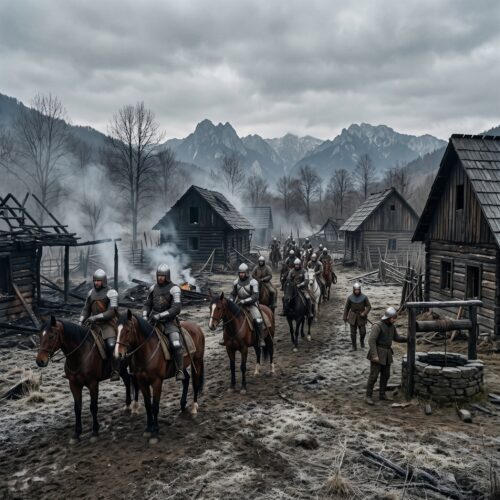
History is delightfully fuzzy on Basarab’s exact pedigree, which only makes his rise more fascinating. His father, Thocomerius, was a local lord of mixed Vlach and Cuman heritage—meaning Basarab had both deep roots in the Carpathian hills and tactical DNA from the nomadic steppe horsemen who had terrified Europe for centuries. Basarab didn’t have golden mines, Gothic cathedrals, or a standing army of plate-armored aristocrats. What he had was absolute mastery of his terrain, fierce loyalty from his people, and an acute, street-smart understanding of leverage.
Initially, Basarab played the diplomatic game with exquisite patience. In a royal charter from July 1324, Charles I comfortably referred to Basarab as “our Transalpine Voivode,” assuming the Wallachian leader was a compliant, tax-paying vassal. Basarab smiled, nodded, and quietly consolidated his power.
Then, in 1325, Basarab decided he was done paying rent to Budapest. He stopped recognizing Hungarian suzerainty, withheld tribute, and seized the Banate of Severin—a strategic, heavily fortified border strip along the Danube that Hungary considered its own front porch. By 1329, Hungarian royal documents were spitting venom, officially branding Basarab “disloyal to the Holy Crown of Hungary” and accusing him of raiding borderlands alongside Bulgarians, Serbs, and Tatars.
Charles Robert was furious, though distracted by other European squabbles. Then, in July 1330, Basarab suffered a rare geopolitical stumble. He sent troops to help his ally, Tsar Michael Shishman of Bulgaria, in a war against Serbia. At the Battle of Velbazhd on July 28, 1330, the Serbs crushed the Bulgarian-Wallachian coalition, and the Bulgarian tsar was killed.
Sitting in his opulent palace at Visegrád, Charles I saw blood in the water. His rebellious vassal had just taken a bruise. In Charles’s mind, this was the perfect moment to march south, crush the upstart Voivode, absorb Wallachia directly into the Hungarian crown, and open a lucrative corridor all the way to the Black Sea.
It was a textbook case of what happens when a powerful executive mistakes a competitor’s temporary setback for total helplessness.
Act II: The Invasion of Arrogance and the Olive Branch That Got Spit On
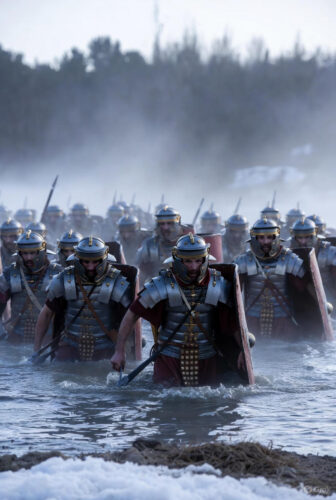
In September 1330, Charles Robert assembled a colossal invasion force. Medieval chroniclers—most notably the anonymous author of the Chronicon Pictum (the Viennese Illuminated Chronicle, written around 1358)—put the size of the Hungarian army at roughly 30,000 men. Even allowing for the medieval habit of rounding up crowd sizes like a concert promoter, it was an enormous, terrifying host: the flower of the Hungarian nobility, heavy cavalry clad in gleaming mail and plate, royal banners fluttering in the early autumn breeze, accompanied by bishops, royal scribes carrying the Great Seal of Hungary, and wagons groaning with luxury tents and silver goblets.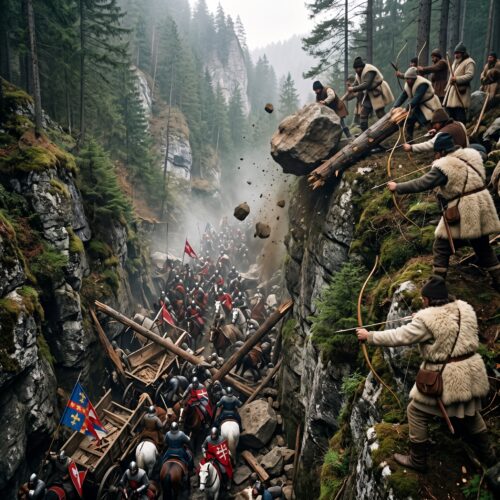
Charles marched across the Danube, slammed into the Banate of Severin, and quickly recaptured the fortress of Severin, immediately handing it over to one of his favorite nobles, Dionysius Szécsi, to rub salt in Basarab’s wounds.
At this exact moment, Basarab I demonstrated why he is revered in Romanian history not merely as a warrior, but as a master strategist.
Basarab looked at his own forces—fewer than 10,000 men, mostly lightly armored horsemen, peasant foot-archers, and highland woodsmen—and then looked at Charles’s 30,000-man steel steamroller. Basarab knew with mathematical certainty that if he met Charles in a traditional, open-field battle on the Wallachian plain, his army would be ground into paste before lunch.
So, Basarab did not puff out his chest. He did not give a motivational speech about dying gloriously in a fair fight. Instead, he sent envoys to Charles’s camp carrying one of the most generous, face-saving peace offers in medieval history.
Basarab offered to:
- Relinquish all claims to the Banate of Severin and leave the fortress peacefully in Charles’s hands.
- Pay an immediate, staggering war indemnity of 7,000 silver marks—a fortune equivalent to roughly 1.5 metric tons of pure silver, enough to fund a European kingdom for years.
- Resume paying a regular annual tribute to the Hungarian crown.
- Send one of his own sons to the royal court at Visegrád as a permanent royal hostage to guarantee his future good behavior.
Think about that offer for a second. Charles Robert had achieved every single strategic objective of his campaign without losing a single nobleman. He had the disputed territory, he had a massive pile of silver, he had future tax revenue, and he had the enemy leader’s own child as insurance.
Charles’s senior military advisors and royal councilors—men who actually understood logistics, mountain weather, and supply chains—begged the king to take the deal. “Accept the peace, Your Majesty,” they urged, “or at the very least, send back a mild and courteous reply”.
Charles Robert refused. Worse than refusing, he decided to deliver a theatrical, humiliating insult designed to flex his royal dominance in front of his court. Looking down at Basarab’s envoys, the king declared:
“Tell Basarab that he is the shepherd of my sheep, and I will drag him out of his mountains by his beard!”
It is one of the most expensive trash-talks ever recorded.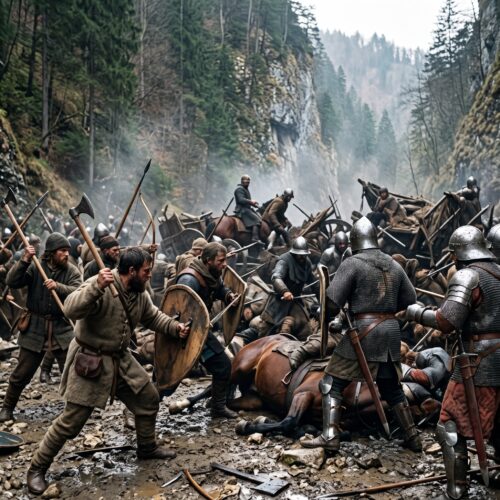
Blind to the calendar—it was already October, and winter arrives early and viciously in the Carpathians—and completely ignoring the fact that his massive army had outrun its supply wagons, Charles ordered his columns to push deeper into the Wallachian heartland. He marched straight toward Basarab’s capital at Curtea de Argeș, expecting a decisive battle where his heavy knights could trample the “shepherd” into the dirt.
Act III: The Scorched Earth and the Disappearing Enemy
When Charles Robert arrived at Curtea de Argeș, he found a ghost town.
Basarab had already evacuated the population, stripped the barns of grain, driven every cow, sheep, and pig up into the high mountain pastures, and burned whatever couldn’t be carried. He even poisoned or fouled the local wells along the Hungarian line of march.
Charles sat in the damaged, empty capital, surrounded by 30,000 hungry men and tens of thousands of starving warhorses. Every day that passed in the crisp autumn air burned through another mountain of oats, salted pork, and firewood. There was no enemy army to charge. There were no castles left to besiege. There was no silver to loot. Just empty wooden houses, cold wind whistling down from the snow-dusted peaks of the Făgăraș Mountains, and the growing, gnawing realization among the Hungarian knights that their supply lines back to Transylvania were stretched across a hundred miles of hostile wilderness.
By the first week of November 1330, the mighty Angevin invasion had quietly rotted from the inside out. Men were eating their own pack animals. Dysentery was creeping through the tents. The proud knights who had ridden south expecting a glorious parade were now shivering in damp wool cloaks, grumbling around smoky campfires.
Charles Robert had no choice. With winter storms threatening to seal the mountain passes forever, the king ordered a general retreat back toward Transylvania.
To get home, the Hungarian army had to cross the Southern Carpathians. And in 1330, you did not simply stroll across the Carpathians with thousands of wagons, heavy warhorses, and supply carts. You had to thread your way through narrow, winding river valleys and rocky defiles carved over millions of years by icy mountain streams.
And here is where Basarab I executed the masterstroke that turned a miserable retreat into an apocalyptic annihilation.
According to medieval accounts, Basarab realized that a cornered, starving army of 30,000 men is still dangerous if it knows where it is going. So, as Charles’s vanguard approached the foothills, Wallachian intermediaries approached the king under a flag of truce. They feigned submission, assured Charles that Basarab had no desire to fight, and offered local guides to show the Hungarian army the quickest, smoothest pass back into Transylvania.
Exhausted, freezing, and desperate to get his starving army home, Charles Robert swallowed the bait whole. He agreed to a truce and allowed the local guides to lead his 30,000-man column straight into the mouth of a narrow, steep-walled gorge known to history as Posada.
Act IV: Four Days in the Meat Grinder (November 9–12, 1330)
Historians have spent centuries arguing over the exact GPS coordinates of Posada—some place it in the Loviștea depression along the Olt River valley, others near the Bran Pass or the Rucăr-Bran corridor, and still others along the Prahova valley or near Mehadia. Regardless of which specific granite canyon holds the rusted arrowheads, the geography described in the Chronicon Pictum is terrifyingly clear.
Imagine a rocky funnel several miles long, barely wide enough in places for two wagons to pass abreast. On either side, vertical cliffs and steep, densely forested slopes shoot straight up into the grey November sky. At the bottom runs a cold, rocky stream bed choked with boulders and fallen timber.
On Friday, November 9, 1330, the vanguard of the Hungarian army entered the gorge. Behind them stretched a miles-long traffic jam of heavy cavalry, infantrymen, baggage carts, camp followers, priests, and royal officials. Because the canyon was so narrow, the army could not form battle lines. Knights riding knee-to-knee could barely turn their horses around.
When the bulk of the Hungarian column was wedged deep inside the stone corridor, the local guides vanished into the brush.
Suddenly, the silence of the Carpathian forest shattered.
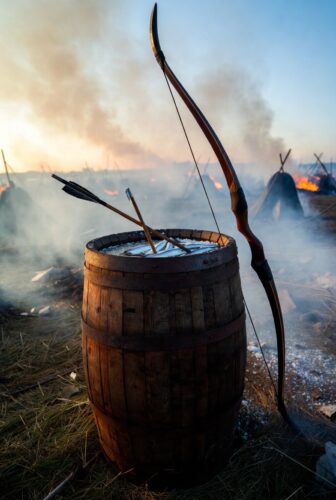
High above on the cliff edges—completely out of reach of Hungarian lances, swords, or mounted charges—thousands of Wallachian warriors appeared. They had spent days preparing the rim of the canyon like an industrial demolition site. On Basarab’s signal, they pried loose massive boulders, rolled whole felled pine trunks over the precipice, and unleashed a darkening storm of arrows down into the helpless mass of men and horses below.
The Chronicon Pictum describes the scene with visceral, nightmare-inducing clarity:
“The Wallachians, standing on the cliffs above the valley, shot arrows and threw rocks down upon the army… The Hungarians could neither climb the steep slopes to reach their attackers nor flee forward or backward, for the way was blocked by fallen trees and barricades. They fell like fish caught in a net.”
At both ends of the gorge, Basarab’s cavalry and foot soldiers had already felled giant trees across the path and built timber barricades, sealing the canyon shut like a cork in a bottle.
For heavy feudal cavalry—the undisputed kings of European battlefields for three hundred years—Posada was psychological and physical hell. A warhorse costing the equivalent of a modern luxury sports car, trained to charge across open plains in tight formation, panicked instantly when struck by falling stones or screaming arrows from above. Horses reared, threw their armored riders into the mud, and trampled infantrymen behind them. Knights weighed down by sixty pounds of chainmail and plate armor couldn’t scramble ten feet up the slick, mossy cliff faces without slipping backward into the chaos.
And the horror didn’t end at sundown.
Unlike a traditional medieval battle, which usually lasted a few brutal hours before one side broke and ran, Posada was a four-day siege inside a stone corridor. Through the freezing nights of November 9, November 10, and November 11, the survivors huddled in the dark among dead horses and shattered wagons, shivering without fires, listening to the Wallachians chanting in the trees above them and rolling fresh boulders down into the darkness whenever anyone tried to clear the barricades.
By the morning of November 12, 1330—the fourth and final day of the battle—the Hungarian army was no longer an army. It was a starving, bleeding, half-frozen mob trapped in a slaughterhouse.
Basarab’s warriors sensed the end. Having softened the trapped column with three days of relentless gravity and archery, the Wallachians scrambled down the slopes for vicious, close-quarters hand-to-hand combat to finish the job.
Act V: The Royal Wardrobe Swap and the Escape of a Humiliated King
By midday on November 12, 1330, the royal banner of Hungary—bearing the Anjou lilies and the red-and-white Árpád stripes—was surrounded by a ring of dying nobles.
Among the dead littering the canyon floor were the highest-ranking leaders of the realm: Stephen Lackfi, the Voivode of Transylvania (one of the primary architects of the invasion); the royal chancellor; dozens of barons; and even the king’s personal priest, Andrew, who was cut down while carrying the Great Seal of Hungary.
Charles Robert himself stood near the center of the collapsing pocket, staring squarely at death or capture. For the king who had boasted about dragging Basarab out of the mountains by his beard, the irony was suffocating. If Basarab’s warriors spotted the gilded royal crest and distinctive Angevin surcoat, every archer and axeman in the gorge would converge on him within seconds.
In that desperate, chaotic final afternoon of November 12, one of Charles’s loyal retainers—a nobleman named Desiderius (Dezső), son of Denis, who happened to share a similar build and coat of arms with the monarch—stepped forward and proposed an act of staggering self-sacrifice.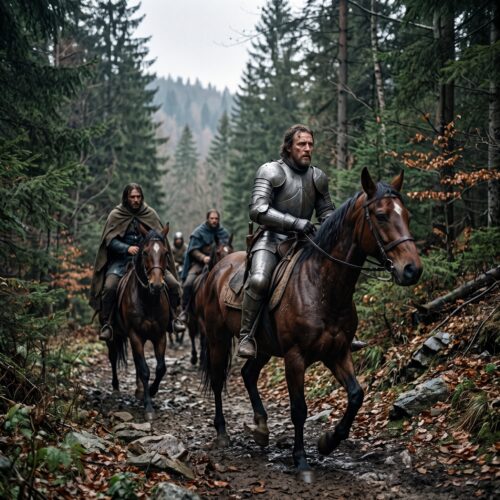
Right there in the mud, amidst the screaming horses and whistling arrows, the King of Hungary stripped off his royal armor, his gilded surcoat, and his royal insignia, and handed them to Desiderius. Charles buckled on Desiderius’s plain, battered, anonymous soldier’s gear.
Moments later, Desiderius mounted a warhorse and rode conspicuously into the thickest part of the fighting wearing the king’s colors. Just as planned, the Wallachian warriors swarmed the decoy, thinking they had cornered the “shepherd-hunter” himself, and Desiderius went down beneath a storm of arrows, spears, and stones.
That bloody distraction bought Charles Robert a tiny, ten-minute window of invisibility.
With a handful of surviving bodyguards—including a warrior named Nicholas, son of Radoslav, whom Charles later credited in a 1335 royal charter with personally fending off the swords of five Wallachian fighters while the king scrambled away—Charles slipped through a breach in the timber barricade. Another loyal knight, Thomas Csór, gave up his own fresh horse so the king could outrun pursuing scouts.
Charles Robert, ruler of one of Europe’s richest empires, rode out of the Carpathians bruised, terrified, dressed in borrowed rags, having lost his army, his elite nobility, his baggage train, and even his royal seal (which had to be painstakingly remade when he finally staggered back to Visegrád).
Behind him in the gorge of Posada, Basarab I stood victorious. Without fighting a single “fair” open-field battle, without spending a single ounce of his 7,000 silver marks, and using little more than local intelligence, patience, pine trees, and gravity, the “shepherd” had annihilated a superpower.
The aftermath reshaped Eastern Europe permanently. While Hungary still possessed enough gold to rebuild an army over the next decade and occasionally claimed theoretical overlordship on paper, Charles Robert never invaded Wallachia again. November 12, 1330, cemented Wallachia as the first independent Romanian principality, launching the Basarab dynasty that would rule for over two centuries and lay the historical foundation for modern Romania.
Why November 12, 1330, Matters to Your Tuesday Afternoon
Now, let’s step out of the fourteenth century, brush the Carpathian mud off our boots, and look at what Basarab I actually proved on November 12, 1330.
Most people walk through modern life operating under Charles Robert’s Delusion. They assume that winning requires having the biggest budget, the fanciest title, the loudest voice, the most credentials, or the heaviest armor. And when they don’t have those things—when they are the smaller bidder, the overlooked candidate, the bootstrapped entrepreneur, the junior voice in a boardroom full of loud executives, or simply a regular human being trying to dig out from under a mountain of debt or burnout—they either:
- Charge headfirst onto the open battlefield and get trampled by someone with 3x their resources, OR
- Give up before the fight even starts because they assume size equals inevitability.
Basarab I proved that size is only an advantage when the battlefield is wide open.
When you refuse to fight on your opponent’s flat, wide-open plain—and instead force the conflict into narrow terrain where your agility, preparation, and local knowledge turn their massive weight into a liability—the giant doesn’t just lose. The giant collapses under its own armor.
Look closely at the exact mechanics of Basarab’s victory on November 12, 1330, and how each historical move translates directly into modern leverage:
- He Offered Peace From a Position of Clarity, Not Panic: Basarab didn’t offer 7,000 silver marks because he was weak; he offered it because avoiding an unnecessary war is always cheaper than winning one. In modern life, always give difficult bosses, angry clients, or stubborn adversaries a dignified, reasonable exit ramp first. If they are wise, you save your energy. If they are arrogant like Charles Robert and insult your beard, they just revealed their fatal blind spot: their ego overrides their logic.
- He Denied the Enemy “Forage” (Starving the Drama): When Charles marched on Curtea de Argeș, he found nothing to eat and no one to fight. In your life, toxic coworkers, manipulative relatives, algorithmic outrage machines, and energy vampires survive entirely on your reaction. When you evacuate the town, burn the grain, and refuse to show up on their open field, their outrage starves to death in the cold.
- He Used Gravity Instead of Muscle: Basarab didn’t try to out-muscle thirty thousand knights. He stood on high ground and let physics do the heavy lifting. In your career, finances, or health, willpower is the equivalent of swinging a heavy broadsword uphill—it exhausts you fast. Systems, automation, calendar blocks, automatic transfers, and environment design are boulders perched on a cliff edge. Set them up once, and gravity works for you 24/7.
- He Controlled the Bottlenecks: The Hungarian army wasn’t defeated by superior numbers; it was defeated because 30,000 men were forced through a 15-foot-wide canyon. You don’t need to win every hour of the week or beat every competitor across every metric. You only need to own the narrow bottlenecks where decisions actually get made.
- He Understood That “Royal Armor” Can Get You Killed: Charles Robert almost died because he insisted on looking like a king in a place where looking like a king made him a target. Modern society is obsessed with status symbols—the luxury lease, the bloated job title, the need to always look like the smartest, richest person in the room. Sometimes, taking off the gilded crest and moving quietly like a regular person is the only way you survive the ambush.
The “Posada Gorge Protocol”: Your Unique, Zero-Fluff Tactical Plan
Forget waking up at 4:30 AM to journal about your gratitude while drinking lukewarm lemon water, and forget vision boards covered in magazine cutouts of yachts. Those are open-field tactics—they feel great in sunny weather and get slaughtered the second reality hits.
Here is The Posada Gorge Protocol—a ruthless, asymmetric, 4-day tactical maneuver based strictly on November 12, 1330, designed to help you beat a bigger, heavier, or seemingly overwhelming obstacle in your life right now:
- Day 1 (The “Curtea de Argeș” Evacuation — Starve the Trap): Identify the one giant problem, toxic dynamic, or bloated commitment currently marching toward you like a 30,000-man army (an unmanageable workload, a debt spiral, a manipulative person, or a bloated project). Instead of fighting it head-on today, pull all your supplies out of its path. Cancel the non-essential meeting, freeze the discretionary spending, mute the thread, or pause the low-value busywork. Leave the invader standing in an empty town with nothing to feed on.
- Day 2 (The “7,000 Marks” Ego Test — Offer One Clean Off-Ramp): If your obstacle involves another human being (a difficult boss, a vendor, a partner, or a rival), make one calm, generous, zero-drama proposal to resolve the friction cleanly right now. Put it in writing, keep your tone ice-cold and professional, and remove all pride. If they accept, you win without bleeding. If they mock you or double down on arrogance, smile—you now have 100% proof that their ego will blind them to what comes next.
- Day 3 (The “High Ground” Rigging — Replace Willpower With Gravity): Stop trying to beat your obstacle with daily hustle or brute-force motivation. Spend 45 minutes today placing three “boulders on the cliff”—automated rules or physical barriers that do the work without your willpower. Set an automatic bank transfer that sweeps money before you can see it; put your phone charger in another room; block two non-negotiable hours on your calendar as “Out of Office” so no one can schedule over your deep work; pre-pack your gym bag and put it literally in front of your front door so you have to trip over it to leave.
- Day 4 (The “November 12” Armor Swap — Drop the Ego and Slip Through): Look at where your pride is weighing you down like sixty pounds of Milanese steel. Are you refusing to ask a “dumb” question, avoiding an entry-level skill, hiding a mistake to protect your image, or clinging to an expensive habit just to look successful? Strip off the heavy royal crest today. Ask the blunt question, admit what you don’t know, downgrade the ego-purchase, and use the sudden lightness to sprint past the bottleneck while everyone else is still stuck in the mud.
On November 12, 1330, the world learned a timeless truth in a cold Romanian canyon: you do not need to be the biggest force on the map to win. You just need to stop fighting in open fields, know your terrain better than the giant does, and let arrogance walk itself straight into the gorge.
Share: