


Imagine the weather in Paris on November 11, 1675. It is mid-autumn, the air is crisp, the cobblestones are slick with a damp chill, and the city is bustling with horse-drawn carriages, street vendors, and the aristocrats of King Louis XIV’s court strutting about in absurdly high heels and powdered wigs. But we are not focusing on the grandeur of the Palace of Versailles or the political maneuverings of the French nobility. Instead, we are peering into a cramped, candlelit study where a twenty-nine-year-old German diplomat, philosopher, and self-taught mathematician is hunched over a piece of parchment. His name is Gottfried Wilhelm Leibniz, and on this exact day, in a burst of sheer intellectual audacity, he is about to fundamentally alter the trajectory of human history. He is about to demonstrate integral calculus for the very first time to find the exact area under a curve.
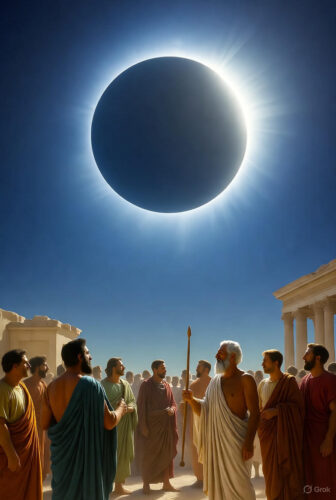
To truly understand the monumental, earth-shattering magnitude of what Leibniz scribbled on a piece of paper that Thursday in November, we have to rewind and look at the horrifying state of mathematics before 1675. For thousands of years, humanity was trapped in a mathematical straightjacket. The ancient Greeks, for all their philosophical brilliance and marble-chiseling prowess, were terrified of the concept of infinity. They liked whole numbers. They liked perfect circles. They liked straight lines, right angles, and things you could easily draw in the sand with a stick. If you asked an ancient Greek mathematician to calculate the area of a square or a rectangle, they would do it with a smug sense of satisfaction. If you asked them to calculate the area of a triangle, they had it covered.
But if you asked them to calculate the area of a bizarre, swooping, irregular curve? Panic ensued.
The greatest minds of antiquity, including the legendary Archimedes, tried to solve the problem of curved areas using something called the “method of exhaustion.” This involved taking a curved shape and stuffing it full of tiny, straight-edged polygons—like trying to fill a round jar with square blocks. You would keep adding smaller and smaller polygons, counting their areas, and getting closer and closer to the actual area of the curve. It was brilliant, but it was also a nightmare. It required mind-numbing amounts of calculation, it was never perfectly exact, and it was quite literally exhausting. For over a millennium, this was the best humanity could do. We were stuck. We could build cathedrals and chart the stars, but if a shape didn’t have straight lines, our mathematics hit a brick wall. We had no language to describe continuous, fluid, ever-changing motion. The universe is not made of straight lines; it is made of orbits, accelerating falling apples, tidal swells, and parabolic trajectories.
The dark ages of mathematics stretched on for centuries. Fast forward to the seventeenth century, an era exploding with scientific curiosity. Telescopes were looking at the moons of Jupiter, microscopes were looking at fleas, and scientists were realizing that the universe was a giant, ticking clockwork mechanism. Johannes Kepler had figured out that planets move in elliptical orbits, not perfect circles, which was a deeply offensive concept to the purists of the time. René Descartes had recently invented analytic geometry, allowing people to plot equations on a graph using an x and y axis—a revolutionary idea that meant you could finally visualize algebra. But even with these tools, the ultimate problem remained unsolved. No one knew how to calculate the exact area under these newly graphed curves, nor did they know how to calculate the exact rate of change at any given micro-second on that curve.
Enter our hero, Gottfried Wilhelm Leibniz. Born in Leipzig, Germany, in 1646, Leibniz was not a traditional mathematician. He was a child prodigy who taught himself Latin at the age of eight just so he could read the dusty, ancient books in his deceased father’s immense library. By the time he was a teenager, he had devoured the works of Aristotle, Virgil, and countless theologians. He applied to the University of Leipzig to get his doctorate in law at the age of twenty, but they rejected him because he was annoyingly young and probably made all the senior faculty feel deeply insecure about their own intellects. Unfazed, Leibniz simply went to another university, got his doctorate almost immediately, and entered the workforce as an international diplomat and political fixer for German nobility.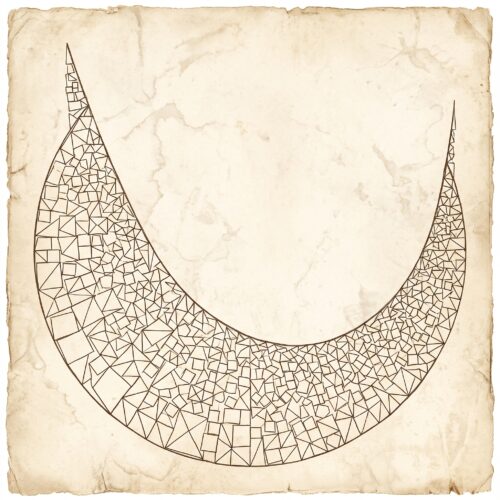
Leibniz was a polymath in the truest sense of the word. He was interested in law, philosophy, theology, history, alchemy, and engineering. He even invented an early mechanical calculator called the Stepped Reckoner that could multiply and divide. But in 1672, his political duties brought him to Paris, the intellectual capital of the world. He was supposed to be convincing the French king not to invade Germany (a classic diplomatic maneuver), but instead, he fell in with a crowd of hardcore scientific revolutionaries, most notably the brilliant Dutch physicist Christiaan Huygens.
Huygens realized that Leibniz, despite his genius, was actually terrible at modern math. He gave the young German a crash course in the cutting-edge mathematics of the day. Leibniz, being Leibniz, absorbed hundreds of years of mathematical theory in a matter of months. He became obsessed with the mysteries of the infinite and the continuous. He began to look at the problem of curves not as a geometric puzzle of stuffing polygons into a space, but as an algebraic mystery of infinitely small changes.
This brings us to the sacred date: November 11, 1675.
Leibniz is sitting at his desk. He is wrestling with the concept of the “infinitesimal”—a number that is smaller than any measurable quantity, yet not quite zero. It is a ghost of a number. A whisper of a quantity. Philosophers hated infinitesimals because they made no logical sense. How can something be essentially zero, but still be used in an equation? If you add up an infinite number of these zero-like ghosts, do you get something real?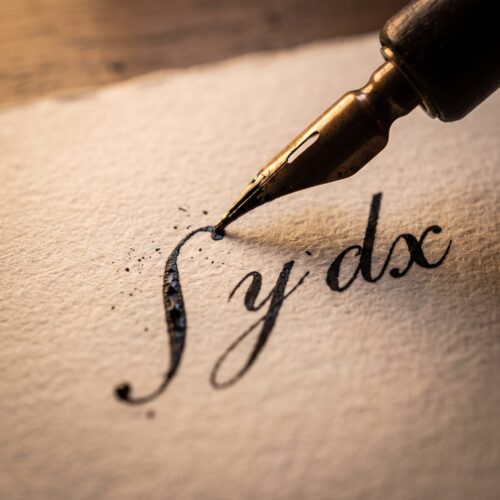
Leibniz said yes. He realized that if you want to find the exact area under a swooping, changing curve plotted on a graph, you don’t stuff it with a few big, clunky rectangles. You stuff it with an infinite number of infinitely thin rectangles. These rectangles are so thin they have almost no width at all—an infinitesimal width, which he called “dx” (a tiny difference in x).
But how do you add up an infinite number of infinitely thin rectangles without spending the rest of eternity doing addition?
Leibniz, on this exact day, had a massive stroke of symbolic genius. He realized he needed a new symbol to represent this miraculous, infinite summation. He took the Latin word for sum, which is summa. He took the first letter, “S”, and he stretched it out, pulling it from the top and bottom until it looked like a tall, elegant, sweeping hook.
He wrote down: ∫ y dx
With that single, beautiful stroke of the pen, integral calculus was born.
The stretched-out S (the integral sign) meant “sum up all the infinite pieces.” The “y” represented the height of the curve at any given point. The “dx” represented the infinitely thin width of the slice. By multiplying the height by the infinitely thin width, and summoning the power of the stretched-out S to add them all together in one elegant algebraic swoop, Leibniz had conquered the infinite. He had found a way to perfectly, exactly, flawlessly measure the area under the graph of y = f(x).
He didn’t stop there. He soon realized the second half of the miracle: the Fundamental Theorem of Calculus. He discovered that this process of summing up infinite slices (integration) was the exact mathematical reverse of finding the steepness or rate of change of the curve (differentiation). It was as if he had found the master key to the universe. He had invented a language that could perfectly describe how a planet accelerates, how a cannonball arcs through the sky, how a population grows, and how heat dissipates.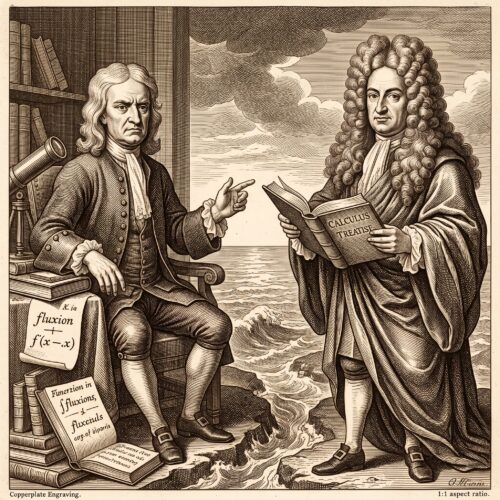
Of course, because human history is deeply petty, this monumental breakthrough on November 11 did not result in a peaceful transition into a new utopian age of science. It resulted in one of the most vicious, bitter, and dramatic intellectual feuds in recorded history.
Across the English Channel, an eccentric, solitary, and notoriously grumpy genius named Isaac Newton had actually discovered the exact same mathematical concepts a few years earlier. Newton had formulated his own version of calculus, which he called the “method of fluxions.” But Newton, being deeply paranoid and afraid of public criticism, had locked his discoveries in a desk drawer and refused to publish them. He just kept them secret, occasionally using them to solve physics problems faster than anyone else, leaving the rest of the scientific community bewildered.
When Leibniz proudly published his discovery of calculus—complete with his beautiful, easy-to-use notation featuring the stretched-out S and the clever “dx” and “dy”—Newton absolutely lost his mind. Newton accused Leibniz of being a plagiarist. He claimed Leibniz had seen some of his private letters and stolen the ideas.
The resulting “Calculus Priority Dispute” tore the scientific world apart. English mathematicians sided with Newton, fiercely defending their national hero and stubbornly refusing to use Leibniz’s notation. Continental European mathematicians sided with Leibniz. The feud got so incredibly petty that Newton, who eventually became the President of the Royal Society, secretly wrote a “neutral” committee report investigating the plagiarism charges, completely exonerating himself and condemning Leibniz as a thief, and then anonymously published the report while pretending it was an independent review.
Leibniz died in 1716, somewhat impoverished and politically out of favor. Only one person (his secretary) attended his funeral. It was a tragic, quiet end for the man who had quite literally given humanity the mathematical tools to conquer the physical world.
But history is the ultimate judge. While Newton was undeniably a co-inventor of the concepts of calculus, it was Leibniz’s notation—invented on that crisp November day in 1675—that won the war. Newton’s notation (putting little dots over letters to represent fluxions) was clunky, confusing, and hard to read. Leibniz’s notation, with its elegant ∫ and intuitive dx, was a masterpiece of user interface design before the concept of user interface even existed. It made calculus accessible. It made it teachable.
To this day, every single high school and college student who suffers through AP Calculus, every engineer designing a suspension bridge, every aerospace aerodynamicist calculating the drag on a supersonic jet, and every computer scientist writing machine learning algorithms relies entirely on the exact symbols Leibniz invented on November 11, 1675.
Without the events of this specific day, the industrial revolution would have stalled. The modern skyscraper could not have been engineered. Electricity and magnetism could not have been mapped by James Clerk Maxwell. The internal combustion engine, the airplane, the microchip, the smartphone in your pocket, and the satellite beaming data down from orbit—none of it exists without the ability to measure continuous, dynamic change. And the ability to measure continuous, dynamic change was locked away in the terrifying vault of infinity until a wig-wearing German diplomat figured out how to stretch out the letter S and sum up the infinitesimals.
So, how does the invention of integral calculus in a musty Parisian room over 350 years ago apply to your life today?
We often view our lives the way the ancient Greeks viewed curved shapes. When we look at our massive life goals—starting a business, writing a novel, losing fifty pounds, getting out of crushing debt, or learning a new language—we see a daunting, irregular, overwhelmingly massive area. It looks impossible to measure. It looks impossible to conquer. We try to use the “method of exhaustion” on our own lives. We try to conquer the massive curve by throwing huge, clunky polygons at it. We try to change our entire diet overnight. We try to write a book in a weekend. We try to work out for three hours a day when we haven’t been to the gym in a year.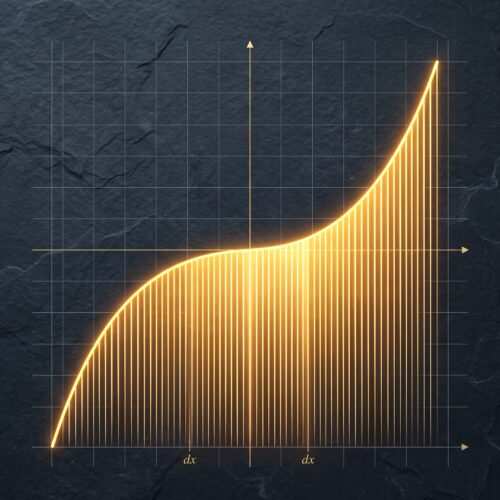
And just like the ancient mathematicians, we end up frustrated, inaccurate, and completely exhausted. We fail because we are using the wrong tools to measure the curve of our own potential.
Leibniz’s revelation on November 11 provides the exact blueprint for personal transformation. He proved that the only way to master the massive, overwhelming area under a curve is to stop looking at the massive area, and instead focus entirely on the infinitely small slices. You do not conquer the whole shape at once. You conquer the “dx”—the infinitesimal sliver.
Here is the November 11 Integral Plan for conquering the massive curves of your life, completely free of generic self-help fluff, grounded entirely in the fundamental theorem of the universe:
- Isolate Your ‘dx’ (The Infinitesimal Habit): Your ‘dx’ is the smallest possible slice of effort you can make toward your goal today. It must be so small that it feels almost negligible, like a mathematical ghost. If your goal is to write a screenplay, your ‘dx’ is not writing a scene; it is writing a single sentence. If your goal is fitness, your ‘dx’ is not a marathon; it is putting on your shoes and walking to the end of the driveway. Stop trying to stuff massive polygons into your day. Shrink your daily requirement down to an infinitesimal sliver that is mathematically impossible to fail at.
- Draw Your Mental ‘S’ Every Morning: The integral sign (∫) is literally the Latin letter for ‘Sum’. Your only job in life is summation. When you wake up, visualize the elongated S. You do not need to worry about the final result today. You only need to add today’s tiny ‘dx’ slice to yesterday’s slice. Calculus proves that if you stack enough infinitely small, seemingly worthless slices together, they inevitably, undeniably add up to a massive, perfectly calculated area. Consistency is not just a motivational buzzword; it is a proven mathematical law.
- Stop Fighting Isaac Newton: Leibniz spent the second half of his life miserable because he was fighting a bitter war over who got the credit for an idea. In your life, stop worrying if someone else in your field is doing it better, if someone else thought of your business idea first, or if your peers are getting more recognition. Newton had the idea first but hid it in a drawer. Leibniz published his work and gave the world the notation it actually uses. Do not hide your work out of fear, and do not waste your energy fighting over credit. Put your ‘notation’ out into the world. Ship your work. The world rewards the person who makes the concept accessible, not the person hoarding it in secret.
- Focus on the Area, Not the Slope: In calculus, the derivative measures the slope (how steep and stressful the climb is right now), while the integral measures the area (the accumulated value over time). Most people spend their lives obsessing over the derivative. They obsess over how hard today is, how steep the learning curve feels, and how much it hurts right now. You must mentally shift from differential calculus to integral calculus. Stop measuring the steepness of today’s struggle. Start measuring the accumulated area of what you have built over the last hundred days. The steepness is temporary; the area you build is permanent.
November 11, 1675, was not just a victory for mathematics; it was a victory for the human spirit over the overwhelming concept of infinity. Gottfried Leibniz proved that no matter how complex, daunting, or irregular the shape of the universe (or your life) appears to be, it can be mastered. It doesn’t require a superhuman effort to solve the whole thing at once. It only requires the patience to define the smallest possible piece, the courage to write it down, and the faith that the sum of those tiny pieces will eventually change the world. Go find your infinitesimal slice today, stretch out the sum of your efforts, and start calculating the area of the life you were meant to live.
Share: