
The Greatest Victory Party That Never Happened
If you ever feel like you have had an exhausting week where your achievements went unappreciated by upper management, take comfort in knowing that on October 24, 1260, a man named Sayf al-Din Qutuz suffered what remains the single worst post-performance review in human history.
Fifty-one days earlier, Qutuz had achieved the impossible. He had led an army into the Jezreel Valley in the Levant, faced down the supposedly invincible war machine of the Mongol Empire at the Battle of Ain Jalut, and smashed them. Up until that humid morning in September 1260, the Mongols had swallowed everything between Beijing and Damascus like an inescapable cosmic void. Baghdad had been razed to cinders two years prior, its rivers running black with manuscript ink and crimson with the blood of its scholars. Caliphs had been rolled into rugs and trampled by horses. Western Christendom was quivering behind stone keeps, and Cairo was packing its bags in sheer existential terror.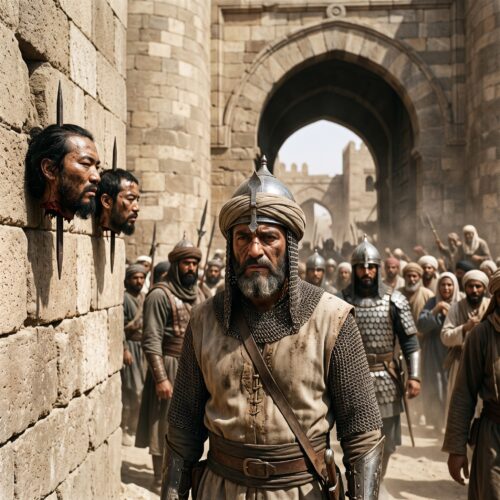
Enter Qutuz, the newly self-installed Sultan of Egypt. When Mongol emissaries arrived in Cairo bearing a letter from Hulagu Khan that essentially read, “We have destroyed the world, submit or die,” Qutuz did not schedule a working group. He sliced the emissaries in half, nailed their heads to the great city gate of Bab Zuweila, dragged his trembling emirs to the frontier, and pulled off one of the most consequential military victories in antiquity.
Historians widely agree: if Qutuz had failed at Ain Jalut, the Islamic world would have been largely extinguished as a sovereign political entity, North Africa would have fallen, and European history would look entirely unrecognisable. He was, by every rational metric, the supreme savior of the Near East.
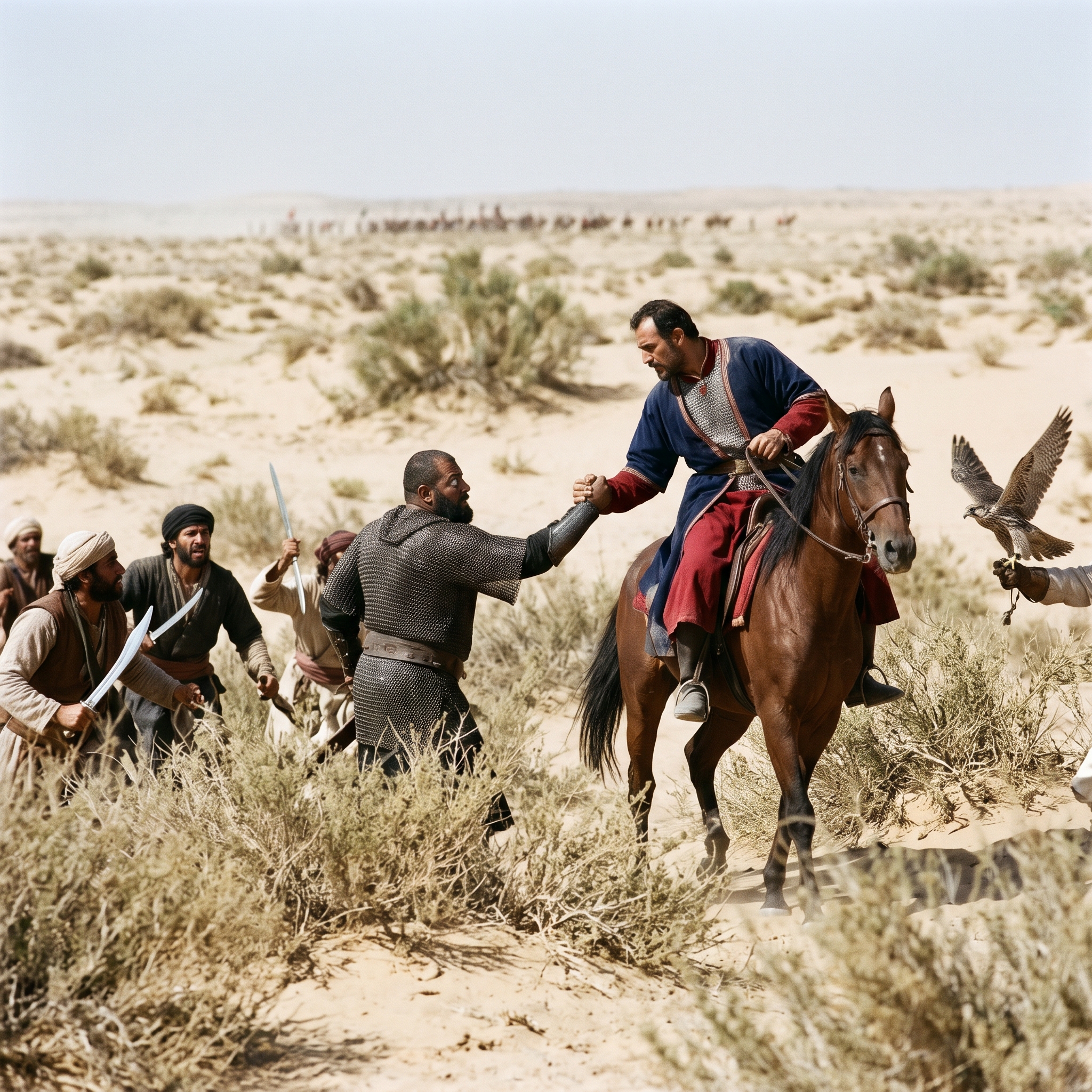
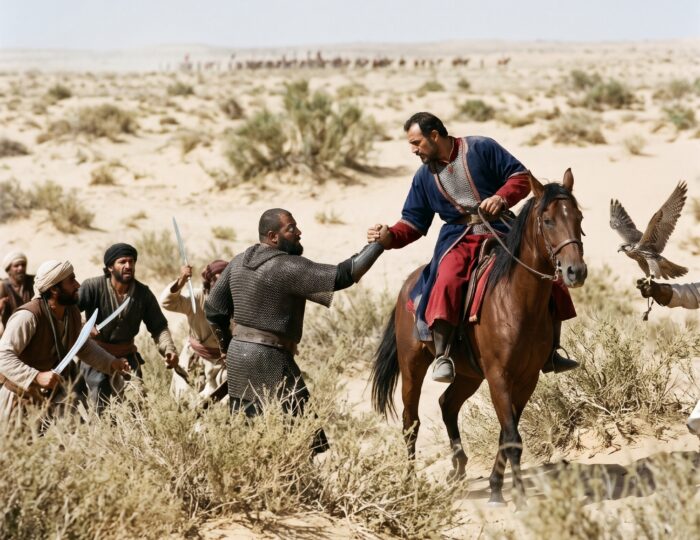
Yet on October 24, 1260, as the royal victory caravan made its triumphant crawl back toward Cairo through the scrubby dunes of al-Salihiyya in the eastern Nile Delta, Qutuz decided he was bored. He left his heavily armored royal guard behind to chase a wild hare with his hunting falcon.
Riding alongside him was his brilliant, hyper-competent, utterly ruthless vanguard commander: a man named Baybars. Baybars had one milky cataract in his eye, a massive physical stature, a terrifying voice, and a towering grudge because Qutuz had just passed him over for the governorship of the city of Aleppo.
When the royal party scattered into the brush, Baybars rode up, smiled, and asked the Sultan for a gift—specifically, an enslaved Frankish noblewoman captured during the recent campaigns. Qutuz graciously nodded and extended his hand for Baybars to kiss in royal gratitude.
Baybars grabbed the Sultan’s hand with an iron grip. He did not kiss it.
Instead, he held the Sultan firmly in place while a cohort of conspirators burst from the brush, plunging daggers and swords straight through Qutuz’s riding robes. Before the royal guard even realized the Sultan was no longer looking for hares, Qutuz was dead in the sand, and Baybars was galloping into the main camp to inform the army council that there had been an immediate change in senior leadership.
When the senior viziers looked at Baybars and asked who had struck down the Sultan, Baybars did not stutter. “I did,” he said.
According to ancient steppe-nomadic custom that had survived among the Mamluk warrior caste, the rule of succession was simple: al-mulk li-man ghalaba—the kingdom belongs to whoever overcomes. Within hours, Baybars sat upon the throne. Qutuz, the savior of civilization, was hastily buried by the side of the road in an unmarked desert grave.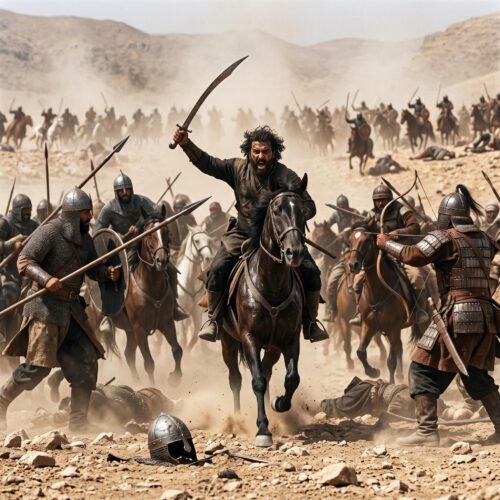
It is an astonishing, grimly funny, and deeply profound turning point in distant history. But more than an entertaining chronicle of medieval treachery, October 24, 1260, exposes a fundamental law of human endeavor that modern self-help completely ignores: The psychological vulnerability that follows a supreme victory is vastly more lethal than the crisis that preceded it.
The World-Saving Slave: Who Was Sayf al-Din Qutuz?
To understand how someone who survived the Mongol horde managed to get ambushed while hunting bunnies, you have to understand the sheer caliber of individual Qutuz was.
Qutuz was not born to royalty. His birth name was Mahmud ibn Mamdud, born into the noble royal family of the Khwarazmian Empire in Central Asia. When Genghis Khan’s initial waves obliterated the Khwarazmian realm, Mahmud was captured as a young boy, stripped of his heritage, and sold into the slave markets of Damascus. His captors called him Qutuz, a Turkic term meaning “vicious dog,” because even as a child in chains, he fought, kicked, bit, and raged against anyone who tried to subdue him.
He was purchased by Aybak, a prominent military commander of the Mamluk caste in Cairo. The Mamluks were an extraordinary socio-political phenomenon unique to the medieval Islamic world: enslaved Kipchak Turkic boys purchased from the Eurasian steppe, imported to Cairo, converted to Islam, and subjected to years of brutal, monastic equestrian and martial training. They were not mere servants; they were an elite military caste with strict codes of brotherhood, tactical brilliance, and unprecedented social mobility.
Qutuz climbed through this meat-grinder of a meritocracy purely on the strength of his nerves, operational acumen, and spine of steel. When his master Aybak seized power and later fell to internal palace intrigue, Qutuz maneuvered into the role of vice-regent to Aybak’s teenage son, Mansur Ali.
Then, 1258 arrived, and the world broke.
Hulagu Khan, grandson of Genghis Khan, marched into Mesopotamia at the head of an army numbering well over 100,000 men. Baghdad was sacked. The Abbasid Caliph, the spiritual center of Sunni Islam for five centuries, was executed. Cities across the Levant were systematically reduced to rubble. When the Mongol juggernaut reached Syria, Aleppo was besieged and subjected to a five-day bloodbath, and Damascus surrendered without a fight.
The smoke was visible on the horizon, and Egypt was next.
In Cairo, the ruling class went into absolute, paralyzed panic. The emirs gathered in the Citadel, arguing, sweating, and considering surrender. Mansur Ali was fifteen years old, fond of polo, and entirely incapable of ordering breakfast, let alone facing the sons of Genghis Khan.
Qutuz did not consult a committee. In November 1259, he walked into the royal hall, announced that a teenage boy had no business running a state during an apocalypse, deposed Mansur Ali, and proclaimed himself Sultan. When the other emirs protested this blatant power grab, Qutuz gave an answer that should be studied in every leadership academy:
“My only aim is to unite the Muslims against the Mongols. The throne will not stay mine once the threat has passed. When the enemy is driven away, you may elect whomever you wish.”
He was ruthless, but he was clear-eyed. He knew that divided leadership in an existential crisis is a death sentence.
The Psychological Siege: The Letter That Should Have Broken Him
In early 1260, four Mongol ambassadors rode through the gates of Cairo. They handed Qutuz a letter from Hulagu Khan that remains one of the most chilling psychological warfare documents ever penned.
The letter read, in part:
“From the King of Kings of the East and the West, the Great Khan. To Qutuz the Mamluk, who fled to escape our swords into this country, where he enjoys its pleasures while awaiting its destruction… You have heard how we conquered the lands and cleansed the earth of corruption and killed most of the people. Yours to flee: ours to pursue. And what land will shelter you, what road save you; what country protect you? If you hide in the mountains, we will raze the mountains; if you sink into the earth, we will dig you out. Where is your safety? Our horses are swift, our arrows sharp, our swords like lightning, our hearts as hard as rocks, our numbers as vast as the sand. Those who make war against us are sorry; those who seek our protection are safe. Do not, therefore, destroy yourselves with your own hands.”
Take a moment to imagine receiving that memo.
Every single kingdom that had received that exact dispatch had folded or been erased. The emirs around Qutuz were terrified. Several argued that sending tribute and begging for mercy was the only way to avoid the extermination of Egypt’s population.
Qutuz understood human psychology better than anyone in the room. He knew that once doubt enters a collective mind, defeat is already accomplished. If you leave open a psychological escape hatch—even a humiliating one—people will crawl toward it.
So Qutuz slammed the door shut and welded it from the inside.
He ordered the four Mongol envoys executed immediately. They were sliced through the torso, their heads paraded through Cairo on pikes, and their severed skulls nailed to the Bab Zuweila gate for every soldier and citizen to see.
By doing this, Qutuz effectively told his entire military: “There is no treaty. There is no surrender. There is no peace. If we lose, they will skin us alive. Our only options are total victory or total annihilation.”
It was the ultimate historical burn-the-ships moment. Having eliminated any possibility of retreat or diplomacy, he marshaled the state’s entire treasury. He imposed heavy taxes on the wealthy emirs, melted down personal silver, assembled every available horse and bow, and did something completely unexpected: instead of waiting behind Cairo’s high stone walls for the Mongols to starve them out, he marched his army across the Sinai desert straight into Syria to meet them head-on.
The Clash at the Spring of Goliath: Ain Jalut
When Qutuz’s army crossed into Palestine in late summer 1260, they caught an enormous strategic break: Hulagu Khan had pulled back to the Mongol homeland with the bulk of his main force upon learning of the death of Great Khan Möngke, leaving behind his finest general, Kitbuqa Noyan, with a formidable detachment of roughly 20,000 to 25,000 veterans.
On September 3, 1260, the two forces met at Ain Jalut (“The Spring of Goliath”) in northern Palestine.
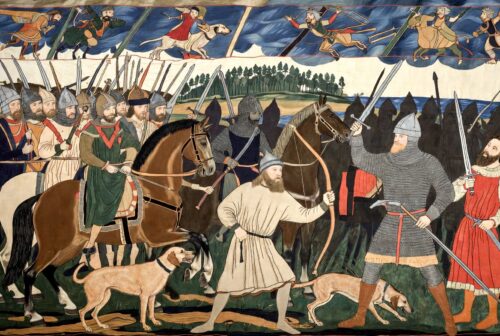
Qutuz hid the bulk of his heavy cavalry within the forested hills flanking the valley and deployed his brilliant vanguard under Baybars into the flat open basin. Baybars engaged the Mongol lines, exchanged devastating arrow fire, and then executed a classic feigned retreat, drawing Kitbuqa’s ferocious horse-archers deep into the funnel of the valley.
Once the Mongols had taken the bait, Qutuz slammed the trap shut. From the ridges on either side, horns blared, drums pounded, and thousands of Mamluk horsemen poured down into the Mongol flanks.
Yet the Mongols did not break easily. They regrouped with terrifying discipline and launched a savage counter-charge against the Mamluk left wing, tearing it to shreds. The Mamluk ranks wavered. Panic began to ripple down the line. A route was seconds away from unfolding.
At that exact breaking point, Qutuz rode his horse to a small knoll in full view of the army. He tore his helmet from his head, threw it violently into the dirt so his men could see his face, and shouted with everything in his lungs:
“O Muslims! Wa Islamah! (O Islam!)”
He charged directly into the center of the melee without a helmet, sword drawn, hacking through the line. Seeing their Sultan fighting like a common soldier in the dust, the Mamluk soldiers surged backward into the fight. Kitbuqa was unhorsed, captured, and executed on the spot. The remaining Mongol troops broke and fled across the plains, hunted down by Mamluk units.
For the first time in history, a full Mongol army had been defeated in close-quarters combat, held in place, and completely routed.
The Fatal Oversight: The Treacherous Post-Victory Lull
The weeks that followed Ain Jalut were a blur of geopolitical glory. Damascus opened its gates to Qutuz. Aleppo was cleared of Mongol outposts. Syrian cities hailed Qutuz as a living legend. In seven weeks, he had gone from an obscure palace usurper to the most celebrated general on earth.
And that is precisely where the tragedy of October 24 began.
When you are fighting an existential threat, your focus is pristine. Your senses are dialed to maximum. You know exactly who your enemies are, what your objective is, and what needs to happen to survive the next ten seconds.
The moment that threat evaporates, your psychological defenses collapse.
Qutuz made three catastrophic mistakes between September 3 and October 24, 1260:
- He Failed to Manage Internal Stakeholder Resentment
During the campaign, Baybars had performed flawlessly. He had led the vanguard, executed the trap at Ain Jalut, and chased down the remnants of Kitbuqa’s army. Baybars expected a massive, tangible reward: he requested the governorship of Aleppo.
Qutuz turned him down. Why? Because Qutuz feared that giving an ambitious, brilliant general like Baybars control of Aleppo would allow Baybars to build a rival power center in northern Syria.
It was a sensible concern, but Qutuz handled it with breathtaking clumsiness. He denied the request without providing an adequate substitute, without disarming Baybars, and without securing Baybars’ ongoing loyalty. He left a predator hungry, empty-handed, and armed to the teeth inside his inner circle.
- He Believed His Own Press Releases
By late October, Qutuz was basking in universal acclaim. The mosques of Damascus, Jerusalem, and Cairo were praying for his long life. He began to believe that his historic achievement granted him moral immunity.
He forgot that in high-stakes politics, gratitude has an expiration date of roughly twelve minutes. The other Mamluk emirs did not see Qutuz as an immortal hero; they saw a fellow former slave who had managed to get the big chair and who was now acting like he intended to keep it.
- He Disconnected Operational Readiness from the Victory Lap
On October 24, the royal army reached al-Salihiyya, an oasis town on the edge of the Nile Delta, just a couple of days’ ride from Cairo. The gates of the capital were already being draped in silk. Triumphal arches were being hammered into place.
Feeling secure, comfortable, and celebratory, Qutuz dropped his operational discipline. He rode away from his core guard into the open desert to hunt hares. He allowed Baybars and a small clique of armed conspirators to isolate him far out of earshot of his loyal troops.
When Baybars asked for the hand of a captive woman, Qutuz extended his own hand in a gesture of paternalistic royal condescension. He was emotionally living in the victory parade; Baybars was living in the reality of the present moment.
A few moments later, Qutuz’s throat was cut, his body was stripped, and the throne changed hands before the sun set over the dunes.
Why October 24, 1260, Matters to You Today
Most self-help books and productivity influencers talk exclusively about how to win. They preach relentless hustle, how to build momentum, how to overcome obstacles, and how to conquer the metaphorical Mongols at your doorstep.
Almost nobody talks about how not to get murdered in the desert right after you win.
This is what behavioral psychologists call the Post-Achievement Void, and it is responsible for more professional crashes, ruined relationships, and executive meltdowns than failure ever was.
Think about how this dynamic plays out in everyday life:
- You spend six months pulling 70-hour weeks to launch a massive product or hit an impossible company milestone. The moment the launch goes live, you celebrate, completely take your hands off the wheel, ignore the simmering resentments among your core team who felt underpaid during the grind, and within six weeks your best talent resigns to work for your competitor.
- You grind for two years to complete a grueling degree or earn a major promotion. The minute you arrive, you fall into a profound lethargy, alienate your support network, neglect your physical health, and make erratic, arrogant decisions that destroy your professional reputation.
- You hit your goal weight, pay off your credit cards, or finish a marathon. Having defeated your personal “Mongols,” you relax completely, abandon the daily baseline disciplines that got you there, and within six months you are worse off than when you started.
Qutuz didn’t die because he was weak. He died because he confused the end of the crisis with the end of the game. He forgot that the skills required to survive an external war (ferocity, high-risk courage, autocratic control) are completely different from the skills required to navigate the post-war peace (stakeholder diplomacy, ego management, continuous vigilance).
To make October 24, 1260, genuinely work for your life, you need an operational framework designed specifically for the dangerous phase of life that occurs immediately after a major breakthrough.
The Qutuz Prevention Protocol: A Non-Standard, Highly Specific Action Plan
Forget generic advice about “celebrating your wins” or “practicing mindfulness.” The lesson of October 24 is about defensive execution during moments of maximum vulnerability.
Here is the exact, step-by-step tactical protocol to deploy the moment you achieve a major milestone, close a critical deal, or survive an intense professional crisis.
- The Post-Crisis “Aleppo Audit” (Stakeholder Resentment Management)
- The Historical Mistake: Qutuz won using Baybars’ brilliance, then denied Baybars his prize (Aleppo) without an alternative concession, creating a deadly enemy.
- Your Tactical Rule: Within 48 hours of any major victory, identify the single most valuable person who helped you achieve it and conduct a ruthless audit of their emotional equity.
- Specific Actions:
-
- Ask yourself: “Who carried the water on this project, and do they feel adequately compensated, recognized, or elevated?”
-
- If someone wanted a promotion, a raise, or public recognition that you cannot give them, never deliver a flat denial.
-
- Provide an immediate, structured alternative that offers clear status, equity, or growth. If you cannot give them Aleppo, you must give them Damascus, or at least transparently explain the path to it before they begin shopping for daggers.
-
- If an ambitious subordinate or collaborator has outgrown their current role and you cannot promote them, actively help them transition elsewhere on honorable terms before their inevitable resentment turns toxic.
- Implement the “Hare Hunt” Buffer (Vigilance Containment)
- The Historical Mistake: Qutuz dropped his security detail to chase wild game before he had even entered the capital city.
- Your Tactical Rule: Never take your victory lap or celebrate a success until your structural systems are fully locked down and stabilized.
- Specific Actions:
-
- Define your “Fortress Phase”: A mandatory 14-day operational lockdown after any major career, financial, or personal milestone where you prohibit yourself from making major life changes, signing new commitments, or taking unstructured retreats.
-
- During these 14 days, your sole task is documentation, handoff stabilization, and thanking your support network.
-
- Do not indulge in the metaphorical “hare hunt”—unwinding your core personal habits, indulging in reckless spending, or abandoning physical routines—until the project is not just completed, but completely integrated and institutionalized.
- Conduct the “Bab Zuweila” Psychological Reset
- The Historical Mistake: Qutuz was great at radical, uncompromising focus when his life was on the line, but once the crisis ended, he reverted to casual complacency.
- Your Tactical Rule: When transitioning from a high-stress crisis to normal operations, you must deliberately de-escalate your nervous system through calculated boundary changes.
- Specific Actions:
-
- When you are in crisis mode, you operate on adrenaline and unilateral decision-making (slicing envoys in half and screaming into the dust). That behavior is effective in a storm, but catastrophic in fair weather.
-
- Write down a list of “Wartime Behaviors” you used to survive the crunch (skipping sleep, curt emails, micromanagement, high-calorie stress snacking).
-
- Formally “retire” those behaviors with a hard deadline. Announce to your team or family: “The crunch ended at 5:00 PM today. For the next two weeks, we are shifting from triage mode back to deliberate, measured operations.”
- Build a “Baybars Defense” Into Your Ambition
- The Historical Mistake: Qutuz assumed his title and recent heroic deeds made him indispensable and unassailable.
- Your Tactical Rule: Assume that the moment you succeed, someone in your periphery is already studying your habits, looking for where you are sloppy, entitled, or distracted.
- Specific Actions:
-
- Regularly perform an “Adversarial Review” on your personal routines: If a hyper-competent competitor wanted to displace you right now, where would they attack?
-
- Look for:
-
-
- Softening technical skills that you have stopped updating because you are “too senior.”
-
-
-
- Professional relationships you have neglected because you feel established.
-
-
-
- Blind spots where you have delegated total control of critical infrastructure to a single individual without cross-training or oversight.
-
-
- Fix those vulnerabilities quietly while you are still riding the crest of your success, rather than waiting for an ambush to reveal them.
The Daily Battle: Winning the War After the War
History loves to remember the dramatic, screaming clashes—the charge across the valley floor, the clash of scimitars, the heroic speeches that rally an army from the brink.
We build monuments to the Battle of Ain Jalut. We write epics about saving kingdoms.
But real life is almost never decided during the cinematic battles. You will probably never have to face a Mongol tumen galloping across a desert with bows drawn.
Your greatest battles happen on quiet, breezy afternoons in the middle of nowhere, when you think you have already won, when your guard is down, and when the temptation to coast feels entirely justified.
Sayf al-Din Qutuz saved the Islamic world from oblivion on September 3, 1260. He was brilliant, brave, and visionary. But he died in the dirt on October 24 because he forgot that victory is not a permanent destination; it is merely an operational transition to a more complex set of challenges.
Celebrate your achievements. Savor your triumphs. But whatever you do when you finish routing the impossible odds in your life: keep your helmet strapped on, keep your eyes on the horizon, and do not ride off alone to chase rabbits in the scrub.
Share: