
The Autumn When Free Speech Almost Died in America
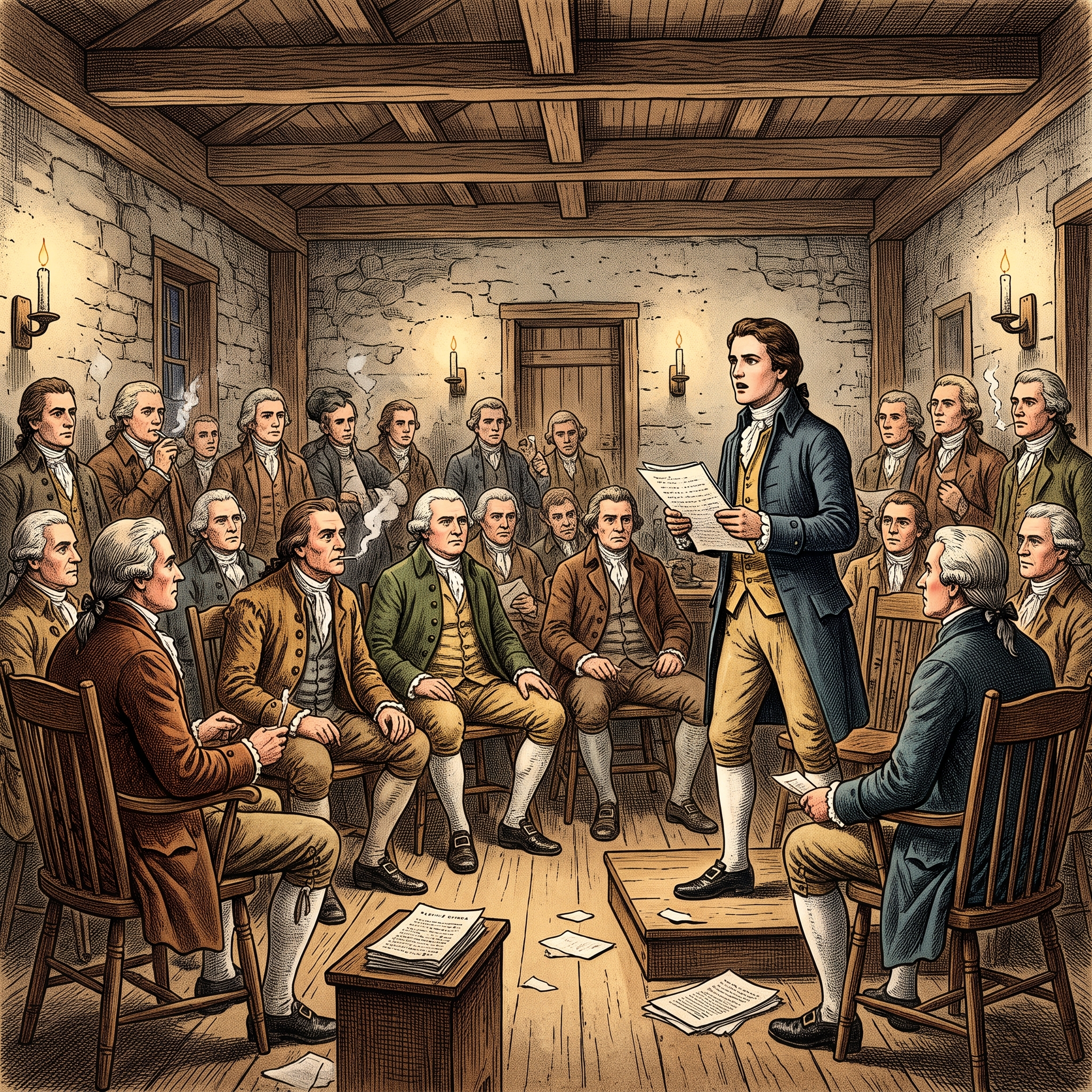
On the dreary evening of November 10, 1798, inside a cramped, wood-heated legislative chamber in the frontier town of Frankfort, Kentucky, an assembly of roughly fifty pioneer politicians, tobacco farmers, and backwoods lawyers pulled up their wooden chairs to pass an explosive, anonymous manifesto.
The nation was twenty-two years young, shivering in political winter. Across the Eastern Seaboard, federal marshals were banging on print-shop doors, dragging independent newspaper editors into debtor’s prisons, and indicting congressmen for political blasphemy. The Federalist-dominated Congress and President John Adams had enacted the Alien and Sedition Acts of 1798—a sweeping legislative cudgel that turned critical political speech into a federal felony punishable by imprisonment.
Under the Sedition Act, any citizen uttering, printing, or circulating “false, scandalous, and malicious writing” against the President, Congress, or government was liable to find their assets liquidated and their person confined. When a Vermont Congressman named Matthew Lyon casually noted that President Adams possessed an “unbounded thirst for ridiculous pomp, foolish adulation, and selfish avarice,” the government threw him into an unheated Vermont jail cell, fining him a crushing thousand dollars. When a tavern patron in Newark, New Jersey, heard an artillery salute celebrating Adams passing through town and quipped that he wished the cannon wadding would lodge right in the President’s trousers, the federal government indicted, arrested, and fined him too.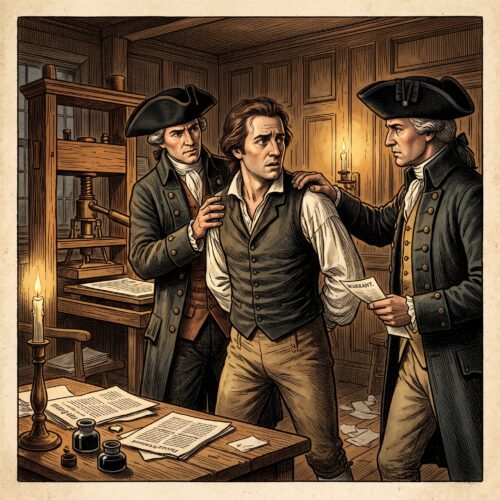
Paranoia gripped the Republic. Federalists suspected French saboteurs lurked behind every Appalachian ridge. Republicans feared the American presidency was metamorphosing into King George III with an American accent.
Yet the most staggering insurrection of that turbulent year took place in absolute silence, far away from the capitol, orchestrated by the Vice President of the United States: Thomas Jefferson.
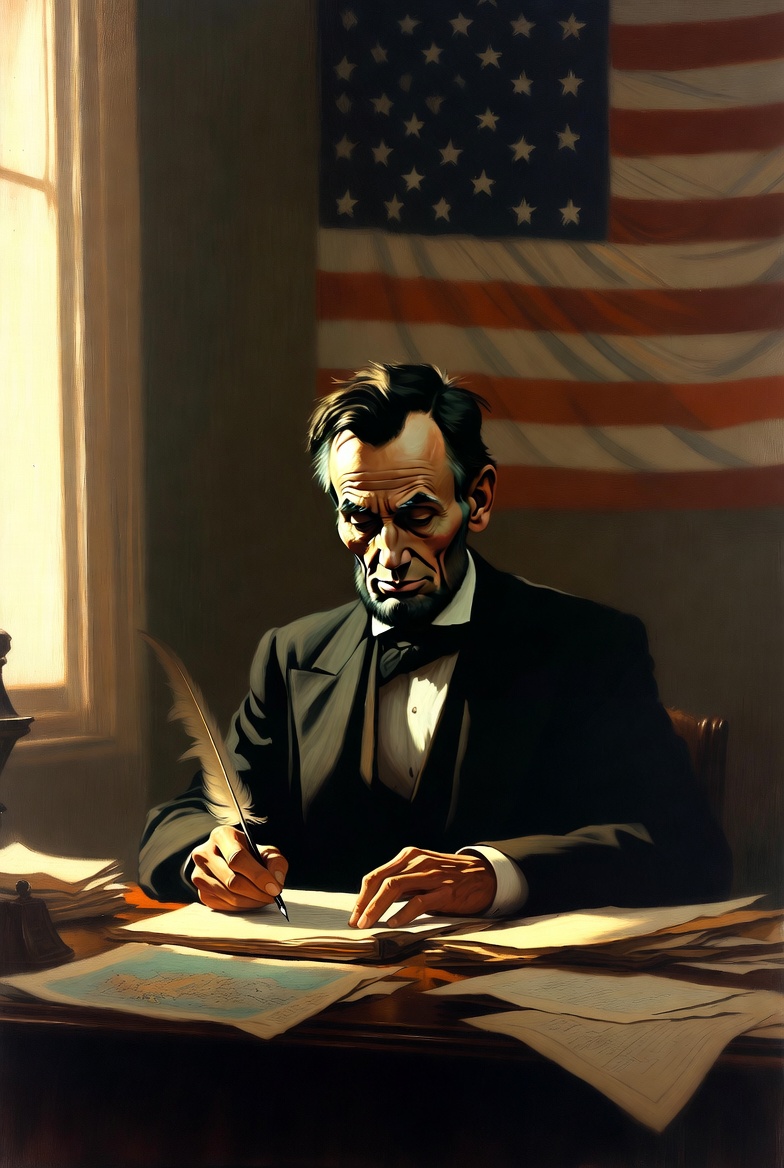
Jefferson, while presiding daily as Vice President over the Senate, was secretly committing treason against his own administration’s executive policy. Working by flickering candlelight in his private study at Monticello, dipping a quill into lampblack ink, Jefferson drafted an unapologetic, radical document declaring that whenever the central authority breaches its fundamental boundaries, citizens possess the unalienable right to repudiate those overreaches.
He could not sign his name. If his authorship emerged, Alexander Hamilton and the high Federalists would have prosecuted Jefferson for seditious conspiracy, impeached him, and possibly tried him for high treason. So, in absolute secrecy, Jefferson arranged for his manifesto to be smuggled westward over the Appalachian mountain trails via saddlebag. It landed in the hands of John Breckinridge, an ambitious young member of the Kentucky General Assembly.
On November 10, 1798, the Kentucky House of Representatives adopted those resolutions. Jefferson’s underground draft became known to history as the Kentucky Resolutions of 1798.
The Anatomy of the Frontier Coup: November 10, 1798
To grasp the stakes of November 10, one must look at the room in Frankfort where this rebellion took life.
Kentucky was barely six years into statehood. Frankfort was not a marble-encrusted seat of power; it was a rough-hewn settlement bordered by muddy rut roads, smelling of woodsmoke, river damp, and horse stables. The Kentucky General Assembly met in a plain two-story stone capitol building. Outside, riverboats drifted down the Kentucky River, carrying cured tobacco, corn whiskey, and salt pork. Inside, men sat in heavy homespun wool and deerskin, smoking hand-rolled tobacco and spitting into sandboxes.
John Breckinridge stood before the assembly holding handwritten folio sheets. He did not read them as the political treatises of a refined Virginia aristocrat. He delivered them with the raw cadence of a frontier lawyer defending a homesteader against an encroaching land speculator.
The text was brazen:
“Resolved, That the several States composing, the United States of America, are not united on the principle of unlimited submission to their general government… and that whensoever the general government assumes undelegated powers, its acts are unauthoritative, void, and of no force.”
The assembly debated the paragraphs point by point. While Federalists in Philadelphia and Boston preached reverence for central power, the frontiersmen of Kentucky were suspicious of distant authorities. Only a few years earlier, Kentuckians had worried the federal government would bargain away their commercial right to navigate the Mississippi River. Now, Philadelphia was dictating what an editor in Lexington could write or what an immigrant farmer could say at an inn.
On November 10, 1798, after brief deliberations and minor edits, the Kentucky House of Representatives voted through the resolutions with near unanimity. Four days later, the Kentucky Senate concurred, and Governor James Garrard signed his name to the legislation.
Copies were dispatched to the legislatures of all other states. Jefferson’s covert intellectual hand grenade was detonated in the public square.
Why the Event Was Kept in the Shadows
The secrecy surrounding the author was so airtight that for over two decades, the American public believed John Breckinridge had composed every word of the Kentucky Resolutions.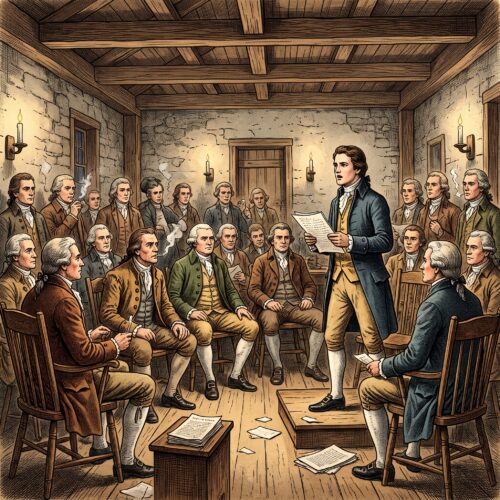
Jefferson swore his confidants to absolute silence. Only James Madison, who was secretly drafting a parallel set of protests for Virginia, and John Nicholas knew the truth. Jefferson lived in genuine fear of federal interceptors. During that summer and autumn, federal postal riders regularly tampered with the correspondence of known Republican sympathizers. Jefferson stopped sending sensitive letters through the government mail entirely, relying instead on private couriers who carried dispatches concealed inside the soles of their boots or sewn into coat linings.
When Jefferson rode his carriage into Philadelphia for the winter legislative session later that year, he sat in the Vice President’s chair with an impassive poker face. Behind his desk, Federalist senators thundered against “Kentucky’s lawless defiance.” They drafted condemnations of the frontier legislature, unaware that the quiet, red-haired gentleman presiding over the room had composed every sentence of the document they were denouncing.
The Kentucky Resolutions changed American political history. They served as the intellectual platform that broke the Federalist party’s control, propelling Jefferson into the presidency in the pivotal election of 1800—an outcome Jefferson termed the “Revolution of 1800,” restored without bloodshed.
Beyond partisan maneuvering, November 10, 1798, established a philosophical principle: When an external system expands beyond its mandate to compromise your core integrity, you are not obligated to submit in silence. You possess the authority to reject that overreach, establish your boundaries, and run your life on your own terms.
Translating 1798 to Modern Life: The Over-Centralized Mind
Most people live under a modern, psychological version of the Alien and Sedition Acts.
Instead of an 18th-century government telling you what you can print, you deal with a web of outside demands:
- The Sedition Act of Workplace Culture: The silent expectation that you should surrender your evenings, weekends, and mental well-being to answer non-urgent pings.

- The Alien Act of Social Algorithms: Digital platforms that populate your mind with synthetic outrage, false urgency, and synthetic inadequacies.
- The Bureaucracy of People-Pleasing: An internal committee where you grant acquaintances, relatives, and strangers veto power over your decisions, habits, and focus.
Most modern advice tells you to manage this through soft adjustments: lighting lavender candles, writing three things you appreciate in a notebook, or doing deep-breathing exercises.
Those tactics fail when the fundamental problem is jurisdictional overreach. Breathing exercises do not stop outside demands from taking over your schedule, just as gentle petitions did not stop the Sedition Act of 1798.
You do not need minor coping mechanisms. You need a clean, structured assertion of personal sovereignty.
The Sovereignty Protocol: A Unique Personal System
The following protocol applies Jefferson’s November 10 maneuver to modern personal management. It discards generic lifestyle platitudes in favor of clear, structural boundaries.
- The Jurisdictional Audit
- List every entity currently demanding your energy: your employer, direct reports, family obligations, volunteer commitments, digital feeds, and financial demands.
- Divide a page into two distinct columns: Delegated Powers and Undelegated Encroachments.
- Under Delegated Powers, write the specific, contracted outcomes you have agreed to deliver (e.g., “I deliver 40 focused hours of development work each week; I manage the household budget; I maintain my physical health”).
- Under Undelegated Encroachments, document every task, emotional burden, or response window that has crept into your life without your consent (e.g., answering group chats at 10:00 PM; arbitrating disputes between colleagues; saying yes to low-priority favors out of obligation).
- Treat every item under Undelegated Encroachments as an invalid claim on your attention.
- The November 10 Boundary Notice
- When external entities make demands beyond your agreed parameters, do not offer emotional apologies or rambling justifications. Apologies invite debate; structural clarity ends it.
- Use direct, clear language: “I am unavailable for unscheduled calls outside standard hours,” or “That falls outside my capacity this month.”
- Refuse to let outside parties set your immediate agenda.
- Clandestine Deep Work
- Jefferson did not hold a public debate about whether he should write the resolutions; he closed his office door, lit his lamp, and produced his work without seeking validation.
- Carve out ninety minutes every morning where your phone is locked in another room, all notifications are killed, and your internet access is turned off.
- Use this block exclusively for your primary personal, creative, or career project. Build your assets before you answer anyone else’s morning pings.
- Strategic Decoupling
- Avoid running your entire life on a single platform, income stream, or company ecosystem.
- Maintain a separate emergency cash reserve equal to three to six months of basic living expenses, held outside your everyday operating account.

- Maintain direct, independent relationships with peers in your field outside your employer’s official communication channels.
- Own your primary tools and audience. If you publish or market work, maintain an independent email list and offline backups rather than relying entirely on rented social channels.
- Absolute Focus
- The men in Frankfort on November 10, 1798, focused entirely on the core text in front of them. They did not worry about gossip from New York or debates in London.
- Pick one non-negotiable metric for your week: books read, miles run, client calls completed, or lines of code deployed.
- Track that single metric daily, ignoring peripheral distractions.
The 72-Hour Frontier Action Blueprint
This plan provides immediate, non-traditional steps to reclaim your autonomy over the next three days.
Day 1: The Frontier Blackout
- Morning (8:00 AM – 9:30 AM): Set your smartphone to grayscale mode to eliminate visual stimulation. Disable every app badge, banner, and lock-screen notification except direct phone calls.
- Noon (12:00 PM – 1:00 PM): Complete the Jurisdictional Audit. Identify the single biggest outside demand that drains your day without producing real value.
- Evening (6:00 PM – 8:00 PM): Shut down all communication channels precisely at the close of your workday. Do not check work emails, messages, or task boards until the following morning.
Day 2: The Frankfort Nullification
- Morning (7:30 AM – 9:00 AM): Execute your ninety-minute deep work block on your most important project before looking at an inbox.
- Midday (1:00 PM – 2:00 PM): Say no to at least one low-priority request, non-essential meeting, or outside demand that falls under your “Undelegated Encroachments” list. Give no long-winded excuses—state your unavailability directly.
- Evening (7:00 PM – 9:00 PM): Audit your financial subscriptions. Cancel every recurring charge for apps, tools, or memberships you have not used in the past thirty days.
Day 3: Fortifying the Perimeter
- Morning (8:00 AM – 9:30 AM): Build an offline repository for your key personal assets: financial records, resumes, work samples, and crucial contacts saved locally on an external hard drive.
- Afternoon (2:00 PM – 4:00 PM): Consolidate your communication channels. Establish two clear windows during the day (e.g., 11:00 AM and 4:00 PM) to batch-process all email and messages, keeping the rest of the day uninterrupted.
- Evening (8:00 PM): Review your calendar for the coming week. Strip out low-value obligations and replace them with dedicated, protected time for your own priorities.
Walking Out of the Chamber
When the Kentucky legislators pushed back their chairs on November 10, 1798, and stepped into the cool autumn night, they had made an intentional, consequential choice. They refused to let distant authorities erode their foundational rights.
Real autonomy is rarely granted from above. It is taken through steady, deliberate daily decisions.
By defining your own boundaries, protecting your working focus, and clearing away unnecessary demands, you ensure your time and energy remain under your own authority. You become the sole architect of your work, your focus, and your future.
Share: