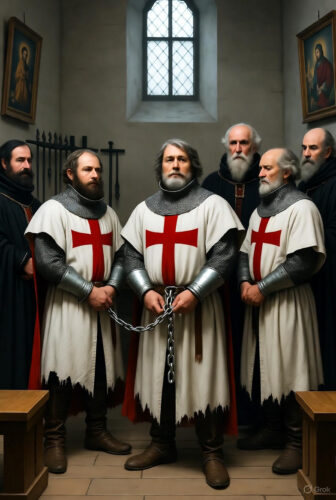

If you have ever received an invitation to a mandatory corporate retreat, a reconciliation dinner with a notoriously dramatic relative, or a “clear the air” meeting with a boss who has spent the last six months undermining you, history has a very specific warning for you. It comes from the freezing, sleet-battered cobblestones of Sweden in the sixteenth century, and it involves the absolute worst party ever thrown in human civilization.
On November 8, 1520, King Christian II of Denmark executed one of the most audacious, legally acrobatic, and violently literal toxic betrayals ever recorded. It is an event permanently burned into the Scandinavian psyche as the Stockholm Bloodbath. It is a masterclass in the dangers of trusting a sudden shift in behavior, the reality of political gaslighting, and the sheer audacity of finding a loophole in a promise of total amnesty. Most importantly, it provides a flawless, blood-soaked historical lens through which you can examine the treacherous invitations and false truces in your own modern life.
To truly appreciate the breathtaking scale of this betrayal, we have to rewind the clock and set the stage in the icy, precarious political landscape of the Baltic.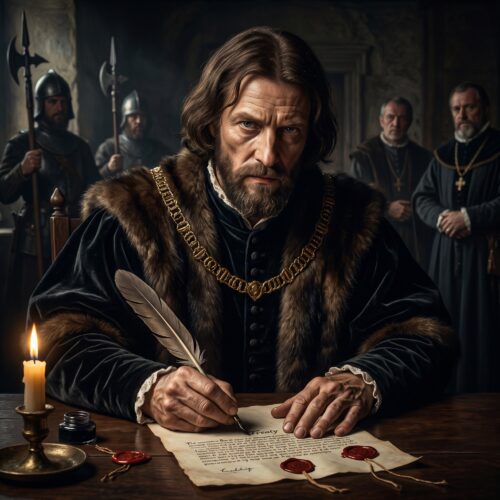
The year is 1520, but the drama began over a century earlier with something called the Kalmar Union. Established in 1397, the Kalmar Union was essentially an unstable, perpetually irritating roommate agreement between three sovereign kingdoms: Denmark, Norway, and Sweden. Under this agreement, the three nations were united under a single monarch. In theory, this was a brilliant geopolitical strategy designed to block the expansion of the powerful Hanseatic League, a commercial and defensive confederation of merchant guilds that dominated Baltic maritime trade. In practice, it was a recipe for relentless bickering. Denmark, being the wealthiest and most populous of the three, naturally assumed the role of the domineering older sibling. The Danish monarchs insisted on calling the shots, collecting the taxes, and treating Sweden not as an equal partner, but as a subordinate province.
The Swedes, a fiercely independent people accustomed to governing themselves through a complex system of local councils and noble estates, absolutely hated this arrangement. For over a hundred years, the history of the Kalmar Union was simply a repetitive cycle of Swedish rebellion, Danish military intervention, temporary pacification, and renewed rebellion. It was a miserable political marriage held together purely by the threat of violence.
Enter King Christian II of Denmark. Crowned in 1513, Christian was a man of intense ambition, soaring intellect, and absolutely zero emotional regulation. He was the kind of ruler who read Machiavelli’s The Prince and viewed it not as a philosophical treatise, but as a practical to-do list. Christian was determined to crush Swedish defiance once and for all. He wanted to forge a centralized, absolute monarchy, and the pesky, independent-minded Swedish nobility stood directly in his way.
On the Swedish side, the resistance was led by a young, charismatic nobleman named Sten Sture the Younger. Sten Sture held the title of Regent of Sweden, meaning he effectively ran the country in defiance of the Danish king. He was backed by a significant portion of the Swedish nobility and the common peasantry, who were tired of Danish taxes. However, Sten Sture had a massive problem: not all Swedes were on his side. The Swedish Church, led by the incredibly vindictive Archbishop of Uppsala, Gustav Trolle, heavily favored the Danish king. Trolle believed that aligning with Denmark would secure his own power and wealth. Sten Sture and Gustav Trolle hated each other with the burning passion of a thousand suns, a rivalry that eventually led Sten Sture to literally besiege the Archbishop’s castle, tear it down brick by brick, and strip Trolle of his title.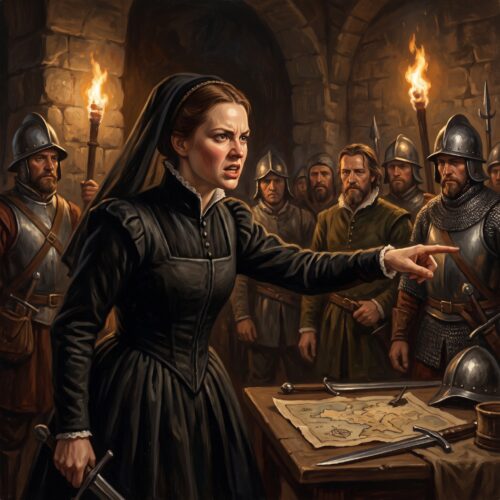
This internal Swedish squabble was exactly the excuse King Christian II needed. Claiming he was simply riding to the rescue of the wrongfully deposed Archbishop, Christian launched a massive invasion of Sweden in early 1520. He brought with him a terrifying army of professional mercenaries—battle-hardened French, German, and Scottish soldiers who fought for gold and cared nothing for Scandinavian politics.
In January 1520, the Danish mercenary army clashed with Sten Sture’s peasant militia on the frozen ice of Lake Åsunden at the Battle of Bogesund. It was a disaster for the Swedes. A Danish cannonball bounced off the ice and shattered Sten Sture’s leg. The Swedish lines broke, and as the army retreated, Sten Sture succumbed to his wounds, dying in a horse-drawn sleigh on the frozen road back to Stockholm.
With their charismatic leader dead, the Swedish resistance should have crumbled instantly. Christian II expected to march right into Stockholm and claim his crown. But he did not account for Sten Sture’s widow, a twenty-eight-year-old woman named Christina Gyllenstierna.
Christina was not about to simply hand the keys to the city over to the man who had just killed her husband. She rallied the surviving Swedish forces, took command of the Stockholm garrison, and slammed the city gates shut. When Christian’s massive army arrived, they found Stockholm completely locked down and heavily armed. For months, the Danish forces besieged the city. They bombarded the walls, cut off the supply lines, and waited for starvation to do their work. But Christina and the defenders held out with astonishing resilience through the spring and summer.
By September, however, the situation inside the city walls was becoming desperate. Food was running out. Morale was plummeting. On the outside, Christian II was also getting frustrated. His expensive mercenary army was eating through his treasury, and a protracted siege was bad for his public image. Both sides needed an out.
So, King Christian II did what any cunning politician would do: he offered an olive branch so generously wrapped in velvet that it seemed impossible to refuse.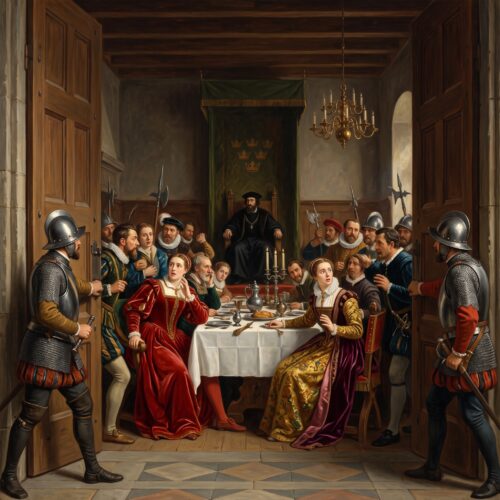
He sent envoys to Christina Gyllenstierna with a proposition for surrender. If she opened the gates and recognized him as the rightful King of Sweden, he would grant a general and absolute amnesty. No one would be punished for the rebellion. Not Christina, not the nobles who fought alongside her, not the peasants, and certainly not the city officials. He promised, in writing, that all past grievances would be forgotten, all property would remain intact, and a new era of peace and brotherly love would commence. The slate would be wiped completely clean.
Exhausted, starving, and out of options, Christina and the city council accepted the terms. The gates of Stockholm were opened. King Christian II rode into the city, smiling benevolently, presenting himself as a merciful sovereign rather than a conquering tyrant.
The mood in the city shifted from terror to a cautious, bewildered relief. The King was actually keeping his word. He was polite, he was gracious, and he immediately began planning his coronation. He sent out invitations to all the prominent Swedish nobles, bishops, mayors, and wealthy merchants—including all the people who had spent the last several months actively trying to kill him. He invited them to a massive, multi-day coronation feast at the Tre Kronor (Three Crowns) castle to celebrate the reunification of the realm.
This brings us to early November. The coronation itself took place on Sunday, November 4, 1520. It was a splendid, incredibly expensive affair. The King was anointed by the reinstated Archbishop Gustav Trolle. Following the religious ceremony, the banqueting began. For three entire days, the castle was a scene of unbridled gluttony and celebration. The wine flowed in rivers, the tables groaned under the weight of roasted meats and exotic delicacies, and the music played deep into the freezing Scandinavian nights.
The Swedish nobles, initially tense and suspicious, began to relax. The King was toasting their health. He was laughing at their jokes. He was showering them with honors. It genuinely seemed as though the hatchet had been buried. The general amnesty was real. The war was over.
Then came the evening of Wednesday, November 7.
As the final night of the banquet was winding down, the atmosphere in the great hall suddenly changed. The musicians stopped playing. The servants quietly slipped out of the room. The heavy wooden doors of the great hall were slammed shut, and the unmistakable sound of iron bolts sliding into place echoed through the silence. Armed Danish guards, holding halberds and looking entirely unamused, stepped out of the shadows and blocked every exit.
The laughter died in the throats of the Swedish guests. The velvet glove was coming off, and the iron fist was about to make its debut.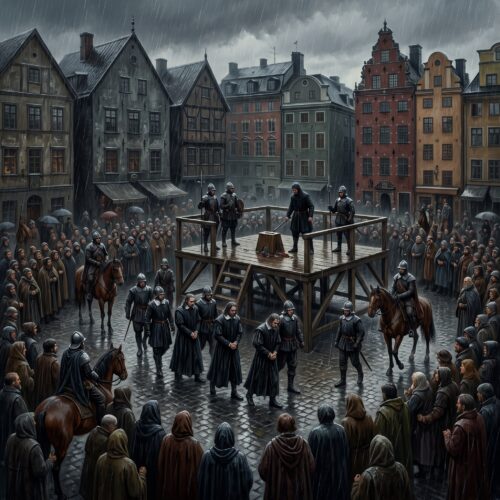
King Christian II sat perfectly still on his throne. Beside him stood Archbishop Gustav Trolle, holding a very large, very formal legal document. The King turned the floor over to the Archbishop, who proceeded to read aloud a list of grievances.
Trolle reminded the captive audience that a few years prior, the Swedish nobility had illegally besieged his castle, stripped him of his office, and humiliated the Church. He demanded justice. He demanded compensation. He demanded blood.
The Swedish nobles were confused but initially confident. They loudly reminded the King about the amnesty document. The treaty specifically stated that all past crimes, rebellions, and grievances were entirely forgiven. The King had sworn it on the Bible.
It was at this moment that King Christian II executed the greatest, most devastating legal loophole in European history.
The King nodded solemnly and agreed that he had, indeed, granted a general amnesty for all crimes committed against the Crown of Denmark. He forgave them for the rebellion. He forgave them for the war. However, he noted, leaning forward, the Swedish nobles had not just rebelled against the King; they had attacked an Archbishop. They had destroyed church property. Therefore, they had committed a crime against God. And while the King of Denmark could forgive crimes against the state, only the Pope could forgive crimes against the Church.
The charge was not treason. The charge was heresy. And the King’s amnesty did not cover heresy.
The trap had sprung. The Swedish guests realized with mounting horror that the entire amnesty, the peace treaty, and the lavish three-day banquet had been an incredibly elaborate, deeply cynical ruse designed to gather all of the King’s political enemies into a single, locked room so they could be legally exterminated in one fell swoop.
A makeshift, utterly farcical ecclesiastical court was set up right there in the castle. Archbishop Trolle acted as the chief prosecutor, and unsurprisingly, the court found everyone on his list guilty of manifest heresy. The sentence was death. There was no appeal.
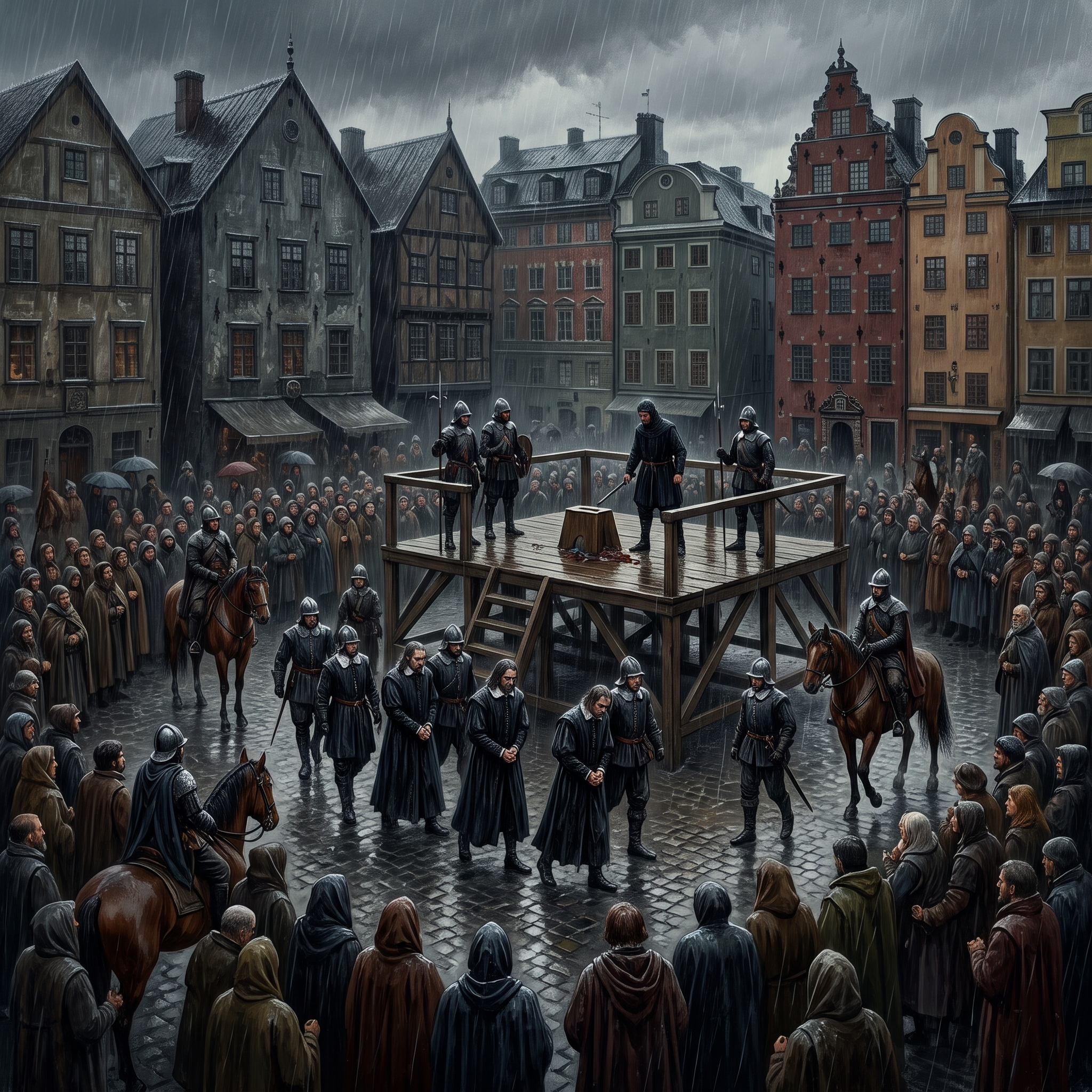
The next morning, Thursday, November 8, 1520, the gates of the castle were thrown open, but not for the guests to leave. Trumpets sounded through the damp, freezing air of Stockholm, ordering the citizens to stay indoors and keep their windows shut. Danish soldiers lined the streets leading from the castle down to Stortorget, the main public square in the center of the old city.
The executions began at noon. They started with the highest-ranking officials to make a point. The first to be led to the chopping block were two Catholic bishops who had supported the Swedish rebellion. The executioner’s sword fell, and the bishops were decapitated.
Next came the secular nobility. Fourteen prominent noblemen, the absolute core of the Swedish political elite, were brought out and beheaded one by one. The mayors of Stockholm were next, followed by the wealthy merchants who had financed the defense of the city.
The executions did not stop when the sun went down. They continued through the next day, November 9. As the list of high-profile targets ran out, the King’s soldiers began rounding up ordinary citizens who had been vocal in their support of the rebellion. Some were hanged from the rafters of their own houses; others were dragged to the square and beheaded. The exact number of victims is debated by historians, but it is generally accepted that nearly one hundred people were systematically slaughtered in the center of Stockholm over those two days.
The autumnal rains fell heavily, mixing with the astonishing amount of blood on the cobblestones. Contemporary accounts, likely embellished but capturing the sheer horror of the event, claimed that the blood flowed in literal streams down the sloped streets of the old town, staining the water of the harbor red.
To ensure the point was made with absolute finality, King Christian II ordered that the bodies of the executed, including the bishops, be dragged out of the city and burned on a massive pyre—the traditional punishment for heretics, which denied them a Christian burial. In a final act of breathtaking pettiness, he even ordered that the rotting corpse of Sten Sture the Younger be dug up from its grave and thrown onto the fire.
Christian II departed Stockholm believing he was an absolute genius. He had surgically removed the entire leadership class of Sweden. He had eliminated his opposition, enriched his treasury by confiscating the estates of the dead, and terrorized the populace into permanent submission. He returned to Denmark expecting to rule a quiet, pacified Scandinavia for the rest of his life.
But history is rarely kind to tyrants who rely on cheap legal tricks, and the Stockholm Bloodbath instantly backfired in the most spectacular way imaginable.
By betraying the amnesty so flagrantly, Christian destroyed the one currency a monarch actually needs: trust. If a signed, sworn amnesty was worthless, then no Swede could ever negotiate with him again. Surrender was no longer an option, because surrender meant death. The only option left was total, uncompromising war.
Furthermore, Christian had missed someone. A twenty-four-year-old Swedish nobleman named Gustav Vasa had wisely decided not to attend the coronation banquet, suspecting a trap. When news of the Bloodbath—and the execution of his own father—reached him, Gustav Vasa fled north into the heavily forested province of Dalarna.
Using the horror of the Bloodbath as his ultimate recruiting tool, Gustav Vasa rallied the fiercely independent miners and farmers of the region. He pointed to the severed heads in Stockholm as proof that the Danish King was a monster who could not be reasoned with. The rebellion that erupted was not a polite, aristocratic disagreement; it was a desperate, vicious war for national survival.
Within three years, Gustav Vasa’s rebel army had driven the Danish forces entirely out of Sweden. The Kalmar Union was permanently shattered. On June 6, 1523, Gustav Vasa was elected King of an independent Sweden, establishing a dynasty that would transform the country into a major European power.
As for King Christian II? His incredible capacity for making enemies eventually alienated his own Danish nobility. He was overthrown, forced into exile, and spent the last twenty-seven years of his life locked in a drafty castle prison, pacing the floors and wondering where it all went wrong.
So, why does a mass execution from the freezing mud of 1520 matter to you today?
It matters because human psychology has not changed in five hundred years. The tactics of the power-hungry, the manipulative, and the toxic remain exactly the same; only the execution method has evolved. Instead of a mercenary army and an executioner’s sword, today’s tyrants use corporate restructuring, sudden HR audits, passive-aggressive family gossip, and weaponized guilt.
The Stockholm Bloodbath is the ultimate historical metaphor for the “Velvet Trap”—a situation where an adversary suddenly offers you everything you want (peace, forgiveness, a clean slate, a promotion) in order to get you to lower your defenses, enter a controlled environment, and lock the doors behind you.
When you find yourself in a situation where a historically hostile force in your life—a toxic boss, an abusive ex, a manipulative friend, or a cutthroat colleague—suddenly offers a grand, unprompted truce, you need to channel the suspicion of the few Swedes who stayed home on November 8, 1520.
Here is how you apply the brutal lessons of the Stockholm Bloodbath to your own life, ensuring you never end up politically, professionally, or emotionally decapitated in the town square.
The Bloodbath Survival Plan: How to Identify and Exit Toxic Traps
- Beware the Sudden “Amnesty” Without Accountability King Christian II offered total forgiveness without addressing why the conflict happened in the first place. He simply waved his hand and said, “Let’s forget the past.”
- The Modern Application: When a toxic person in your life suddenly offers a clean slate without taking accountability for their past behavior, it is not an olive branch; it is bait. If your boss suddenly stops micromanaging you and invites you to a “vision-boarding retreat,” or if a toxic family member who hasn’t spoken to you in years invites you to a lavish holiday dinner with no preamble, your internal alarms should be deafening. Genuine reconciliation requires a painful, slow autopsy of past wrongs. A sudden, cheerful offer to “just move on” is usually a trap designed to reset the board so they can attack you from a new angle.
- Scan for the “Heresy” Loophole The Swedes thought they were protected because they had a document forgiving their rebellion. They failed to realize that the King had an entirely different set of rules (heresy) that he could activate at any time.
- The Modern Application: Manipulative people always build loopholes into their truces. They will agree not to attack you on Issue A, only to blindside you by attacking you on Issue B, claiming it wasn’t covered by the agreement. If you are negotiating a truce—whether it is a severance package, a custody agreement, or a ceasefire with a roommate—look for the unsaid exception. Do not just look at what they are promising to stop doing; look at the avenues of attack they have conveniently left open.
- Never Enter a Room Where You Don’t Control the Exit The defining moment of the Bloodbath was the slamming of the great hall doors. Once the Swedes were inside a space completely controlled by their enemy, their fate was sealed.
- The Modern Application: Never agree to a high-stakes conversation in an environment where the other person holds all the physical or psychological power. If a hostile manager wants a “casual chat,” do not do it in their office with the door closed; insist on a neutral conference room or a coffee shop. If a manipulative relative wants to “hash things out,” do not go to their house where you rely on them for dinner and a ride home. Keep your hand on the doorknob, metaphorically and literally. Always retain the ability to walk away the second the vibe shifts.
- Reject the “Coronation Banquet” (The Trap of Forced Indebtedness) Christian didn’t just invite them to a meeting; he invited them to a three-day rager. He fed them, gave them wine, and made them feel honored. He weaponized hospitality to make them feel indebted and comfortable.
- The Modern Application: Be incredibly wary of sudden, lavish gifts or favors from enemies. This is the tactic of the co-worker who steals your ideas but suddenly buys you a very expensive lunch, or the client who pays late but sends you box seats to a game. They are trying to trigger your social conditioning. Human beings are wired to reciprocate hospitality. By accepting the “banquet,” you subconsciously lower your guard and feel guilty about fighting back. Eat your own lunch, pay for your own coffee, and refuse the psychological debt.
- Be Your Own Gustav Vasa (Have a Bug-Out Bag) Gustav Vasa survived the Bloodbath because he looked at the invitation to the biggest party of the decade, smelled a rat, and decided to go hide in the freezing woods instead.
- The Modern Application: You must always have an exit strategy that relies entirely on yourself. Do not put all your career eggs in a toxic company’s basket, hoping the new HR policy will fix things. Do not depend entirely on a volatile partner for your housing or social life. Build your own “Dalarna”—a network of outside contacts, a savings account nobody else can touch, an updated resume, and a side hustle. When the doors lock and the Archbishop stands up to read the charges, you don’t want to be the one arguing about the amnesty document. You want to be the one who never showed up to the party in the first place, already halfway out the door, ready to build your own kingdom.
The next time you are offered a seat at a table that has historically been hostile to you, look closely at the menu, check the locks on the doors, and remember November 8, 1520. Sometimes, the most powerful move you can make is simply declining the invitation.
Share: