
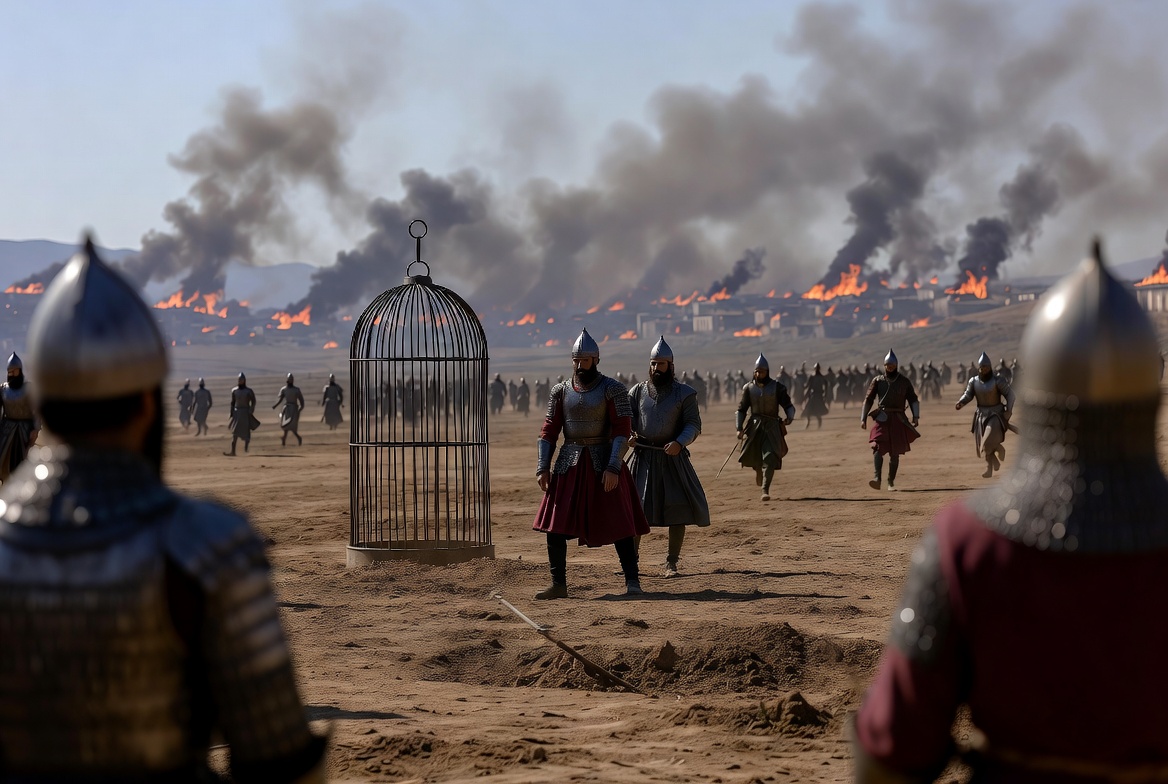
On a blistering Friday in the high summer of 1402, the Çubuk plain northeast of Ankara baked under a sky the color of hammered brass. Two of the most formidable warlords the medieval world had yet produced faced each other across a dry landscape that would decide the fate of empires. One was Bayezid I, called Yıldırım—the Thunderbolt—Sultan of the Ottomans, the man who had crushed a crusader army at Nicopolis six years earlier and was currently starving Constantinople into submission. The other was Timur, known in the West as Tamerlane, the Turco-Mongol warlord from Transoxiana who limped from old wounds, claimed descent from the steppes of Genghis, and had already reduced Delhi, Baghdad, and half of Persia to smoking ruins. By the time the sun set that day, one of them would be a prisoner and the Ottoman state would enter an eleven-year interregnum that nearly erased it from history.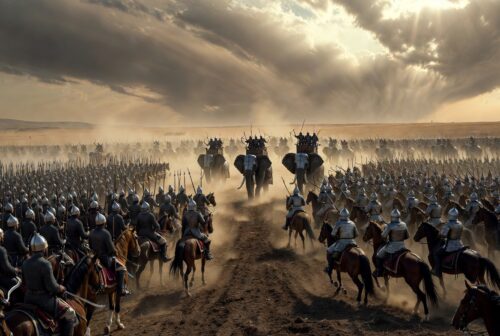
The roots of the confrontation stretched back years. Bayezid had spent the 1390s swallowing the independent Anatolian beyliks one after another, absorbing their Turkmen warriors and pushing Ottoman power deep into the old Seljuk heartland. Timur, who styled himself restorer of the Mongol order, regarded those same beyliks as his rightful sphere. When Bayezid demanded tribute from an emir who answered to Timur, the slight became personal. Timur answered by storming Sivas in 1400, then turning south to smash Mamluk Syria. By the summer of 1402 he had wheeled back into Anatolia with an army swollen by defecting Turkmen and the promise of plunder.
Bayezid was at that moment camped outside Constantinople, tightening the noose around the last remnant of Byzantium. Word of Timur’s advance forced him to break the siege and force-march eastward through the Anatolian heat. His army—estimates range from 85,000 to something over 100,000—included the elite Janissary infantry, sipahi cavalry, Balkan Christian vassals (most notably the Serbian knights under Stefan Lazarević), and contingents from the very beyliks he had only recently conquered. Many of those Anatolian troops nursed fresh grudges. The summer march cost the Ottomans thousands before a single arrow flew; men and horses collapsed from thirst and exhaustion on the long roads.
Timur, meanwhile, played a deeper game. He did not simply wait. He maneuvered behind Bayezid’s line of march, occupied the ground the Ottomans expected to use, and—most critically—diverted the Çubuk Creek. The small watercourse that normally watered the plain and the approaches to Ankara was dammed and redirected into an off-stream reservoir near the village of Çubuk. When the Ottoman host finally staggered onto the plain on or about July 28, they found the water gone. The city of Ankara itself was under Timurid siege. Bayezid had no choice but to fight at once on ground of Timur’s choosing.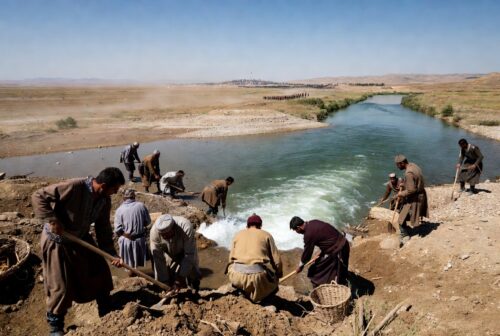
Dawn on that Friday revealed two armies drawn up across a front that contemporary accounts describe as stretching for miles. Timur placed war elephants—more than thirty of them, armored and carrying fighting platforms—in his center, flanked by dense masses of horse archers and heavy cavalry under his sons and grandsons. Bayezid took the center with his Janissaries. His son Süleyman commanded the left with the best Turkish troops. Stefan Lazarević and the Serbian heavy cavalry held the right. Another son, Mehmed, watched the rear.
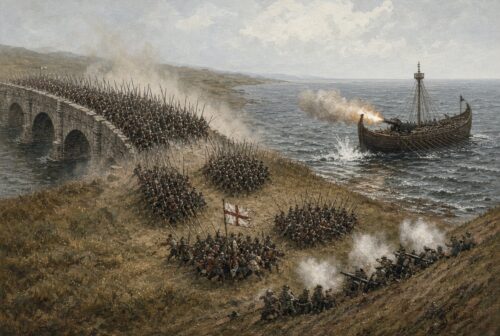
The battle opened with Ottoman advances that met clouds of Timurid arrows. Horse archers wheeled, loosed, and wheeled again, exacting a terrible toll on the thirsty ranks. The Serbians, clad in black plate that turned many shafts, charged with legendary ferocity. Timur himself is said to have remarked that they fought like lions. They broke through ranks more than once and even managed to extract one of Bayezid’s sons and part of the treasury before the weight of numbers forced them back. Yet the rest of the Ottoman line began to unravel. Anatolian beylik contingents and Black Tatar units, never fully loyal, deserted in the heat of the fighting and rode over to Timur. The center held longest. Bayezid and his Janissaries formed a stubborn knot that resisted until nightfall. When darkness came, the sultan attempted a breakout toward the nearby hills with a few hundred horsemen. Timur’s cavalry sealed the mountains. Bayezid’s horse went down. The Thunderbolt was taken alive—the only Ottoman sultan ever captured on the field by an enemy.
Casualties were savage. Modern estimates put Ottoman dead and wounded somewhere between 30,000 and 50,000; Timurid losses lower, perhaps 15,000 to 40,000. The numbers in medieval chronicles balloon into the hundreds of thousands, as medieval numbers always do, but the strategic result needs no inflation. Bayezid was carried off in chains. Popular legend later placed him in an iron or golden cage that Timur carted from camp to camp, though the more sober accounts simply record that the sultan remained a closely guarded prisoner until his death in March 1403. Timur’s forces swept westward, sacking cities and even storming the Hospitaller stronghold at Smyrna on the Aegean. Then, as suddenly as he had come, Timur turned east again. He had no interest in governing Anatolia. He left the Ottoman lands in chaos and died two years later on the road to China.
What followed was the Ottoman Interregnum. Bayezid’s sons—Süleyman, İsa, Mehmed, and Musa—fought one another for eleven bloody years. The empire that had seemed poised to take Constantinople fractured into competing principalities. Byzantine Emperor Manuel II, who had been on the verge of losing his city, suddenly found breathing room. Western chroniclers noted with astonishment that the Ottoman threat had, for a season, vanished. Only in 1413 did Mehmed I finally reunite the core territories and begin the long recovery that would culminate, half a century later, in the fall of Constantinople under his grandson Mehmed II. The Battle of Ankara did not destroy the Ottomans forever, but it delayed their imperial destiny by a generation and proved that even the most seemingly unstoppable expansion could be snapped by superior maneuver, the denial of a single critical resource, and the exploitation of internal fractures.
The details remain vivid across the sources. The diverted creek. The elephants in the center. The Serbian black armor flashing through the dust. The Thunderbolt reduced to a captive while his sons scattered. The plain of Çubuk, ordinary farmland most years, turned for one day into the hinge of Eurasian history. Timur, the lame conqueror who never learned to read, out-thought the brilliant and ruthless Bayezid by the simple expedient of arriving first, resting his men, and moving the water.
That is the historical core. Everything else—empire, succession, the temporary reprieve of Byzantium—flowed from the decisions made on that dry plain on July 28, 1402.
Now the narrow bridge from that day to any individual life. The outcome of Ankara was not merely military defeat. It was the sudden, total interruption of a trajectory that had looked inevitable. An empire that had momentum, elite troops, recent victories, and a charismatic leader was reduced in a single afternoon to a collection of quarreling fragments. Recovery took more than a decade of internal war. The lesson is not the usual soft talk about “resilience” or “learning from failure.” It is colder and more practical: the side that controls the indispensable resource and forces the opponent to fight thirsty wins, even against superior reputation and recent form.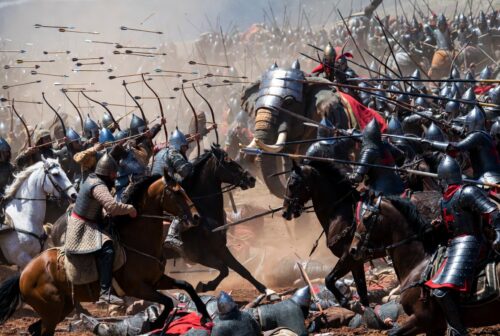
Apply it this way. Most personal stuckness is not a lack of effort. It is the quiet loss of control over the one or two streams that everything else depends on—attention, cash flow, physical energy, a critical relationship, a scarce skill, or the narrative others tell about you. The person or system that diverts those streams first leaves you marching in summer heat toward a dry creek bed.
Here is the concrete, non-generic plan that grows directly from the mechanics of July 28, 1402. Call it the Çubuk Diversion Protocol. It is deliberately unlike the usual advice of journaling, vision boards, or “mindset shifts.” It is a short sequence of irreversible resource moves executed on a fixed calendar.
– Identify your single most critical personal creek within 48 hours. This is not a goal. It is the upstream input without which your current projects, income, health, or influence dry up. Write it down in one sentence. Examples that fit the historical pattern: the specific client or platform that supplies 60 percent of revenue; the two hours of morning focus that produce all useful work; the physical capacity that lets you train or travel; the one relationship that opens doors. Be brutal. If you cannot name it, you are already fighting thirsty.
– Map the three most likely ways that creek can be diverted against you in the next 90 days. Competitor undercutting. Algorithm change. Health interruption. Key person leaving. Write the three scenarios in the same notebook. No optimism allowed.
– Execute one irreversible diversion of your own within seven days. This is the Timur move. You do not wait for the opponent to arrive. You arrive first and move the water. Practical forms: lock in a secondary revenue stream that does not depend on the primary creek (even if it is smaller); shift a critical skill or asset into a form you alone control; pre-pay or pre-commit a resource so that it cannot be easily yanked; publicly document a capability so that reputation travels with you rather than staying tied to one platform. The action must be hard to reverse. Soft intentions do not count.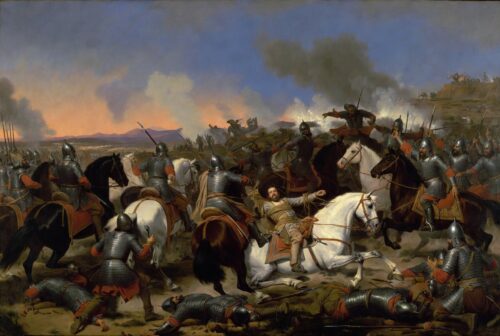
– Install a Serbian Lion Flank the same week. Identify the one asset or relationship that must be protected even if the main line collapses—exactly as the Serbian knights extracted a prince and the treasury. Put concrete protection around it: legal paperwork, redundant access, a private channel, a cash buffer earmarked only for that asset. Do not let the main fight consume it.
– Schedule a forced interregnum review on day 30 and day 90. After any major disruption (or even after a quiet month), spend one focused hour answering only these questions: Which of my creeks is still under my control? Which ones have been partially diverted? What new water source can I claim this month? Write the answers. Do not discuss them with anyone who has a stake in the old arrangement.
– Refuse the golden-cage narrative. Bayezid’s legend became the cage. Do not let any single defeat or status loss become the story others tell about you. Counter it with one public, dated action every 30 days that demonstrates continued agency—release something, ship something, appear somewhere new. The historical record shows that the Ottoman recovery began only when one son stopped fighting the others long enough to rebuild a coherent core. Your version is the same: stop internal civil war (scattered priorities, self-recrimination) and rebuild around the creeks you still control.
This protocol is short by design. It can be started this week and completed in its first cycle inside three months. It does not require new beliefs, only the same cold attention to logistics that Timur brought to a dry Anatolian plain. Control the water. Force the fight on your ground. Protect the extractable core. Then rebuild after the interregnum without nostalgia for the old momentum.
The plain of Çubuk is still farmland. The creek still runs when no one diverts it. On one July day in 1402 it became the instrument that broke an empire. The same mechanics remain available to anyone willing to move the water first.
Share: