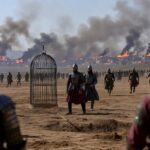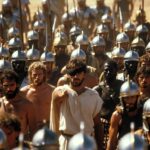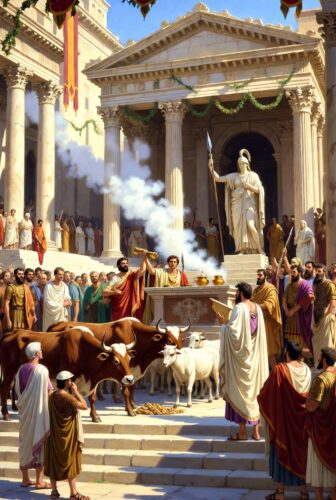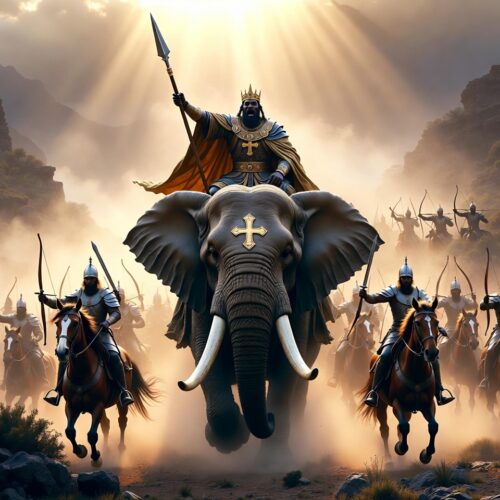

On a clear summer morning in the year 1030, in a valley called Verdalen in what is now central Norway, two armies faced each other across a stretch of farmland that would later be remembered as Stiklestad. One was led by a king who had already lost his throne once and was trying to claw it back. The other was a swollen, improvised host of farmers, freeholders, local chieftains, and their retainers who had decided that this particular king had overstayed his welcome. By the time the sun had climbed and then, according to the later storytellers, mysteriously reddened and darkened, the king was dead. Three wounds finished him. He leaned against a large stone, dropped his sword, and died calling on God. The farmers won the day. History, however, handed the farmers a peculiar kind of defeat that would outlast every one of them.
This is the story of that day, told with the messy, contradictory details that the medieval sources actually give us rather than the tidy national myth that later grew around it. It is a story of exile, of a king who could not stop pushing people, of battle cries that sound almost comic in translation, of a body that refused to stay properly dead, and of a political and religious transformation that no one on the field that afternoon could possibly have predicted.
### The Road to the Farm
Olaf Haraldsson was born around 995, the son of a minor petty king in Vestfold. Like many ambitious young Norsemen of his generation, he spent his early years on Viking expeditions. He raided in the Baltic, served as a mercenary in England, and at some point accepted baptism. By 1015 he had returned to Norway with enough gold, enough reputation, and enough carefully cultivated alliances to claim the kingship. He defeated the powerful jarls of Lade at the Battle of Nesjar in 1016 and set about the hard, often brutal work of turning a collection of regional power centers into something closer to a single kingdom. He introduced Christian law codes, suppressed pagan practices where he could, and made enemies among the great landowners who preferred the old loose arrangements and the Danish connection.
In 1028 the Danish king Cnut the Great, already master of England and Denmark, turned his attention fully to Norway. With the help of the remaining Lade jarls and a number of Norwegian chieftains who had grown tired of Olaf’s high-handed ways, Cnut forced Olaf into exile. Olaf fled east, first to Sweden and then to the court of Yaroslav the Wise in Kievan Rus’. There he waited, married into the Russian royal family for a time, and watched for an opening.
The opening came in 1029 when the last Lade jarl, Hákon Eiríksson, drowned. The Danish grip on Norway temporarily loosened. Olaf gathered what forces he could. The Swedish king Anund Jacob supplied him with a few hundred men and guides through the inland routes. A Norwegian exile named Dagr Hringsson joined on the promise that his family’s lands would be restored. Along the way Olaf also picked up various adventurers, outlaws, and highwaymen—men who had little to lose and saw a chance for plunder or advancement under a restored king. The resulting force was not a professional royal army. Saga accounts put it somewhere between three and four thousand men at the core, swelling with Swedish auxiliaries and local recruits to something like six thousand at the high estimate. It was a mixed, imperfect instrument.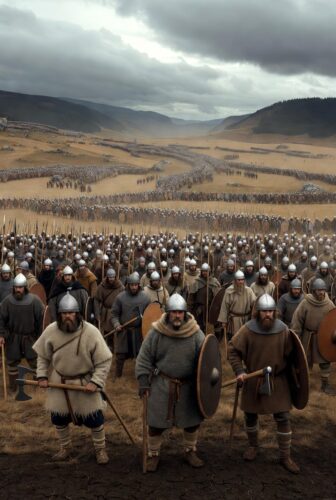
Olaf chose to approach Norway not through the more friendly eastern districts where he still had supporters, but through the mountains into Trøndelag, the heartland of the very men who had helped drive him out. Whether this was bold strategy or stubborn miscalculation remains debated. He came down the Verdal valley and arrived at the farm of Stiklestad. There the opposition was waiting.
### The Farmer Army
The force that faced Olaf was led by three prominent figures: Hárek of Tjøtta, Þórir Hund from Bjarkøy in the far north, and Kálfr Árnason, a man who had once served Olaf and now stood against him. Snorri Sturluson, writing roughly two centuries later in the *Heimskringla*, describes this host as “one hundred hundred” in the old long-hundred counting system—14,400 men. Modern historians treat the number with skepticism. Raising and feeding that many men on short notice in eleventh-century Norway would have been an enormous logistical feat. What is clear is that the opposition was substantially larger than Olaf’s force and that it represented a genuine coalition of regional interests that preferred Danish overlordship, or at least local autonomy, to Olaf’s return.
These were not professional soldiers. They were landowners, free farmers, their household men, and whoever else could be mustered. Their battle cry, according to the sagas, was blunt and almost domestic: “Fram, fram, búandmenn!”—“Forward, forward, farmers!” Olaf’s men answered with a more ideological shout: “Fram, fram, kristsmenn, krossmenn, konungsmenn!”—“Forward, forward, Christ-men, cross-men, king’s men!” The contrast is perfect. One side claimed the soil and the practical order of the countryside. The other claimed heaven, the cross, and the person of the king.
Fifteen-year-old Harald Sigurdsson, Olaf’s half-brother and the future Harald Hardrada, was present. Olaf initially ordered him to stay out of the fighting. The boy insisted. He would later escape the field wounded and begin the long career that would take him to the Varangian Guard, the throne of Norway, and finally death at Stamford Bridge in 1066.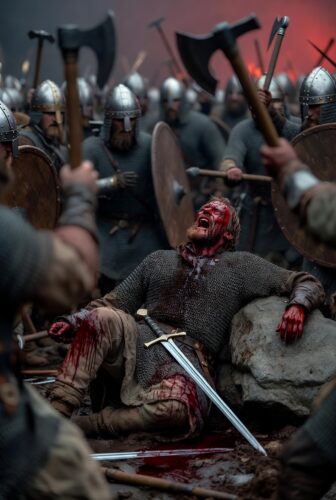
### The Fighting
The armies met near midday under what the sources describe as clear sunshine. Olaf had drawn his men up on slightly higher ground and launched them downhill in a fierce initial charge that pushed the farmers back. For a time it looked as if the smaller force might break the larger one through sheer aggression. Then the weight of numbers began to tell. The fighting was close and brutal—spears, axes, swords, and the occasional war-hammer.
According to Snorri’s detailed (and almost certainly embroidered) account, the critical sequence around the king went like this. Þórir Hund, wearing a famous reindeer-skin coat that local tradition claimed was magic or at least remarkably tough, advanced. Bjørn Stallare, Olaf’s marshall, struck at him with the hammer side of an axe and staggered him. Þórir recovered and killed Bjørn with a spear, reportedly joking that this was how they hunted bears in the far north (Bjørn means “bear”). Then Torstein Knarresmed, a shipwright with a personal grudge, swung an axe into Olaf’s left leg just above the knee. Finn Arnason immediately killed Torstein in revenge, but the damage was done. Olaf staggered, leaned against a large stone that would later be called Olavssteinen, threw down his sword Hneitir, and prayed. Þórir Hund thrust a spear up under the king’s mail into his belly. Kálfr Árnason struck him in the neck. Three wounds. The king was dead.
Snorri also records that the sky and the sun turned red and then grew as dark as night while the battle raged. Later tradition linked this to a solar eclipse. Modern astronomical calculation shows that a hybrid annular-total eclipse did occur over the region in 1030—but on August 31, not July 29. The traditional date of the battle is July 29. The eclipse story is almost certainly a later poetic or symbolic addition, a convenient omen that the chroniclers attached to the day of the king’s fall. The discrepancy is a useful reminder that even the most vivid saga details must be handled with care.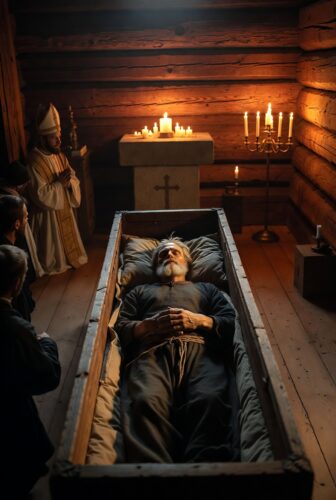
Dagr Hringsson continued the fight for a time after Olaf fell, but the farmer army held. Olaf’s surviving men broke and fled. Harald, wounded, was hidden by locals and eventually escaped the country. The body of the king was carried away in secret and buried in a sandbank near the Nidelva river south of Nidaros (modern Trondheim).
### The Strange Afterlife of a Corpse
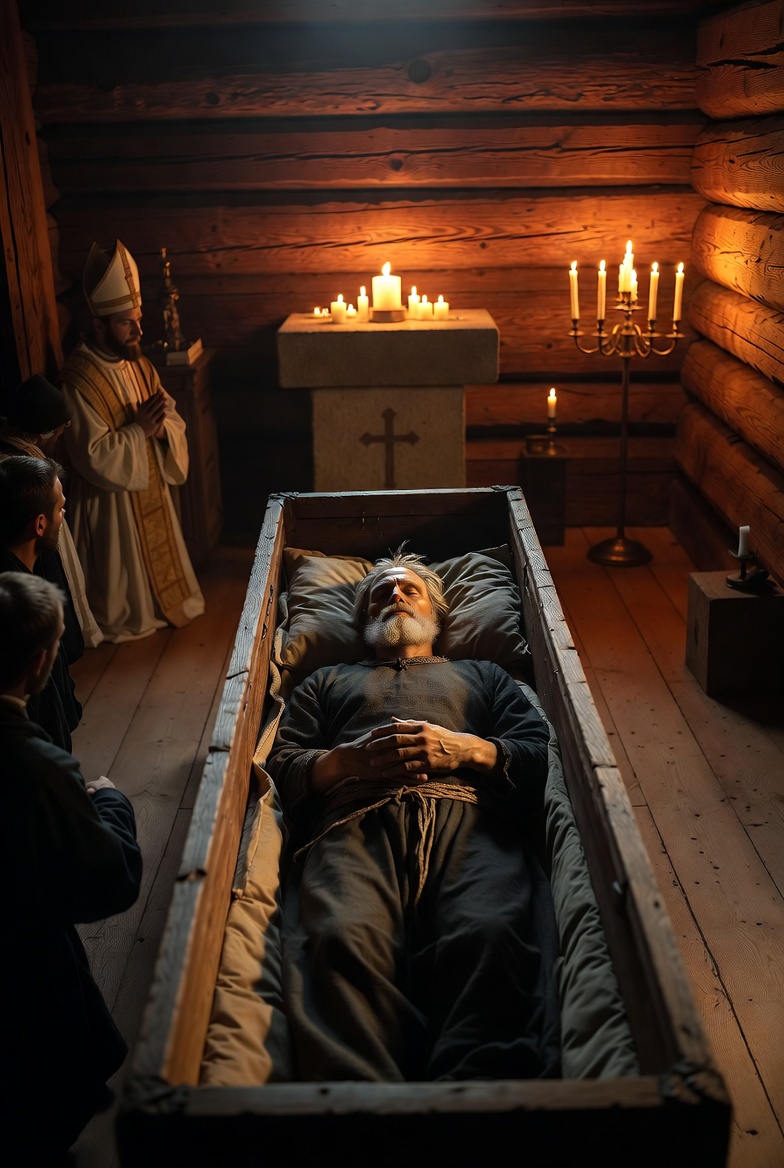
Here the story takes its decisive turn. Within a year, local reports of miracles began to circulate. The body was exhumed. According to the accounts that later became standard, it was found incorrupt. The cheeks still held color. The hair and nails had continued to grow. Bishop Grimketel, one of the English churchmen who had accompanied Olaf, declared him a saint on or around August 3, 1031. The remains were translated to St. Clement’s Church in Nidaros. A church was later built at Stiklestad itself over the stone against which the king had died; tradition holds that the stone remains inside the altar.
The cult spread with remarkable speed. Pilgrims came. Stories of healings multiplied. Within a generation churches dedicated to Saint Olaf appeared across Scandinavia and even farther afield—England, the Baltic, Novgorod, and among the Varangian Guard in Constantinople. In 1164 Pope Alexander III formally confirmed the local canonization. Olaf received the title *Rex Perpetuus Norvegiae*—the Eternal King of Norway.
Politically the effect was profound. Danish rule under Cnut’s son Svein and the Englishwoman Ælfgifu of Northampton proved harsh and unpopular. The memory of the fallen king became a rallying point. Olaf’s illegitimate son Magnus was brought back from Rus’ and eventually took the throne. Danish control collapsed. Norway entered a period of relative independence and consolidation. The Christianization that Olaf had pushed with varying degrees of force was now completed under the banner of his martyrdom. The warrior king who had died fighting his own people was transformed into the patron saint who united them.
The irony is almost too neat. The farmers who killed him on July 29, 1030, won the battle and lost the century. The king who lost his life and his crown that day became the permanent symbolic sovereign of the realm he had failed to hold by force.
### What the Sources Actually Give Us
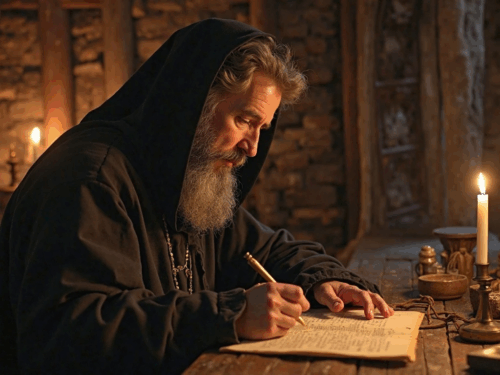
The main narrative comes from Snorri Sturluson’s *Heimskringla*, composed around 1230, and from earlier skaldic verses, particularly those of Sigvat Thordarson, who was not present at the battle but composed an *erfidrápa* (memorial poem) about it. Earlier Latin sources such as Adam of Bremen and Theodoricus Monachus are thinner. There is no contemporary battlefield report. Archaeology at Stiklestad has produced little decisive evidence of a major engagement; the rocky soil does not preserve bones well, and geophysical surveys have found traces of buildings rather than clear combat debris. Army sizes are almost certainly inflated. The precise sequence of the three wounds may be literary shaping. The eclipse is almost certainly misplaced. Yet the core event—Olaf’s attempt to reclaim the throne, his death in combat against a regional coalition, and the rapid growth of a cult around his remains—is accepted by virtually all serious historians as historical.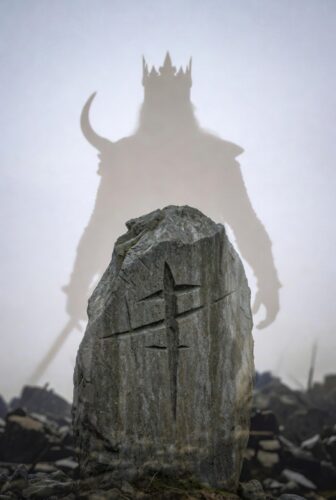
The battle sits at a hinge point. Before it, Norwegian kingship was still contested and often dependent on external Danish or Swedish power. After it, the idea of a unified Christian Norwegian kingdom under a native royal line gained a powerful emotional and religious foundation. Saint Olaf’s axe became a national symbol. The annual Olsok celebrations and the modern outdoor drama at Stiklestad continue a tradition that is nearly a thousand years old.
### Applying the Outcome: The Three-Wound Forge
The historical outcome is clear. A public, humiliating military defeat, followed by death, became the foundation of lasting authority and identity. The man who lost everything on the field gained more in death than he had ever held in life. The practical question for anyone living today is how to extract something usable from that pattern without turning it into empty inspirational rhetoric.
Most self-help advice about failure tells you to “fail forward,” reframe, or extract lessons. That advice is common, soft, and often ineffective because it stays private and cognitive. The Stiklestad pattern is different. It is public, bodily, and irreversible in its first stage. The king did not get a second chance to win the same battle. He was dead. The transformation happened afterward through the deliberate elevation of the defeat itself.
Here is a concrete, non-generic method built directly from the structure of the event. Call it the Three-Wound Forge. It is designed to be completed in seven days and then maintained for thirty. It is deliberately uncomfortable and deliberately public within a controlled circle. It does not require religion, nationalism, or any belief in miracles. It requires only that you treat a real personal defeat as raw material for a new form of authority.
**Preparation (Day 0)**
Identify one concrete, recent failure that still stings and that other people know about—or that you have been carefully hiding. It must be specific: a project that collapsed, a relationship that ended publicly, a professional rejection, a financial loss, a health setback that forced a change of plans. Write it down in one plain sentence. This is your Stiklestad.
**The Three Wounds (Days 1–3)**
You will assign three distinct “wounds” to this failure. These are not psychological diagnoses. They are structural cuts you make yourself.
– Wound One (the knee): the practical, visible damage. What tangible thing did you lose? Status, money, time, a title, a relationship, physical capacity? Write a single paragraph describing only the external facts, without excuses or lessons.
– Wound Two (the neck): the identity damage. What story about yourself did this failure kill? “I am competent.” “I am reliable.” “I am the one who figures it out.” Name the dead story in one sentence.
– Wound Three (the belly): the irreversible element. What part of the old path is now permanently closed? Be ruthless. If the old plan is still theoretically possible, the wound is not real enough. Find the part that is gone for good.
Write each wound on a separate sheet of paper. Do not add silver linings yet.
**The Stone (Day 4)**
Find or designate a physical object that will serve as your Olavssteinen—a stone, a piece of wood, a heavy book, anything solid and inert. Place the three written wounds against or under it. Sit with them for twenty minutes in silence. No journaling, no phone, no reframing. The point is to feel the weight of the defeat without immediately trying to improve it.
**The Incorrupt Declaration (Day 5)**
Write a short, formal statement in the third person, as if you were a later chronicler. Describe the failure and the three wounds. Then declare, in plain language, that the person who suffered them is now the permanent authority on that specific domain of experience. Example structure: “On [date], [your name] suffered [brief description]. The practical loss was X. The identity that died was Y. The path that closed was Z. From this day forward, [your name] is the living record of what that defeat actually costs and what remains possible afterward.”
Read the statement aloud once, alone. Then send it to three people who already know about the failure. Do not ask for encouragement. Simply deliver the declaration. This is the controlled public step. It is the modern equivalent of the body being raised and shown.
**The Cult of One (Days 6–30)**
For the next thirty days you will treat the failure as the origin of a narrow, personal authority. Every time the topic arises in conversation or in your own thinking, you speak from the position of the person who already took the three wounds and is therefore no longer negotiating with the fear of them. You do not boast. You simply refuse to perform the old identity that the failure killed. If someone offers sympathy that tries to restore the old story, you politely decline it. You are no longer available for that role.
Keep a private log of only three lines per day: (1) one moment when the old identity tried to reassert itself, (2) the sentence you used to refuse it, (3) one concrete action taken from the new position of authority. At the end of thirty days, burn or delete the three original wound sheets. Keep only the chronicler’s declaration.
This is not positive thinking. It is the deliberate conversion of a finished defeat into a permanent reference point. The farmers at Stiklestad got the field. The king got the century. The method above is a compressed, secular version of that exchange: you give the failure its full, public weight once, then you stop living as the person who is still trying to reverse it. What remains is a narrower but far more durable form of personal authority—one that does not depend on never having lost.
The stone is still there. The wounds are still real. The authority that grew from them is what lasted.
Share: