
On a blistering July day in 1212, deep in the Sierra Morena mountains of southern Spain, three rival Christian kings, a collection of warrior monks in blood-red crosses, foreign crusaders who had sailed across the sea, and a ragtag host of Spanish knights and foot soldiers did something that should have been impossible. They broke an empire that had dominated the Iberian Peninsula for decades. They did it not with overwhelming numbers or perfect conditions, but with one overlooked local man who knew the goat paths, a willingness to unite old enemies, and one ferocious, personal charge straight at the enemy commander’s tent.
The date was July 16. The place was Las Navas de Tolosa. The result was the beginning of the end for major Muslim power in most of Spain and one of the most decisive turning points in medieval European history. What happened that day offers something rarer than generic motivation: a field-tested, underdog blueprint for breaking through when every obvious route is blocked, your resources feel scattered, and the “mountain” in front of you looks impregnable.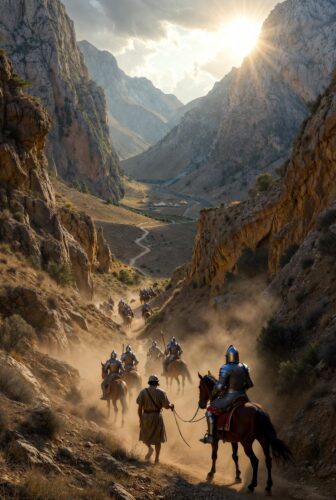
This is not another story about “believing in yourself.” This is the story of how a shepherd named Martín Alhaja earned the hereditary nickname *Cabeza de Vaca* — Cow’s Head — and how his knowledge, combined with royal audacity, collapsed an entire strategic order in a single afternoon. The lessons are specific, the tactics transferable, and the plan that follows is deliberately weird enough to actually work.
### The Long Road to the Mountains
To understand why July 16, 1212 mattered so much, you have to feel the weight of what came before. In 1195, Alfonso VIII of Castile had suffered a catastrophic defeat at the Battle of Alarcos against the Almohad Caliphate. The Almohads, a fierce Berber Muslim dynasty from North Africa that ruled southern Spain and Morocco, smashed the Castilian army. For years afterward, Almohad raids terrorized the Christian frontier. Castilian castles fell. The psychological blow was brutal. Alfonso, once a confident young king, had watched his prestige and much of his military strength evaporate in one afternoon.
By 1211 the new Almohad caliph, Muhammad al-Nasir (known in Christian chronicles as Miramamolín), felt strong enough to push deeper. He captured the key fortress of Salvatierra, held by the Order of Calatrava. That loss was the spark. Pope Innocent III, already inclined toward crusading energy, authorized a major campaign and preached it across Europe. The Archbishop of Toledo, Rodrigo Jiménez de Rada — a brilliant, politically astute churchman who combined spiritual authority with hard-headed military realism — threw himself into recruiting and organizing. This was not a vague “call to arms.” It was a deliberate, coalition-building operation.
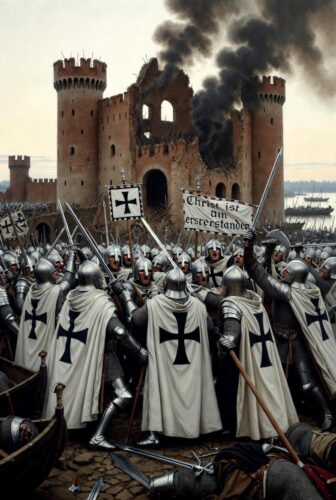
In May 1212 the Christian forces gathered in Toledo. The core was Alfonso VIII’s Castilians, but crucially he secured alliances with his former rivals: Peter II of Aragon and Sancho VII of Navarre (nicknamed “the Strong” for good reason — he was a physically imposing warrior king). Leonese forces stayed out because their king had his own grudges, but Portuguese Templars and town militias joined anyway. From beyond the Pyrenees came “ultramontane” crusaders — French, German, and other knights fired up by the papal bull. Military orders supplied the professional backbone: the red-crossed knights of Santiago, the Calatrava brothers, and Templars. These were not weekend warriors. They were disciplined, experienced fighting monks who lived by a rule and knew how to hold a line.
The march south was a rolling campaign of castle-taking: Malagón, Calatrava la Vieja, Alarcos itself. Each victory boosted morale, but it also exposed fractures. Some of the foreign crusaders were shocked that Alfonso treated surrendered Muslim and Jewish populations with relative mercy rather than massacre. There were ugly incidents, including attacks on Toledo’s Jewish quarter by some of the more fanatical outsiders. Alfonso had to balance coalition politics with basic governance. The lesson was already forming: imported zeal without local knowledge creates its own problems.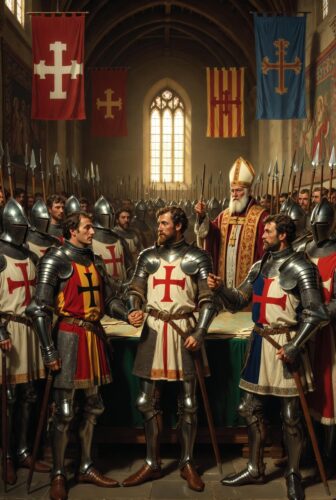
By early July the army reached the edge of the Sierra Morena. The obvious route into the Almohad heartland ran through the Despeñaperros Pass — a narrow, easily defended defile. The Almohads, under Caliph Muhammad al-Nasir, had positioned their massive host to block it. Contemporary estimates put Christian strength at roughly 12,000–14,000 effectives. Almohad numbers were larger — some sources claim 20,000–30,000 or more, including North African contingents, Andalusian levies, and the caliph’s personal guard of black African troops. The Christians were tired, far from home, and staring at a fortified natural choke point held by a confident enemy who believed the terrain would do half the work for them.
Then a local shepherd appeared.
### July 16: The Day the Pass Opened
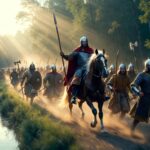
His name was Martín Alhaja. History does not record long speeches or dramatic conversion scenes. He simply knew the mountains. While the main Christian host hesitated before the guarded Despeñaperros, Alhaja guided a force — possibly including Alfonso himself or his vanguard — through an alternative, much narrower route. Some accounts describe it as a hidden defile or goat track that bypassed the main Almohad blocking position. The Christians emerged on the other side of the mountains, surprising the encamped Almohad army.
The shock was enormous. The Almohads had assumed the Christians would either assault the obvious pass at ruinous cost or turn back. Instead, an entire army had materialized in their rear or flank area. On July 16 the two hosts clashed in the rolling country near Las Navas de Tolosa.
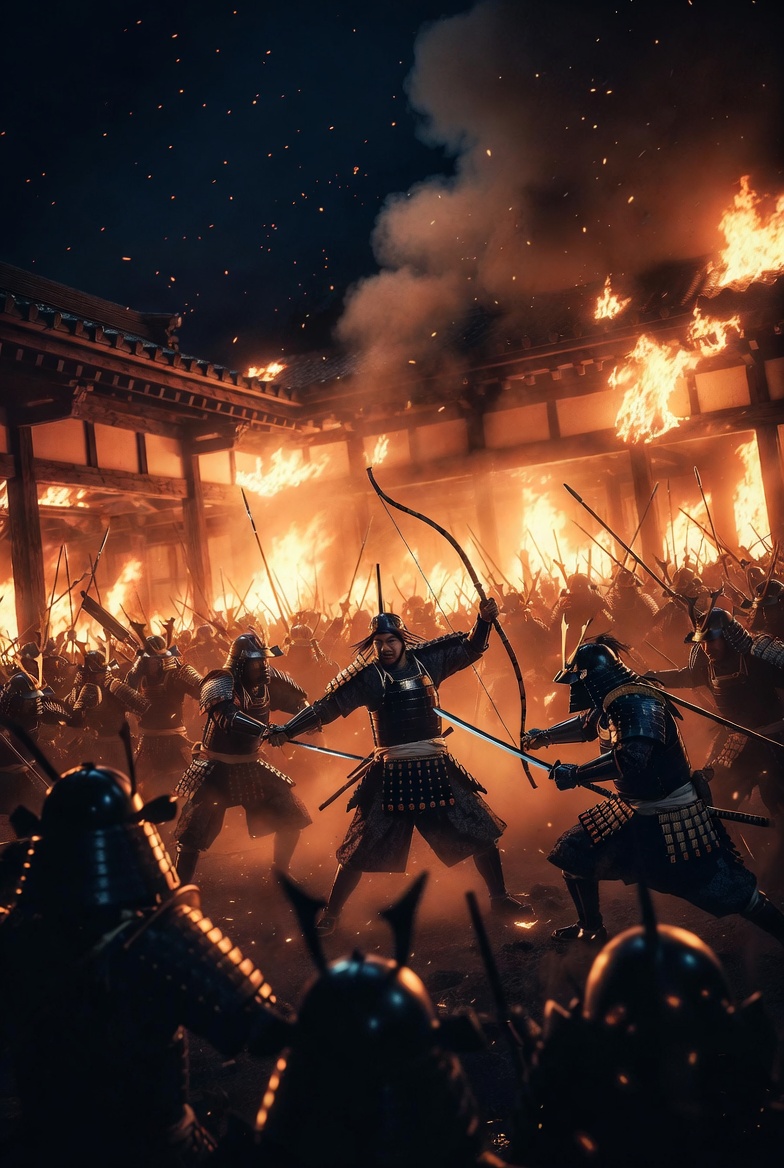
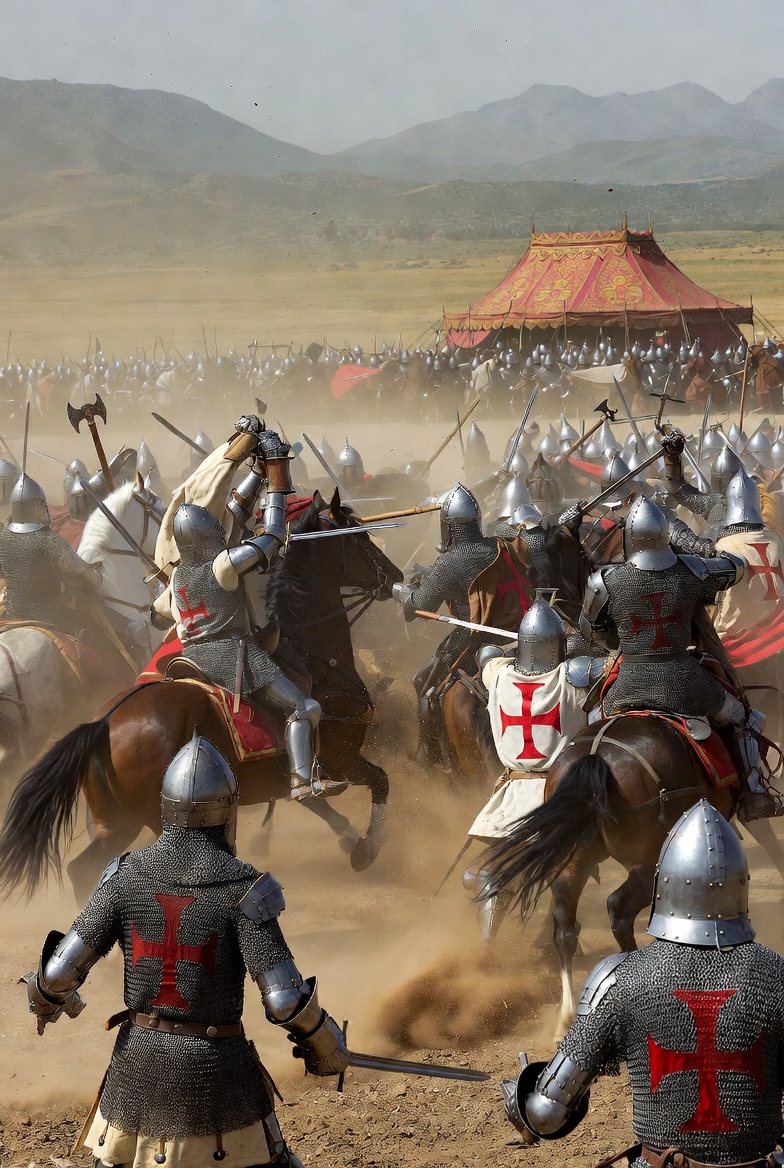
It was a brutal, close-quarters medieval battle. The terrain and the sudden appearance of the enemy limited the effectiveness of archery and missile weapons. Men fought with lances, swords, maces, and axes in a grinding melee. The military orders lived up to their reputation. Knights of Santiago smashed into the Almohad lines and began creating gaps. Portuguese town militiamen — tough, agile foot soldiers — fought with what one chronicler called “an audacious onset… as if to a feast.” They were not glamorous, but they were effective.
The decisive moment came when the Christian center or right, led in person by King Sancho VII of Navarre and supported by other royal contingents, drove through the breaches toward the very heart of the Almohad position: the caliph’s tent and his immediate bodyguard. Whether the guard was literally chained together (a later romantic legend) or simply formed in dense, serried ranks is debated by historians. What matters is that the Christians broke them. The caliph fled the field, leaving his tent, his standard, and much of his army’s cohesion behind. Christian sources later claimed the banner and tent were sent as trophies to Pope Innocent III — the medieval equivalent of sending the enemy commander’s desk to headquarters.
The rout was total. Almohad casualties were heavy; Christian losses were far lighter by comparison (roughly 2,000 according to the most credible estimates). In the immediate aftermath Alfonso’s forces pursued and took the fortified towns of Baeza and Úbeda. These were not minor raids. They were strategic prizes that opened the road deeper into Andalusia.
### The Empire That Collapsed
Muhammad al-Nasir retreated to Marrakesh in disgrace. He reportedly locked himself in his palace and died within a year, broken. The Almohad Caliphate, already strained by internal tensions between its North African core and its Iberian territories, never recovered its former strength in Spain. Within a generation the dominoes fell: Córdoba in 1236, Jaén in 1246, Seville in 1248. James I of Aragon conquered Valencia and the Balearics. By the mid-13th century, Muslim political power in most of the peninsula had been reduced to the Emirate of Granada in the far south — a vassal state that would linger until 1492 but never again threaten the Christian kingdoms as a peer.
The Battle of Las Navas de Tolosa did not end the Reconquista by itself. It removed the central pillar that had held the structure together. Once the Almohad field army and its caliph were humiliated, the coalition of Christian kingdoms could pick apart the remaining strongpoints one by one. The victory proved that a unified (if uneasy) Christian front, guided by local knowledge and willing to risk everything on a bold maneuver, could shatter an opponent who relied on terrain, numbers, and reputation.
That is the historical fact. Now here is what it actually gives a person in the 21st century who feels stuck behind their own version of the Despeñaperros Pass.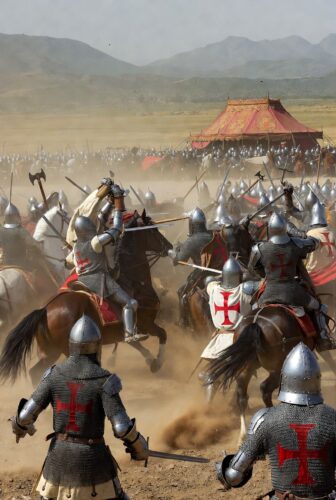
### How One Obscure July 16 Changes the Way You Fight Your Own Battles
The outcome of Las Navas was not “try harder.” It was a specific sequence: stop banging on the obvious fortified gate everyone expects you to attack; find the person or piece of knowledge that knows the back trails; temporarily align the rival parts of your resources or relationships; commit your own leadership personally to the decisive point instead of managing from safety; then exploit the breakthrough ruthlessly before the enemy can regroup.
A person who internalizes this stops treating obstacles as permanent features of the landscape and starts treating them as problems of intelligence, alliance, and timing. You stop assuming the “mountain” is the problem and start assuming your map is incomplete. You stop waiting for perfect consensus among your own competing priorities and instead forge temporary, high-stakes pacts. You stop delegating the hardest, highest-leverage action and instead put yourself at the front of it for the critical window. And you stop celebrating the first crack in the wall as the end — you treat it as the moment to pursue the routed enemy all the way to their next stronghold.
That is why this particular historical event is unusually useful. Most self-help stories are either too vague (“be resilient”) or too modern and stripped of friction. Las Navas gives you friction, betrayal of assumptions, a literal hidden path, and a measurable cascading effect afterward. It is a story about an underdog coalition that should have lost but didn’t because it solved the right problem with the right unconventional asset at the right moment.
### The 5-Day “Cabeza de Vaca” Lightning Campaign — Your Personal Goat-Path Protocol
Here is the part that separates this from every other “historical lessons for life” piece online. This is not a mindset shift. This is an executable field order you can run on any stalled goal in five focused days or less. It is designed to be repeated for different “sieges” in your life. It borrows the actual sequence from 1212 and translates it into concrete, time-bounded actions that create visible pressure and momentum.
**Phase 1 — Toledo Assembly (Day 1, 2–3 hours)**
Clarify the single objective that actually matters right now — the equivalent of “break Almohad power in Iberia,” not “do better at life.” Write it in one sentence. Then list every obvious route that has failed or feels blocked (your personal Despeñaperros). Identify the three rival “kingdoms” inside your own resources or schedule that normally compete or ignore each other (example: deep work time vs. physical training vs. relationship maintenance). Write one-sentence mutual-benefit pacts for each pair. You are not merging them forever. You are creating a temporary coalition with a shared interest in this specific breakthrough.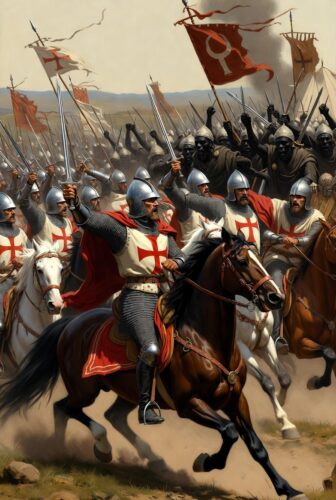
**Phase 2 — Find Your Martín Alhaja (Day 1–2, ongoing reconnaissance)**
Deliberately seek one unconventional source of local knowledge about your specific obstacle. This is not another productivity book or generic podcast. It is one weird, specific lead: an old forum thread from 2012 that solved a similar technical problem, a person two degrees removed who once navigated the exact bureaucracy you face, a physical location or archive or data set nobody in your usual circles looks at. Spend no more than two hours on this search. When you find one credible “shepherd” tip — even a small one — test it immediately at small scale. The goal is not perfection. It is to prove that the obvious guarded pass is not the only route.
**Phase 3 — The Personal Charge (Day 3, scheduled block of 60–90 minutes)**
This is non-negotiable and must be done by you, not delegated. Block a specific time. At that time you personally execute the highest-leverage, scariest, or most decisive single action on your objective — the equivalent of leading the charge at the caliph’s tent. It might be the difficult conversation, the first ugly draft, the hard training session after injury, the financial move you have been avoiding. You do it in person, with your full attention, and you document it (photo, note, timestamp). This phase exists because history shows that coalitions and clever routes still require someone willing to close the distance and strike the center.
**Phase 4 — Capture the Standard and Pursue to Baeza (Day 4–5, immediate follow-through)**
Within 24 hours of your personal charge, complete two or three chained follow-up actions while the momentum is hot. These are your “Baeza and Úbeda.” They convert the breakthrough into territory. At the same time, make the win visible to one external accountability point — your version of sending the caliph’s tent to the Pope. It could be a short public update, a message to a mentor, or a simple logged record you review weekly. Visibility prevents quiet backsliding.
**Phase 5 — Screen the Foreign Knights (Ongoing filter)**
Throughout the five days, deliberately ignore or adapt any trendy advice, tool, or “best practice” that does not fit the actual terrain of your situation. The foreign crusaders who wanted to sack everyone in Toledo almost derailed a functional coalition. Your equivalent is the rigid morning routine, the expensive course, or the viral framework that assumes conditions you do not have. Keep only what helps you move through *your* specific pass.
The entire protocol can be run in a focused week. It can be repeated the next month on the next layer of the same goal or on an entirely different one. It costs almost nothing except focused time and the willingness to look stupid asking “shepherd” questions. What it produces is disproportionate: one unconventional route + temporary alignment of your own factions + one act of personal leadership + immediate exploitation often collapses obstacles that months of frontal grinding could not touch.
### Why This Works When Generic Advice Fails
Most self-help assumes either perfect information or perfect motivation. Las Navas assumes neither. It assumes you are tired, your coalition is fragile, the obvious path is defended, and the enemy believes the terrain favors them. The solution it models is not more willpower. It is better reconnaissance, better temporary politics, and one moment of concentrated audacity at the right point.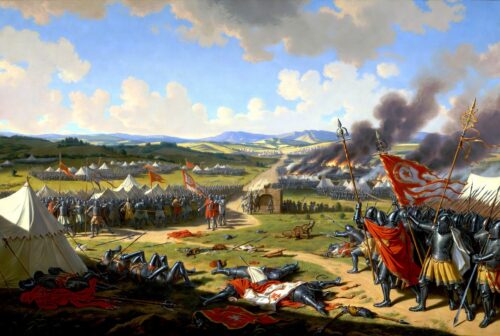
The shepherd did not win the battle. He made the battle winnable. The kings did not win it alone. They needed the orders, the Portuguese militias, and the sudden appearance of an army where none was expected. The charge at the tent did not end the war by itself. It started the cascade that made later conquests possible. Every element mattered, and none of them looked heroic or efficient in isolation.
That is the part most modern advice misses. It wants the single hack or the perfect morning. History shows that decisive shifts usually require several imperfect pieces working in sequence under pressure. The July 16, 1212 event gives you the sequence.
Run the protocol once on something that actually matters to you. You will almost certainly discover that your personal Despeñaperros has at least one goat path you had not mapped. And once you walk it, the view on the other side tends to look a lot like open country.
The mountains did not move in 1212. The map did. The same is available to anyone willing to stop assaulting the gate everyone else is stuck at and go find the person who knows where the cows actually go.
Share: