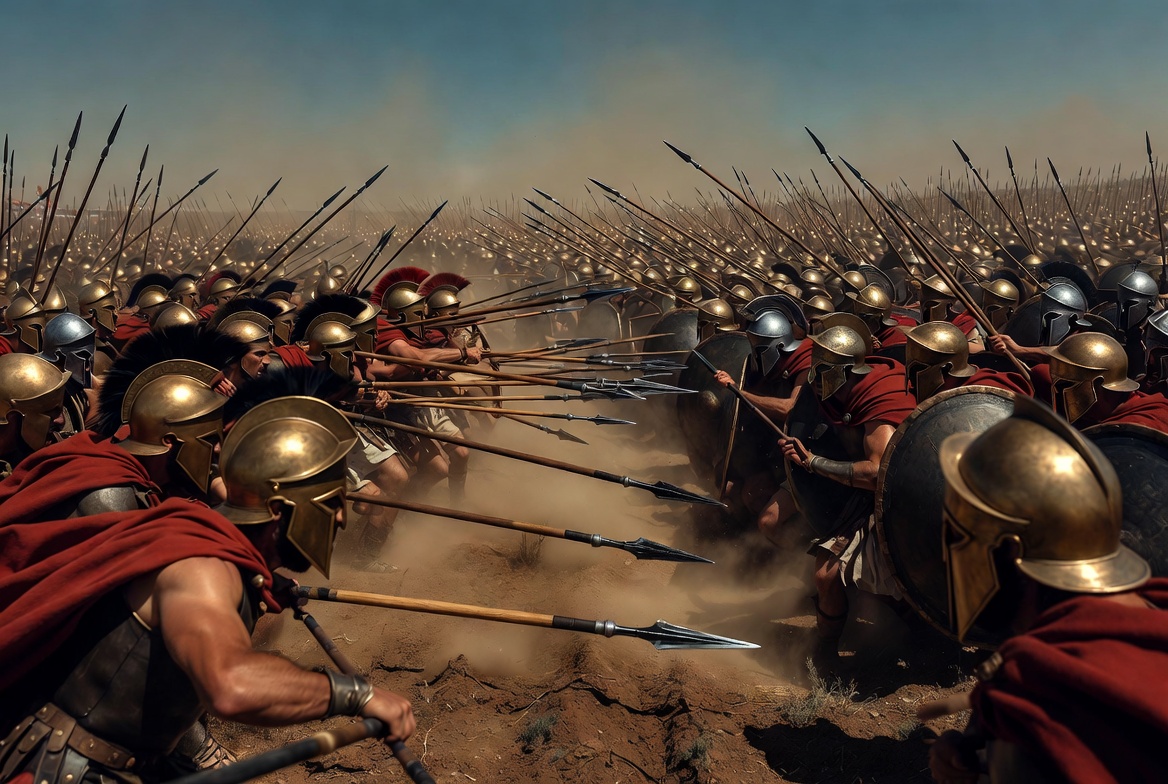


In the brutal summer of 1240, the lands of Rus’ were bleeding. Mongol tumens had already smashed through Ryazan, Vladimir, and Suzdal. Cities burned. Princes died in cellars or on the steppe. Kiev itself would fall before the year ended. Most Russian principalities lay shattered or scrambling to submit and survive.
Novgorod, the proud northern republic with its veche assemblies, foreign merchants, and fur-trade wealth, had avoided the worst by paying tribute and keeping its head down. But submission bought only fragile breathing room. The city’s real power came from controlling the river roads to the Baltic — especially the Neva, the narrow, vital artery that linked Lake Ladoga and the interior to the Gulf of Finland and the wider world of trade.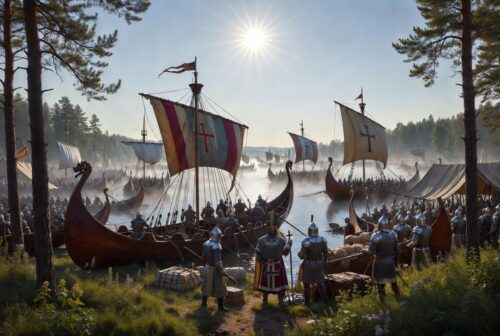
That same summer, another predator noticed the distraction. Sweden, fresh from crusading successes in pagan Finland, saw opportunity. Catholic expansion, trade monopolies, and the chance to cut Orthodox Novgorod off from the sea aligned perfectly. A “great army” — Swedes, Norwegians, Finns from Tavastia, and bishops carrying the spiritual justification of crusade — sailed east in ships. Their goal was straightforward: land at the mouth of the Neva, secure a foothold, push upriver to Ladoga, then take or break Novgorod itself. With Rus’ reeling from the Mongol storm, the Swedes expected little resistance. They camped at the confluence where the Izhora River meets the Neva, near what is now Ust-Izhora, unpacked, and began to settle in.
They had miscalculated one variable: a nineteen-year-old prince named Alexander Yaroslavich.
Alexander was not supposed to be the savior that day. He was young, had already clashed with Novgorod’s touchy veche politics, and held lands farther south in Pereslavl. But when word reached him that Swedish ships had appeared on the Neva and intended to take Ladoga next, he did not call a long assembly. He did not wait for his father Yaroslav to send reinforcements from the devastated heartland. He did not calculate the perfect odds.
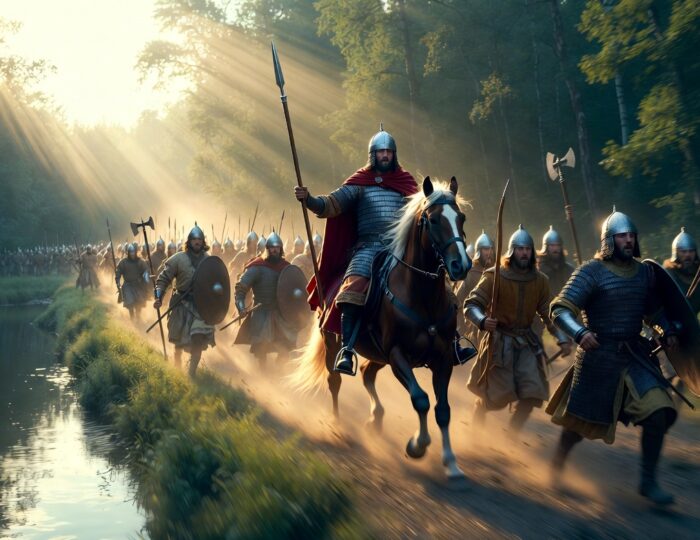
He gathered what he had — his personal druzhina of retainers, Novgorod militiamen, and fighters from nearby Ladoga — and moved fast down the Volkhov River. Local knowledge mattered. The Neva and Izhora banks were his terrain. The Swedes, confident in their numbers and the chaos elsewhere, had not posted strong scouts or prepared layered defenses. Their camp sat exposed.
On July 15, 1240 — a Sunday — Alexander’s small force struck.
The attack was a classic riverbank ambush executed with medieval precision and local cunning. Russian cavalry, the princely squad, drove straight into the center of the Swedish camp. Infantry pressed along the river flank, where the bank gave them cover and the enemy’s ships offered tempting targets. Individual acts of reckless initiative turned the surprise into a rout. One warrior, Gavrilo Aleksich, rode his horse straight up a gangplank onto a Swedish ship and fought hand-to-hand amid the crowded deck. Another, Sbyslav Yakunovich, waded in with a hatchet more suited to his peacetime trade than knightly combat. A unit under a man named Misha seized or destroyed three enemy vessels. A young fighter named Savva hacked through the supporting pole of the enemy commander’s ornate tent, collapsing the golden canopy in the middle of the fight — a psychological blow as devastating as any sword stroke.
The chronicles, written later and colored by hagiography, claim Alexander himself crossed spears with the Swedish leader (later traditions name him Birger Jarl, though contemporary details are murkier) and drove his spear point through the visor slot into the man’s face, “sealing” him with a wound that ended his command. Whether the exact duel happened that way or grew in the telling, the result was the same: the enemy leader was incapacitated or killed (one account names Spiridon as the fallen commander), the camp’s cohesion shattered, and panic spread.
By nightfall the Swedes were fleeing in shame. They loaded the bodies of their high-born dead onto two ships and sent them out to sea — a grim floating funeral — while burying uncounted others in pits on the bank. Many more wounded limped or were carried aboard the remaining vessels. The invaders who had arrived expecting easy conquest left “without waiting for the Monday light.” Russian losses, according to the Novgorod First Chronicle, totaled around twenty men, including named fighters Konstantin Lugotinitch, Gyuryata Pinyashchinich, and others from Novgorod and Ladoga. The chronicle credits divine protection through Saint Sophia of Novgorod and the prayers of the Virgin Mary, but the practical reality was speed, surprise, terrain, and refusal to hesitate.
The Swedes never established the foothold they wanted. Their eastward push into Russian lands stalled for years. Subsequent Swedish efforts focused first on consolidating Finland rather than risking another direct lunge at Novgorod. The Neva remained open. Novgorod kept its access to the Baltic trade routes that fed its wealth and independence.
Alexander returned home a hero. Chroniclers later gave him the epithet “Nevsky” — of the Neva — in honor of the victory. Two years later he would add another legendary triumph, luring Teutonic and Livonian knights onto the ice of Lake Peipus in April 1242 and breaking their advance with terrain and timing. He would spend the rest of his life navigating the far larger Mongol threat with pragmatic diplomacy while fiercely resisting Western military and religious pressure. In Russian memory and Orthodox tradition he became the archetype of the ruler who protects the faith and the land from one direction while making necessary peace with the overwhelming power in the other. Canonized centuries later, he remains one of Russia’s most enduring national saints and cultural symbols — the young prince who acted when action was possible and bought his people time and identity.
The battle itself was not a world-conquering clash of empires. It was a sharp, localized river fight between a few thousand men at most. Swedish sources are silent or minimal, leading some modern historians to debate whether it was a major crusade or a more limited raid that later Russian chroniclers amplified for political and religious reasons. The numbers are uncertain, the leadership details fuzzy, and the divine interventions clearly legendary. Yet the core event — a swift, decisive local response that prevented an enemy from consolidating on a strategically vital river — is accepted as historical fact. Its real power lies in what it reveals about timing, initiative, and the disproportionate impact of refusing to let a threat finish unpacking its camp.
That is the part that travels across centuries.
The Swedes believed the Mongol catastrophe had already done their work for them. They brought bishops and ships and the confidence of crusading momentum. They assumed Novgorod would be too paralyzed or too slow to respond effectively. They were wrong about the one thing that actually mattered in that moment: whether someone on the other side would treat their landing as an immediate, solvable problem rather than one more catastrophe to endure.
Alexander’s answer was to move before the enemy’s “great army” could turn into a permanent presence. He used the smallest force that could still deliver a focused strike. He leveraged intimate knowledge of the ground and the river. He accepted that perfection was impossible and that waiting for reinforcements from a burning homeland was a luxury he did not have. The result was not just a tactical win. It preserved Novgorod’s economic lifeline, bought psychological breathing room, and began the process of turning a regional prince into a figure whose name still carries weight eight centuries later.
Translate that same logic to any life where multiple threats compete for attention and resources feel chronically insufficient.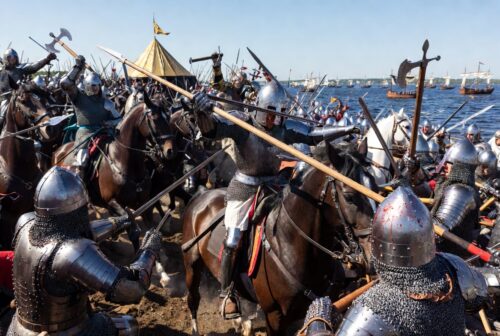
The “Swedish landing” is any emerging blocker that threatens to cut you off from your own version of the sea — your income flow, your creative output, your health baseline, your key relationships, your forward momentum. It does not have to be the biggest danger on the horizon. It is the one currently setting up camp on your riverbank, the one that will become exponentially harder to dislodge if you let it finish unpacking. The Mongols — the systemic, overwhelming, slow-moving catastrophes — are still out there. They always are. The protocol does not ask you to ignore them. It asks you to handle the immediate landing first so you retain the capacity and the access you will need for everything else.
Here is how the Izhora Strike Protocol turns that 1240 river fight into a repeatable, fast, zero-fluff operating system for modern life. It is designed to be executed in hours or a single focused day when a threat appears, then repeated as needed. It deliberately rejects the usual self-help inflation of “build a massive army first” or “optimize everything simultaneously.” Those approaches let the enemy finish setting up camp.
**Step 1: Receive the word and refuse to hesitate.**
The moment credible information arrives that something is landing on your Neva — a project threat, a health signal, a platform change, a relationship drift, a financial leak, a creative block that is starting to feel permanent — you treat it as actionable intelligence, not background noise. No committee. No “I’ll monitor it.” Alexander did not wait to see if the Swedes were serious. He moved on the first solid report. Your version: spend thirty minutes max confirming the threat is real and proximal, then commit.
**Step 2: Muster only the druzhina you actually have today.**
List your minimal viable force in writing: the three to five assets, skills, people, or current advantages already in your possession. Your existing routines, one trusted collaborator, the tool you already own, the knowledge of your own terrain (your schedule, your location, your specific constraints). Do not wait for more resources, more motivation, or perfect conditions. The chronicle is clear — Alexander went with Novgorodians and Ladoga people, not the full army his father might eventually send. Small and committed beats large and theoretical every time.
**Step 3: Identify the exact Izhora confluence — the single highest-leverage point.**
Where is the mouth of the river in your situation? The one place where a focused strike disrupts the threat’s momentum before it spreads. Not the entire problem. The camp. For a creative producer it might be shipping one specific piece of work that reclaims visibility. For health it might be one non-negotiable protocol that stops a flare from becoming chronic. For finances it might be one targeted conversation or boundary that protects cash flow. Choose the spot where your small force can actually reach and where success creates immediate breathing room. Write it down in one sentence.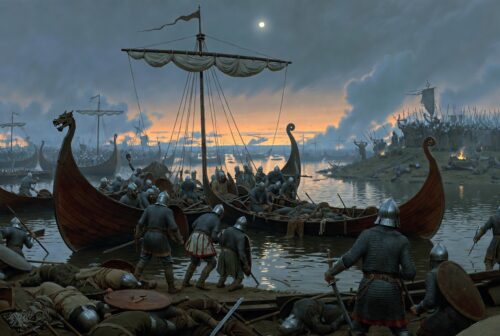
**Step 4: Launch the midday ambush — execute with surprise and focused violence of action.**
Pick a short, protected window and hit hard. Cavalry charge into the center (your boldest, most direct move) paired with infantry pressure on the flank (supporting systems or secondary actions). The historical detail of attacking while the enemy was potentially settling or eating is instructive: strike when the threat is least braced. In practice this means scheduling the key action for when your own energy or the opponent’s guard is lowest. One intense, time-boxed session beats scattered effort across days. Collapse the symbolic tent if you can — the one assumption or easy win the threat relies on.
**Step 5: Secure the immediate gains and count the bodies honestly.**
When the strike lands, do not immediately pivot to the next fire. Lock in what you won. Document the win in concrete terms (even if small). Extract the two or three tactical lessons while they are fresh. Physically or symbolically “load the dead ships and sail home” — remove yourself from the battlefield, rest, and let the psychological win compound. Alexander’s force returned intact and celebrated. Premature celebration or immediate overextension wastes the victory. Quick, honest assessment followed by deliberate disengagement preserves the legend-building effect.
**Step 6: Name the victory and let it deter the next landing.**
Alexander got “Nevsky.” You get to name what you just did and claim the identity upgrade. Tell the story to yourself or the right small audience. Use the win to raise your default posture against similar future threats. The long-term power of the Neva fight was not just the battle itself but the reputation and confidence it created, which shaped how later threats were approached. One clean, named victory changes how you (and others) perceive your capacity. It turns a one-off success into part of your operating identity.
**Step 7: Keep the Mongols in perspective while you protect the sea access.**
The protocol never claims the big, slow, overwhelming problems disappear. It insists you keep your river open so you retain options, revenue, health, and agency while you manage the larger storm. Alexander fought the immediate Western incursion decisively and then dealt with the Mongols through travel, tribute, and political skill. The same principle applies: secure your critical lifelines first, then you have more leverage and stamina for the systemic challenges.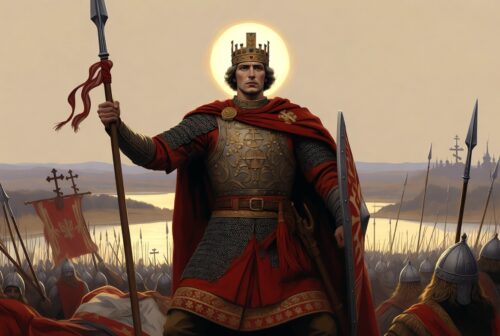
This is not motivational wallpaper. It is a combat-derived decision framework built on one of history’s cleaner examples of economy of force and timely initiative. It works because it matches how actual small-to-medium wins have always been won when resources are constrained and time is short. Most self-help systems either tell you to become a different person first or to attack every problem at once. The Izhora Strike Protocol tells you to treat the current landing as the only problem that exists right now, hit it with what you already have, secure the gain, name it, and repeat. The rest of the map remains, but your access to the sea stays open.
The Swedes sailed away believing they had suffered a temporary setback. History records it as the day a teenage prince began turning a vulnerable republic into the seed of something larger by refusing to let an enemy finish setting up camp on his river. The same choice remains available on any July 15 or any other day a threat appears on your own Neva. Move before they unpack. Strike the camp. Keep the water open. The legend, and the practical breathing room, takes care of itself from there.
Share: