
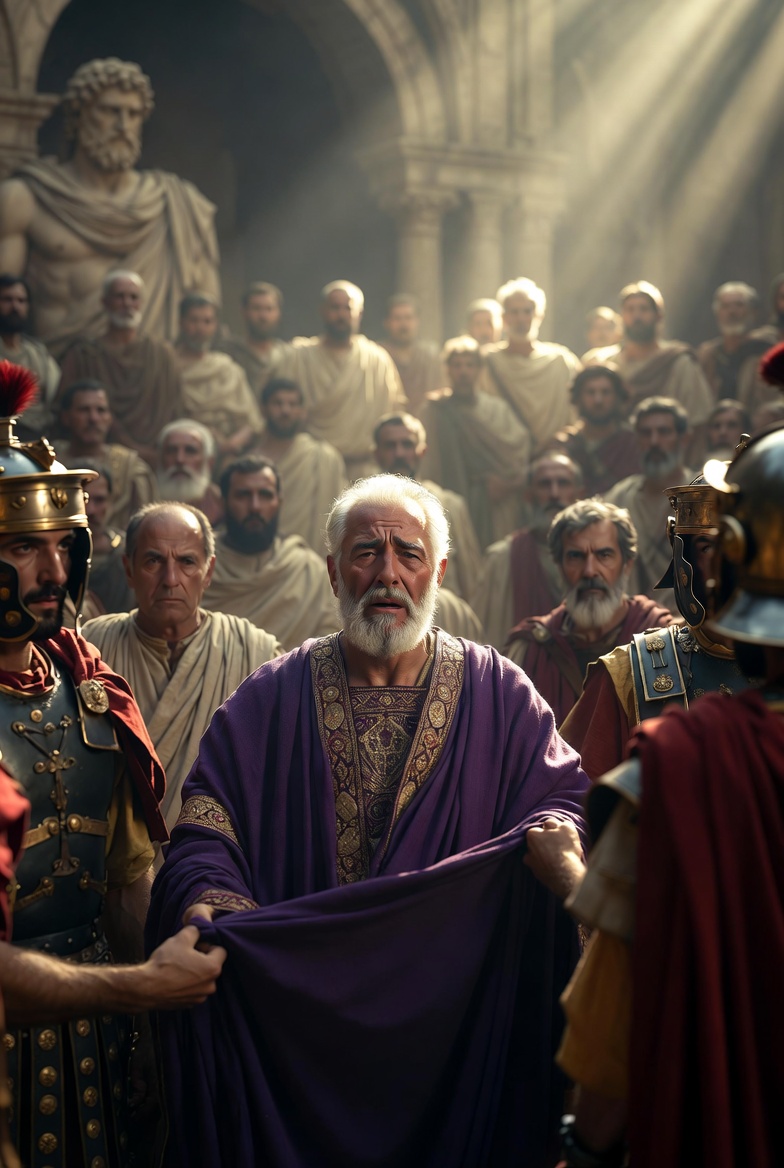
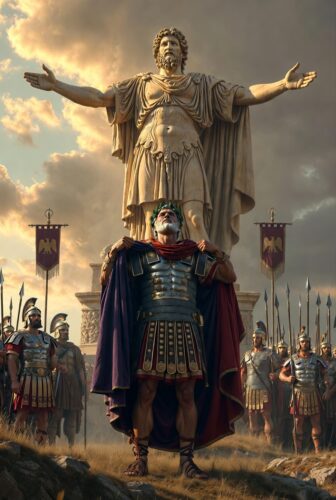
Picture this: it’s May 1 in the year 305 AD, deep in the Roman province of Bithynia. The sun beats down on a hill just outside the bustling city of Nicomedia, where legions from across the empire have gathered under banners snapping in the breeze. An aging emperor named Diocletian stands before a towering statue of Jupiter, his patron god, dressed in the imperial purple that has defined his every waking moment for two decades. He’s not dying on a battlefield, not stabbed by a jealous rival in a palace coup, and not dragged off in chains by barbarians. No—he’s choosing to walk away. With tears in his eyes, he addresses his generals, troops, and representatives from distant legions. His voice cracks as he speaks of age, illness, and the crushing weight of empire. Then, in a moment that history had never seen before and would rarely see again, he removes his purple cloak, folds it neatly, and hands over the reins to younger men. On that exact same day, his co-emperor Maximian does the same in Milan. The first voluntary abdication of a Roman emperor isn’t a defeat. It’s a masterclass in timing, planning, and knowing when enough is enough. And today, on this very May 1 centuries later, that single act from distant history offers a radical, non-cookie-cutter way to reclaim your own sanity, legacy, and joy—without waiting for burnout, betrayal, or breakdown to force your hand.
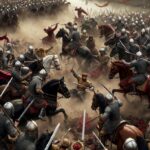
To understand why this May 1 event in 305 AD matters so profoundly—and why 90 percent of what follows is a deep, gritty dive into the blood-soaked, reform-crazed world of late Roman history before we get to the actionable payoff—you first have to step back into the nightmare that was the Crisis of the Third Century. Between 235 and 284 AD, the Roman Empire didn’t just stumble; it teetered on the edge of total annihilation. In roughly fifty years, there were over two dozen emperors and claimants, most of whom met violent ends—beheaded by their own troops, strangled in their beds, poisoned at banquets, or skewered on the battlefield. The average reign lasted about three years. Imagine running a global superpower where the CEO changes every few seasons because the board keeps assassinating him. That was Rome. The external threats were relentless. Germanic tribes like the Goths and Alamanni poured across the Rhine and Danube, sacking cities and carrying off loot. In the east, the resurgent Persian Sassanid Empire under kings like Shapur I humiliated Roman legions, even capturing Emperor Valerian in 260 AD and using him as a living footstool before flaying him alive. To make matters worse, the empire fractured internally: the Gallic Empire broke away in the west, controlling Gaul, Britain, and Spain for over a decade, while Queen Zenobia’s Palmyrene Empire carved out the east, including Egypt and Syria. Trade routes collapsed. Cities built desperate walls. The economy imploded under hyperinflation caused by emperors debasing the currency—mixing silver coins with so much base metal that they were basically worthless slugs. A single loaf of bread that once cost a few denarii now required wheelbarrows of cash. Plague, probably smallpox or something like the earlier Antonine Plague, swept through, killing millions and leaving armies depleted. The Plague of Cyprian in the 250s alone wiped out entire regions. Rome wasn’t falling gracefully; it was being torn apart by wolves at the gates and knives in the back. Enter Gaius Aurelius Valerius Diocletianus—born simply as Diocles around 244 AD in the rugged hills of Dalmatia, near the town of Salona in what is now Croatia. His origins were humble, possibly the son of a freed slave or a modest scribe; ancient sources hint at low-status Illyrian roots, the kind of background that would have made him invisible in earlier, more aristocratic Rome. But the third-century military machine didn’t care about pedigrees. Diocletian rose through the ranks as a soldier under emperors Aurelian and Probus—tough, no-nonsense rulers who themselves fought to stitch the empire back together. By 282 AD, he commanded the elite Protectores Domestici, the emperor’s personal cavalry bodyguard. He was battle-hardened, politically savvy, and ruthlessly pragmatic. When Emperor Carus died mysteriously in Persia in 283 and his son Numerian was found dead in his litter—eyes swollen, body reeking, likely murdered by his father-in-law Aper—Diocletian seized the moment. On November 20, 284, outside Nicomedia, the eastern army proclaimed him emperor. In a dramatic flourish that set the tone for his reign, Diocletian publicly swore he had no hand in Numerian’s death, then drew his sword and ran Aper through on the spot, right in front of the troops. Message received: loyalty or death. The new emperor still had to deal with Carinus, Carus’s surviving son, who held the west. Diocletian marched across the Balkans, crushed a usurper named Julianus in northern Italy, and met Carinus at the Battle of the Margus near modern Belgrade in spring 285. It was a brutal clash, but Diocletian’s forces prevailed when Carinus’s own men turned on him, fed up with his arrogance, Senate-bashing, and rumored moral excesses. With Carinus dead, Diocletian became sole ruler—but he knew sole rule had doomed every recent emperor. Assassination was the occupational hazard of the purple. His solution? Share the load. In 286, he elevated his old military comrade Maximian to co-Augustus, sending him west to handle the Bagaudae peasant rebels in Gaul and the rogue British admiral Carausius, who had declared his own mini-empire. Maximian, the brawn to Diocletian’s brain, took the title Herculius (Hercules-like doer), while Diocletian styled himself Jovius (Jupiter-like planner). It worked. The duo stabilized the frontiers, crushed revolts, and began rebuilding.But Diocletian wasn’t done innovating. On March 1, 293, he took the radical step of creating the Tetrarchy—the “Rule of Four.” He appointed two junior emperors, or Caesars: Galerius in the east (his son-in-law) and Constantius Chlorus in the west (Maximian’s son-in-law). The empire was divided into four quadrants, each ruler with his own court, army, and administrative hub—Nicomedia for Diocletian, Milan for Maximian, Sirmium and Trier for the Caesars. Marriage alliances glued it together: Galerius wed Diocletian’s daughter Valeria. It wasn’t democracy; it was pragmatic autocracy on steroids. The system aimed to prevent the single-point failures that had nearly destroyed Rome. No more lone emperor trying to micromanage from the Mediterranean to the Rhine while barbarians knocked. Each tetrarch could respond instantly to threats in his zone. Diocletian kept the strategic oversight, but the burden was shared. This leads us into the heart of Diocletian’s reforms—the administrative, military, economic, and religious overhaul that consumed the next decade and turned the ramshackle third-century empire into the more centralized, bureaucratic Dominate (from “dominus,” lord). Administratively, he doubled the number of provinces from about fifty to nearly a hundred, then grouped them into twelve dioceses overseen by vicars. Rome itself lost its centrality; new capitals hugged the frontiers for faster response. The bureaucracy exploded—estimates put the number of officials at around 30,000, one for every 5,000 to 10,000 citizens in places like Egypt. New departments (scrinia) handled everything from petitions to the imperial post (cursus publicus). Civil and military commands were separated to avoid ambitious generals staging coups. Governors became judges and tax collectors, with decurions (local councilors) personally liable for shortfalls. It was inefficient by modern standards—red tape on steroids—but it worked well enough to restore order after decades of anarchy. Funny enough, Diocletian’s empire ran more like a giant HR department crossed with a military base than the lean republic of old. Militarily, he expanded the army from roughly 390,000 to 580,000 men, plus a bigger navy. Troops shifted to fixed frontier garrisons (limitanei) backed by mobile field armies (comitatenses) that could rush to hotspots. He built fort lines like the Ripa Sarmatica along the Danube and the Strata Diocletiana road in the east, complete with watchtowers and supply depots. Campaigns against Sarmatians, Carpi, and Persians succeeded spectacularly—Galerius even dragged the Persian king’s family back in triumph after a 298 victory. Diocletian wasn’t a battlefield glory-hound like Trajan; he was a system-builder who understood logistics, pay, and supply chains. Economically, the reforms were ambitious if imperfect. A new tax system based on the iugum (land unit) and caput (human “head” or productive unit) replaced chaotic requisitions. Every five years, a census assessed land and people so taxes could be predictable. Italy, long exempt, finally paid up. Currency was reformed with new gold solidi, silver argentei, and bronze folles. But inflation raged on, so in 301 Diocletian issued the famous Edict on Maximum Prices—freezing over 1,000 goods and services from wheat to haircuts to shipping rates, with death penalties for gouging. It was a bold anti-greed measure, but it ignored supply chains, regional differences, and black-market realities. Prices went underground, goods vanished from shelves, and the edict was quietly abandoned. Still, it showed Diocletian’s willingness to intervene ruthlessly for the common good. Tax collection tied peasants to the land (early serfdom vibes), and occupations became hereditary to keep the machine running. Harsh? Yes. Effective at stopping the bleeding? Absolutely.
Religiously, Diocletian was a traditionalist who saw the old gods as the glue holding Rome together. In 301-302 he cracked down on Manichaeans, burning their leaders and books. Then came the Great Persecution of Christians starting February 23, 303, with edicts destroying churches, burning scriptures, and demanding sacrifices. Fires in the Nicomedia palace (possibly arson or accident) were blamed on Christians. Executions followed—scourging, boiling alive, tongues cut out. Galerius pushed hard, consulting oracles that blamed “impious” Christians for divine displeasure. It was brutal, the bloodiest anti-Christian campaign yet, but it ultimately failed. Martyrs inspired rather than deterred, and the policy ended under Constantine. Diocletian wasn’t a cartoon villain; he was a conservative restoring what he saw as cosmic order after decades of chaos. By 304, illness struck—likely from campaigning against the Carpi. Diocletian, now around sixty, had ruled twenty years. He’d rebuilt an empire that should have collapsed. The Tetrarchy was in place, succession planned (no dynastic sons grabbing power). Why cling to the purple when younger, healthier hands could hold it? On May 1, 305, he convened the assembly at the very hill outside Nicomedia where he’d been proclaimed two decades earlier. Before Jupiter’s statue, with tears streaming, he explained his frailty and the need for rest. He removed the purple cloak and invested Galerius as eastern Augustus, with Maximinus as Caesar. The same day, Maximian—grudgingly—abdicated in Milan, elevating Constantius to Augustus and Severus as Caesar. No blood, no coup. Just a calculated, tearful handover. The empire held its breath. It was unprecedented. Historians like Lactantius and later sources note the emotional weight: an emperor choosing life over legacy in the moment. Diocletian didn’t slink away quietly. He’d been building his retirement home for years—a massive fortified palace at Spalatum (modern Split, Croatia), near his birthplace Salona. Construction began around 295, modeled on military camps but infused with eastern luxury: 30,000 square meters of limestone walls, sixteen towers, four monumental gates, peristyle courtyard, seafront apartments with domes and cryptoporticoes, private baths, a Jupiter temple, and his own mausoleum (now the Cathedral of Split). Imported Egyptian granite sphinxes and Proconnesian marble gleamed. It was half villa, half fortress—practical for a man who trusted no one completely. He arrived shortly after abdication and settled into a life of deliberate simplicity. He tended vegetable gardens personally, digging soil, planting, weeding. The palace overlooked the Adriatic, a far cry from Nicomedia’s intrigues. The ultimate proof of his commitment came in 308 at the Conference of Carnuntum. The Tetrarchy was fracturing—Maxentius had usurped in Rome, Constantine was rising, civil wars loomed. Maximian and others begged the old master to return. Diocletian’s reply became legend: “If you could see the cabbages I have planted here with my own hands, you surely would never have thought to request this.” He refused. No empire, no matter how broken, tempted him more than his garden. He lived on until around 311-316 (sources vary slightly on the exact year), witnessing from afar the system he built collapse into the wars that elevated Constantine. Yet he died peacefully in his palace, the first emperor in generations to do so without violence.
His legacy? The palace became the core of medieval Split, its walls sheltering refugees after Salona fell in the seventh century; today it’s a UNESCO site where tourists wander the peristyle where Diocletian once strolled. The empire he stabilized lasted another 150 years in the west and over a millennium in the east. Reforms influenced Constantine’s Christian empire and the later Byzantine bureaucracy. He shifted Rome from the Principate (disguised republic) to the Dominate (open autocracy). But the real genius was the exit. Now, here’s where that distant May 1 fact delivers the remaining 10 percent of this story straight into your everyday life. Diocletian didn’t just retire; he engineered a voluntary, planned power-down that preserved his dignity, legacy, and peace while handing off a functioning system. Most self-help screams “hustle harder” or “never quit.” This is different: strategic abdication as the ultimate power move. It’s not about lazy quitting—it’s about building an empire you’re strong enough to walk away from on your terms, before it destroys you. The outcome? A life where fulfillment isn’t tied to the throne you once occupied. You trade the purple robe of endless grind for the hoe of genuine joy. You build systems that outlast you. You say no to drama with a garden full of tangible results. Apply this to your individual life with these very specific bullet points that flow directly from Diocletian’s playbook: - **Assess your personal “Crisis of the Third Century” before it kills you**: Just as Diocletian surveyed a fracturing empire of assassinations, invasions, and inflation, audit the four quadrants of your life—career/finances, relationships/health, personal growth, and daily chaos. List the “barbarian threats” (toxic commitments, burnout triggers, energy vampires) and “debased currency” (habits that look productive but deliver nothing, like doom-scrolling or overcommitting). Do this quarterly on May 1 as your personal abdication anniversary. The benefit? You spot collapse early instead of waking up emperor of nothing. - **Divide your world into a personal Tetrarchy for shared load and faster wins**: Don’t rule alone. Appoint “Augusti and Caesars” in your life—delegate core responsibilities to trusted partners, apps, routines, or even future-you systems (automations, checklists, mentors). Diocletian split the empire into four; you split your week: one quadrant for high-impact work (your Jovius planning), one for execution (Herculius action), one for recovery (Caesar training), and one for joy (garden time). Result: no single failure tanks everything, and you scale without exhaustion. - **Build your “Split Palace” as a fortified retreat, not an escape hatch**: Diocletian spent years constructing a self-contained haven with gardens and sea views. Create your literal or metaphorical palace—a dedicated space or ritual (morning garden walk, evening journal, weekend hobby fortress) that’s impregnable to work emails and drama. Stock it with simple, tangible projects like actual vegetable beds, model-building, or skill-honing that deliver visible progress. The payoff? When external chaos hits, you have a ready-made sanctuary that recharges you faster than any vacation. - **Master the Cabbage Test for every opportunity**: Before saying yes to any promotion, side hustle, or obligation, ask the Diocletian question: “If I could see the simple joys I’m currently growing with my own hands, would I still want this?” Visualize trading that new title for time in your garden/reading chair/family moment. If the cabbage wins, decline. This filter kills FOMO dead and ensures every “yes” aligns with legacy over ego. - **Execute the voluntary handover ritual when the time is right**: Diocletian didn’t wait for illness to force him out; he planned succession and performed the ceremony publicly. Identify your next “May 1”—a specific date when a project, role, or habit has run its course. Write the handover script (who takes over? What systems stay behind?), announce it emotionally but firmly, and remove the “purple” (quit the group chat, delete the app, hand off the keys). Benefit: you leave on top, with relationships intact and respect earned, instead of being carried out on a shield of regret.
The detailed, quick, unique plan—no vision boards, no 5 a.m. clubs, no generic gratitude journals—is the **Diocletian Abdication Protocol**, a 21-day system that turns historical precision into your personal empire-stabilizer. It’s designed for immediate implementation, works in any life stage, and stands alone because it uses Roman pragmatism as the framework rather than fluffy mindset hacks. **Days 1-7: The Crisis Audit (Map your empire)** Wake at your normal time. Spend 20 minutes listing every “province” you rule: work tasks, home duties, social obligations, health routines. Score each 1-10 on stability and personal drain. Identify the three biggest threats (the Goths at your gate). Then, for each, note one reform—like Diocletian’s province-doubling, break oversized commitments into smaller, delegable units. End each day planting one literal or metaphorical “cabbage seed”: a 10-minute act of simple creation (sketch, cook, walk, journal one win). By day 7 you’ll have a Tetrarchy map of your life and three immediate fixes. **Days 8-14: Build the Palace and Appoint the Tetrarchs (Systematize and delegate)** Choose your physical or mental palace spot (corner of yard, desk drawer, app folder). Outfit it with three tools for joy (seeds, notebook, playlist). Now appoint your four rulers: assign one life quadrant each to a “co-ruler” (spouse for home, colleague for work project, app for tracking, or even a scheduled block for self). Write explicit handover notes—exactly what they handle, success metrics, and your non-interference vow. Test one delegation daily. The unique twist: every evening, perform a mini “robe removal” by logging what you released and how the system ran without you. This creates muscle memory for graceful exits. **Days 15-21: The Abdication Rehearsal and Cabbage Harvest (Lock in the exit habit)** Simulate three small abdications: quit one draining commitment cold (unsubscribe, say no to a recurring meeting, delete an app). For each, write the emotional speech (private journal) explaining why you’re stepping back for strength, not weakness. Then run the Cabbage Test on one upcoming opportunity. Harvest: plant or buy actual cabbages/veggies and tend them as your daily anchor. By day 21, schedule your next full May 1-style review. The protocol’s secret sauce? It’s cyclical and repeatable—you abdicate small things weekly so the big ones never break you. No endless hustle; sustainable empire management where peace is the ultimate victory. Diocletian proved that the strongest ruler is the one who knows the exact moment to trade crowns for cabbages. On this May 1, you don’t need legions or a palace by the sea—just the courage to audit, divide, build, test, and release. Your empire—whatever you call it—will thank you. The chaos of the third century didn’t end because one man clung harder; it stabilized because he let go at the right time. Do the same, and watch your life transform from frantic survival to deliberate flourishing. The hoe awaits. Your purple robe? It’s already optional. Happy abdication day.
Share: