Picture this: a ragtag fleet of wooden ships bobbing on the Strait of Gibraltar under a blazing North African sun. It’s April 30, 711 AD—give or take a day or two in the fuzzy medieval calendars—and a Berber commander named Tariq ibn Ziyad steps onto a rocky promontory with about 7,000 battle-hardened warriors, mostly recent converts to Islam fresh from the deserts and mountains of North Africa. No fanfare, no massive armada, just a handful of galleys, some horses, and an audacious plan to invade the Visigothic Kingdom of Hispania. What happens next isn’t just a footnote in history; it’s a lightning strike that redraws the map of Europe, births a civilization of breathtaking learning and culture, and leaves behind a legend so potent that the rock itself gets renamed Jabal Tariq—Gibraltar, the “Mountain of Tariq.”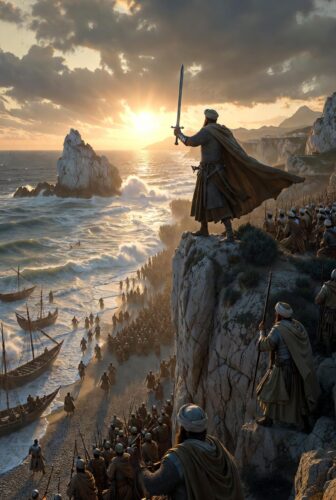 This wasn’t some grand imperial campaign plotted in Damascus. It was opportunistic, messy, driven by personal grudges, military cunning, and sheer nerve. And on this exact date in distant history, the first boots hit European soil in what would become one of the most consequential invasions ever. For the next several thousand words, we’re diving deep into the gritty, blood-soaked, occasionally hilarious details of how a former slave-turned-governor and his Berber raiders dismantled a crumbling Gothic kingdom in months, not years. We’ll meet scheming counts, feuding kings, and warriors who fought like the devil was on their heels. Then—and only then—we’ll flip the script to today: how the raw outcome of that landing can hand you a no-nonsense, wildly unconventional edge in your own life. No fluffy affirmations, no vision boards. Just a quick, battle-tested plan that turns hesitation into conquest. Buckle up. This is 90% pure history, served raw and real.
To understand why April 30, 711 mattered so much, rewind a few decades to the fractured mess that was Visigothic Spain. The Visigoths—those tall, Germanic descendants of the tribes that sacked Rome in 410 AD—had ruled the Iberian Peninsula since the late 5th century. By the early 700s, their kingdom was a powder keg of its own making. Kings were elected by a council of nobles, which sounds democratic until you realize it meant constant civil wars, assassinations, and betrayals. One ruler after another got knifed or exiled. The last legitimate-ish king before our story was Wittiza, who died around 710 amid whispers of poison and palace intrigue. Enter Roderic (or Rodrigo), a powerful duke who seized the throne in what amounted to a coup. He wasn’t exactly loved. The sons of Wittiza were still alive, nursing grudges and plotting revenge. The Visigothic elite—a small warrior aristocracy of maybe 200,000 people ruling over millions of Hispano-Roman peasants—treated the locals like second-class citizens. Taxes were crushing, religious tensions simmered (the Goths had only recently converted from Arian Christianity to Catholicism), and the countryside simmered with resentment.
Add to that external pressures: the kingdom was already stretched thin fighting Basques in the north and facing raids from across the sea. The Visigoths had a decent army—estimates put Roderic’s forces at anywhere from 20,000 to 100,000, though medieval numbers are always inflated like a fisherman’s tale—but it was divided, poorly coordinated, and riddled with disloyalty. Many troops secretly favored Wittiza’s heirs. This wasn’t a unified realm; it was a reality-TV drama with swords. One chronicler later quipped that the Goths spent more time stabbing each other in the back than fighting outsiders. Perfect timing for an invader with vision.
Across the Strait in North Africa, the Umayyad Caliphate was on a tear. Under Caliph Al-Walid I in Damascus, Muslim forces had swept through the Maghreb, converting Berber tribes and incorporating them into the empire as mawla—clients or freedmen who owed loyalty to Arab overlords. One of the star governors was Musa ibn Nusayr, a tough Arab administrator who had just wrapped up the conquest of Ifriqiya (modern Tunisia and Algeria). Musa needed reliable commanders on the frontier. Enter Tariq ibn Ziyad. Born around 670 in the Berber lands near modern Tlemcen, Algeria, Tariq wasn’t some blue-blooded prince. He was likely from the Nafza or a related tribe, rose through the ranks as a mawla of Musa, and proved himself ruthless and clever in campaigns against holdout Berber groups. By 710–711, Musa had appointed him governor of Tangier, the strategic port staring straight at Spain. Tariq was no stranger to risk—he’d fought in the brutal North African wars where loyalty was earned with blood, not birthright.
This wasn’t some grand imperial campaign plotted in Damascus. It was opportunistic, messy, driven by personal grudges, military cunning, and sheer nerve. And on this exact date in distant history, the first boots hit European soil in what would become one of the most consequential invasions ever. For the next several thousand words, we’re diving deep into the gritty, blood-soaked, occasionally hilarious details of how a former slave-turned-governor and his Berber raiders dismantled a crumbling Gothic kingdom in months, not years. We’ll meet scheming counts, feuding kings, and warriors who fought like the devil was on their heels. Then—and only then—we’ll flip the script to today: how the raw outcome of that landing can hand you a no-nonsense, wildly unconventional edge in your own life. No fluffy affirmations, no vision boards. Just a quick, battle-tested plan that turns hesitation into conquest. Buckle up. This is 90% pure history, served raw and real.
To understand why April 30, 711 mattered so much, rewind a few decades to the fractured mess that was Visigothic Spain. The Visigoths—those tall, Germanic descendants of the tribes that sacked Rome in 410 AD—had ruled the Iberian Peninsula since the late 5th century. By the early 700s, their kingdom was a powder keg of its own making. Kings were elected by a council of nobles, which sounds democratic until you realize it meant constant civil wars, assassinations, and betrayals. One ruler after another got knifed or exiled. The last legitimate-ish king before our story was Wittiza, who died around 710 amid whispers of poison and palace intrigue. Enter Roderic (or Rodrigo), a powerful duke who seized the throne in what amounted to a coup. He wasn’t exactly loved. The sons of Wittiza were still alive, nursing grudges and plotting revenge. The Visigothic elite—a small warrior aristocracy of maybe 200,000 people ruling over millions of Hispano-Roman peasants—treated the locals like second-class citizens. Taxes were crushing, religious tensions simmered (the Goths had only recently converted from Arian Christianity to Catholicism), and the countryside simmered with resentment.
Add to that external pressures: the kingdom was already stretched thin fighting Basques in the north and facing raids from across the sea. The Visigoths had a decent army—estimates put Roderic’s forces at anywhere from 20,000 to 100,000, though medieval numbers are always inflated like a fisherman’s tale—but it was divided, poorly coordinated, and riddled with disloyalty. Many troops secretly favored Wittiza’s heirs. This wasn’t a unified realm; it was a reality-TV drama with swords. One chronicler later quipped that the Goths spent more time stabbing each other in the back than fighting outsiders. Perfect timing for an invader with vision.
Across the Strait in North Africa, the Umayyad Caliphate was on a tear. Under Caliph Al-Walid I in Damascus, Muslim forces had swept through the Maghreb, converting Berber tribes and incorporating them into the empire as mawla—clients or freedmen who owed loyalty to Arab overlords. One of the star governors was Musa ibn Nusayr, a tough Arab administrator who had just wrapped up the conquest of Ifriqiya (modern Tunisia and Algeria). Musa needed reliable commanders on the frontier. Enter Tariq ibn Ziyad. Born around 670 in the Berber lands near modern Tlemcen, Algeria, Tariq wasn’t some blue-blooded prince. He was likely from the Nafza or a related tribe, rose through the ranks as a mawla of Musa, and proved himself ruthless and clever in campaigns against holdout Berber groups. By 710–711, Musa had appointed him governor of Tangier, the strategic port staring straight at Spain. Tariq was no stranger to risk—he’d fought in the brutal North African wars where loyalty was earned with blood, not birthright.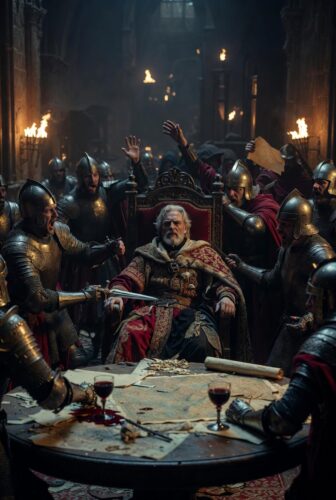 The spark for invasion? A juicy scandal straight out of a medieval soap opera. According to later Arab and Christian chroniclers (take them with a grain of salt, but the drama is gold), Count Julian—ruler of the enclave of Ceuta on the African side and a Visigothic vassal with trading ships and inside knowledge—had a daughter named Florinda (sometimes called La Cava). Roderic, ever the charming usurper, supposedly had her sent to the royal court in Toledo for “education.” There, the story goes, he raped or seduced her. Julian, enraged and humiliated, swore revenge. He secretly offered Tariq intelligence, ships, and safe passage in exchange for helping topple Roderic. Was it true? Historians debate—some say Julian was just hedging bets against a weak king, others call it pure legend to explain the impossible speed of the conquest. Either way, it worked. Julian’s betrayal handed Tariq the keys to the kingdom.
In early 711, Tariq assembled his force: roughly 7,000 men, the bulk Berber light infantry known as al-mughawir or “raiders”—tough, mobile fighters who lived off the land, armed with javelins, short swords, and shields, famous for their endurance and hit-and-run tactics. A smattering of Arab cavalry and perhaps some freed slaves rounded it out. No siege engines, no supply trains—just speed and shock. On or around April 26 to 30 (sources vary by a few days, but “on this day” records nail April 30 for the landing), the fleet crossed the 14-kilometer strait. The ships beached at the foot of a massive limestone rock jutting into the sea. Tariq’s men swarmed ashore, securing the high ground. That rock? They named it Jabal Tariq—Tarik’s Mountain. Today we call it Gibraltar. One small landing, one giant flip of history’s script.
Here’s where the legend gets cinematic—and funny in its sheer audacity. Tariq, sensing hesitation or homesickness among his troops (many had never seen Europe), allegedly ordered the ships burned. No retreat. No safety net. The flames lit up the night sky as the fleet went up in smoke. Then came the speech, preserved in later accounts like those of 13th-century historian Ibn Khallikan and 16th-century Ahmed al-Maqqari. It’s probably embellished, but damn if it doesn’t ring true for a commander staring down an empire:
“O my warriors! Whither would you flee? Behind you is the sea, before you the enemy. By God, you have no choice but courage and constancy. Remember, you are fighting for your faith, your families, and your future. Victory or martyrdom—there is no middle ground. The enemy is before you; the sea is behind you. Stand firm!”
The spark for invasion? A juicy scandal straight out of a medieval soap opera. According to later Arab and Christian chroniclers (take them with a grain of salt, but the drama is gold), Count Julian—ruler of the enclave of Ceuta on the African side and a Visigothic vassal with trading ships and inside knowledge—had a daughter named Florinda (sometimes called La Cava). Roderic, ever the charming usurper, supposedly had her sent to the royal court in Toledo for “education.” There, the story goes, he raped or seduced her. Julian, enraged and humiliated, swore revenge. He secretly offered Tariq intelligence, ships, and safe passage in exchange for helping topple Roderic. Was it true? Historians debate—some say Julian was just hedging bets against a weak king, others call it pure legend to explain the impossible speed of the conquest. Either way, it worked. Julian’s betrayal handed Tariq the keys to the kingdom.
In early 711, Tariq assembled his force: roughly 7,000 men, the bulk Berber light infantry known as al-mughawir or “raiders”—tough, mobile fighters who lived off the land, armed with javelins, short swords, and shields, famous for their endurance and hit-and-run tactics. A smattering of Arab cavalry and perhaps some freed slaves rounded it out. No siege engines, no supply trains—just speed and shock. On or around April 26 to 30 (sources vary by a few days, but “on this day” records nail April 30 for the landing), the fleet crossed the 14-kilometer strait. The ships beached at the foot of a massive limestone rock jutting into the sea. Tariq’s men swarmed ashore, securing the high ground. That rock? They named it Jabal Tariq—Tarik’s Mountain. Today we call it Gibraltar. One small landing, one giant flip of history’s script.
Here’s where the legend gets cinematic—and funny in its sheer audacity. Tariq, sensing hesitation or homesickness among his troops (many had never seen Europe), allegedly ordered the ships burned. No retreat. No safety net. The flames lit up the night sky as the fleet went up in smoke. Then came the speech, preserved in later accounts like those of 13th-century historian Ibn Khallikan and 16th-century Ahmed al-Maqqari. It’s probably embellished, but damn if it doesn’t ring true for a commander staring down an empire:
“O my warriors! Whither would you flee? Behind you is the sea, before you the enemy. By God, you have no choice but courage and constancy. Remember, you are fighting for your faith, your families, and your future. Victory or martyrdom—there is no middle ground. The enemy is before you; the sea is behind you. Stand firm!”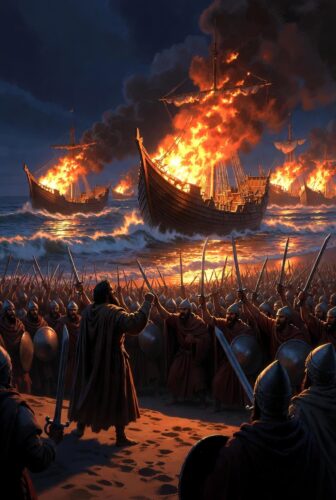 The troops, now with literally nowhere to run, roared approval. Modern self-help gurus love quoting “burn the boats,” but Tariq lived it on a rocky spit of land with 7,000 guys who’d just traded desert camels for European conquest. The irony? A Berber ex-slave (or client) from the fringes of empire was about to school the Gothic “masters” of Rome’s old province.
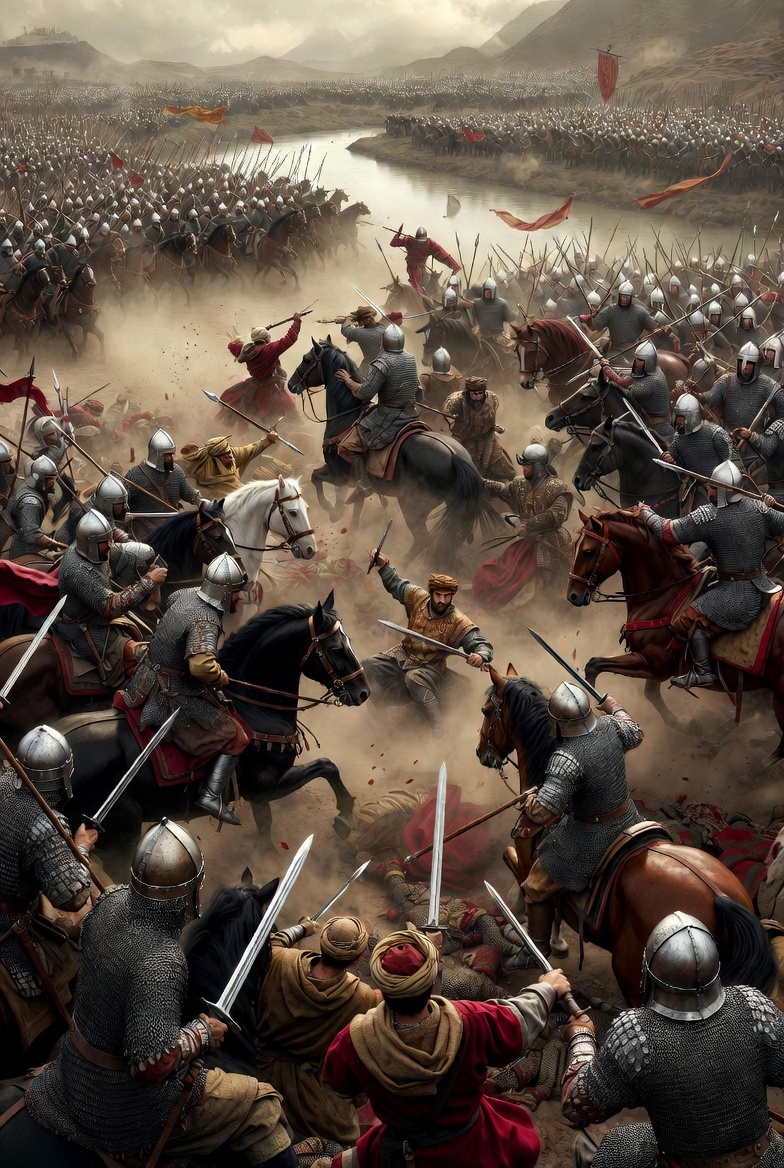
The invasion didn’t stall. Tariq’s forces fanned out, raiding farms and villages for supplies while probing defenses. Roderic was up north battling Basques when word reached him. He scrambled south with whatever army he could muster—nobles, levies, and the disgruntled sons of Wittiza’s faction who showed up more out of duty than loyalty. The two armies clashed in July 711 near the Río Guadalete (exact spot debated, but somewhere in southern Spain). Roderic’s force was larger on paper, but Tariq split his into four mobile divisions for flanking attacks—a classic Berber/early Islamic tactic emphasizing speed over brute force. Chroniclers describe a bloody, chaotic fight lasting days. Visigothic heavy cavalry charged, but the lighter Berbers wore them down with javelins and ambushes. Crucially, betrayal struck again: some Visigothic units allegedly held back or switched sides, still smarting from Roderic’s coup. Roderic himself was killed—accounts say he drowned in the river while fleeing in full armor, his body never recovered. One Gothic chronicler called it divine judgment; Arab ones celebrated it as the will of Allah.
With the king dead and the army shattered, the conquest snowballed. Tariq divided his forces again. One column under Mughith al-Rumi took Córdoba after a daring night assault—the gates opened by a local shepherd who knew a secret path. Another seized Granada. Tariq himself marched on Toledo, the Gothic capital. The city fell with barely a fight; panicked nobles had fled, leaving behind treasures and a demoralized populace. By late 711, most of southern and central Hispania was under Muslim control. Tariq’s men weren’t mindless destroyers—they offered terms to cities that surrendered (the dhimmi system: pay a tax, keep your faith and laws). Resistance pockets held in the north, but the core was gone.
Musa ibn Nusayr, back in Africa, heard the news and got jealous. He crossed with 12,000 more troops (mostly Arabs) in 712, linking up with Tariq near Toledo. There was tension—Musa reportedly rebuked his subordinate for stealing glory—but together they mopped up the rest. By 718 or so, nearly the entire peninsula was theirs, stretching from Gibraltar to the Pyrenees. The Umayyads named the new province Al-Andalus. Tariq and Musa were both recalled to Damascus in 714 by Caliph Al-Walid (politics, envy, the usual). Tariq fades from records after that, dying around 720, but his legacy? Immortal.
Now the real payoff of April 30, 711: what emerged from the rubble. Al-Andalus wasn’t a dark-age occupation; it became Europe’s brightest light for centuries. Córdoba grew into the continent’s largest and most advanced city by the 10th century—half a million people, paved streets, public baths, street lighting when London was still mud. Libraries held hundreds of thousands of volumes, preserving Greek philosophy, Roman engineering, and Indian math that the rest of Europe had forgotten. Scholars like Averroes (Ibn Rushd) commented on Aristotle, influencing Thomas Aquinas and the Renaissance. Surgeons like Abulcasis wrote encyclopedias with diagrams of instruments still used today. Agriculture boomed—new crops like rice, oranges, sugar cane, and cotton transformed the landscape thanks to advanced irrigation. Architecture? The Great Mosque of Córdoba, the Alhambra in Granada—masterpieces of geometric beauty and engineering. Jews and Christians lived as protected dhimmis under relatively tolerant rule (far from perfect, but leagues ahead of contemporary Europe’s pogroms). Science, poetry, philosophy, and trade flourished in a multicultural mash-up of Berber, Arab, Visigoth, and Roman roots. This wasn’t conquest for conquest’s sake; it was synthesis on steroids.
The troops, now with literally nowhere to run, roared approval. Modern self-help gurus love quoting “burn the boats,” but Tariq lived it on a rocky spit of land with 7,000 guys who’d just traded desert camels for European conquest. The irony? A Berber ex-slave (or client) from the fringes of empire was about to school the Gothic “masters” of Rome’s old province.
The invasion didn’t stall. Tariq’s forces fanned out, raiding farms and villages for supplies while probing defenses. Roderic was up north battling Basques when word reached him. He scrambled south with whatever army he could muster—nobles, levies, and the disgruntled sons of Wittiza’s faction who showed up more out of duty than loyalty. The two armies clashed in July 711 near the Río Guadalete (exact spot debated, but somewhere in southern Spain). Roderic’s force was larger on paper, but Tariq split his into four mobile divisions for flanking attacks—a classic Berber/early Islamic tactic emphasizing speed over brute force. Chroniclers describe a bloody, chaotic fight lasting days. Visigothic heavy cavalry charged, but the lighter Berbers wore them down with javelins and ambushes. Crucially, betrayal struck again: some Visigothic units allegedly held back or switched sides, still smarting from Roderic’s coup. Roderic himself was killed—accounts say he drowned in the river while fleeing in full armor, his body never recovered. One Gothic chronicler called it divine judgment; Arab ones celebrated it as the will of Allah.
With the king dead and the army shattered, the conquest snowballed. Tariq divided his forces again. One column under Mughith al-Rumi took Córdoba after a daring night assault—the gates opened by a local shepherd who knew a secret path. Another seized Granada. Tariq himself marched on Toledo, the Gothic capital. The city fell with barely a fight; panicked nobles had fled, leaving behind treasures and a demoralized populace. By late 711, most of southern and central Hispania was under Muslim control. Tariq’s men weren’t mindless destroyers—they offered terms to cities that surrendered (the dhimmi system: pay a tax, keep your faith and laws). Resistance pockets held in the north, but the core was gone.
Musa ibn Nusayr, back in Africa, heard the news and got jealous. He crossed with 12,000 more troops (mostly Arabs) in 712, linking up with Tariq near Toledo. There was tension—Musa reportedly rebuked his subordinate for stealing glory—but together they mopped up the rest. By 718 or so, nearly the entire peninsula was theirs, stretching from Gibraltar to the Pyrenees. The Umayyads named the new province Al-Andalus. Tariq and Musa were both recalled to Damascus in 714 by Caliph Al-Walid (politics, envy, the usual). Tariq fades from records after that, dying around 720, but his legacy? Immortal.
Now the real payoff of April 30, 711: what emerged from the rubble. Al-Andalus wasn’t a dark-age occupation; it became Europe’s brightest light for centuries. Córdoba grew into the continent’s largest and most advanced city by the 10th century—half a million people, paved streets, public baths, street lighting when London was still mud. Libraries held hundreds of thousands of volumes, preserving Greek philosophy, Roman engineering, and Indian math that the rest of Europe had forgotten. Scholars like Averroes (Ibn Rushd) commented on Aristotle, influencing Thomas Aquinas and the Renaissance. Surgeons like Abulcasis wrote encyclopedias with diagrams of instruments still used today. Agriculture boomed—new crops like rice, oranges, sugar cane, and cotton transformed the landscape thanks to advanced irrigation. Architecture? The Great Mosque of Córdoba, the Alhambra in Granada—masterpieces of geometric beauty and engineering. Jews and Christians lived as protected dhimmis under relatively tolerant rule (far from perfect, but leagues ahead of contemporary Europe’s pogroms). Science, poetry, philosophy, and trade flourished in a multicultural mash-up of Berber, Arab, Visigoth, and Roman roots. This wasn’t conquest for conquest’s sake; it was synthesis on steroids.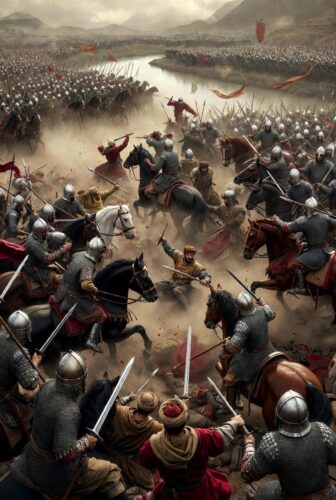 The funny part? A small Berber force from the “barbarian” fringes, led by a mawla who burned his own escape route, outmaneuvered and outlasted a “civilized” Gothic kingdom that had survived Rome’s fall. One rock, one speech, one betrayal, and suddenly Spain becomes a bridge between continents instead of a backwater. Visigothic nobles who thought they were invincible got humbled by guys who fought with javelins and faith. History is full of these ironies—empires rotting from within while outsiders with nothing to lose rewrite the rules.
Fast-forward to today. That April 30 landing wasn’t just about territory; it was about total commitment in the face of impossible odds. Tariq didn’t hedge. He didn’t keep a fleet in reserve “just in case.” He named his conquest site after himself, burned the boats, gave the speech that lit a fire, and turned a risky raid into a civilization. The outcome? A golden age that shaped the modern world. You don’t need to invade a country to steal that power. You can apply the exact same mindset to your individual life—your career rut, stalled goals, or personal reinvention—and reap outsized rewards. No generic “positive thinking.” Here’s how the historical fact delivers concrete benefits today, broken into specific, actionable bullets:
- **Total commitment eliminates decision fatigue**: By burning the boats, Tariq removed the mental drain of “what if I fail and retreat?” In your life, this means you stop half-assing projects or relationships, freeing up energy for execution instead of endless weighing options.
- **Seizing one strategic “rock” multiplies opportunities**: Gibraltar was a tiny foothold that unlocked a continent. Identify your personal Jabal Tariq—a single high-ground skill, network, or habit—and it cascades into exponential growth.
- **Turning betrayal or internal chaos into advantage**: The Visigoths’ civil wars and Julian’s grudge handed Tariq victory. When life throws office politics, broken promises, or personal drama your way, channel it like Tariq did—use the chaos as fuel rather than wallowing.
- **Small, mobile forces beat lumbering giants**: Tariq’s light, divided army outmaneuvered a bigger, slower one. In modern terms, nimble side hustles or focused daily habits crush bloated corporate inertia or overwhelming to-do lists.
- **Legacy compounds across generations**: Al-Andalus’s knowledge preservation influenced Europe for 800 years. Your bold move today—learning a skill, building a system—can outlive you, benefiting family, community, or industry long after you’re gone.
The funny part? A small Berber force from the “barbarian” fringes, led by a mawla who burned his own escape route, outmaneuvered and outlasted a “civilized” Gothic kingdom that had survived Rome’s fall. One rock, one speech, one betrayal, and suddenly Spain becomes a bridge between continents instead of a backwater. Visigothic nobles who thought they were invincible got humbled by guys who fought with javelins and faith. History is full of these ironies—empires rotting from within while outsiders with nothing to lose rewrite the rules.
Fast-forward to today. That April 30 landing wasn’t just about territory; it was about total commitment in the face of impossible odds. Tariq didn’t hedge. He didn’t keep a fleet in reserve “just in case.” He named his conquest site after himself, burned the boats, gave the speech that lit a fire, and turned a risky raid into a civilization. The outcome? A golden age that shaped the modern world. You don’t need to invade a country to steal that power. You can apply the exact same mindset to your individual life—your career rut, stalled goals, or personal reinvention—and reap outsized rewards. No generic “positive thinking.” Here’s how the historical fact delivers concrete benefits today, broken into specific, actionable bullets:
- **Total commitment eliminates decision fatigue**: By burning the boats, Tariq removed the mental drain of “what if I fail and retreat?” In your life, this means you stop half-assing projects or relationships, freeing up energy for execution instead of endless weighing options.
- **Seizing one strategic “rock” multiplies opportunities**: Gibraltar was a tiny foothold that unlocked a continent. Identify your personal Jabal Tariq—a single high-ground skill, network, or habit—and it cascades into exponential growth.
- **Turning betrayal or internal chaos into advantage**: The Visigoths’ civil wars and Julian’s grudge handed Tariq victory. When life throws office politics, broken promises, or personal drama your way, channel it like Tariq did—use the chaos as fuel rather than wallowing.
- **Small, mobile forces beat lumbering giants**: Tariq’s light, divided army outmaneuvered a bigger, slower one. In modern terms, nimble side hustles or focused daily habits crush bloated corporate inertia or overwhelming to-do lists.
- **Legacy compounds across generations**: Al-Andalus’s knowledge preservation influenced Europe for 800 years. Your bold move today—learning a skill, building a system—can outlive you, benefiting family, community, or industry long after you’re gone. Now, the detailed, quick, unique plan. This isn’t your average self-help “30-day challenge” or “morning routine” fluff you’ll find on every blog. It’s the **Gibraltar Protocol**—a 5-day mercenary-style blitz inspired directly by Tariq’s landing, but twisted into a hyper-practical, anti-fragile system that treats your personal goals like a raid on a crumbling kingdom. It’s funny, battle-ready, and designed to be executed in a single workweek with zero ongoing apps or journals. You “burn the boats” literally and publicly, assemble a “Berber horde,” and charge. Do it once, and the momentum sticks because retreat is off the table.
**Day 1: Scout the Strait (Identify Your Jabal Tariq)**
Spend 30 minutes listing your “Visigothic weaknesses”—the internal rot holding you back (bad habits, toxic relationships, skill gaps). Pick ONE strategic rock: the single opportunity or asset that, if seized, unlocks everything else (e.g., pitching that big client, mastering one revenue skill, or fixing one health bottleneck). Name it out loud like “Jabal [Your Name]” and tell one trusted person. No retreat options listed.
**Day 2: Burn the Boats (Public Commitment Ceremony)**
Physically destroy your safety nets in a memorable way. Delete the apps that enable procrastination (or uninstall them publicly on social media with a screenshot). Cancel the “easy out” subscriptions or backup plans. Write the Tariq-style speech on a piece of paper—“Behind me is comfort, before me is the goal”—and burn it (safely, in a sink). Post or tell your inner circle: “I’m all in; no bailout calls accepted.” The public shame of backing out becomes your enforcer—way stronger than private vows.
**Day 3: Assemble the Horde (Recruit 3–5 Elite Allies)**
Tariq didn’t conquer alone. Recruit a tiny “Berber company” of 3–5 people (friends, mentors, or even online accountability buddies) who each commit one specific support role: scout intel, provide tough feedback, or celebrate micro-wins. Meet virtually for 20 minutes. Give them “titles” like “Mughith the Raider” for fun. Their job: hold you to the landing—no pity parties.
**Day 4: Split into Divisions and Charge (Guadalete Blitz)**
Divide your main goal into 4 mobile “divisions” (daily actions). Execute one bold move per division today: e.g., send the scary email, make the call, build the prototype piece, research the next foothold. Track only wins, not hours. If resistance appears (internal “Roderic” doubts), laugh it off as the predictable flailing of a dying kingdom and push through with javelin-style speed—short, sharp efforts.
**Day 5: Claim Toledo (Secure the Capital and Lock In Legacy)**
Consolidate: Review what fell into your hands. Secure the “capital” by setting up one irreversible system (automated habit trigger, public milestone announcement, or financial commitment). Celebrate like Tariq in Toledo—share the loot (your progress) with the horde. Then declare Al-Andalus: plant a flag (a visible reminder, like a desk note saying “Jabal [Your Name] – Conquered”) that stays up permanently. The protocol ends here, but the conquest mindset doesn’t. You’ve turned one April 30-inspired week into a self-sustaining empire of momentum.
Execute this once, and you’ll feel the same electric shift Tariq’s men did on that rock. No more dithering. The boats are ash. The enemy—your old limits—is routed. The golden age? Yours to build. History didn’t wait for perfect conditions on April 30, 711. Neither should you. Go land on your Gibraltar today. The view from the top is worth the burn.
Now, the detailed, quick, unique plan. This isn’t your average self-help “30-day challenge” or “morning routine” fluff you’ll find on every blog. It’s the **Gibraltar Protocol**—a 5-day mercenary-style blitz inspired directly by Tariq’s landing, but twisted into a hyper-practical, anti-fragile system that treats your personal goals like a raid on a crumbling kingdom. It’s funny, battle-ready, and designed to be executed in a single workweek with zero ongoing apps or journals. You “burn the boats” literally and publicly, assemble a “Berber horde,” and charge. Do it once, and the momentum sticks because retreat is off the table.
**Day 1: Scout the Strait (Identify Your Jabal Tariq)**
Spend 30 minutes listing your “Visigothic weaknesses”—the internal rot holding you back (bad habits, toxic relationships, skill gaps). Pick ONE strategic rock: the single opportunity or asset that, if seized, unlocks everything else (e.g., pitching that big client, mastering one revenue skill, or fixing one health bottleneck). Name it out loud like “Jabal [Your Name]” and tell one trusted person. No retreat options listed.
**Day 2: Burn the Boats (Public Commitment Ceremony)**
Physically destroy your safety nets in a memorable way. Delete the apps that enable procrastination (or uninstall them publicly on social media with a screenshot). Cancel the “easy out” subscriptions or backup plans. Write the Tariq-style speech on a piece of paper—“Behind me is comfort, before me is the goal”—and burn it (safely, in a sink). Post or tell your inner circle: “I’m all in; no bailout calls accepted.” The public shame of backing out becomes your enforcer—way stronger than private vows.
**Day 3: Assemble the Horde (Recruit 3–5 Elite Allies)**
Tariq didn’t conquer alone. Recruit a tiny “Berber company” of 3–5 people (friends, mentors, or even online accountability buddies) who each commit one specific support role: scout intel, provide tough feedback, or celebrate micro-wins. Meet virtually for 20 minutes. Give them “titles” like “Mughith the Raider” for fun. Their job: hold you to the landing—no pity parties.
**Day 4: Split into Divisions and Charge (Guadalete Blitz)**
Divide your main goal into 4 mobile “divisions” (daily actions). Execute one bold move per division today: e.g., send the scary email, make the call, build the prototype piece, research the next foothold. Track only wins, not hours. If resistance appears (internal “Roderic” doubts), laugh it off as the predictable flailing of a dying kingdom and push through with javelin-style speed—short, sharp efforts.
**Day 5: Claim Toledo (Secure the Capital and Lock In Legacy)**
Consolidate: Review what fell into your hands. Secure the “capital” by setting up one irreversible system (automated habit trigger, public milestone announcement, or financial commitment). Celebrate like Tariq in Toledo—share the loot (your progress) with the horde. Then declare Al-Andalus: plant a flag (a visible reminder, like a desk note saying “Jabal [Your Name] – Conquered”) that stays up permanently. The protocol ends here, but the conquest mindset doesn’t. You’ve turned one April 30-inspired week into a self-sustaining empire of momentum.
Execute this once, and you’ll feel the same electric shift Tariq’s men did on that rock. No more dithering. The boats are ash. The enemy—your old limits—is routed. The golden age? Yours to build. History didn’t wait for perfect conditions on April 30, 711. Neither should you. Go land on your Gibraltar today. The view from the top is worth the burn.