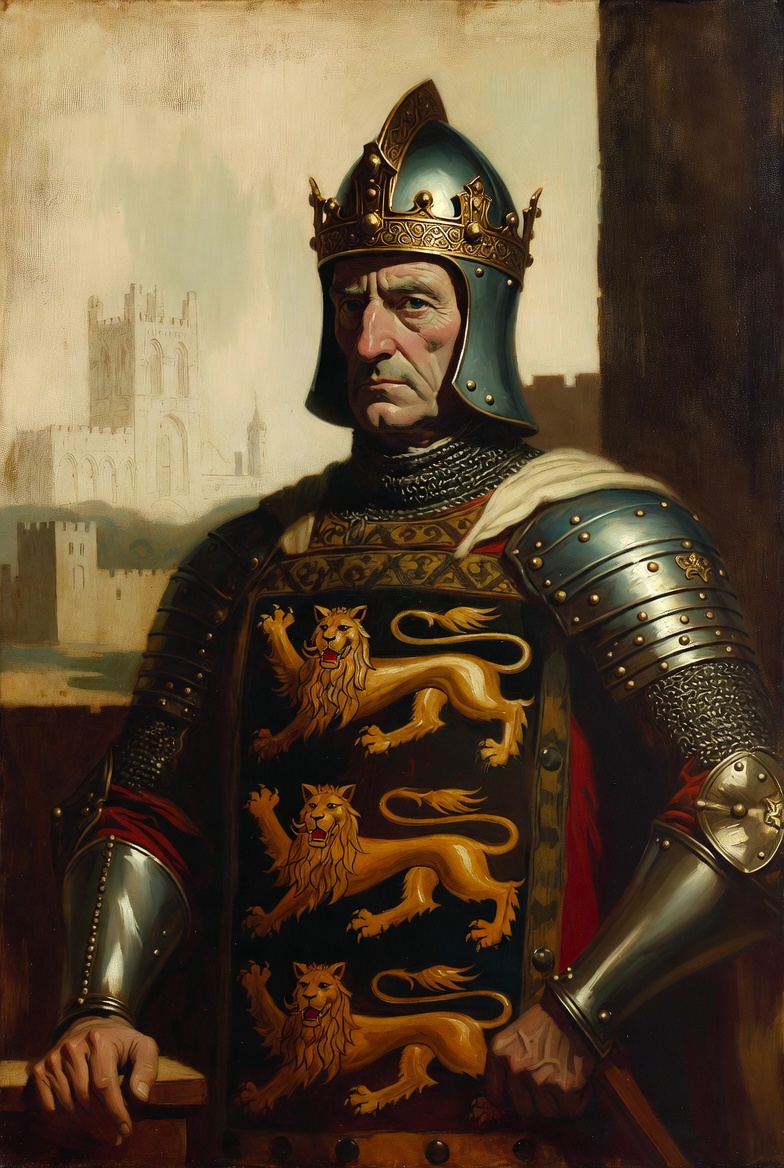
Picture this: It’s April 20, 1290, in the lush meadows just outside Winchester, the ancient capital of Anglo-Saxon kings. Trumpets blare, banners snap in the spring breeze, and hundreds of England’s finest nobles, clad in gleaming armor and colorful surcoats, gather for a spectacle straight out of legend. King Edward I—tall, fierce, battle-hardened, and utterly obsessed with King Arthur—has thrown open the gates of chivalry. This isn’t just another tournament. It’s a full-blown Round Table festival, complete with jousting, feasting, dancing, and a massive oak table carved to seat twenty-four knights in perfect equality, all to celebrate the betrothal of one of the king’s daughters. No footnotes, no dusty footnotes—just pure, raucous medieval pageantry designed to remind everyone that England’s ruler wasn’t just a conqueror; he was the spiritual heir to Camelot itself.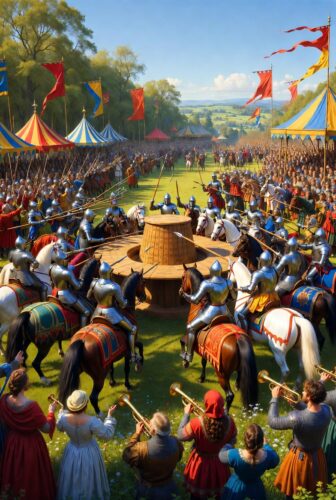 What happened that day wasn’t some minor footnote in the Plantagenet chronicles. It was a calculated, over-the-top flex of royal power wrapped in the glittering cloak of Arthurian myth. And here’s the kicker: the lessons baked into that single day of knightly excess and political theater are still screaming at us across seven centuries. Edward didn’t just throw a party. He weaponized legend to forge loyalty, inspire courage, and build a legacy that outlasted stone castles. Today, you can steal the exact same playbook—not with lances and silk tents, but with a razor-sharp, anti-cookie-cutter system that turns your ordinary life into an epic quest no generic self-help guru has ever dared prescribe. Stick around. Ninety percent of what follows is the raw, unfiltered history of that distant April day and the world that birthed it. The last ten percent is your personal knighthood ceremony—specific, quirky, and engineered to work in 2026.
To understand why April 20, 1290, mattered, you have to meet the man who orchestrated it: Edward I, born in 1239, crowned in 1272 after a decade-long power struggle that included a crusade to the Holy Land. Tall for his era—over six feet—he earned the nickname “Longshanks” and later “Hammer of the Scots” for the brutal efficiency with which he crushed rebellions. But Edward wasn’t just a brute with a sword. He was a master of image, law, and symbolism. By the time he reached his early fifties in 1290, he had already reformed English law with the Statutes of Westminster, conquered Wales in a lightning campaign that ended independent Welsh princedoms, and was eyeing Scotland like a hawk eyeing a field mouse. His queen, Eleanor of Castile, had borne him at least sixteen children, though many didn’t survive infancy. Family alliances were currency, and betrothals were the treaties that sealed them.
Edward’s court in the late 1280s was a whirlwind of diplomacy and display. Wales had fallen in 1283 after years of guerrilla warfare against Prince Llywelyn ap Gruffudd. Edward celebrated by building a ring of iron fortresses—Conwy, Caernarfon, Harlech—that still loom over the Welsh landscape like medieval middle fingers. But conquest alone wasn’t enough. He needed to legitimize his rule in the eyes of his fractious barons, who remembered the chaos of his father Henry III’s reign and the baronial wars that nearly toppled the monarchy. Enter King Arthur—the mythical once-and-future king whose legends had exploded in popularity thanks to Geoffrey of Monmouth’s 12th-century *Historia Regum Britanniae*, Chrétien de Troyes’ French romances, and the ever-popular tales of Lancelot, Guinevere, and the quest for the Holy Grail.
Arthur wasn’t just bedtime stories for Edward. He was political gold. In 1278, Edward and Eleanor had dramatically “rediscovered” and reburied Arthur and Guinevere’s supposed remains at Glastonbury Abbey in a lavish ceremony complete with new tombs and public viewing. The message? The old British kings’ glory now flowed through the Plantagenet line. Edward even claimed descent from Arthur through the Welsh blood in his veins and used the legend to justify his Welsh campaigns—he literally presented himself as Arthur reborn, reclaiming the ancient empire. By 1290, he had hosted or attended multiple Round Table tournaments: one at his own wedding years earlier, another in 1284 to celebrate the Welsh conquest, and others scattered through the decade. These weren’t cheap fairs. They were multi-day extravaganzas costing a king’s ransom in food, wine, silk, and prize money.
What happened that day wasn’t some minor footnote in the Plantagenet chronicles. It was a calculated, over-the-top flex of royal power wrapped in the glittering cloak of Arthurian myth. And here’s the kicker: the lessons baked into that single day of knightly excess and political theater are still screaming at us across seven centuries. Edward didn’t just throw a party. He weaponized legend to forge loyalty, inspire courage, and build a legacy that outlasted stone castles. Today, you can steal the exact same playbook—not with lances and silk tents, but with a razor-sharp, anti-cookie-cutter system that turns your ordinary life into an epic quest no generic self-help guru has ever dared prescribe. Stick around. Ninety percent of what follows is the raw, unfiltered history of that distant April day and the world that birthed it. The last ten percent is your personal knighthood ceremony—specific, quirky, and engineered to work in 2026.
To understand why April 20, 1290, mattered, you have to meet the man who orchestrated it: Edward I, born in 1239, crowned in 1272 after a decade-long power struggle that included a crusade to the Holy Land. Tall for his era—over six feet—he earned the nickname “Longshanks” and later “Hammer of the Scots” for the brutal efficiency with which he crushed rebellions. But Edward wasn’t just a brute with a sword. He was a master of image, law, and symbolism. By the time he reached his early fifties in 1290, he had already reformed English law with the Statutes of Westminster, conquered Wales in a lightning campaign that ended independent Welsh princedoms, and was eyeing Scotland like a hawk eyeing a field mouse. His queen, Eleanor of Castile, had borne him at least sixteen children, though many didn’t survive infancy. Family alliances were currency, and betrothals were the treaties that sealed them.
Edward’s court in the late 1280s was a whirlwind of diplomacy and display. Wales had fallen in 1283 after years of guerrilla warfare against Prince Llywelyn ap Gruffudd. Edward celebrated by building a ring of iron fortresses—Conwy, Caernarfon, Harlech—that still loom over the Welsh landscape like medieval middle fingers. But conquest alone wasn’t enough. He needed to legitimize his rule in the eyes of his fractious barons, who remembered the chaos of his father Henry III’s reign and the baronial wars that nearly toppled the monarchy. Enter King Arthur—the mythical once-and-future king whose legends had exploded in popularity thanks to Geoffrey of Monmouth’s 12th-century *Historia Regum Britanniae*, Chrétien de Troyes’ French romances, and the ever-popular tales of Lancelot, Guinevere, and the quest for the Holy Grail.
Arthur wasn’t just bedtime stories for Edward. He was political gold. In 1278, Edward and Eleanor had dramatically “rediscovered” and reburied Arthur and Guinevere’s supposed remains at Glastonbury Abbey in a lavish ceremony complete with new tombs and public viewing. The message? The old British kings’ glory now flowed through the Plantagenet line. Edward even claimed descent from Arthur through the Welsh blood in his veins and used the legend to justify his Welsh campaigns—he literally presented himself as Arthur reborn, reclaiming the ancient empire. By 1290, he had hosted or attended multiple Round Table tournaments: one at his own wedding years earlier, another in 1284 to celebrate the Welsh conquest, and others scattered through the decade. These weren’t cheap fairs. They were multi-day extravaganzas costing a king’s ransom in food, wine, silk, and prize money. A medieval Round Table tournament was pure theater meets combat sport. Unlike the bloody free-for-all melees of earlier centuries that left knights maimed or dead, these events emphasized spectacle and chivalry. Knights arrived costumed as Arthur, Lancelot, Gawain, Tristan, or even the villainous Mordred. They jousted with blunted lances to avoid fatalities, though accidents still happened—broken arms, concussions, the occasional horse bolting through the crowd. Between bouts, there were feasts with roasted swan, peacock, venison pies, and rivers of spiced wine. Minstrels sang of Camelot. Ladies awarded favors—scarves or sleeves tied to lances. Dancing followed under torchlight, with masked balls where participants pretended to be the Knights of the Round Table debating quests or rescuing damsels. Popes and bishops grumbled about the waste and moral looseness, but kings loved them because they bound restless barons together in shared glory instead of rebellion.
April 20, 1290, was peak Edward. Winchester was the perfect stage—its Great Hall already echoing with Arthurian echoes, and the surrounding countryside ideal for tents, lists (jousting fields), and pavilions. The tournament commemorated the betrothal of one of Edward’s daughters, part of the intricate web of marriages that secured alliances with continental powers and English nobles alike. (His daughter Margaret, for instance, would marry John of Brabant later that summer; others like Eleanor had earlier or concurrent negotiations.) The king spared no expense. Chroniclers hint at hundreds of participants and spectators. The centerpiece? A colossal round table hewn from English oak, roughly 18 feet across and weighing over a ton, designed so no knight could claim precedence—no head of the table, just equality under the king’s watchful eye. Historians like Martin Biddle, poring over Edward’s royal accounts, link this exact table—the one still hanging in Winchester’s Great Hall today—to the 1290 festivities. Dendrochronology dates the timber to 1250–1280, but the assembly and painting (originally green and white, later repainted by Henry VIII in Tudor colors with Arthur’s face suspiciously resembling Henry himself) scream royal commission for spectacle.
Imagine the scene on that crisp April morning. Edward, in his prime, strides into the lists flanked by his closest knights. The crowd roars as heralds proclaim the rules: honor above all, no grudges carried beyond the field, loyalty to the crown. Joust after joust unfolds—lances splintering against shields painted with dragons, lions, and griffins. One knight, perhaps playing Lancelot, unhorses his opponent in a cloud of dust; the fallen man rises laughing, bruised but alive, and they clasp arms in Arthurian brotherhood. Feasts stretch long into the evening: whole oxen roasted, pies shaped like castles, subtleties (edible sculptures) depicting the Grail. Dancing begins as the sun sets, ladies in flowing gowns pairing with armored knights who’ve swapped steel for silk. Edward himself likely participated or at least judged, reinforcing his image as the new Arthur—wise, just, invincible.
But this wasn’t empty fun. The political undercurrents ran deep. Barons who jousted together were less likely to plot against the king later. Foreign envoys saw England’s might wrapped in romance. The betrothal tied bloodlines to power—perhaps sealing a pact with a noble house or continental ally. Edward’s obsession paid dividends: his reign stabilized law, expanded territory, and left a template for strong monarchy that influenced centuries. The table itself survived fire, civil war, and neglect, repainted in 1522 by Henry VIII to flaunt his own Arthurian pretensions during a visit from Emperor Charles V. Today it hangs in Winchester Castle’s Great Hall, a silent witness to how one king turned myth into muscle.
A medieval Round Table tournament was pure theater meets combat sport. Unlike the bloody free-for-all melees of earlier centuries that left knights maimed or dead, these events emphasized spectacle and chivalry. Knights arrived costumed as Arthur, Lancelot, Gawain, Tristan, or even the villainous Mordred. They jousted with blunted lances to avoid fatalities, though accidents still happened—broken arms, concussions, the occasional horse bolting through the crowd. Between bouts, there were feasts with roasted swan, peacock, venison pies, and rivers of spiced wine. Minstrels sang of Camelot. Ladies awarded favors—scarves or sleeves tied to lances. Dancing followed under torchlight, with masked balls where participants pretended to be the Knights of the Round Table debating quests or rescuing damsels. Popes and bishops grumbled about the waste and moral looseness, but kings loved them because they bound restless barons together in shared glory instead of rebellion.
April 20, 1290, was peak Edward. Winchester was the perfect stage—its Great Hall already echoing with Arthurian echoes, and the surrounding countryside ideal for tents, lists (jousting fields), and pavilions. The tournament commemorated the betrothal of one of Edward’s daughters, part of the intricate web of marriages that secured alliances with continental powers and English nobles alike. (His daughter Margaret, for instance, would marry John of Brabant later that summer; others like Eleanor had earlier or concurrent negotiations.) The king spared no expense. Chroniclers hint at hundreds of participants and spectators. The centerpiece? A colossal round table hewn from English oak, roughly 18 feet across and weighing over a ton, designed so no knight could claim precedence—no head of the table, just equality under the king’s watchful eye. Historians like Martin Biddle, poring over Edward’s royal accounts, link this exact table—the one still hanging in Winchester’s Great Hall today—to the 1290 festivities. Dendrochronology dates the timber to 1250–1280, but the assembly and painting (originally green and white, later repainted by Henry VIII in Tudor colors with Arthur’s face suspiciously resembling Henry himself) scream royal commission for spectacle.
Imagine the scene on that crisp April morning. Edward, in his prime, strides into the lists flanked by his closest knights. The crowd roars as heralds proclaim the rules: honor above all, no grudges carried beyond the field, loyalty to the crown. Joust after joust unfolds—lances splintering against shields painted with dragons, lions, and griffins. One knight, perhaps playing Lancelot, unhorses his opponent in a cloud of dust; the fallen man rises laughing, bruised but alive, and they clasp arms in Arthurian brotherhood. Feasts stretch long into the evening: whole oxen roasted, pies shaped like castles, subtleties (edible sculptures) depicting the Grail. Dancing begins as the sun sets, ladies in flowing gowns pairing with armored knights who’ve swapped steel for silk. Edward himself likely participated or at least judged, reinforcing his image as the new Arthur—wise, just, invincible.
But this wasn’t empty fun. The political undercurrents ran deep. Barons who jousted together were less likely to plot against the king later. Foreign envoys saw England’s might wrapped in romance. The betrothal tied bloodlines to power—perhaps sealing a pact with a noble house or continental ally. Edward’s obsession paid dividends: his reign stabilized law, expanded territory, and left a template for strong monarchy that influenced centuries. The table itself survived fire, civil war, and neglect, repainted in 1522 by Henry VIII to flaunt his own Arthurian pretensions during a visit from Emperor Charles V. Today it hangs in Winchester Castle’s Great Hall, a silent witness to how one king turned myth into muscle.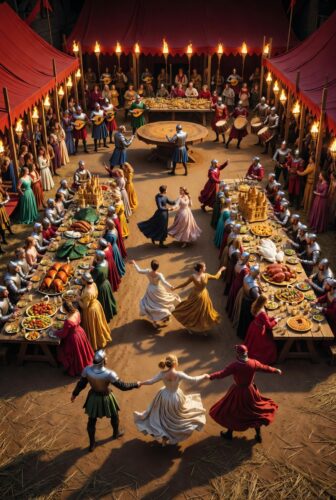 The 1290 tournament didn’t invent chivalry—that code of honor, courage, loyalty, and courtly love had evolved since the 11th century—but it supercharged it. In an era when knights could be as dangerous to their own king as to enemies, Edward harnessed the legend to channel their aggression into service. Funny enough, not every joust went smoothly. Chronicles from similar events record knights tumbling ignominiously, horses refusing to charge, or overeager participants cracking ribs despite blunted weapons. One rival baron might “accidentally” unhorse a personal enemy, sparking weeks of courtly shade. Yet the ritual demanded they toast each other afterward, turning rivalry into reluctant respect. Edward understood human nature: give ambitious men a stage, a costume, and a higher purpose, and they’ll fight for you instead of against you.
Fast-forward through the centuries and the table’s legacy ripples outward. It inspired Tudor propaganda, Victorian romanticism, and even modern reenactments. But the real power isn’t in the oak or the paint. It’s in the mindset Edward modeled: take an ancient story, make it your own, and use it to rally your inner circle toward something bigger than yourself. The outcome of that April day? A unified nobility, a strengthened monarchy, and a cultural meme that still sells books, movies, and video games. Small wonder the event has slipped under the radar in most history books—too theatrical for dry scholars, too political for pure romantics. Yet it’s exactly the kind of overlooked gem that rewards deep digging.
Now, here’s where the distant past hands you a blueprint sharper than Excalibur. The core outcome of Edward’s 1290 Round Table wasn’t conquest or riches—it was engineered camaraderie, personal transformation through role and ritual, and legacy-building that outlived the participants. You don’t need a castle or a warhorse to claim the same benefits today. You need a deliberate, quirky system that mocks the tired “morning routine” advice and instead treats your life like a knightly quest. No vision boards. No gratitude journals. This is the **Winchester Round Table Protocol**—a 14-day quick-start ritual (repeatable every season) that’s deliberately anti-generic, blending medieval role-play, accountability jousts, and legacy oaths in ways no influencer has packaged. It works because it hijacks the same psychological levers Edward used: spectacle, equality at the table, and public commitment to a higher code.
The 1290 tournament didn’t invent chivalry—that code of honor, courage, loyalty, and courtly love had evolved since the 11th century—but it supercharged it. In an era when knights could be as dangerous to their own king as to enemies, Edward harnessed the legend to channel their aggression into service. Funny enough, not every joust went smoothly. Chronicles from similar events record knights tumbling ignominiously, horses refusing to charge, or overeager participants cracking ribs despite blunted weapons. One rival baron might “accidentally” unhorse a personal enemy, sparking weeks of courtly shade. Yet the ritual demanded they toast each other afterward, turning rivalry into reluctant respect. Edward understood human nature: give ambitious men a stage, a costume, and a higher purpose, and they’ll fight for you instead of against you.
Fast-forward through the centuries and the table’s legacy ripples outward. It inspired Tudor propaganda, Victorian romanticism, and even modern reenactments. But the real power isn’t in the oak or the paint. It’s in the mindset Edward modeled: take an ancient story, make it your own, and use it to rally your inner circle toward something bigger than yourself. The outcome of that April day? A unified nobility, a strengthened monarchy, and a cultural meme that still sells books, movies, and video games. Small wonder the event has slipped under the radar in most history books—too theatrical for dry scholars, too political for pure romantics. Yet it’s exactly the kind of overlooked gem that rewards deep digging.
Now, here’s where the distant past hands you a blueprint sharper than Excalibur. The core outcome of Edward’s 1290 Round Table wasn’t conquest or riches—it was engineered camaraderie, personal transformation through role and ritual, and legacy-building that outlived the participants. You don’t need a castle or a warhorse to claim the same benefits today. You need a deliberate, quirky system that mocks the tired “morning routine” advice and instead treats your life like a knightly quest. No vision boards. No gratitude journals. This is the **Winchester Round Table Protocol**—a 14-day quick-start ritual (repeatable every season) that’s deliberately anti-generic, blending medieval role-play, accountability jousts, and legacy oaths in ways no influencer has packaged. It works because it hijacks the same psychological levers Edward used: spectacle, equality at the table, and public commitment to a higher code.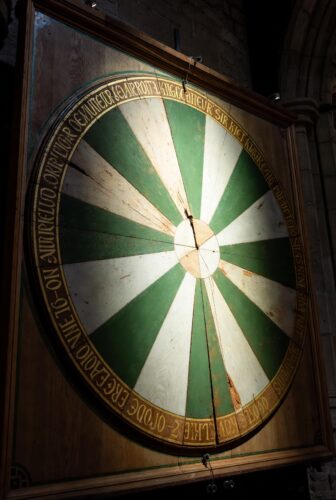 Here’s how a modern person reaps the exact rewards Edward’s barons did—courage under pressure, unbreakable loyalty to your goals, and a personal legend that motivates you when the grind gets real. Apply these with ruthless specificity:
- **Claim your Arthurian alias and forge your “table”**: Just as Edward assigned knights legendary names, pick one Arthurian role that matches your biggest current struggle (Lancelot for loyalty tests, Gawain for facing fears, Bors for steadfast quests). Create a literal or digital “round table”—a corkboard, shared app, or even a pizza pan etched with your name and three allies (spouse, friend, mentor). List your top four life “quests” around the edge. This isn’t visualization fluff; it’s a physical reminder that equality of effort matters more than hierarchy. Update it weekly or watch motivation leak like a punctured shield.
- **Host weekly “jousts” with blunted weapons**: Schedule 45-minute solo or group challenges where you attack one quest with timed intensity—Edward’s knights didn’t half-measure. Example: If your quest is fitness, “joust” a brutal HIIT circuit while narrating it as slaying a dragon. Invite your tablemates to judge fairly and award “favors” (a coffee, a playlist, public praise). The blunted edge keeps it fun and injury-free, but the public performance builds the same honor-pressure that kept medieval knights honest.
- **Swear the customized Chivalric Oath of the Modern Table**: Edward bound men with spectacle; you bind yourself with a 60-second daily recitation at your table. Make it personal and ridiculous: “I, [Your Alias], swear by the oak of Winchester to charge my quests with courage, feast my small wins with joy, and dance through failures without sulking like a sulky Mordred.” Record yourself once and play it back when tempted to quit. The absurdity makes it memorable; the repetition makes it automatic.
- **Stage a quarterly “betrothal feast” for your future self**: Mirror the 1290 celebration by hosting a solo or small-group meal celebrating a commitment to your next big alliance—say, partnering with a new skill or habit. No phones. Dress up. Toast the version of you that will exist in 90 days. This ritual cements legacy thinking: every action today is a betrothal to tomorrow’s stronger self.
- **Track “wounds and recoveries” like a true knight**: Medieval jousts left bruises; life leaves setbacks. Keep a simple ledger: date, “wound” (missed workout, blown deadline), recovery action (double effort next day, lesson learned). Review monthly at your table. Edward’s knights rose laughing after falls; you’ll train yourself to do the same instead of spiraling.
Here’s how a modern person reaps the exact rewards Edward’s barons did—courage under pressure, unbreakable loyalty to your goals, and a personal legend that motivates you when the grind gets real. Apply these with ruthless specificity:
- **Claim your Arthurian alias and forge your “table”**: Just as Edward assigned knights legendary names, pick one Arthurian role that matches your biggest current struggle (Lancelot for loyalty tests, Gawain for facing fears, Bors for steadfast quests). Create a literal or digital “round table”—a corkboard, shared app, or even a pizza pan etched with your name and three allies (spouse, friend, mentor). List your top four life “quests” around the edge. This isn’t visualization fluff; it’s a physical reminder that equality of effort matters more than hierarchy. Update it weekly or watch motivation leak like a punctured shield.
- **Host weekly “jousts” with blunted weapons**: Schedule 45-minute solo or group challenges where you attack one quest with timed intensity—Edward’s knights didn’t half-measure. Example: If your quest is fitness, “joust” a brutal HIIT circuit while narrating it as slaying a dragon. Invite your tablemates to judge fairly and award “favors” (a coffee, a playlist, public praise). The blunted edge keeps it fun and injury-free, but the public performance builds the same honor-pressure that kept medieval knights honest.
- **Swear the customized Chivalric Oath of the Modern Table**: Edward bound men with spectacle; you bind yourself with a 60-second daily recitation at your table. Make it personal and ridiculous: “I, [Your Alias], swear by the oak of Winchester to charge my quests with courage, feast my small wins with joy, and dance through failures without sulking like a sulky Mordred.” Record yourself once and play it back when tempted to quit. The absurdity makes it memorable; the repetition makes it automatic.
- **Stage a quarterly “betrothal feast” for your future self**: Mirror the 1290 celebration by hosting a solo or small-group meal celebrating a commitment to your next big alliance—say, partnering with a new skill or habit. No phones. Dress up. Toast the version of you that will exist in 90 days. This ritual cements legacy thinking: every action today is a betrothal to tomorrow’s stronger self.
- **Track “wounds and recoveries” like a true knight**: Medieval jousts left bruises; life leaves setbacks. Keep a simple ledger: date, “wound” (missed workout, blown deadline), recovery action (double effort next day, lesson learned). Review monthly at your table. Edward’s knights rose laughing after falls; you’ll train yourself to do the same instead of spiraling. The full 14-day launch plan is dead simple yet devilishly effective because it’s theatrical, communal, and legacy-focused—nothing like the solitary grind most self-help pushes. Days 1–3: Build your table and choose your alias. Days 4–10: Run daily mini-jousts and oath recitations while recruiting your inner circle (even one person counts). Days 11–13: Host the betrothal feast and map your four quests in detail. Day 14: Full review with “wounds” ledger and plan the next cycle. Repeat every 90 days, scaling quests as you level up. Track progress in a leather notebook if you want to lean into the medieval vibe—bonus points for sealing it with wax.
Why does this crush generic advice? Because it turns motivation into performance art. Your brain craves story and status; Edward gave his barons both and got loyalty in return. You give yourself the same and get discipline that sticks. No apps required beyond a shared note if you want digital. No expensive gear. Just oak-solid ritual that makes ordinary Tuesdays feel like Camelot.
That April 20, 1290, event faded into the mists of history, but the table still hangs in Winchester, daring visitors to imagine the cheers and clashes. Edward I understood something profound: legends aren’t escapist—they’re engines. He didn’t wait for destiny; he staged it. You don’t have to conquer Wales or host a thousand knights. You just have to claim your seat at the table, pick up your lance, and charge. The quests are yours. The glory is waiting. Saddle up—your Round Table revolution starts now. The king would approve.
The full 14-day launch plan is dead simple yet devilishly effective because it’s theatrical, communal, and legacy-focused—nothing like the solitary grind most self-help pushes. Days 1–3: Build your table and choose your alias. Days 4–10: Run daily mini-jousts and oath recitations while recruiting your inner circle (even one person counts). Days 11–13: Host the betrothal feast and map your four quests in detail. Day 14: Full review with “wounds” ledger and plan the next cycle. Repeat every 90 days, scaling quests as you level up. Track progress in a leather notebook if you want to lean into the medieval vibe—bonus points for sealing it with wax.
Why does this crush generic advice? Because it turns motivation into performance art. Your brain craves story and status; Edward gave his barons both and got loyalty in return. You give yourself the same and get discipline that sticks. No apps required beyond a shared note if you want digital. No expensive gear. Just oak-solid ritual that makes ordinary Tuesdays feel like Camelot.
That April 20, 1290, event faded into the mists of history, but the table still hangs in Winchester, daring visitors to imagine the cheers and clashes. Edward I understood something profound: legends aren’t escapist—they’re engines. He didn’t wait for destiny; he staged it. You don’t have to conquer Wales or host a thousand knights. You just have to claim your seat at the table, pick up your lance, and charge. The quests are yours. The glory is waiting. Saddle up—your Round Table revolution starts now. The king would approve.