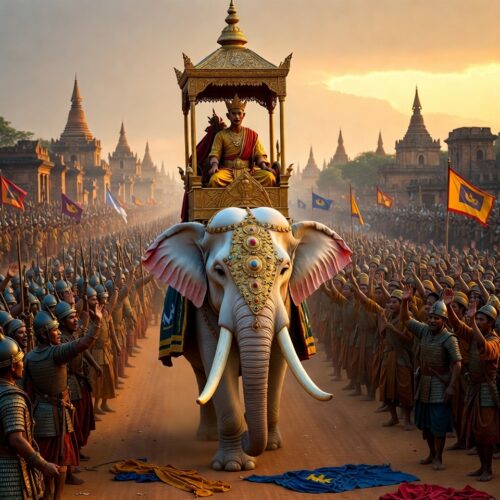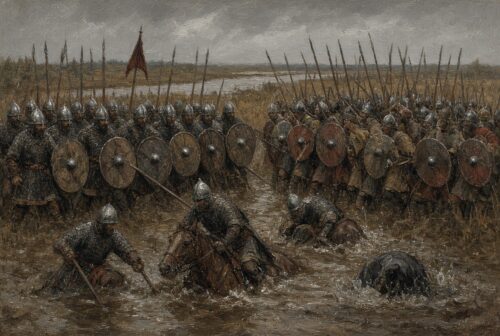

Picture this: It’s April 28, 224 AD, in the sun-baked plain of Hormozdgan, somewhere in the rugged foothills of what is now southern Iran near Ram-Hormoz. The air shimmers with heat and the metallic tang of impending bloodshed. Two armies face off. One is bloated with centuries of aristocratic swagger – the Parthian host, led by King Artabanus IV (sometimes called V in the messy numbering of feuding Arsacid kings), a feudal patchwork of cataphract heavy cavalry in clanking lamellar armor, vassal lords from distant provinces, and the weight of nearly five hundred years of imperial tradition stretching back to the Arsacid dynasty’s founding around 247 BC. The other? A lean, disciplined force of about 10,000 horsemen under Ardashir I, a man whose family claimed descent from the ancient Achaemenid kings and whose power base was the sacred fire temples of Persis (modern Fars). Ardashir’s men ride lighter, some already sporting flexible Roman-style chain mail that lets them move like predators. Ardashir has arrived first. While his opponent’s scouts are still kicking up dust on the horizon, he’s ordered his troops to dig a defensive ditch across the plain, turning the battlefield into his personal kill zone. By the end of that single day, Artabanus lies dead, the Parthian Empire – that sprawling, decentralized behemoth that had humbled Rome itself on more than one occasion – is effectively decapitated, and the Sasanian Empire is born. It will last 427 years, reshape the Middle East, challenge Byzantium to its core, revive Zoroastrian orthodoxy, spark a golden age of Persian art, science, and bureaucracy, and leave rock reliefs at Firuzabad and Naqsh-e Rostam that still smirk down at tourists today, immortalizing Ardashir unhorsing his rival like a cosmic game of polo gone lethal.This wasn’t just another ancient skirmish in the endless saga of Persian power struggles. It was the decisive pivot from a loose confederation of noble houses playing king-of-the-hill to a centralized, ideologically charged superpower that would define the region until the Arab conquests of the 7th century. And because it happened precisely on April 28, 224 AD, it’s the perfect distant-history time capsule for today – a raw, unfiltered masterclass in vision, preparation, adaptability, and bold execution that most self-help gurus have never even heard of, let alone turned into a repeatable system. We’re going deep – 90% pure historical meat, the kind that makes you smell the horse sweat and hear the clash of lances – before distilling the outcome into a razor-sharp, laugh-out-loud unique plan you can execute in days, not decades. No vision boards, no morning routines copied from billionaires, no “manifest your inner king” fluff. Just Ardashir-level tactics applied to your own chaotic life. To understand why April 28, 224 mattered so much, we have to rewind the tape on the Parthian Empire itself – a story of brilliant improvisation that eventually ossified into arrogant decline. The Parthians weren’t native Persians in the Achaemenid sense. They were a nomadic Iranian people from the northeast steppes who, under Arsaces I around 247 BC, broke away from the crumbling Seleucid Greek empire left behind by Alexander the Great’s conquests. For nearly five centuries they ruled a vast territory from Mesopotamia to Central Asia using a brilliantly flexible feudal system: the “king of kings” sat in the grand capital of Ctesiphon on the Tigris, but real power rested with seven great noble houses (the Suren, Karen, and others) who supplied cataphracts – elite heavy cavalry encased in scale or lamellar armor, horse and rider alike, charging like ironclad tanks with 12-foot lances. These guys were the terror of Rome. At Carrhae in 53 BC, Parthian horse archers and cataphracts annihilated Crassus’s legions with hit-and-run tactics and feigned retreats that would make modern special forces jealous. They played the Romans like fiddles for generations, recovering the lost legionary standards under Augustus through diplomacy and sheer nuisance value. But by the early 3rd century AD, that same flexibility had become a fatal flaw. The empire was a patchwork of semi-autonomous kings, satraps, and city-states held together by marriage alliances, tribute, and the occasional royal smackdown. Civil wars were basically the national sport. In the decades before 224, two rival Arsacid brothers – Vologases VI and Artabanus IV – had been tearing each other apart for the throne, weakening the center while Rome under the Severan emperors nibbled at the western frontiers. Artabanus, the eventual survivor of that fratricidal mess, ruled from Ctesiphon but governed more like a mafia don than an absolute monarch. His army was impressive on paper – larger than Ardashir’s, drawn from Kerman, Spahan (Isfahan), Mokristan, and the loyal houses of Pars itself – but it was lumbering, overconfident, and still reliant on the old heavy lamellar gear that restricted movement in the heat. The Parthians had grown fat on their own legend. They underestimated local upstarts. They partied on past glories while the sacred fires of Zoroastrianism flickered in the provinces.
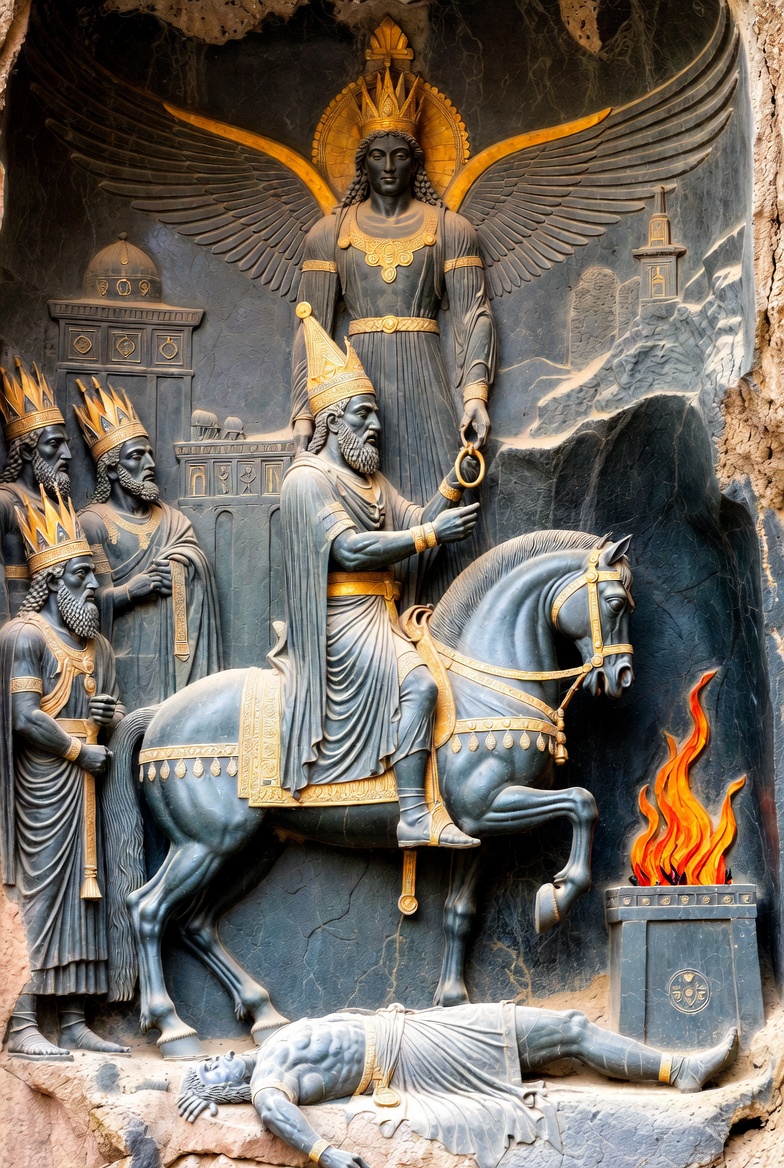
Enter Ardashir, the ultimate disruptor. His origins are half-legend, half-hard politics – exactly the mix that makes ancient history deliciously unreliable and endlessly entertaining. Traditional Sasanian sources (like the *Book of Deeds of Ardashir Papakan*) trace him to Sasan, a supposed descendant of the Achaemenid royal line who served as a custodian of the fire temple at Istakhr, the old Achaemenid religious heart near Persepolis. Whether that bloodline was real or brilliant propaganda (historians still debate it), the family was undeniably powerful in Persis, the rugged highland province that had birthed Cyrus the Great. Ardashir’s father (or grandfather, depending on the source) Papak was a local ruler or priestly lord who overthrew the last minor Parthian vassal king in the region around 205-208 AD. Young Ardashir wasn’t some pampered prince; he was raised in the shadow of ancient ruins and sacred flames, learning horsemanship, Zoroastrian ethics, and the art of calculated ambition. By his twenties he was already a proven warrior-administrator, governing Darabgerd and expanding through a mix of marriage, conquest, and temple alliances. He seized Istakhr, minted coins proclaiming himself “king,” and began absorbing neighboring principalities in Fars, Kerman, and Elymais. Parthian overlords in Ctesiphon sent stern letters. Ardashir sent back armies. What made Ardashir dangerous wasn’t just military muscle – it was vision and timing. While Artabanus was bogged down in northern power plays and Roman border skirmishes, Ardashir was consolidating a compact, loyal core in the south. He equipped his cavalry with innovative chain armor (inspired by Roman designs captured in earlier clashes), drilled them relentlessly, and wrapped the whole enterprise in religious legitimacy: the revival of orthodox Zoroastrianism centered on the eternal flame of Ahura Mazda. This wasn’t fanaticism; it was branding. Ardashir positioned himself as the restorer of ancient Persian glory against “foreign” Parthian nomad ways. He courted the priestly class, built alliances with local lords tired of Ctesiphon’s taxes, and moved with the speed of a man who knew history was watching. By 222-223 AD he had conquered enough territory to alarm Artabanus seriously. The Parthian king assembled a massive punitive force from across the empire and marched south in the spring of 224, determined to crush this upstart once and for all. The two armies converged on the plain of Hormozdgan – a wide, flat expanse perfect for cavalry but now rigged by Ardashir’s foresight. Ancient sources like Tabari and the *Shahnameh* (echoed in later chronicles) describe how Ardashir’s scouts reported the Parthian approach. Instead of waiting passively, Ardashir seized the initiative: his men arrived first, scouted water sources, and dug a deep trench across the most vulnerable approaches. This wasn’t medieval siege engineering; it was battlefield judo – using the terrain to blunt the Parthian charge while protecting his own flanks and denying the enemy easy maneuver. Artabanus’s larger host (estimates put it well over 10,000, possibly double) included the elite cataphracts of the great houses and vassal contingents still wearing the cumbersome lamellar plates that had served them so well against Rome but now felt like wearing a sauna in the Iranian spring heat. Ardashir’s force, smaller but tighter, featured more mobile heavy cavalry with the new chain links that allowed faster turns and sustained combat. His son Shapur (the future Shapur I, one of the greatest Sasanian kings) rode at his side, already proving himself a warrior-prince. Dawn on April 28 broke with the thunder of hooves. The Parthians advanced in their traditional splendor, banners flapping, lances lowered – the very image of imperial might that had intimidated emperors. Ardashir held his lines behind the ditch, forcing the enemy to commit to a narrow front or risk disorder. The clash was brutal and short by ancient standards: a swirling maelstrom of dust, arrows, lances, and close-quarters sword work. Ardashir himself led the decisive charge, according to the Firuzabad rock relief carved shortly afterward – a vivid propaganda masterpiece still visible today. In the carving, Ardashir on his armored stallion drives his lance clean through Artabanus, unhorsing the Parthian king in a single, iconic moment of triumph. To the side, young Shapur spears another Parthian noble, Dad-windad (or a stand-in for the great houses’ leadership). The relief isn’t subtle; it’s a billboard declaring regime change. Artabanus fell in the melee or immediately after – sources differ on the exact blow, but the outcome was unmistakable. His army shattered. Survivors fled north, but the heart was ripped out. The last Arsacid king was dead, and with him the old order.
The immediate aftermath was pure consolidation genius. Ardashir didn’t rest on laurels; he assumed the title *Shahanshah* (“King of Kings”) right there on the battlefield, kindling his royal fire in the Zoroastrian tradition to signal divine favor. He marched on Ctesiphon, entered in triumph, and began systematically absorbing or eliminating the remaining Parthian noble houses. Some seven great families eventually joined the new hierarchy, bringing their vassals and expertise – pragmatic realpolitik at its finest. Resistance in the east (under Vologases VI’s lingering claimants) was mopped up within years. Ardashir reformed the military, centralized taxation, revived Achaemenid-style satrapies with tighter royal oversight, and elevated Zoroastrian priests (the *mobads*) as a counterweight to the old feudal lords. Rock reliefs proliferated: at Naqsh-e Rostam, Ardashir is shown receiving the ring of kingship from the god Ohrmazd himself, with the defeated Artabanus trampled beneath the hooves. It was psychological warfare carved in stone – “We are the true heirs, deal with it.” The long-term transformation was staggering. The Sasanian Empire that rose from Hormozdgan’s dust was no mere copy of the Parthians. It was leaner, meaner, and far more ideologically coherent. Centralized bureaucracy replaced loose feudalism. A professional standing army supplemented the noble cavalry. Trade boomed along the Silk Road under royal protection. Science and philosophy flourished – think the Academy of Gundeshapur, where Greek, Indian, and Persian knowledge fused into medical and astronomical breakthroughs that later influenced the Islamic Golden Age. Zoroastrianism became state orthodoxy, with fire temples dotting the landscape as symbols of cosmic order (*asha*) against chaos. Relations with Rome (and later Byzantium) turned into a centuries-long chess match: Shapur I would capture the Roman emperor Valerian in 260 AD, the ultimate flex. Sasanian art – silver plates, silk textiles, intricate stucco – radiated confidence. Their legal codes, urban planning, and even chess (yes, the game evolved here) spread influence from the Mediterranean to China. When the Arabs finally overran the empire in 651 AD under the Rashidun Caliphate, they inherited not a crumbling shell but a sophisticated machine whose administrative DNA still echoes in modern Iran. One April day in 224 had redrawn the map of Eurasia for half a millennium. What’s hilarious – and brutally motivational – about this story is the sheer underdog energy. Ardashir wasn’t a god-king born in a palace; he was a temple administrator’s kid who out-hustled, out-prepared, and out-thought a bloated dynasty that literally wrote the book on empire. The Parthians had the numbers, the tradition, the bling. Ardashir had the ditch, the lighter armor, the vision, and the willingness to strike when the iron was hot. History is littered with also-rans who showed up late and died dramatically. Hormozdgan is proof that preparation plus audacity equals dynasty.
Now, fast-forward to you in 2026. The outcome of that single day – a decisive, prepared victory that replaced stagnation with explosive renewal – isn’t dusty trivia. It’s a blueprint for personal empire-building in an age of digital Parthians: endless notifications, inherited bad habits, corporate feudalism, and self-doubt that feels as heavy as lamellar armor. The benefit? You stop drifting like a vassal and start ruling like a Shahanshah. Here’s how that historical fact translates into tangible gains for any individual life, delivered in razor-sharp bullets that cut through the usual self-help noise: - **Strategic terrain control becomes your unfair advantage**: Just as Ardashir arrived early and dug the ditch, you learn to scout your personal “battlefield” (career, health, relationships) weeks ahead and create deliberate barriers against chaos – turning reactive scrambling into preemptive dominance. - **Mobility over brute mass crushes outdated systems**: The Parthians’ heavy armor slowed them; Ardashir’s flexible force won. You shed “lamellar” baggage – toxic commitments, perfectionism, legacy apps and habits – for agile tools that let you pivot faster than competitors or inner critics. - **Visionary branding rallies allies instantly**: Ardashir wrapped conquest in Zoroastrian fire and Achaemenid revival. You craft a personal “royal fire” narrative that turns solo grind into magnetic purpose, attracting mentors, partners, and opportunities without begging. - **Decisive single-day execution ends civil wars inside your head**: One battle ended centuries of Parthian feuding. You stop the endless internal debates and execute one high-leverage move that topples your biggest obstacle forever. - **Legacy infrastructure outlives the moment**: The Sasanians built systems (bureaucracy, temples, reliefs) that endured. You create repeatable processes and public “rock reliefs” (visible wins, documented habits) that compound into a life story people quote decades later. - **Underdog audacity rewires your risk tolerance**: A temple kid toppled an empire. You laugh at “impossible” and treat every setback as reconnaissance for the next charge. The rest of this isn’t another recycled 30-day challenge or “stoic morning routine.” It’s the **Hormozdgan Forge Protocol** – a quick, 5-day, historically faithful system designed to be as unique as the battle itself. No apps, no journals full of platitudes, no group accountability circles. Instead, you simulate the exact elements of April 28, 224 in your modern life: terrain prep, ditch-digging, armor upgrade, decisive charge, and fire-kindling. Do it once, and it becomes your repeatable “Shahanshah reset” for any life domain. It’s funny because you’ll literally visualize yourself as Ardashir on a horse while doing push-ups or negotiating a raise; it’s motivational because the results feel like carving your own rock relief. Total time investment: under 90 minutes a day. Tools: a notebook, your calendar, and zero excuses. **Day 1: Scout and Occupy the Plain (Terrain Mastery)** Wake up and map your current “Hormozdgan” – pick one life area in chaos (finances, fitness, a stalled project). Spend 20 minutes listing advantages (your skills, hidden resources) and threats (distractions, weak spots) like Ardashir’s scouts. Physically walk or drive a new route to work or the gym to “claim the ground.” End by digging your metaphorical ditch: block two time-wasters (delete apps, say no to one commitment) for the next month. Motivation spike: You’re no longer reacting; you own the battlefield.
**Day 2: Forge Lighter Armor (Shed the Lamellar)** Identify one heavy, outdated “Parthian” burden – a grudge, a toxic app, an inefficient routine. Replace it with a flexible Sasanian upgrade (e.g., swap endless scrolling for 10-minute focused sprints). Do one physical drill mimicking mobility: 15 minutes of dynamic movement (burpees, shadowboxing) while mentally chanting “chain over scales.” Laugh at how ridiculous it feels – that’s the point; history’s winners looked crazy to the old guard. By evening, you move lighter. **Day 3: Light the Royal Fire (Vision Ignition)** Carve your personal rock relief: Draw or describe (in vivid, arrogant detail) the moment you defeat your biggest “Artabanus” obstacle. Tie it to a core purpose (your “Zoroastrian flame”). Share a one-sentence version publicly or with one trusted ally. Then kindle the fire literally – light a candle or stove burner for 5 minutes while visualizing the Firuzabad carving. This isn’t woo; it’s propaganda that works on your own brain. **Day 4: The Decisive Charge (Execution Day)** Pick one high-impact action that ends the stalemate – send the scary email, hit the workout PR, cut the dead-weight expense. Execute it Ardashir-style: no hesitation, full commitment, with Shapur-level backup (enlist one person to witness or assist). Celebrate like a battlefield coronation: treat yourself to something symbolic (a Persian meal, a victory playlist). The empire shifts on days like this. **Day 5: Crown the Shahanshah and Build the Relief (Legacy Lock-In)** Review the week’s wins. Formalize one new system (a weekly “fire temple” review ritual) and document it publicly – post a before/after, tell the story to a friend, or update your resume/bio with the metaphor. Schedule the next “Hormozdgan reset” for 30 days out. You now have a personal dynasty protocol that compounds. Run this once and watch how quickly old patterns die and new empires rise. Ardashir didn’t wait for permission or perfect conditions; he showed up early, dug in, and charged. You can too. The plain of Hormozdgan is wherever you decide to fight. April 28, 224 wasn’t the end of history – it was the beginning of something fiercer. Make today the same for your own story. The ditch is waiting. Grab a shovel.
Share: