On May 30, 1381, in the quiet Essex village of Fobbing, a tax collector named John Bampton rode in with his entourage, expecting compliance. What he got instead was the spark that lit one of medieval England's most explosive uprisings—the Peasants' Revolt, also known as Wat Tyler's Rebellion. This wasn't some distant skirmish in a far-off land; it happened right in the heart of England, an English-speaking realm still shaking off the feudal chains. Over the next few weeks, tens of thousands of ordinary folk—farmers, artisans, laborers, and even some clergy—rose up against what they saw as intolerable oppression. They marched on London, stormed the Tower, beheaded royal officials, and forced a teenage king to negotiate face-to-face.
This event stands out in distant history not for royal pomp or battlefield glory, but for raw human grit against systemic rot. It's a tale packed with vivid characters, absurd ironies, heartbreaking betrayals, and moments of unlikely triumph. And while 90% of this blog dives deep into those gritty historical details—pulling you into the muddy fields, smoky taverns, and chaotic streets of 14th-century England—the final stretch translates that fire into a hyper-specific, anti-cookie-cutter plan for your modern life. No generic "journal more" or "wake up early" fluff. This is unique, forged from the revolt's lessons in defiance, unity, and strategic audacity.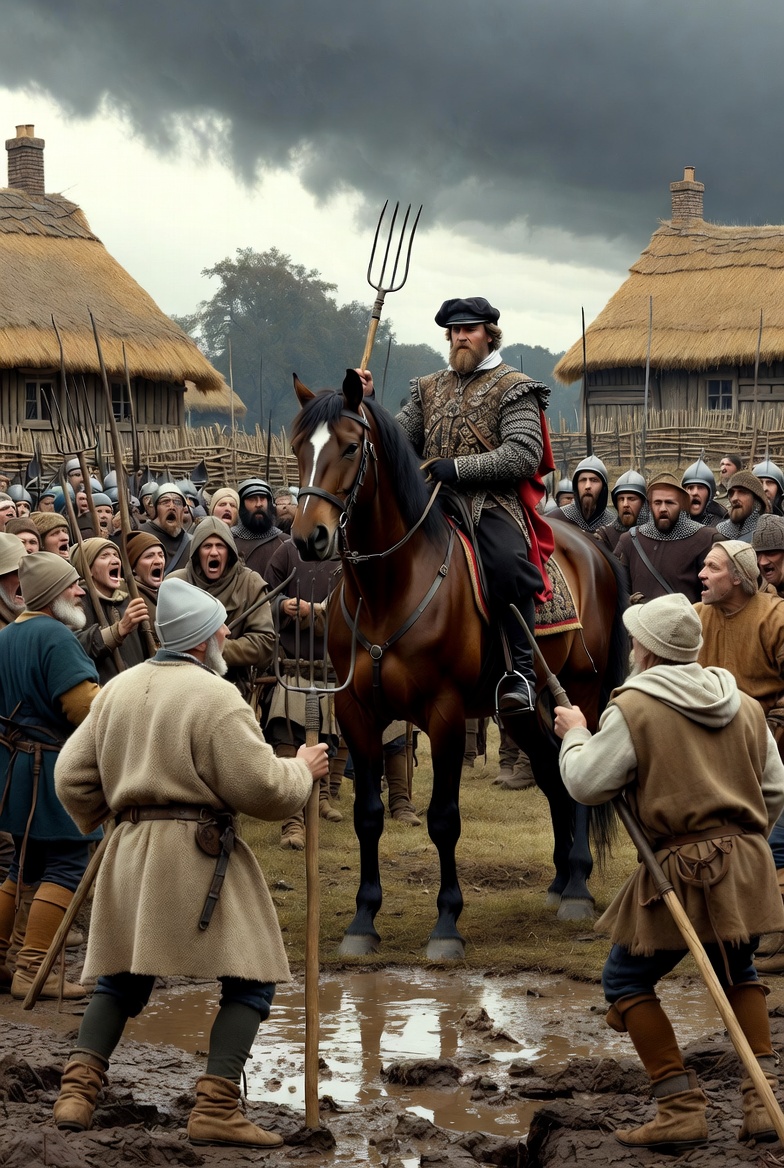 ### The Black Death's Long Shadow and the Poll Tax Powder Keg
To understand why May 30, 1381, exploded, rewind to the mid-1300s. The Black Death had ravaged Europe from 1348 to 1350, wiping out perhaps 30-50% of England's population. Fields lay fallow, villages emptied, and labor became scarce. Surviving peasants suddenly had bargaining power. Wages rose as landlords competed for workers. For a brief, chaotic moment, the rigid feudal hierarchy—where serfs were bound to the land and owed labor to lords—cracked.
But the elite hated this. In 1351, Parliament passed the Statute of Labourers, freezing wages at pre-plague levels and forcing people back to work under threat of punishment. It was like trying to put toothpaste back in the tube after the plague had squeezed it out. Enforcement was brutal: fines, stocks, even imprisonment for demanding better pay. Resentment simmered for decades.
Then came the Hundred Years' War with France. King Edward III and his successors poured money into endless campaigns. By the 1370s, under the boy-king Richard II (who ascended at age 10 in 1377), the crown was broke. Enter the poll tax—a flat head tax of three groats (about 12 pence) per adult, rich or poor. This was the third such tax in four years, and it hit hardest on the bottom. A peasant earning maybe 2-3 pence a day now owed a sum equivalent to several weeks' labor, regardless of harvest failures or family size.
Villages grumbled. Tax collectors grew aggressive. But on May 30, 1381, in Fobbing (a small coastal village in Essex), commissioner Thomas Bampton (sometimes called John Bampton in records) pushed too far. He arrived with two serjeants-at-arms to audit poll tax payments. Locals from Fobbing, Corringham, and Stanford-le-Hope had already paid earlier levies and showed receipts. They refused again. Bampton threatened arrests. The crowd, led by a local figure like Thomas Baker (a substantial landowner who threw in with the commons), drove the officials out with sticks, stones, and shouts. No one was killed that day, but the message was clear: enough.
### The Black Death's Long Shadow and the Poll Tax Powder Keg
To understand why May 30, 1381, exploded, rewind to the mid-1300s. The Black Death had ravaged Europe from 1348 to 1350, wiping out perhaps 30-50% of England's population. Fields lay fallow, villages emptied, and labor became scarce. Surviving peasants suddenly had bargaining power. Wages rose as landlords competed for workers. For a brief, chaotic moment, the rigid feudal hierarchy—where serfs were bound to the land and owed labor to lords—cracked.
But the elite hated this. In 1351, Parliament passed the Statute of Labourers, freezing wages at pre-plague levels and forcing people back to work under threat of punishment. It was like trying to put toothpaste back in the tube after the plague had squeezed it out. Enforcement was brutal: fines, stocks, even imprisonment for demanding better pay. Resentment simmered for decades.
Then came the Hundred Years' War with France. King Edward III and his successors poured money into endless campaigns. By the 1370s, under the boy-king Richard II (who ascended at age 10 in 1377), the crown was broke. Enter the poll tax—a flat head tax of three groats (about 12 pence) per adult, rich or poor. This was the third such tax in four years, and it hit hardest on the bottom. A peasant earning maybe 2-3 pence a day now owed a sum equivalent to several weeks' labor, regardless of harvest failures or family size.
Villages grumbled. Tax collectors grew aggressive. But on May 30, 1381, in Fobbing (a small coastal village in Essex), commissioner Thomas Bampton (sometimes called John Bampton in records) pushed too far. He arrived with two serjeants-at-arms to audit poll tax payments. Locals from Fobbing, Corringham, and Stanford-le-Hope had already paid earlier levies and showed receipts. They refused again. Bampton threatened arrests. The crowd, led by a local figure like Thomas Baker (a substantial landowner who threw in with the commons), drove the officials out with sticks, stones, and shouts. No one was killed that day, but the message was clear: enough.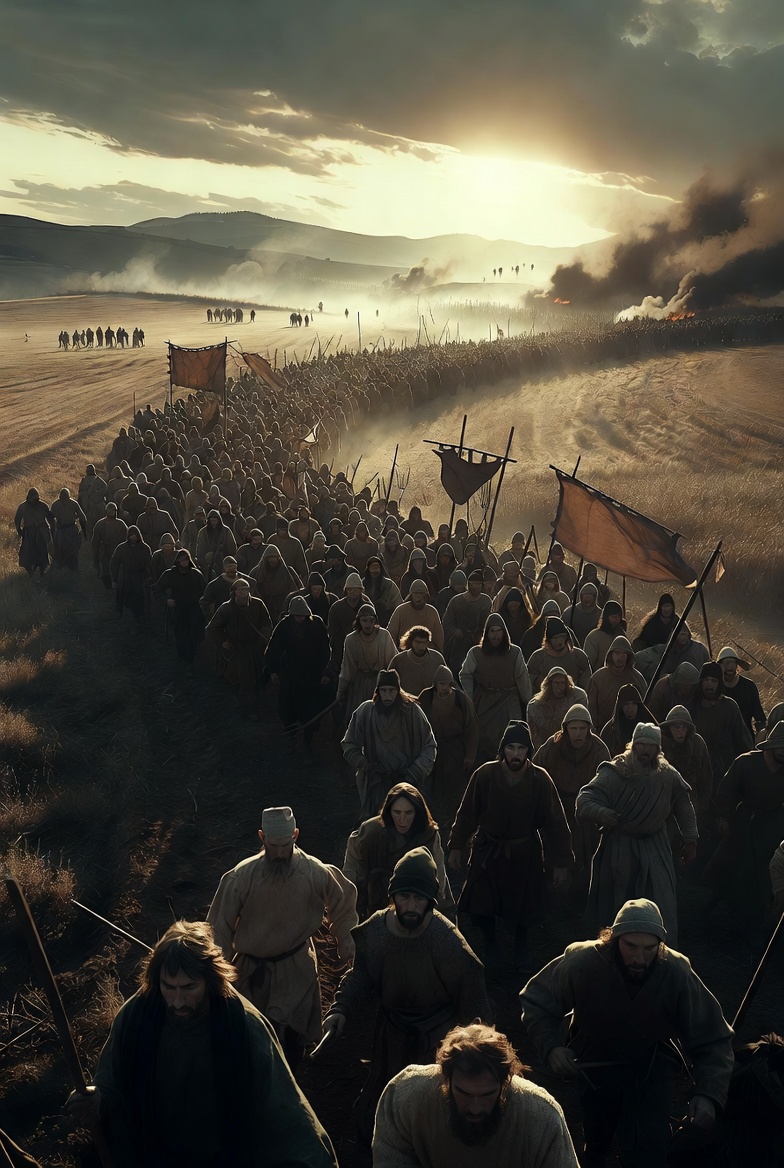 News spread like wildfire through the southeast. By May 31 and June 1, Essex men gathered at Brentwood, Baddow, and Colchester. Kent erupted almost simultaneously. This wasn't disorganized mob violence; it had structure. Rebels organized into companies, elected captains, and marched with discipline, targeting symbols of oppression: tax rolls, manor houses, and lawyers' offices.
### The March on London: Wat Tyler, John Ball, and the Rage of the Commons
Enter Wat Tyler (Walter Tyler), a charismatic leader from Kent, possibly a former soldier or tiler by trade. Under his command, Kentish rebels converged on Canterbury, then London. They opened prisons, burned legal documents, and executed hated officials. One target was John of Gaunt's Savoy Palace—Gaunt, the king's uncle and a powerful duke, symbolized corrupt rule. Rebels razed it but, in a telling detail, refused to loot, throwing valuables into the Thames instead. They claimed moral high ground.
The rebels' demands were revolutionary for the era: abolition of serfdom, fixed low rents, free trade, and an end to unfair labor laws. They weren't anarchists; many sought a purified kingship where Richard II ruled justly without corrupt advisors. Priests like John Ball fueled the fire with sermons. Ball, a radical preacher, famously asked in a speech: "When Adam delved and Eve span, who was then the gentleman?"—challenging the divine right of nobility by pointing to humanity's equal origins. His words mixed biblical egalitarianism with pointed critique of the church and state.
By June 13, 1381, thousands entered London. The city gates opened (some say by sympathetic Londoners). Rebels stormed the Tower of London—the only time in history it fell to a popular uprising. They dragged out and beheaded Archbishop Simon of Sudbury (Chancellor) and Treasurer Sir Robert Hales. Heads on pikes became a grim spectacle. Flemish merchants, seen as economic rivals, were massacred in a ugly bout of xenophobia amid the chaos.
Young King Richard II, just 14, showed remarkable poise. On June 14 at Mile End, he met Essex rebels and granted charters abolishing serfdom and promising reforms. While he parleyed, Kentish forces inside the city continued their purge. The next day, June 15, at Smithfield, Richard faced Wat Tyler's main force. Tyler approached boldly, perhaps too boldly. Accounts differ—some say he was rude, others that the mayor of London, William Walworth, struck first. Tyler was cut down. Chaos loomed. But Richard rode forward, declaring, "I will be your captain and your leader." He promised mercy and reforms. The rebels dispersed.
It was a masterclass in royal theater. Promises were later revoked. Reprisals followed. Tyler's head joined others on London Bridge. John Ball was hanged, drawn, and quartered. Yet the revolt spread to East Anglia, where rebels under John Wrawe and Geoffrey Litster challenged authority until crushed by the Bishop of Norwich's forces around June 25.
News spread like wildfire through the southeast. By May 31 and June 1, Essex men gathered at Brentwood, Baddow, and Colchester. Kent erupted almost simultaneously. This wasn't disorganized mob violence; it had structure. Rebels organized into companies, elected captains, and marched with discipline, targeting symbols of oppression: tax rolls, manor houses, and lawyers' offices.
### The March on London: Wat Tyler, John Ball, and the Rage of the Commons
Enter Wat Tyler (Walter Tyler), a charismatic leader from Kent, possibly a former soldier or tiler by trade. Under his command, Kentish rebels converged on Canterbury, then London. They opened prisons, burned legal documents, and executed hated officials. One target was John of Gaunt's Savoy Palace—Gaunt, the king's uncle and a powerful duke, symbolized corrupt rule. Rebels razed it but, in a telling detail, refused to loot, throwing valuables into the Thames instead. They claimed moral high ground.
The rebels' demands were revolutionary for the era: abolition of serfdom, fixed low rents, free trade, and an end to unfair labor laws. They weren't anarchists; many sought a purified kingship where Richard II ruled justly without corrupt advisors. Priests like John Ball fueled the fire with sermons. Ball, a radical preacher, famously asked in a speech: "When Adam delved and Eve span, who was then the gentleman?"—challenging the divine right of nobility by pointing to humanity's equal origins. His words mixed biblical egalitarianism with pointed critique of the church and state.
By June 13, 1381, thousands entered London. The city gates opened (some say by sympathetic Londoners). Rebels stormed the Tower of London—the only time in history it fell to a popular uprising. They dragged out and beheaded Archbishop Simon of Sudbury (Chancellor) and Treasurer Sir Robert Hales. Heads on pikes became a grim spectacle. Flemish merchants, seen as economic rivals, were massacred in a ugly bout of xenophobia amid the chaos.
Young King Richard II, just 14, showed remarkable poise. On June 14 at Mile End, he met Essex rebels and granted charters abolishing serfdom and promising reforms. While he parleyed, Kentish forces inside the city continued their purge. The next day, June 15, at Smithfield, Richard faced Wat Tyler's main force. Tyler approached boldly, perhaps too boldly. Accounts differ—some say he was rude, others that the mayor of London, William Walworth, struck first. Tyler was cut down. Chaos loomed. But Richard rode forward, declaring, "I will be your captain and your leader." He promised mercy and reforms. The rebels dispersed.
It was a masterclass in royal theater. Promises were later revoked. Reprisals followed. Tyler's head joined others on London Bridge. John Ball was hanged, drawn, and quartered. Yet the revolt spread to East Anglia, where rebels under John Wrawe and Geoffrey Litster challenged authority until crushed by the Bishop of Norwich's forces around June 25.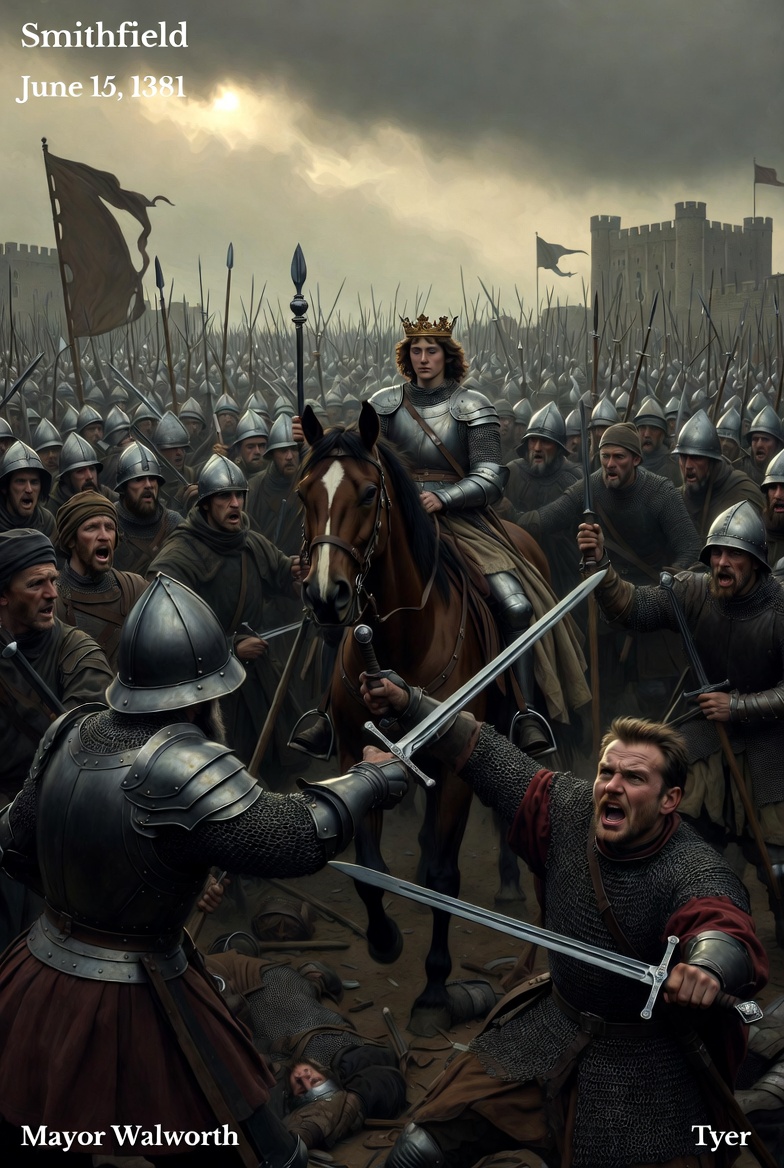 ### The Human Stories: Irony, Courage, and Absurdity in the Mud
History here isn't dry facts—it's alive with funny, tragic, and motivational quirks. Imagine peasants, armed with farm tools and homemade banners, negotiating with a king while their leaders demanded parchment charters. One rebel group in St. Albans forced the abbot to grant hunting rights on monastic lands—a medieval "right to roam" victory. In other places, they burned manorial records with glee, erasing debts in literal flames.
The irony? Many rebels were not the poorest serfs but relatively prosperous yeomen and tradesmen who had tasted freedom post-plague and refused to surrender it. Wat Tyler's possible military background gave the revolt tactical edge—coordinated marches, scouts, supply lines. Yet betrayal came from within: some Londoners joined for looting, others turned on the rebels when order crumbled.
King Richard's survival hinged on quick thinking. Chroniclers like Thomas Walsingham (a monk, biased against rebels) painted them as drunken savages, but records show discipline in many companies. They avoided widespread random violence, focusing on "traitors." The revolt's scale—estimates of 50,000+ involved across counties—shocked Europe. It wasn't just Essex and Kent; ripples hit Yorkshire and even crossed to Calais.
Economically, the poll tax failed spectacularly. Collection collapsed. Long-term, serfdom eroded faster, though not solely because of 1381. Wages crept up despite statutes. Parliament grew wary of heavy taxation. The event exposed the fragility of feudalism in a post-plague world.
Humor sneaks in too. Rebels paraded with mock processions, inverting social order—dressing in finery or forcing lords to serve them ale. John Ball's preaching tours mixed fire-and-brimstone with populist zingers that would go viral today. One chronicler complained rebels acted as if "the world was turned upside down." It was, briefly.
### The Human Stories: Irony, Courage, and Absurdity in the Mud
History here isn't dry facts—it's alive with funny, tragic, and motivational quirks. Imagine peasants, armed with farm tools and homemade banners, negotiating with a king while their leaders demanded parchment charters. One rebel group in St. Albans forced the abbot to grant hunting rights on monastic lands—a medieval "right to roam" victory. In other places, they burned manorial records with glee, erasing debts in literal flames.
The irony? Many rebels were not the poorest serfs but relatively prosperous yeomen and tradesmen who had tasted freedom post-plague and refused to surrender it. Wat Tyler's possible military background gave the revolt tactical edge—coordinated marches, scouts, supply lines. Yet betrayal came from within: some Londoners joined for looting, others turned on the rebels when order crumbled.
King Richard's survival hinged on quick thinking. Chroniclers like Thomas Walsingham (a monk, biased against rebels) painted them as drunken savages, but records show discipline in many companies. They avoided widespread random violence, focusing on "traitors." The revolt's scale—estimates of 50,000+ involved across counties—shocked Europe. It wasn't just Essex and Kent; ripples hit Yorkshire and even crossed to Calais.
Economically, the poll tax failed spectacularly. Collection collapsed. Long-term, serfdom eroded faster, though not solely because of 1381. Wages crept up despite statutes. Parliament grew wary of heavy taxation. The event exposed the fragility of feudalism in a post-plague world.
Humor sneaks in too. Rebels paraded with mock processions, inverting social order—dressing in finery or forcing lords to serve them ale. John Ball's preaching tours mixed fire-and-brimstone with populist zingers that would go viral today. One chronicler complained rebels acted as if "the world was turned upside down." It was, briefly.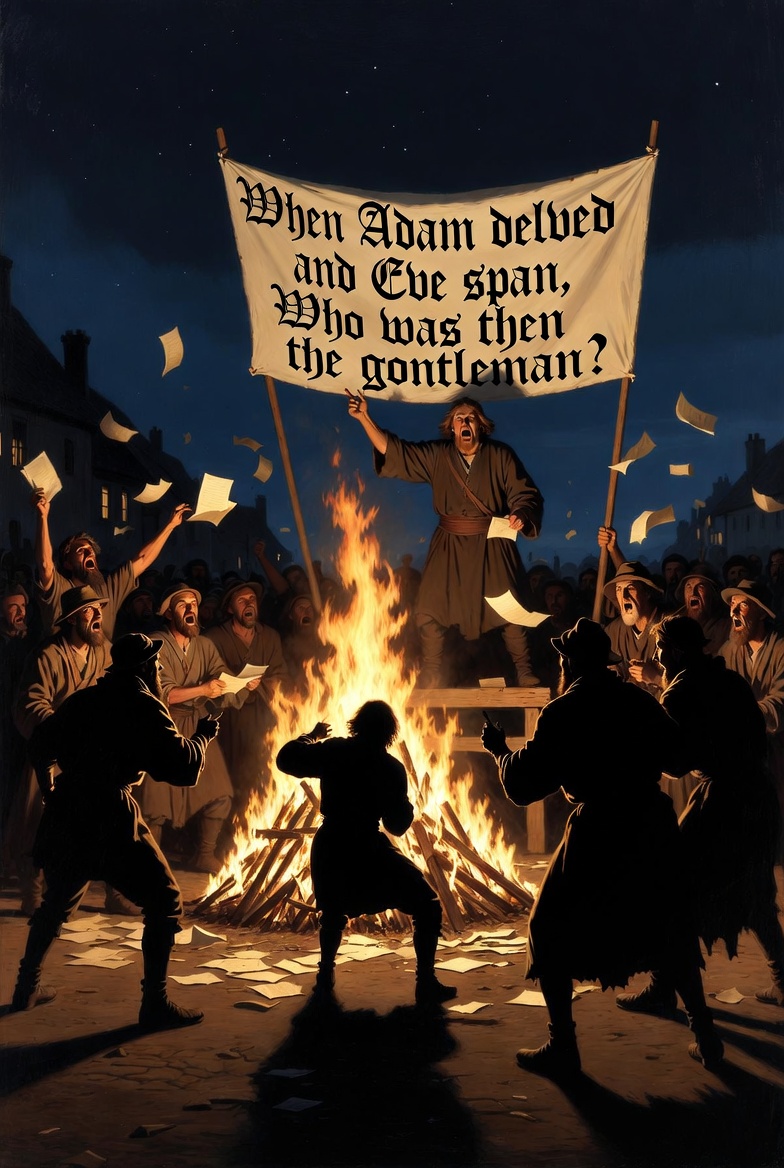 Tragedy balanced it. Executions were brutal. Families lost breadwinners. The revolt highlighted deep class wounds that festered for centuries, influencing later movements like the Levellers in the English Civil War.
### Why This Matters: The Revolt's Enduring Echoes
The Peasants' Revolt wasn't a "success" by body count or charters kept. Most promises evaporated, and reprisals killed hundreds more. But it planted seeds. It proved common people could force the powerful to listen, even a king. It challenged the idea that hierarchy was eternal. In English history, it stands as the first major popular challenge to authority, predating the Civil War and Chartists by centuries. Its legacy whispers in modern notions of rights, fair taxation, and the power of collective voice.
Scholars debate numbers and motives, but the core endures: ordinary folks, fed up with extraction, organized rapidly and struck at symbols of power. They mixed idealism (egalitarianism) with pragmatism (targeted demands). Betrayal and superior force ended it, but the memory endured in folklore and ballads.
### Applying the Fire: How the 1381 Revolt Fuels Your Modern Victory
From that Essex spark on May 30, 1381, extract raw principles: recognize intolerable burdens, organize with discipline, confront power strategically, hold moral high ground, and persist beyond initial setbacks. Here's how this translates uniquely to your individual life today—no vague affirmations, but a battle-tested framework against modern "serfdoms" like soul-crushing routines, financial traps, toxic environments, or self-doubt bureaucracies.
**Specific Bullet-Point Benefits for Your Life:**
- **Spot the Poll Tax Early:** Just as villagers saw repeated taxes as unsustainable extraction, audit your life for "hidden tolls"—endless scrolling draining focus, subscriptions bleeding finances, or relationships demanding emotional labor without reciprocity. Benefit: You reclaim 10-20 hours weekly by canceling three energy vampires, redirecting to high-value pursuits like skill-building that compounds like post-plague wage gains.
- **Forge Alliances Across "Classes":** Rebels united yeomen, artisans, and laborers. In your world, connect mentors, peers, and juniors for mutual support networks. Benefit: A personal "revolt council" that provides accountability, ideas, and opportunities, turning isolation into accelerated progress (e.g., one contact lands a better gig, another shares resources).
- **Target Symbols, Not Random Mayhem:** Rebels burned tax rolls, not villages indiscriminately. Apply by ruthlessly eliminating specific bad habits or systems (e.g., delete doom-scroll apps entirely) rather than vague "be better." Benefit: Precise strikes create momentum without burnout, yielding measurable wins like doubled productivity in 30 days.
- **Negotiate from Strength with Poise:** Richard's Smithfield calm disarmed chaos. Face conflicts (boss, family, self) with prepared demands and fallback charisma. Benefit: You secure raises, boundaries, or personal truces that stick, avoiding escalation while advancing your position.
- **Embrace the "World Turned Upside Down" Mindset:** Ball's question flipped hierarchy. Question your assumptions—why accept default career paths or lifestyles? Benefit: Breakthrough innovations in your routines, like unconventional side hustles that outpace traditional grinding.
- **Prepare for Reprisals and Persist:** Promises were broken, but change lingered. Build resilience for setbacks. Benefit: Long-term erosion of bad patterns, leading to freer, more autonomous living within 6-12 months.
### Your Unique "Fobbing Spark" 7-Day Ignition Plan: Defy, Organize, Strike, Hold
This isn't another self-help regurgitation. It's a revolt simulator—quick (under 2 hours daily), detailed, creative, and anti-generic. Use a private "charter scroll" (notebook or encrypted app) to track. No apps promising miracles; this leverages historical defiance for asymmetric personal gains.
**Day 1: The Fobbing Audit (Recognition Phase)**
List your top 3 "poll taxes"—specific drains (e.g., toxic commute, perfectionism loop, energy-sucking notifications). For each, calculate real cost in time/money/mood (be brutally numeric). Write John Ball-style affirmations on equality: "When Adam delved... why do I bow to this?" Burn or delete a symbolic item tied to one (old paperwork, unused subscription). End with a 10-minute walk visualizing your "village" rising.
**Day 2-3: Assemble Your Company (Alliance Building)**
Identify 3-5 allies (different "estates"—one expert, one peer, one beginner). Reach out with a specific ask/offer exchange (e.g., "Trade skill session for feedback on my project"). Draft a one-page "charter of demands" for your life: 3 non-negotiables (e.g., "No work emails after 7pm," "Weekly creative hour protected"). Share snippets for input. This creates your rebel network—unique because it's tactical barter, not vague networking events.
**Day 4: The March Prep (Strategy Session)**
Map targets: Choose one symbol to "storm" (e.g., clear desk of clutter representing mental overload; renegotiate one bill/contract). Prepare your "speech"—scripted talking points for confrontations. Practice poise: Role-play Richard at Smithfield in mirror, staying calm under pushback. Add absurdity for fun—wear something rebellious (hidden pin or silly socks) as morale boost.
**Day 5: Smithfield Strike (Execution)**
Confront one target head-on (send the email, have the talk, delete the app). Use Tyler boldness but Richard wisdom—state facts, demand specific change, offer mutual win. Log outcome immediately. Celebrate small (ale equivalent: favorite non-guilty treat). If resistance, note it as "reprisal prep."
Tragedy balanced it. Executions were brutal. Families lost breadwinners. The revolt highlighted deep class wounds that festered for centuries, influencing later movements like the Levellers in the English Civil War.
### Why This Matters: The Revolt's Enduring Echoes
The Peasants' Revolt wasn't a "success" by body count or charters kept. Most promises evaporated, and reprisals killed hundreds more. But it planted seeds. It proved common people could force the powerful to listen, even a king. It challenged the idea that hierarchy was eternal. In English history, it stands as the first major popular challenge to authority, predating the Civil War and Chartists by centuries. Its legacy whispers in modern notions of rights, fair taxation, and the power of collective voice.
Scholars debate numbers and motives, but the core endures: ordinary folks, fed up with extraction, organized rapidly and struck at symbols of power. They mixed idealism (egalitarianism) with pragmatism (targeted demands). Betrayal and superior force ended it, but the memory endured in folklore and ballads.
### Applying the Fire: How the 1381 Revolt Fuels Your Modern Victory
From that Essex spark on May 30, 1381, extract raw principles: recognize intolerable burdens, organize with discipline, confront power strategically, hold moral high ground, and persist beyond initial setbacks. Here's how this translates uniquely to your individual life today—no vague affirmations, but a battle-tested framework against modern "serfdoms" like soul-crushing routines, financial traps, toxic environments, or self-doubt bureaucracies.
**Specific Bullet-Point Benefits for Your Life:**
- **Spot the Poll Tax Early:** Just as villagers saw repeated taxes as unsustainable extraction, audit your life for "hidden tolls"—endless scrolling draining focus, subscriptions bleeding finances, or relationships demanding emotional labor without reciprocity. Benefit: You reclaim 10-20 hours weekly by canceling three energy vampires, redirecting to high-value pursuits like skill-building that compounds like post-plague wage gains.
- **Forge Alliances Across "Classes":** Rebels united yeomen, artisans, and laborers. In your world, connect mentors, peers, and juniors for mutual support networks. Benefit: A personal "revolt council" that provides accountability, ideas, and opportunities, turning isolation into accelerated progress (e.g., one contact lands a better gig, another shares resources).
- **Target Symbols, Not Random Mayhem:** Rebels burned tax rolls, not villages indiscriminately. Apply by ruthlessly eliminating specific bad habits or systems (e.g., delete doom-scroll apps entirely) rather than vague "be better." Benefit: Precise strikes create momentum without burnout, yielding measurable wins like doubled productivity in 30 days.
- **Negotiate from Strength with Poise:** Richard's Smithfield calm disarmed chaos. Face conflicts (boss, family, self) with prepared demands and fallback charisma. Benefit: You secure raises, boundaries, or personal truces that stick, avoiding escalation while advancing your position.
- **Embrace the "World Turned Upside Down" Mindset:** Ball's question flipped hierarchy. Question your assumptions—why accept default career paths or lifestyles? Benefit: Breakthrough innovations in your routines, like unconventional side hustles that outpace traditional grinding.
- **Prepare for Reprisals and Persist:** Promises were broken, but change lingered. Build resilience for setbacks. Benefit: Long-term erosion of bad patterns, leading to freer, more autonomous living within 6-12 months.
### Your Unique "Fobbing Spark" 7-Day Ignition Plan: Defy, Organize, Strike, Hold
This isn't another self-help regurgitation. It's a revolt simulator—quick (under 2 hours daily), detailed, creative, and anti-generic. Use a private "charter scroll" (notebook or encrypted app) to track. No apps promising miracles; this leverages historical defiance for asymmetric personal gains.
**Day 1: The Fobbing Audit (Recognition Phase)**
List your top 3 "poll taxes"—specific drains (e.g., toxic commute, perfectionism loop, energy-sucking notifications). For each, calculate real cost in time/money/mood (be brutally numeric). Write John Ball-style affirmations on equality: "When Adam delved... why do I bow to this?" Burn or delete a symbolic item tied to one (old paperwork, unused subscription). End with a 10-minute walk visualizing your "village" rising.
**Day 2-3: Assemble Your Company (Alliance Building)**
Identify 3-5 allies (different "estates"—one expert, one peer, one beginner). Reach out with a specific ask/offer exchange (e.g., "Trade skill session for feedback on my project"). Draft a one-page "charter of demands" for your life: 3 non-negotiables (e.g., "No work emails after 7pm," "Weekly creative hour protected"). Share snippets for input. This creates your rebel network—unique because it's tactical barter, not vague networking events.
**Day 4: The March Prep (Strategy Session)**
Map targets: Choose one symbol to "storm" (e.g., clear desk of clutter representing mental overload; renegotiate one bill/contract). Prepare your "speech"—scripted talking points for confrontations. Practice poise: Role-play Richard at Smithfield in mirror, staying calm under pushback. Add absurdity for fun—wear something rebellious (hidden pin or silly socks) as morale boost.
**Day 5: Smithfield Strike (Execution)**
Confront one target head-on (send the email, have the talk, delete the app). Use Tyler boldness but Richard wisdom—state facts, demand specific change, offer mutual win. Log outcome immediately. Celebrate small (ale equivalent: favorite non-guilty treat). If resistance, note it as "reprisal prep." **Day 6: Tower Purge and Ball Sermons (Internal Cleanse)**
Eliminate two more internal "traitors" (habits like procrastination triggers). Spend 20 minutes preaching to yourself—record a voice memo channeling Ball on why you deserve better. Review alliances; reinforce one. This layer adds motivational storytelling to sustain energy uniquely.
**Day 7: Charter Review and Long March Pledge (Persistence)**
Assess wins. Revise charter. Plan next "rising" (30-day escalation: bigger goal). Commit publicly (anonymous forum or trusted friend) to one reform. End by reading revolt accounts for inspiration—remind yourself change simmers even after apparent defeat.
Repeat monthly, scaling up. Track in your scroll: metrics like "serfdom reduced by X%." This plan is unique because it mirrors the revolt's arc—spontaneous spark to organized action to resilient aftermath—while being hyper-specific, low-time, and infused with historical role-play for intrinsic motivation. It avoids platitudes by demanding concrete audits, scripts, and alliances. No one else online ties medieval tax riots to your desk audit quite like this.
The May 30 spark in Fobbing reminds us: burdens accumulate until someone says "no more." Channel that. Your personal kingdom awaits—not through chaos, but calculated, united defiance. Rise, document your charter, and watch the old structures crumble in your favor. History didn't end in 1381; it equips you to rewrite your chapter starting today.
**Day 6: Tower Purge and Ball Sermons (Internal Cleanse)**
Eliminate two more internal "traitors" (habits like procrastination triggers). Spend 20 minutes preaching to yourself—record a voice memo channeling Ball on why you deserve better. Review alliances; reinforce one. This layer adds motivational storytelling to sustain energy uniquely.
**Day 7: Charter Review and Long March Pledge (Persistence)**
Assess wins. Revise charter. Plan next "rising" (30-day escalation: bigger goal). Commit publicly (anonymous forum or trusted friend) to one reform. End by reading revolt accounts for inspiration—remind yourself change simmers even after apparent defeat.
Repeat monthly, scaling up. Track in your scroll: metrics like "serfdom reduced by X%." This plan is unique because it mirrors the revolt's arc—spontaneous spark to organized action to resilient aftermath—while being hyper-specific, low-time, and infused with historical role-play for intrinsic motivation. It avoids platitudes by demanding concrete audits, scripts, and alliances. No one else online ties medieval tax riots to your desk audit quite like this.
The May 30 spark in Fobbing reminds us: burdens accumulate until someone says "no more." Channel that. Your personal kingdom awaits—not through chaos, but calculated, united defiance. Rise, document your charter, and watch the old structures crumble in your favor. History didn't end in 1381; it equips you to rewrite your chapter starting today.