On May 29, 363 CE, under the blistering Mesopotamian sun, Roman Emperor Flavius Claudius Julianus—better known to history as Julian the Apostate—led his legions across the Tigris River in a audacious assault against a Persian army arrayed before the formidable walls of Ctesiphon, the opulent capital of the Sassanid Empire. What unfolded was one of the most lopsided tactical masterpieces of late antiquity: a Roman force, facing cataphract heavy cavalry, disciplined infantry, and war elephants, suffered a mere 70 casualties while inflicting over 2,500 on the enemy. Yet this glittering victory on the battlefield masked a deeper strategic quagmire that would ultimately doom the campaign and claim Julian's life.
This isn't just dusty history—it's a raw, human saga of ambition, ingenuity, philosophical fire, and the brutal math of logistics that echoes through the ages. In a world obsessed with quick wins and viral success stories, Julian's May 29 clash at Ctesiphon offers a masterclass in bold execution amid imperfect conditions. Today, we'll immerse ourselves in the rich tapestry of this distant event—90% pure historical meat, with the motivational payoff woven in at the end. Buckle up for a journey through the dying days of pagan Rome, the rise of a visionary (if flawed) emperor, and lessons sharper than a Sassanid arrow.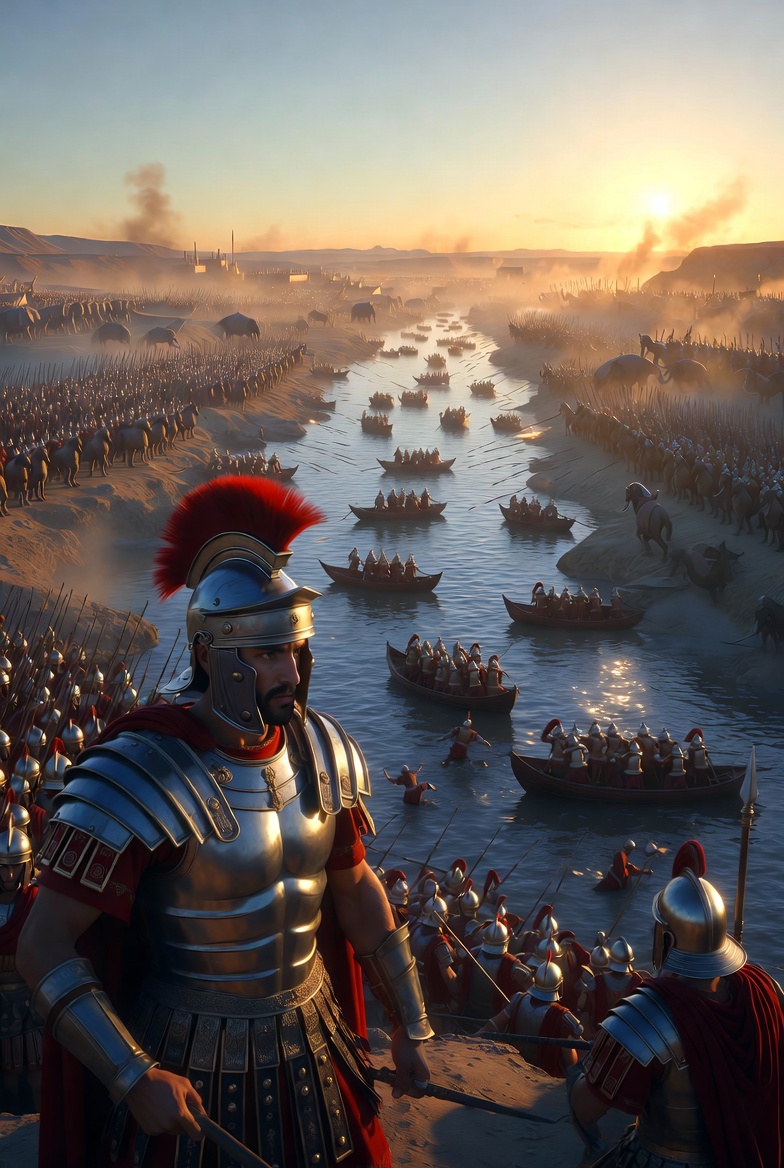 ### The World on the Eve of May 29, 363: Rome's Identity Crisis
To understand the stakes of that May morning, we must rewind. By the mid-4th century, the Roman Empire was a fractured giant. Constantine the Great had shifted the capital eastward to Constantinople, embraced Christianity, and set the stage for a religious transformation that would redefine the West. His successors, including Constantius II, continued this Christianization, often with heavy-handed purges of pagan traditions.
Enter Julian, born around 331 CE in Constantinople. Orphaned young after his family's massacre in imperial power struggles, he was raised under the watchful eye of Christian tutors but secretly devoured classical Greek philosophy, Homer, Plato, and the old gods. As a young Caesar governing Gaul, he proved a military prodigy, repelling Germanic tribes with daring campaigns while reforming administration. His soldiers adored him for sharing their hardships—marching on foot, eating simple rations, and leading from the front.
When Constantius II died in 361, Julian became sole Augustus. He immediately dropped the Christian facade, publicly sacrificing to the old gods and earning the Christian nickname "Apostate." He wasn't a blind reactionary; he envisioned a revived Hellenic-Roman synthesis: tolerant paganism infused with Neoplatonic philosophy, efficient bureaucracy, and military vigor reminiscent of Alexander the Great or Trajan. He reduced court extravagance, promoted merit over favoritism, and even attempted to create a pagan clergy to rival Christian organization. His reign was a brief, brilliant flare of intellectual and cultural rebellion against the rising Christian tide.
### The World on the Eve of May 29, 363: Rome's Identity Crisis
To understand the stakes of that May morning, we must rewind. By the mid-4th century, the Roman Empire was a fractured giant. Constantine the Great had shifted the capital eastward to Constantinople, embraced Christianity, and set the stage for a religious transformation that would redefine the West. His successors, including Constantius II, continued this Christianization, often with heavy-handed purges of pagan traditions.
Enter Julian, born around 331 CE in Constantinople. Orphaned young after his family's massacre in imperial power struggles, he was raised under the watchful eye of Christian tutors but secretly devoured classical Greek philosophy, Homer, Plato, and the old gods. As a young Caesar governing Gaul, he proved a military prodigy, repelling Germanic tribes with daring campaigns while reforming administration. His soldiers adored him for sharing their hardships—marching on foot, eating simple rations, and leading from the front.
When Constantius II died in 361, Julian became sole Augustus. He immediately dropped the Christian facade, publicly sacrificing to the old gods and earning the Christian nickname "Apostate." He wasn't a blind reactionary; he envisioned a revived Hellenic-Roman synthesis: tolerant paganism infused with Neoplatonic philosophy, efficient bureaucracy, and military vigor reminiscent of Alexander the Great or Trajan. He reduced court extravagance, promoted merit over favoritism, and even attempted to create a pagan clergy to rival Christian organization. His reign was a brief, brilliant flare of intellectual and cultural rebellion against the rising Christian tide.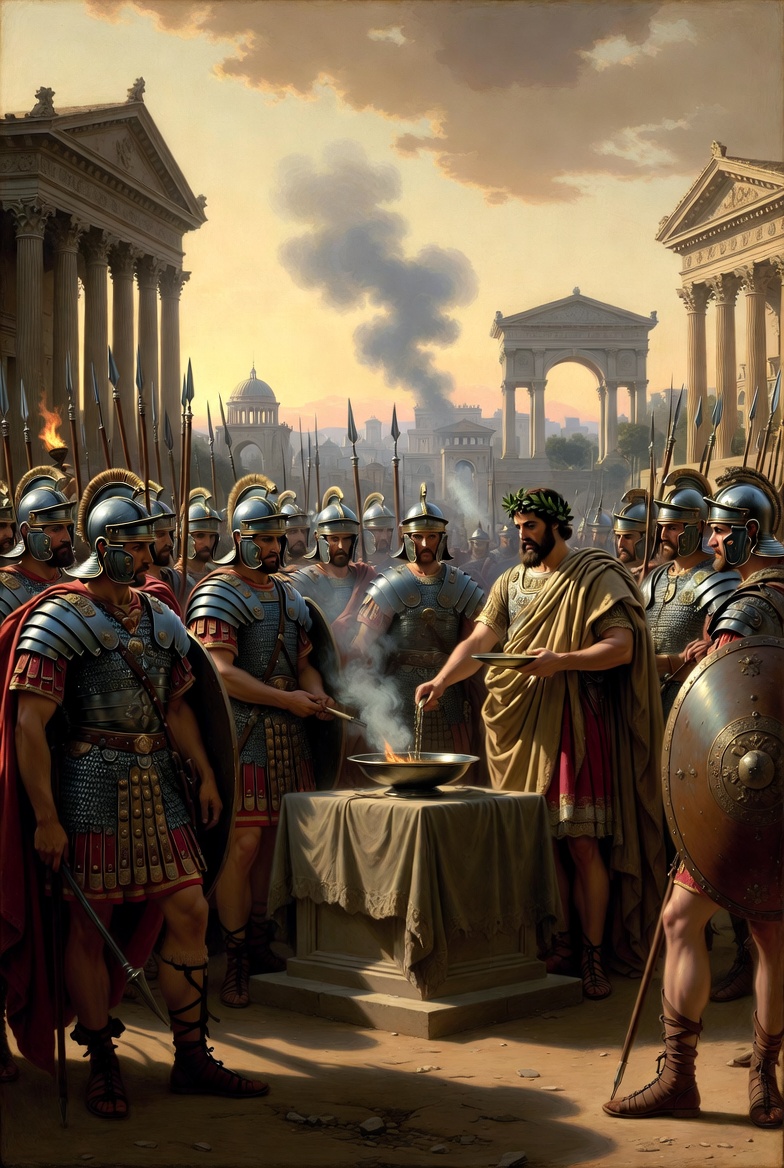 Foreign policy loomed large. The Sassanid Persians, under the formidable Shapur II (who reigned an astonishing 70 years), had been probing Roman eastern frontiers. In 359, they captured the key fortress of Amida. Julian saw this as both a threat and an opportunity for immortal glory. Rejecting Shapur's peace overtures, he planned a grand expedition modeled on Alexander's conquests. By early 363, he had assembled a massive force—estimates range from 65,000 to 90,000 men, including legions, auxiliaries, and allies from Arsacid Armenia.
### The March East: Bold Plans, Riverine Gambles, and Scorched Earth
Julian's campaign began in March 363 from Antioch. He divided his forces cleverly: a smaller detachment of about 18,000 under his cousin Procopius was sent through Armenia to link up later in a pincer movement against Shapur's main army. Julian himself led the bulk down the Euphrates, supported by a fleet of over a thousand supply ships. This riverine logistics chain was crucial—Rome's strength often lay in its ability to project power via waterways.
The advance was grueling but successful at first. Julian's troops captured several Persian strongholds with minimal losses. However, Shapur's strategy was classic: scorched earth. Persian forces burned crops, poisoned wells, and avoided direct confrontation while the main Sassanid army maneuvered. Julian, ever the romantic, burned his own boats after reaching the Tigris— a dramatic "no retreat" signal echoing Hernán Cortés centuries later. This boosted morale but committed his men to a high-stakes push.
By late May, the Romans approached Ctesiphon, a sprawling metropolis on the Tigris, successor to ancient Babylon and Seleucia. Founded by the Parthians and expanded by the Sassanids, it was a symbol of Persian might: grand palaces, lush gardens, bustling markets, and formidable defenses. Shapur II was away rallying forces, leaving a substantial garrison and field army under commanders like Merena, Surena, and others.
Foreign policy loomed large. The Sassanid Persians, under the formidable Shapur II (who reigned an astonishing 70 years), had been probing Roman eastern frontiers. In 359, they captured the key fortress of Amida. Julian saw this as both a threat and an opportunity for immortal glory. Rejecting Shapur's peace overtures, he planned a grand expedition modeled on Alexander's conquests. By early 363, he had assembled a massive force—estimates range from 65,000 to 90,000 men, including legions, auxiliaries, and allies from Arsacid Armenia.
### The March East: Bold Plans, Riverine Gambles, and Scorched Earth
Julian's campaign began in March 363 from Antioch. He divided his forces cleverly: a smaller detachment of about 18,000 under his cousin Procopius was sent through Armenia to link up later in a pincer movement against Shapur's main army. Julian himself led the bulk down the Euphrates, supported by a fleet of over a thousand supply ships. This riverine logistics chain was crucial—Rome's strength often lay in its ability to project power via waterways.
The advance was grueling but successful at first. Julian's troops captured several Persian strongholds with minimal losses. However, Shapur's strategy was classic: scorched earth. Persian forces burned crops, poisoned wells, and avoided direct confrontation while the main Sassanid army maneuvered. Julian, ever the romantic, burned his own boats after reaching the Tigris— a dramatic "no retreat" signal echoing Hernán Cortés centuries later. This boosted morale but committed his men to a high-stakes push.
By late May, the Romans approached Ctesiphon, a sprawling metropolis on the Tigris, successor to ancient Babylon and Seleucia. Founded by the Parthians and expanded by the Sassanids, it was a symbol of Persian might: grand palaces, lush gardens, bustling markets, and formidable defenses. Shapur II was away rallying forces, leaving a substantial garrison and field army under commanders like Merena, Surena, and others.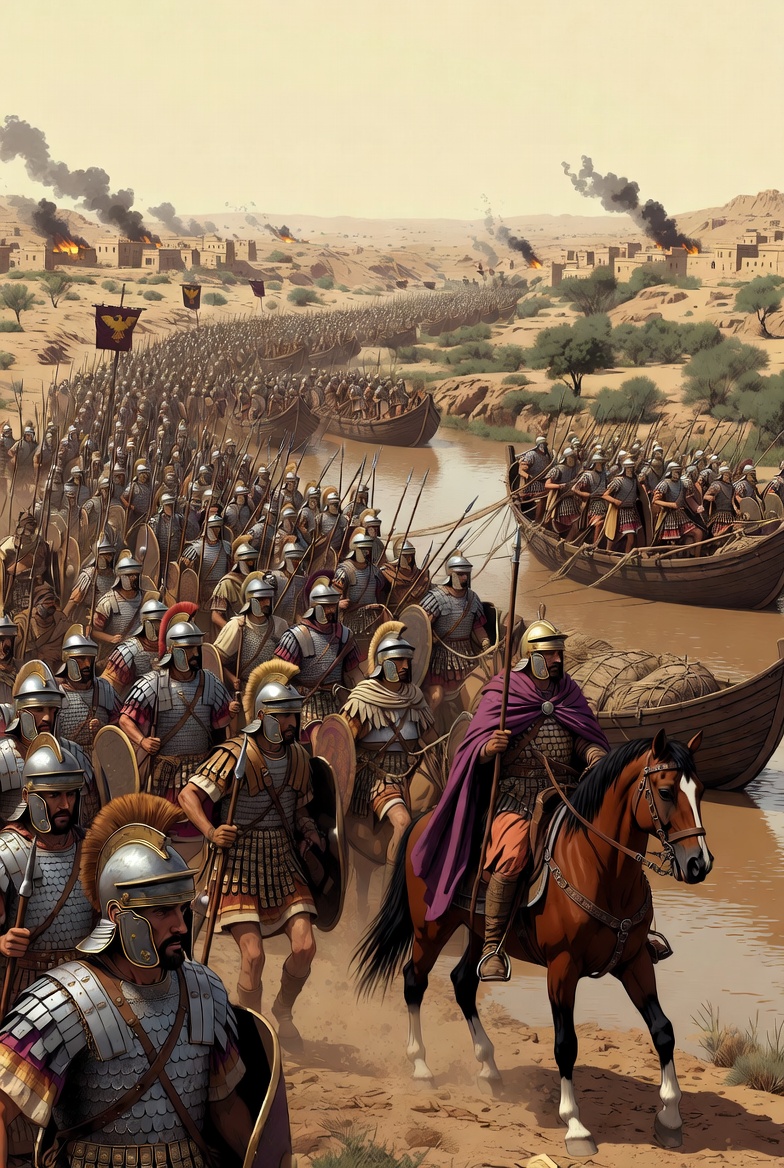 ### May 29, 363: The Assault Across the Tigris
Dawn broke with tension thick as the river mist. Julian's engineers had cleared a canal blocked by the Persians, allowing the fleet to position. The Romans needed to cross the Tigris under fire to engage the enemy arrayed on the opposite bank.
Persian forces presented a terrifying spectacle: lines of *clibanarii* (cataphracts)—heavily armored cavalry with scale or lamellar plates covering rider and horse, wielding long lances. Behind them, close-order infantry and, most intimidating, war elephants with towers bearing archers. The heat was oppressive; metal armor became ovens.
Julian orchestrated a night-to-dawn crossing. Ships ferried troops while under barrage of arrows and naphtha-filled clay pots that ignited on impact. Initial landings were chaotic, with Romans clawing for beachheads amid flaming decks and Persian charges. Julian rode among his men, shouting encouragement, plugging gaps, and embodying the philosopher-king ideal.
Once a foothold was secured, the full battle erupted. Roman infantry formed tight formations, using shields and short swords to counter the Persian cavalry's reach. Julian employed a crescent formation with cavalry wings to envelop. The sweltering conditions fatigued the heavily armored Persians more than the adaptable Romans. Elephants, initially fearsome, panicked under Roman missile fire and turned on their own lines—a common ancient battlefield comedy of errors.
The fighting was hand-to-hand and ferocious. Ammianus Marcellinus, a contemporary historian who served in the campaign, described the Romans driving back the enemy with relentless pressure. Persian lines buckled; their commanders withdrew behind Ctesiphon's walls. Roman losses: around 70. Persian: 2,500. A stunning, near-textbook victory. Some accounts claim Shapur offered territorial concessions, which Julian rejected in pursuit of total glory and the title *Parthicus*.
Yet victory tasted bittersweet. Ctesiphon loomed impregnable without siege engines (many lost with the burned fleet). Procopius's pincer force failed to appear. Shapur's main army approached. Supplies dwindled, disease spread, and forage was scarce in the devastated countryside. Julian's officers urged retreat. He reluctantly agreed, beginning a northward withdrawal along the Tigris on June 16.
### May 29, 363: The Assault Across the Tigris
Dawn broke with tension thick as the river mist. Julian's engineers had cleared a canal blocked by the Persians, allowing the fleet to position. The Romans needed to cross the Tigris under fire to engage the enemy arrayed on the opposite bank.
Persian forces presented a terrifying spectacle: lines of *clibanarii* (cataphracts)—heavily armored cavalry with scale or lamellar plates covering rider and horse, wielding long lances. Behind them, close-order infantry and, most intimidating, war elephants with towers bearing archers. The heat was oppressive; metal armor became ovens.
Julian orchestrated a night-to-dawn crossing. Ships ferried troops while under barrage of arrows and naphtha-filled clay pots that ignited on impact. Initial landings were chaotic, with Romans clawing for beachheads amid flaming decks and Persian charges. Julian rode among his men, shouting encouragement, plugging gaps, and embodying the philosopher-king ideal.
Once a foothold was secured, the full battle erupted. Roman infantry formed tight formations, using shields and short swords to counter the Persian cavalry's reach. Julian employed a crescent formation with cavalry wings to envelop. The sweltering conditions fatigued the heavily armored Persians more than the adaptable Romans. Elephants, initially fearsome, panicked under Roman missile fire and turned on their own lines—a common ancient battlefield comedy of errors.
The fighting was hand-to-hand and ferocious. Ammianus Marcellinus, a contemporary historian who served in the campaign, described the Romans driving back the enemy with relentless pressure. Persian lines buckled; their commanders withdrew behind Ctesiphon's walls. Roman losses: around 70. Persian: 2,500. A stunning, near-textbook victory. Some accounts claim Shapur offered territorial concessions, which Julian rejected in pursuit of total glory and the title *Parthicus*.
Yet victory tasted bittersweet. Ctesiphon loomed impregnable without siege engines (many lost with the burned fleet). Procopius's pincer force failed to appear. Shapur's main army approached. Supplies dwindled, disease spread, and forage was scarce in the devastated countryside. Julian's officers urged retreat. He reluctantly agreed, beginning a northward withdrawal along the Tigris on June 16.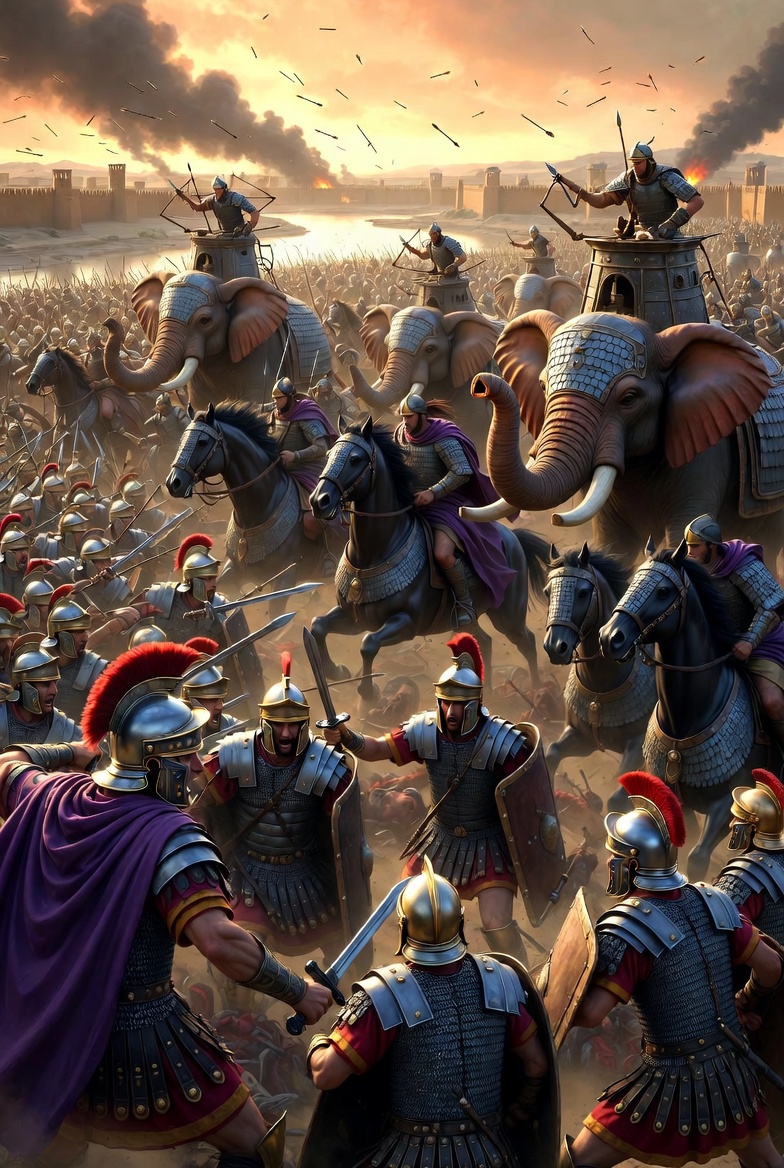 ### The Bitter Aftermath: Triumph Undone by Logistics and Fate
The retreat turned nightmarish. Persians harassed with hit-and-run tactics. On June 26 near Samarra, Julian rushed into battle without full armor and was mortally wounded by a spear (possibly Persian, possibly from a disgruntled Christian in his ranks—theories abound). He died that night at age 32, philosophizing to the end about the soul's immortality.
His successor, Jovian, negotiated a humiliating peace, ceding territories. The campaign's failure accelerated Rome's eastern vulnerabilities and cemented Christianity's dominance. Julian's pagan revival died with him. Yet his tactical brilliance at Ctesiphon endures as a testament to audacity, leadership, and adaptability.
Historians debate Julian endlessly: visionary reformer or reckless dreamer? He embodied the classical ideal—courage, intellect, physical prowess—while navigating a transforming world. His writings, like *Against the Galileans*, reveal sharp critique of Christianity alongside genuine piety toward the old gods. The siege's details, preserved by Ammianus and others, paint a vivid picture of ancient warfare: the creak of oars, clang of armor, trumpets signaling charges, the stench of elephants and blood.
Ctesiphon itself faded over centuries, its ruins near modern Baghdad whispering of lost empires. The battle highlights timeless truths: innovation wins battles (river crossings, flexible formations), but supply lines and coordination win wars. Julian's overreliance on a single bold stroke, without perfect contingency, proved fatal.
### Applying the Ctesiphon Edge: A Unique, Anti-Self-Help Plan for Your Life
History isn't a mirror for cheap inspiration—it's a forge. Julian didn't "manifest" victory; he engineered it through preparation, risk, and presence. Here's how to channel that May 29 spirit into your daily grind, in a way no generic productivity guru peddles. This isn't vision boards or hustle culture. It's "Ctesiphon Protocol": tactical dominance amid strategic fog, embracing the philosopher-warrior's grit without the emperor's hubris. Specific, actionable, and weirdly effective because it's rooted in one chaotic river crossing.
- **Burn Selective Boats, Not All of Them**: Julian torched the fleet for commitment but lost siege capability. In your life, identify one "no-retreat" domain this week—say, a stalled career project or fitness goal—and commit irreversibly (public announcement, sunk-cost investment like hiring a coach). But retain "supply ships": backup plans, mentors, or side resources. Bullet-point your non-negotiables versus flexible assets before acting. This avoids all-or-nothing burnout plaguing modern "hustlers."
- **Cross Under Fire with Micro-Landings**: The Romans secured beachheads incrementally despite arrows. Break overwhelming goals into nightly "crossings." Each evening, list 3 micro-tactical wins for tomorrow (e.g., 20 minutes deep work before email, one networking message, one skill drill). Execute at dawn metaphorically—first thing, no excuses. Track in a simple ledger noting "casualties" (distractions overcome). Over 30 days, this compounds like legionary discipline.
### The Bitter Aftermath: Triumph Undone by Logistics and Fate
The retreat turned nightmarish. Persians harassed with hit-and-run tactics. On June 26 near Samarra, Julian rushed into battle without full armor and was mortally wounded by a spear (possibly Persian, possibly from a disgruntled Christian in his ranks—theories abound). He died that night at age 32, philosophizing to the end about the soul's immortality.
His successor, Jovian, negotiated a humiliating peace, ceding territories. The campaign's failure accelerated Rome's eastern vulnerabilities and cemented Christianity's dominance. Julian's pagan revival died with him. Yet his tactical brilliance at Ctesiphon endures as a testament to audacity, leadership, and adaptability.
Historians debate Julian endlessly: visionary reformer or reckless dreamer? He embodied the classical ideal—courage, intellect, physical prowess—while navigating a transforming world. His writings, like *Against the Galileans*, reveal sharp critique of Christianity alongside genuine piety toward the old gods. The siege's details, preserved by Ammianus and others, paint a vivid picture of ancient warfare: the creak of oars, clang of armor, trumpets signaling charges, the stench of elephants and blood.
Ctesiphon itself faded over centuries, its ruins near modern Baghdad whispering of lost empires. The battle highlights timeless truths: innovation wins battles (river crossings, flexible formations), but supply lines and coordination win wars. Julian's overreliance on a single bold stroke, without perfect contingency, proved fatal.
### Applying the Ctesiphon Edge: A Unique, Anti-Self-Help Plan for Your Life
History isn't a mirror for cheap inspiration—it's a forge. Julian didn't "manifest" victory; he engineered it through preparation, risk, and presence. Here's how to channel that May 29 spirit into your daily grind, in a way no generic productivity guru peddles. This isn't vision boards or hustle culture. It's "Ctesiphon Protocol": tactical dominance amid strategic fog, embracing the philosopher-warrior's grit without the emperor's hubris. Specific, actionable, and weirdly effective because it's rooted in one chaotic river crossing.
- **Burn Selective Boats, Not All of Them**: Julian torched the fleet for commitment but lost siege capability. In your life, identify one "no-retreat" domain this week—say, a stalled career project or fitness goal—and commit irreversibly (public announcement, sunk-cost investment like hiring a coach). But retain "supply ships": backup plans, mentors, or side resources. Bullet-point your non-negotiables versus flexible assets before acting. This avoids all-or-nothing burnout plaguing modern "hustlers."
- **Cross Under Fire with Micro-Landings**: The Romans secured beachheads incrementally despite arrows. Break overwhelming goals into nightly "crossings." Each evening, list 3 micro-tactical wins for tomorrow (e.g., 20 minutes deep work before email, one networking message, one skill drill). Execute at dawn metaphorically—first thing, no excuses. Track in a simple ledger noting "casualties" (distractions overcome). Over 30 days, this compounds like legionary discipline.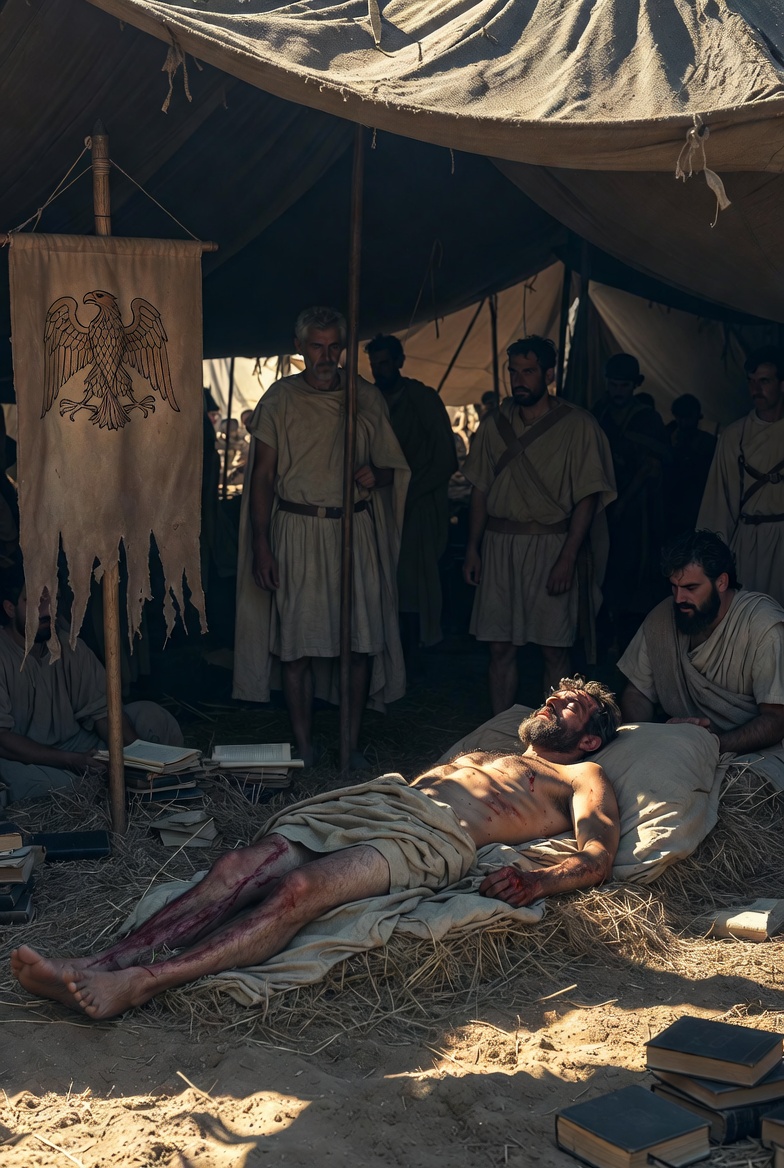 - **Form the Crescent Against Overwhelm**: Julian enveloped with wings. Map your "Persian line" of obstacles (procrastination, toxic habits, skill gaps) and attack from flanks. Use asymmetric tools: if emails drown you, flank with voice notes or delegation. If fitness plateaus, attack nutrition first. Weekly review: draw a literal crescent diagram, assign resources to weak points. This turns reactive chaos into enveloping mastery.
- **Ride the Line Like Julian**: He was everywhere, praising and correcting. Adopt "emperor rounds"—twice daily, scan your personal "front" (work, health, relationships) for 10 minutes each. Celebrate small heroics in a journal; call out drifts immediately. No vague affirmations—specific: "That report draft showed real insight; refine the data section tomorrow." This builds troop (self) loyalty without delusion.
- **Scout for the Missing Pincer**: Julian's plan failed partly due to absent reinforcements. Audit your support network quarterly. Identify "Procopius gaps"—allies not delivering—and either reinforce alliances or recruit new ones. Send clear "marching orders" via direct asks. This prevents isolated heroism turning tragic.
- **Philosophize Amid the Dust**: Julian read and reflected even on campaign. Carve 15 minutes daily for "Apostate hour": classical reading, history, or philosophy unrelated to your job. It cultivates resilience and big-picture thinking, countering algorithm-driven shallowness. No apps—just a physical book and notebook.
- **Retreat with Honor When Needed**: Post-victory, Julian withdrew strategically (initially). Define exit ramps for failing endeavors before investing. After any "battle" (project launch, habit attempt), debrief: What worked tactically? What logistics failed? Adjust without ego. This turns losses into future Ctesiphons.
**Your 7-Day Ctesiphon Sprint Plan** (unique because it's campaign-flavored, not checklist bland):
Day 1: Map your "Mesopotamia"—core challenges. Burn one symbolic boat (e.g., delete distracting apps).
Day 2-3: Execute two river crossings (morning tactical blocks). Journal like Ammianus.
Day 4: Crescent audit—flank one weakness creatively.
Day 5: Emperor rounds twice; celebrate one "70-casualty" win.
Day 6: Scout pincer—reach out to one ally.
Day 7: Full debrief. Plan next "campaign season." Measure not by summits reached but by command presence gained.
This protocol isn't about becoming emperor—it's about ruling your own chaotic frontier with Julian's fire minus his fatal overreach. On this anniversary of May 29, channel that 363 sunrise crossing. The walls of your Ctesiphon await. History doesn't repeat, but its echoes can propel you forward. Charge the river. Win the day.
- **Form the Crescent Against Overwhelm**: Julian enveloped with wings. Map your "Persian line" of obstacles (procrastination, toxic habits, skill gaps) and attack from flanks. Use asymmetric tools: if emails drown you, flank with voice notes or delegation. If fitness plateaus, attack nutrition first. Weekly review: draw a literal crescent diagram, assign resources to weak points. This turns reactive chaos into enveloping mastery.
- **Ride the Line Like Julian**: He was everywhere, praising and correcting. Adopt "emperor rounds"—twice daily, scan your personal "front" (work, health, relationships) for 10 minutes each. Celebrate small heroics in a journal; call out drifts immediately. No vague affirmations—specific: "That report draft showed real insight; refine the data section tomorrow." This builds troop (self) loyalty without delusion.
- **Scout for the Missing Pincer**: Julian's plan failed partly due to absent reinforcements. Audit your support network quarterly. Identify "Procopius gaps"—allies not delivering—and either reinforce alliances or recruit new ones. Send clear "marching orders" via direct asks. This prevents isolated heroism turning tragic.
- **Philosophize Amid the Dust**: Julian read and reflected even on campaign. Carve 15 minutes daily for "Apostate hour": classical reading, history, or philosophy unrelated to your job. It cultivates resilience and big-picture thinking, countering algorithm-driven shallowness. No apps—just a physical book and notebook.
- **Retreat with Honor When Needed**: Post-victory, Julian withdrew strategically (initially). Define exit ramps for failing endeavors before investing. After any "battle" (project launch, habit attempt), debrief: What worked tactically? What logistics failed? Adjust without ego. This turns losses into future Ctesiphons.
**Your 7-Day Ctesiphon Sprint Plan** (unique because it's campaign-flavored, not checklist bland):
Day 1: Map your "Mesopotamia"—core challenges. Burn one symbolic boat (e.g., delete distracting apps).
Day 2-3: Execute two river crossings (morning tactical blocks). Journal like Ammianus.
Day 4: Crescent audit—flank one weakness creatively.
Day 5: Emperor rounds twice; celebrate one "70-casualty" win.
Day 6: Scout pincer—reach out to one ally.
Day 7: Full debrief. Plan next "campaign season." Measure not by summits reached but by command presence gained.
This protocol isn't about becoming emperor—it's about ruling your own chaotic frontier with Julian's fire minus his fatal overreach. On this anniversary of May 29, channel that 363 sunrise crossing. The walls of your Ctesiphon await. History doesn't repeat, but its echoes can propel you forward. Charge the river. Win the day.