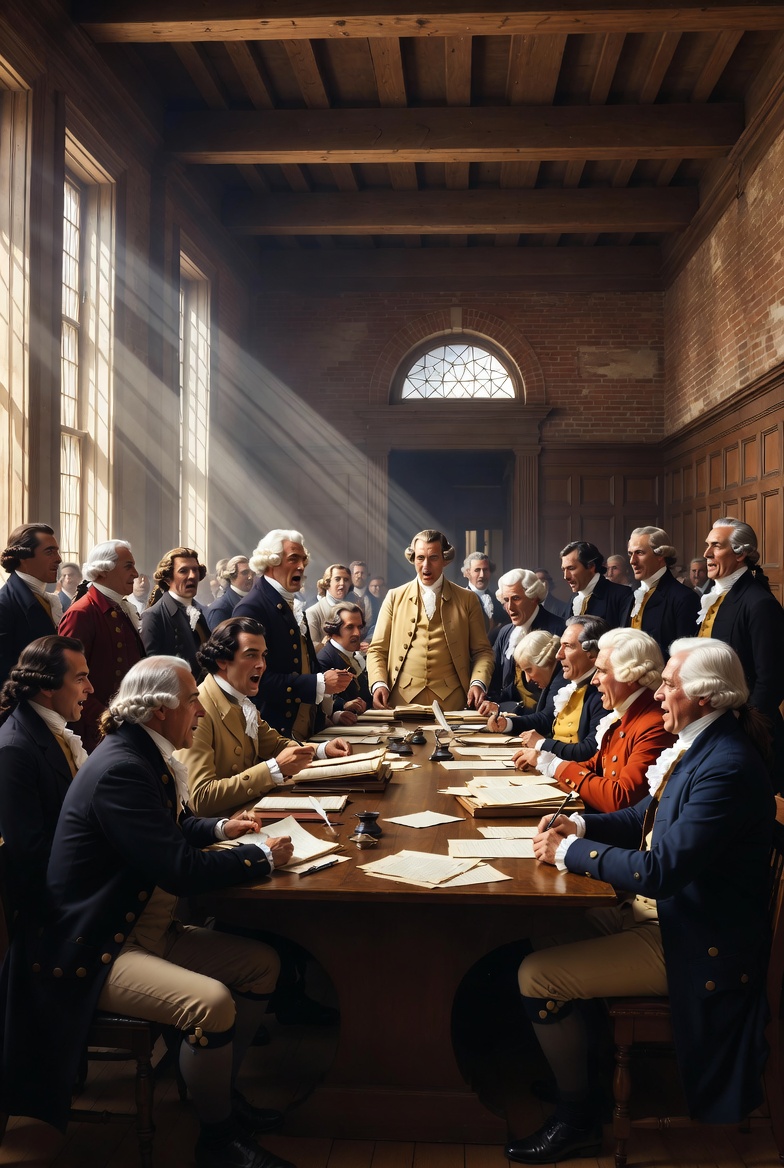



On a rainy, gaslit Monday evening in London on October 26, 1863, a dozen gentlemen walked out of the autumn chill and into the Freemasons’ Tavern on Great Queen Street. They wore wool waistcoats, carried heavy umbrellas, and took seats around a mahogany table under clouds of pipe smoke and the clatter of pewter tankards.
They did not assemble to draft an imperial treaty, fund an expedition across the Atlantic, or debate prime ministers. They gathered because grown men across the British Isles could not kick a pig’s bladder across a patch of grass without an all-out brawl breaking out over the definition of reality itself.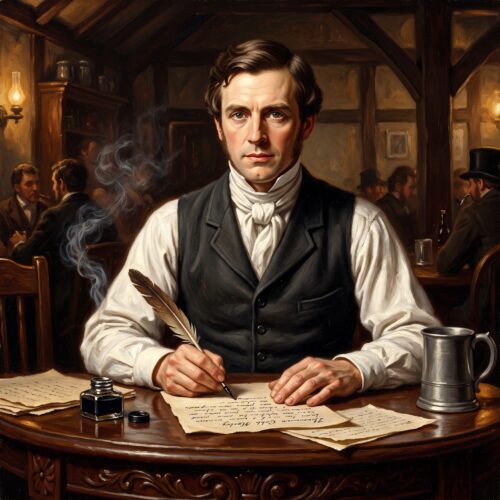
Up until seven o’clock that evening, the game known as “football” was a violent, lawless, localized fever dream. If you lived in Rugby, the sport was an aggressive melee where carrying the ball and deliberately kicking an opponent in the shins—a proud tradition formally dubbed “hacking”—was considered essential character development. If you attended Eton or Westminster, running with the ball in your arms was an unspeakable vulgarity, but kicking players in the kneecaps was still negotiable depending on the referee’s temper. If Charterhouse played Harrow, players spent twenty minutes arguing about boundary lines, ten minutes chasing a ball through mud, and forty minutes nursing contusions from unprovoked assault.
The sport was everywhere, but it was impossible to play outside of an insular clan because nobody agreed on the rules of engagement.
Sitting near the head of that tavern table was a thirty-two-year-old solicitor from Barnes named Ebenezer Cobb Morley. Morley was not an aristocratic sporting icon; he was a working lawyer who rowed on the Thames and played informal matches on Barnes Common. He had grown profoundly exhausted by the constant bickering, tribal fragmentation, and arbitrary violence that derailed every Saturday afternoon.
Morley understood a fundamental truth that applies directly to the modern human condition: you cannot build an enduring game if every player operates on a conflicting operating system.
That night, Morley pulled out his drafts, took control of the room, and formed the Football Association. Over the next six contentious meetings, he forced a room of stubborn, bruised traditionalists to agree on a single, binding code. In doing so, he eliminated “hacking,” banned carrying the ball in open play, defined offside, and launched what would eventually become a multibillion-dollar global religion played across two hundred nations by over three billion human beings.
The forgotten showdown of October 26, 1863, wasn’t just about an English tavern game. It is the historical blueprint for how a clear set of self-imposed constraints can transform chaotic energy into unstoppable momentum.
Part I: The Lawless Mud of Victorian Free-for-Alls
To comprehend the madness Ebenezer Morley faced on October 26, 1863, one must dismantle any romantic notions of Victorian gentility. Middle-nineteenth-century English football was effectively organized street fighting thinly disguised as exercise.
For centuries, “folk football” or “mob football” swept through English villages on Shrove Tuesday. Towns played entire neighboring parishes across open fields, rivers, and churchyards. There were virtually no rules. If an opposing butcher tripped you into a gravel ditch, you got up and threw him into a millpond. Hundreds of men surged through streets, shattering shop windows, breaking limbs, and leaving towns boarded up like an approaching hurricane. Royal edicts banning the game were issued by Edward II, Edward III, Henry IV, and Elizabeth I—all to zero effect. The human animal desperately wanted to play, but without a framework, the animal defaulted to demolition.
When public schools adopted football in the early nineteenth century, they attempted to civilize it, but only succeeded in creating localized cults. Each institution became an island:
- Rugby School worshipped brute force. Players could catch the ball, sprint across the pitch, and violently hack incoming defenders on their shins to knock them to the ground.
- Eton College favored an intricate, tight dribbling contest with zero handling, focusing on tight close-control maneuvers through dense scrums known as “the wall.”
- Westminster and Charterhouse had limited yard space consisting of paved brick cloisters. If a player was tackled violently onto cobblestones, someone left with a fractured skull. Naturally, their game evolved with quick passing and footwork, expressly outlawing vicious tackles.
The crisis arrived when young men left their boarding schools and went out into the wider world. When alumni settled in London, established suburban athletic clubs, or entered university, they wanted to play.
The result was unplayable friction. A match between Barnes and Blackheath required two hours of pre-game bickering under a drizzling sky just to establish whether tackling a man by the cravat was legal. Halfway through the game, an Eton boy would yell that someone was using their hands, a Rugby boy would retaliate by booting the complainant in the tibia, and the afternoon dissolved into bruised resentment.
The game had enormous kinetic energy, boundless passion, and zero leverage. It was choked by ambiguity.
Part II: Ebenezer Cobb Morley and the Barnes Ultimatum
Enter Ebenezer Cobb Morley.
Born in Hull in 1831, Morley moved to the London suburb of Barnes in 1858. He was an avid sportsman, founding the Barnes Football Club in 1862 and serving as its captain. Every weekend, Morley laced up his leather boots and experienced the exact same frustration: wasted potential. Players spent more time litigating disputes than executing strategy.
In early 1863, Morley decided to stop whining and start writing. He picked up his fountain pen and sent a scathing, pragmatic letter to Bell’s Life in London, the preeminent sporting newspaper of the British Empire.
Morley’s argument was deceptively simple: If cricket had the Marylebone Cricket Club to enforce universal laws, why should football remain an ungoverned riot? He pointed out that football would forever remain a trivial, squabbling pastime unless the clubs agreed on a universal, written standard.
He closed his letter with an open challenge to all prominent clubs and schools: show up at the Freemasons’ Tavern on Great Queen Street on the evening of October 26, 1863, and write the rules of modern competition.
Part III: The Tavern War of October 26, 1863
When the clock struck 7:00 PM on October 26, representatives from eleven major football clubs and London sporting institutions had taken their seats. The roster read like a roll call of mid-Victorian society: Barnes, Civil Service, Crusaders, Forest of Leytonstone (later the Wanderers), N.N. (No Names) of Kilburn, Crystal Palace, Blackheath, Kensington School, Perceval House, Surbiton, and the War Office.
Morley had not merely called a meeting; he had laid a strategic ambush for chaos.
First, he didn’t allow the meeting to degenerate into an open-ended debate on theory. He immediately moved to establish a formal governing entity: The Football Association. Arthur Pember of Kilburn was nominated and elected President, while Morley took the pivotal position of Honorary Secretary, ensuring he would hold the pen that drafted the text.
Second, Morley introduced a working draft of rules derived primarily from the Cambridge Rules of 1848, which favored footwork, passing, and sportsmanship over brute physical damage.
That was when the real war began.
The room immediately split down the middle. On one side stood Morley, Pember, and the advocates of technical skill, flowing movement, and universal participation. On the other side stood Francis Maule Campbell, the aggressive, unyielding representative of the Blackheath Club.
Campbell was a true believer in the cult of violence. He championed two fundamental pillars: handling the ball and hacking.
To modern ears, “hacking” sounds like a colloquial slang term for a clumsy trip. In 1863, it was a deliberate, bone-crunching tactic where an opposing player kicked the runner full-force in the shins to strip the ball or stop his advance. Campbell considered shin-kicking the absolute bedrock of British masculinity.
Campbell stood up in the Freemasons’ Tavern and delivered an impassioned, belligerent defense of hacking:
“Hacking is the true football! If you do away with it, you will do away with all the pluck and courage of the game, and I won’t give twopence for it. If you abolish hacking, you will bring in a lot of Frenchmen who would beat you with two weeks’ practice!”
The room sat in dead silence. Campbell had framed the debate in the most inflammatory way possible: eliminate bone-breaking shin kicks, and you are weak, soft, unmanly, and unpatriotic.
Most leaders confronted with that kind of blustering cultural defense fold. They create a committee. They attempt a compromise that pleases everyone and accomplishes nothing—a watered-down rulebook where hacking is permitted on Thursdays between the eighteen-yard box and the center circle.
Ebenezer Morley refused to budge. He understood that a system with internal contradictions cannot scale. You cannot build a fluid, international, technical game if players are actively permitted to shatter each other’s fibulas.
Morley held his ground across subsequent meetings, forcing vote after vote. By December 1863, the FA voted Campbell down: hacking was banned, running with the ball in two hands was forbidden, and tripping was made illegal.
Campbell threw a tantrum, gathered his papers, and stormed out into the London night, pulling the Blackheath Club out of the FA forever. Campbell and his disciples would later go on to form the Rugby Football Union in 1871, establishing rugby as an entirely separate sport.
By refusing to compromise on his foundational principles, Ebenezer Morley did not destroy the sport; he unleashed it.
Freed from localized violence and arbitrary rules, Association Football exploded. It was lightweight, accessible, simple to learn, and infinitely scalable. It spread to the factories of Manchester, the docks of Liverpool, the railways of South America, and the ports of continental Europe. Today, over 250 million people play it regularly, and more than half the human population on Planet Earth tunes in to watch the World Cup final.
All because one stubborn lawyer sat in a tavern on October 26, 1863, and drew a line in the sand between productive discipline and meaningless friction.
Part IV: The Modern Shin-Kicking Crisis
Now, strip away the Victorian tweed, the gas lamps, and the leather boots. Look directly at your own everyday life.
Most people today are living in the exact state of pre-1863 British football.
You have energy, ambition, raw talent, and a desire to win. But your daily existence is an ungoverned, exhausting riot:
- Your operating system is fractured: You wake up with one set of rules, read three productivity hacks on LinkedIn at noon, adopt a contradictory diet at dinner, and wonder why by Friday you feel mentally battered and accomplish nothing.
- You let “hacking” drain your momentum: You tolerate people, habits, meetings, notifications, and micro-obligations that kick you directly in the shins every thirty seconds under the excuse that “that’s just how the grind works.”
- You mistake violent struggle for progress: Like Francis Maule Campbell, you convince yourself that if a day doesn’t involve suffering, friction, exhausted conflict, and raw pain, you aren’t doing “real work.” You confuse being kicked in the shins with moving the ball downfield.
The great self-help machine on the internet tells you to wake up at 4:00 AM, drink ice-cold mushroom water, visualize a vision board, write thirty journal entries, and run through a brick wall of sheer willpower.
That is not a system; that is just modern hacking. It’s glorifying the bruise while remaining stuck in the mud.
What Ebenezer Cobb Morley proved on October 26, 1863, is that breakthrough performance is not born from greater physical aggression—it is born from codifying non-negotiable boundaries that eliminate pointless friction.
If you want to dominate your arena, you do not need more motivation. You need a codified standard.
Part V: The 1863 Codification Protocol: A Radical Blueprint for Personal Leverage
This is not a generic “manage your time” checklist. This is the 1863 Codification Protocol—an operational framework designed to dismantle internal chaos, expel unnecessary pain, and scale your personal impact.
- Identify Your “Hacking” Subsidies
Francis Maule Campbell argued that without physical abuse, the game had no grit. Modern professionals make the exact same excuse for bad operational habits.
- Write down the three daily activities that drain 80% of your emotional energy without producing a single tangible result.
- Identify the meetings where people argue about definitions instead of executing.
- Identify the notifications, digital interruptions, and open loops that kick your focus in the shins every twelve minutes.
- Cut them entirely. Do not try to “manage” them or make them slightly more polite. Ebenezer Morley did not restrict hacking to the second half; he eradicated it from the rulebook.
- Establish “Tavern Rules” (The 5 Universal Constraints)
You cannot run a high-performance life on thirty complex variables. The original FA rulebook had only thirteen short, unmistakable laws. Write down five concrete operating laws for your week:
- Define your absolute start and stop times for work.
- Define what constitutes a completed daily victory (a single “goal”), rather than measuring yourself by how many hours you stood in the mud.
- Outlaw retroactive guilt. If an action does not score points, advance your mission, or restore your health, it is outside the field of play.
- Mandate one single source of truth for your tasks. Stop scattering obligations across sticky notes, mental checklists, Slack messages, and unread emails. If it isn’t on the official board, the match does not count it.
- Establish a radical offside rule: if an opportunity requires you to violate your core standard to reach it early, you are out of position. Let it go.
- Evict the Campbell Faction
When Morley announced that the FA was banning violence, the purists walked out. That was not a catastrophe; it was the greatest filtering event in sports history.
- The moment you establish clear personal boundaries—saying “no” to late-night emergency demands, declining low-leverage social obligations, demanding clarity from collaborators—certain people will tell you that you are losing your edge.
- Recognize these voices for what they are: Francis Maule Campbell screaming that pain equals value.
- Let them leave the room. When you stop subsidizing other people’s chaos, you create space for people who know how to play a clean, fast, beautiful game.
- Build for Cross-Border Portability
Morley designed rules that could be understood by a schoolboy in London, a factory hand in Sheffield, and an immigrant in Buenos Aires.
- Simplify your routines so radically that you can execute them anywhere: in a luxury hotel room, in a delayed airport terminal, on a bad health day, or during personal upheaval.
- If your routine requires four specialty supplements, seven distinct apps, ninety minutes of absolute silence, and perfect ambient lighting, your system is fragile. It will collapse under pressure.
- Make your core habits as universally transportable as a round leather ball: thirty minutes of rigorous movement, two hours of deep creative output, zero compromise on recovery.
- Play the Ball, Not the Man
Folk football focused on physically assaulting the person carrying the ball. The FA shifted the entire focus of the universe to the ball itself.
- When obstacles, conflict, or setbacks occur, stop attacking personalities—including your own.
- Depersonalize friction. Look at problems as structural bottlenecks on the pitch, not moral failings of the people involved.
- Ask: “What is the structural constraint in this system?” rather than “Who is to blame for this mess?” When you focus entirely on moving the ball forward, the petty drama of the field vanishes.
The Verdict of Great Queen Street
History does not remember the names of the eleven men who spent sixty minutes yelling in the mud outside of Harrow on October 25, 1863. It remembers the thirty-two-year-old solicitor who put on dry clothes, walked into a London tavern on October 26, pulled out a clean sheet of paper, and dared to ask a messy world to agree on a higher standard.
You are not failing because you lack effort. You are exhausted because you are playing an uncodified game where everyone—including your own subconscious—is allowed to kick you in the shins.
Put down the pipe smoke. Silence the arguments. Write your rules, ban the hacking, and kick the game off on your terms.
For a fascinating look at the actual meeting in London that forever divided the sporting world and codified the rules of modern play, check out The Birth of Modern Football’s Governing Body. This short visual overview illustrates how the historic gathering at the Freemasons’ Tavern on October 26, 1863, formally drew the line between rugby and association football to create the world’s most popular game.
Share: