
On the morning of August 9, 378, the fifth of the Ides of August by the Roman calendar, Emperor Valens ordered his standards forward from a fortified camp in the suburbs of Adrianople. The baggage train and imperial treasury stayed behind under guard inside the city walls. The men who marched out that day—veterans of the eastern armies, units pulled from Syria, imperial scholae, auxiliaries, and the remnants of the Thracian field forces—would not return as an army. By nightfall two-thirds of them were dead. The emperor himself vanished into the chaos, his body never recovered. Ammianus Marcellinus, the last great Latin historian of antiquity and a man who spoke with survivors, recorded that the disaster ranked with Cannae. It remains one of the most complete military collapses of the late Roman state.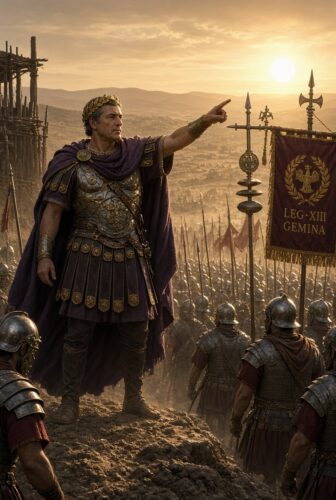
The road to that plain began two years earlier. In 376 the Thervingi Goths, pressed by the westward movement of the Huns, appeared on the north bank of the Danube and asked for admission into the empire. Emperor Valens, then campaigning against the Persians, granted them permission to cross as foederati—settled allies who would farm the land and supply recruits. Roman officers on the frontier, notably Lupicinus and Maximus, turned the crossing into an opportunity for enrichment. They demanded the surrender of weapons, took Gothic children as hostages and slaves, and sold food at ruinous prices. Famine followed. When Gothic leaders Alavivus and Fritigern were invited to a banquet that was in reality an assassination attempt, the trap failed. The Goths rose. They defeated the local Roman forces near Marcianople, then fought a drawn battle at Ad Salices in 377. For two years the conflict simmered across Thrace while Valens remained in the east.
By the spring of 378 Valens finally turned west. He reached Constantinople on 30 May, appointed the experienced Sebastianus to reorganize the Thracian troops, and began concentrating forces at Melantias. Sebastianus scored a sharp success with a mobile force of two thousand men, ambushing Gothic foraging parties and recovering so much booty that the city and surrounding plains could scarcely hold it. Fritigern responded by concentrating his people—men, women, children, wagons, and herds—near Kabyle and then moving south. The Greuthungi under Alatheus and Saphrax, accompanied by Alan and Hunnic cavalry, operated separately, foraging at a distance. Roman scouts reported only about ten thousand Goths visible. Valens, already jealous of the successes his western colleague Gratian was winning against the Lentienses in Gaul, decided the numbers favored an immediate strike before Gratian’s reinforcements arrived.
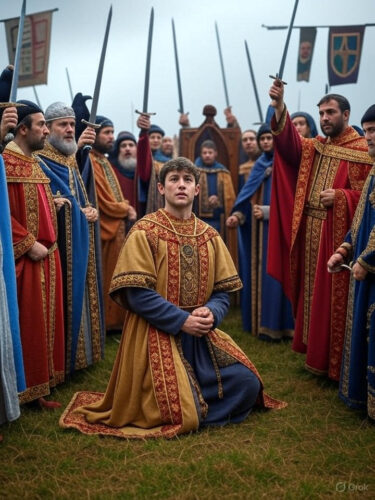
On 6 August the emperor moved to Adrianople and fortified a camp. On 8 August Richomeres arrived from the west bearing a letter that urged caution and the arrival of the Gallic army. A council followed. Some officers, influenced by Sebastianus, pressed for battle. Victor, a Sarmatian cavalry commander known for prudence, argued for waiting. Valens chose glory. He rejected a Gothic offer of peace that would have granted the Goths Thrace in exchange for lasting service. A Christian priest sent by Fritigern the night before and again on the morning of the ninth was received but refused. The delay, Ammianus later understood, was deliberate: Fritigern needed time for the Greuthungi cavalry to return.
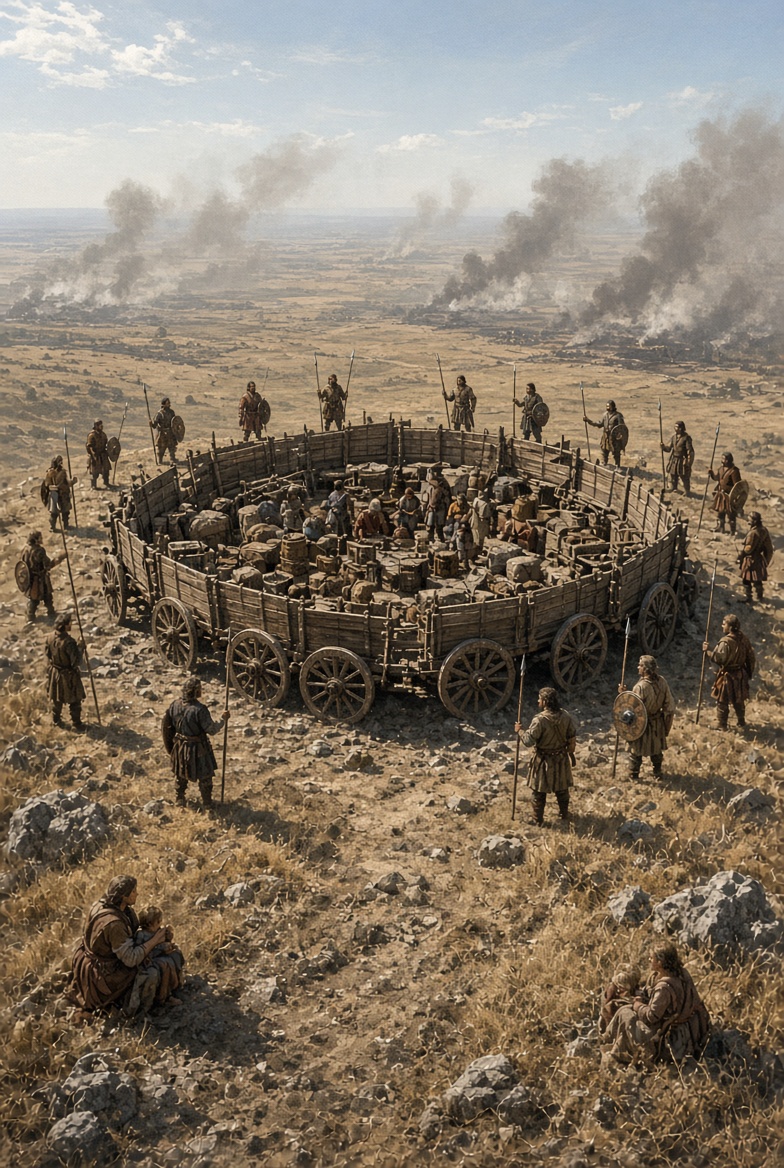
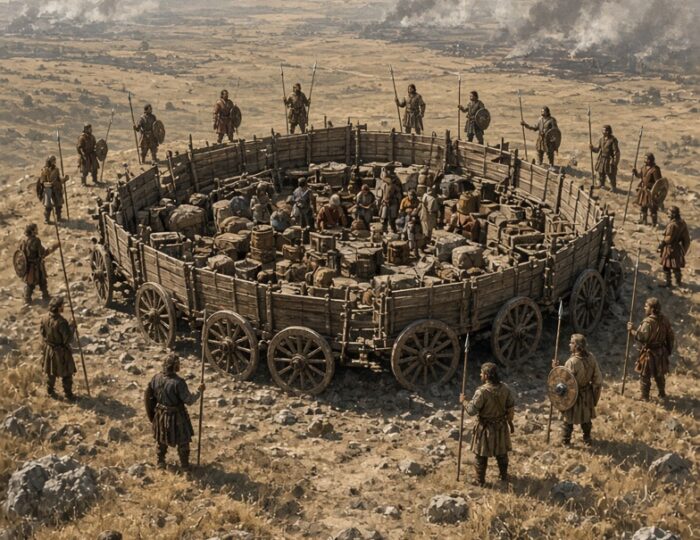
The Roman army left Adrianople around dawn on the ninth. The march covered roughly eight Roman miles across broken ground under a punishing midsummer sun. Men carried arms and armor; water was scarce; the heat rose steadily. By the time the Gothic wagon circle came into view on a ridge or low hill, the Romans were already thirsty, tired, and strung out. The Goths had drawn their wagons into a defensive laager that sheltered non-combatants and supplies. Smoke from deliberately burned fields drifted across the approaches. The Roman line formed with heavy infantry in the center, light troops and archers in front, and cavalry on both wings. The Gothic host answered with the war cry Ammianus called a “fierce and hideous yell.”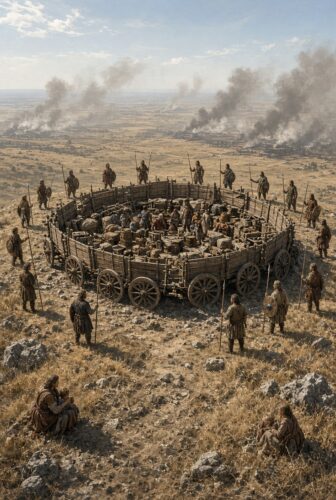
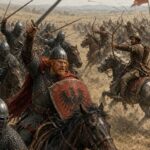
What followed was not a set-piece engagement carefully controlled by either side. Roman cavalry on the right under Bacurius advanced too soon and without proper support; they were driven back. The Roman left wing pushed hard toward the wagons and for a moment seemed to gain ground. Then the Greuthungi cavalry—perhaps ten thousand horsemen including Alans and Huns—swept in from the distance where they had been foraging. The Roman left collapsed under the sudden pressure. The Gothic infantry, previously held in check, poured down from the ridge. The Roman center found itself compressed into an ever-tightening mass. Dust rose so thick that the sky disappeared. Men could no longer raise their arms to swing a sword or draw a new one. Arrows, many of them whistling for psychological effect, found targets at point-blank range. Ammianus described the press: “the barbarians, pouring forth in huge hordes, trampled down horse and man, and in the press of ranks no room for retreat could be gained anywhere, and the increased crowding left no opportunity for escape.”
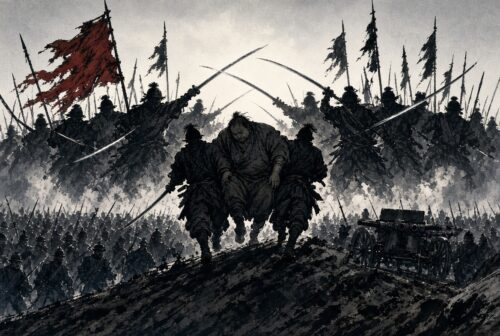
The slaughter continued until darkness. Valens, separated from his bodyguard and reduced to the company of common soldiers, was struck by an arrow. Some accounts say he was carried to a nearby farmhouse that the Goths later set on fire; others simply state that his body was never found. Among the dead were senior officers: Sebastianus, Traianus, Equitius, Valerianus, Potentius, and dozens of tribunes. Estimates of Roman losses range from ten to twenty thousand—roughly two-thirds of the force present. The Goths themselves suffered, but far less. They immediately turned on Adrianople and attempted a siege. They failed; the city walls held and a sudden thunderstorm dispersed the attackers. The Gothic War dragged on until 382, when Theodosius negotiated a new foedus that settled the Goths inside the empire as a distinct people under their own leaders.
The battle did not destroy the Eastern Empire. Constantinople remained secure. Recruiting recovered over time. Yet the loss of so many experienced units and officers left a permanent scar. The Danubian frontier never fully recovered its old density of trained manpower. Later writers, from Ammianus onward, treated Adrianople as a hinge. It demonstrated that Roman armies could still be annihilated in open battle when intelligence failed, logistics were ignored, and a commander preferred personal prestige to waiting for the full weight of available force. The Gothic cavalry’s arrival at the decisive moment became, in later military memory, a classic illustration of the danger of incomplete scouting. The wagon circle itself showed that a defensive posture, properly timed with mobile reserves held off the field, could turn an attacker’s momentum against him.
The physical details of the day remain vivid because Ammianus wrote them down while the survivors were still alive to correct him. The heat. The dust that blotted out the sun. The inability of tightly packed men to use their weapons. The emperor dying anonymously among the rank and file. The failure to recover even his body for the traditional funeral honors. These are not abstract lessons about “hubris.” They are concrete failures of information, timing, and the refusal to accept that the picture on the ground was incomplete.
That is the historical core. Everything else is application.
The outcome at Adrianople was not inevitable. Valens possessed a still-formidable army. He had warnings. He had the option of waiting a few days for Gratian’s approach. He chose speed and personal credit over completeness of force. The result was not merely a lost battle; it was the irreversible loss of the very instrument that could have recovered from a temporary setback.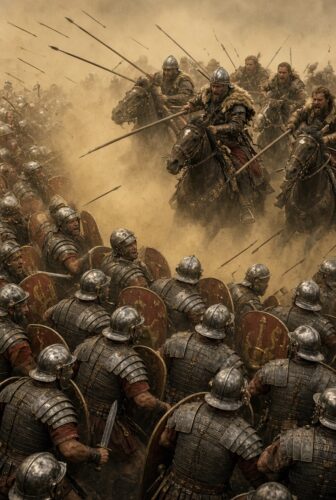
A person today benefits from that fact by treating every major decision as a potential Adrianople plain. Incomplete information is the modern equivalent of the missing Greuthungi cavalry. Rushing because someone else might claim the credit is the modern equivalent of Valens’ jealousy of Gratian. Ignoring logistics—whether of time, energy, money, or relationships—while marching in the heat is the modern equivalent of leaving the water behind in Adrianople.
Specific, non-generic applications:
– When a professional opportunity appears with incomplete data on the other party’s full resources, treat the missing pieces as the Greuthungi still out foraging. Do not engage until the reconnaissance returns.
– When personal ambition tempts an immediate public move that could be shared or delayed for better positioning, recognize the Valens impulse and deliberately insert a waiting period equal to the time it would take for a trusted second force to arrive.
– When physical or mental fatigue is already present and a high-stakes confrontation is proposed, refuse the march. The Romans arrived dehydrated and paid for it in the inability to swing a sword.
– When an opponent or competitor offers terms that look generous but come with a request for delay, examine whether the delay is buying time for their hidden strength to concentrate.
The unique plan that follows is not a list of affirmations, not a morning routine, not a vision-board exercise, and not a generic “pause and reflect.” It is a procedural sequence derived directly from the operational failures of 9 August 378. Call it the Dust Circle Protocol. It is designed to be executed in under forty-eight hours whenever a decision carries irreversible downside risk and the information picture is incomplete.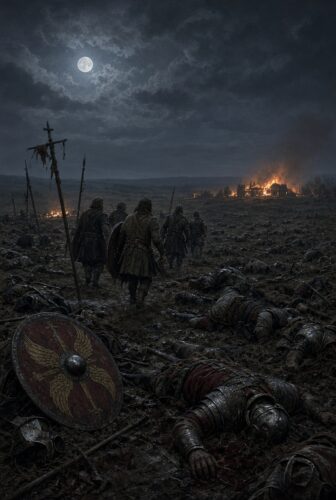
Step one: Map the visible force. Write down, in one page or less, every concrete fact currently known about the opportunity, threat, or choice. Assign each fact a confidence rating of high, medium, or low. Anything rated low is treated as a potential wagon circle—defensive and possibly concealing more.
Step two: Identify the missing cavalry. Explicitly name the one or two pieces of information that, if present, would change the decision. These are the Greuthungi. Do not proceed until a realistic plan exists to obtain them or until a hard deadline forces action.
Step three: Insert the forced delay. Regardless of external pressure, impose a minimum forty-eight-hour hold. During that hold, perform one physical action that improves logistics: sleep an extra hour, prepare a contingency resource, or move a key asset to a safer position. This is the modern equivalent of not marching eight miles in the heat without water.
Step four: Run the Richomeres test. Identify one person whose judgment you respect and who has no personal stake in the credit of the decision. Present the visible force and the missing cavalry. Ask only one question: “Would you wait?” If the answer is yes, wait.
Step five: If action remains necessary after the hold, form the third line. Before committing the main effort, designate a reserve—money, time, relationships, or alternative options—that is not committed in the first engagement. This is the Roman third line that never got the chance to act at Adrianople because the wings collapsed too fast.
Step six: After the decision is made, whether successful or not, conduct a twenty-minute debrief focused solely on the quality of the scouting rather than the outcome. Record one concrete improvement to the reconnaissance process for next time.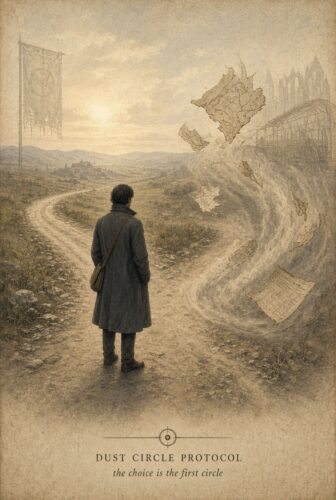
The protocol is deliberately narrow. It does not promise transformation, abundance, or enlightenment. It promises only that the next time incomplete information and personal urgency collide, the decision will not be taken in the equivalent of a dust cloud under a noon sun with the cavalry still out of sight. Valens had options. He chose the one that left his body unrecovered on a Thracian field. The same choice is available every day. The Dust Circle Protocol is the operational refusal of that choice. It is not self-help. It is the application of a single afternoon in 378 to the only battlefield that still matters: the one on which a person still has the power to refuse an unnecessary march.
Share: