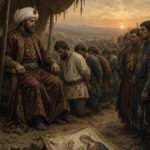

Picture a low river in late September, brown and wide and already cold at the edges. The Maritsa slides out of the Rhodopes toward the Aegean as if it has nowhere particular to be. On its right bank, a few miles west of a city the Turks already call Edirne and the older maps still call Adrianople, a Christian army has unrolled itself across the fields around a village named Chernomen. Fires are going. Horses are picketed. Men who have marched for weeks from Serres and Prilep and the Macedonian high country are eating, talking, and doing the thing armies do when they believe the enemy is still a day’s ride away: they are going to sleep.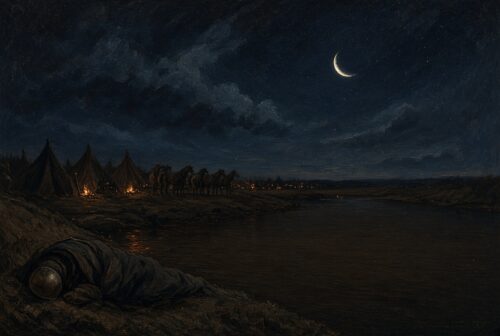
They came to surprise a capital. They will be the ones surprised.
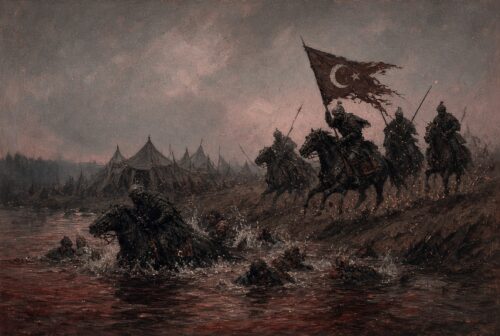
On 26 September 1371 the Ottoman frontier commanders Lala Şahin Pasha and Hacı İlbey hit that camp in the dark with a force that later storytellers would swell or shrink according to need, but that almost certainly numbered in the low thousands at most and may have been only a few hundred ghazi riders who knew the ground. By morning two Serbian rulers were dead, a generation of southern Serbian nobility was gone, the river was said to have run the color of a butcher’s apron, and the road from Thrace into Macedonia lay open in a way it had not been open since the first Turkish bands crossed the Dardanelles seventeen years earlier. The living, a monk on Mount Athos would write before the year was out, envied the dead.
That is the specific thing that happened on this date in distant history. Everything after it in the central Balkans—vassalage, the Battle of Kosovo eighteen years later, the long Ottoman afternoon that lasted into the nineteenth century—walks out of that night camp.
The Serbian Empire that rode toward Chernomen was already a house with the roof off. Stefan Dušan had died in 1355 at the height of a conquest that had made him emperor of Serbs and Greeks, master of lands from the Danube to the Gulf of Corinth. He left a son, Stefan Uroš V, whom even friendly chroniclers would remember as Uroš the Weak. The great nobles did what great nobles do when the center goes soft. They kept the titles and stopped sending the taxes. Macedonia, the real prize of Dušan’s wars, fractured into lordships that still spoke the language of the empire while acting like small kingdoms.
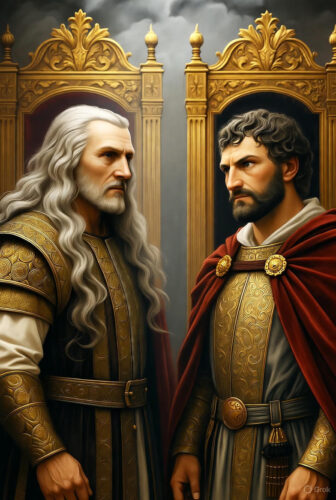
Two of those lordships belonged to brothers. Vukašin Mrnjavčević had started as a župan around Prilep in the last years of Dušan. By 1365 he had himself crowned king and co-ruler with the fading Uroš. His lands ran through Prizren, Skopje, and the Vardar country. His younger brother, Jovan Uglješa, held the more dangerous prize: Serres and the approaches to the Aegean, a despotate that looked straight at the Ottoman advance. They were not the last Nemanjić emperors. They were the men who had stepped into the vacuum and decided, late, that someone had to do something about the Turks.
The Turks had not been a Balkan problem for very long. In 1354 an earthquake cracked the walls of Gallipoli. Ottoman fighters under Süleyman Pasha walked in and did not walk out. From that European beachhead they took Demotika, then Philippopolis, then—by the late 1360s—Adrianople itself. Murad I made the captured city his European seat. The Maritsa valley, the old highway from the Thracian plain into the central Balkans, was now an Ottoman river. Bulgarian lords had already been forced into tributary arrangements. The Byzantine emperor in Constantinople was in no condition to lead anyone. Uglješa tried to build a coalition anyway. The patriarch in Constantinople was sounded. Bulgarian help was hoped for. It did not arrive in useful form. The only reliable partner was his brother.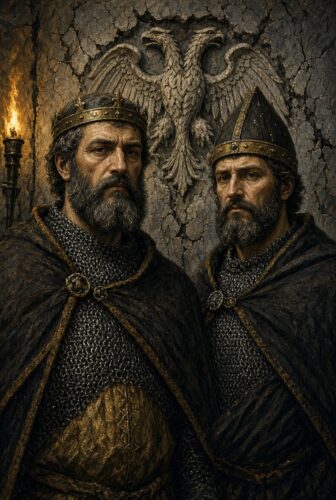
In the summer of 1371 the brothers saw what looked like a window. Murad was campaigning in Asia Minor. The Ottoman force left in Thrace was a provincial command, not the full household army. Uglješa’s plan was the correct one on paper: move fast, hit Adrianople before the sultan could recross, and throw the Turks back toward the straits while they were still a frontier nuisance rather than a settled power. Vukašin, who had been entangled that summer in the usual Serbian side-wars around Zeta and the Balšići, turned east and joined him. The combined host marched down into the Maritsa valley.
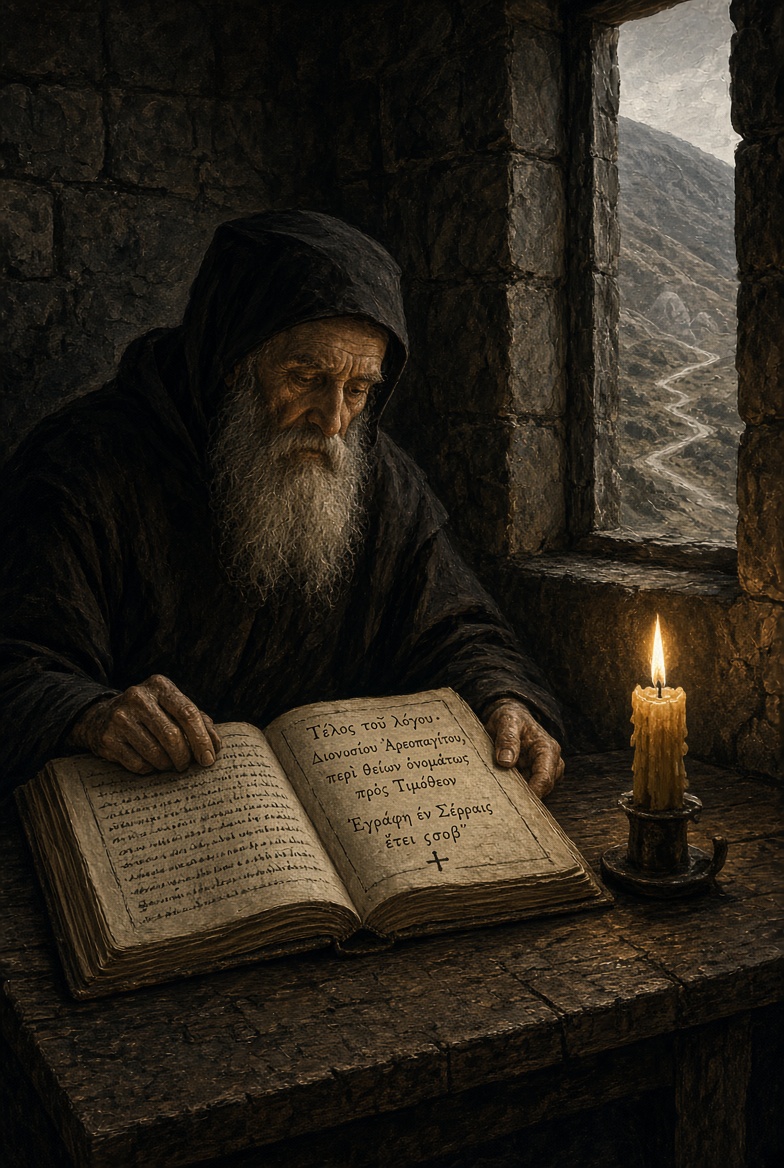
How large was it? The monk Isaiah, translating Pseudo-Dionysius on Athos and writing a colophon that reads like a funeral oration, said sixty thousand chosen troops—Serbs and Greeks and magnates. Ottoman chroniclers, writing later and building an origin myth, liked the same number on the Christian side and four thousand or fewer on their own. Modern estimates, treating medieval army figures the way they deserve to be treated, put the Serbian force closer to ten thousand and the Ottoman striking party anywhere from eight hundred to a few thousand. Even at the lower number it was a serious army for the 1370s. It was also an army that had already made the fatal assumption: that the enemy they had come to surprise was still sitting behind walls twenty miles to the east.
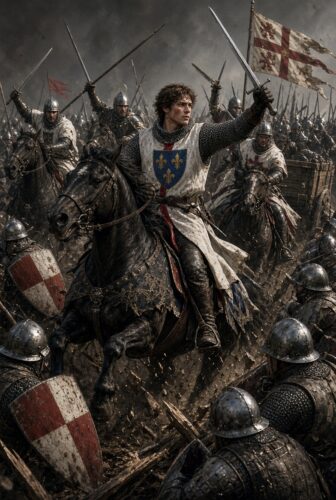
They halted at Chernomen. The village sits near the modern Greek-Bulgarian-Turkish knot of borders, on ground that looks ordinary until you remember what a river does to a routed army. There is no surviving order-of-battle, no captured correspondence, no staff officer’s complaint about pickets. What the sources agree on is the method. The Ottoman commanders did not wait to be besieged in Adrianople. They came out at night. Ghazi bands—raiders who lived by the frontier ethic of sudden violence—hit the sleeping camp. King Vukašin and Despot Uglješa were killed in the slaughter. Men who got out of their tents ran for the only obvious exit that was not toward the swords. They ran for the river. Many drowned. The Maritsa, the chronicles say, ran red. The field earned the Turkish name that stuck in later memory: Sırpsındığı, the place of the Serb rout.
Isaiah finished his translation in the wreckage of that year. He had begun the work, he wrote, in good times, when the churches of the Holy Mountain blossomed like a garden with a spring running through it. He finished it in the worst time that had ever come upon the Christians of the western lands. After the brave despot Uglješa was killed, the Ishmaelites spilled across the country like birds in the air. Bones lay unburied. Cities emptied. Famine followed the swords so closely that people said it had not been seen since the creation of the world. Wolves took what the hunger left. There was no squire and no ruler left to lead anyone. The hearts of brave men became like the hearts of women. The living envied those who had already died. Isaiah believed he was watching the seventh royal dynasty of the Serbs end. He was not far wrong. Uroš V died the same year, childless. The Nemanjić line that had built the empire was finished.
What followed was not a single conquest but a rearrangement. Vukašin’s son Marko—Marko Kraljević of the later ballads, the hero on the piebald horse—kept Prilep and became an Ottoman vassal. He would die in Ottoman service in 1395 fighting other Christians. Other Macedonian and Serbian lords made the same calculation. Tribute and cavalry service bought time. Time ran out in pieces. Ottoman columns moved into Macedonia. Drama, Kavala, and Serres fell in the years after the river. The Bulgarian tsardom, already bent, stayed bent. The northern Serbian lords—Lazar in the Morava country, the Balšići on the coast, the Brankovići—now faced the problem without the southern shield that Vukašin and Uglješa had been. Eighteen years later Lazar would stand at Kosovo Polje and die there, and that battle would swallow the memory of Chernomen the way a louder funeral swallows a quieter one. But Kosovo was a stand made after the door had already been kicked in. The door was Chernomen.
The Ottoman state that walked through that door was not yet the machine that would park itself in front of Vienna. In 1371 it was still a frontier principality with a European beachhead, a habit of settling warriors on conquered land, and commanders who treated night as a weapon. The victory did not give them instant mastery of every Balkan valley. It gave them the initiative and the reputation. Initiative and reputation, in the fourteenth century, were how you turned a raid into a tax register. For the next five centuries the political grammar of the central Balkans would be written in a language that assumed the Porte as the final court of appeal. That grammar begins on a September night when an army that had come to dictate terms went to sleep in the wrong place.
There is a grim comedy in the numbers, if you have the stomach for it. Sixty thousand chosen troops. Four thousand ghazis. Eight hundred men who did not sleep. Medieval writers inflate because inflation is how you make God look properly angry and the enemy look properly favored. The comedy does not cancel the fact. A smaller force that stayed awake beat a larger force that had already spent its surprise on the march. The brothers had read the strategic map correctly and the tactical clock wrong. They treated the absence of the sultan as the absence of danger. They treated a camp by a river as a pause rather than a trap. They treated night as downtime.
The river did the rest. Rivers are honest that way. They look like roads when you are advancing and like walls when you are running. The men who reached the water found that the Maritsa did not care who had been king that morning.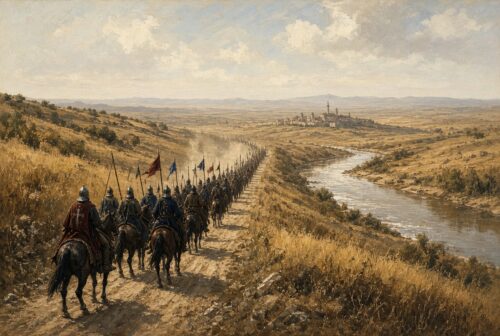
Later Ottoman memory would sometimes fold this fight into an earlier clash and call the whole sequence Sırpsındığı, a tidy founding victory. Slavic memory kept the date and the names and the unburied bones. Greek and Athonite notes kept the tone of the end of an age. Western Europe, busy with its own fourteenth-century disasters, barely looked up. That is how a hinge works. The people standing on it know. Everyone else files it under someone else’s tragedy.
The hinge is specific. Two brothers who had climbed from provincial office to kingship and despotate. A sultan who happened to be on the other side of the water. A village whose name most maps no longer bother to print. A night attack that did not need a famous general, only men who understood that the best time to hit an army is the hour it has decided the fighting is finished for the day. The outcome was not mysterious. It was a lesson delivered at the cost of a political class.
The benefit of knowing that lesson is not a slogan about vigilance. Slogans about vigilance are how people go back to sleep. The benefit is a working rule about the precise moment a campaign dies: the moment you have already congratulated yourself for being the one who marched.
Here is the part that is not history.
The Chernomen Protocol is not a morning routine, a gratitude list, a vision board, or a five-year plan. Those things assume you are the army that arrived. This protocol assumes you are also the camp that can be hit before dawn by someone who did not send a herald.
Once a week, on a day you will not skip, do the following in writing, on paper, in twenty minutes and no more.
First, name the Adrianople you are currently marching toward: the job, the deal, the body of work, the relationship, the credential, the move that you have already begun to treat as weakly held because the person who should be defending it appears to be elsewhere. Write one sentence that admits you have started sleeping on the approach.
Second, name the river you will drown in if the night raid works. Not the dramatic failure. The ordinary exit that looks like safety: the savings account you would drain, the reputation you would spend, the excuse you would tell, the city you would move back to, the version of yourself you would put back on like old armor. If you cannot name the river, you have not imagined the rout.
Third, appoint your Hacı İlbey. This is not your rival of equal size. This is the smaller, hungrier, less impressive force that can move at two in the morning because it does not have a baggage train of self-regard. A junior colleague. A cheaper product. A habit you think is harmless. A deadline you have mentally moved. Write the name. If you flinch at how small it looks, you have found the right one.
Fourth, install one watch that cannot be delegated to Monday. Not a feeling. A physical check: a number you look at, a person you call, a page you reread, a lock you test, a draft you send to someone who does not love you. The watch exists to answer one question: if eight hundred riders left their camp tonight, what would they hit first in yours?
Fifth, write the Isaiah sentence for the week you are in, modeled on the only line that matters from 1371: “I began this work in good times… I am finishing it in the time that will be described afterward.” If the sentence feels melodramatic, good. Melodrama is how you keep the bones from going unburied in your own account.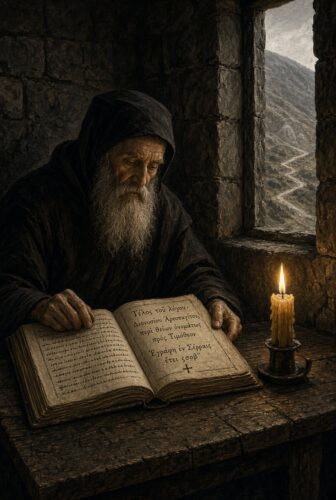
Do not turn the protocol into a brand. Do not share it. Do not add candles or apps. The point is the same point the Maritsa made without a single motivational speaker: the army that came to surprise the capital is allowed to lose the moment it decides the night is its own.
The brothers were not fools. They saw the window. They gathered what coalition they could. They moved while the sultan was away. They did the strategically adult thing and then committed the tactically childish one. They assumed the fight they had scheduled was the fight they would get. History, which is not a gentleman, sent a different fight at a different hour and let the river grade the paper.
That is what 26 September 1371 still is, six and a half centuries later: a date on which a specific camp, in a specific valley, taught a specific rule. Stay awake at the exact moment you have already started to celebrate the march. The living who ignored it envied the dead. The dead at least were finished being surprised.
Share: