
On July 18, 390 BC (traditional Varronian dating; around 387 BC by some reckonings), a Roman army—hastily levied, poorly led, and disastrously positioned—clashed with a Gallic warband led by the chieftain Brennus near the confluence of the Tiber River and the small Allia brook, just eleven miles north of the Eternal City. What should have been a routine border skirmish turned into one of the most catastrophic days in Roman history. The legions shattered in panic almost upon contact. Thousands died or drowned in the Tiber. Rome itself lay wide open. The Gauls marched in, looted, burned, and besieged the survivors on the Capitoline Hill for months. The “dies Alliensis” became a permanent black day in the Roman calendar—a *dies religiosus* on which no public business was conducted, a reminder etched into the Republic’s soul that even the mightiest can fall in a single afternoon of arrogance and sloppiness.
This wasn’t just a battle lost. It was Rome’s first great existential crisis. The city that had slowly clawed its way to dominance in Latium faced annihilation at the hands of “barbarians” who fought with terrifying ferocity and little regard for the disciplined formations Romans prized. Yet from this ashes-and-humiliation rose the resilient, adaptive Rome that would eventually master the Mediterranean. The story of the Allia and the subsequent sack is packed with tactical blunders, desperate heroism, divine geese (yes, really), a famous “Vae victis!” taunt, and hard-won lessons in preparation, adaptability, and unbreakable will. Today, nearly 2,400 years later, its echoes offer raw, practical wisdom for anyone staring down personal or professional disaster.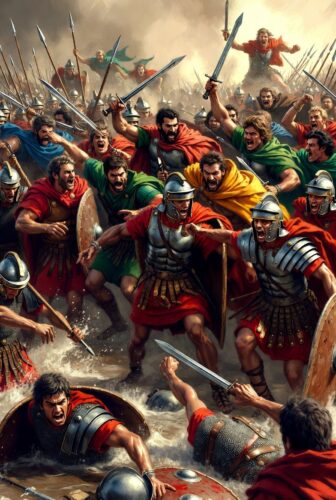
### The Road to Disaster: Arrogance Meets a Gallic Storm
To understand the Allia, rewind a bit. In the early 4th century BC, Rome was a rising power in central Italy but far from invincible. It had recently conquered Veii after a long siege, expanding its territory and confidence. Meanwhile, Gallic tribes—tall, fierce warriors from the north, often described with flowing mustaches, colorful cloaks, and a love for gold and combat—were migrating southward into the Po Valley and pressing into Etruria.
The spark came at Clusium, an Etruscan city under siege by Senones Gauls under Brennus. Clusium appealed to Rome for aid. Roman ambassadors—the Fabii—arrived, but instead of negotiating peacefully, they allegedly joined the fighting against the Gauls, violating diplomatic norms. Enraged, the Gauls demanded justice. Rome’s Senate, overconfident after Veii, refused and even appointed the offending Fabii to military tribunes. The Gauls declared war and marched south with shocking speed.
Roman sources like Livy paint the Gauls as terrifying: enormous men with booming voices, wielding long swords that hacked rather than stabbed, charging with wild cries and momentum that shattered formations. Romans, still fighting in a somewhat hoplite-style phalanx or early manipular style, were unprepared for this “shock and awe.” No proper camp, no entrenchments, auspices ignored—pure hubris.
The Roman force, perhaps 15,000–24,000 strong under military tribunes with consular power (including Quintus Sulpicius Longus), rushed out to meet them. They positioned at the Allia, with the Tiber on one side and hills on the other. To avoid being outflanked by the numerically superior Gauls (estimates vary wildly, but likely tens of thousands), they stretched their line thin, weakening the center. Reserves went on a small hill to the right. It was a recipe for panic.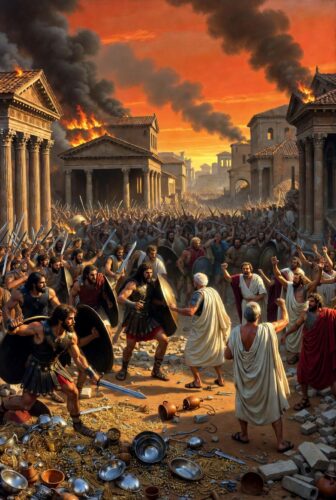
### The Battle: Panic, Rout, and the Tiber’s Bloody Waters
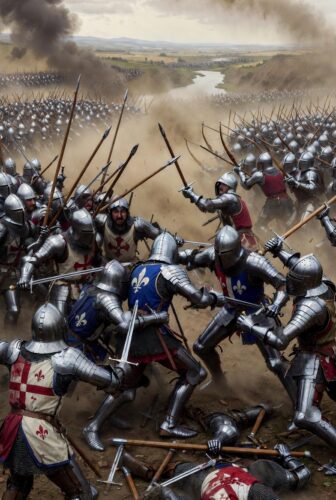
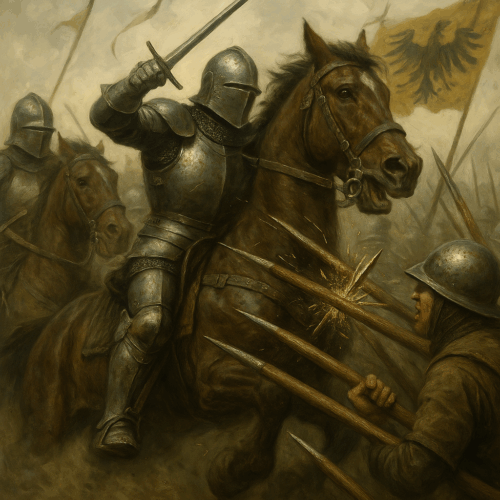
Livy’s account is vivid and damning. The Gauls, sensing weakness or suspecting a trap on the hill, charged the Roman reserves first. The sight of these howling warriors—naked or semi-naked in some descriptions for ritual ferocity—broke the Romans almost instantly. No heroic stand, no disciplined retreat. Panic spread like wildfire. “None were slain while actually fighting,” Livy writes; they were cut down from behind as they hindered each other in flight.
The left wing fled toward the Tiber, throwing down arms. Many drowned, weighed by armor, or were slaughtered on the banks. Others fled to Veii, the recently captured Etruscan city with better walls, rather than back to Rome. The right fared marginally better but the army dissolved. Gallic losses were minimal. The road to Rome lay open. Three days later, the Gauls entered the largely undefended city.
Imagine the scene: smoke rising, temples desecrated, senators slaughtered in their homes (some stayed, seated in togas, awaiting fate with stoic dignity). The Gauls rampaged, looting and burning. Survivors—mostly women, children, elderly, and able-bodied defenders—fled to the Capitoline Hill, the city’s natural fortress with the Temple of Jupiter. There, under leaders like Marcus Manlius Capitolinus, they held out.
### The Siege of the Capitol: Geese, Gold, and “Vae Victis!”
The Gauls couldn’t easily storm the steep Capitoline. They settled in for a siege, plundering the countryside for supplies while suffering from disease and hunger themselves. The Romans on the hill endured famine, watching their city burn below.
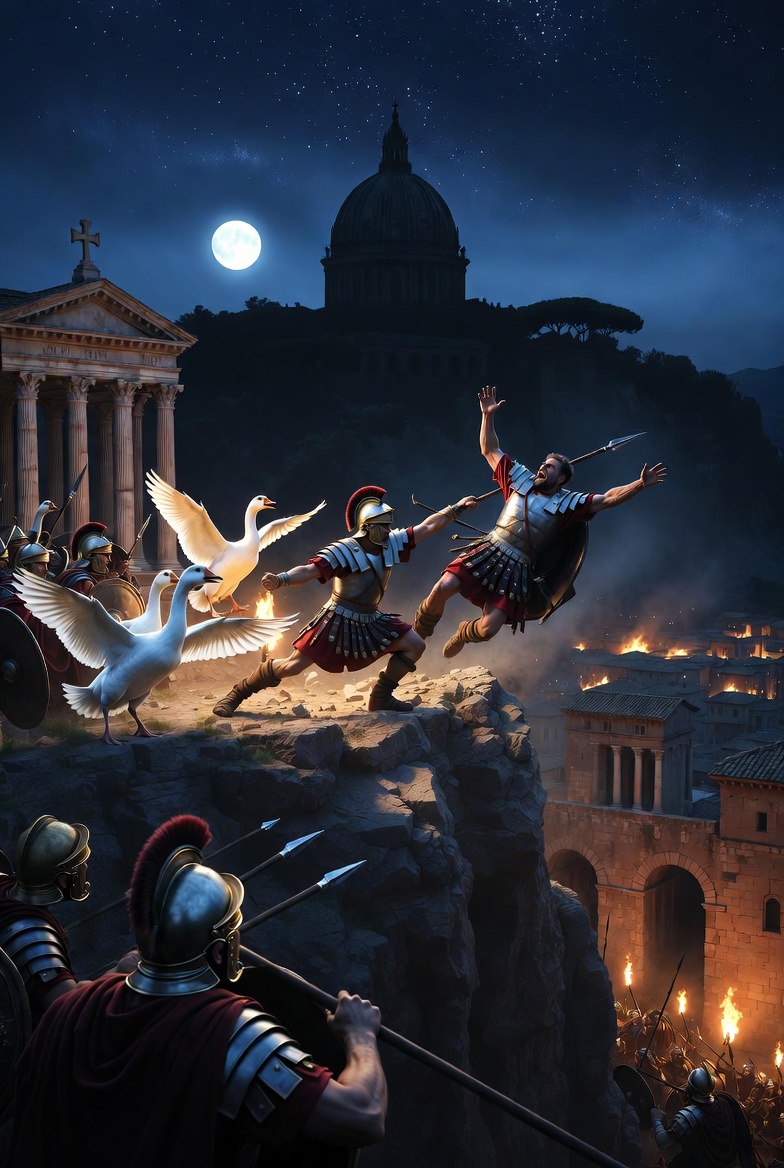
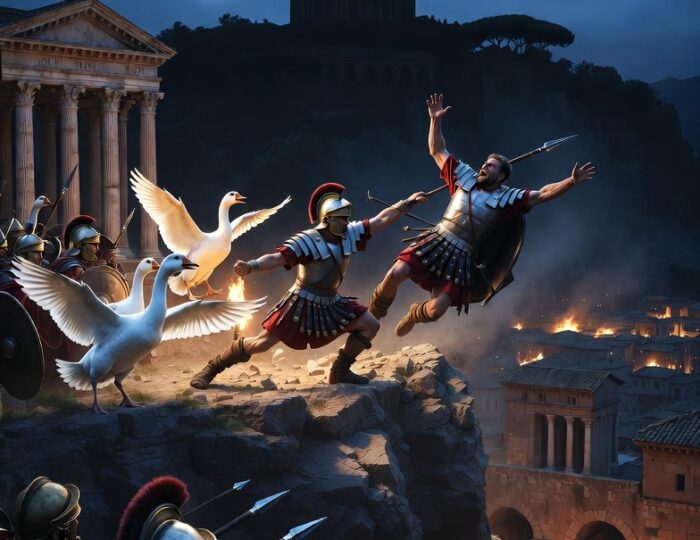
The most famous episode: a nighttime Gallic assault. The steep path was poorly guarded; dogs slept; but sacred geese dedicated to Juno honked furiously, waking Manlius. He hurled the lead climber down, sparking a chain reaction that repelled the attackers. The geese became legendary symbols of divine intervention and vigilance.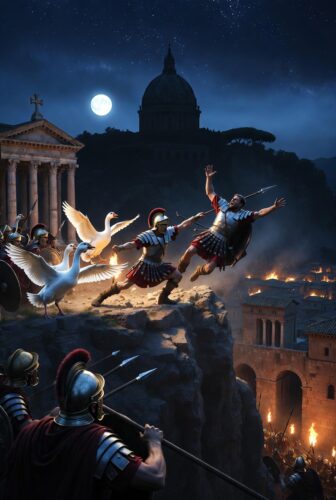
After seven months, starvation forced negotiations. The Romans agreed to pay 1,000 pounds of gold. When they complained about dishonest weights, Brennus threw his sword on the scale: “*Vae victis!*” — Woe to the vanquished! A bitter humiliation.
Legend adds Marcus Furius Camillus, the hero of Veii, returning from exile as dictator. He supposedly defeated the departing Gauls, rejecting the ransom and restoring Roman pride. Historians debate the details—some see Camillus as partly mythic—but the core trauma and recovery are real.
### Why the Allia Mattered: Trauma That Built Resilience
The sack was Rome’s deepest early wound. It exposed vulnerabilities: overconfidence, poor intelligence, weak fortifications (the Servian Wall was later strengthened), and the need for better military organization. Allies wavered; enemies like Aequi, Volsci, and Etruscans pressed attacks. Rome lost much of what it had gained over a century in one afternoon.
Yet the response was quintessentially Roman: learn, adapt, rebuild stronger. Military reforms followed—better training, more flexible maniples, emphasis on discipline and preparation. Camillus allegedly pushed for relocating to Veii but Romans recommitted to their city, fortifying it and expanding influence. The Republic emerged tougher, more unified, on the path to conquering Italy and beyond. The *dies Alliensis* served as a perpetual warning: never again be caught unprepared.
Ancient historians like Livy, Diodorus Siculus, and Plutarch used the event to moralize about piety, discipline, and fortune. The Gauls weren’t mindless destroyers; they sought land and plunder, not permanent conquest, which allowed Rome a chance to recover. But the psychological scar lingered for centuries.
### Applying the Allia Lesson: The Capitol Cliff Protocol for Modern Comebacks
Ninety percent of this story is raw history—the blunders, the terror, the geese, the gold, the long road back. The remaining ten percent translates that grit into your life with a plan unlike generic self-help fluff. No vision boards, no “manifest abundance,” no toxic positivity. This is the **Capitol Cliff Protocol**: a ruthless, battle-tested system for holding the high ground when everything below is burning. It emphasizes preparation before crisis, unbreakable defense during, and aggressive reconstruction after. Specific, actionable, forged in real catastrophe.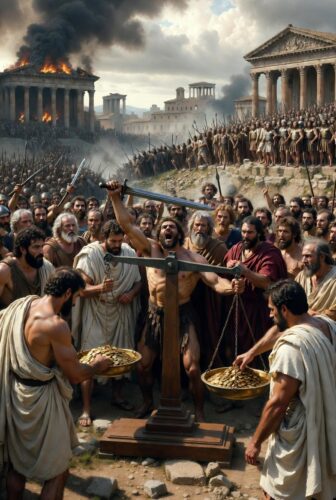
– **Pre-Crisis Fortification (Build Your Capitoline Before the Gauls Arrive)**: Romans ignored warnings and skipped basics like camps and auspices. Audit your “defenses” quarterly: finances (emergency fund equal to 6+ months expenses, diversified), skills (one new high-value competency every 90 days), network (cultivate 3–5 reliable allies who’ve seen you at low points). Identify your “Allia vulnerabilities”—thin lines like over-reliance on one income stream or unaddressed health issues—and thicken them. Unlike fluffy “resilience journaling,” run red-team simulations: “What if my biggest client ghosts me tomorrow?” Write the contingency and test it.
– **When the Charge Hits: Controlled Panic and High-Ground Focus**: The legions broke because panic spread unchecked. In your crisis—job loss, health scare, relationship implosion—designate your “Capitoline”: the non-negotiable core (family, core values, one viable skill). Let peripheral things burn if needed, but hold the hill. Practice the “Manlius Throw”: when chaos climbs your walls (anxiety, bad decisions), physically interrupt it—stand up, move, voice one factual next action aloud. No wallowing. The geese taught vigilance; set “goose alarms”—daily 10-minute reviews of threats and resources.
– **Siege Endurance: Ration, Innovate, Outlast**: Seven months of famine on the hill. Track your “siege metrics”: calories (literal or metaphorical energy), information intake (cut doom-scrolling, focus on actionable intel), and morale (one small daily win, like the senators’ dignity). Negotiate from strength where possible—don’t accept the first “Vae victis” deal. When Brennus cheats the scales, call it out and counter. Unique twist: maintain a “Geese Log”—record every small alert or save that kept you going. Review it weekly to build proof of resilience.
– **Post-Sack Reconstruction: Camillus Mode—Rebuild and Reform**: Rome didn’t just repair; it restructured its military and society. After your low point, conduct a formal “Allia Inquiry”: dissect every decision that led there without mercy or excuses. Implement 2–3 structural changes (e.g., new habits, systems, boundaries). Expand territory: turn survival into offense—use the story for content, mentorship, or new ventures. Celebrate the “gold ransom paid” as tuition, not failure. Measure success not by speed back to baseline but by superior new baseline.
– **Daily Drills for the Protocol**: Morning: 5-minute “Allia Scan” (threats, assets, high ground). Evening: “Geese Gratitude” (what warned/saved you today). Quarterly: Full siege simulation and reform audit. This isn’t motivational wallpaper—it’s muscle memory for when life sends Brennus your way. Funny side note: those sacred geese probably saved Rome because they were hangry too. Sometimes your biggest annoyances become your best alarms.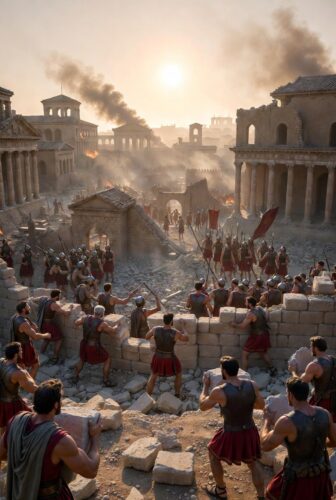
The Allia wasn’t Rome’s end; it was the forge. That single humiliating day on July 18 taught a young republic that survival demands vigilance, adaptation, and the refusal to stay defeated. Centuries later, the empire that rose from those ashes dominated the known world. Your personal Allia—whatever rout you’re facing or fear—carries the same potential. Hold the cliff. Listen for the geese. Pay the ransom only on your terms. Then rebuild taller walls and sharper legions.
The Romans turned woe into empire. You can turn yours into momentum that outlasts every barbarian at the gates. The protocol works because it’s not invented—it’s excavated from the smoke of 390 BC. Use it. The high ground is yours to keep.
Share: