
Act I: A Supper at the Pope’s Head and a Spaniel with a Brand-New Lease on Life
If you had walked down Cornhill in the City of London on the evening of Wednesday, November 14, 1666, you would have needed thick boots, a sturdy lantern, and a stomach accustomed to the lingering stench of wet charcoal. Just ten weeks earlier, in the opening days of September, the Great Fire of London had chewed through four-fifths of the medieval walled city, reducing thirteen thousand houses, eighty-seven parish churches, and the towering Gothic hull of Old St. Paul’s Cathedral to smoking rubble. Yet somehow, clinging stubbornly to the charred perimeter of the devastation like a stone barn that refused to burn, stood Gresham College on Bishopsgate Street—and a short walk away, tucked into the warren of alleys off Lombard Street, sat a bustling chophouse known as the Pope’s Head Tavern.
Inside that tavern, away from the November fog and the soot-blackened ruins, a thirty-three-year-old naval administrator named Samuel Pepys was having what he called in his private shorthand diary an “exceeding pretty supper”. Pepys was a man of ferocious appetites—for venison pasties, for music, for naval gossip, and for every scrap of cutting-edge natural philosophy floating around Restoration London. Sitting beside him at the table were the Houblon brothers—a clan of wealthy Huguenot merchants who helped finance England’s maritime trade—and a slight, sharp-witted physician named Dr. William Croone, who happened to be a professor of rhetoric at Gresham College and one of the founding fellows of the fledgling Royal Society of London.
While Pepys had been tending to his wife and dining with the Houblons, the Royal Society had been holding its regular Wednesday evening meeting just up the road at Gresham College. Because of the Great Fire, the Society’s weekly gatherings had been disrupted only twice—once during the inferno itself in early September, and once on October 10 for a national day of fasting and repentance. By mid-November, however, the virtuosi were back at their benches, determined to prove that neither plague nor fire could extinguish the Scientific Revolution. Dr. Croone had come straight from that Wednesday night assembly to the Pope’s Head, still buzzing with what he had just witnessed on the dissecting table.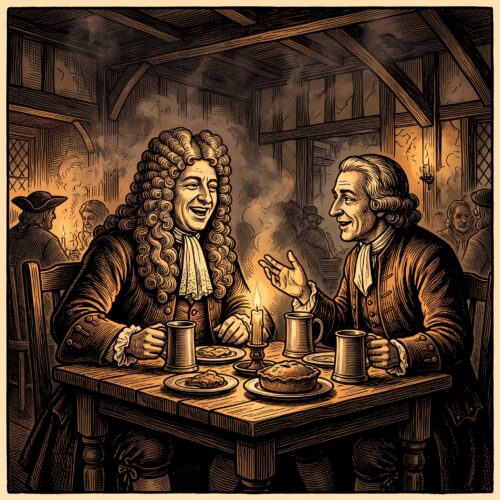
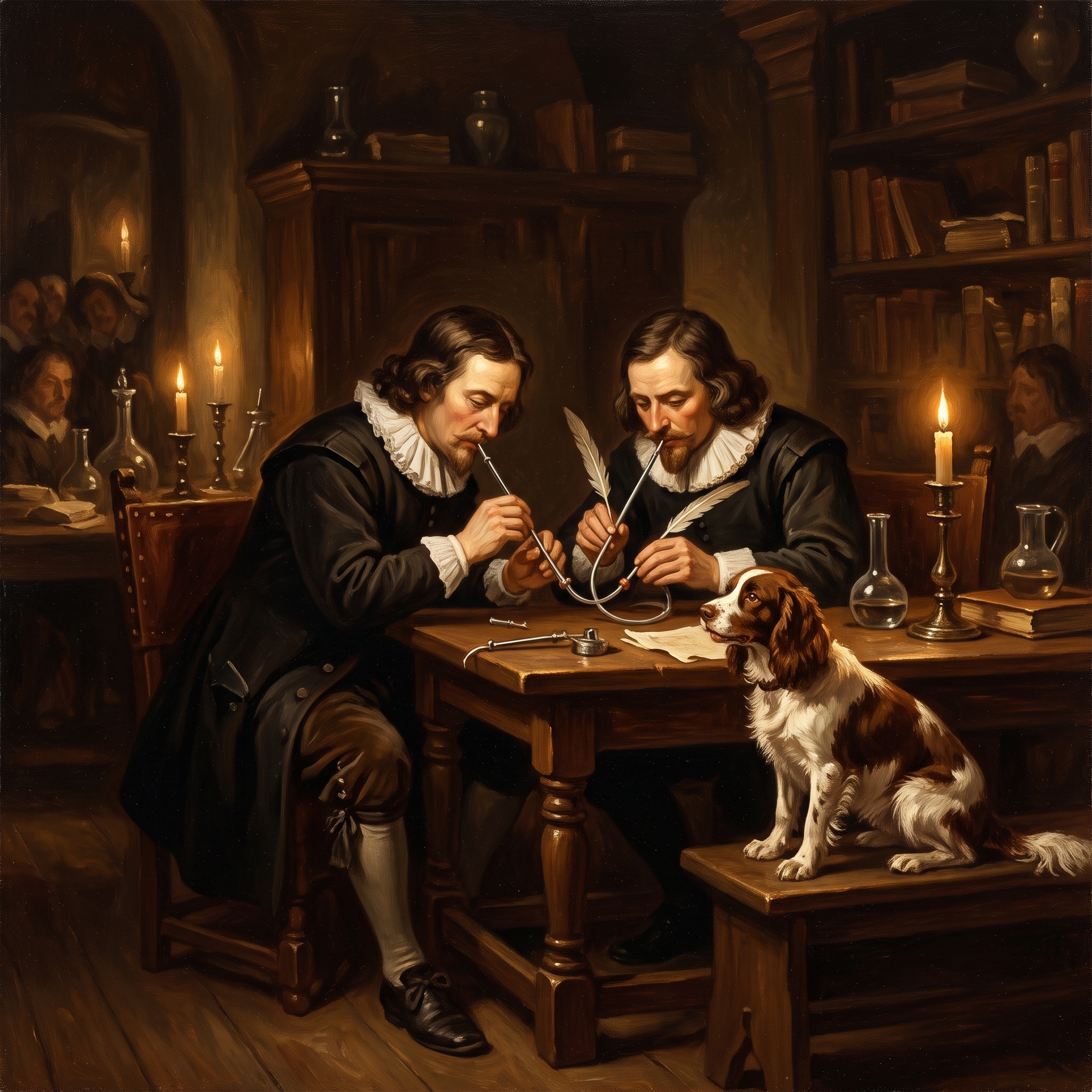
Between bites of supper and sips of claret, Croone leaned across the table and casually described to Pepys a spectacle that sounded less like medicine and more like dark sorcery. Earlier that evening, before a roomful of gentlemen, mathematicians, and physicians at Gresham College, two Royal Society fellows—the anatomist and surgeon Edmund King and the physician Thomas Coxe—had strapped two live dogs to a wooden board, opened their blood vessels, and connected them with a makeshift system of silver pipes and quills. They had drained the blood out of one dog until the poor beast expired on the table, while simultaneously channeling that dying animal’s blood into the veins of a second dog—a spaniel—even as the spaniel’s own original blood was allowed to gush out of an incision on its opposite side.
In effect, King and Coxe had performed a complete, live-action oil change on a canine. The donor dog died on the spot. The recipient spaniel, whose entire circulatory system had just been flushed and refilled with another animal’s life force, was untied from the board, shook itself off, and trotted around Gresham College in remarkably high spirits.
Pepys, who never met a bizarre piece of dinner-table news he didn’t immediately want to turn into a social thought experiment, scribbled down Croone’s report that very night. After noting that the first dog died upon the place and the second survived very well, Pepys recorded the table’s gleeful speculation about what this breakthrough could mean for human society. “This did give occasion to many pretty wishes,” Pepys wrote with deadpan seventeenth-century mischief, “as of the blood of a Quaker to be let into an Archbishop, and such like; but, as Dr. Croone says, may, if it takes, be of mighty use to man’s health, for the amending of bad blood by borrowing from a better body”.
Pause and appreciate the sheer comedic brilliance of that tavern joke. In 1666, England was still nursing the raw psychological wounds of the English Civil War, the execution of Charles I, and the volatile Restoration of Charles II. Quakers were radical, plain-spoken religious nonconformists who refused to take oaths, refused to pay tithes, and refused to take off their hats to dukes or bishops. Archbishops of the Church of England were the ultimate avatars of high-church pomp, liturgical hierarchy, and royal authority. The dinner guests at the Pope’s Head Tavern were essentially proposing the world’s first ideological gene-therapy: if an Archbishop was too pompous, rigid, or worldly, why waste time arguing theology with him when you could simply strap him to a table next to a devout Quaker, hook up a brass pipe, and pump a pint of radical humility straight into his jugular?
Beneath the tavern laughter, however, lay a tectonic shift in human history. On November 14, 1666, in the charred ruins of London, blood ceased to be an untouchable, mystical fluid governed by ancient Greek dogma and became an engineering problem that human hands could solve.
Act II: Two Thousand Years of Bad Plumbing—Why Nobody Thought to Move Blood Before
To understand why a spaniel surviving a blood swap at Gresham College was as shocking in 1666 as a moon landing would be three centuries later, you have to understand the intellectual prison that medicine had occupied for nearly fifteen hundred years.
From the second century AD until the seventeenth century, European medicine was ruled by the ghost of Claudius Galenus—Galen of Pergamon—the brilliant, combative Roman physician who tended to gladiators and emperors. Galen had dissected plenty of Barbary macaques and pigs, and from those observations he constructed a comprehensive, tidy, and catastrophically wrong model of how the human body worked.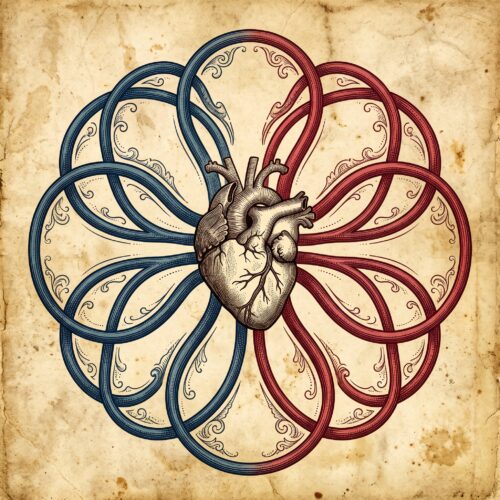
In Galen’s universe, blood did not circulate. It was not a closed loop, and the heart was not a pump. Instead, Galen taught that the human body possessed two completely separate, one-way vascular irrigation systems, like a house whose hot-water pipes and cold-water pipes never met and had no drains. According to Galenic orthodoxy, digested food traveled from the stomach to the liver, where it was brewed into dark, thick, nutrient-rich “nutritive blood.” This venous blood then ebbed and flowed sluggishly outward through the veins like tidal water in a salt marsh, absorbed entirely by the tissues and organs as food—never returning to its source. Meanwhile, the heart drew air from the lungs and mixed it with a trickle of blood seeping through invisible pores in the wall separating the heart’s right and left chambers, concocting a bright, frothy “vital spirit” that pulsed outward through the arteries to give the body heat and life, where it too was consumed and vanished.
Think about what Galenic physiology meant for any doctor who imagined putting new blood into a patient. Under Galen’s rules, attempting a blood transfusion was as nonsensical as pouring gasoline onto the hood of a car and hoping it would soak into the engine. If blood was just a slow-moving nutrient soup brewed in the liver and eaten up by your muscles, there was no continuous stream to tap into, no pressure gradient to drive fluid from one body to another, and no reason to believe foreign blood wouldn’t just sit there and rot. Worse still, Galen’s theory of the four humors—blood, phlegm, yellow bile, and black bile—taught that illness came from an excess of fluid, not a deficit. For over a millennium, the standard medical response to almost any ailment, from a fever to a broken leg to melancholy, was to drain blood out of the patient using lancets and leeches. Nobody put blood in; you only ever let it out.
That entire edifice came crashing down in 1628, when an English physician named William Harvey published a slim, seventy-two-page Latin treatise titled Exercitatio Anatomica de Motu Cordis et Sanguinis in Animalibus (An Anatomical Exercise on the Motion of the Heart and Blood in Animals). Harvey had done something shockingly unfashionable for a seventeenth-century scholar: instead of just quoting Aristotle and Galen, he measured things. He calculated how much blood the left ventricle of a human heart holds (roughly two ounces) and multiplied that by the number of times the heart beats in an hour (around four thousand). Even if the heart pushed out only a fraction of its capacity per beat, Harvey showed, it pumped more than five hundred pounds of blood every single hour—roughly three times the weight of an entire adult human being.
The liver could not possibly brew five hundred pounds of brand-new blood out of porridge and beer every sixty minutes, nor could the tissues soak it all up without exploding like water balloons. There was only one mathematical possibility: it was the exact same blood, racing around the body in a continuous, high-pressure, closed-loop circuit, pushed out through the arteries by the muscular contraction of the heart and returned through the veins to be pumped all over again.
Harvey’s discovery of circulation was the Big Bang of modern physiology, yet Harvey himself never attempted a blood transfusion. For nearly thirty years after De Motu Cordis, the idea hung in the air like an unplayed chord. If the circulatory system was simply a closed hydraulic circuit—a biological plumbing loop driven by a mechanical pump—then in theory, you could splice a tube into one creature’s pipes and connect it to another’s.
Act III: The Oxford Tinkers—Quills, Beer, Opium, and a Country Doctor Named Lower
The leap from Harvey’s theory to the Gresham College dissecting table began not in a gleaming hospital, but in a cluster of smoky Oxford rooms during the 1650s. In the wake of the English Civil War, a band of restless young experimenters—men who would soon form the nucleus of the Royal Society—gathered at Oxford to test everything by trial and error. Among them were the chemist Robert Boyle, the architect and polymath Christopher Wren, the clergyman-scientist John Wilkins, and a quiet, intensely focused Cornish physician named Richard Lower.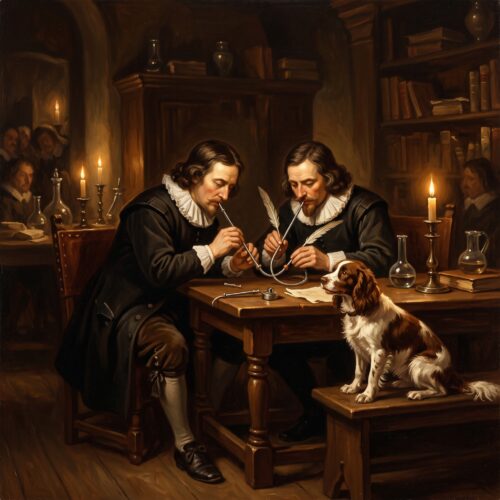
In 1656, Christopher Wren—long before he designed St. Paul’s Cathedral—became curious about what would happen if drugs were introduced directly into Harvey’s newly discovered bloodstream rather than swallowed into the stomach. Assisted by Robert Boyle and John Wilkins, Wren took a stray dog, tied a ligature around its leg to make a vein swell, slit the vessel open with a lancet, and inserted a slender brass pipe attached to an animal bladder filled with warm sack (a sweet white wine) and dissolved opium. Within moments, the dog became staggering drunk and fell fast asleep, waking up the next morning none the worse for wear. Soon the Oxford group was injecting everything they could get their hands on into canine veins—beer, milk, whey, emetics, purgatives—proving that the bloodstream was an express highway to the entire body.
Once you can inject wine and opium into a vein, the next question is inevitable: what if you inject blood?
Early attempts were clumsy disasters. In 1658, the churchman and amateur experimenter Francis Potter—inspired by Ovid’s ancient myth of Medea rejuvenating old King Aeson by draining his blood and replacing it with a herbal brew—tried to transfuse blood between two chickens using a system of ivory pipes and bladders. He failed miserably, complaining in a letter to the antiquary John Aubrey that he could scarcely get a single drop of blood to flow before it clotted into a useless jelly. Another Royal Society fellow, Thomas Coxe—the very same physician who would co-lead the November 14 demonstration—reported in May 1665 that he had managed to inject blood from one pigeon into the vein of another using a quill, though he had no witnesses and never repeated the feat.
The problem was clotting. Whenever seventeenth-century experimenters tried to collect blood in a cup, a syringe, or a sheep’s bladder and then push it into a recipient, the blood exposed to air and cold surfaces coagulated within seconds, clogging their pipes like wet cement.
The man who cracked the code was Richard Lower. Born on a Cornish estate in 1631 and educated at Westminster School and Christ Church, Oxford, Lower was a master anatomist with famously steady hands. After reading Harvey’s treatise in 1652, Lower became obsessed with the mechanics of the heart and blood. By late February 1665—or as Lower later documented for the Royal Society—he realized that the secret to preventing clotting was to eliminate the middleman entirely. Instead of draining blood into a container and trying to pump it back in, Lower decided to link the artery of a donor animal directly to the vein of a recipient animal, letting the donor’s own beating heart provide all the hydraulic pressure needed to drive the blood straight across.
Lower’s apparatus was a masterpiece of seventeenth-century MacGyvering. He used sharpened goose and swan quills—hollow, smooth, and naturally tapered—connected by short lengths of silver tubing or excised animal blood vessels to give the bridge flexibility if the dogs twitched. In his landmark Oxford trial, Lower first bled a medium-sized mongrel dog from its jugular vein until the animal was nearly dead, whimpering, convulsing, and barely breathing. Then he opened the cervical artery of a large mastiff strapped beside it, slipped in his quill-and-silver conduit, and connected it directly to the dying mongrel’s jugular vein.
As the mastiff’s powerful heart pumped bright red arterial blood straight into the mongrel’s depleted veins, the transformation was instantaneous. The half-dead dog opened its eyes, lifted its head, and began breathing deeply. Lower repeated the drain-and-refill cycle several times until the mastiff had given almost all its blood and died, while the mongrel—now running entirely on mastiff blood—was stitched up, untied, and promptly ran off to roll in the grass and shake itself clean, as unbothered as if it had just woken from a nap.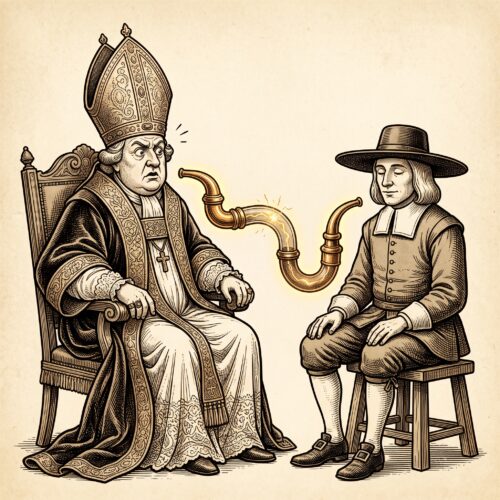
Act IV: Why November 14, 1666, Was the Turning Point
If Richard Lower had already pulled off his private dog-to-dog transfusion in Oxford, why did the evening of November 14, 1666, at Gresham College matter so enormously?
Because in science, an experiment locked in a provincial scholar’s notebook is merely a rumor; an experiment replicated in front of a skeptical, institutional audience becomes an undeniable public fact.
Throughout 1665 and the summer of 1666, London had been paralyzed by two biblical catastrophes back-to-back: first the Great Plague, which killed roughly a hundred thousand Londoners and forced the Royal Society to suspend its meetings, and then the Great Fire of September 1666, which turned the heart of the city into a smoking wasteland. Robert Boyle, eager to see Lower’s Oxford miracle verified before the entire Royal Society, had urged Lower to send detailed instructions to London. Meanwhile, Henry Oldenburg, the tireless German-born secretary of the Royal Society, recognized that blood transfusion wasn’t just a medical curiosity—it was a geopolitical trophy. Across the English Channel, King Louis XIV had just founded the Académie Royale des Sciences in Paris, and French savants were already whispering that they had thought of blood transfusion ten years earlier. England needed an indisputable, witnessed, published triumph.
That triumph happened on Wednesday night, November 14, 1666.
Under the flickering candlelight of Gresham College, Edmund King and Thomas Coxe stepped forward to replicate Lower’s procedure in front of the assembled Fellows—including Robert Hooke, who was also demonstrating his inclining pendulum that very same evening. King and Coxe refined Lower’s technique, demonstrating that you didn’t even need to dissect deep into an animal’s neck to tap a major artery; a more accessible vein-to-artery link could accomplish the total exchange with remarkable speed and precision. With Dr. William Croone watching intently from the gallery, King and Coxe bled the donor dog to death while routing its entire blood supply into the recipient spaniel, simultaneously draining the spaniel’s original blood out of its opposite flank.
When the procedure ended and the spaniel was set down on the floor, alive and alert, the psychological barrier that had stood for two millennia evaporated. Seven days later, on November 21, 1666, King and Coxe brought the spaniel back to Gresham College for a follow-up inspection; according to Thomas Birch’s History of the Royal Society, the dog “was produced and found very well”. On November 28, Samuel Pepys finally attended a Gresham College meeting in person alongside Mr. Carteret and recorded that the fellows were deep in “good discourse how this late experiment of the dog, which is in perfect good health, may be improved for good uses to men”. And on December 17, 1666, Henry Oldenburg published Richard Lower’s complete, step-by-step instructions in Issue No. 20 of the Philosophical Transactions of the Royal Society—the world’s first peer-reviewed scientific journal—officially staking England’s priority and handing the blueprint to humanity.
Act V: Sheep’s Blood, Madmen, and the 150-Year Hangover
Once the November 14 demonstration proved that an animal could live entirely on borrowed blood, Europe went briefly, gloriously, dangerously mad with transfusion fever.
Within months, the race was on to perform the first transfusion into a human being. In Paris, an ambitious young physician named Jean-Baptiste Denis—armed with the Royal Society’s published report—teamed up with the surgeon Paul Emmerez. On June 15, 1667, Denis and Emmerez connected the carotid artery of a gentle lamb to the arm vein of a fifteen-year-old Parisian boy who had been weakened nearly to death by twenty consecutive Galenic bloodlettings for a stubborn fever. Astonishingly, the boy recovered.
Five months later, on November 23, 1667—almost one year to the day after the Gresham College spaniel experiment—Richard Lower and Edmund King performed England’s first human transfusion at Arundel House in London. Because the physicians at Bedlam Hospital refused to hand over any of their inmates for an untested procedure, the Royal Society scouted London’s taverns and coffeehouses until they found Arthur Coga, a thirty-two-year-old Cambridge-educated divinity graduate who was brilliant, penniless, perpetually eccentric, and deeply fond of drink. They paid Coga twenty shillings (one guinea) to let them drain several ounces of his own blood and pipe nine ounces of sheep’s blood into his arm. When asked afterward why he had agreed to take the blood of a sheep, Coga quipped in impeccable Latin: “Sanguis ovis symbolicam quandam facultatem habet cum sanguine Christi, quia Christus est agnus Dei”—“The blood of a sheep has a certain symbolic power like the blood of Christ, for Christ is the Lamb of God”. Coga survived without a scratch and promptly spent his guinea on wine.
Why did seventeenth-century doctors use animals—lambs, calves, sheep—instead of human donors? Partly because human donors were hard to recruit, and partly because of an enduring medieval superstition: physicians believed that blood carried not just oxygen and nutrients, but temperament and soul. If a man was raving with mania or “inveterate phrensy,” doctors reasoned, transfusing the blood of a meek, placid lamb would physically dilute his rage and calm his brain. Critics, meanwhile, were horrified, warning that transfusing animal blood into humans would create monstrous minotaur-like hybrids—people who would sprout wool, grow horns, or start barking and bleating at dinner parties.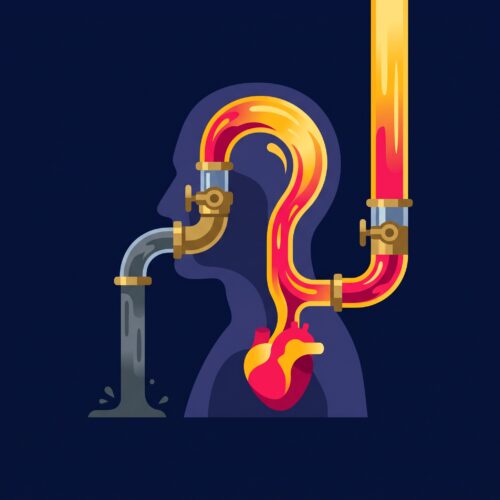
Reality, of course, was far deadlier than mythology. Neither Lower, King, nor Denis knew anything about human blood types (ABO and Rh antigens, which wouldn’t be discovered by Karl Landsteiner until 1901) or cross-species immune reactions. In December 1667, Jean-Baptiste Denis transfused calf’s blood into a violently unstable Parisian valet named Antoine Mauroy. After a second transfusion, Mauroy suffered a textbook hemolytic reaction—sweating, agonizing kidney pain, black urine, and collapse—and died shortly after a third attempt. Denis was dragged into court on murder charges (and eventually acquitted when evidence emerged that Mauroy’s estranged wife may have poisoned him with arsenic). Nevertheless, the scandal was fatal to the field: in 1670, the French Parliament banned human blood transfusions, the Royal Society quietly shelved its trials, the Pope issued an edict against the practice, and blood transfusion was banished to medical purgatory for nearly a century and a half.
Yet the thread that started on November 14, 1666, never truly broke. In 1818, British obstetrician James Blundell revived transfusion using human-to-human blood to save women dying of postpartum hemorrhage. In 1901, Landsteiner unlocked blood typing. In 1914, sodium citrate solved the clotting problem once and for all. Today, every time a trauma surgeon saves a car-crash victim, every time a cancer patient receives platelets, and every time a blood bank labels a bag of O-negative, they are standing directly on the floorboards of Gresham College on that smoky Wednesday night in 1666.
Act VI: What a 17th-Century Spaniel and an Imaginary Quaker Teach You About Your Own Stagnant Mindset
Now let’s step out of the Pope’s Head Tavern and look at your life right now.
Most modern self-help advice is built on a hidden Galenic fallacy. When you feel burned out, stuck in a creative rut, trapped in the same petty arguments, or coasting on autopilot at work, conventional personal development tells you to treat yourself like a Galenic liver: work harder to brew more of your own blood. Wake up at 4:30 a.m.! Journal harder! Squeeze more productivity out of the exact same mental reservoir! Or, conversely, it tells you to do a Galenic bloodletting: cut everything out, go on a dopamine detox, delete all your apps, and sit in an empty room until you feel better.
Both approaches fail for the exact same reason Galen failed: you cannot circulate your way out of stagnation if you are only ever pumping the exact same old blood in a closed loop.
Think about what Edmund King and Thomas Coxe actually did on November 14, 1666. They realized that when a system is depleted, poisoned, or stuck, adding new input isn’t enough if the old, stagnant fluid is clogging every vessel. You have to simultaneously drain the stale assumptions out of one side while piping fresh, radically incompatible perspective into the other.
And think about Samuel Pepys’s joke over supper: putting the blood of a Quaker into an Archbishop. You don’t need a literal transfusion to become an Archbishop in your own life. Every single one of us eventually builds our own miniature cathedral of habit. We surround ourselves with people who nod at our opinions, algorithms that mirror our biases, routines that flatter our strengths, and excuses that protect our pride. Before long, we are wearing metaphorical velvet robes, repeating the same liturgies every Monday morning, and wondering why our energy feels thick, sluggish, and stale.
You don’t need another morning routine. You need a Gresham College Swap: a deliberate, structural exchange where you bleed out an outdated mental habit while piping in the raw, unfiltered perspective of your intellectual opposite—your “Quaker.”
Specific Ways This Historical Breakthrough Applies to Your Individual Life
- Stop Practicing “Galenic Bloodletting” on Your Exhaustion: When you feel overwhelmed or uninspired, your instinct is probably to either force yourself to grind harder or to passively “rest” by scrolling on your phone. Neither introduces new life. Just as Richard Lower proved that a depleted organism recovers instantly when given fresh, oxygenated arterial blood rather than being left alone to recover slowly, your brain recovers from burnout through high-contrast novel input (a completely different discipline, environment, or challenge), not passive isolation.
- Simultaneous Drainage Beats Gradual Habit Tweaking: King and Coxe didn’t wait three weeks for the spaniel’s old blood to fade away before adding the new supply; they opened an exit valve on one side at the exact moment they opened an intake valve on the other. When you try to adopt a new skill, career pivot, or mindset while clinging to every single old obligation and identity label, the two systems clash and clot. Real transformation requires paired subtraction: every new commitment you pipe in must have a corresponding old habit visibly bled out on the opposite side.
- Eliminate the “Clotting Middleman” Between Idea and Action: Seventeenth-century doctors failed for years because they collected blood in cups and bladders first, where exposure to cold air turned it into useless jelly before it ever reached the patient. You do the exact same thing when you take a spark of inspiration and trap it in endless “preparation”—buying courses, organizing Notion dashboards, waiting for Monday, or over-analyzing the risk. Ideas clot in storage. Connect the source directly to the execution with zero holding tanks in between.
- Seek Out Your “Quaker” (Ideological Cross-Transfusion): Pepys’s dinner guests joked about piping a plain-spoken Quaker’s blood into a pompous Archbishop because they intuitively understood that closed ecosystems breed arrogance and blind spots. If you are an analytical spreadsheet thinker, your “Quaker” is an improv comedian or a street painter. If you are a chaotic creative, your “Quaker” is a structural engineer or an actuary. Deliberately exposing your thinking to someone whose operating system contradicts yours cures intellectual inbreeding faster than ten self-help books.
- Watch Out for “Cross-Species Rejection” (Imitation vs. Integration): Jean-Baptiste Denis nearly destroyed transfusion medicine by pumping calf’s blood into a human and expecting the man to magically acquire a calf’s calm temperament. In your own life, trying to wholesale copy the daily routine of a billionaire, an athlete, or an influencer whose biology, resources, and temperament are completely alien to yours causes an immediate “hemolytic reaction”—burnout, shame, and collapse. Borrow mechanisms (how they solve problems), never identities (who they are).
- Do the Experiment in Public, Not in Secret: Richard Lower had already transfused dogs in private in Oxford, but history pivoted on November 14, 1666, because King and Coxe staged the trial in front of a roomful of peers who could verify the outcome and hold them accountable. Private resolutions die quietly in the dark. Staging a visible, time-boxed experiment where at least one respected peer sees the before-and-after forces rigor, honesty, and follow-through.
Act VII: The “Quaker-to-Archbishop” Protocol (A Quick, 48-Hour Cognitive Transfusion Plan)
Forget 75-day challenges, vision boards, morning affirmations, gratitude journals, and five-step productivity funnels. Here is a sharp, forty-eight-hour, zero-fluff behavioral experiment modeled directly on King, Coxe, and Pepys’s tavern thought experiment.
Step 1: Identify Your “Archbishop” (10 Minutes — Tonight)
Write down the single area of your life where you have become most pompous, rigid, or stagnant—the place where you repeat the exact same complaints, excuses, or methods every week while expecting different results. Name the specific dogma you keep defending (for example: “I don’t have time to write,” “Nobody in my industry appreciates good work,” or “I’m just not a networking person”).
Step 2: Open the Exit Valve First (15 Minutes — Tonight)
Before you add a single new goal, honor the Gresham College rule of simultaneous drainage. Pick one concrete, recurring drain tied to that stagnant area and sever it cleanly for the next 48 hours. Cancel a recurring meeting that produces nothing, delete the news/social feed you use to fuel your cynicism, or shelve the half-finished “safe” project you use to avoid launching your real one. You must create an empty vessel before piping anything new in.
Step 3: Find Your “Quaker” and Connect a Direct Quill (30 Minutes — Tomorrow Morning)
Identify one person, book, workspace, or direct action that represents the exact opposite temperament of your “Archbishop” self—and connect to it without a holding tank (no saving links for “later,” no taking notes to “review next week”).
- If you over-plan and under-ship, spend 30 minutes talking to or shadowing someone who ships messy work fast, then publish or send one unpolished deliverable before noon.
- If you are trapped in a rigid career silo, buy coffee for someone in a completely unrelated trade (a chef, a carpenter, an ER nurse, a stand-up comic) and ask them only one question: “How do you solve a crisis when your usual plan breaks?”
- If you are stuck in physical or mental lethargy, go to an environment you never visit—a martial arts gym, a botanical greenhouse, an early-morning wholesale market—and participate directly rather than observing from the sidelines.
Step 4: Run the “7-Day Spaniel Check” (5 Minutes — One Week From Today)
Just as King and Coxe brought the spaniel back to Gresham College seven days later on November 21 to verify that it was genuinely thriving rather than running on adrenaline, put a five-minute calendar reminder on your phone for seven days from today. Ask yourself two blunt questions:
- Did the old stagnant habit stay drained, or did I let it clot back into my schedule?
- What concrete behavior changed as a result of my “Quaker” input?
If the new blood took, keep the channel open. If it didn’t, adjust the pipe and run the experiment again—because as a handful of curious Londoners proved amid the ashes of 1666, you are never stuck with the blood you woke up with.
Share: