
On the hazy autumn morning of October 19, 439 AD, the citizens of Roman Carthage were violently preoccupied with something that had nothing to do with warfare.
They were screaming at horse races.
In the massive hippodrome overlooking the Gulf of Tunis, tens of thousands of Roman citizens, local provincial elites, and merchants were passionately disputing whether the Green faction or the Blue faction deserved to win the fourth chariot heat of the morning. Carthage was not a border outpost on the jagged fringe of Britannia or a shivering garrison on the Rhine. Carthage was the glittering jewel of the Western Roman world—a metropolis second only to Rome in wealth, prestige, and sheer indulgence. It was the breadbasket of the empire, the clearinghouse of Mediterranean trade, and a city wrapped in immense, newly rebuilt fortifications that Emperor Theodosius II had declared virtually unassailable.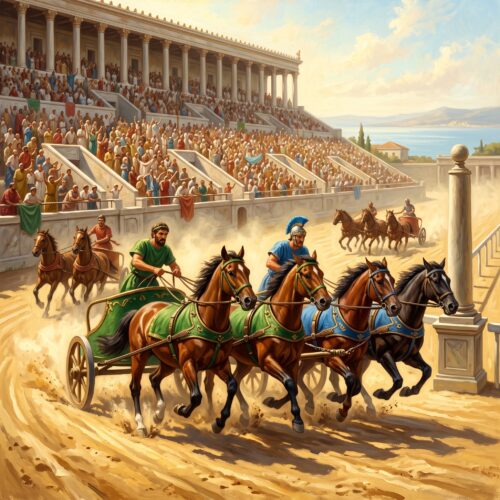
Beyond the roaring stands of the circus, however, a limping, middle-aged monarch named Genseric (often recorded as Gaiseric) was walking through the open city gates without having to fire a single catapult bolt.
Genseric was the king of the Vandals, a coalition of Germanic and Sarmatian tribes who, just a generation prior, had been shivering refugees chased out of Central Europe by the Huns. Through sheer tactical brilliance, geopolitical judo, and staggering organizational discipline, Genseric had led eighty thousand men, women, children, and livestock across the Strait of Gibraltar a decade earlier. On October 19, 439 AD, he pulled off what remains arguably the single most audacious, system-breaking heist in recorded antiquity: he captured Carthage intact, confiscated the imperial Mediterranean grain fleet, severed Rome’s primary food supply line, and permanently broke the back of the Western Roman Empire.
Most history textbooks treat the fall of Rome as a vague, melodramatic blur of decadent emperors drinking wine out of skull goblets while wild-eyed brutes in horned helmets crashed through marble doorways. But reality is infinitely stranger, much funnier, and profoundly more instructive. The fall of Rome did not happen because barbarians were stronger; it happened because Rome forgot how its own supply chains worked, while an exiled outsider who walked with a pronounced limp spent ten years studying Roman infrastructure better than the Romans did.
The events of October 19, 439 AD, hold a mirror directly up to the modern mind. They show what happens when comfort breeds complacency, how systems collapse when their central dependencies are ignored, and why an individual armed with tactical clarity, asymmetrical thinking, and stubborn resilience can outmaneuver bureaucratic giants every single day of the week.
Part I: The Road to the Mediterranean Jewel
To appreciate the sheer absurdity and operational genius of what happened on October 19, 439 AD, you have to rewind thirty-three years to the icy winter of 406 AD.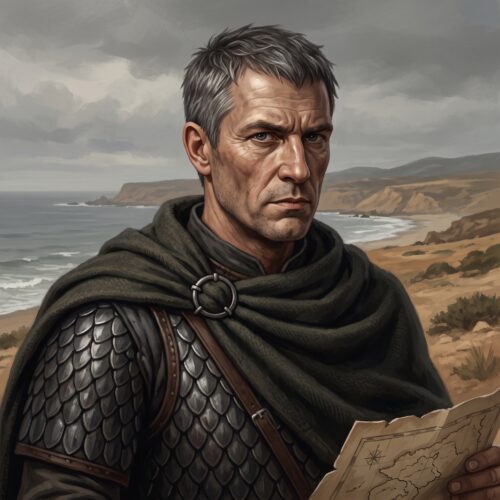
Along the frozen banks of the Rhine River, a shivering confederation of Vandals (specifically the Hasdingi and Silingi branches), along with the Iranian-speaking Alans and the Germanic Suebi, stood staring across the frozen water. Behind them were the Huns—horsemasters of terrifying velocity and ruthless efficiency who were driving every tribe west of the Carpathians into a blind panic. Ahead of them lay Roman Gaul.
When the river froze solid on New Year’s Eve, the tribes crossed the ice en masse. They did not cross as an elite invasion army looking for glorious conquest; they crossed as desperate families pushing wooden carts filled with copper pots, ragged sheep, and terrified children.
For two decades, these groups wandered across Gaul and down into Hispania (modern Spain), constantly harassed by Roman legions and rival Visigoths. They were treated as peripheral annoyances, slaughtered in piecemeal skirmishes, and driven into the arid, rocky southern heel of the Iberian Peninsula. By the late 420s, the Vandals looked like a footnote waiting to happen. The Roman governor in Spain regularly penned smug dispatches describing them as trapped against the sea, starved of resources, and incapable of posing an existential threat to the empire.
Enter Genseric.
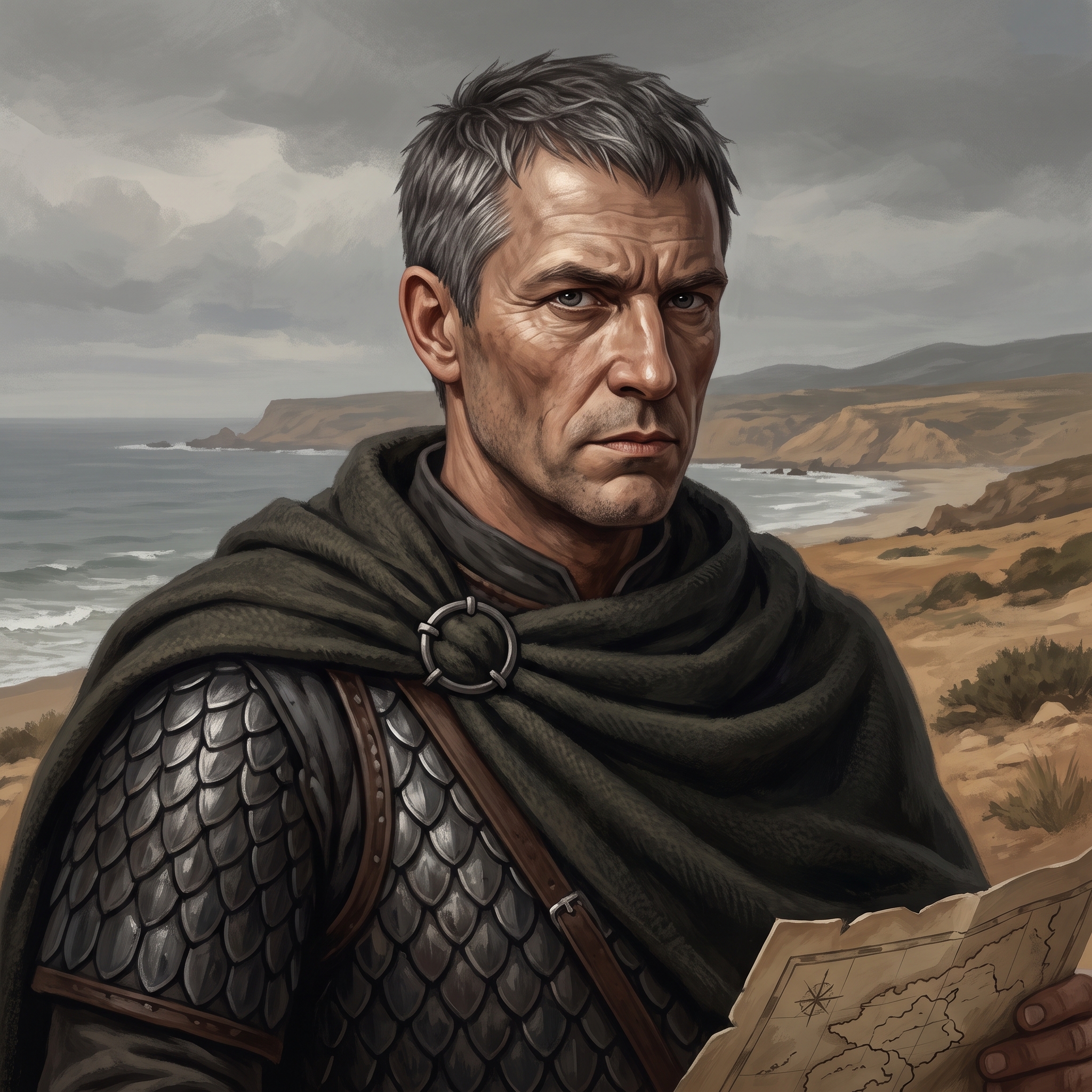
Elected king of the Hasdingi Vandals in 428 AD following the death of his half-brother Gunderic, Genseric was anything but a Hollywood-style barbarian chieftain. Roman chroniclers, who loathed him with every fiber of their aristocratic souls, grudgingly recorded that he was relatively short, walked with a noticeable limp (caused by a fall from a horse in his youth), spoke with cold brevity, despised luxury, possessed a volcanic temper held in check by terrifying iron self-discipline, and had a mind like an operational ledger.
Where other tribal leaders dreamed of burning down villas and stealing gold candlesticks, Genseric thought in terms of logistics, supply chains, leverage, and deep geography. He looked at the map of the Mediterranean and realized what the Roman elites had forgotten: Rome did not run on the bravery of its legions; Rome ran on bread.
Part II: The Masterstroke Across the Sea
In the fifth century, the city of Rome had a population hovering around half a million to eight hundred thousand souls. The Italian peninsula had long ceased to produce enough grain to feed its massive urban centers. The Italian aristocracy had converted most of the arable land in Campania and Etruria into luxury olive groves, vineyards, and sprawling vacation villas.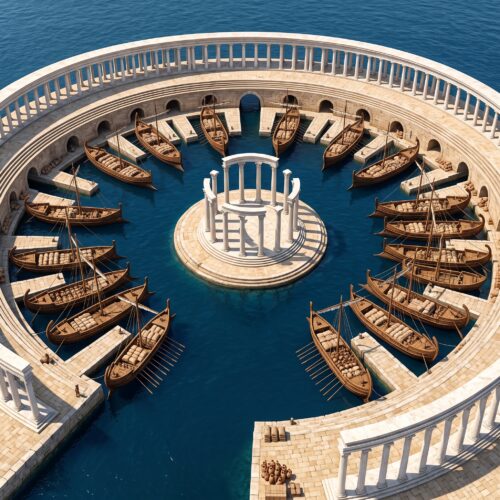
The entire western imperial apparatus was kept alive by the annona civica—a colossal, state-managed naval supply chain that transported hundreds of thousands of bushels of wheat, barley, olive oil, and dried legumes every single month across the Tyrrhenian Sea from the Roman province of Africa Proconsularis (modern Tunisia and eastern Algeria).
If North Africa sneezed, Rome starved. If North Africa stopped shipping grain, the Roman legions could not be paid, the urban mob in the capital would riot, and the Western Roman court—then hiding behind the salt marshes of Ravenna—would be politically paralyzed.
Genseric understood this vulnerability with surgical clarity.
In May of 429 AD, he orchestrated one of the greatest logistical feats of antiquity. Gathering roughly eighty thousand people—of whom barely fifteen to twenty thousand were fighting men, the rest being women, the elderly, children, and enslaved camp followers—Genseric commandeered hundreds of merchant vessels, fishing boats, and rafts. In disciplined waves, he ferried his entire nation across the treacherous Strait of Gibraltar from Tarifa to Ceuta.
The Roman leadership was baffled. Africa was supposed to be safe. It was separated from barbarian turmoil by the entire Mediterranean Sea. It had been Roman for nearly six centuries, ever since Scipio Aemilianus burned Punic Carthage to the ground in 146 BC. Roman Africa was a landscape of opulent mosaic-floored villas, sprawling olive presses, Roman baths, and marble basilicas. The Roman aristocracy in Carthage lived lives of unimaginable luxury, sipping Falernian wine, listening to poetry, and arguing about theological nuances while their estates ran on the labor of Berber farmers and enslaved workers.
For ten years, from 429 to 439 AD, Genseric played a slow, deliberate, geopolitical game of chess. He marched east across modern-day Morocco and Algeria. When the Roman supreme military commander, Flavius Aetius, realized the mortal danger, he dispatched Count Bonifacius with Roman field armies to stop him. Genseric defeated Bonifacius in the field, laid siege to Hippo Regius (where the great philosopher Saint Augustine famously died inside the walls during the siege in 430 AD), and forced Ravenna into a humiliating treaty in 435 AD.
Under the 435 treaty, the Romans thought they had outsmarted the barbarian king. They gave Genseric control of peripheral, poorer territories in Numidia and Mauretania, while Rome retained Carthage and the prime grain-producing plains. The imperial court congratulated itself on its diplomatic mastery. The Roman elites in Carthage sighed with relief, popped open new amphorae of wine, and returned to their lavish banquets, literary salons, and afternoon chariot races.
They thought the crisis was over. Genseric was simply waiting for the right day on the calendar.
Part III: October 19, 439 AD – The Fall Without a Fight
October in the Mediterranean is the month of seasonal transition. The sailing season was officially coming to a close for the winter. In the great circular naval harbor of Carthage—the Cothon, an engineering marvel originally constructed by the ancient Phoenicians and expanded by Rome—dozens of massive, deep-hulled Roman grain freighters (onerariae) were tied up at the quays, loaded with the final shipments of wheat and oil intended for the Italian granaries.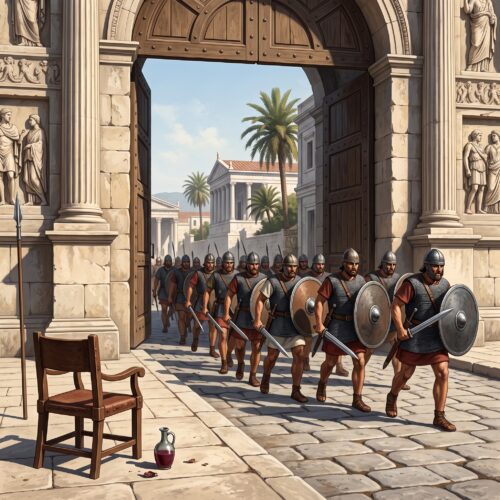
The city felt impregnable. Carthage was surrounded by massive stone curtains, reinforced with defensive towers, and protected by wide moats. To take such a city by traditional siege would require years, hundreds of siege engines, and tens of thousands of casualties.
Genseric did not bring siege engines. He brought a calendar, an intelligence network, and an acute understanding of human psychology.
Through scouts, merchants, and local disaffected provincial workers, Genseric had learned that October 19 was a major civic holiday in the city. The Roman governor and the municipal magistrates had sponsored an extravagant program of games, theatrical shows, and chariot races at the hippodrome to celebrate imperial unity and distract the urban populace from soaring inflation.
On the morning of October 19, 439 AD, virtually the entire civilian population and the garrison guards poured into the circus. The roar of the crowd was deafening. Down on the track, the teams were flying around the turning posts (metae), whip-cracks echoing off marble columns, while thousands screamed at the top of their lungs.
Outside the southern gates, Genseric’s vanguard appeared.
They did not rush the gates with flaming torches or screaming battle cries. They moved quickly, quietly, and in tight formation. Finding the outer checkpoints undermanned, the gate watchmen distracted, and key defensive positions abandoned by guards who had snuck off to watch the chariot heats, the Vandals simply walked in.
The chronicler Prosper of Aquitaine recorded the event with cold despair. By the time the roar of the racetrack died down, Genseric’s soldiers had already secured the administrative palace on the Byrsa hill, seized the municipal treasuries, cordoned off the granaries, and taken command of the Cothon harbors.
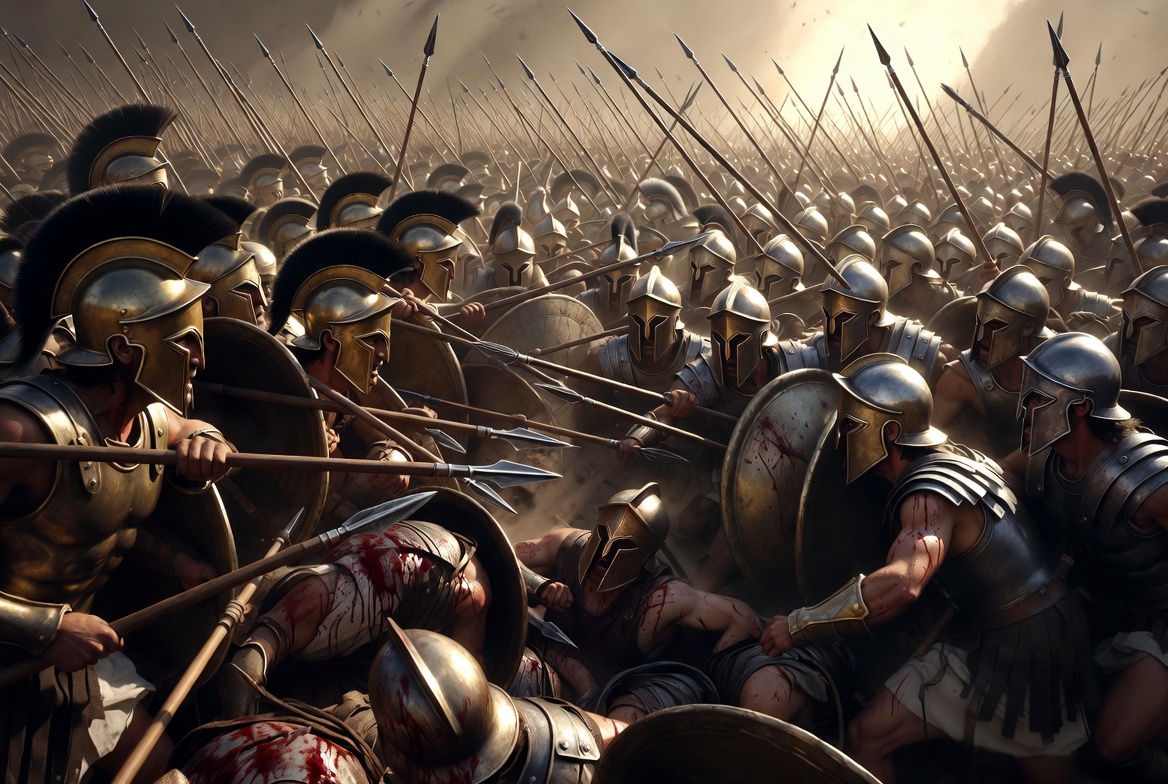
There was no epic battle on the walls. There was no glorious heroic stand by Roman legionaries. The greatest strategic hub in the Western Roman world fell not because the defenders were overpowered, but because they were entirely asleep at the switch, blinded by amusement and paralyzed by the arrogant assumption that because Carthage had not fallen in six hundred years, it could never fall on a random Tuesday in October.
Part IV: The Asymmetrical Coup That Broke an Empire
Capturing Carthage was sensational, but what Genseric did on the afternoon of October 19, 439 AD, turned a tactical raid into an empire-shattering catastrophe.
The Vandals were traditionally horsemen and cattle pastoralists from the plains of Central and Eastern Europe. They knew almost nothing about naval architecture. They had no tradition of ocean navigation.
Yet Genseric did not burn the Roman grain ships. Instead, he immediately nationalized every single vessel in the Carthage harbor, confiscated the dry docks, conscripted the Roman shipwrights, cartographers, and navigators, and transformed a land-locked tribal confederation into the undisputed naval superpower of the Western Mediterranean virtually overnight.
The strategic fallout was immediate and catastrophic:
- Total Grain Embargo: Genseric instantly gained a chokehold on Rome’s food supply. If the Roman Senate or Emperor Valentinian III made a move against him, Genseric simply delayed the grain fleet. Bread prices in Rome spiked uncontrollably. Food riots erupted in the Forum. The Western Roman Empire was forced to spend massive sums of its dwindling gold reserves just to buy back grain from the very territory it had owned twenty-four hours earlier.
- Fiscal Decapitation: North Africa was the primary tax base of the Western Empire. The agricultural revenues from Africa Proconsularis paid the salaries of the Roman legions defending northern Italy, Gaul, and the Danube. In one single afternoon, Rome lost over forty percent of its imperial tax revenue. Within two years, Roman armies were disintegrating because the state could no longer afford to pay the troops or provide their gear.
- The Creation of Mediterranean Piracy: Using Carthage’s naval infrastructure, Genseric launched annual amphibious raids across the Mediterranean. Vandal fleets raided Sicily, Sardinia, Corsica, the Balearic Islands, and mainland Greece. Sixteen years later, in June 455 AD, Genseric sailed his Carthage-built fleet straight up the Tiber River and executed the infamous Sack of Rome—systematically stripping the capital of its gold, silver, bronze, imperial regalia, and aristocratic hostages with such clinical precision that not a single public building was burned, yet the empire’s cultural treasury was completely emptied.
Modern historians often debate the precise date when the Western Roman Empire truly died. Was it 476 AD, when the barbarian general Odoacer deposed the teenage boy-emperor Romulus Augustulus? Was it 410 AD, when Alaric sacked Rome?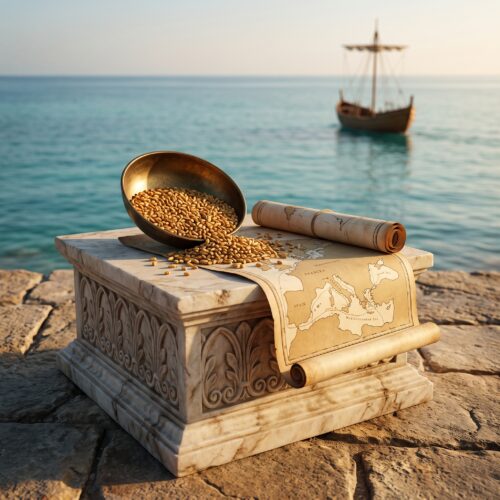
A growing consensus among economic and military historians argues that the real, fatal, irreversible blow landed on October 19, 439 AD. When Genseric walked through the gates of Carthage, the Western Roman Empire ceased to be an empire. It was reduced to a hollow, bankrupt Italian rump state living on borrowed time.
And the entire catastrophe occurred because a civilization focused entirely on its own spectacles forgot to guard the single pipeline that kept it alive.
Part V: Why the Fall of Carthage Matters to You Today
It is tempting to read about fifth-century Romans losing an ancient grain port and treat it as dusty, irrelevant trivia. But look past the tunics and Latin names, and you find the exact psychological pattern that destroys individuals, careers, projects, and personal health in the modern world.
Consider the Roman mindset on October 18, 439 AD:
- “We’ve always had food delivered to our door.”
- “Our walls are thick enough; we don’t need to do active maintenance.”
- “Someone else is managing the difficult logistics.”
- “Let’s just enjoy the games; tomorrow will be just like today.”
Now consider Genseric’s mindset:
- “Identify the single bottleneck upon which the entire opponent depends.”
- “Ignore the distractions and perform the difficult work when everyone else is asleep.”
- “Do not destroy the resources you capture; convert and master them.”
- “Leverage physical limitations into tactical patience.”
Most modern advice focuses on broad, hollow cliches: “Work hard,” “Stay positive,” “Wake up at 5:00 AM,” or “Manifest your goals.” These slogans are the motivational equivalent of screaming at chariot races while the gates are wide open. They produce a brief dopamine hit of emotional excitement while leaving your foundational life systems completely uninspected, unfortified, and vulnerable to disruption.
Genseric did not win because he possessed positive energy. He won because he executed cold, asymmetrical systems thinking against an opponent blinded by complacency.
Here is how you apply the brutal, brilliant lessons of October 19, 439 AD, to your own daily life.
Part VI: The Strategic Architecture: Specific Lessons from the Vandal Masterstroke
To translate Genseric’s victory into practical benefits for your life, we must dissect the operational mechanics of the historical event:
- The Single Point of Failure (The Grain Fleet Trap): Rome built magnificent aqueducts, marble temples, and military barracks, but the entire civilization relied on a single maritime supply line from Carthage. In personal life, individuals routinely build impressive “front yards”—glamorous titles, expensive clothes, or curated social media profiles—while relying on a single employer, a single fragile revenue stream, or a single fragile emotional crutch. If that single pipeline is severed, the entire facade collapses.
- The Noise-to-Signal Exploitation: Genseric chose a holiday because he knew high-stimulation environments degrade human situational awareness. The modern world is an infinite hippodrome. Push notifications, 24-hour news cycles, algorithmically engineered feeds, and low-stakes drama serve as the chariot races of our time. While you are busy arguing about internet “races,” your competitors, your health debts, and your neglected financial blind spots are marching right up to your gates.
- Asymmetrical Skill Acquisition: Genseric’s people were steppe and forest dwellers who had never operated sailing vessels. Instead of staying within their traditional comfort zone, they seized the Roman ships and forced themselves to become Mediterranean admirals. True personal growth is rarely about polishing skills you already possess; it requires systematically conquering domain areas you currently find foreign, intimidating, or completely unnatural.
- The Power of the Decisive Strike Over Prolonged Attrition: Genseric did not spend ten years dying in trenches outside Carthage’s walls. He positioned his resources patiently, waited for the exact structural moment of vulnerability, and resolved a decade-long conflict in less than six hours. Most people spend years fighting exhausting wars of attrition with their habits—yo-yo dieting, sporadic work bursts, messy multitasking—because they never execute clean, decisive structural changes to their daily environment.
- Turning Adversity into Strategic Leverage: Genseric was permanently lame from an injury, ruled a fractured confederation, and was vastly outnumbered by the Roman legions. He did not attempt to beat Rome at Rome’s game (heavy infantry field warfare). He attacked Rome where Rome was physically incapable of fighting back (supply-line interdiction). Your perceived weaknesses, your background, or your lack of traditional credentials become an advantage the moment you stop competing on the established rules of entrenched incumbents.
Part VII: The Carthage Defense & Offensive Execution Framework
To ensure this historical analysis translates into concrete life performance, reject standard self-help generalities. You do not need another motivational platitude; you need an operational framework designed to audit vulnerabilities, capture critical supply lines, and execute with disciplined patience.
This is a structured, tactical blueprint built directly on the strategic principles of October 19, 439 AD.
Phase 1: The Bottleneck Audit (Identifying Your Unprotected Carthage)
Before launching new ambitions, you must secure the vulnerabilities that could bring down your entire personal structure.
- Map the Single Points of Failure:
List the three primary systems that keep your life operating: Financial (your income sources), Physical (your baseline energy and health), and Operational (your core daily habits). Identify the single component in each category that, if removed tomorrow, would cause immediate crisis. That component is your Carthage.
- Audit the “Chariot Races” Consuming Your Bandwidth:
Track your high-dopamine, low-return activities across the last seven days. These are the noisy distractions pulling your attention away from structural maintenance. Quantify the exact hours spent watching spectacles rather than building defenses.
- Inspect the Gate Guards:
Identify which critical routines have been abandoned due to familiarity. Have you stopped tracking core expenditures because “things are fine”? Have you neglected foundational sleep or mobility because you haven’t been injured recently? Re-establish baseline monitoring on every open gate.
Phase 2: The Genseric Shift (Asymmetrical Skill Acquisition)
Transform from a passive defender into an adaptive operator by seizing unfamiliar tools.
- Identify the Adjacent Fleet:
Pinpoint one technical, logistical, or professional skill completely outside your current identity that directly amplifies your primary craft. If you are creative, learn distribution and analytical data. If you are analytical, master persuasive communication. If you are non-technical, learn workflow automation.
- Deconstruct the Requisition Process:
Do not spend three years getting a theoretical background before taking action. Like the Vandals seizing Roman dry docks, jump directly into hands-on utility. Build a live project using the unfamiliar skill within fourteen days, even if the execution is crude. Functional utility beats theoretical perfection every time.
- Turn Constraints into Tactics:
Stop waiting for ideal conditions, perfect energy, or traditional credentials. Identify your greatest personal limitation (time constraints, geographic friction, physical bottlenecks) and design a daily operating rhythm that bypasses standard competition entirely.
Phase 3: The 72-Hour Rapid Mobilization Sprint
Convert long-delayed strategic initiatives into immediate, irreversible momentum.
- Hour 1 to 12 (Target Selection):
Select the single most intimidating, high-leverage project you have deferred for more than six months. It must be a structural project—such as setting up an automated investment pipeline, overhauling your professional resume and outreach pipeline, or cutting a toxic commitment—not a minor cosmetic adjustment.
- Hour 13 to 36 (Quiet Assembly):
Assemble all required materials, contact information, research, and technical tools in total secrecy. Do not post on social media about what you are going to do. Do not seek external validation from peers. Maintain operational silence until the execution is complete.
- Hour 37 to 60 (The Gate Strike):
Execute the decisive structural shift in a single focused working block. Submit the application, deploy the system, terminate the draining contract, or liquidate the unnecessary overhead. Move before emotional hesitation, comfort, or distraction can mount a counter-offensive.
- Hour 61 to 72 (Securing the Harbor):
Immediately establish permanent locks on the new state. Put automated deposits in place, change system passwords, set up non-negotiable calendar blocks, and establish clear documentation. Ensure that reverting to the old, lazy status quo requires vastly more effort than maintaining the new standard.
Part VIII: The Final Reckoning
On October 20, 439 AD, the sun rose over a Carthage that was fundamentally unchanged in its physical beauty. The marble columns of the forum were pristine. The waves still rolled gently into the Gulf of Tunis. The white villas still overlooked the sapphire water.
Yet everything that mattered had altered forever. The grain ships no longer answered to Rome. The economic engine of an empire had slipped out of imperial hands in the span of a single afternoon.
The Roman elite did not lose North Africa because their enemies possessed supernatural powers. They lost North Africa because they mistook longevity for invincibility, distraction for peace, and complexity for strength. They assumed that because their world had always worked, it would always continue to work, regardless of how much attention they paid to its underlying mechanics.
Genseric didn’t listen to the roar of the hippodrome. He walked past the grandstands, walked into the harbor, untied the ropes of the grain fleet, and sailed into history.
The lesson of this day is as clear now as it was when the dust settled over the Tunisian coast:
Stop screaming at the circus. Step out of the grandstands. Audit your personal supply lines, shore up your open gates, seize the tools you thought were foreign to you, and execute your work with quiet, unrelenting discipline.
The people who control their own grain control their own destiny. Everything else is just noise from the stands.
Share: