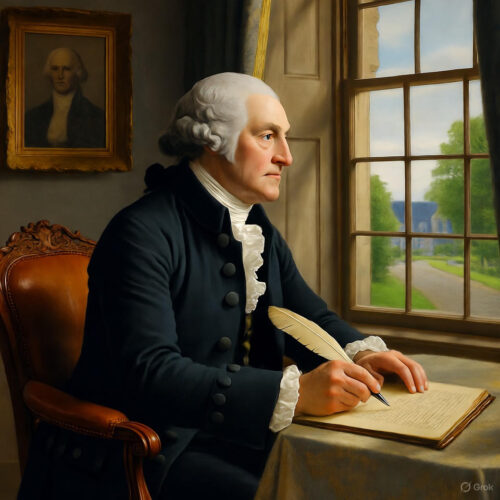

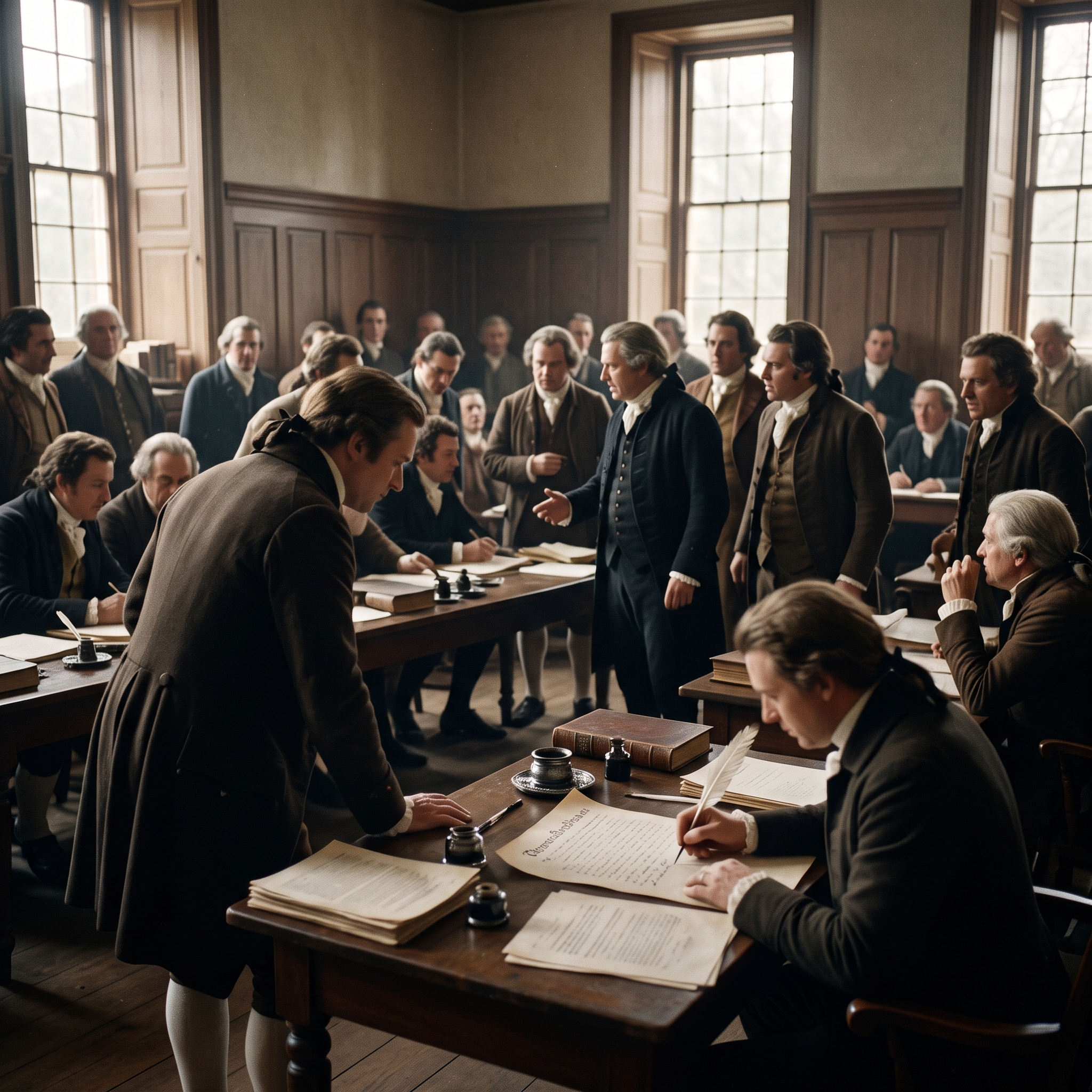
History loves a tidy scene. School textbooks adore polished oil paintings where immaculate men in powdered wigs strike heroic poses on marble steps, clutching parchment like sacred scripts descended from the heavens. In those paintings, liberty always looks neat, orderly, and decided by men whose linen shirts cost more than an average farm.
Reality, however, smelled of wet wool, pine pitch, sulfur smoke, and human hypocrisy thick enough to choke an ox.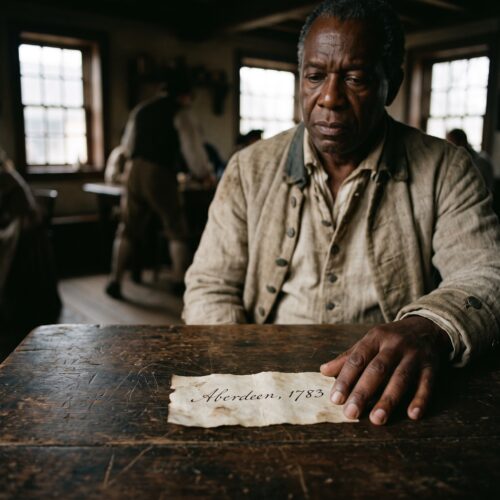
On October 20, 1783, inside the newly designated Virginia State Capitol at Richmond, the General Assembly convened its autumn session to reckon with an awkward, glaring, monumental scandal. The Revolutionary War was officially over. The Treaty of Paris had been signed mere weeks earlier in September 1783, confirming that thirteen scrappy former colonies had severed their apron strings from King George III. Men who called themselves Patriots were busy toasting liberty in taverns, waxing poetic about universal inalienable rights, and dusting off the classic Thomas Jefferson lines about how all men are created equal.
Yet sitting right in front of the legislators was an undeniable legal dilemma. During the grimmest years of the war, wealthy plantation owners had faced compulsory military draft quotas. Lacking any desire to sit in freezing trenches at Valley Forge, risk typhus, or catch British musket balls in their intestines, dozens of these wealthy masters pulled off the ultimate aristocratic trick: they took their enslaved laborers, dragged them down to recruitment officers, swore with straight faces that these men were legally free laborers enlisting voluntarily as substitutes, pocketed the state substitute bounties, and sent them off to bleed in their place.
The enslaved men marched into battle. They carried muskets, manned gunboats in the Virginia State Navy, endured winter freezes without shoes, and faced bayonet charges under the Continental flag.
Then came victory. The smoke cleared. Cornwallis surrendered at Yorktown. The surviving Black substitute soldiers limped back home, nursing shrapnel wounds and frostbitten feet, expecting to live as free men under the newborn flag of freedom.
Their masters promptly clapped them back into irons.
The slaveholders looked at the law and argued, with jaw-dropping audacity, that because the men had originally been property, their military enlistments were null and void, meaning their battlefield heroism had simply been uncredited free overtime. The masters demanded their human collateral returned immediately for plantation labor.
The entire moral legitimacy of the American Revolution hung over that hideous swindle. And right at the storm center of the legal counterstrike stood one man whose individual valor made it utterly impossible for lawmakers to look away: an enslaved naval veteran known to history simply as Aberdeen.
When the Virginia General Assembly met on October 20, 1783, they were forced to draft and pass Chapter III of the 1783 Acts of Assembly: “An act directing the emancipation of certain slaves who have served as soldiers in this state, and for the emancipation of the slave Aberdeen.”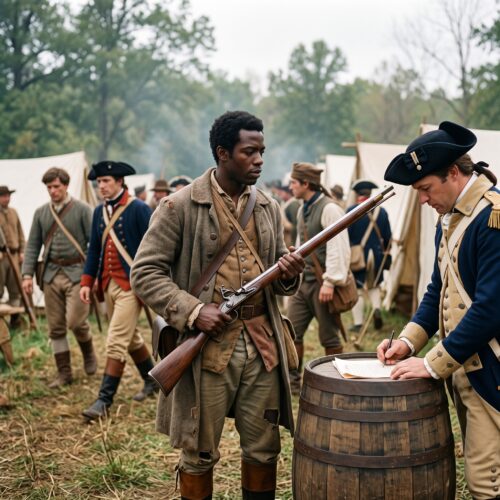
Aberdeen had performed so brilliantly during naval actions against British raiders along the Virginia waterways that the legislature could not merely pass a general emancipation law; they named him specifically in the statute, buying his permanent freedom out of the public treasury and creating one of the earliest, sharpest victories of battlefield leverage over systemic deceit in American history.
It is an unbelievable piece of distant American history—scandalous, absurd, inspiring, and completely unscrubbed.
The Great Patriot Shell Game
To understand what happened on October 20, 1783, you must first appreciate the staggering logistics of avoidance that characterized the Revolutionary home front.
When the Revolutionary War began, Virginia’s gentry possessed an almost poetic enthusiasm for liberty, provided that liberty could be won by someone else. Patriot orators made fiery speeches about breaking the chains of British tyranny. But by 1777, General George Washington was writing increasingly exasperated letters to colonial governors begging for warm bodies to fill his decimated ranks. Smallpox was raging, Continental currency was depreciating faster than bad fish in July, and the enlistment terms of early volunteers were expiring.
The Virginia Assembly responded by passing draft acts that divided the state’s militia-eligible white males into classes, each responsible for producing one fully equipped soldier. If your class failed to provide a recruit, one of you would be drafted by lot.
Naturally, the wealthiest men looked around the room and decided that pulling a straw sounded like a terrible hobby.
Under Virginia law, enslaved men were strictly barred from bearing arms in the military. The planter elite was terrified of slave rebellions—a reasonable anxiety when you are brutally keeping hundreds of thousands of people in bondage while holding dinner parties about the rights of man. But panic has a funny way of adjusting ethical consistency. As the British southern strategy escalated and redcoats under Benedict Arnold and Lord Cornwallis began raiding Chesapeake plantations, Virginia recruiters became much less particular about paperwork.
Wealthy draftees saw a golden loophole. They took enslaved men and told them: “Go take my spot in the line. Enlist under your own name, tell the recruiting sergeant you are a freeman, survive the war, and when it’s over, you’ll be a free citizen.”
The recruiting officers knew it. The masters knew it. The enslaved men, recognizing that the brutal lottery of war offered a tiny, perilous sliver of a path toward dignity and autonomy, stepped up and seized it.
Some fought in continental line regiments at Monmouth, Camden, and Yorktown. Others took to the treacherous coastal waterways of the Chesapeake.
The Virginia State Navy was not a fleet of grand three-deck battleships. It was a ragtag collection of armed schooners, galleys, pilot boats, and row-galleys designed to navigate shallow inlets, escort supply craft, and fight running, brutal gun-battles with British privateers and foraging parties. Handling these boats required immense skill. The waters of the Chesapeake and its tributaries—the James, the York, the Rappahannock—were labyrinths of shoals, tide rips, sandbars, and narrow channels.
Enslaved watermen possessed that institutional knowledge. Generations of enslaved Virginians had worked the fisheries and cargo boats. They could read the color of the water like a printed map and pilot heavy vessels in pitch-black conditions.
Enter Aberdeen.
Aberdeen was assigned to public labor and the naval defenses of the Commonwealth. While many free men abandoned the maritime service due to lack of pay, spoiled provisions, and the horrifying lethality of naval skirmishes, Aberdeen stayed at his post. During repeated encounters with British naval forces, he showed exceptional gallantry and technical expertise. He was not merely a laborer hauling ropes; he distinguished himself under direct enemy fire, keeping vessels operational and saving state property and Patriot lives when others broke.
His performance was so undeniably heroic that colonial officers and observers—white men steeped in the racial hierarchy of 18th-century Virginia—took official notice. They made formal reports. They wrote letters. In a military system where Black service was routinely downplayed or attributed to the owner’s credit, Aberdeen forced his name into the record through sheer, unassailable competence.
The Victory Swindle
When the British guns fell silent and the redcoats boarded their evacuation transports, the newly sovereign Americans sat back to enjoy their hard-won paradise.
That is when the masters pulled their move.
The masters did not hold welcome-home parades for their Black substitutes. They did not hand them farmsteads or certificates of gratitude. Instead, they sent overseers, constables, and slave-catchers to round them up.
The masters’ legal argument was staggering in its cynicism. They stated that under Virginia law, an enslaved person had no legal right to enter into a contract. Military enlistment was a legal contract. Therefore, the original enlistment was fraudulent and void. The fact that the master himself had driven the man to the recruiter, lied about his status, and pocketed the cash bounty was brushed aside as a minor procedural hiccup. As far as property law was concerned, the enslaved soldier had merely been leased to the state, and now that the military contract was finished, the chattel had to return to the tobacco rows.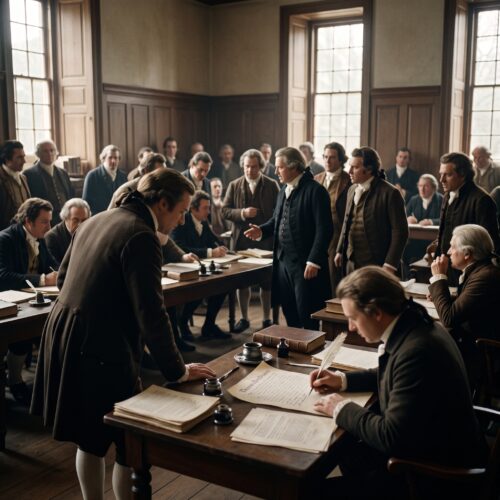
Imagine the sheer gall. You send a man to endure cannon fire, frostbite, and gangrene on your behalf. He wins your country its independence. And your response upon his return is to tell him to put down his musket, grab a hoe, and keep quiet.
This was not a rare, isolated event; it was happening across Virginia. Former soldiers who had marched alongside white comrades found themselves grabbed on roads, stripped of their uniforms, and dragged back into the quarters.
However, the veterans refused to go quietly. They petitioned. Officers who had witnessed their men’s courage on the battlefield were appalled by the shameful cowardice of the stay-at-home planters. Military commanders who had seen Black substitutes stand their ground while militia units broke and fled were disgusted that the legal machinery of Virginia was being weaponized to reduce these men back to slavery.
By the autumn of 1783, the controversy had reached a boiling point.
Richmond, October 20, 1783: The Lawmakers Cornered
When the Virginia General Assembly opened its session in Richmond on October 20, 1783, the legislative slate was packed with post-war chaos: debts owed to British merchants, land grants to disgruntled soldiers, worthless paper money, and destroyed infrastructure.
Yet among the very first items brought forward was the unresolved outrage of the substitute veterans and the legendary naval pilot Aberdeen.
The legislature could not dodge the question. If the Commonwealth of Virginia permitted masters to re-enslave men who had legally stood in the ranks of the Patriot army, the state would be confessing to the entire world that its glorious Revolution was a total fraud. How could Patrick Henry shout about liberty or death if Virginia’s official policy was to reward wartime saviors with chains?
The resulting legislation, enacted from this pivotal October 20 session, is one of the most remarkable legal texts of the American Revolutionary era. The bill did not mince words. Its preamble laid bare the repulsive behavior of the wealthy masters with devastating clarity:
“Whereas it hath been represented to the present General Assembly of Virginia, that during the late war, many persons in this state had caused their slaves to enlist in certain regiments or corps raised within the same, having tendered them to the officers appointed for that purpose, as substitutes for free persons, whose lot or duty it was to serve in such regiments or corps, at the same time representing to such recruiting officers that the slaves so enlisted were freemen: And whereas it appears just and reasonable that all persons enlisted as aforesaid, who have faithfully served agreeable to the terms of their enlistment, and have thereby of course contributed towards the establishment of American liberty and independence, should enjoy the blessings of freedom as a reward for their said services; and that each of the said persons should have his freedom from the time of his enlistment…”
The law struck with uncompromising legal force. It commanded that any enslaved person who had served as a substitute and completed their term was declared, by law, completely and permanently emancipated. If any master dared to seize them, the Attorney General of Virginia was ordered to sue the master on the veteran’s behalf without fees, and the courts were instructed to award damages to the veteran for unlawful imprisonment.
Then came Section II of the statute.
The general law covered those who had enlisted as infantry substitutes in the Continental and militia regiments. But Aberdeen’s case was distinct. He had served in the Virginia State Navy and on public works where substitute rules had not applied in the identical manner, yet his personal courage had saved ships and lives.
The General Assembly wrote Aberdeen directly into Virginia law:
“And whereas the slave Aberdeen hath by his faithful services in the Navy of this State, during the late war, distinguished himself so much as to attract the notice of the General Assembly; Be it therefore enacted, that the said slave Aberdeen shall be, and he is hereby, emancipated and set free, to all intents and purposes…”
To make sure his master could not retaliate or file endless legal claims, the Commonwealth paid Aberdeen’s owner compensation out of the state treasury.
Aberdeen walked out of bondage as a legally recognized, fully free veteran, carrying an act of parliament bearing his own name as his shield.
The Irony That Cuts Both Ways
Before anyone cues up the patriotic fife-and-drum music, let us pause to examine the razor-sharp irony embedded in this moment.
The Virginia General Assembly of 1783 was not suddenly converted to racial egalitarianism. They did not end slavery. They did not liberate the wives, children, or parents of the men who had fought. They only freed the men whose blood on the battlefield was so undeniable that maintaining their enslavement would have detonated Virginia’s moral defense on the world stage.
The law was an admission of guilt forced by undeniable leverage.
The masters thought they were playing a game where they held all the cards: the property rights, the courts, the social standing, and the legal statutes. They believed that an enslaved man was a disposable asset you could hire out to face bullets and then whistle back to the shed once the danger had passed.
Aberdeen and his fellow veterans shattered that calculation. By performing their duties with undeniable precision and valor, they turned their performance into an inescapable institutional debt. They created a reality where the state could not survive its own legal and moral scrutiny without honoring the contract.
They beat the system using the system’s own desperate promises.
The Modern Dilemma: Why You Are Playing the Same Shell Game
You are probably thinking: “Fascinating story, but I don’t live in an 18th-century slave state, I’m not dodging cannon fire on a wooden galley, and nobody is trying to substitute me into an infantry regiment.”
Are you sure about that?
Look at your everyday modern existence. Look at how corporate hierarchies, volatile markets, social expectations, and institutional structures operate around you.
How many times have you been pushed into taking the risk while someone else hoarded the upside?
Think about it:
- The employer who promises that if you work seventy hours a week, crush your weekends, and bail out a broken project, you’ll be in line for equity or that career-making promotion—only to hand you a branded company water bottle and an annual 2% cost-of-living adjustment while executive bonuses hit record highs.
- The family dynamic where you are expected to be the emotional shock absorber, managing everyone’s crises and sacrificing your own sanity, while the people creating the chaos face zero accountability.
- The commercial market that constantly invites you to gamble your time, attention, and mental peace on volatile trends, algorithmic feeds, and endless subscription traps designed to harvest your productivity while leaving you burned out and empty-handed.
That is the modern version of the Patriot Shell Game. Modern systems love to outsource the risk to you while reserving the ownership for themselves. They rely on you quietly accepting that your efforts are simply part of the deal, hoping you won’t realize that you’ve been doing the heavy lifting while they pocket the dividends.
Most people handle this dilemma by falling into one of two traps:
- Passive Resignation: They keep working themselves to the bone, hoping that if they just survive one more cycle of exploitation, the powers that be will magically develop a conscience and reward them out of pure benevolence. (Spoiler: They won’t.)
- Generic Internet “Self-Help” Defeatism: They read standard pop-psychology advice telling them to “manifest abundance,” “set soft boundaries,” or “take a mental health bubble bath.”
Aberdeen did not take a bubble bath. Aberdeen did not manifest freedom on a vision board.
Aberdeen developed such undeniable, high-leverage utility that the governing body of Virginia had to pass a custom law naming him individually just to keep their entire post-war legal system from collapsing under its own hypocrisy.
He converted extreme external utility into permanent individual freedom.
Here is how you apply that exact 1783 operational leverage to your life today.
The Aberdeen Strategic Directive: 6 Rules for Winning Against Asymmetric Systems
Before we look at your execution plan, you must internalize the strategic principles that allowed substitute soldiers like Aberdeen to beat an asymmetric game:
- Rule 1: Never Rely on Systemic Benevolence.
The Virginia planters never woke up on October 20 and said, “You know what? We should be nice to these men.” They fought tooth and nail to keep them enslaved. Systems do not reward sacrifice out of gratitude; they concede benefits only when withholding them creates an unsustainable institutional cost. Stop waiting for your company, your boss, or your toxic acquaintances to “realize your worth.” You must structure your environment so that recognizing your value is their only viable option.
- Rule 2: Cultivate Critical Navigation Skills.
Aberdeen was not a generic laborer; he was a specialist in the treacherous waters of the Chesapeake. When bullets were flying, amateur navigators ran ships onto shoals. Aberdeen’s skills were irreplaceable under pressure. If your day-to-day skills can be replicated by an off-the-shelf software tool or a lower-cost worker in thirty minutes, you have zero leverage. You must become the person who knows the shoals, the currents, and the hidden mechanics of your craft.
- Rule 3: Force Public Accounting of Pledges.
The substitute veterans won because their service was registered in official muster rolls and backed by the testimony of officers who witnessed it. If you take on high-stakes work in private, you will be exploited in private. Every risk you shoulder must be documented, visible, and tied directly to the person who asked you to carry it.
- Rule 4: Recognize the Substitution Trap Early.
Whenever someone asks you to step into a difficult, high-risk situation on their behalf, ask yourself: “Who gets the bounty if I succeed, and who bleeds if I fail?” If the upside belongs entirely to them and the downside belongs entirely to you, you are being used as a substitute soldier. Either demand contractual equity before you step onto the field, or refuse the deployment.
- Rule 5: Leverage Institutional Hypocrisy.
The Virginia Assembly had a catastrophic vulnerability: they had just staked their entire global reputation on the Declaration of Independence and natural liberty. Every institution has a stated code of ethics, mission statement, or public posture. When you align your demands directly with their public principles, you make it excruciatingly embarrassing for them to deny you.
- Rule 6: Secure Your Emancipation Certificate.
Aberdeen didn’t settle for a verbal “thank you” or a polite pat on the shoulder. He got a legislative statute stamped by the Commonwealth. When you achieve an outcome, convert that victory into permanent autonomy—tangible ownership, verifiable portfolio assets, equity, contracts, or credentials that nobody can strip away when the management winds change.
The Aberdeen Audit & Leverage Protocol: A 14-Day Blueprint
This is not a feel-good meditation routine. It is a calculated, forensic extraction of leverage designed to stop you from being used as someone else’s substitute soldier and secure your individual autonomy.
Execute this protocol over the next fourteen days.
Phase 1: The Substitution Audit (Days 1–3)
Identify where you are absorbing disproportionate risk for someone else’s gain.
- Day 1: Map the Liabilities.
-
- Sit down with pen and paper (no screens). Draw three columns: Task/Obligation, Who Requested It, and Who Captures the Upside.
-
- List every major project at work, every interpersonal dynamic, and every financial commitment you are currently carrying.
-
- Identify the “Ghost Enlistments”: tasks where you carry the blame if it collapses, but someone else collects the bonus, credit, or peace of mind if it succeeds.
- Day 2: Identify the Exploitation Mechanism.
-
- Determine the specific leverage being used against you. Are you staying quiet because of vague promises of future promotion? Fear of conflict? Habitual people-pleasing?
-
- Write down the exact currency you are being paid in. If that currency is “exposure,” “gratitude,” or “promises of next quarter,” write down its real valuation: $0.00.
- Day 3: The Chesapeake Inventory.
-
- Catalog your specific, rare technical competencies—your personal navigational skills. What operational knowledge do you hold that would cost the system massive time or capital to replace?
-
- Highlight the two skills that make you indispensable in a crisis. These are your naval artillery.
Phase 2: Evidence Hardening (Days 4–7)
Build an unassailable record of your performance before demanding structural change.
- Day 4: Establish the Paper Trail.
-
- Stop having verbal agreements about project outcomes, deadlines, and responsibilities.
-
- Implement the “Memorialization Standard”: following every conversation involving commitments or duties, immediately send a concise confirmation: “Confirming our alignment from our meeting today: I am executing X and Y to achieve Z outcome by [Date]. Please let me know by end of day if any scope parameters differ.”
- Day 5: Quantify the Substitution Delta.
-
- Calculate exactly how much money, time, or organizational catastrophe your intervention has prevented over the past 6–12 months.
-
- Frame every win in concrete institutional terms: dollars saved, hours eliminated, risk averted, or clients retained.
- Day 6: Identify Institutional Hypocrisy.
-
- Review your organization’s declared values, quarterly goals, or HR mission statements.
-
- Note the explicit disconnect between their stated ideals (“innovation,” “work-life balance,” “fair compensation”) and the actual operational reality of your workload.
- Day 7: Consolidate the Dossier.
-
- Assemble a private, offline single-page portfolio containing your quantifiable wins, written acknowledgments of your work from leadership, and documented responsibilities. This is your personal muster roll.
Phase 3: The Legislative Maneuver (Days 8–11)
Force a structural reset using undeniable leverage and clear options.
- Day 8: Draft the Terms of Emancipation.
-
- Determine the exact outcome required to make your engagement fair. A specific title change? A 25% compensation adjustment? Direct equity? Removal from an uncredited project? Hard boundaries on working hours?
-
- Formulate this into two distinct, acceptable options for the counterparty. Never give an ultimatum without a defined alternative path.
- Day 9: Schedule the Alignment Session.
-
- Do not ambush your stakeholders. Schedule a dedicated 30-minute review session.
-
- Frame the meeting agenda entirely around structural alignment: “Reviewing Q4/Annual resource allocation and establishing our operational framework for upcoming deliverables.”
- Day 10: Deliver the Argument (The October 20 Pitch).
-
- Present your case using the Aberdeen model: lead with the demonstrable record of your navigation through turbulence, tie your performance directly to organizational success, and present the updated terms required for your continued execution.
-
- Keep your delivery flat, objective, and devoid of emotional pleading. State the facts like a surveyor reading boundary lines.
- Day 11: Hold the Silence.
-
- When the counterparty tries to deflect with vague assurances or pleas for patience, do not fill the awkward silence.
-
- Respond with one phrase: “I understand the organizational constraints, but given the record of delivery, those terms are necessary for me to continue leading this initiative. How would you like to proceed?”
Phase 4: Autonomy Lock-In (Days 12–14)
Seal the agreement and eliminate reversion pathways.
- Day 12: Codify the Agreement.
-
- Ensure any agreement reached is captured in formal, written documentation signed by authorized decision-makers—job descriptions, employment contracts, revised compensation structures, or formal project charters.
-
- No verbal “handshakes.” If it isn’t in writing, it never happened.
- Day 13: Establish Perimeter Tripwires.
-
- Define the exact warning signs that indicate the system is trying to slide back into old extraction patterns.
-
- The first time an unauthorized task or uncompensated responsibility is pushed back onto your plate, reject it instantly within 60 minutes: “That fall outside the agreed scope we established on [Date]. Happy to review how we can re-prioritize existing objectives if leadership wants this included.”
- Day 14: Own Your Freedom.
-
- Take stock of your liberated bandwidth, mental clarity, and time.
-
- Immediately allocate 30% of your recovered energy toward building assets, skills, and projects that belong entirely to you, ensuring you never find yourself dependent on someone else’s good graces again.
The Last Word: Don’t Die in Someone Else’s Coat
The forgotten heroes of October 20, 1783, teach us that systems of extraction rely on your willingness to wear someone else’s uniform, fight someone else’s war, and then meekly surrender the victory when the gunfire ceases.
The planters thought they could buy their peace with someone else’s courage. Aberdeen proved that when an individual possesses undeniable skill, unwavering resolve, and the tactical intelligence to demand what is owed, even the most stubborn institutions on earth are forced to bend.
Take a hard look at the battles you are fighting today. Make sure you aren’t risking your life for someone else’s plantation. Build your skills, document your value, stand firm when the session convenes, and make sure that when victory arrives, the name written on that certificate of freedom is yours.
Share: