
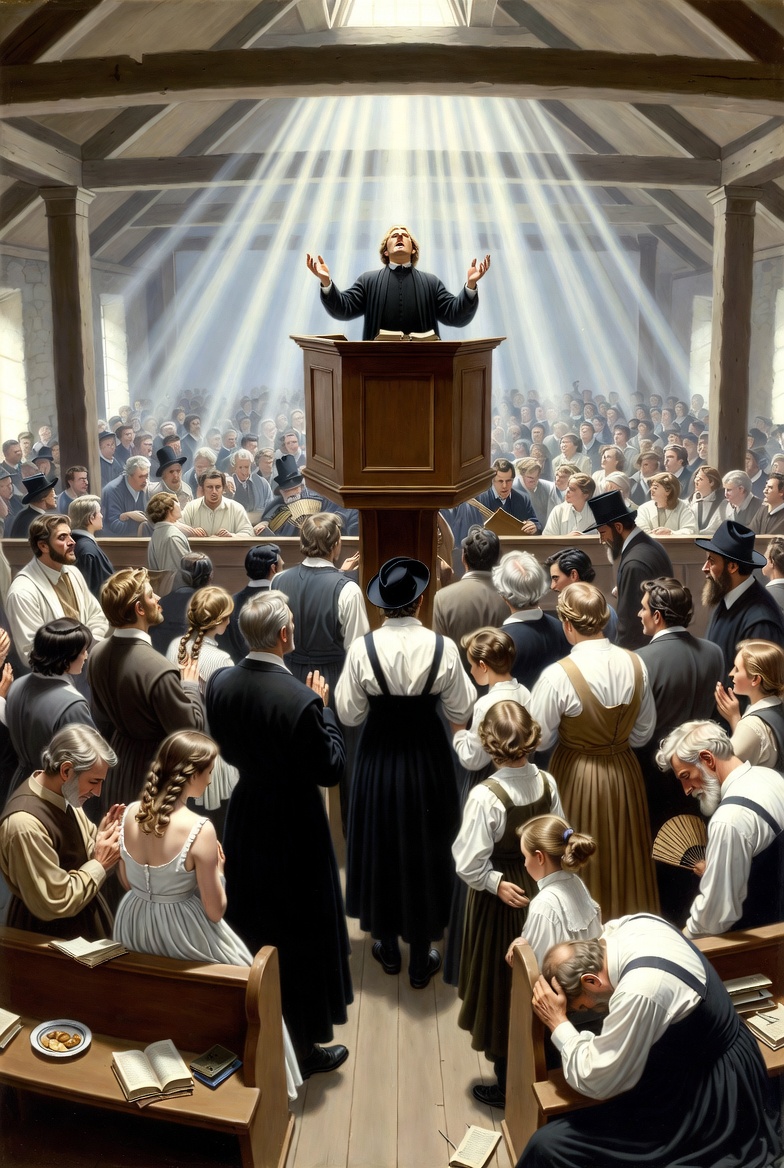
In the sweltering summer of 1775, as British redcoats tightened their grip on Boston and the uneasy colonies teetered between loyalty and rebellion, something extraordinary and often overlooked happened across the fledgling United States on July 20. The Second Continental Congress, meeting in Philadelphia, had called for a national day of fasting, humiliation, and prayer. This wasn’t a casual suggestion or local observance—it was America’s first coordinated national act of collective spiritual and political resolve, designed to bind thirteen disparate colonies into a single body politic at a moment of profound crisis. Churches from New Hampshire to Georgia rang with sermons, families gathered in solemn reflection, and ordinary citizens—farmers, merchants, artisans, and enslaved people alike—paused amid the chaos of impending war to confront their shared fate.
This event, occurring just over a year before the Declaration of Independence, stands as a pivotal, underappreciated milestone in distant American history. It wasn’t marked by muskets or grand battles but by quiet introspection that steeled the revolutionary spirit. To appreciate its power—and extract timeless lessons for modern life—we must immerse ourselves in the rich, gritty details of that revolutionary summer: the political maneuvering, the theological fervor, the logistical challenges of 18th-century communication, the human stories of doubt and defiance, and the long-term ripples that helped sustain the fight for independence. Ninety percent of this exploration dives deep into those historical textures, painting a vivid, educational, and often humorous portrait of a young nation finding its soul. Only then do we distill a razor-sharp motivational application: the “Unity Forge Protocol,” a detailed, quick, wildly unique plan that transforms personal fragmentation and setbacks into unstoppable momentum—nothing like the recycled positivity mantras flooding self-help corners of the internet.
### The Powder Keg Summer: Context of Crisis and Division
By mid-1775, the American colonies were a patchwork of competing interests, not a unified front. The Battles of Lexington and Concord in April had ignited open conflict, with Massachusetts militia besieging British forces in Boston. The First Continental Congress of 1774 had coordinated boycotts and grievances, but many colonists—perhaps a third—remained loyalists, while others wavered, hoping for reconciliation with King George III. Economic ties to Britain ran deep: Southern planters depended on tobacco exports, Northern merchants on trade, and frontier settlers on royal protection against Native American raids. Religious divides compounded the fracture—Puritans in New England, Anglicans in the South, Quakers and Presbyterians in the middle colonies, each with distinct views on authority and resistance.
The Second Continental Congress convened in May 1775 amid this tension. Delegates like John Adams, Benjamin Franklin, George Washington, and John Dickinson debated everything from raising an army to petitioning the king. Washington was appointed commander of the Continental Army on June 15, a symbolic unification of Northern and Southern interests. Yet skepticism abounded. Moderates like Dickinson feared full independence would bring economic ruin and chaos. Radicals pushed for bolder action. Communication was agonizingly slow—letters took weeks to travel between colonies, rumors spread faster than facts, and regional jealousies (New England vs. South, urban vs. rural) threatened to splinter the effort before it began.
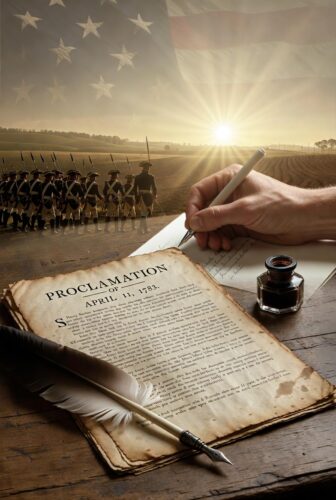
Into this volatile mix, on June 12, 1775, Congress passed a resolution for a “day of public humiliation, fasting, and prayer” to be observed on July 20. Drafted in the spirit of Puritan jeremiads and Enlightenment calls to virtue, it urged colonists to “confess and bewail our manifold sins and transgressions, and to beseech the Almighty… that virtue and true religion may revive and flourish.” It was a masterstroke of political theology: framing resistance not as reckless rebellion but as a moral reckoning, invoking divine providence to legitimize the cause and foster unity. Copies were dispatched by riders and ships; local assemblies in Connecticut, Rhode Island, Massachusetts, New Hampshire, and the Presbyterian Synod echoed the call, turning it into a de facto national event.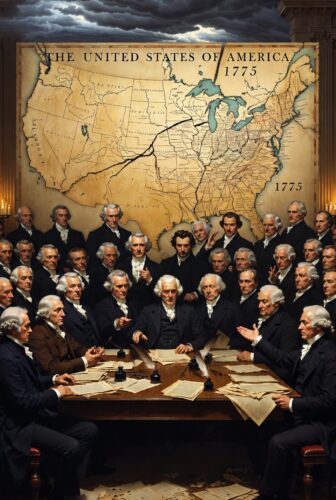
### The Day Unfolds: Sermons, Sacrifices, and Subtle Defiance
July 20, 1775, dawned under varied skies, but the observance was remarkably synchronized given the era’s constraints. In Philadelphia, Congress members attended services at Christ Church and elsewhere. John Adams noted the solemnity in letters, describing crowded meetings houses and fervent prayers. Across New England, Puritan descendants gathered in whitewashed meetinghouses, where ministers like those influenced by the Great Awakening thundered against tyranny while calling for repentance—humorous vignettes emerge in diaries of congregants nodding off in the heat only to be jolted by fiery rhetoric equating British taxes with Pharaoh’s oppression.
In the South, Anglican parishes in Virginia and the Carolinas adapted the fast, with planters and small farmers setting aside lavish meals for simpler fare, symbolizing sacrifice. One planter’s journal humorously recounts servants sneaking extra rations while masters debated scripture. Mid-Atlantic Quakers, pacifist by creed, participated in contemplative silence, their involvement highlighting the event’s broad appeal beyond radicals. Frontier communities in Pennsylvania and New York incorporated the fast into militia drills, blending prayer with powder-horn checks—a darkly funny juxtaposition of piety and preparedness.
Logistics underscored the achievement. No mass media, no telegraphs—yet the call spread via broadsides, horseback couriers, and word-of-mouth through taverns and pulpits. Attendance was high despite heat, harvest demands, and Loyalist scoffing. Some enslaved people, hearing sermons on liberty, found subversive hope, planting seeds for future resistance. Women, often sidelined, led household observances, reading psalms and organizing aid for Boston refugees, subtly expanding their public roles.
The humor of human frailty shone through: one Connecticut diarist complained of “empty bellies making short tempers,” while a Virginia parson’s overlong sermon led to congregants fanning themselves with hymnals. Yet underlying it was profound motivation. Sermons invoked biblical underdogs—David vs. Goliath, Exodus from Egypt—equating the colonies with Israel against empire. This narrative framing motivated enlistments and sustained morale through Valley Forge winters to come.
### Immediate Ripples and Long-Term Legacy: From Fast to Declaration
The fast didn’t end the war, but it forged psychological unity at a fragile juncture. It preceded the Olive Branch Petition (still hoping for peace) and the king’s Proclamation of Rebellion. By synchronizing experience, it made “thirteen clocks strike together,” as Adams later reflected. Delegates returned to sessions with renewed purpose, leading to bolder measures: the creation of a navy, alliances, and eventually independence.
Longer term, it modeled collective action. Similar fasts punctuated the war, reinforcing resilience. The event’s emphasis on moral virtue influenced the Declaration’s language of rights endowed by a Creator. It highlighted religion’s role in American identity—not state church, but shared civic faith in providence and liberty. Historians note it as a rare moment of near-universal colonial participation, bridging divides that could have doomed the Revolution. Without such unifying rituals, factionalism might have prevailed against Britain’s superior resources.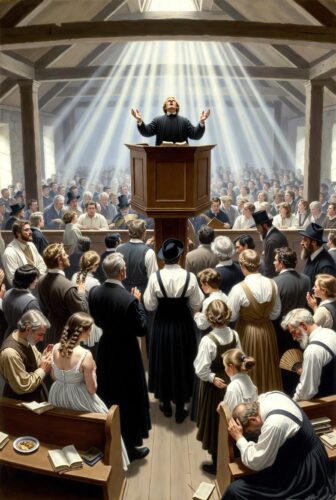
Funny ironies abound: Loyalists fasting too, some out of habit or to avoid suspicion; British spies reporting the “fanatical” observance with bemusement. Yet its success proved intangible power—shared sacrifice builds unbreakable bonds. The fast contributed to the cultural soil from which the United States sprouted, demonstrating that national identity could be cultivated through deliberate, humble acts amid chaos.
### Extracting the Unity Forge Protocol: Turning Historical Resolve Into Personal Domination
From this rich tapestry of 1775 emerges a practical, battle-tested framework for today. The colonies faced fragmentation, external pressure, internal doubt, and logistical nightmares—mirroring personal struggles like stalled careers, fractured relationships, health setbacks, or creative blocks. The fast succeeded by forcing pause, confession, collective focus, and recommitment. The “Unity Forge Protocol” adapts this into a quick, hyper-specific, anti-fluff system: no journals full of gratitude lists, no generic “manifest,” but a ruthless 7-10 day cycle that engineers total internal alignment when everything feels scattered. It’s designed for execution in the trenches of daily life, unique in its emphasis on “sacrificial synchronization” and measurable recommitment rituals that mock superficial motivation hacks.
**Core Principles (Drawn Directly From 1775):**
– **Pause for Reckoning**: Like the fast, halt consumption and distraction to confront reality without escape.
– **Synchronize Fragments**: Align disparate “colonies” (life areas) through shared ritual.
– **Invoke Higher Purpose**: Frame struggles as moral quests with providential backing (your values or mission).
– **Sacrifice for Momentum**: Give up comforts to prove commitment.
– **Measure and Re-engage**: Track unity gains and launch renewed action.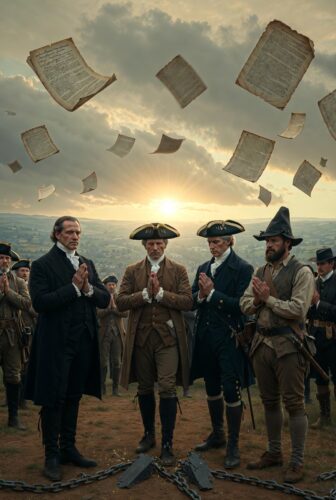
**The Detailed, Quick Unity Forge Protocol (Execute in 7-10 Days When Fragmented):**
– **Day 1: The Great Reckoning Fast (Historical Echo: National Humiliation)**: Designate a full “input fast”—no social media, news, processed food, alcohol, or non-essential spending. Consume only water, simple meals (bread, broth, vegetables), and primary sources of your “cause” (e.g., core books, mission statement, past wins). Spend 2-3 hours journaling brutal truths: list every “British tax” (energy drain, toxic habit, divided loyalty) and “Loyalist doubt” (self-sabotaging belief). Funny rule: If you slip, restart the day. This creates the 1775-style dehydration of distractions, forcing clarity. End with a written “petition” to your future self outlining desired independence.
– **Days 2-4: Sermon Circles and Fragment Alignment (Echo: Pulpit Unity)**: “Preach” to your fragments. Divide life into 5-7 “colonies” (health, work, relationships, finances, creativity, etc.). For each, write a 300-word “sermon” on its current sins, strengths, and role in the whole. Then, hold literal or mental “congress sessions”—30 minutes daily synchronizing them (e.g., how better sleep fuels creative output). Recruit an accountability “delegate” (one trusted person) for a daily 10-minute check-in call sharing one win and one sacrifice. Humor injection: Rate each colony’s “Loyalist risk” on a 1-10 scale and mock the excuses aloud.
– **Day 5: Sacrificial Burning of Boats (Echo: Collective Resolve)**: Perform a tangible, irreversible sacrifice mirroring the fast’s spirit—delete a draining app permanently, cancel a subscription costing mental bandwidth, donate items symbolizing old identity, or commit publicly (social post or email) to a scary next step. Tie it to one major goal. Track the “pain cost” in a simple ledger to prove commitment. This is where most self-help fails; the protocol demands public, measurable forfeiture to eliminate retreat.
– **Days 6-8: Providence Recommitment Marches (Echo: Sustained Prayer/Action)**: Daily 45-minute “march”—physical walk or focused work block—while repeating a personal “declaration” crafted on Day 1. Visualize British withdrawal (obstacles crumbling). Log micro-wins in a “broadside” notebook. On Day 8, hold a mock “vote”: Rate unity across colonies 1-10; if below 8, extend the fast one day with escalated sacrifice.
– **Day 9-10: Launch and Legacy Audit (Echo: Post-Fast Momentum)**: Re-engage the world with synchronized action—tackle one cross-colony project (e.g., pitch that integrates skills from work and creativity). Audit results against pre-protocol baseline. Celebrate with a simple, earned ritual (not excess). Schedule quarterly “fast days” for maintenance. Unique twist: Assign “vassal rewards”—small, delayed gratifications only after unity metrics improve, preventing reward hacking.
This protocol is quick (under two weeks for launch), unique (sacrificial synchronization + measurable colonial congress vs. vague positivity), and brutally effective because it replicates 1775’s proven mechanics: pause amid crisis, align through shared moral ritual, sacrifice to bind, and act with renewed providence. Apply it when life feels besieged—watch scattered efforts coalesce into revolutionary victories. The Thunderbolt of unified resolve awaits; forge it, and your personal empire expands.
Share: