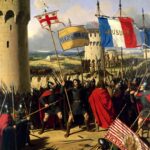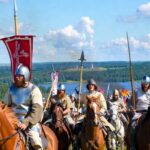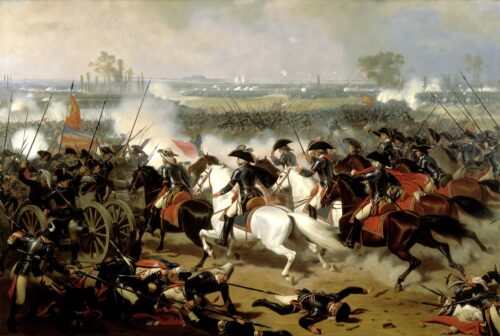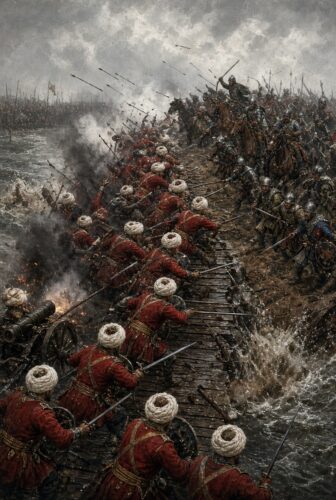

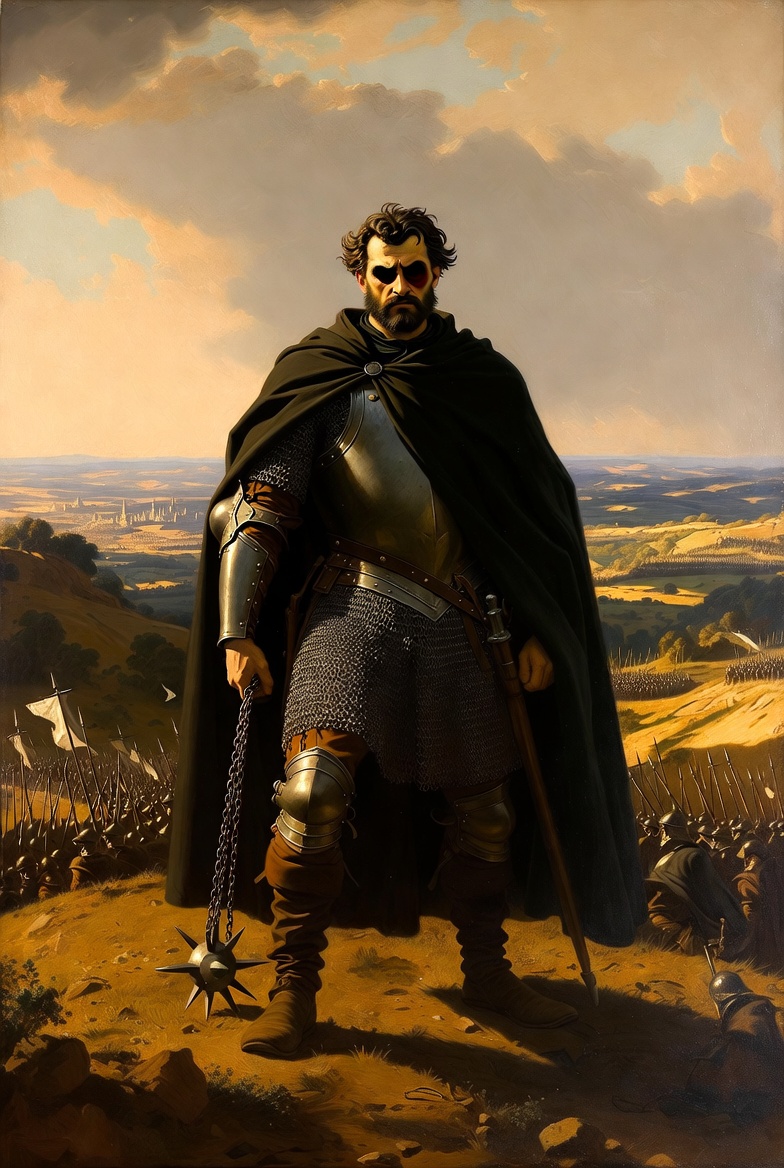
Picture a blistering July afternoon in 1420 just outside Prague’s walls. Dust hangs in the air. The Vltava River glints below. On a modest rise called Vítkov Hill, a few dozen defenders — farmers, townsfolk, maybe three women among them — crouch behind fresh-cut log cabins and rough wooden palisades. They grip flails, crossbows, and early hand cannons. Their one-eyed commander, Jan Žižka, moves among them with the calm of a man who has already decided this patch of dirt is worth everything.
Below and around them swarms a crusading army that looks like the wrath of God: thousands of armored knights from across the Holy Roman Empire, banners of emperor and pope snapping, horses stamping, the promise of indulgences and plunder in every man’s eyes. They have come to crush a “heresy” and starve Prague into submission by seizing the high ground that controls the eastern approaches.
What happened in the next hour on that hill did not just save a city. It shattered the first major crusade against the Hussites, proved that peasant weapons and iron discipline could humble heavy cavalry, and handed history one of its cleanest demonstrations that overwhelming force often loses to the right people, in the right place, at the exact wrong moment for the big dogs.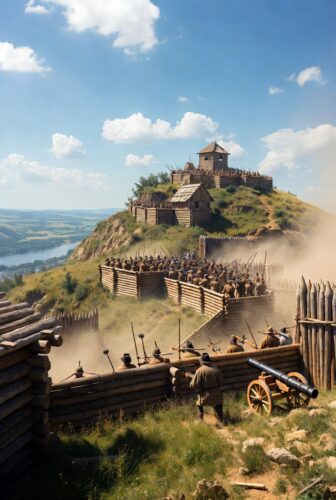
This is not a tidy morality tale. It is a bloody, sweaty, muddy brawl that lasted roughly one decisive hour on July 14, 1420, and it still offers a sharper operating system for modern life than most self-help books ever will.
### The Powder Keg That Lit the Fuse
Bohemia in the early fifteenth century was a pressure cooker that had been simmering for decades. The Black Death had killed perhaps a third of the population and upended the old feudal order. Survivors demanded higher wages, questioned authority, and looked for meaning beyond the old hierarchies. At the same time the Western Schism had split the papacy itself, with rival popes excommunicating each other and selling spiritual favors like market goods. The Church’s moral and financial corruption was glaring even to many of its own clergy.
Into this volatile mix stepped Jan Hus, a Prague university master and preacher at Bethlehem Chapel. Hus did not start as a revolutionary. He began by attacking the sale of indulgences — pieces of paper that supposedly shortened time in Purgatory — and the practice of simony, buying and selling church offices. He preached in the Czech vernacular so ordinary people could understand him. He argued that the Bible, not the institutional Church, was the ultimate authority, and that a sinful priest could not validly administer the sacraments. Most explosively, he and his followers demanded that laypeople receive both bread and wine in communion (utraquism), not just the bread as was standard practice.
In 1415 Hus was summoned to the Council of Constance. Emperor Sigismund personally guaranteed his safe conduct. Hus went anyway, believing he could defend his views. The safe conduct was ignored. After weeks of interrogation he was condemned as a heretic and burned at the stake on July 6, 1415. His followers immediately turned him into a martyr. Within months, unrest spread across Bohemia. Nobles, towns, and peasants formed defensive leagues. Radical preachers began gathering followers in southern Bohemia and founding new communities at a place they called Tábor — a biblical name for a mountain of refuge.
The movement was never monolithic. The moderate Utraquists mostly wanted communion in both kinds and some church reform while staying inside the existing social order. The radical Taborites went much further: they rejected purgatory, saint veneration, and much of the traditional liturgy, and some experimented with communal living and the abolition of private property in their settlements. What united them was a shared conviction that the established Church and its noble allies had forfeited any right to rule their consciences or their land.
When King Wenceslas IV died in 1419, his half-brother Sigismund — already King of Hungary and the man who had failed to protect Hus — claimed the Bohemian throne. Many Bohemians wanted nothing to do with him. In Prague, radicals threw city councillors out of the windows of the New Town Hall in the First Defenestration of Prague. Open warfare followed.
Pope Martin V issued a formal crusade bull in March 1420. Anyone who took up arms against the Bohemian “heretics” would receive full remission of sins. It was the usual medieval mixture of spiritual carrot and very material stick. Knights and mercenaries from Germany, Austria, Meissen, Hungary, and beyond began gathering. Contemporary estimates of the total host ran as high as 80,000–150,000, though the effective fighting strength was smaller. Still, it was an enormous force compared with anything the Hussites could field in open battle.
Sigismund’s plan was brutally simple. Capture the castles and high ground around Prague, cut the supply routes (especially the road to the rich silver mines of Kutná Hora), and starve the city into surrender or internal collapse. Vyšehrad and Hradčany fell early. The noose was visibly tightening around the capital.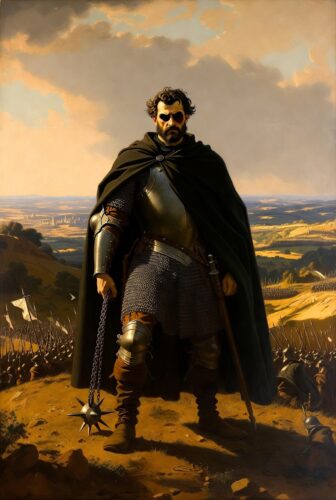
### Žižka and the Hill
Jan Žižka stepped into this crisis with a reputation already forming. Born around 1360 to minor gentry or prosperous burgher stock, he had lost an eye years earlier (accounts vary between childhood illness, a tournament mishap, or combat). He had fought in various central European conflicts and shown a rare gift for turning irregular, poorly equipped men into disciplined, tactically innovative units. By spring 1420 he was in Prague helping organize its defense.
Vítkov Hill mattered strategically. It sat on the eastern edge of the city and guarded a key approach route. If the crusaders held it, they could interdict movement and complete the encirclement. Žižka and the Prague leadership decided it could not be lost. They threw up quick fortifications — wooden blockhouses (sruby), palisades, and whatever obstacles could be improvised from available timber and earth. The garrison was tiny: sources speak of roughly 26 men and three women at one point, or perhaps 60–80 total once rotations and last-minute reinforcements are counted. These were not professional soldiers. They were locals — artisans, farmers, students, and townspeople — who believed the cause was worth dying for.
The crusader plan for mid-July called for coordinated pressure on multiple fronts. Diversionary attacks would hit other sectors (Charles Bridge, the New Town) to pin down Prague’s main forces. The decisive blow would fall on Vítkov. On or around July 13 the crusaders crossed the Vltava and positioned themselves. The following afternoon, July 14, the assault on the hill began in earnest.
### The Hour That Broke an Army
Heinrich of Isenburg (or forces under Meissen and Austrian leadership) led the attack up the southern or southeastern slope. Heavy cavalry in full plate armor does not climb hills efficiently. The path narrowed quickly. Horses and men bunched up, presenting perfect targets. Above them the defenders used every advantage of elevation: arrows and crossbow bolts rained down, stones were hurled, and the terrifying bark, smoke, and flash of early hand cannons (píšťaly) added psychological shock. Even if the guns were slow to reload and inaccurate, the noise and stench in the confined space could rattle men expecting a quick, glorious charge.
Some crusaders fought their way close enough to threaten the wooden structures. For a few tense minutes the situation looked desperate for the tiny garrison. Then the flank arrived.
From Prague, reinforcements — bowmen, flail-wielding infantry, and townsfolk — pushed through the vineyards that covered the southern approach. They hit the crusader assault force from the side and rear while the defenders on the hill redoubled their effort. The war cry went up (“Hrr na ně!” — “At them!”). A priest reportedly carried the consecrated host forward as a visible sign of divine favor and morale anchor. In the chaos of narrow terrain, surprise, and sudden pressure from an unexpected direction, the attackers broke.
What followed was not a long, grinding fight. It was a short, vicious collapse. Men and horses tumbled down the steep northern face of the hill. Others tried to flee toward the river and found themselves weighed down by armor in the current. Chroniclers record 400–500 crusader dead in the space of that one action, against perhaps two or three Hussite casualties. The numbers are almost certainly stylized for dramatic effect, but the disproportion is real and widely accepted by historians. A vastly superior force had been stopped cold and then routed by a fraction of its size because terrain, preparation, timing, and morale aligned perfectly for the defenders.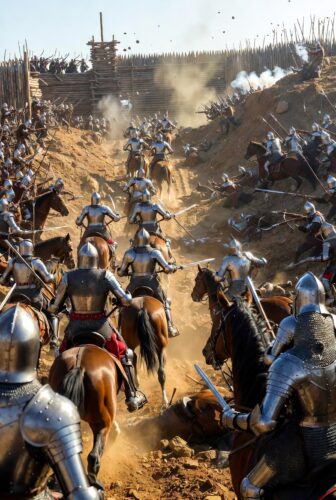
The crusader army did not disintegrate in a single afternoon, but the Vítkov defeat shattered its momentum and aura of inevitability. Sigismund could not force Prague’s surrender on schedule. Other strongpoints shifted hands or negotiated. The first anti-Hussite crusade had failed at the very moment it should have succeeded. The psychological effect was enormous. Hussite morale soared. The idea that God might actually favor the reformers gained powerful new credibility. More crusades would come over the next decade, and more would fail for similar reasons: underestimation of irregular forces, poor coordination across international contingents, and the repeated discovery that Bohemian peasants and townsfolk had learned to fight with terrifying efficiency.
### Why It Worked — The Mechanics of an Asymmetric Win
Terrain was the first multiplier. Vítkov was not an impregnable fortress; it was a decent hill with a narrow approach and a steep drop on one side. The defenders did not need to hold forever. They only needed to make the cost of taking it higher than the attackers were willing to pay in that moment.
Preparation mattered more than numbers. The wooden defenses were crude but functional. The weapons were mostly agricultural or low-tech. The flail — a wooden shaft with a chain and heavy or spiked head — was devastating against armored men on broken ground because it could wrap around shields or helmets, concuss through plate, or break limbs without requiring a perfect thrust. Early firearms added noise, smoke, and psychological shock even if their rate of fire was low and accuracy limited. Žižka’s genius lay in turning these improvised tools and irregular fighters into something cohesive through strict discipline and clear tactical doctrine.
Morale and leadership were decisive. These defenders believed they were protecting their faith, their city, and a vision of a cleaner church. Žižka’s presence and the timely arrival of reinforcements turned defense into a coordinated counter-punch. The priest with the host was not mere theater; in a deeply religious age it was a visible reminder of what was at stake and a powerful symbol that kept men fighting when logic said run.
The enemy’s weaknesses were classic and repeatable across history: overconfidence born of numerical superiority, heavy troops ill-suited to the ground they were forced to fight on, divided command attention because of diversionary attacks that failed to achieve their pinning purpose, and the simple fact that a large, heterogeneous army campaigning far from home is fragile once its aura of inevitability cracks.
The result was not just a local victory. It bought the Hussite movement time to organize, spread its ideas, and win subsequent engagements. Žižka would go on to refine and popularize wagon-fort tactics (mobile laagers of armored wagons that could be quickly formed into defensive squares) that became a signature of Hussite warfare and influenced later Eastern European military practice for generations. The movement survived long enough to force negotiations (the Compactata of Basel in the 1430s) and shape the religious map of Central Europe for decades.
### The Longer Shadow — What Happened Next and Why It Still Matters
In the immediate aftermath, Sigismund’s grand coalition lost heart. Some contingents simply went home once the easy victory failed to materialize. Hussite forces, emboldened, began to take the initiative in other sectors. The psychological boost was immense. Recruitment to the Hussite cause increased, and the idea that a determined minority could defeat a papal crusade became a powerful recruiting tool and morale weapon.
Over the following years the Hussite Wars continued with more crusades (1421, 1422, 1427, 1431) and more Hussite victories or stalemates. Žižka himself died of the plague in 1424 while campaigning, but his successors — notably Prokop the Bald — kept the movement militarily effective. The wars eventually ended in a negotiated settlement that gave the Utraquists significant concessions while the more radical Taborite wing was eventually suppressed. Yet the survival of a reformed, vernacular, Bible-centered Christianity in Bohemia for two centuries (until the crushing defeat at White Mountain in 1620) was a direct consequence of the breathing room won on hills like Vítkov.
Militarily, the wagon fort and the aggressive use of combined arms (missile weapons + shock troops + mobility) influenced later warfare in the region. The Poles used similar laager tactics against the Teutonic Knights and Tatars. The ideas and the example of successful resistance against overwhelming odds traveled. Intellectually and theologically, the Hussite experience demonstrated that a popular religious reform movement backed by military organization could survive and even force concessions from the established order — a precedent that later reformers, including Martin Luther a century later, could look to (even if they sometimes distanced themselves from the more radical Bohemian wing).
Culturally, Žižka became a Czech national hero. The hill itself was later renamed Žižkov in his honor. Today a massive equestrian statue of him dominates the district — one of the largest bronze statues in the world — looking out over the city he helped save. The story of Vítkov remains part of Czech historical memory as a symbol of resilience against superior force.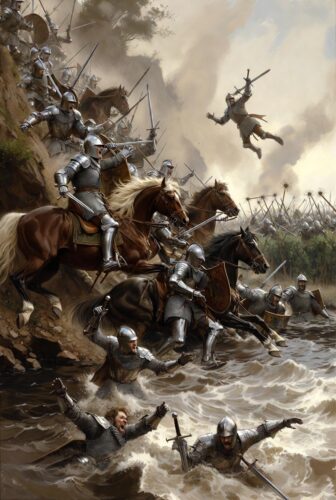
### What July 14, 1420, Actually Hands Us Today
Strip away the armor, the flails, and the river full of drowning knights and the core pattern remains brutally useful.
A small force holding a strategically vital position with minimal resources can stall and then shatter a much larger opponent when it combines preparation, terrain awareness, high morale, and a timely counter-move from an unexpected angle. The victory does not require matching the enemy’s resources. It requires making the enemy’s resources irrelevant for long enough to break their will or their formation.
That pattern shows up constantly once you start looking for it. The creator working alone who builds a defensible niche and then launches a surprise collaboration or content angle that undercuts bigger players. The person rebuilding health or finances who fortifies a few non-negotiable daily systems and then uses a moment of external pressure as the trigger for a decisive lifestyle or career strike. The small team or solo operator who refuses to fight on the enemy’s preferred ground and instead forces the contest onto terrain where preparation and timing matter more than headcount.
The specific, repeatable benefits are these:
– You stop wasting energy on flat-ground fights where raw numbers or resources decide everything. You learn to identify and claim the high-ground positions — the 20 percent of effort or focus that protects or advances everything else — and defend them with disproportionate creativity.
– You develop genuine resourcefulness instead of resource envy. The flail was not a fancy new weapon. It was a farm tool repurposed with intent. Modern equivalents are the skills, tools, relationships, and even past failures you already possess, turned into something that hits harder than it has any right to.
– You internalize timing as a weapon. Defense alone eventually fails. The decisive act at Vítkov was the counter-strike through the vineyards at the moment the attackers were most committed and most vulnerable. Training yourself to recognize that moment — and to have pre-positioned assets ready to exploit it — changes outcomes across work, creative projects, negotiations, and personal challenges.
– Morale stops being a soft, optional extra and becomes a measurable force multiplier. The rituals, stories, and visible symbols that kept a tiny garrison fighting are the same class of tool that keeps any individual or small group coherent under sustained pressure.
– You gain proof that one well-executed stand can cascade. The crusader army did not vanish overnight, but after Vítkov its aura of inevitability was gone. Allies appeared, momentum shifted, and what had looked like an existential threat became a manageable series of problems. The same dynamic operates when you hold a critical line in your own life: the “crusaders” (distractions, competitors, inner resistance, external circumstances) lose confidence and you gain breathing room and unexpected support.
– You build a practical tolerance for being outnumbered. Once you have internalized that 80 determined, prepared people on the right hill can ruin the day of thousands, your threshold for “impossible” situations rises dramatically. Anxiety and paralysis shrink because the historical script is clear: the big, shiny force often breaks first when the small, scrappy one refuses to play by its rules.
### The Vítkov Protocol: A Fast, Repeatable System for Holding Your Ground and Flanking the Problem
This is not another generic goal-setting framework or affirmation loop. It is a tactical operating system modeled directly on the July 14, 1420, sequence: claim the decisive position, fortify it with what you actually have, maintain focus and morale under pressure, and execute a timed counter-move from an unexpected angle. It is designed to be set up quickly and run hard for a defined sprint (one intense week or the duration of a specific challenge). It works whether your “hill” is a creative project, a business move, a health reset, a financial defense, or any other high-stakes personal campaign.
**Step 1: Claim Your Single Hill (30–60 minutes on Day 1)**
Pick one position whose defense or capture changes the map downstream. Not five goals. One. Write in plain language why holding or taking it alters everything else. Then list the specific forces arrayed against it — time leaks, competing priorities, external resistance, your own recurring failure patterns. Be precise. Vague enemies cannot be flanked.
**Step 2: Erect Minimal but Functional Defenses (Setup 1–2 hours, then 10–15 minutes daily maintenance)**
Using only resources and time you already possess, create three to four simple barriers or systems that make attacking your hill expensive or inconvenient for the opposition. Examples: protected deep-work blocks with a visible “do not disturb” signal and one accountability partner; prepped meals or movement minimums that remove daily decision friction; three scripted boundary responses for energy-draining requests; a single master document or folder that contains everything relevant to the hill so you are never hunting for tools mid-battle. Keep them crude and immediate — wooden sruby, not marble palaces. Perfectionism is the enemy of speed here.
**Step 3: Forge Two or Three Flails (1 hour initial conversion + daily use)**
Identify everyday tools, skills, or past material you already own and deliberately repurpose two or three of them into higher-impact weapons. A notes app becomes a rapid idea-to-content pipeline. A past failure story becomes the emotional core of your next piece of work. A simple tracking sheet becomes an early-warning system. Test one repurposed tool the same day you define it. The point is conversion, not acquisition.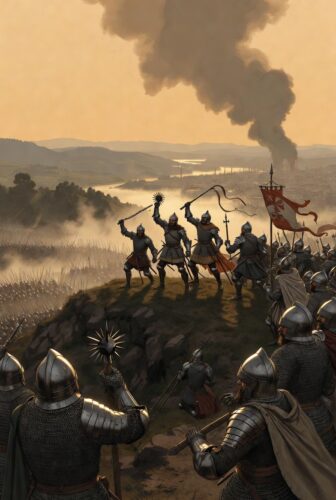
**Step 4: Run the One-Eyed Focus Drill (Daily 14 minutes)**
Each day, conduct a short, ruthless review wearing an imaginary eyepatch. What single action or decision most advances or protects the hill right now? Everything else is peripheral vision and gets cut for the duration of the sprint. Track “knights repelled” — specific distractions, obligations, or internal narratives you successfully denied entry. This is not mindfulness theater. It is operational triage.
**Step 5: Maintain the Sacrament and Scout the Vineyards (Daily 5–10 minutes + one 30-minute weekly review)**
Create a short, repeatable morale anchor that reminds you why the hill matters — a track you produced, a paragraph you wrote, a photo of the life you are building, or a two-sentence “why this hill” statement read aloud. Use it when pressure mounts. Separately, spend a few minutes scanning for flanks: unexpected openings, weak spots in the opposition, new angles, or potential reinforcements. Keep a running list. The vineyards at Vítkov were cover that allowed the surprise attack; your equivalent is any overlooked path or asset.
**Step 6: Trigger and Execute the Flank Counterstrike (When the signal appears, move inside 48 hours)**
Define your trigger in advance. It can be external pressure reaching a threshold, a specific metric moving the wrong way, or a scheduled “strike window.” When it hits, launch one deliberate, surprising move designed to hit the opposition where they are most extended or least prepared. Examples: a bold collaboration or guest appearance, a piece of content that reframes the entire conversation, an aggressive but precise ask, or a concentrated burst on a high-leverage sub-project. Document what happens next — the confusion, the openings, the “knights” that suddenly have to react to you instead of the other way around.
**Step 7: Drown the Knights and Lock In the Gains (Immediately after the strike + ongoing)**
After the counter-move, spend focused time consolidating. What obstacles lost power or disappeared? What new ground did you take? Update your defenses and systems to reflect the new reality so you are not fighting the same battle twice. Celebrate in a way that reinforces identity — play the track at volume, share the win with the specific people who helped, or perform a small personal ritual that marks the shift from defense to holding captured territory. Then return to the daily drill with the improved position.
The entire protocol can be initialized in a single focused afternoon and then run with minimal daily overhead plus one decisive strike per challenge cycle. It is deliberately tactical rather than inspirational, repeatable across domains, and built around the historical mechanics that actually worked on July 14, 1420: hold the decisive ground with minimal resources, keep morale and focus sharp, and strike from the flank at the moment the larger force is most committed and most exposed.
History does not hand out participation trophies. On that July afternoon six centuries ago, a handful of people with farm tools, early guns, and unbreakable resolve decided that one specific hill belonged to them. They held it. They flanked the attackers. They sent hundreds of armored men tumbling into the river. The crusade that was supposed to end their movement instead gave it legend and breathing room.
Your hill is not Vítkov. The stakes are different. The weapons have changed. But the pattern has not. The forces that look overwhelming are often more fragile than they appear once someone refuses to fight on their terms and instead makes them climb a narrow path into prepared resistance. The vineyards are still there for anyone willing to use them.
Grab your flail. The slope is waiting. The moment to hold — and then to strike — is closer than it looks.
Share: