In the sweltering heat of a Thracian summer, on July 3, 324 AD, two Roman emperors faced off across the muddy waters of the Hebrus River (modern Maritsa). One commanded a force hardened by years of frontier wars and civil strife; the other held numerical superiority but commanded a patchwork army of fresh levies and wary allies. The clash at Adrianople (modern Edirne, Turkey) wasn't just another bloody chapter in Rome's endless internal squabbles. It was the pivotal moment that ended the fractured Tetrarchy system established by Diocletian and paved the way for Constantine the Great to rule as sole emperor of a reunified Roman Empire.
This battle stands as a masterclass in audacious leadership, tactical deception, and the power of a unified vision. With 90% of this deep dive rooted in the gritty historical realities of late antiquity—drawn from sources like Zosimus, Eusebius, and modern reconstructions—we'll unpack the prelude, the chaos of the crossing and melee, the human cost, and the seismic aftermath. Then, we'll distill razor-sharp, non-generic lessons into a unique action plan for applying that ancient grit to your own life today. No fluffy affirmations or generic "manifest your destiny" nonsense—just a battle-tested framework for turning personal bottlenecks into breakthroughs.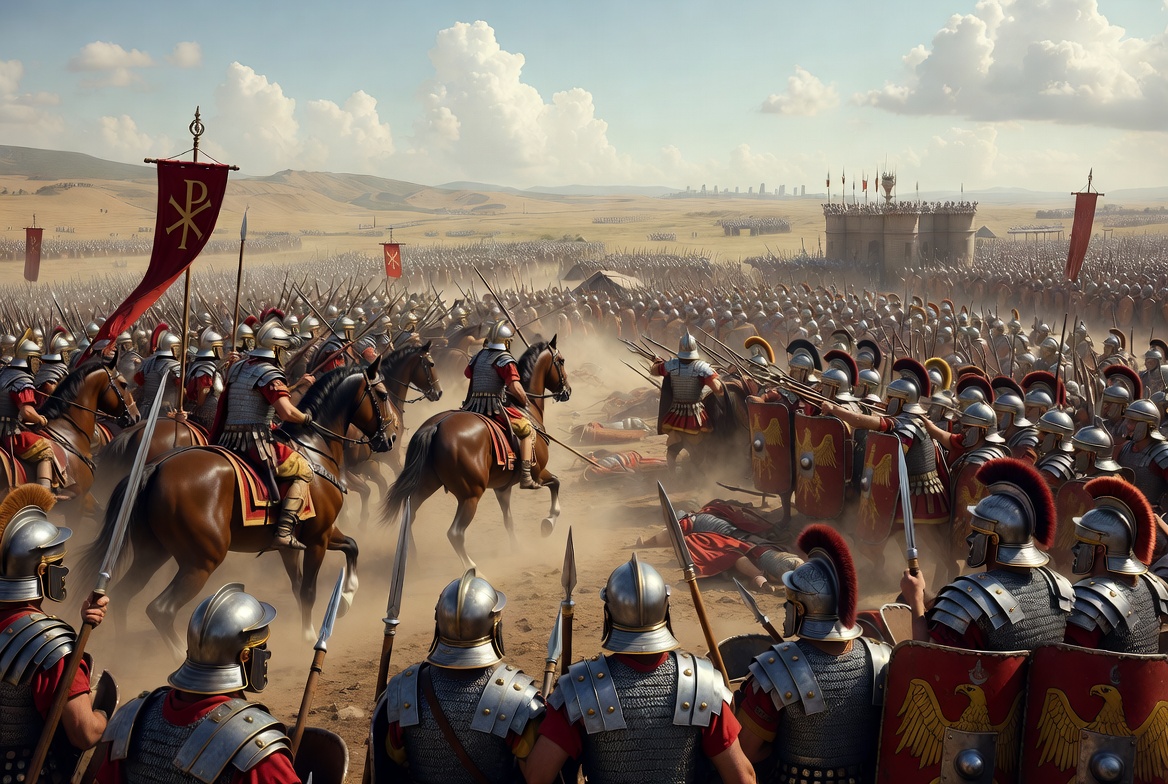 ### The Fractured World Before the Clash: Rome's Tetrarchic Hangover
To understand why July 3, 324 mattered, rewind to the chaos of the early 4th century. The Roman Empire had nearly collapsed in the Crisis of the Third Century—barbarian invasions, economic meltdown, plague, and a revolving door of emperors (over 20 in 50 years). Diocletian (r. 284–305) imposed the Tetrarchy: four co-rulers (two senior Augusti, two junior Caesars) to manage the vast territory more effectively. It worked temporarily but bred rivalry.
Constantine I, son of Caesar Constantius Chlorus, rose through military prowess. After his father’s death in 306, he was proclaimed Augustus by his troops in Britain. He consolidated the West by defeating Maxentius at the Milvian Bridge in 312 (famously under the Christian *labarum* standard, or so later Christian sources claimed). Meanwhile, Licinius controlled the East after defeating Maximinus Daia.
A fragile peace held after their earlier clashes in 316–317 (Battles of Cibalae and Mardia), where Constantine forced Licinius to cede territories. But tensions simmered. Licinius, increasingly paranoid and leaning pagan, allegedly persecuted Christians and executed some of Constantine’s relatives. Constantine, championing Christianity (or at least its political utility), found his *casus belli* when pursuing Gothic raiders across the border into Licinius’ territory.
### The Fractured World Before the Clash: Rome's Tetrarchic Hangover
To understand why July 3, 324 mattered, rewind to the chaos of the early 4th century. The Roman Empire had nearly collapsed in the Crisis of the Third Century—barbarian invasions, economic meltdown, plague, and a revolving door of emperors (over 20 in 50 years). Diocletian (r. 284–305) imposed the Tetrarchy: four co-rulers (two senior Augusti, two junior Caesars) to manage the vast territory more effectively. It worked temporarily but bred rivalry.
Constantine I, son of Caesar Constantius Chlorus, rose through military prowess. After his father’s death in 306, he was proclaimed Augustus by his troops in Britain. He consolidated the West by defeating Maxentius at the Milvian Bridge in 312 (famously under the Christian *labarum* standard, or so later Christian sources claimed). Meanwhile, Licinius controlled the East after defeating Maximinus Daia.
A fragile peace held after their earlier clashes in 316–317 (Battles of Cibalae and Mardia), where Constantine forced Licinius to cede territories. But tensions simmered. Licinius, increasingly paranoid and leaning pagan, allegedly persecuted Christians and executed some of Constantine’s relatives. Constantine, championing Christianity (or at least its political utility), found his *casus belli* when pursuing Gothic raiders across the border into Licinius’ territory.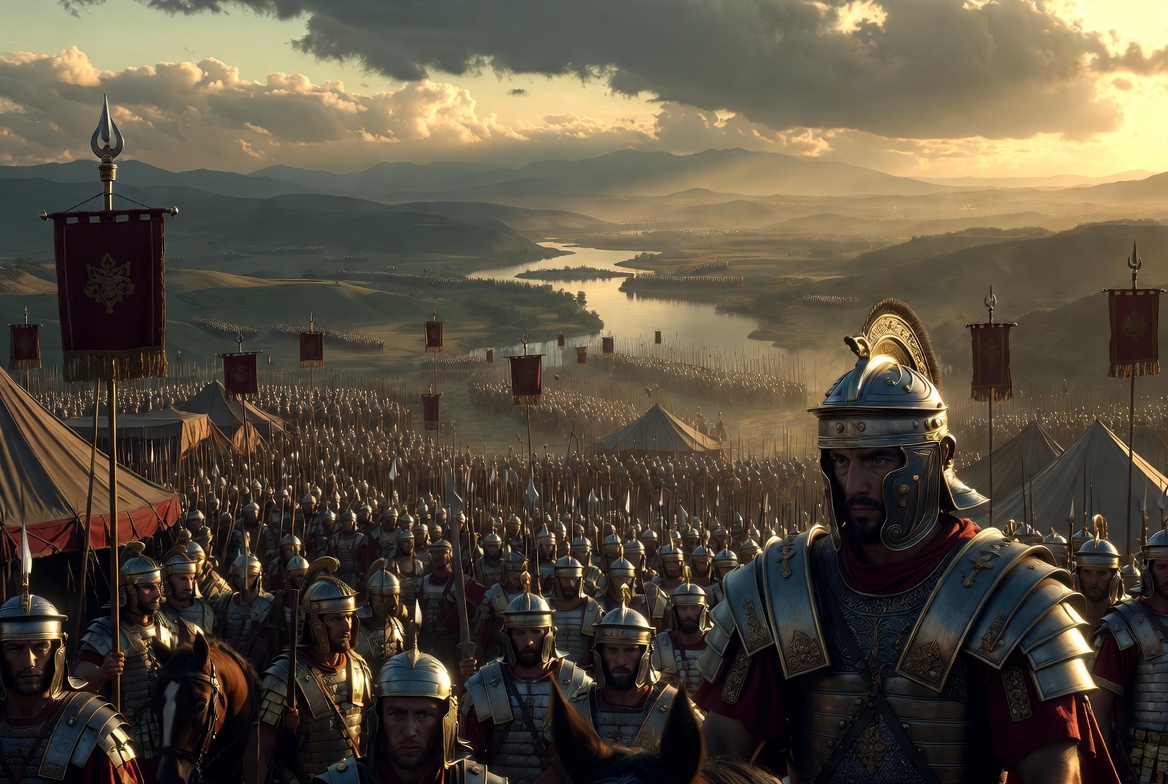 By spring 324, both mobilized massive armies. Estimates vary, but Constantine fielded around 130,000 (many battle-hardened veterans from the West, including Illyrian recruits and Frankish allies). Licinius mustered perhaps 165,000—larger but with more raw levies, Goths, and less cohesion. Licinius also had naval superiority with ~350 ships from eastern maritime provinces.
Constantine advanced from Thessalonica eastward into Thrace. Licinius positioned defensively near Adrianople, the key inland city, anchoring his line along the Hebrus River—a natural barrier. His camp was fortified, his lines stretched over a long front (some sources say 200 stades, roughly 23 miles) between heights and river confluences. He expected a prolonged siege or attritional fight.
### The Deception and the Crossing: audacity on July 3
For days, the armies glared across the river. Constantine, outnumbered and facing a strong defensive position, refused to play Licinius’ waiting game. He needed momentum.
Enter the ruse—one of military history’s cleverest feints. Constantine spotted a narrow, fordable point in the Hebrus, overlooked by a wooded hillside ideal for concealment. Publicly, he ordered troops to haul timber and ropes to a distant, obvious spot downstream, loudly preparing a bridge. Licinius’ scouts reported the activity; the eastern army shifted focus there.
Secretly, Constantine assembled ~5,000 archers and cavalry on the wooded hill. On July 3, he personally led a small vanguard—accounts say 12 horsemen initially—across the narrows. They slammed into the surprised Licinian outposts. The shock was total. As Zosimus dramatically recounts (with the usual ancient flair for heroism), Constantine’s veterans poured across. The rest of his army followed rapidly.
Licinius’ lines, overextended and caught off-guard, buckled. Constantine’s forces—disciplined, motivated, with superior cavalry—exploited the disorder. The emperor himself was reportedly in the thick of it, wounded in the thigh but pressing the attack, directing the *labarum* (the Christian standard with Chi-Rho symbol) to faltering sectors for morale boosts. This wasn’t passive command; it was visceral leadership.
By spring 324, both mobilized massive armies. Estimates vary, but Constantine fielded around 130,000 (many battle-hardened veterans from the West, including Illyrian recruits and Frankish allies). Licinius mustered perhaps 165,000—larger but with more raw levies, Goths, and less cohesion. Licinius also had naval superiority with ~350 ships from eastern maritime provinces.
Constantine advanced from Thessalonica eastward into Thrace. Licinius positioned defensively near Adrianople, the key inland city, anchoring his line along the Hebrus River—a natural barrier. His camp was fortified, his lines stretched over a long front (some sources say 200 stades, roughly 23 miles) between heights and river confluences. He expected a prolonged siege or attritional fight.
### The Deception and the Crossing: audacity on July 3
For days, the armies glared across the river. Constantine, outnumbered and facing a strong defensive position, refused to play Licinius’ waiting game. He needed momentum.
Enter the ruse—one of military history’s cleverest feints. Constantine spotted a narrow, fordable point in the Hebrus, overlooked by a wooded hillside ideal for concealment. Publicly, he ordered troops to haul timber and ropes to a distant, obvious spot downstream, loudly preparing a bridge. Licinius’ scouts reported the activity; the eastern army shifted focus there.
Secretly, Constantine assembled ~5,000 archers and cavalry on the wooded hill. On July 3, he personally led a small vanguard—accounts say 12 horsemen initially—across the narrows. They slammed into the surprised Licinian outposts. The shock was total. As Zosimus dramatically recounts (with the usual ancient flair for heroism), Constantine’s veterans poured across. The rest of his army followed rapidly.
Licinius’ lines, overextended and caught off-guard, buckled. Constantine’s forces—disciplined, motivated, with superior cavalry—exploited the disorder. The emperor himself was reportedly in the thick of it, wounded in the thigh but pressing the attack, directing the *labarum* (the Christian standard with Chi-Rho symbol) to faltering sectors for morale boosts. This wasn’t passive command; it was visceral leadership.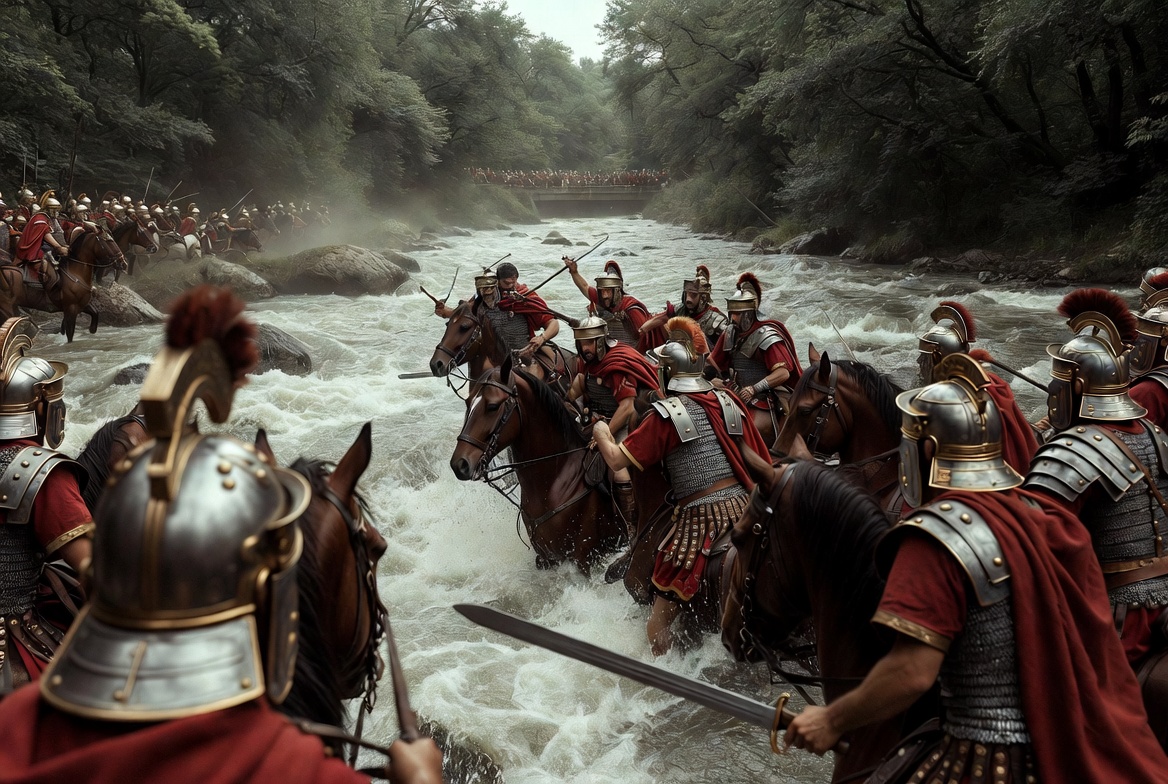 The fighting raged through the day. Licinius’ infantry, less experienced, broke under the veteran onslaught. Wings collapsed; panic spread. By evening, Constantine’s troops stormed the fortified camp. Licinius fled toward Byzantium (soon to be Constantinople). Casualties: Licinius lost ~34,000 dead (per Zosimus—likely exaggerated but indicative of a slaughter). Constantine’s losses were far lighter.
### The Human Drama and Immediate Aftermath
Imagine the scene: dust-choked plains, the Hebrus running red, thousands of bodies strewn across fields that had been peaceful farmland. Roman against Roman—brothers in arms from the same legions now killing each other for imperial ambition. Veterans who survived the Persian wars or barbarian raids died in a civil bloodbath.
Licinius retreated but wasn’t finished. He appointed Martinianus as co-Augustus and regrouped. Constantine’s son Crispus won a naval victory at the Hellespont, neutralizing Licinius’ fleet advantage. The final land clash at Chrysopolis on September 18, 324 sealed it. Licinius surrendered, was initially spared (exiled to Thessalonica), but executed in 325 on conspiracy charges, along with his son. Constantine was now sole ruler.
The victory enabled massive reforms: administrative centralization, economic stabilization (solidus gold coin), military reorganization favoring mobile field armies, and the promotion of Christianity (Edict of Milan in 313 had already granted tolerance; now it accelerated). Most dramatically, Constantine refounded Byzantium as Constantinople in 330—a new Christian capital, the "New Rome" that would endure for over a millennium as the Byzantine heart.
Adrianople wasn’t the largest or bloodiest Roman battle, but its outcome was transformative. It ended the Tetrarchy’s division, reunified the empire under one visionary (flawed as he was), and shifted Rome’s center of gravity eastward. Without it, the Western Empire’s decline might have fragmented even faster, and the Christianization of Europe could have taken a different path. Historians debate Constantine’s sincerity—political calculation or genuine faith?—but the result was an empire that survived in the East far longer than the West.
The fighting raged through the day. Licinius’ infantry, less experienced, broke under the veteran onslaught. Wings collapsed; panic spread. By evening, Constantine’s troops stormed the fortified camp. Licinius fled toward Byzantium (soon to be Constantinople). Casualties: Licinius lost ~34,000 dead (per Zosimus—likely exaggerated but indicative of a slaughter). Constantine’s losses were far lighter.
### The Human Drama and Immediate Aftermath
Imagine the scene: dust-choked plains, the Hebrus running red, thousands of bodies strewn across fields that had been peaceful farmland. Roman against Roman—brothers in arms from the same legions now killing each other for imperial ambition. Veterans who survived the Persian wars or barbarian raids died in a civil bloodbath.
Licinius retreated but wasn’t finished. He appointed Martinianus as co-Augustus and regrouped. Constantine’s son Crispus won a naval victory at the Hellespont, neutralizing Licinius’ fleet advantage. The final land clash at Chrysopolis on September 18, 324 sealed it. Licinius surrendered, was initially spared (exiled to Thessalonica), but executed in 325 on conspiracy charges, along with his son. Constantine was now sole ruler.
The victory enabled massive reforms: administrative centralization, economic stabilization (solidus gold coin), military reorganization favoring mobile field armies, and the promotion of Christianity (Edict of Milan in 313 had already granted tolerance; now it accelerated). Most dramatically, Constantine refounded Byzantium as Constantinople in 330—a new Christian capital, the "New Rome" that would endure for over a millennium as the Byzantine heart.
Adrianople wasn’t the largest or bloodiest Roman battle, but its outcome was transformative. It ended the Tetrarchy’s division, reunified the empire under one visionary (flawed as he was), and shifted Rome’s center of gravity eastward. Without it, the Western Empire’s decline might have fragmented even faster, and the Christianization of Europe could have taken a different path. Historians debate Constantine’s sincerity—political calculation or genuine faith?—but the result was an empire that survived in the East far longer than the West.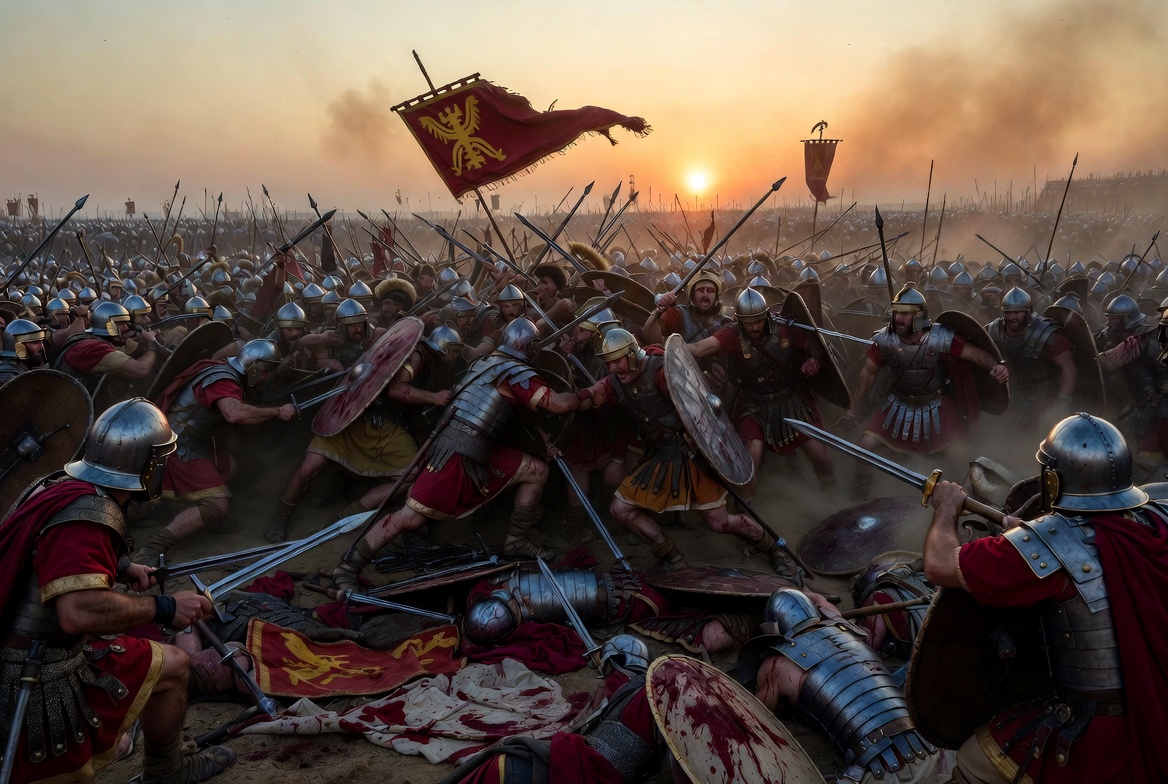 ### Funny asides from the Fog of War
Ancient chroniclers loved embellishing. Zosimus paints Constantine as a one-man wrecking crew fording the river like a demigod. Reality? A calculated gamble by a battle-scarred pragmatist who knew when to feint and when to strike. Licinius, the cautious survivor of previous scraps, got outmaneuvered by superior initiative. It’s the eternal truth: numbers matter less than timing, terrain, and balls-to-the-wall execution. (Licinius probably regretted not fortifying that narrow ford more heavily.)
The *labarum* waving like a divine cheat code adds ironic humor—pagan Licinius vs. the Christian symbol. In an empire still half-pagan, symbolism was warfare by other means.
### Applying the Adrianople Edge: A Non-Fluffy, Battle-Hardened Personal Mastery Plan
History’s greats didn’t win by wishing harder. Constantine faced a river (literal and metaphorical obstacle), inferior numbers in the moment, and a dug-in foe. He won through deception, speed, personal risk, and relentless follow-through. Here’s a unique, battle-specific plan—no vision boards, no "hustle culture" platitudes. This is "Forge Your Own Empire" protocol: identify your Hebrus, cross it ruthlessly, and consolidate like a Roman.
**1. Scout the Terrain Ruthlessly (Preparation Phase – 1-2 Weeks)**
Map your personal "river"—the bottleneck blocking your goal (career stall, health plateau, creative block, financial choke). Be brutally specific. Not "I want more money"—but "My $17% interest Sofi loan is draining 20% of monthly cash flow while my skills sit unused." Gather intel like Constantine’s scouts: audit time logs, finances (use spreadsheets), skills gaps, competitors. Identify the "narrow ford"—the overlooked leverage point (e.g., one high-impact skill or low-hanging partnership). Feint publicly if needed—tell others you’re pursuing the obvious path while prepping the real one in secret.
**2. The Feint and the Hidden Vanguard (Execution Launch – Day of Decision)**
Build the decoy bridge openly: invest visible but low-stakes effort in the expected direction to distract obstacles (bosses, self-doubt, market noise). Meanwhile, assemble your "5,000 archers"—a small, elite task force of habits/tools/skills. Cross personally and aggressively. Example: If launching a side project, don’t announce vaguely; secretly prototype for 2 weeks, then drop a minimum viable version that surprises everyone. Lead from the front—personally test, risk a "thigh wound" (small failure), and push through. Momentum > perfection.
**3. Exploit the Breakthrough, Don’t Rest on It (Immediate Pursuit – Next 30 Days)**
Once across, pour everything in. Constantine didn’t celebrate the crossing; he stormed the camp. Convert initial wins into cascading victories: naval equivalent = secure supply lines (funding, networks). Target Chrysopolis-level closure—don’t leave loose ends. Track daily "casualties" (wasted time/energy) and eliminate them. Use the *labarum* equivalent: a personal symbol or reminder (mantra, image, ritual) to rally yourself when lines waver. Measure ruthlessly: weekly audits.
### Funny asides from the Fog of War
Ancient chroniclers loved embellishing. Zosimus paints Constantine as a one-man wrecking crew fording the river like a demigod. Reality? A calculated gamble by a battle-scarred pragmatist who knew when to feint and when to strike. Licinius, the cautious survivor of previous scraps, got outmaneuvered by superior initiative. It’s the eternal truth: numbers matter less than timing, terrain, and balls-to-the-wall execution. (Licinius probably regretted not fortifying that narrow ford more heavily.)
The *labarum* waving like a divine cheat code adds ironic humor—pagan Licinius vs. the Christian symbol. In an empire still half-pagan, symbolism was warfare by other means.
### Applying the Adrianople Edge: A Non-Fluffy, Battle-Hardened Personal Mastery Plan
History’s greats didn’t win by wishing harder. Constantine faced a river (literal and metaphorical obstacle), inferior numbers in the moment, and a dug-in foe. He won through deception, speed, personal risk, and relentless follow-through. Here’s a unique, battle-specific plan—no vision boards, no "hustle culture" platitudes. This is "Forge Your Own Empire" protocol: identify your Hebrus, cross it ruthlessly, and consolidate like a Roman.
**1. Scout the Terrain Ruthlessly (Preparation Phase – 1-2 Weeks)**
Map your personal "river"—the bottleneck blocking your goal (career stall, health plateau, creative block, financial choke). Be brutally specific. Not "I want more money"—but "My $17% interest Sofi loan is draining 20% of monthly cash flow while my skills sit unused." Gather intel like Constantine’s scouts: audit time logs, finances (use spreadsheets), skills gaps, competitors. Identify the "narrow ford"—the overlooked leverage point (e.g., one high-impact skill or low-hanging partnership). Feint publicly if needed—tell others you’re pursuing the obvious path while prepping the real one in secret.
**2. The Feint and the Hidden Vanguard (Execution Launch – Day of Decision)**
Build the decoy bridge openly: invest visible but low-stakes effort in the expected direction to distract obstacles (bosses, self-doubt, market noise). Meanwhile, assemble your "5,000 archers"—a small, elite task force of habits/tools/skills. Cross personally and aggressively. Example: If launching a side project, don’t announce vaguely; secretly prototype for 2 weeks, then drop a minimum viable version that surprises everyone. Lead from the front—personally test, risk a "thigh wound" (small failure), and push through. Momentum > perfection.
**3. Exploit the Breakthrough, Don’t Rest on It (Immediate Pursuit – Next 30 Days)**
Once across, pour everything in. Constantine didn’t celebrate the crossing; he stormed the camp. Convert initial wins into cascading victories: naval equivalent = secure supply lines (funding, networks). Target Chrysopolis-level closure—don’t leave loose ends. Track daily "casualties" (wasted time/energy) and eliminate them. Use the *labarum* equivalent: a personal symbol or reminder (mantra, image, ritual) to rally yourself when lines waver. Measure ruthlessly: weekly audits.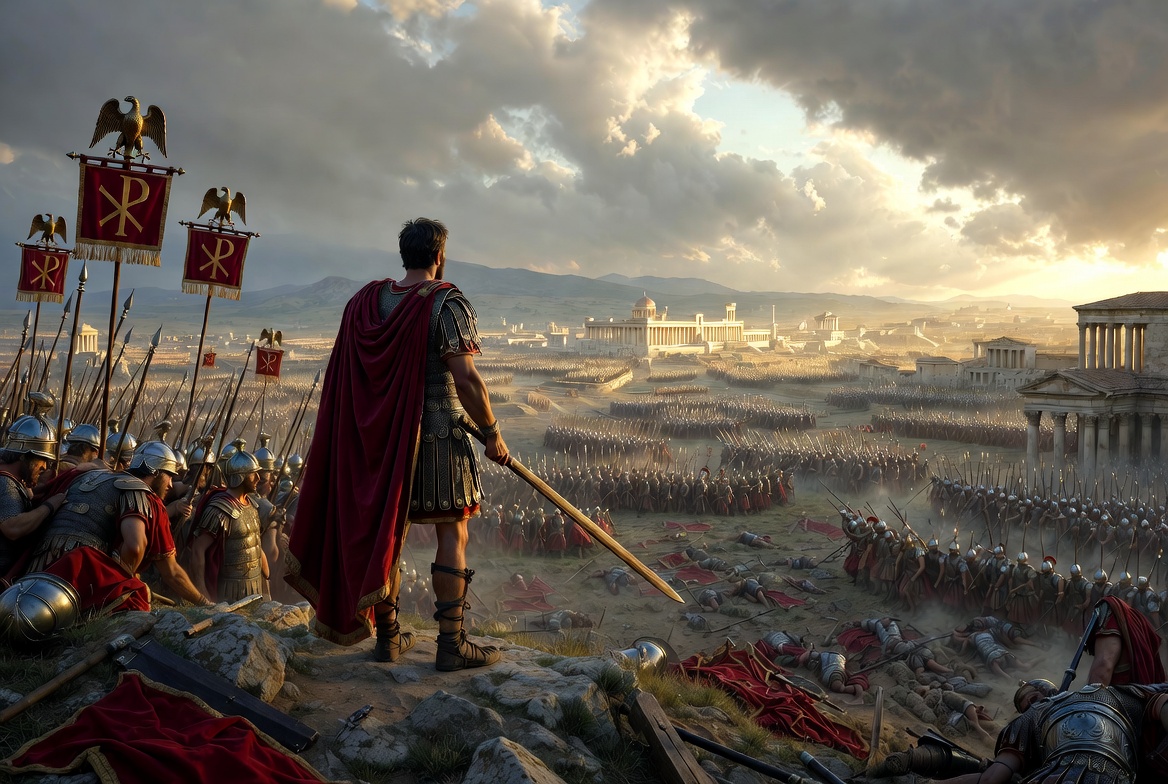 **4. Consolidate and Refound (Long-Term Empire Building – 3-12 Months)**
Unify your "provinces"—integrate the win into your whole life. Constantine built Constantinople; you build sustainable systems (habits, passive income, networks). Reform like he did: standardize processes (budgeting, routines), promote what works (Christianity parallel = core values), and purge what doesn’t (bad debts, toxic influences). Aim for legacy durability—your version of a New Rome that outlasts temporary chaos.
**5. The Unique Twist: Tetrarchy-Busting Iteration**
Most self-help is linear. This is multi-front: run parallel "civil wars" against different weaknesses simultaneously but prioritize the decisive theater. Every quarter, reassess like post-324 Constantine—execute rivals (old habits), elevate Caesars (promising new skills), and centralize under your sole rule. Track in a "Campaign Log": victories, deceptions used, rivers crossed. Make it competitive and funny—name your obstacles after Roman foes.
This plan is unique because it’s derived directly from one specific battle’s mechanics, not generic tropes. It demands Roman *disciplina* and *felicitas* (discipline + opportunistic luck). Applied consistently, it turns ordinary lives into empires of personal sovereignty—financially secure, creatively prolific, resilient against modern "barbarians" like distraction or debt.
Constantine’s July 3 gamble didn’t just win a battle; it reshaped the ancient world. Your version can reshape yours. The river is there—cross it. The empire awaits.
**4. Consolidate and Refound (Long-Term Empire Building – 3-12 Months)**
Unify your "provinces"—integrate the win into your whole life. Constantine built Constantinople; you build sustainable systems (habits, passive income, networks). Reform like he did: standardize processes (budgeting, routines), promote what works (Christianity parallel = core values), and purge what doesn’t (bad debts, toxic influences). Aim for legacy durability—your version of a New Rome that outlasts temporary chaos.
**5. The Unique Twist: Tetrarchy-Busting Iteration**
Most self-help is linear. This is multi-front: run parallel "civil wars" against different weaknesses simultaneously but prioritize the decisive theater. Every quarter, reassess like post-324 Constantine—execute rivals (old habits), elevate Caesars (promising new skills), and centralize under your sole rule. Track in a "Campaign Log": victories, deceptions used, rivers crossed. Make it competitive and funny—name your obstacles after Roman foes.
This plan is unique because it’s derived directly from one specific battle’s mechanics, not generic tropes. It demands Roman *disciplina* and *felicitas* (discipline + opportunistic luck). Applied consistently, it turns ordinary lives into empires of personal sovereignty—financially secure, creatively prolific, resilient against modern "barbarians" like distraction or debt.
Constantine’s July 3 gamble didn’t just win a battle; it reshaped the ancient world. Your version can reshape yours. The river is there—cross it. The empire awaits.