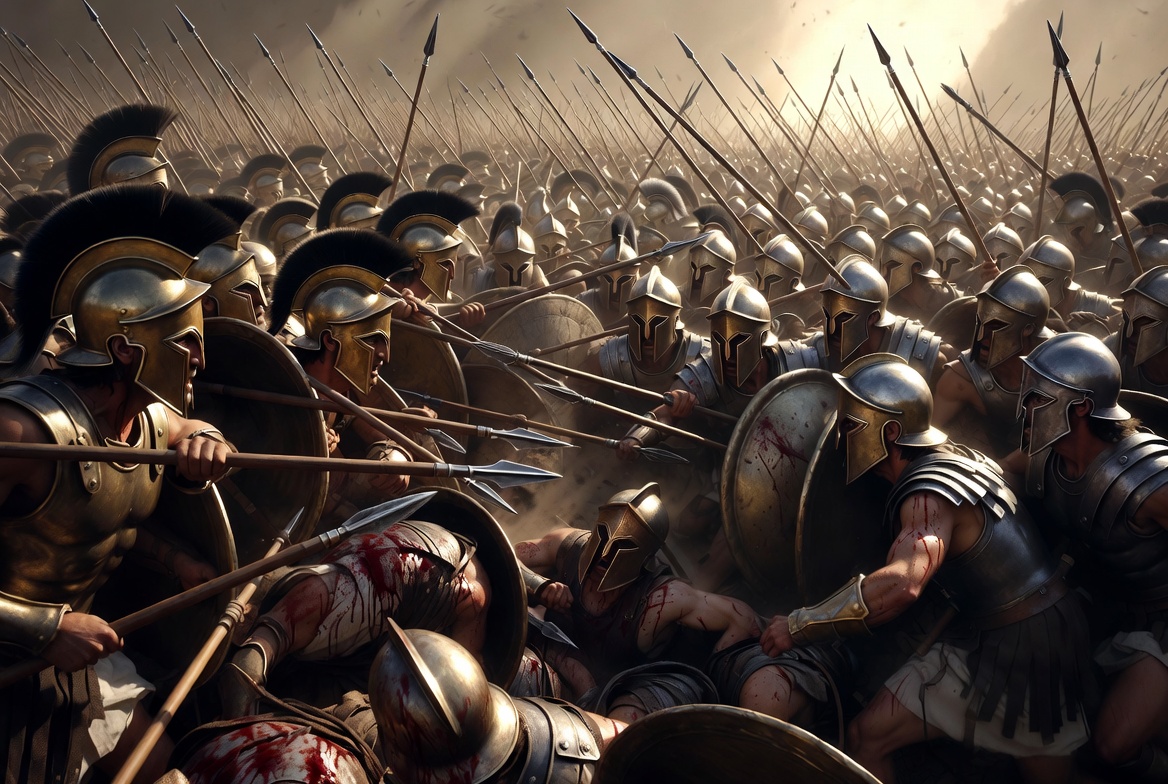

On July 7, 1520, in the sun-baked plains near Otumba (or Otompan), a ragged band of about 400–500 exhausted Spanish conquistadors and roughly 1,000–2,000 Tlaxcalan allies faced what seemed like certain annihilation. They had just survived the infamous *Noche Triste*—the Night of Sorrows—where thousands of their comrades had perished or drowned in the lakes surrounding Tenochtitlan, weighed down by stolen gold as Aztec warriors rained stones, arrows, and spears upon them. Wounded, starving, low on powder and bolts, with only a handful of horses and no artillery, they stumbled into a massive Aztec force numbering in the tens of thousands (Spanish chroniclers inflated it to 200,000, but even conservative estimates put it at overwhelming odds of 20-to-1 or more).
This was no ordinary skirmish. It was a pivotal, make-or-break moment in the Spanish conquest of the Aztec Empire. Hernán Cortés, the audacious leader who had burned his ships to commit his men to the venture, turned desperation into one of history’s most improbable victories. The Battle of Otumba wasn’t won by superior numbers, technology, or divine intervention alone (though the Spaniards certainly invoked Santiago). It was won through raw leadership, psychological insight into the enemy’s command structure, and the sheer will to charge into the heart of the storm. Today, over 500 years later, its lessons on resilience, decisive action under impossible odds, and turning apparent defeat into legendary comeback still resonate powerfully.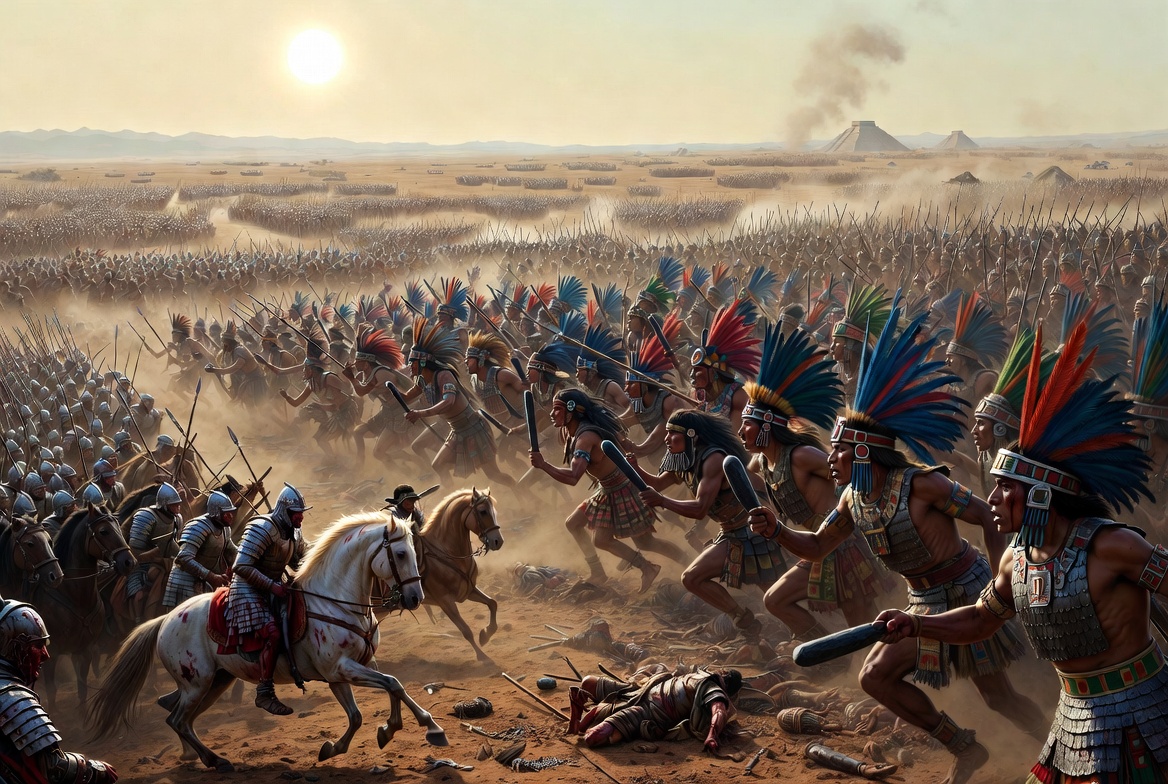
### The Road to Disaster: Cortés’ Bold Gamble and the Fall of Tenochtitlan’s Fragile Alliance
To understand Otumba, we must rewind to the heady days of the conquest. Hernán Cortés landed on the Gulf Coast in 1519 with a small force of around 500–600 men, horses, cannons, and crossbows. Through a mix of diplomacy, intimidation, and sheer audacity, he forged alliances with the Tlaxcalans—bitter enemies of the Aztecs who had resisted subjugation for years. The Aztecs, or Mexica, ruled a vast tributary empire centered on the magnificent island-city of Tenochtitlan, a metropolis of canals, temples, and markets that dazzled the Spaniards like something out of a fever dream.
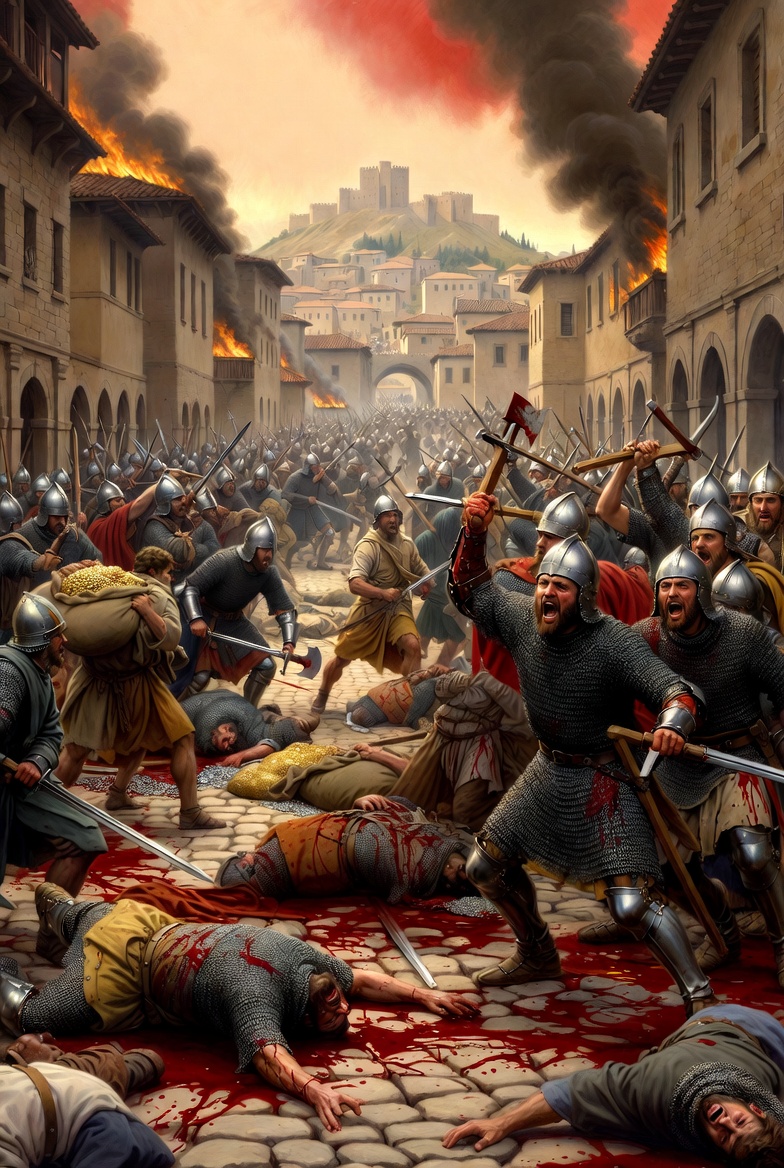
Cortés marched inland, entered Tenochtitlan as a guest of Emperor Moctezuma II, but tensions exploded. The Aztecs, fearing the strangers and their strange gods and animals (horses were terrifying novelties), grew hostile. After Moctezuma’s death—debated as murder by the Spanish or by his own people—Cortés’ men were besieged. On June 30, 1520 (or around there, depending on sources), they attempted a nighttime escape across the causeways. Aztec warriors ambushed them ferociously. Bridges were torn down; canoes swarmed the lakes. Spaniards laden with gold sank like stones. Bernal Díaz del Castillo, a foot soldier who chronicled the events vividly, described chaos: men screaming, bodies piling up, the water turning red. Roughly 800–1,000 Spaniards and thousands of Tlaxcalan allies died or were captured for sacrifice. Only a battered remnant escaped, many wounded, most of their precious gunpowder lost, horses slain.
For days, the survivors trudged through hostile territory, harassed by skirmishers, subsisting on wild cherries, corn, and the occasional horse carcass. Cortés himself was injured. Morale was in tatters. Aztec scouts shadowed them, and a massive relief force under the cihuacóatl (a high military leader, essentially co-ruler) Matlatzincátzin (or Matlatzincatl) positioned itself to block their path to safety in Tlaxcala. The Aztecs aimed to finish them off, capture survivors for ritual sacrifice to their gods (Huitzilopochtli chief among them), and restore cosmic order disrupted by these bearded invaders.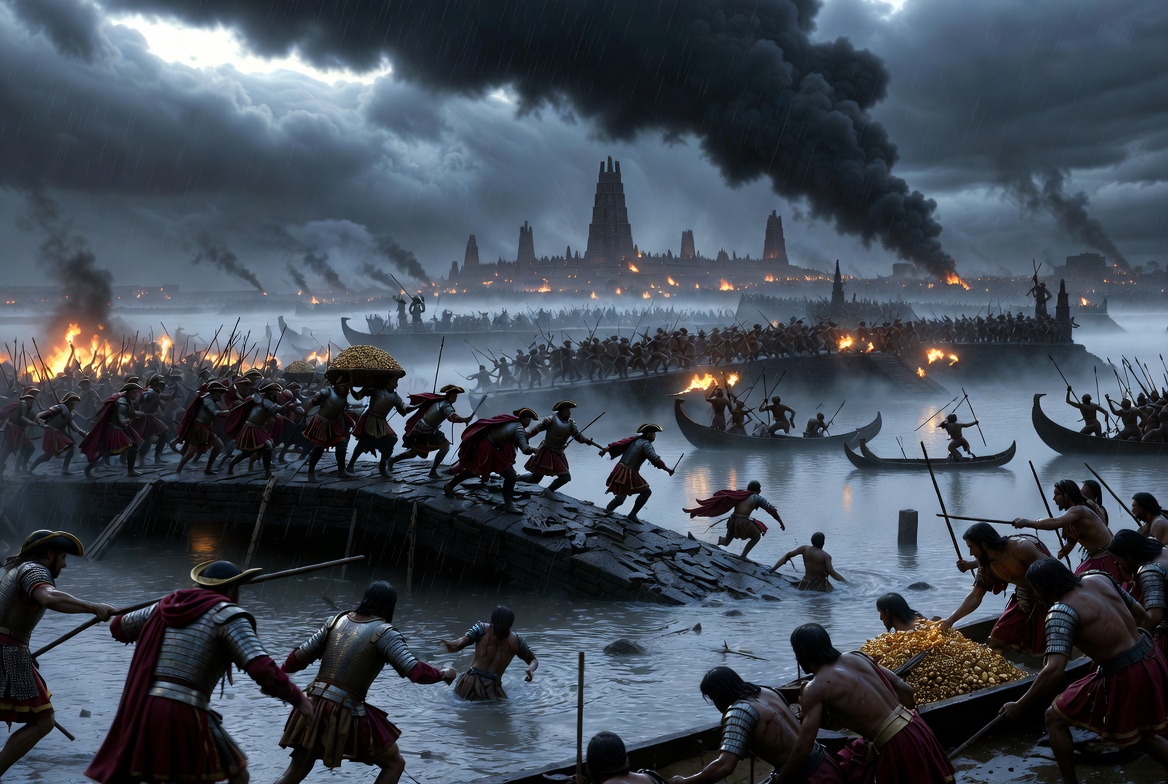
### The Plains of Otumba: A Sea of Warriors Meets a Desperate Gamble
On the morning of July 7, the weary column crested a rise overlooking the broad plain of Otompan, near the town of Otumba and the ancient pyramids of Teotihuacan visible in the distance. Below them stretched what looked like an endless Aztec army—warriors in cotton armor and feather headdresses, wielding obsidian-edged macuahuitl clubs, spears, and atlatl darts. Their standards fluttered, drums thundered, and conch shells blared. The plain filled with tens of thousands, possibly reinforced by allies from Texcoco and other city-states. The Spaniards and Tlaxcalans formed up as best they could: infantry in tight ranks with swords and shields, the few remaining horsemen (13–20) at the ready, crossbowmen and arquebusiers with scant ammunition.
The battle opened with the Aztecs advancing in waves, confident in their numbers. Aztec warfare emphasized capture over kill for sacrificial purposes, which gave the Spaniards a slight edge—they fought to the death. But the sheer mass was crushing. Hand-to-hand combat raged fiercely. Spaniards hacked with steel swords that shattered obsidian blades; Tlaxcalans fought alongside with their own weapons. Every Spaniard was soon wounded. Horses, though few, created terror—Aztecs had never faced cavalry in open battle before, and the animals seemed like demonic beasts.
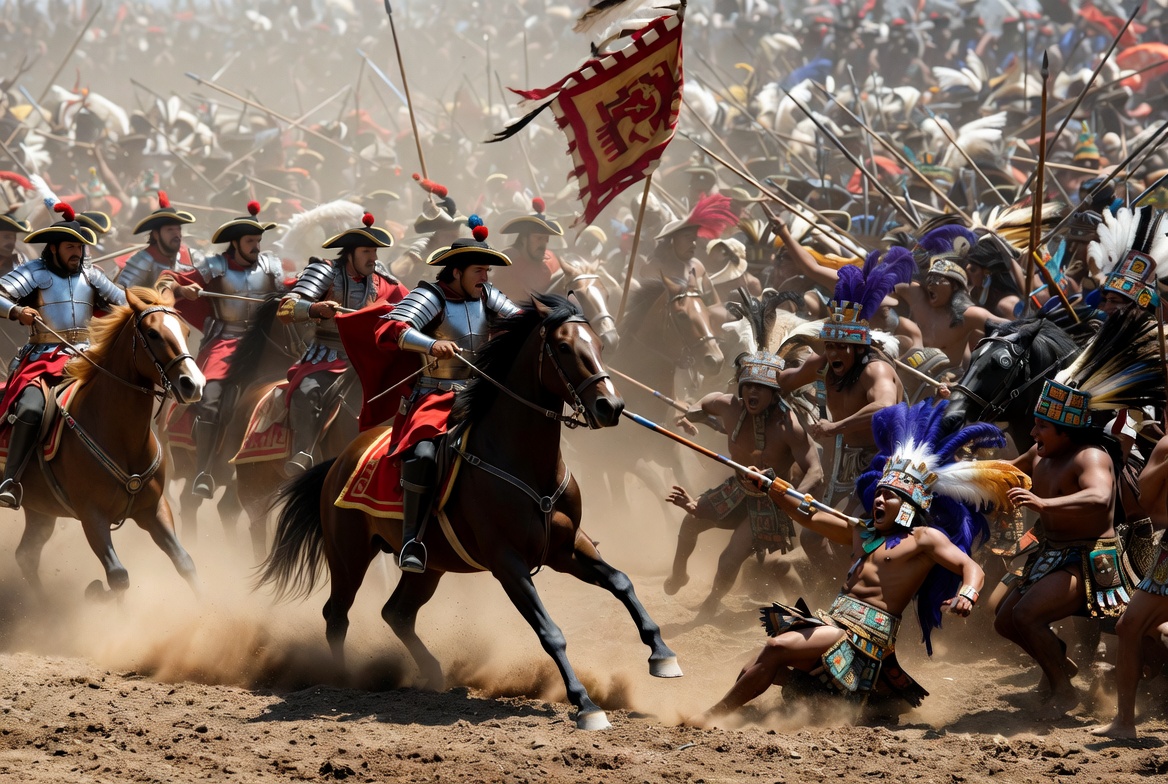
As the sun beat down and exhaustion set in, Cortés spotted the Aztec commander, Matlatzincátzin, resplendent in rich regalia, headdress, and carrying the imperial standard (*pāmitl* or battle banner). In Mesoamerican warfare, killing or capturing the leader and seizing the banner often caused the army to disintegrate, as command structures were hierarchical and morale tied to symbolic leadership. Cortés seized the moment. He rallied a small group of captains—Gonzalo de Sandoval, Pedro de Alvarado, Cristóbal de Olid, Alonso Dávila, and others—and ordered a desperate cavalry charge straight through the thick of the enemy toward the command post.
Shouting “Santiago!” (invoking St. James, the patron of Spanish warriors), the horsemen thundered forward. Lances lowered, they punched through the Aztec lines. Cortés personally struck at Matlatzincátzin. According to accounts, he unhorsed or wounded him; Juan de Salamanca delivered the fatal blow with his lance and seized the banner. The sight of their leader slain and standard taken spread panic like wildfire through the Aztec ranks. What had been an organized assault turned into a rout. Warriors fled, pursued by the exhausted but elated victors. By sunset, the plain was littered with dead and dying, though Spanish losses were relatively light given the odds (around 73 Spaniards total in the broader retreat phase, but the day itself miraculous). The survivors camped in a nearby temple, giving thanks.
Chroniclers like Díaz del Castillo and Cortés himself in his letters to the Spanish crown emphasized the near-miraculous nature. Without gunpowder or heavy support, leadership, cavalry shock, and exploiting the enemy’s cultural vulnerabilities won the day. The victory allowed the remnants to reach Tlaxcala, regroup, receive reinforcements from the coast and more indigenous allies disillusioned with Aztec rule, build brigantines, and return to besiege and conquer Tenochtitlan in 1521. Otumba reversed the momentum. What could have been the end of the conquest became its turning point.
The battle’s details highlight the brutal realities of 16th-century Mesoamerican and European warfare colliding. Aztecs fought in colorful, feathered splendor with ritualistic elements; Spaniards with steel, horses, and a crusading zeal mixed with greed for gold and glory. Disease (smallpox, already spreading) would later devastate the Aztecs further, but Otumba was decided by human grit on that specific July day. Historians debate exact numbers—Aztec forces likely closer to 10,000–40,000 effective fighters rather than mythical hordes—but the psychological and strategic impact was immense. It showcased how a tiny, determined force could exploit command decapitation against a numerically superior but conventionally organized foe.
### Echoes Across Centuries: Why Otumba Matters Beyond the Conquest
This wasn’t just a footnote in imperial history. Otumba exemplified the clash of civilizations: the highly centralized, ritualistic Aztec Empire versus the adaptable, technologically edged Europeans backed by local grievances. It paved the way for New Spain, reshaped global trade (silver from the Americas fueling European economies), and left a complex legacy of cultural fusion, resistance, and controversy. Modern Mexico grapples with this history—pride in indigenous resilience alongside the transformative (and destructive) arrival of Spanish culture, language, and faith. The pyramids of Teotihuacan still stand sentinel near the battlefield, silent witnesses to empires rising and falling.
Funny enough, in an era of tanks and drones, the lesson holds: technology and numbers aren’t everything. A bold strike at the right moment, informed by keen observation of the opponent’s psychology, can flip the script. Cortés didn’t have spreadsheets or AI; he had scouts, instinct, and unyielding commitment. His men, half-dead and broke, followed because he embodied the refusal to quit.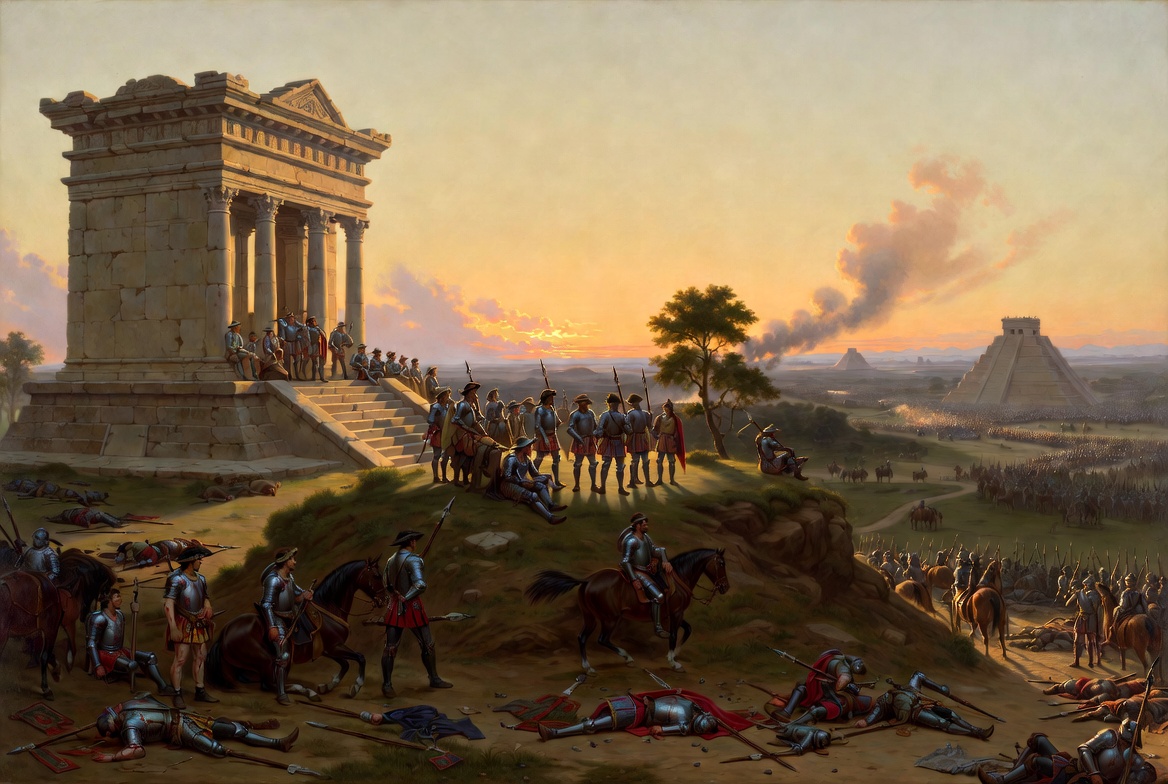
### Applying the Spirit of Otumba Today: A Unique, No-Fluff Plan for Personal Comebacks
While 90% of this account dives deep into the raw historical drama—the sweat, blood, obsidian glints, and desperate charges—the remaining power lies in extraction for modern life. The outcome at Otumba teaches that catastrophic setbacks (your personal *Noche Triste*) don’t define the end. They set the stage for the charge. Here’s a detailed, quick, unique plan that stands apart from generic self-help mantras like “visualize success” or “hustle harder.” This is “Command Decapitation Strategy for Life”—target the core obstacle blocking your momentum, rally a tiny trusted cadre, and strike decisively with what little you have left. No vision boards, no 30-day challenges. Just battlefield pragmatism adapted for daily survival and victory.
– **Assess the Plains Honestly (Morning Recon):** Like Cortés scanning the valley, inventory your exact resources post-setback without delusion. List remaining “horses” (strengths/assets: skills, one loyal contact, health sliver) and wounds (debts, bad habits, lost opportunities). Spend 15 minutes journaling facts only—no positivity fluff. This prevents scattered fighting on multiple fronts.
– **Identify the “Matlatzincátzin” (Target the Linchpin):** Pinpoint the single highest-leverage blocker. Not everything; the command standard. Is it procrastination on one key task? A toxic relationship draining energy? A financial leak? In Otumba, killing the leader collapsed the army. Today, isolate yours—e.g., if fitness stalled, the linchpin might be skipping morning prep, not “lack of motivation.” Name it explicitly.
– **Form Your Tiny Cavalry Squad (Rally the Remnant):** Cortés didn’t charge alone; he pulled 5–6 proven captains. Recruit or activate 2–4 real allies (not cheerleaders—doers). Share the plan bluntly: “We hit this one target hard.” Use voice notes or quick meets. Avoid mass motivation; small, committed groups amplify force like those 13 horses.
– **The Decapitation Charge (Execute One Decisive Strike Daily):** Commit to one bold, focused action per day aimed at the linchpin. Make it asymmetric—use your unique edge (e.g., if the blocker is “fear of rejection,” cold-call one decision-maker with a prepared pitch leveraging your survivor story). Time it for when resistance is lowest. Invoke your equivalent of “Santiago”—a personal mantra rooted in past small wins. Do it even if exhausted; momentum builds in the rout.
– **Pursue to Tlaxcala (Secure the Rear and Regroup):** After the daily charge, immediately consolidate: rest minimally but purposefully (protein, sleep, quick debrief). Forge or deepen one “alliance”—reach out to a potential mentor, skill-share partner, or resource that strengthens your base. Track micro-wins in a simple log to fuel the next push. Avoid looting “gold” (distractions like endless scrolling) that weighs you down.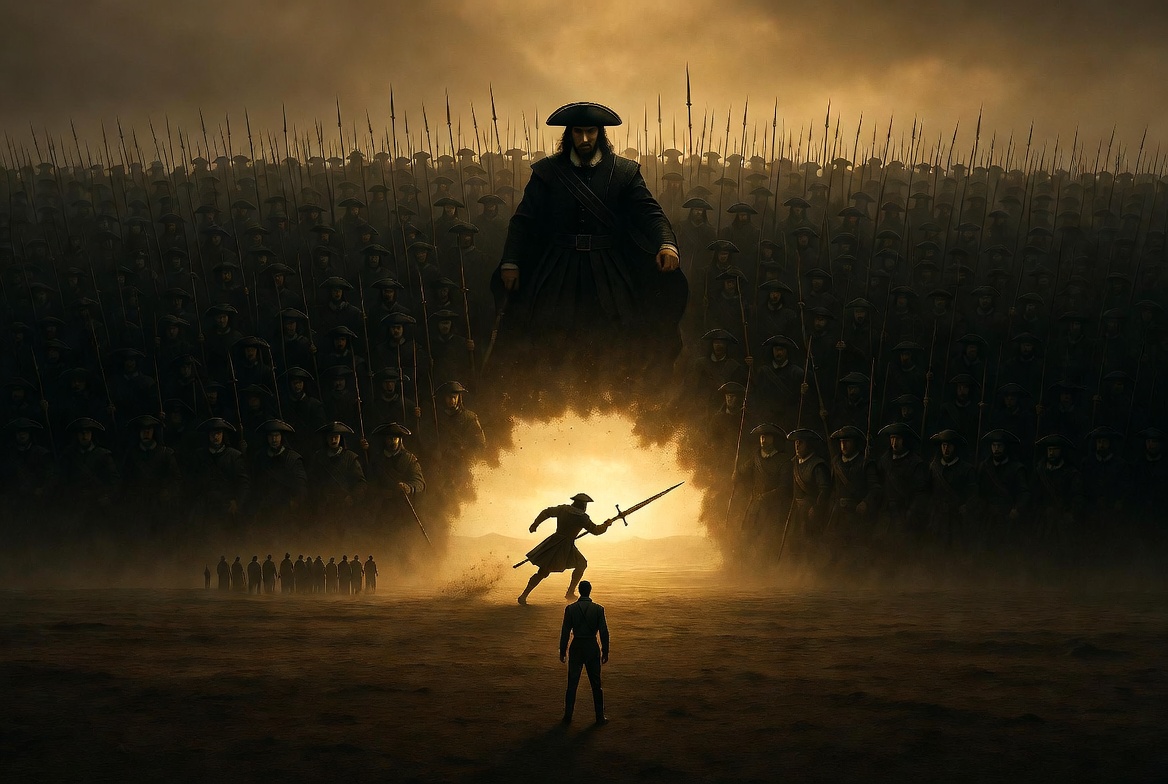
– **Iterate Until Tenochtitlan Falls (Sustain the Campaign):** Repeat for 7–14 days (the retreat-to-victory timeline). Reinforcements will come—new opportunities, energy, allies—as momentum shifts. When the main “empire” (big goal) is in sight, scale with captured “banners” (proofs of victory). Celebrate minimally; the real prize is the rebuilt force.
This plan is unique because it rejects broad positivity for surgical, historical warfare logic: observe, isolate the command node, strike with remnants, consolidate, repeat. It’s quick (daily executable in under an hour of focused effort), detailed (specific targeting), and anti-self-help (no endless affirmations, just battlefield results). Survivors of real *Noche Tristes*—job loss, health crises, betrayals—have used variants to rebuild empires in business, art, or personal reinvention. You don’t need an army. You need the charge.
The Battle of Otumba reminds us that history’s greatest turnarounds often look suicidal in the moment. On July 7, 1520, a handful refused to die quietly on the plains. They charged. Empires shifted. What linchpin will you target today? The plains await—make your stand count.
Share: