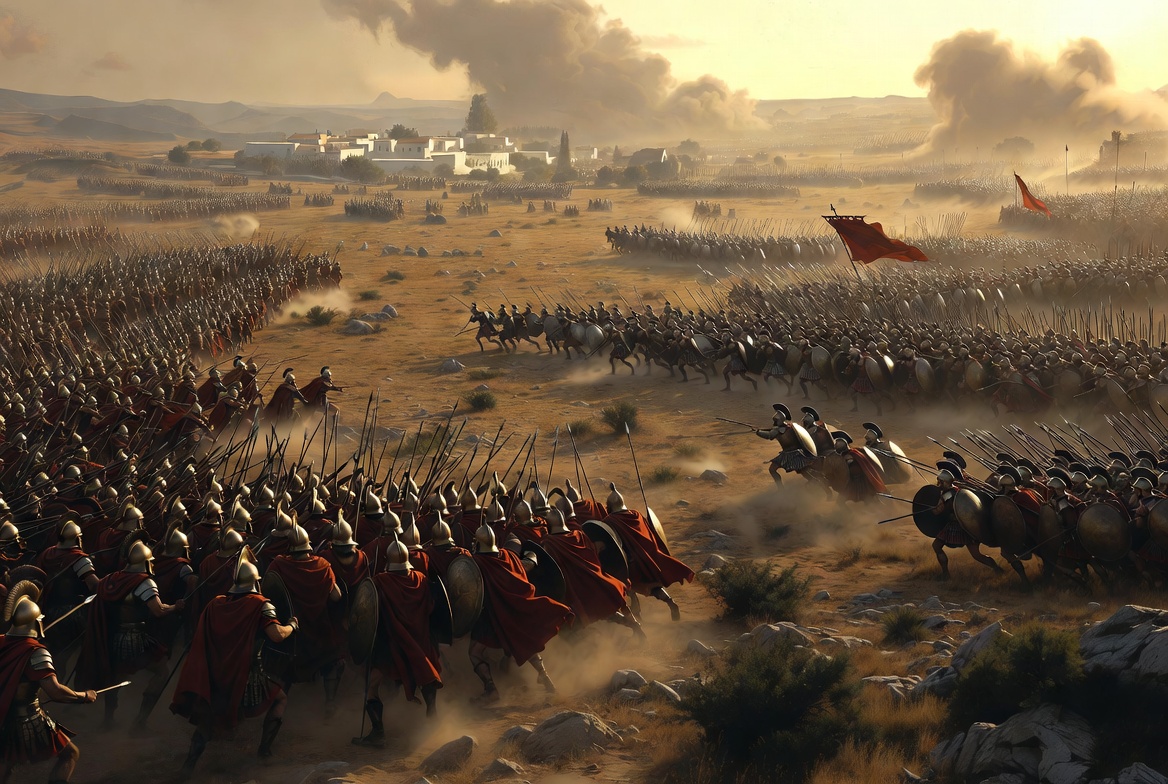
In the sweltering summer heat of central Greece, on a dusty plain near the obscure Boeotian village of Leuctra, the impossible happened. On July 6, 371 BC, a Theban army, outnumbered and facing the legendary Spartan phalanx—widely regarded as the most invincible fighting force the ancient world had ever known—delivered a crushing blow that ended an era. King Cleombrotus I of Sparta lay dead among hundreds of his elite warriors. The myth of Spartan supremacy, forged over centuries of rigorous training, iron discipline, and battlefield dominance, cracked wide open in a single afternoon of calculated brilliance.
This was no fluke. It was the masterstroke of Epaminondas, a Theban general whose tactical innovations rewrote the rules of hoplite warfare. What unfolded that day wasn’t just a military upset; it was a seismic shift in Greek power dynamics, ushering in a brief Theban hegemony and paving the way for the rise of Macedon under Philip II and Alexander the Great. The Battle of Leuctra stands as one of history’s most dramatic demonstrations that even the mightiest empires can fall when confronted by ingenuity, unity, and relentless preparation.
### The Road to Leuctra: Decades of Tension and Spartan Overreach
To understand the earthquake at Leuctra, we must rewind through the turbulent politics of 4th-century BC Greece. The Peloponnesian War (431–404 BC) had left Sparta as the dominant power, but its heavy-handed hegemony bred resentment. Sparta imposed garrisons, oligarchic regimes, and tribute demands across Greece, alienating former allies like Thebes.
Thebes, in Boeotia north of Athens, had long chafed under Spartan influence. In 382 BC, a Spartan force seized the Theban acropolis (the Cadmea) in a surprise coup, installing a pro-Spartan oligarchy. This violation of Greek norms sparked outrage. In 379 BC, a daring band of Theban exiles, led by the fiery Pelopidas and supported by Epaminondas, staged a nighttime coup. They assassinated key collaborators, liberated the Cadmea, and restored democratic rule. Sparta responded with invasions, but Thebes held firm, forging the Boeotian League into a cohesive military power.
Epaminondas emerged as the intellectual and strategic heart of Theban resistance. Unlike the stereotypical blunt Spartan warrior, he was a cultured philosopher influenced by Pythagorean thought—ascetic, eloquent, and visionary. He had studied music, geometry, and rhetoric, skills that translated into battlefield precision. Pelopidas, his close comrade, commanded the elite Sacred Band: 300 professional Theban hoplites, organized in 150 pairs of lovers who swore to fight and die together. This unit combined personal bonds with iron discipline, creating an unbreakable shock force.
Tensions boiled over in 371 BC at a peace conference in Sparta. The Thebans, under Epaminondas, demanded recognition as leaders of the entire Boeotian League. Sparta’s King Agesilaus refused, insisting on independent city autonomy—a transparent ploy to weaken Thebes. The conference collapsed. Sparta’s King Cleombrotus, already positioned in Phocis with an army, was ordered to invade Boeotia.
The Spartans marched boldly, crossing difficult terrain to surprise the Thebans. They seized a fortress and ships at Creusis, then camped near Leuctra. The Thebans, debating retreat behind city walls, were rallied by Epaminondas. He invoked omens: the plain near Leuctra was the site of an ancient outrage where two local virgins had been assaulted by Spartans and subsequently suicided. Their tomb, adorned with wreaths, became a symbol of divine justice against Spartan arrogance. Morale soared.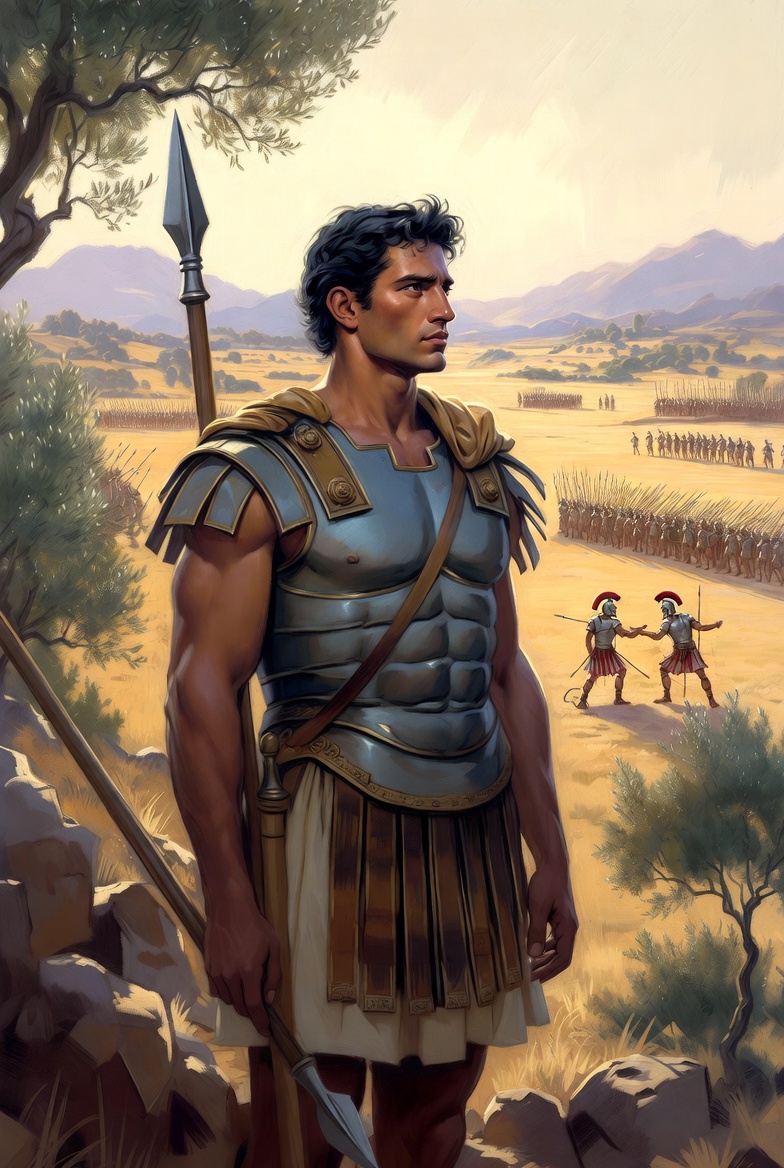
### The Armies Assemble: Numbers, Formations, and the Stage Is Set
The opposing forces met on the plain of Leuctra on July 6. Estimates vary slightly across ancient sources like Xenophon, Diodorus, and Plutarch, but consensus holds that Cleombrotus commanded roughly 10,000–11,000 hoplites and 1,000 cavalry, including about 700 full Spartan citizens (Spartiates) and allies from the Peloponnese. The Thebans fielded around 6,000–7,000 hoplites and 700 cavalry from the Boeotian League.
Traditional Greek hoplite battles featured two phalanxes—dense blocks of shielded spearmen—advancing in even lines, typically 8–12 ranks deep, clashing shield-to-shield in a brutal pushing match. Spartans excelled here, their professional training emphasizing endurance, coordination, and the right-wing position of honor where the best troops anchored the line.
Epaminondas shattered convention. He deployed his army in an oblique order: refusing (holding back) his right wing while massively reinforcing his left. The Theban left, facing the Spartan right (where Cleombrotus and the elite Spartiates stood), was stacked an unprecedented 50 ranks deep. The Sacred Band, led by Pelopidas, formed the spearhead. Cavalry screened the advance, and the Theban right was echeloned rearward to protect the flank while minimizing engagement.
This was revolutionary. Instead of a uniform clash, Epaminondas concentrated overwhelming force at the decisive point—like a trireme’s ram aimed at the enemy’s strongest section. He had studied past battles and drilled his troops rigorously, turning citizen-soldiers into a cohesive instrument of shock.
### The Battle Unfolds: Cavalry Clash, the Oblique Hammer, and Spartan Collapse
As the armies formed, preliminary cavalry skirmishes erupted. Theban horsemen, improved under Epaminondas’s reforms, routed the Spartan cavalry, driving them back into their own lines and disrupting cohesion.
Cleombrotus advanced, but confusion reigned—the rear ranks barely knew the order had been given. Epaminondas’s deep column surged forward on the left. The impact was cataclysmic. The Theban mass hit the Spartan right with irresistible momentum. Shields clashed; spears thrust; the push intensified. Pelopidas and the Sacred Band charged directly into Cleombrotus’s position.
Ancient accounts describe chaos. Cleombrotus was mortally wounded early, along with many senior officers. Spartans fought heroically—Spartiate discipline held longer than most—but numbers and depth overwhelmed them. The deep Theban formation allowed rear ranks to rotate fresh fighters forward, sustaining pressure while Spartans tired. Allies on both sides saw little action; the battle was decided on the Theban left versus Spartan right.
Casualties were lopsided: roughly 1,000 Lacedaemonians fell, including 400 Spartiates—a devastating blow given Sparta’s dwindling citizen population. Theban losses were light, perhaps 47–300. The Spartan army broke and fled to their camp. A truce was negotiated for burial; the myth of invincibility lay in ruins.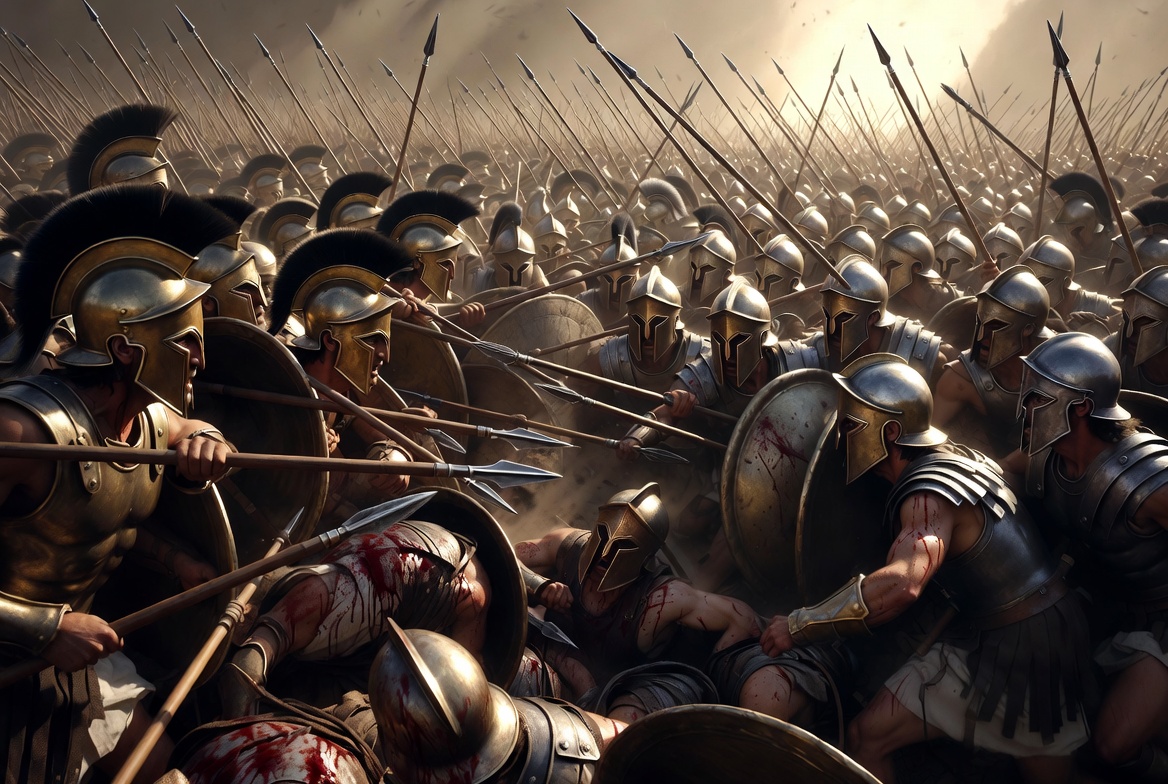
Xenophon, a pro-Spartan source, downplays Epaminondas, but later historians like Plutarch and Diodorus credit his genius. The oblique order, refused flank, integrated cavalry, and concentrated mass became templates for future commanders, influencing Philip of Macedon’s phalanx and Alexander’s tactics.
### Immediate Aftermath and the Theban Hegemony
News of Leuctra stunned Greece. In Sparta, the ephors suppressed mourning to maintain morale, but reality bit hard. Epaminondas followed up by invading the Peloponnese, liberating Messenia (Sparta’s helot breadbasket), founding Messene, and encouraging Arcadian unity. Sparta’s power base crumbled; it never fully recovered.
Thebes enjoyed a decade of hegemony, but internal rivalries and overextension led to decline. Epaminondas died heroically at Mantinea in 362 BC, famously asking if his shield was safe before expiring. His last words reflected strategic clarity: the victory was incomplete without him.
Leuctra’s ripples extended far. It weakened the Greek city-states, making them vulnerable to Macedonian conquest. Yet it also proved that innovation could topple tradition, inspiring underdogs for millennia.
### Applying Leuctra’s Lessons: A Unique Plan for Personal Breakthrough
History’s 90% here reveals raw power of focused genius over brute tradition. The remaining motivational core translates this into your life with a plan that’s anything but generic self-help fluff. No vision boards, no “hustle harder,” no recycled positivity. This is **Oblique Spear Protocol**—a deliberate, asymmetric strategy to shatter your own “Spartan myths” (limiting beliefs, inefficient habits, or overwhelming odds) by concentrating force where it counts most. It’s engineered for sustainability on a tight schedule, leveraging historical asymmetry rather than linear grind.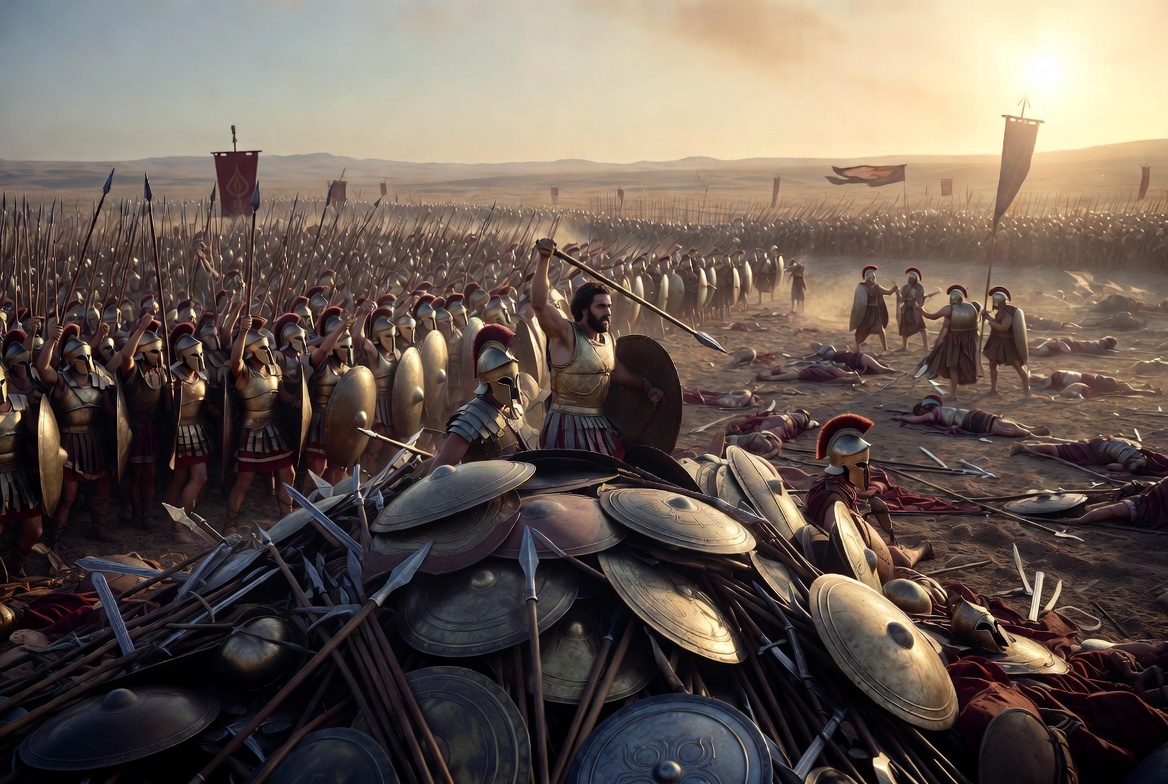
– **Audit Your Phalanx (Week 1: Map the Battlefield)**: List your “Spartan right”—the strongest, most defended area of resistance (e.g., a dead-end job, toxic relationship, or procrastination stronghold). Be brutally specific. Then identify your “Theban left”: the high-leverage skill, relationship, or daily ritual where doubling depth (effort) yields exponential breakthrough. Example: Instead of spreading 12 shallow “resolutions” across fitness, finance, and family, stack 50% of your weekly energy into one: mastering a single income skill for 25 focused hours while “refusing” lesser tasks. Track with a simple notebook tally—no apps. This mirrors Epaminondas refusing the right wing to protect the decisive thrust.
– **Forge Your Sacred Band (Ongoing: Build Unbreakable Pairs)**: Pair actions like the Theban lovers. Link a challenging task to an existing strength or joy. Write daily for your history channel? Pair it with a favorite walk-and-dictate session. Strength training stalled? Pair gym days with a specific protein ritual and post-workout reflection on one tactical win. The bond creates resilience—no solo heroism. Recruit one accountability “comrade” (friend, online peer) for mutual deep dives, not superficial check-ins. Aim for 150 “pairs” metaphorically: 300 micro-moments of reinforced discipline.
– **Cavalry Screen First (Daily Prep: Disrupt Before the Push)**: Start every major effort with a 10–15 minute “cavalry skirmish”—quick wins or intel gathering that disrupts inertia. Before a big creative session, clear distractions and review one past small victory. This prevents rear-rank confusion, just as Theban horse routed Spartans early. Make it ritual: morning saline rinse and eggs while visualizing the oblique angle on your goal.
– **Deep Column Rotation (Sustainability Rule)**: When pushing hard (e.g., music production or content batching), rotate fresh “ranks”—alternate intense 50-minute focus blocks with 10-minute recovery (walk, stretch, review one historical parallel). Never burn the whole line evenly. This prevents Spartan-style exhaustion. Weekly: one full “refused” day for rest/reflection, protecting your main thrust from burnout.
– **Oblique Advance Execution (Monthly Campaigns)**: Choose one Leuctra-style objective per month (e.g., “Release one WYNNR track with AI visuals while cutting one debt snowball payment”). Mass resources asymmetrically: 70% effort there, 30% maintenance elsewhere. Measure victory not by total output but by whether the “head of the serpent” (core obstacle) is crushed. Celebrate with a tangible trophy—like engraving a key date on a personal item.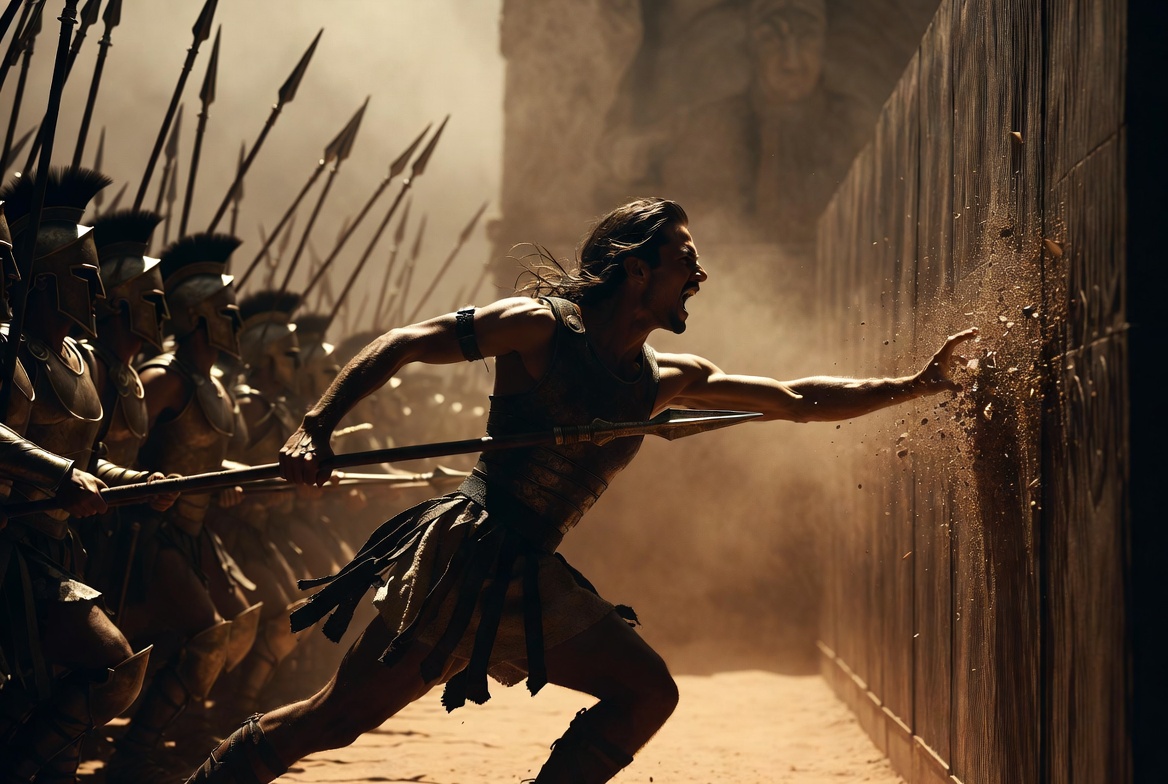
– **Post-Battle Liberation (Quarterly Review)**: After each push, “invade your Peloponnese”—free up liberated resources (time, money, energy) from conquered habits. Free a helot-like drain (e.g., unused subscriptions) and reinvest in new foundations, like exploring Arizona relocation options or church community ties. Track long-term erosion of old myths: “I’m too disabled for X” dies when you document one asymmetric win.
This protocol is unique because it rejects even-front battles with life’s demands. It demands philosophical depth (study one tactic deeply, like Epaminondas) over scattered motivation hacks. It’s funny in its Spartan mockery—your inner drill sergeant gets humbled by a philosopher’s spear. Motivational core: Leuctra proves underdogs with vision don’t just survive—they redefine the map. One focused afternoon of genius can echo for centuries. Your personal Leuctra awaits. Charge the left wing.