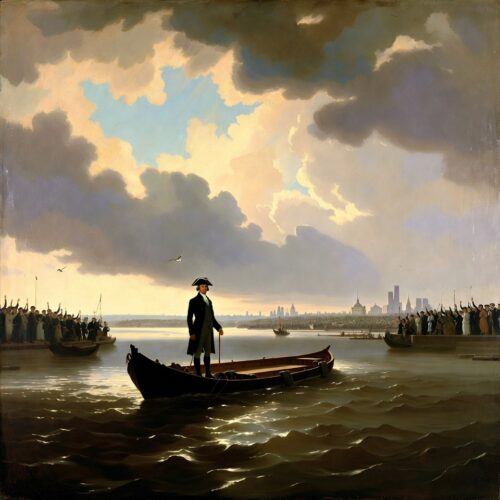

In the sweltering summer heat of the Peloponnese, on what we now mark as July 4, 362 BC, the plains near Mantinea witnessed one of the most tactically brilliant yet bittersweet clashes in ancient Greek history. This was no ordinary skirmish between city-states bickering over farmland or trade routes. It was the culmination of a decade-long power struggle that had upended the traditional order of the Greek world. At its heart stood Epaminondas, the Theban general whose innovative mind and unyielding courage had already humbled the once-invincible Spartans at Leuctra in 371 BC. On this day, he would deliver another masterclass in warfare—only to pay the ultimate price for victory. The Battle of Mantinea (sometimes called the Second Battle of Mantinea to distinguish it from an earlier 418 BC encounter) was the decisive engagement of the Theban–Spartan War. It pitted a Theban-led coalition against a Spartan-led alliance in a fight for dominance over Greece. While it ended in a tactical win for Thebes, the death of Epaminondas robbed the victory of lasting strategic impact, ushering in a fragile peace and ultimately paving the way for Macedonian ascendancy under Philip II and Alexander the Great. But beyond the maps and casualty figures lies a story of genius, resilience, betrayal, and the high cost of leadership—a tale packed with lessons that resonate far louder than the clash of hoplite shields.### The Road to Mantinea: Greece on a Knife’s Edge To understand July 4, 362 BC, we must rewind a bit. After the Peloponnesian War (431–404 BC), Sparta emerged as the dominant power in Greece, enforcing its harsh hegemony through garrisons and puppet regimes. Thebes, long a secondary player in Boeotia, chafed under Spartan oversight. In 379 BC, a daring group of Theban exiles, including Pelopidas and Epaminondas, overthrew the pro-Spartan oligarchy in a daring nighttime coup. This "Theban Liberation" set the stage for a remarkable reversal of fortunes. Epaminondas, born around 418 BC into a moderately wealthy Theban family, was no typical aristocratic warrior. Educated in Pythagorean philosophy, music, and rhetoric, he was known for his integrity, simplicity, and strategic brilliance rather than mere brute force. Ancient sources like Plutarch and Diodorus Siculus paint him as a man of exceptional virtue—incorruptible, eloquent, and deeply committed to his city’s freedom. He refused lavish gifts and lived modestly, focusing his energies on military reform and diplomacy. The turning point came at the Battle of Leuctra in 371 BC. Facing a Spartan army renowned for its rigid, deep phalanx formations and elite Spartiates, Epaminondas innovated radically. Instead of the traditional even distribution of strength across the line, he massed his best troops—including the elite Sacred Band of 300 Theban hoplites—in a deep, oblique column on the left wing, opposite the Spartan right (their strongest point). This "refused flank" tactic allowed him to concentrate overwhelming force at the decisive point while holding back elsewhere. The result was shattering: Sparta’s myth of invincibility was broken, with King Cleombrotus I killed and hundreds of elite Spartans slain. Theban hegemony began.
In the years that followed, Epaminondas led multiple invasions of the Peloponnese. He liberated Messenia, creating a hostile state on Sparta’s doorstep that deprived them of vital helot labor and territory. He bolstered Arcadian alliances, founded cities like Megalopolis as counterweights to Spartan power, and even marched near Sparta itself, forcing the Spartans to arm their helots in desperation—a humiliating necessity. These campaigns weakened Sparta economically and psychologically but also sowed seeds of resentment among other Greek states wary of Theban dominance. By 362 BC, the Greek world was fractured. Alliances shifted like sand. Mantinea, an Arcadian city, had flipped against Theban influence. Sparta, under the aging but wily King Agesilaus II, sought to reassert control. Athens, fearing Theban naval ambitions and land power, joined the anti-Theban coalition alongside Elis, Achaeans, and pro-Spartan Arcadians. Epaminondas, commanding a coalition of Boeotians, Arcadians, Argives, Messenians, Thessalians, and Euboeans, marched south once more to restore order and secure Theban gains. ### The Campaign: Daring Maneuvers and Near-Misses Epaminondas advanced to Tegea, gathering allies. Learning that Mantinea was vulnerable and that Spartan forces under Agesilaus had moved to support it, he devised a bold night march toward undefended Sparta itself. The plan was audacious: strike the Spartan homeland while its main army was away. But a traitor or alert runner warned the Spartans. Agesilaus raced back, and Epaminondas’ surprise was foiled after a sharp fight. Undeterred, he pivoted toward Mantinea, hoping to catch it unprepared. Athenian reinforcements arrived just in time to thwart that too. These failures tested Epaminondas’ resolve. His command term was expiring, and prolonged campaigning strained his coalition. Yet he refused to withdraw without a decisive blow. The two armies—roughly 25,000–30,000 Thebans and allies versus about 20,000 on the Spartan side—converged on the plain before Mantinea in early July. ### July 4, 362 BC: The Battle Unfolds The terrain was a classic Greek battlefield: open plains flanked by hills, ideal for hoplite clashes but demanding precise command. Epaminondas arrayed his forces with the Theban elite and key allies on the left, facing the Spartans and Mantineans on the enemy right. He employed a feint, marching toward western heights as if avoiding battle, lulling the enemy into relaxing their formation. Then, with stunning speed, he wheeled into attack order.
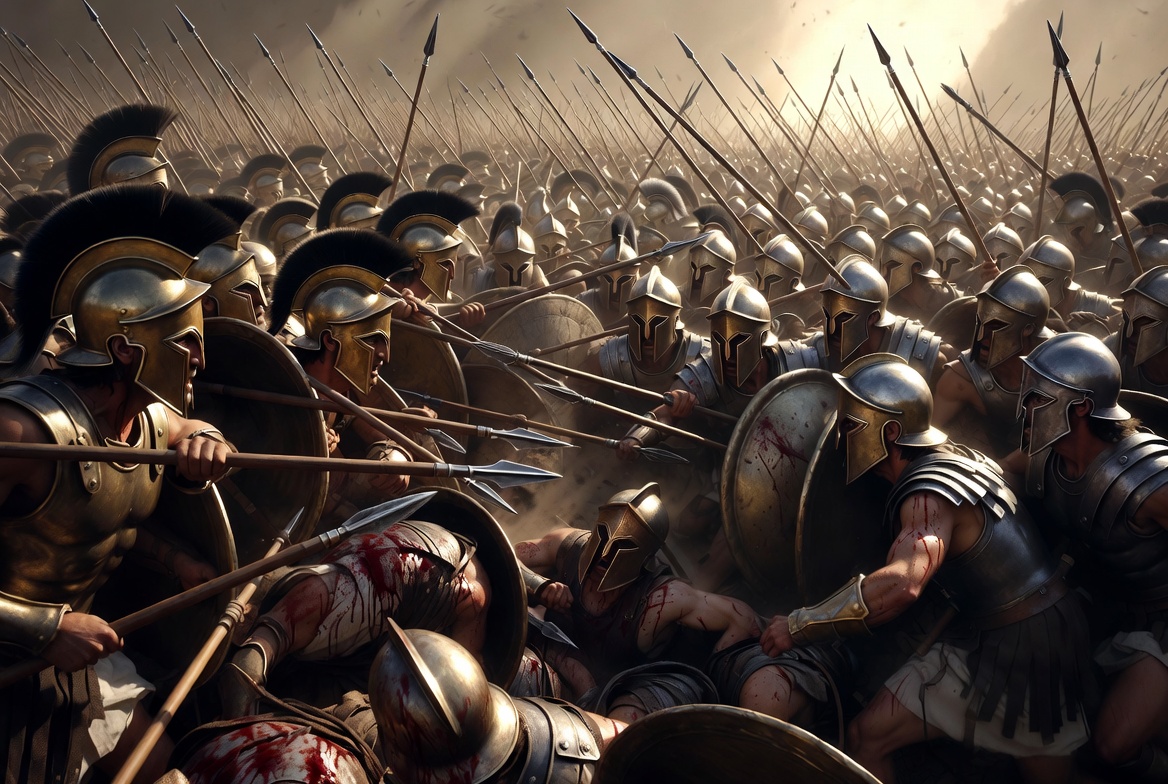
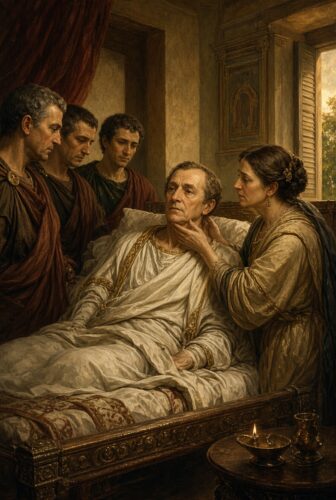
The cavalry engagement opened the fight. Theban and Thessalian horsemen, supported by light troops, routed the opposing Athenian and Mantinean cavalry. Instead of pursuing wildly, they pivoted to harass the enemy infantry—textbook combined arms. Then came the infantry hammer. Epaminondas led the deep Theban column personally, like a trireme’s ram. Xenophon, no friend of Thebes, described the impact vividly: the massed Thebans crashed into the Spartan-Mantinean line with irresistible force. Shields clashed, spears thrust, and the Spartan right buckled under the weight. The enemy phalanx broke, and panic spread. Epaminondas had engineered another Leuctra-style breakthrough. Victory seemed assured. But in the thick of the melee, pressing the pursuit at the head of his troops, Epaminondas was struck in the chest by a spear (accounts vary on the thrower—possibly a Spartan named Anticrates or even Gryllus, son of Xenophon). The shaft broke, leaving the iron head embedded. Mortally wounded, he was carried from the field. Before dying, he learned of the victory and famously remarked that he left behind two "daughters"—his triumphs at Leuctra and Mantinea. He urged peace and died with dignity. His intended successors, Daiphantus and Iolaidas, also fell. The Thebans, leaderless, halted their pursuit. Both sides claimed victory but agreed to a common peace, as neither could press the advantage. Casualties were heavy: perhaps 6,000 on the Theban side and more on the Spartan coalition, though exact figures vary. The battle ended the era of Theban supremacy and left Greece exhausted, ripe for external conquest. ### Why Mantinea Mattered: A Turning Point in Western History This was no mere footnote. Epaminondas’ innovations—oblique order, concentrated shock tactics, integration of cavalry and infantry—anticipated later masters like Alexander and even influenced Roman and medieval warfare indirectly. His liberation of Messenia permanently crippled Spartan power. The peace after Mantinea was a "peace of exhaustion," as Xenophon noted: "the opposite of what all men believed would happen." No single power dominated, fostering the conditions for Philip of Macedon to exploit Greek disunity. Humorously, one can imagine the post-battle recriminations. Spartans muttering about "that damned Theban wedge," Athenians blaming unreliable allies, and Thebans mourning the one man who held their coalition together. Epaminondas’ death was like removing the keystone from an arch—the structure held briefly but eventually crumbled.
### Applying the Mantinea Mindset: Specific Ways This History Powers Your Daily Life The raw facts of July 4, 362 BC, offer far more than dusty academia. Epaminondas exemplified **focused, asymmetric strikes against the opponent’s center of gravity**—a principle that cuts through modern noise like a Theban spear. Here’s how to weaponize it uniquely, without generic "hustle harder" platitudes: - **Identify Your "Spartan Right" and Mass Your Effort There**: Spartans put their best on the right. Epaminondas hit it with everything. In your life, audit your biggest obstacle (that high-interest debt snowballing like Spartan helot revolts, the skill gap blocking promotion, or the health habit draining your energy). Don’t spread thin across 17 "self-improvement" apps. Pick **one** leverage point weekly—e.g., automate debt payments with 50% of any windfall, or dedicate 90 uninterrupted minutes daily to deliberate practice on that skill—and attack it obliquely (pair it with an existing strength, like listening to history podcasts during workouts). Track it ruthlessly in a single notebook entry: "Today’s ram: X impact." - **The Feint-and-Wheel: Master Deception Against Procrastination or Distraction**: Epaminondas feinted toward the heights to disrupt enemy readiness. Translate this: When facing a dreaded task (taxes, difficult conversation, creative block), announce a "preparatory" low-stakes action publicly or to yourself (e.g., "Just outlining for 5 minutes"). This lowers resistance, then wheel into full engagement. It exploits your brain’s tendency to relax guard, turning inertia into momentum. Unique twist: Pair with a "Sacred Band" accountability partner—someone who checks only on that one strike, no fluff. - **Combined Arms for Modern Chaos**: Cavalry screened and harassed; infantry delivered the knockout. Don’t rely on willpower alone. Stack micro-habits: Use environmental "cavalry" (phone in another room, prepped gym bag) to harass distractions, then deploy your main "phalanx" (deep work block). For fitness like the user’s high-protein training, combine tracking macros (infantry) with social proof at the gym (cavalry support) to break through plateaus. - **Lead from the Front, But Know When to Pass the Spear**: Epaminondas charged personally, inspiring victory but costing his life. In teams or solo endeavors, model excellence visibly—demo the hard rep, share the unpolished draft first—but build successors. Document processes obsessively (your "Leuctra playbook") so others (or future you) can continue. This prevents single-point failure, whether in a side hustle, family legacy, or personal recovery. - **Embrace the Pyrrhic Reality and Pivot to Peace**: Tactical win, strategic draw. Celebrate small victories fully (journal the "Mantinea moment"), then immediately assess: "What now for lasting hegemony?" Avoid victory disease by scheduling a 24-hour "peace council" post-milestone—review what broke, what held, and negotiate internal truces with bad habits. - **Philosophical Armor: Virtue as Force Multiplier**: Epaminondas’ integrity won allies where arms alone couldn’t. In a world of shortcuts, cultivate unshakeable personal standards (honesty in deals, consistency in training). It compounds trust and self-respect like Theban alliances.
### Your Unique 7-Day "Mantinea Strike Plan" – No Fluff, All Asymmetric Warfare This isn’t another recycled morning routine. It’s a campaign blueprint tailored to deliver one decisive breakthrough while preserving your forces (time/energy). **Day 1: Reconnaissance** – Map your battlefield. List top 3 "enemies" (obstacles). Choose one as the Spartan right. Gather intel: exact metrics, past failures, allies (resources/people). **Day 2: Feint Preparation** – Assemble your deep column. Gather tools/supplies for the strike. Publicly commit minimally ("Starting research tomorrow") to trigger the wheel. **Day 3: The Charge** – Execute the massed attack for 2–4 focused hours. No distractions. Use timers like hoplite shields. Log resistance and breakthroughs. **Day 4: Cavalry Harassment** – Light supporting actions all day (quick wins, environment tweaks) to maintain pressure without burnout. **Day 5: Press the Pursuit (or Assess)** – Build on Day 3 gains. If wounded (setback), apply Epaminondas’ grace: extract the "spearhead" lesson without despair. **Day 6: Sacred Band Reinforcement** – Share one key insight or result with a trusted ally. Strengthen the coalition. **Day 7: Common Peace** – Full review. Celebrate victory. Decide next campaign or truce. Rest strategically—Sparta didn’t fall in one day. Repeat cyclically, rotating targets. Scale intensity to your capacity (disabled or high-energy). This plan’s uniqueness lies in its military-derived asymmetry: 80% focus on one point of failure, minimalism in tracking, and built-in adaptation to "death of the leader" moments via documentation. Epaminondas didn’t live to see the full fruits, but his spear on July 4, 362 BC, forever altered Greece’s trajectory. Yours can pierce personal stagnation with the same precision. Study the past not for nostalgia, but as a whetstone for today’s battles. Charge forward—unconquered.
Share: