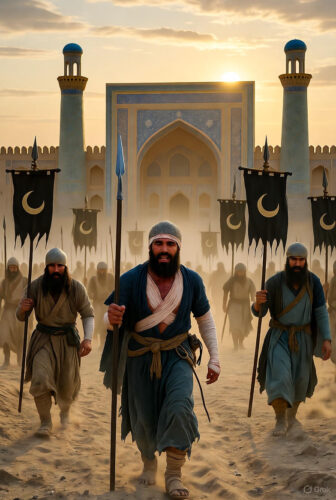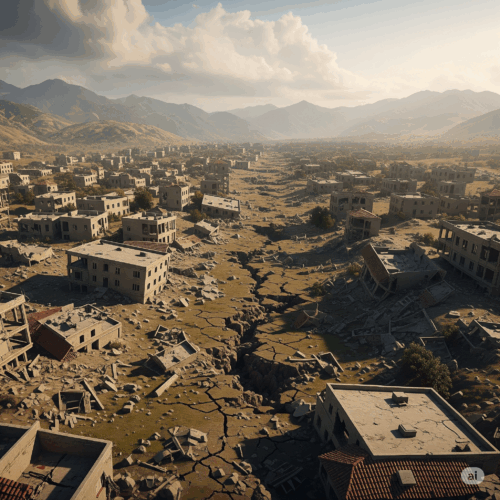

On a narrow plain ringed by hills and dark forests in what is now northern Albania, the morning of June 29, 1444, dawned with the kind of deceptive calm that precedes thunder. Across the field stood perhaps 25,000 Ottoman troops under the experienced commander Ali Pasha—veterans of Murad II’s campaigns, confident in their numbers, their heavy cavalry, and the reputation of the empire that had swallowed kingdoms whole. Facing them were roughly 15,000 Albanians of the newly formed League of Lezhë, a patchwork alliance of proud but previously divided nobles. Their leader was a former Ottoman sipahi turned rebel: Gjergj Kastrioti, better known to history as Skanderbeg. What unfolded that day was not a simple clash of arms. It was a masterclass in asymmetric warfare, terrain mastery, psychological discipline, and the lethal power of the unexpected flank delivered by men who refused to accept the arithmetic of empire. The Ottomans arrived expecting a quick, glorious rout. Instead, they stumbled into a carefully prepared trap that left thousands dead, their army shattered, and a legend born that would echo across Europe for decades. This single June 29 victory did not end the Ottoman advance, but it proved the “invincible” could be humbled—and it gave one small people twenty-five more years of defiant resistance under a man who had once worn the sultan’s colors.To understand why this matters far beyond dusty chronicles, we must first walk the road that brought both sides to that plain. ### The Dragon’s Defection and the Forged Letter Gjergj Kastrioti was born around 1405 into one of Albania’s leading noble houses. His father, Gjon Kastrioti, had been forced to submit to Ottoman suzerainty and send young Gjergj as a hostage to the sultan’s court. There the boy was raised among the elite janissary corps, converted (at least outwardly) to Islam, given the name Iskander Bey—“Lord Alexander,” after the great conqueror—and trained in the arts of Ottoman warfare. He rose quickly, fighting in campaigns across the Balkans and Anatolia. By the 1440s he commanded sipahi cavalry and enjoyed the sultan’s favor. But blood and memory are stubborn things. In 1443, while serving in Murad II’s army against the Hungarian crusader John Hunyadi at the Battle of Niš, Skanderbeg saw his moment. He deserted, taking with him roughly 300 loyal Albanian fighters. Racing home, he pulled off one of history’s more audacious deceptions: he forged a letter from Sultan Murad II ordering the Ottoman governor of Krujë to surrender the fortress to “Iskander Bey.” The governor complied. Skanderbeg seized the citadel, renounced Islam, and declared he had come to reclaim his ancestral lands and faith. This was no isolated bandit raid. It was the spark that ignited a broader rebellion. Albanian nobles, long chafing under Ottoman tax collectors, devshirme levies, and cultural erasure, saw in Skanderbeg a leader who knew the enemy’s methods from the inside. On March 2, 1444, in the Venetian-held town of Lezhë (Alessio), the major lords gathered and formed the League of Lezhë—a rare moment of unity among notoriously independent Albanian principalities. Skanderbeg was elected captain-general, or kryekapedan. The alliance was fragile, bound more by shared threat than deep trust, but it gave him an army and a cause. Murad II was not amused. While preoccupied with threats from Hungary and elsewhere, he could not allow this upstart to carve out a defiant pocket on the empire’s western flank. In spring 1444 he dispatched one of his ablest generals, Ali Pasha, with a substantial force—estimates range from 15,000 to 40,000 depending on the chronicler—to crush the rebellion before it spread. The Ottomans marched south from Üsküp (Skopje) along the Drin River corridor toward Krujë, expecting to brush aside whatever ragtag resistance they met.
Skanderbeg, however, had been scouting and planning. He knew the invasion route. He chose his ground with care. ### The Plain of Torvioll: A Killing Ground in Disguise The battlefield was the Plain of Torvioll (also called Torviolli or Lower Dibra), an elongated stretch of relatively flat land roughly 11 kilometers long and 4–5 kilometers wide, north of modern Peshkopi in the Dibra region. It was surrounded by hills and, crucially, patches of forest and broken ground. To an overconfident attacker it looked like ideal cavalry country—open enough for charges, not so vast that a smaller force could easily melt away. To Skanderbeg it was a natural funnel and ambush site. He positioned his main force—perhaps 9,000–12,000 men divided into wings and center—in a crescent-shaped formation at the foot of rising ground, deliberately placing himself in what appeared to be a vulnerable spot. The intent was to lure the Ottoman heavy cavalry into a downhill charge, committing them to the fight on ground of his choosing. Hidden in the woods and folds of terrain behind and to the flanks of where the Ottomans would deploy, he placed a reserve ambush force of about 3,000 cavalry under trusted commanders including his nephew Hamza Kastrioti, along with Muzaka of Angelina, Zakaria Gropa, Peter Emanueli, and Gjon Muzaka. Their orders were explicit: wait for the signal, then strike the enemy’s rear and exposed flanks without mercy. Another reserve of roughly 3,000 men under the capable Vrana Konti (sometimes called the Count of Urana) waited to be committed at the decisive moment. Skanderbeg’s own center would engage and distract, while the wings under leaders like Tanush Thopia and Moisi Arianiti (or Ajdin Muzaka in some accounts) held or counterattacked. The entire plan relied on three things the Ottomans lacked that day: intimate knowledge of the terrain, iron discipline, and the element of surprise. ### The Night Before: Feasting vs. Fasting, Taunts vs. Silence The night of June 28–29 revealed the character gap between the two camps. Ottoman troops, certain of victory against what they viewed as mountain rebels, feasted, drank, and made provocative approaches to the Albanian lines—shouting insults, perhaps even small harassing attacks meant to goad the “cowards” into foolish action. Confidence oozed from every campfire. Why not? They outnumbered the enemy, they were better equipped for open battle, and their empire had crushed far larger foes. Skanderbeg’s men did the opposite. They extinguished unnecessary fires, maintained strict silence, rested, tended weapons, and received religious ministrations. Scouts moved quietly. No grandstanding. No premature celebration. The Albanian leader understood something fundamental about human nature under pressure: the side that preserves its edge while the other dulls it with overconfidence holds a hidden advantage before the first arrow flies. Small cavalry skirmishes may have tested the waters, but the main Albanian force gave no sign of breaking or fleeing. They were waiting.
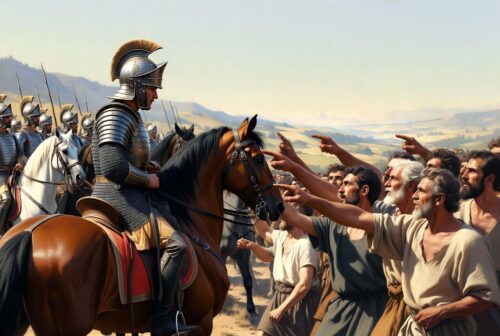
### June 29, 1444: The Lure, the Signal, and the Rout Dawn brought movement. The Ottomans, seeing the Albanian army arrayed at the base of the slope in that inviting crescent, took the bait. Ali Pasha ordered a general advance, expecting his cavalry to smash the rebel center and send the rest scattering into the hills. The Ottoman wings and center surged forward, confident the day would end with plunder and glory. What happened next was coordinated chaos of the best kind. The Albanian wings under Thopia and his counterparts met the first Ottoman charges with surprising stubbornness, holding or even pushing back elements of the attack. In the center, Skanderbeg personally led or directed assaults against isolated Ottoman units, creating the impression of a desperate but contained fight. The Ottomans, committed and perhaps already somewhat disordered by the terrain and the unexpected resistance, pressed harder. Then came the signal. From the woods behind and beside the Ottoman army erupted 3,000 Albanian cavalry. They crashed into the rear and exposed flanks like a thunderbolt. Simultaneously, the Albanian wings shifted from defense to offense, rolling up the Ottoman sides toward the center. The hidden reserves under Vrana Konti were thrown into the growing melee. What had been an orderly Ottoman advance dissolved into a swirling, panicked mass. Men who moments earlier had been laughing at the “ragtag” Albanians now found themselves surrounded, struck from three directions, and unable to maneuver effectively in the confined space. Contemporary and near-contemporary accounts describe a slaughter. The Ottoman front ranks were virtually annihilated; some sources claim only a few hundred remained standing in the hardest-hit sectors. Ali Pasha himself barely escaped with his personal guard and elements of the janissary corps, reportedly coming close to death in the melee. Thousands of Ottomans were killed on the field or in the pursuit; hundreds or thousands more were captured. Albanian losses were far lighter—traditional figures suggest as few as 100–120 dead, though modern estimates allow for several hundred to perhaps a couple of thousand killed and wounded. The disparity itself testifies to the effectiveness of the ambush.
By the end of June 29, 1444, the Ottoman invasion force had ceased to exist as a coherent threat. The survivors fled northward. Skanderbeg’s victory was complete, unexpected, and strategically transformative. ### Why Torvioll Mattered Then—and Why the Story Endures The battle did not destroy Ottoman power in the Balkans; Murad II still commanded vast resources and would send more armies in the years ahead. But it shattered the aura of inevitability. For the first time in open engagement, a regional rebel force had used superior tactics, terrain, and discipline to defeat a larger Ottoman army in the field. News traveled. Pope Eugenius IV and other European powers took notice, seeing in Skanderbeg a potential ally for a broader anti-Ottoman crusade (plans that ultimately faltered, but the inspiration was real). Within Albania, the victory cemented Skanderbeg’s leadership of the League and bought time to strengthen defenses, most famously at Krujë. For the next quarter-century, until his death in 1468, Skanderbeg would wage a remarkable defensive war, winning or stalemating against repeated Ottoman invasions through a combination of guerrilla tactics, fortified strongpoints, and the same cunning that triumphed at Torvioll. He became a symbol across Christendom—the “Athlete of Christ,” the dragon who would not kneel. His story, amplified by early biographers like Marin Barleti, entered European legend. The numbers and some dramatic flourishes in the sources are debated by historians; medieval chronicles often inflate victories and enemy casualties. Yet the core truth remains: a smaller, well-led force that chose its ground, prepared an ambush, maintained discipline while the enemy relaxed, and struck from the unexpected angle routed a larger, overconfident opponent. That is not legend. That is repeatable human pattern recognition applied to warfare. ### What Torvioll Teaches Anyone Facing Overwhelming Odds Today History’s greatest gift is not nostalgia—it is pattern. The same dynamics that decided June 29, 1444, operate in every modern “battlefield” where one side feels outnumbered by bureaucracy, markets, illness, debt, competition, or sheer inertia. The Ottomans had numbers, momentum, and institutional arrogance. Skanderbeg had preparation, terrain knowledge, hidden reserves, and the will to let the enemy commit first. Apply that pattern and several concrete advantages emerge for anyone today: - **Preparation and intelligence beat raw power.** Skanderbeg did not meet the Ottomans on their terms or timetable. He picked the ground weeks or days in advance, hid forces, and understood how overconfident attackers behave when they think victory is certain. In daily life this translates to deep research before major moves—whether negotiating a raise, launching a project, managing a health challenge, or restructuring finances. The person who has mapped the terrain (regulations, competitors, personal triggers, hidden costs) already holds the flank.
- **Discipline while the other side feasts creates asymmetric edges.** The night-before contrast is brutal in its simplicity. One camp dulled its edge with celebration and taunting; the other sharpened it with rest and focus. Modern equivalents are obvious once you look: the competitor doomscrolling until 2 a.m. versus the one who sleeps, reviews notes, and protects recovery. The professional who skips the “quick win” dopamine hit to build the hidden skill or relationship. Small, consistent discipline compounds into devastating surprise when the moment arrives. - **Luring the opponent onto your prepared ground turns defense into offense.** The crescent at the foot of the hill was not cowardice—it was bait. By appearing vulnerable or committed in one visible way, Skanderbeg drew the Ottoman cavalry into a position where their own momentum and numbers became liabilities. In personal terms: structure your environment and commitments so that the “obvious” path for obstacles or distractions leads them into your strengths. Set boundaries that force trade-offs on others. Create systems where your core priorities are protected while side opportunities (the “woods”) remain available for unexpected deployment. - **Hidden reserves and the signal turn a holding action into a rout.** The 3,000 cavalry in the trees were useless until the signal. Once committed, they decided everything. Most people fight every battle with 100% of their visible resources and nothing in reserve. The Torvioll lesson is to deliberately hold back capacity—time, money, relationships, skills, energy—for the moment the main engagement has fixed the opponent’s attention. Then release it decisively. One well-timed side project, introduction, or pivot can collapse resistance that frontal effort alone could never break. - **Unity under competent leadership multiplies small forces.** The League of Lezhë was imperfect and fractious, yet on that day it functioned because a capable commander had a clear plan and the authority to execute it. In individual life this means ruthless prioritization and self-command: decide who or what is in your “league” (habits, tools, people) and give it coherent direction rather than letting every shiny demand pull you in contradictory directions. - **Underdog victories are psychologically contagious—to yourself and others.** Torvioll did not just win a battle; it proved a narrative. Skanderbeg’s men saw they could win. Europe saw the Ottomans could bleed. That belief fueled further resistance. When you engineer and then win a smaller, winnable engagement using these principles, you rewrite your own internal story from “inevitable defeat” to “I have tools the giants don’t expect.” That narrative shift is often the difference between quitting at the first setback and persisting through the next twenty-five years of sieges. ### The Torvioll Protocol: A Quick, Unique, Battle-Tested Plan for Flanking Your Personal Ottomans Most self-help advice is either too vague (“think positive”) or too generic (“set SMART goals”). The Torvioll Protocol is different. It is a short, repeatable tactical drill drawn directly from the June 29 mechanics—scouting, positioning, hidden reserves, disciplined night-before, signal strike, and exploitation. It is designed to be executed in focused bursts (one major challenge at a time) rather than as a permanent lifestyle overhaul. It treats your obstacles like an overconfident invading army and your resources like a smaller but smarter force that refuses to fight fair. **Phase 1: Forge the Letter and Seize Your Krujë (Bold First Claim – 30–60 minutes)** Identify the single most important “fortress” in your current situation—the one asset, habit, relationship, or goal whose control changes everything else (your health baseline, a key income stream, a creative project, debt reduction anchor). Then take one decisive, slightly clever action to claim or secure it, even if imperfect. Skanderbeg used a forged letter; you use whatever truthful but bold move seizes initiative. Examples: schedule the medical appointment you’ve delayed, open the dedicated savings account with an automatic transfer, send the outreach email that could unlock a collaboration, or block the first two hours of tomorrow for the project. Do it today. This is your defection from the status quo. **Phase 2: Choose and Map Your Torvioll Plain (Terrain Intelligence – 1–2 hours)** Define the narrow battlefield for this specific campaign. What is the actual scope? (Not “get in shape”—“walk 8,000 steps daily while protecting my joints and sleep.” Not “fix finances”—“attack the highest-interest debt first while building a three-month buffer.”) Walk the ground mentally or literally: list the hills (obstacles), forests (hidden opportunities or allies), and choke points. Identify where the “Ottoman cavalry” (distractions, cravings, urgent-but-unimportant demands) will naturally charge. Write it down. This map becomes your crescent formation. **Phase 3: Hide Your 3,000 Cavalry (Build and Conceal Reserves – ongoing, start small)** Deliberately create or protect one asymmetric asset the “enemy” (your old patterns, competitors, or circumstances) does not see coming. It could be a new skill practiced in stolen minutes, a quiet relationship nurtured without fanfare, a side income stream, extra sleep banked, or an emergency fund no one knows about. Keep it hidden until the signal. The point is not size—it is that it exists and is positioned for flank use. Start with 15–30 focused minutes daily on one reserve-building activity. Protect it like Skanderbeg protected his ambush force. **Phase 4: The Night-Before Discipline (Pre-Battle Ritual – 10–20 minutes the evening before action)** The evening before any significant “battle day” (presentation, difficult conversation, new habit launch, big decision), run a short protocol: review your map, confirm your reserves are ready, eliminate one indulgence or distraction the Ottomans would have enjoyed (doomscroll, extra snack, late-night argument), and rest. No taunting the problem. No premature celebration. This single habit creates the edge when everyone else is mentally partying or panicking. **Phase 5: Give the Signal and Exploit the Rout (Decisive Strike + Momentum Harvest – the action window)** When conditions align (you have scouted, positioned, and prepped), commit your visible forces to the “crescent”—the obvious, prepared engagement that draws attention. Then release your hidden reserves at the moment of maximum commitment from the obstacle. Strike from the unexpected angle. Once the initial resistance cracks, do not stop to admire the victory. Pursue the advantage ruthlessly for a set period: document the win, lock in the new habit or deal, cut the next expense, schedule the follow-up, tell the story to your future self. The rout phase is where small wins become lasting shifts. **Phase 6: The After-Action League Meeting (Weekly 15-Minute Review)** Once a week, gather your “League”—even if it is just you and a notebook. What worked at Torvioll this week? Where did the Ottomans almost break through? Adjust the map, reinforce or reposition one reserve, and pick the next micro-battle. This keeps the alliance coherent and prevents the fragmentation that plagued Albanian politics between victories. The entire protocol can be initiated in a single focused afternoon for your first campaign and then maintained with the weekly review plus the night-before ritual. It is quick because it is tactical, not philosophical. It is unique because it borrows the specific mechanics of a 15th-century ambush rather than recycled corporate slogans. It is funny in application because you will catch yourself thinking, “Am I feasting like Ali Pasha’s camp right now?”—and that thought alone often stops the self-sabotage. History does not repeat, but it rhymes with ruthless clarity when we bother to listen. On June 29, 1444, a smaller force that had been forged in the enemy’s own system, that chose its ground, hid its strength, rested while the invader celebrated, and struck from the woods at the perfect signal, turned numerical disadvantage into a legendary rout. The Ottomans learned the hard way that arrogance plus numbers is not a strategy. Skanderbeg’s men learned that disciplined preparation plus surprise is. You do not need an army or a sultan to fight. You only need to stop meeting every challenge head-on with your visible resources and start thinking like the commander who already knows where the woods are. The plain is waiting. The crescent can still be formed. The cavalry is already in the trees. The only question left is whether you will give the signal.
Share: