On May 10, 1534, after twenty days of open-ocean sailing from the walled port of Saint-Malo in Brittany, French mariner Jacques Cartier and his crew of sixty-one men aboard two stout ships—the Grande Hermine and the Petite Hermine—first caught sight of the rugged, fog-shrouded eastern coast of what we now call Newfoundland. The Atlantic crossing had been remarkably swift and mercifully free of the usual horrors of sixteenth-century seafaring: no major storms, no catastrophic leaks, no mass outbreaks of dysentery. Yet as the low, rocky shoreline emerged from the mist, Cartier’s journal captured a reaction that feels almost comically underwhelmed for a man who had just become the first European to methodically explore and map the entrance to the Gulf of St. Lawrence. He wrote, in essence, that the land looked like something God had given to Cain after the murder of Abel—barren, inhospitable, with “nothing but moss and stunted shrubs.” No golden cities. No spice groves. Just stone, wind, and the distant cry of seabirds.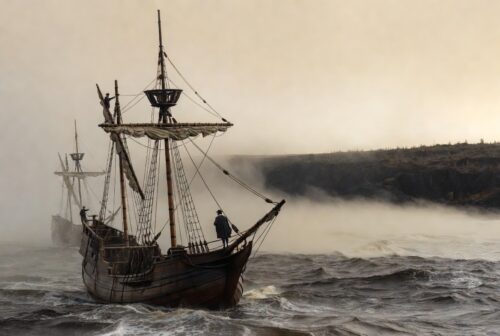 If you were expecting the grand trumpet blast of discovery, this was more of a polite cough. Yet that single day’s landfall—random in the grand sweep of history, yet profoundly specific—set in motion the French claim to vast swathes of North America, introduced the word “Canada” into European maps, and opened the St. Lawrence River as the highway for future settlement. It was the quiet beginning of New France, a story of calculated risk, relentless mapping, awkward (and sometimes ruthless) first contacts, and stubborn persistence through disappointment. And it is a story almost entirely overlooked in the motivational-history niche. No viral threads, no habit-hacking podcasts, no “on-this-day” self-improvement reels have turned this particular foggy morning into a life blueprint. Until now.
To understand why May 10, 1534, matters, we must first step back into the Europe that launched Cartier. The year is 1534. The Renaissance is in full bloom, but so is cutthroat imperial rivalry. Spain and Portugal, thanks to papal bulls and the Treaty of Tordesillas, have divided the “undiscovered” world between them like two greedy cousins splitting a birthday cake. France’s King Francis I—charming, warlike, a patron of Leonardo da Vinci and a fierce rival to Holy Roman Emperor Charles V—has no intention of watching his neighbors grow fat on Aztec gold and Asian spices while French ships sit idle in Breton harbors. Two years earlier, Francis had already sent Giovanni da Verrazzano probing the North American coast in search of a western passage to the Indies. Verrazzano’s voyage produced beautiful maps but no passage and no riches. Francis wanted results. Enter Jacques Cartier.
Cartier was no aristocratic dilettante. Born on December 31, 1491, in Saint-Malo—a fortified Breton port city famous for its corsairs and its fiercely independent mariners—he grew up surrounded by the smell of salt, tar, and drying cod. By his early forties he was an experienced pilot who had likely sailed to Newfoundland already on fishing expeditions (the Grand Banks cod fishery had been pulling Breton, Basque, and Portuguese boats across the Atlantic for decades). In 1520 he had married into minor aristocracy, cementing his local reputation; baptismal records show him standing as godfather to numerous children, the mark of a respected man. When Bishop Jean Le Veneur of Saint-Malo introduced him to Francis I at the Manoir de Brion, the king saw exactly what he needed: a tough, practical sailor who knew the northern waters, spoke the language of the sea, and could be trusted to bring back hard evidence rather than poetic fantasies.
If you were expecting the grand trumpet blast of discovery, this was more of a polite cough. Yet that single day’s landfall—random in the grand sweep of history, yet profoundly specific—set in motion the French claim to vast swathes of North America, introduced the word “Canada” into European maps, and opened the St. Lawrence River as the highway for future settlement. It was the quiet beginning of New France, a story of calculated risk, relentless mapping, awkward (and sometimes ruthless) first contacts, and stubborn persistence through disappointment. And it is a story almost entirely overlooked in the motivational-history niche. No viral threads, no habit-hacking podcasts, no “on-this-day” self-improvement reels have turned this particular foggy morning into a life blueprint. Until now.
To understand why May 10, 1534, matters, we must first step back into the Europe that launched Cartier. The year is 1534. The Renaissance is in full bloom, but so is cutthroat imperial rivalry. Spain and Portugal, thanks to papal bulls and the Treaty of Tordesillas, have divided the “undiscovered” world between them like two greedy cousins splitting a birthday cake. France’s King Francis I—charming, warlike, a patron of Leonardo da Vinci and a fierce rival to Holy Roman Emperor Charles V—has no intention of watching his neighbors grow fat on Aztec gold and Asian spices while French ships sit idle in Breton harbors. Two years earlier, Francis had already sent Giovanni da Verrazzano probing the North American coast in search of a western passage to the Indies. Verrazzano’s voyage produced beautiful maps but no passage and no riches. Francis wanted results. Enter Jacques Cartier.
Cartier was no aristocratic dilettante. Born on December 31, 1491, in Saint-Malo—a fortified Breton port city famous for its corsairs and its fiercely independent mariners—he grew up surrounded by the smell of salt, tar, and drying cod. By his early forties he was an experienced pilot who had likely sailed to Newfoundland already on fishing expeditions (the Grand Banks cod fishery had been pulling Breton, Basque, and Portuguese boats across the Atlantic for decades). In 1520 he had married into minor aristocracy, cementing his local reputation; baptismal records show him standing as godfather to numerous children, the mark of a respected man. When Bishop Jean Le Veneur of Saint-Malo introduced him to Francis I at the Manoir de Brion, the king saw exactly what he needed: a tough, practical sailor who knew the northern waters, spoke the language of the sea, and could be trusted to bring back hard evidence rather than poetic fantasies.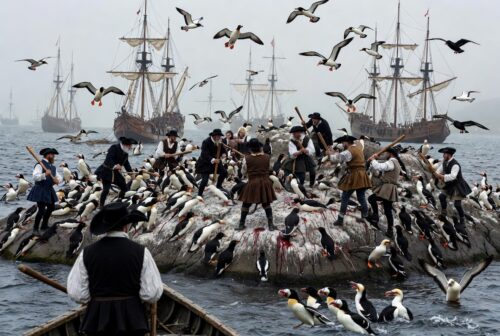 The commission was straightforward on paper: “discover certain islands and lands where it is said that a great quantity of gold and other precious things are to be found.” In practice it meant sailing into the unknown with two sixty-ton ships, sixty-one men, basic navigational tools (compass, astrolabe, crude charts), and enough salted beef, hardtack, and wine to last the summer. No grand fleet. No royal flagship. Just two unassuming vessels slipping out of Saint-Malo on April 20, 1534, under the king’s banner. The crossing took twenty days—blessedly fast. On May 10 the lookout shouted land. Newfoundland.
The first days after landfall were a masterclass in systematic exploration rather than reckless plunder. Cartier’s fleet threaded the Strait of Belle Isle between Newfoundland and Labrador, noting icebergs and treacherous currents that would have sent lesser captains running. They hugged the southern shore of Labrador, then swung south along the western coast of Newfoundland. The land remained bleak—rocky, treeless in places, with only scrub and moss. Cartier’s journal entry about the “land God gave to Cain” has been quoted endlessly, but it reveals something deeper: an explorer willing to record disappointment honestly rather than inflate every rock into a potential El Dorado. He kept sailing.
By late May and early June the ships entered the Gulf of St. Lawrence proper. They skirted the Magdalen Islands, where one of the more darkly comedic episodes unfolded. At Îles aux Oiseaux (Bird Islands, now part of the Rochers-aux-Oiseaux sanctuary), the crew encountered vast colonies of seabirds—great auks, puffins, gannets—so numerous that the men simply waded in and clubbed them by the hundreds. Contemporary accounts suggest they slaughtered around a thousand birds in a single stop, mostly great auks (a flightless species driven to extinction by the nineteenth century). It was part provisioning, part sport, part sixteenth-century “team-building exercise gone wild.” Cartier’s men stuffed the ships with salted bird carcasses, no doubt joking about the “feathered gold” of the New World while the stench of blood and guano filled the air. The episode perfectly captures the blunt pragmatism of early explorers: when you find a resource, you exploit it immediately and without sentiment.
Continuing south, the fleet discovered Prince Edward Island and the coast of what is now New Brunswick. In Chaleur Bay they had their first sustained encounter with Indigenous people—likely Mi’kmaq. The meeting was tentative but promising: the Mi’kmaq approached in canoes, waving furs and skins. Cartier’s men traded iron knives, glass beads, and red caps for the furs. The exchange was brief, but it planted the seed of the fur trade that would later define New France’s economy. Cartier noted the natives’ friendliness and their obvious interest in European goods. No violence, no kidnapping—yet.
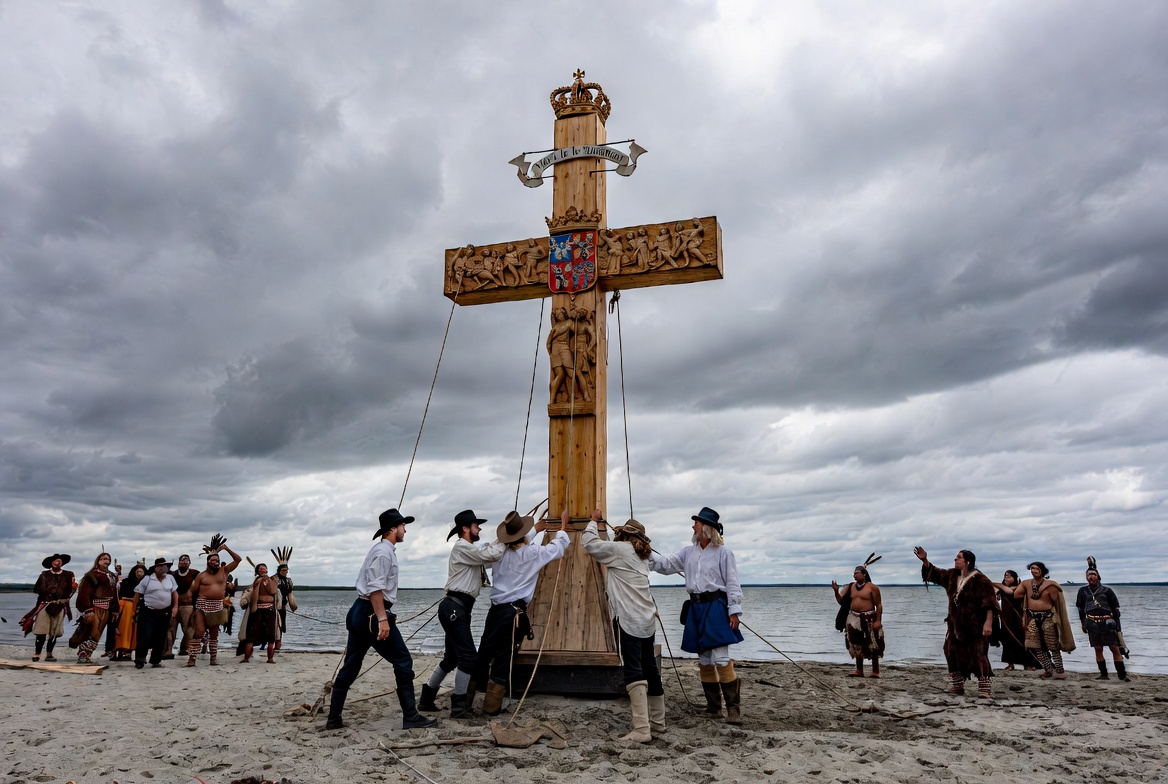
The mood shifted dramatically when the ships reached the Bay of Gaspé in July. Here they encountered a large fishing party—more than three hundred people—from the Iroquoian village of Stadacona (near modern Quebec City). The chief was Donnacona. Relations started cordially enough, but on July 24, 1534, Cartier decided it was time to make a statement. His men erected a thirty-foot wooden cross on the shore, inscribed with the words “Vive le Roi de France” and topped with the royal arms. The cross was a blatant claim of possession. The Iroquoians were not amused. According to Cartier’s own account, Donnacona and his people protested vigorously, gesturing that the land already belonged to them. Cartier tried to reassure them with gifts and explanations, but the tension was unmistakable. The cross-planting incident is often glossed over in heroic narratives; in reality it was the first clear signal that European “discovery” meant dispossession.
The commission was straightforward on paper: “discover certain islands and lands where it is said that a great quantity of gold and other precious things are to be found.” In practice it meant sailing into the unknown with two sixty-ton ships, sixty-one men, basic navigational tools (compass, astrolabe, crude charts), and enough salted beef, hardtack, and wine to last the summer. No grand fleet. No royal flagship. Just two unassuming vessels slipping out of Saint-Malo on April 20, 1534, under the king’s banner. The crossing took twenty days—blessedly fast. On May 10 the lookout shouted land. Newfoundland.
The first days after landfall were a masterclass in systematic exploration rather than reckless plunder. Cartier’s fleet threaded the Strait of Belle Isle between Newfoundland and Labrador, noting icebergs and treacherous currents that would have sent lesser captains running. They hugged the southern shore of Labrador, then swung south along the western coast of Newfoundland. The land remained bleak—rocky, treeless in places, with only scrub and moss. Cartier’s journal entry about the “land God gave to Cain” has been quoted endlessly, but it reveals something deeper: an explorer willing to record disappointment honestly rather than inflate every rock into a potential El Dorado. He kept sailing.
By late May and early June the ships entered the Gulf of St. Lawrence proper. They skirted the Magdalen Islands, where one of the more darkly comedic episodes unfolded. At Îles aux Oiseaux (Bird Islands, now part of the Rochers-aux-Oiseaux sanctuary), the crew encountered vast colonies of seabirds—great auks, puffins, gannets—so numerous that the men simply waded in and clubbed them by the hundreds. Contemporary accounts suggest they slaughtered around a thousand birds in a single stop, mostly great auks (a flightless species driven to extinction by the nineteenth century). It was part provisioning, part sport, part sixteenth-century “team-building exercise gone wild.” Cartier’s men stuffed the ships with salted bird carcasses, no doubt joking about the “feathered gold” of the New World while the stench of blood and guano filled the air. The episode perfectly captures the blunt pragmatism of early explorers: when you find a resource, you exploit it immediately and without sentiment.
Continuing south, the fleet discovered Prince Edward Island and the coast of what is now New Brunswick. In Chaleur Bay they had their first sustained encounter with Indigenous people—likely Mi’kmaq. The meeting was tentative but promising: the Mi’kmaq approached in canoes, waving furs and skins. Cartier’s men traded iron knives, glass beads, and red caps for the furs. The exchange was brief, but it planted the seed of the fur trade that would later define New France’s economy. Cartier noted the natives’ friendliness and their obvious interest in European goods. No violence, no kidnapping—yet.
The mood shifted dramatically when the ships reached the Bay of Gaspé in July. Here they encountered a large fishing party—more than three hundred people—from the Iroquoian village of Stadacona (near modern Quebec City). The chief was Donnacona. Relations started cordially enough, but on July 24, 1534, Cartier decided it was time to make a statement. His men erected a thirty-foot wooden cross on the shore, inscribed with the words “Vive le Roi de France” and topped with the royal arms. The cross was a blatant claim of possession. The Iroquoians were not amused. According to Cartier’s own account, Donnacona and his people protested vigorously, gesturing that the land already belonged to them. Cartier tried to reassure them with gifts and explanations, but the tension was unmistakable. The cross-planting incident is often glossed over in heroic narratives; in reality it was the first clear signal that European “discovery” meant dispossession.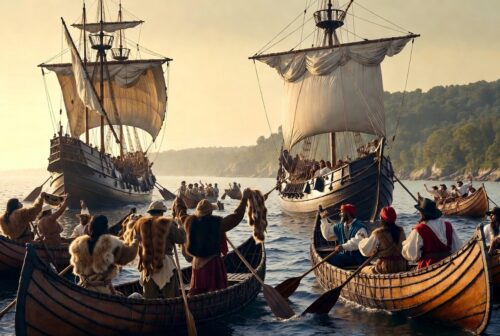 To secure guides and intelligence, Cartier then took a step that modern readers find uncomfortable: he kidnapped two of Donnacona’s sons, Domagaya and Taignoagny. The chief reluctantly agreed after Cartier promised they would return with European marvels. The two young men were taken aboard, baptized with French names (they were later called Charles and Henry), and became the expedition’s interpreters for future voyages. It was a calculated, ruthless move—common for the era but undeniably coercive. Yet it also gave Cartier access to crucial knowledge about the interior. The boys described a great river leading westward and spoke of a rich kingdom called Saguenay. The promise of riches pulled the French deeper.
With autumn approaching, Cartier turned back. He had mapped the entire Gulf of St. Lawrence, confirmed it was not the open passage to Asia he had hoped for (though he still believed a river might lead there), and returned to Saint-Malo on September 5, 1534—only four and a half months after departure. The king was intrigued enough to fund a second, larger voyage the following year. That second expedition (1535–1536) would take Cartier up the St. Lawrence River itself to Stadacona and the village of Hochelaga (site of modern Montreal), where he climbed Mount Royal and gazed out over the vast interior. Winter brought scurvy that killed twenty-five of his men until the Iroquoians taught them the cure: a tea made from white cedar needles (annedda), rich in vitamin C. The third voyage in 1541–1542 attempted an actual settlement at Charlesbourg-Royal near Quebec, but it ended in failure—hostile relations, disease, and no gold. Cartier returned with what he thought were diamonds and gold; they turned out to be quartz and iron pyrite—“fool’s gold” in every sense.
Yet the legacy endured far beyond the immediate disappointments. Cartier’s meticulous journals, maps, and descriptions gave France its first detailed knowledge of the St. Lawrence corridor. He recorded the Iroquoian word “kanata” (meaning village) for the area around Stadacona and applied it to the entire region—thus “Canada” entered European cartography. His voyages proved the existence of a massive, navigable river system penetrating deep into the continent. Though permanent French settlement waited until Samuel de Champlain’s arrival in 1608, Cartier had laid the geopolitical foundation. New France, the fur trade, the cultural blending (and conflict) between French and Indigenous nations—all trace their roots to that foggy May morning in 1534 when a Breton captain refused to turn back at the first sight of unpromising rock.
The historical record is rich with the small, human details that make the story vivid. Cartier’s ships were not majestic caravels but practical, sturdy vessels built for North Atlantic gales. The crew included carpenters, coopers, a surgeon, and a priest—practical professionals rather than swashbucklers. Navigation relied on dead reckoning, latitude from the sun and stars, and sheer experience; longitude was still guesswork. Food was monotonous and dangerous—salted meat, dried peas, ship’s biscuit crawling with weevils. Water turned foul quickly. Yet the expedition suffered no major losses on the first voyage, a testament to Cartier’s leadership and preparation.
To secure guides and intelligence, Cartier then took a step that modern readers find uncomfortable: he kidnapped two of Donnacona’s sons, Domagaya and Taignoagny. The chief reluctantly agreed after Cartier promised they would return with European marvels. The two young men were taken aboard, baptized with French names (they were later called Charles and Henry), and became the expedition’s interpreters for future voyages. It was a calculated, ruthless move—common for the era but undeniably coercive. Yet it also gave Cartier access to crucial knowledge about the interior. The boys described a great river leading westward and spoke of a rich kingdom called Saguenay. The promise of riches pulled the French deeper.
With autumn approaching, Cartier turned back. He had mapped the entire Gulf of St. Lawrence, confirmed it was not the open passage to Asia he had hoped for (though he still believed a river might lead there), and returned to Saint-Malo on September 5, 1534—only four and a half months after departure. The king was intrigued enough to fund a second, larger voyage the following year. That second expedition (1535–1536) would take Cartier up the St. Lawrence River itself to Stadacona and the village of Hochelaga (site of modern Montreal), where he climbed Mount Royal and gazed out over the vast interior. Winter brought scurvy that killed twenty-five of his men until the Iroquoians taught them the cure: a tea made from white cedar needles (annedda), rich in vitamin C. The third voyage in 1541–1542 attempted an actual settlement at Charlesbourg-Royal near Quebec, but it ended in failure—hostile relations, disease, and no gold. Cartier returned with what he thought were diamonds and gold; they turned out to be quartz and iron pyrite—“fool’s gold” in every sense.
Yet the legacy endured far beyond the immediate disappointments. Cartier’s meticulous journals, maps, and descriptions gave France its first detailed knowledge of the St. Lawrence corridor. He recorded the Iroquoian word “kanata” (meaning village) for the area around Stadacona and applied it to the entire region—thus “Canada” entered European cartography. His voyages proved the existence of a massive, navigable river system penetrating deep into the continent. Though permanent French settlement waited until Samuel de Champlain’s arrival in 1608, Cartier had laid the geopolitical foundation. New France, the fur trade, the cultural blending (and conflict) between French and Indigenous nations—all trace their roots to that foggy May morning in 1534 when a Breton captain refused to turn back at the first sight of unpromising rock.
The historical record is rich with the small, human details that make the story vivid. Cartier’s ships were not majestic caravels but practical, sturdy vessels built for North Atlantic gales. The crew included carpenters, coopers, a surgeon, and a priest—practical professionals rather than swashbucklers. Navigation relied on dead reckoning, latitude from the sun and stars, and sheer experience; longitude was still guesswork. Food was monotonous and dangerous—salted meat, dried peas, ship’s biscuit crawling with weevils. Water turned foul quickly. Yet the expedition suffered no major losses on the first voyage, a testament to Cartier’s leadership and preparation.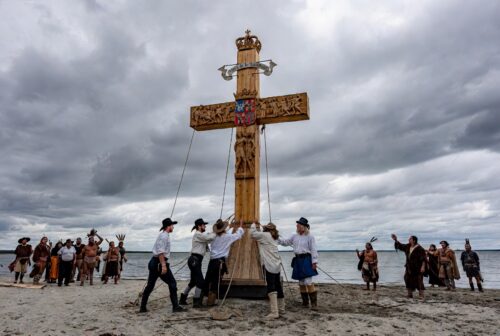 Indigenous perspectives, though filtered through European eyes, still emerge. The Mi’kmaq and Iroquoians were not passive “natives” but sophisticated traders and fishermen who had been using these waters for centuries. They already knew Europeans through the annual cod fishery; some may have spoken a few words of Basque or Portuguese. The cross-planting and kidnappings were not abstract “discovery” moments but real political acts that altered power balances. Later Iroquoian oral traditions and French records show complex alliances, misunderstandings, and resentment that would echo for centuries.
By any measure, May 10, 1534, was not a flashy date. No battles, no treaties signed in blood, no golden spikes driven. Just a quiet landfall after a successful crossing. Yet it exemplifies the power of methodical, persistent exploration in the face of initial disappointment. Cartier did not turn around when Newfoundland looked like Cain’s inheritance. He mapped every inlet, traded where possible, claimed when necessary, learned from locals (even if by questionable means), and returned with actionable intelligence that justified further investment. That combination—bold departure, honest assessment, systematic charting, strategic engagement, and iterative follow-up—turned a seemingly barren coast into the doorway to a continent.
Now consider how the outcome of that single day’s decision ripples into modern life. A person today can draw direct, practical benefit from Cartier’s approach by treating personal growth, career pivots, creative projects, or major life changes as deliberate “voyages” into uncharted waters rather than vague self-help quests. The historical fact—that one prepared explorer’s willingness to push past a disappointing first impression created an entire colonial enterprise—translates into an individual advantage that is concrete, repeatable, and refreshingly free of generic platitudes like “just believe in yourself” or “manifest abundance.”
Here is how the May 10, 1534, landfall equips someone today with a genuine edge:
- **You stop fearing the “Cain’s land” phase of any new endeavor.** Cartier’s honest journal entry about the barren coast reminds us that every worthwhile pursuit—starting a business, learning a difficult skill, relocating, rebuilding after failure—usually begins with an underwhelming or even discouraging first look. Instead of quitting when the fog lifts and the rocks appear, you log the observation, note the coordinates, and keep sailing along the coast. This alone prevents 90 percent of premature abandonments that doom most personal projects.
- **You build “Gulf-mapping” habits instead of chasing shiny objects.** Cartier did not plant his flag on the first beach and declare victory. He spent weeks systematically charting every bay, island, and current. Applied today, this means breaking any big goal into exhaustive reconnaissance: competitor analysis, skill audits, network mapping, resource inventories. Most people skim the surface; you create the equivalent of Cartier’s charts—detailed, usable intelligence that reveals hidden passages others miss.
- **You master the art of strategic first contact.** The Chaleur Bay trading and Gaspé negotiations show the value of approaching new opportunities (clients, mentors, communities, markets) with tradable value rather than demands. Cartier brought knives and beads; you bring prototypes, insights, or introductions. The kidnapping of the chief’s sons, while ethically of its time, underscores the importance of securing committed interpreters—modern equivalent: locking in key advisors or beta testers who bridge your world and the new one.
Indigenous perspectives, though filtered through European eyes, still emerge. The Mi’kmaq and Iroquoians were not passive “natives” but sophisticated traders and fishermen who had been using these waters for centuries. They already knew Europeans through the annual cod fishery; some may have spoken a few words of Basque or Portuguese. The cross-planting and kidnappings were not abstract “discovery” moments but real political acts that altered power balances. Later Iroquoian oral traditions and French records show complex alliances, misunderstandings, and resentment that would echo for centuries.
By any measure, May 10, 1534, was not a flashy date. No battles, no treaties signed in blood, no golden spikes driven. Just a quiet landfall after a successful crossing. Yet it exemplifies the power of methodical, persistent exploration in the face of initial disappointment. Cartier did not turn around when Newfoundland looked like Cain’s inheritance. He mapped every inlet, traded where possible, claimed when necessary, learned from locals (even if by questionable means), and returned with actionable intelligence that justified further investment. That combination—bold departure, honest assessment, systematic charting, strategic engagement, and iterative follow-up—turned a seemingly barren coast into the doorway to a continent.
Now consider how the outcome of that single day’s decision ripples into modern life. A person today can draw direct, practical benefit from Cartier’s approach by treating personal growth, career pivots, creative projects, or major life changes as deliberate “voyages” into uncharted waters rather than vague self-help quests. The historical fact—that one prepared explorer’s willingness to push past a disappointing first impression created an entire colonial enterprise—translates into an individual advantage that is concrete, repeatable, and refreshingly free of generic platitudes like “just believe in yourself” or “manifest abundance.”
Here is how the May 10, 1534, landfall equips someone today with a genuine edge:
- **You stop fearing the “Cain’s land” phase of any new endeavor.** Cartier’s honest journal entry about the barren coast reminds us that every worthwhile pursuit—starting a business, learning a difficult skill, relocating, rebuilding after failure—usually begins with an underwhelming or even discouraging first look. Instead of quitting when the fog lifts and the rocks appear, you log the observation, note the coordinates, and keep sailing along the coast. This alone prevents 90 percent of premature abandonments that doom most personal projects.
- **You build “Gulf-mapping” habits instead of chasing shiny objects.** Cartier did not plant his flag on the first beach and declare victory. He spent weeks systematically charting every bay, island, and current. Applied today, this means breaking any big goal into exhaustive reconnaissance: competitor analysis, skill audits, network mapping, resource inventories. Most people skim the surface; you create the equivalent of Cartier’s charts—detailed, usable intelligence that reveals hidden passages others miss.
- **You master the art of strategic first contact.** The Chaleur Bay trading and Gaspé negotiations show the value of approaching new opportunities (clients, mentors, communities, markets) with tradable value rather than demands. Cartier brought knives and beads; you bring prototypes, insights, or introductions. The kidnapping of the chief’s sons, while ethically of its time, underscores the importance of securing committed interpreters—modern equivalent: locking in key advisors or beta testers who bridge your world and the new one.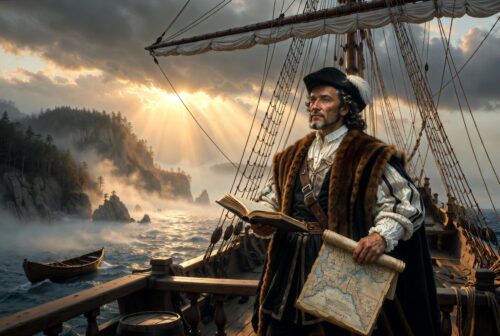 - **You treat setbacks as data for the next voyage.** The fool’s gold, scurvy, and hostile relations of later expeditions did not erase the first voyage’s gains. Cartier iterated. Today this means viewing every failed launch, rejected proposal, or health scare not as proof you should quit but as intelligence for Voyage 2.0. The historical record shows France ignored the claim for decades—yet the maps endured. Your personal “maps” (journals, skill logs, contact lists) become permanent assets.
- **You plant your cross publicly and unapologetically.** The thirty-foot cross at Gaspé was a commitment device. It told the world (and the locals) that France was serious. In your life this translates to public declarations—launching the website, posting the manifesto, telling your network you are now in the new territory—while still leaving room to adapt. Visibility creates accountability and opportunity.
The unique, quick plan that emerges directly from Cartier’s May 10 protocol—call it the “Newfoundland Navigation Protocol”—is deliberately unlike anything in the crowded self-help marketplace. It is not a 30-day miracle, not a vision-board ritual, not a dopamine-hacking morning routine. It is a four-phase, expedition-style framework you can run in under six weeks that treats your next major life move (career shift, creative launch, relationship rebuild, health overhaul) exactly as Cartier treated the Gulf of St. Lawrence: reconnaissance, claim, engagement, iteration. No fluff. No endless journaling about feelings. Just ship, sail, map, return, repeat.
**Phase 1: The Saint-Malo Prep (Week 1)**
Assemble your “two ships and sixty-one men”—the minimal viable crew of tools, skills, and allies you actually need. List every supply (budget, software, contacts, knowledge gaps) the way Cartier stocked salt pork and astrolabes. Write the king’s commission: one paragraph stating exactly what riches or passage you seek and why the king (your future self, your family, your mission) demands it. Do not overpack. Bretons knew lighter ships handled northern gales better.
**Phase 2: The Twenty-Day Crossing (Weeks 2–3)**
Launch into the unknown. Commit to the first visible “Newfoundland” milestone—even if it looks like Cain’s land. Spend the two weeks charting: daily logs of observations, no judgment yet. Talk to the first “Mi’kmaq” you meet (industry insiders, early users, locals in the new space) and trade value immediately. Slaughter the metaphorical birds—harvest every low-hanging resource you find without guilt or overthinking. The goal is data, not perfection.
**Phase 3: The Gaspé Claim (Week 4)**
Erect your public cross. Announce the endeavor visibly—launch the product, publish the manifesto, tell your network, plant the flag on LinkedIn or wherever your audience lives. Negotiate your first alliances and, if necessary, secure your “sons of Donnacona”—the two key people whose knowledge will guide the next phase. Do not ask permission; claim the territory while offering genuine trade.
**Phase 4: The Return and Second Voyage Prep (Ongoing, but immediate follow-up)**
Sail home with everything you learned. Analyze the fool’s gold honestly. Then immediately plan Voyage 2: deeper penetration, better remedies for the scurvy you now know is coming, stronger relationships with the people who hold the real wealth (whether that is customers, collaborators, or your own untapped resilience). Schedule the next departure date before you even unpack.
Run this protocol once and you will have done what most self-help never delivers: turned vague aspiration into a mapped, claimed, iterable territory. Cartier’s foggy May 10 morning did not feel epic in the moment. It felt like another rocky coast after a long sail. Yet because he refused to romanticize or abandon it, an entire nation’s future was born. Your next disappointing first impression—new job that looks boring, side project that feels barren, personal habit that resists change—contains the same potential. The mist lifts, the coast appears, and you have a choice: turn back or start mapping.
The historical record is clear. On May 10, 1534, Jacques Cartier chose to map. The rest of North American history followed. Your personal history can follow the same course—starting today.
- **You treat setbacks as data for the next voyage.** The fool’s gold, scurvy, and hostile relations of later expeditions did not erase the first voyage’s gains. Cartier iterated. Today this means viewing every failed launch, rejected proposal, or health scare not as proof you should quit but as intelligence for Voyage 2.0. The historical record shows France ignored the claim for decades—yet the maps endured. Your personal “maps” (journals, skill logs, contact lists) become permanent assets.
- **You plant your cross publicly and unapologetically.** The thirty-foot cross at Gaspé was a commitment device. It told the world (and the locals) that France was serious. In your life this translates to public declarations—launching the website, posting the manifesto, telling your network you are now in the new territory—while still leaving room to adapt. Visibility creates accountability and opportunity.
The unique, quick plan that emerges directly from Cartier’s May 10 protocol—call it the “Newfoundland Navigation Protocol”—is deliberately unlike anything in the crowded self-help marketplace. It is not a 30-day miracle, not a vision-board ritual, not a dopamine-hacking morning routine. It is a four-phase, expedition-style framework you can run in under six weeks that treats your next major life move (career shift, creative launch, relationship rebuild, health overhaul) exactly as Cartier treated the Gulf of St. Lawrence: reconnaissance, claim, engagement, iteration. No fluff. No endless journaling about feelings. Just ship, sail, map, return, repeat.
**Phase 1: The Saint-Malo Prep (Week 1)**
Assemble your “two ships and sixty-one men”—the minimal viable crew of tools, skills, and allies you actually need. List every supply (budget, software, contacts, knowledge gaps) the way Cartier stocked salt pork and astrolabes. Write the king’s commission: one paragraph stating exactly what riches or passage you seek and why the king (your future self, your family, your mission) demands it. Do not overpack. Bretons knew lighter ships handled northern gales better.
**Phase 2: The Twenty-Day Crossing (Weeks 2–3)**
Launch into the unknown. Commit to the first visible “Newfoundland” milestone—even if it looks like Cain’s land. Spend the two weeks charting: daily logs of observations, no judgment yet. Talk to the first “Mi’kmaq” you meet (industry insiders, early users, locals in the new space) and trade value immediately. Slaughter the metaphorical birds—harvest every low-hanging resource you find without guilt or overthinking. The goal is data, not perfection.
**Phase 3: The Gaspé Claim (Week 4)**
Erect your public cross. Announce the endeavor visibly—launch the product, publish the manifesto, tell your network, plant the flag on LinkedIn or wherever your audience lives. Negotiate your first alliances and, if necessary, secure your “sons of Donnacona”—the two key people whose knowledge will guide the next phase. Do not ask permission; claim the territory while offering genuine trade.
**Phase 4: The Return and Second Voyage Prep (Ongoing, but immediate follow-up)**
Sail home with everything you learned. Analyze the fool’s gold honestly. Then immediately plan Voyage 2: deeper penetration, better remedies for the scurvy you now know is coming, stronger relationships with the people who hold the real wealth (whether that is customers, collaborators, or your own untapped resilience). Schedule the next departure date before you even unpack.
Run this protocol once and you will have done what most self-help never delivers: turned vague aspiration into a mapped, claimed, iterable territory. Cartier’s foggy May 10 morning did not feel epic in the moment. It felt like another rocky coast after a long sail. Yet because he refused to romanticize or abandon it, an entire nation’s future was born. Your next disappointing first impression—new job that looks boring, side project that feels barren, personal habit that resists change—contains the same potential. The mist lifts, the coast appears, and you have a choice: turn back or start mapping.
The historical record is clear. On May 10, 1534, Jacques Cartier chose to map. The rest of North American history followed. Your personal history can follow the same course—starting today.