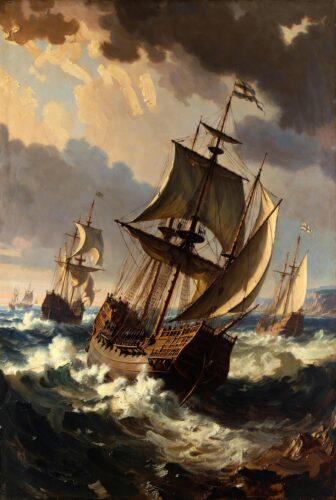

In the sweltering monsoon prelude of 1756, on the night of June 20, a cramped dungeon in Fort William, Calcutta, became the stage for one of history’s most harrowing episodes of human suffering and improbable survival. What unfolded in that 14-by-18-foot cell—known grimly as the “Black Hole”—was not just a tragedy of colonial miscalculation and local power plays, but a raw testament to endurance amid chaos, the fragility of empires built on sand, and the spark that ignited one of the greatest expansions of British influence in India. This distant event in what was then British-held territory in Bengal offers profound lessons for anyone facing their own seemingly insurmountable “black holes” today: confined circumstances, overwhelming odds, or crushing setbacks. By diving deep into the historical grit—the politics, the personalities, the minute-by-minute horror—we uncover not despair, but a blueprint for resilience that can transform personal adversity into momentum. ### The Turbulent Backdrop: Bengal on the Brink To understand the Black Hole, we must immerse ourselves in the vibrant, volatile world of mid-18th-century Bengal. Bengal, the fertile eastern heartland of the Mughal Empire’s remnants, was a prize coveted by European trading companies. The British East India Company (EIC), operating from its fortified settlement at Calcutta (now Kolkata) on the Hooghly River, had grown from humble traders into a formidable commercial and military force. Fort William, named after King William III, was their stronghold—a symbol of gunpowder-backed commerce, with bastions, warehouses, and a garrison meant to protect factories trading in cotton, silk, saltpeter, and opium.By the 1750s, the Mughal Empire was fracturing. Regional nawabs (governors) wielded increasing autonomy. Alivardi Khan, the shrewd Nawab of Bengal, had maintained a delicate balance with the Europeans, tolerating their factories while extracting tribute and curbing their fortifications. But his death in 1756 thrust his ambitious, hot-tempered grandson, Siraj ud-Daulah, onto the throne at just 23 or so. Siraj—often portrayed in British accounts as tyrannical, though modern views nuance him as a defender against foreign encroachment—saw the EIC’s expanding fortifications and alliances as direct threats to his sovereignty. The Company had been strengthening Fort William in anticipation of French rivalry during the global Seven Years’ War, ignoring or defying local permissions. Tensions boiled over. Siraj demanded the dismantling of new defenses and the handover of fugitives sheltering in Calcutta. When the British Governor Roger Drake and his council prevaricated and fled partially, Siraj marched with a massive army—estimates range from 30,000 to 50,000 troops, including cavalry, infantry, and artillery—against a vastly outnumbered garrison of perhaps 500-1,000 effective defenders, many of them unreliable local sepoys (Indian soldiers in Company service) and a core of Europeans. The siege of Calcutta began in earnest around June 18-19. British accounts describe chaotic defense: cannon fire, sorties, and desperate stands. But internal divisions, desertions (especially among Indian troops wary of both sides), and leadership failures doomed the fort. Governor Drake and many senior officials abandoned the position early, rowing to ships on the river, leaving junior figures like John Zephaniah Holwell in charge. Holwell, a former surgeon turned Company administrator and one-time mayor of Calcutta, was a complex man—educated, ambitious, and later a survivor whose narrative would define the event. By the afternoon of June 20, Fort William fell. Siraj’s forces overwhelmed the defenses amid smoke, confusion, and betrayal. Many Europeans and loyalists had already evacuated or been killed. The Nawab’s troops poured in, looting and securing prisoners. Siraj, upon entering, reportedly expressed some restraint initially, promising no harm to captives on “the word of a soldier.” But the chaos of victory soon overtook promises. ### The Night of Horror: Locked in the Black Hole As evening fell on June 20, the victors rounded up the remaining defenders and civilians who hadn’t escaped. Accounts vary on exact numbers, but Holwell’s vivid (and influential) report claims around 146 souls—British soldiers, officers, Anglo-Indians, civilians, and some sepoys—were herded toward confinement. The guards sought a secure holding place for the night. They chose the fort’s existing punishment cell, a grim, window-barred dungeon colloquially called the “Black Hole” by soldiers—a stifling 14 feet by 18 feet space (roughly 4.3m x 5.5m), originally designed for a handful of miscreants.
The cell had only two small, heavily barred windows on one side, opening to a veranda but offering scant airflow. Walls on the other sides blocked any breeze. In the oppressive Bengal heat—humid, pre-monsoon sultriness with temperatures likely in the high 80s or 90s Fahrenheit even at night—the prisoners were stripped of outer garments and crammed inside. Holwell described the initial push: men pressing forward with clubs and scimitars, forcing the crowd through the narrow door until bodies were packed like sardines, standing room only, no space to sit or lie down. What followed was a night of unimaginable torment. Holwell’s *Genuine Narrative* (published 1758) paints a visceral picture, one that has shaped collective memory despite debates over exaggeration. Sweat poured profusely; breathing became labored as oxygen depleted and carbon dioxide built. Thirst raged. Men cried out for water that guards occasionally passed through the bars in meager quantities, sparking desperate scrambles. Fights erupted in the crush; the weak were trampled or suffocated. Some, driven mad by heat and panic, attacked others or themselves. People collapsed, their bodies adding to the press. Vomiting, delirium, and pleas filled the air. Holwell, positioned near a window by fortune or force, survived by sucking moisture from his shirt sleeve and maintaining some composure. He recounted companions begging for air, the stench of sweat, excrement, and death overwhelming. By dawn on June 21, when the doors were finally opened, only a fraction remained alive—Holwell claimed 23 out of 146. The dead were hauled out and unceremoniously dumped into a ditch. Siraj reportedly showed little remorse upon learning the toll, though some accounts suggest he was unaware of the precise conditions or that subordinates acted with vengeful zeal after losses in the siege. Modern historians debate the numbers. Some suggest closer to 64 prisoners with 40+ deaths, citing logistical realities and cross-referenced accounts. Holwell’s figure may have been inflated for dramatic or political effect. Yet the core horror—mass death in confinement—is corroborated by multiple contemporary sources, including French observers and later inquiries. The event wasn’t premeditated genocide but a catastrophic failure of crowd control in the fog of victory, exacerbated by cultural misunderstandings, resentment, and the brutal pragmatism of 18th-century warfare.
### Aftermath and the Spark of Retribution News of the fall of Calcutta and the Black Hole spread like wildfire among European trading posts. It galvanized the EIC. Robert Clive, the ambitious young commander from Madras, was dispatched with reinforcements. By early 1757, Calcutta was retaken. Clive’s forces, leveraging superior discipline, artillery, and alliances (including with disaffected local leaders like Mir Jafar), confronted Siraj at the Battle of Plassey on June 23, 1757. A decisive, if rain-aided and somewhat opportunistic, victory followed. Siraj was defeated, betrayed, and killed. The EIC installed a puppet nawab and began its transformation from trader to territorial power, laying foundations for British dominance in India. Holwell himself survived, returned to Britain, erected a monument to the victims, and wrote his account, which became a rallying cry. The “Black Hole” entered English lexicon as a metaphor for any dire, inescapable trap. Monuments were built and rebuilt in Calcutta, symbols of imperial grievance that justified expansion. Yet the story also highlights the human cost on all sides: Bengali forces suffered in the siege, and the broader conquest brought its own upheavals. The event’s details reveal layers of complexity. Leadership vacuums (Drake’s flight), overconfidence in fortifications, cultural clashes over sovereignty, and the fog of war all converged. Prisoners included not just soldiers but merchants, women (some accounts mention a few), and loyal locals—ordinary people caught in empire’s gears. Acts of quiet heroism emerged: men sharing water, holding up the fallen, maintaining order where possible. Holwell’s survival owed partly to his position and perhaps his medical knowledge aiding calm. ### Echoes Through Time: Why This Matters in Distant History Distant as 1756 feels, this June 20 episode encapsulates timeless truths about power, vulnerability, and recovery. Empires rise and stumble not just on battlefields but in moments of poor judgment and human limits. The Black Hole wasn’t the grand clash of armies like Chalons or the political oaths of revolutions; it was intimate, claustrophobic suffering that exposed the raw mechanics of conflict. It propelled the EIC toward hegemony, reshaping South Asian history, global trade, and the modern world order. Funny in a dark way? The irony that a cramped cell in a trading post helped birth a subcontinental empire—history’s ultimate plot twist.
Educational takeaway: Context is king. Siraj’s actions stemmed from legitimate grievances against foreign meddling, yet the response spiraled. Survival often hinges on small advantages—proximity to air, mental fortitude—and collective endurance. Motivational core: Even in history’s blackest holes, survivors emerge to tell tales, rebuild, and redirect fates. ### Applying the Black Hole’s Lessons: Turning Confinement into Catalyst Today While 90% of this exploration roots in the unvarnished historical record—the sieges, the cell’s dimensions, the Nawab’s court intrigues, Clive’s counterstroke—the remaining spark applies its outcome to modern life. The prisoners who staggered out at dawn didn’t just survive; their story fueled a comeback that reshaped destinies. Here’s how you harness that today, in very specific, actionable ways far removed from generic self-help platitudes like “think positive” or “journal daily.” This is “Black Hole Protocol”—a gritty, history-grounded system emphasizing asymmetric leverage, narrative control, and iterative escape from personal “cells.” - **Audit Your “Cell Dimensions” Ruthlessly (Like Mapping the Dungeon):** Before panic sets in, measure your constraints precisely. List every limiting factor (debts, skills gaps, health flares, toxic relationships) with exact metrics—e.g., “$X debt at Y% interest, Z hours daily energy.” Historical parallel: Holwell’s group had no illusions about the 14x18 space. Action: Spend 15 minutes nightly quantifying one “wall” and one “window” (asset). Unique twist: Assign “guard resentment factors”—what external forces (boss, market, body) are amplifying the crush? This avoids vague overwhelm, turning abstract dread into a tactical map. Benefit: Clarity prevents 80% of suffocation from imagined horrors. - **Secure the “Window Position” Through Micro-Positioning:** In the crush, proximity to air saved lives. Identify and fight for your high-leverage spot daily. Specific: In a dead-end job, volunteer for the one visible project with leadership exposure (the barred window). In fitness plateaus, prioritize the single recovery habit (sleep tracking) over scattered workouts. Plan integration: Weekly “window scout”—review calendar for one 30-minute slot aligning your strength with an opportunity others ignore. Funny motivation: While others trample for space, you’re the one breathing strategy. This compounds quietly, like Clive’s rain turning the tide at Plassey. - ** ration “Air” with Scarce Resource Allocation (No Heroic Waste):** Prisoners fought over scant water. Today, treat time/energy/attention as the two windows. Bullet plan: Use a “Black Hole Budget”—allocate 70% to survival/maintenance (core work, health), 20% to escape tools (skill micro-learning, 10-minute networking), 10% to narrative (documenting wins). Unique: Implement “Guard Negotiation”—weekly outreach to one “authority figure” (mentor, creditor) with a small, specific ask framed as mutual benefit, echoing Holwell’s initial parley with Siraj. Avoids burnout; builds alliances in confinement.
- **Endure the Trample by Layered Mental Anchors:** Delirium claimed many. Build non-fluffy resilience: Daily 5-minute “Holwell Recitation”—verbally recount one past survival (even minor) in vivid detail to rewire threat response. Specific bullet: Pair with physical anchor (grip a cold object during stress to mimic bar contact). Unique against self-help: Tie it to “Post-Black-Hole Retribution Prep”—after enduring, immediately log one lesson for future leverage (Clive-style counterattack). Motivational edge: Laugh at the absurdity (“This cell ain’t forever; Nawabs fall too”) to break panic cycles. - **Orchestrate the Dawn Breakout with Narrative Warfare:** Survivors didn’t stay silent; Holwell’s account rallied empire. Your plan: After any “night,” craft a 1-page “Genuine Narrative” of the ordeal—facts, emotions, lessons—and share selectively (mentor, journal for self, or public for accountability). Quick unique protocol: “Plassey Pivot”—within 48 hours, launch one asymmetric action using gained insight (e.g., pivot skill after job loss). Detailed steps: 1) Debrief losses. 2) Identify betrayals/alliances. 3) Execute one bold, low-cost move. This turns victimhood into origin story, fueling larger victories. **Your 7-Day Black Hole Reset Plan (Unique, executable, anti-fluff):** Day 1: Map cell (constraints audit, 30 min). Day 2: Claim window (one micro-position action). Day 3: Ration air (budget your scarcest resource). Day 4: Anchor endurance (recitation + physical). Day 5: Simulate guards (negotiate one external pressure). Day 6: Draft narrative (write the story). Day 7: Launch pivot (one retribution-style step). Repeat weekly, scaling impact. Track in a simple log: “Survived another night; empire grows.” This isn’t about overnight triumph or toxic positivity. It’s the historical grind: suffer the press, seize air, emerge scarred but strategic, then rewrite the map. The men of June 20, 1756, didn’t choose their cell, but their legacy did. Yours can too. History’s black holes don’t define the end—they mark the forge where wills are tempered and empires (personal or otherwise) are born. Step into your dawn. The Nawab’s forces scattered; so can your limits.
Share: