In the sweltering fields of the Beauce region, north of Orléans, on June 18, 1429, the Hundred Years' War – that grinding, century-long meat grinder of dynastic ambition, feudal loyalty, and national awakening – reached one of its most lopsided and psychologically shattering turning points. The Battle of Patay wasn't a grand set-piece clash of thousands maneuvering like chess pieces under the eyes of kings. It was a chaotic, lightning-fast rout born of French audacity, English overconfidence, a wandering stag, and the raw power of momentum once seized. What started as a routine English retreat exploded into a French cavalry hammer that crushed veteran longbowmen before they could even plant their defensive stakes. By the end of the afternoon, over 2,000 English lay dead or captured, their commanders hauled off in chains, and the myth of English invincibility in open battle lay in the mud alongside their broken bows.
This wasn't just another skirmish in a long war. Patay capped the spectacular Loire Campaign, propelled the Dauphin Charles VII toward his coronation at Reims, and marked the beginning of the end for English dominance in France. It stands as a masterclass in exploiting enemy hesitation, seizing initiative, and turning a momentary advantage into total collapse. And in its lessons of bold pursuit, adaptive chaos, and unbreakable forward drive, it offers a blueprint for personal victory that cuts through the noise of modern self-help fluff. No vision boards, no "manifestation" mantras – just raw historical mechanics applied to your daily grind.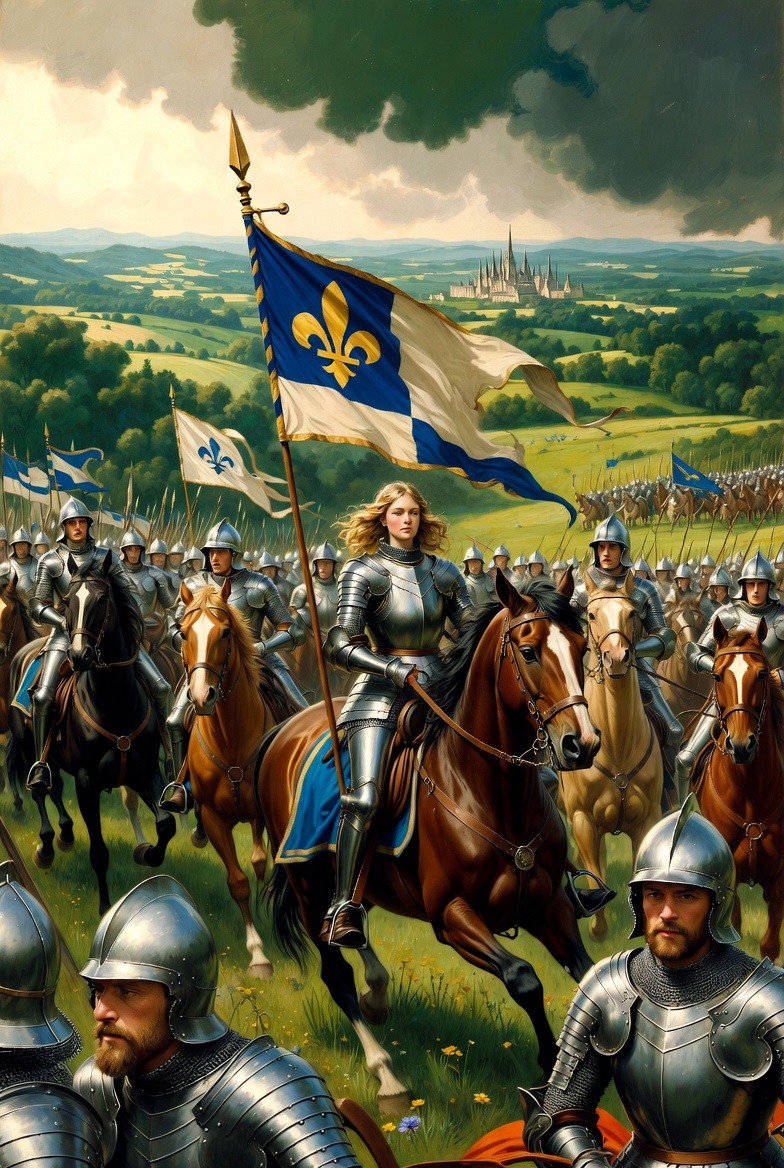 ### The Long Shadow of War: Setting the Stage for Patay
To understand Patay, rewind the tape on the Hundred Years' War. By the late 1420s, England and its Burgundian allies controlled vast swaths of northern France. The English had leveraged their fearsome longbowmen – those yeoman archers who could loose arrows at a rate that darkened the sky – to win crushing victories at Crécy (1346) and Agincourt (1415). These weren't just battles; they were tactical templates. English forces would dismount their men-at-arms, plant sharpened stakes to blunt cavalry charges, and let the arrows do the grim work while French knights impaled themselves in futile assaults.
Enter Joan of Arc, the peasant girl from Domrémy whose visions and unyielding faith galvanized French resistance. After lifting the Siege of Orléans in May 1429 – a seven-day miracle where English besiegers were driven off – French forces under the Duke of Alençon, with Joan in the mix, launched the Loire Campaign. They stormed Jargeau on June 12, secured bridges at Meung-sur-Loire, and besieged Beaugency. English reinforcements under the cautious Sir John Fastolf (fresh from Paris) linked up with Lord John Talbot and Lord Scales at Meung. Talbot wanted to fight aggressively to relieve Beaugency; Fastolf counseled retreat. The Beaugency garrison, demoralized and unaware of the full English strength, surrendered on June 18.
The English decided to withdraw northward toward Paris, marching through the wooded plains of the Beauce. They were veterans, but fatigue, divided command, and the psychological blow of Orléans hung over them. The French, smelling blood, pursued hotly. Joan, ever the motivator, urged speed: "Ride boldly on... you will have good guidance." Her vanguard, commanded by the fiery La Hire (Étienne de Vignolles) and Jean Poton de Xaintrailles, raced ahead with about 180 knights and 1,300 men-at-arms. The main body, including Joan, followed.
### The Stag, the Scouts, and the Sudden Charge
The English, numbering around 5,000, attempted to replicate their winning formula. Talbot dispatched archers to ambush from woods along the road, then repositioned roughly 500 longbowmen to block the main path, stakes at the ready. But fate – or a very unlucky deer – intervened. A lone stag wandered into a nearby field. The English archers, perhaps thinking it a good omen or just hungry for sport, let out a rousing hunting cry. Unbeknownst to them, French scouts were already perilously close. The cry gave away their position.
### The Long Shadow of War: Setting the Stage for Patay
To understand Patay, rewind the tape on the Hundred Years' War. By the late 1420s, England and its Burgundian allies controlled vast swaths of northern France. The English had leveraged their fearsome longbowmen – those yeoman archers who could loose arrows at a rate that darkened the sky – to win crushing victories at Crécy (1346) and Agincourt (1415). These weren't just battles; they were tactical templates. English forces would dismount their men-at-arms, plant sharpened stakes to blunt cavalry charges, and let the arrows do the grim work while French knights impaled themselves in futile assaults.
Enter Joan of Arc, the peasant girl from Domrémy whose visions and unyielding faith galvanized French resistance. After lifting the Siege of Orléans in May 1429 – a seven-day miracle where English besiegers were driven off – French forces under the Duke of Alençon, with Joan in the mix, launched the Loire Campaign. They stormed Jargeau on June 12, secured bridges at Meung-sur-Loire, and besieged Beaugency. English reinforcements under the cautious Sir John Fastolf (fresh from Paris) linked up with Lord John Talbot and Lord Scales at Meung. Talbot wanted to fight aggressively to relieve Beaugency; Fastolf counseled retreat. The Beaugency garrison, demoralized and unaware of the full English strength, surrendered on June 18.
The English decided to withdraw northward toward Paris, marching through the wooded plains of the Beauce. They were veterans, but fatigue, divided command, and the psychological blow of Orléans hung over them. The French, smelling blood, pursued hotly. Joan, ever the motivator, urged speed: "Ride boldly on... you will have good guidance." Her vanguard, commanded by the fiery La Hire (Étienne de Vignolles) and Jean Poton de Xaintrailles, raced ahead with about 180 knights and 1,300 men-at-arms. The main body, including Joan, followed.
### The Stag, the Scouts, and the Sudden Charge
The English, numbering around 5,000, attempted to replicate their winning formula. Talbot dispatched archers to ambush from woods along the road, then repositioned roughly 500 longbowmen to block the main path, stakes at the ready. But fate – or a very unlucky deer – intervened. A lone stag wandered into a nearby field. The English archers, perhaps thinking it a good omen or just hungry for sport, let out a rousing hunting cry. Unbeknownst to them, French scouts were already perilously close. The cry gave away their position.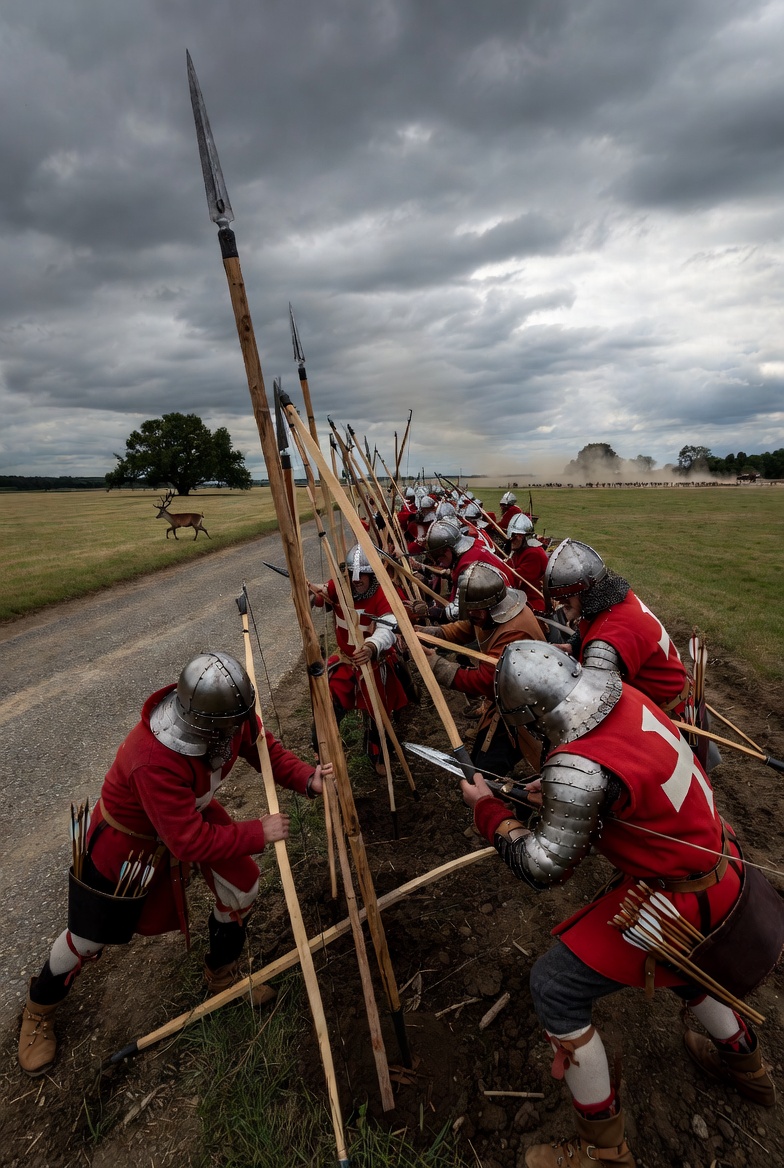 La Hire and Xaintrailles didn't hesitate. Their 180 knights slammed into the unprepared English archers before the stakes could form a proper hedge. The French cavalry overran the position in a whirlwind of lances and swords. English resistance crumbled almost instantly. The rest of the French vanguard crested a ridge south of the English lines, appearing in battle order. Panic spread like wildfire. Fastolf's contingent tried to rally with the English vanguard, but seeing the mounted knights fleeing, they joined the rout. What followed was less a battle than a relentless cavalry pursuit and mopping-up operation. French horsemen thundered across the fields, cutting down fleeing Englishmen. Organized resistance evaporated.
Casualties tell the story: French losses were minimal – perhaps 3 killed and around 100 wounded. The English suffered catastrophic losses: over 2,000 dead, with estimates of total killed or captured reaching 2,500 to 4,000. Senior commanders Talbot, Scales, and Thomas Rempston were captured. Fastolf escaped on horseback but faced accusations of cowardice from Talbot (later cleared, though his reputation never fully recovered). The English field army in central France was virtually annihilated.
Contemporary chroniclers captured the shock. One French account described the English as "dazed as a flock of sheep." Joan herself arrived with the main force as the slaughter wound down. True to her character, she showed mercy amid the carnage, dismounting to comfort a wounded English prisoner and ensuring he received last rites. Her role was inspirational rather than tactical command in the melee itself, but her presence and the momentum she helped build were decisive.
### Aftermath: From Patay to a Crowned King
The victory's ripples were immense. With negligible resistance, French forces swept through territories south, east, and north of Paris. Weeks later, on July 17, 1429, Charles VII was crowned at Reims Cathedral – a symbolic triumph that legitimized his rule and shattered English claims. The Hundred Years' War dragged on until 1453, but Patay marked the irreversible shift. English holdings contracted; French national identity coalesced around the Maid and her improbable successes.
Patay inverted the Agincourt script. Where English stakes and arrows had previously funneled French knights to slaughter, French initiative and speed prevented the English setup entirely. It was a triumph of adaptability over rigid doctrine, pursuit over hesitation, and unified momentum over fractured command. Historian Juliet Barker called it the most disastrous English defeat since Baugé in 1421, with far greater strategic consequences.
### Lessons from the Mud of Patay: Turning Historical Momentum into Your Personal Rout of Setbacks
Ninety percent of this tale is the raw, bloody history – the stag's cry, the thunder of hooves, the broken stakes, the captured lords. The remaining ten percent? Applying that explosive shift to your life. Patay teaches that victories often come not from superior numbers or perfect plans, but from spotting the opening, committing fully, and riding the chaos without looking back. No generic "rise and grind" platitudes here. This is a unique, battle-tested framework: **The Vanguard Charge Protocol** – a quick, asymmetric plan to seize daily "Patay moments" and rout inertia.
- **Scout the Stag (Detect the Unintended Signal):** English archers revealed themselves with a careless cry. In your life, distractions or "minor" slips (a missed deadline sparking urgency, a health twinge forcing routine changes, a rejected idea exposing a better path) are your stag. Don't ignore them – treat every anomaly as intelligence. Spend 5 minutes nightly journaling one "stag cry" from the day: What small event exposed a vulnerability or opportunity? Unique twist: Assign it a battlefield codename like "Stag at Patay" to make reflection visceral and memorable, turning passive awareness into active reconnaissance.
La Hire and Xaintrailles didn't hesitate. Their 180 knights slammed into the unprepared English archers before the stakes could form a proper hedge. The French cavalry overran the position in a whirlwind of lances and swords. English resistance crumbled almost instantly. The rest of the French vanguard crested a ridge south of the English lines, appearing in battle order. Panic spread like wildfire. Fastolf's contingent tried to rally with the English vanguard, but seeing the mounted knights fleeing, they joined the rout. What followed was less a battle than a relentless cavalry pursuit and mopping-up operation. French horsemen thundered across the fields, cutting down fleeing Englishmen. Organized resistance evaporated.
Casualties tell the story: French losses were minimal – perhaps 3 killed and around 100 wounded. The English suffered catastrophic losses: over 2,000 dead, with estimates of total killed or captured reaching 2,500 to 4,000. Senior commanders Talbot, Scales, and Thomas Rempston were captured. Fastolf escaped on horseback but faced accusations of cowardice from Talbot (later cleared, though his reputation never fully recovered). The English field army in central France was virtually annihilated.
Contemporary chroniclers captured the shock. One French account described the English as "dazed as a flock of sheep." Joan herself arrived with the main force as the slaughter wound down. True to her character, she showed mercy amid the carnage, dismounting to comfort a wounded English prisoner and ensuring he received last rites. Her role was inspirational rather than tactical command in the melee itself, but her presence and the momentum she helped build were decisive.
### Aftermath: From Patay to a Crowned King
The victory's ripples were immense. With negligible resistance, French forces swept through territories south, east, and north of Paris. Weeks later, on July 17, 1429, Charles VII was crowned at Reims Cathedral – a symbolic triumph that legitimized his rule and shattered English claims. The Hundred Years' War dragged on until 1453, but Patay marked the irreversible shift. English holdings contracted; French national identity coalesced around the Maid and her improbable successes.
Patay inverted the Agincourt script. Where English stakes and arrows had previously funneled French knights to slaughter, French initiative and speed prevented the English setup entirely. It was a triumph of adaptability over rigid doctrine, pursuit over hesitation, and unified momentum over fractured command. Historian Juliet Barker called it the most disastrous English defeat since Baugé in 1421, with far greater strategic consequences.
### Lessons from the Mud of Patay: Turning Historical Momentum into Your Personal Rout of Setbacks
Ninety percent of this tale is the raw, bloody history – the stag's cry, the thunder of hooves, the broken stakes, the captured lords. The remaining ten percent? Applying that explosive shift to your life. Patay teaches that victories often come not from superior numbers or perfect plans, but from spotting the opening, committing fully, and riding the chaos without looking back. No generic "rise and grind" platitudes here. This is a unique, battle-tested framework: **The Vanguard Charge Protocol** – a quick, asymmetric plan to seize daily "Patay moments" and rout inertia.
- **Scout the Stag (Detect the Unintended Signal):** English archers revealed themselves with a careless cry. In your life, distractions or "minor" slips (a missed deadline sparking urgency, a health twinge forcing routine changes, a rejected idea exposing a better path) are your stag. Don't ignore them – treat every anomaly as intelligence. Spend 5 minutes nightly journaling one "stag cry" from the day: What small event exposed a vulnerability or opportunity? Unique twist: Assign it a battlefield codename like "Stag at Patay" to make reflection visceral and memorable, turning passive awareness into active reconnaissance.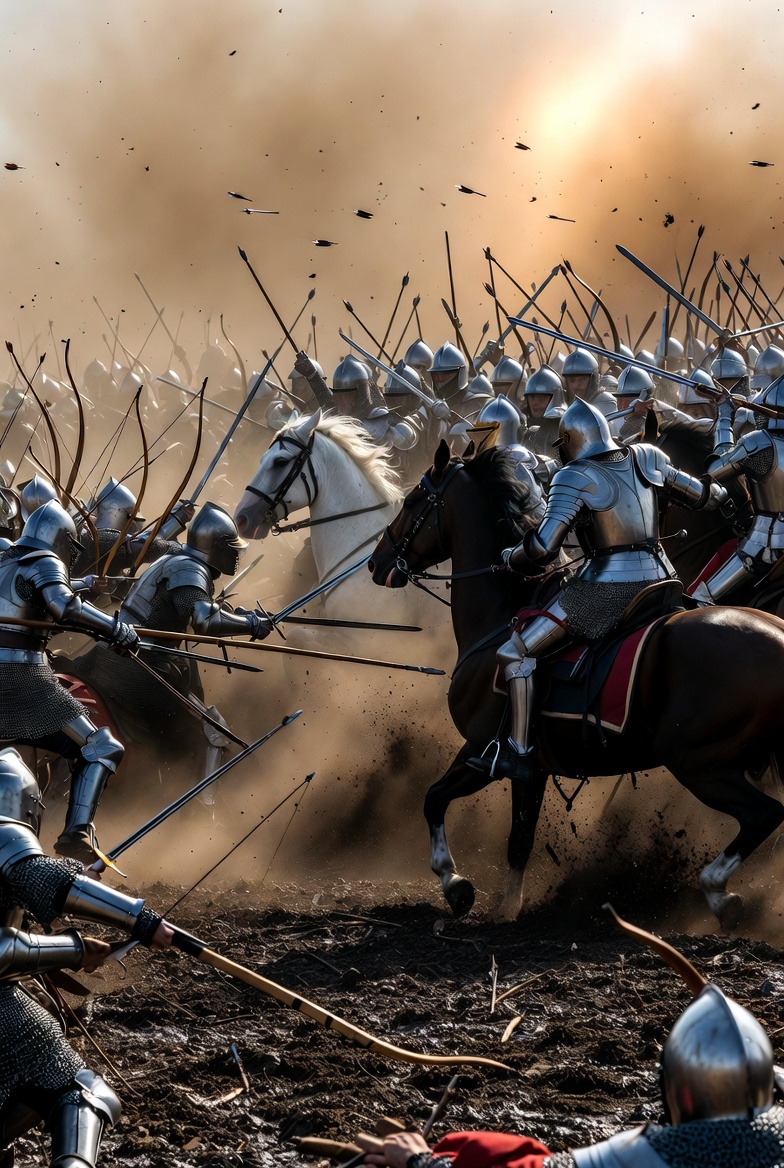 - **Launch the Vanguard (Commit the Forward Elements First):** La Hire's knights didn't wait for the full army. Identify your "180 knights" – the smallest, highest-impact actions you can execute immediately without full preparation. If writing a script or launching a track, don't perfect the whole thing; charge with the opening hook or first verse today. Bullet execution: Pick one high-leverage task daily that exploits a fresh opening. Do it imperfectly but boldly. The rest of your "army" (full plan, resources) catches up. This dodges analysis paralysis, the self-help equivalent of planting stakes while the enemy overruns you.
- **Exploit the Flank (Ride the Exposed Weakness):** Once the archers broke, French cavalry hit from the sides and rear. When you seize momentum, don't frontal assault your obstacles – flank them. Facing debt? Don't just budget harder; sell one unused asset or negotiate one high-interest item aggressively that day. Struggling with isolation? Don't generic "network"; message one specific person tied to a shared historical interest or local event. Track "flank wins" in a simple ledger: Action taken, weakness exploited, result. This builds compounding victories faster than linear grinding.
- **Pursue Without Mercy (Sustain the Rout):** The battle didn't end at first contact; it became a pursuit. After a breakthrough (completed workout, finished draft, tough conversation), immediately chain a follow-up action before doubt creeps in. No victory lap – press the advantage. Unique rule: Implement the "Fastolf Test" – if hesitation arises post-win, ask: "Would I flee like Fastolf, or charge like La Hire?" Then act. This turns isolated successes into campaigns.
- **Launch the Vanguard (Commit the Forward Elements First):** La Hire's knights didn't wait for the full army. Identify your "180 knights" – the smallest, highest-impact actions you can execute immediately without full preparation. If writing a script or launching a track, don't perfect the whole thing; charge with the opening hook or first verse today. Bullet execution: Pick one high-leverage task daily that exploits a fresh opening. Do it imperfectly but boldly. The rest of your "army" (full plan, resources) catches up. This dodges analysis paralysis, the self-help equivalent of planting stakes while the enemy overruns you.
- **Exploit the Flank (Ride the Exposed Weakness):** Once the archers broke, French cavalry hit from the sides and rear. When you seize momentum, don't frontal assault your obstacles – flank them. Facing debt? Don't just budget harder; sell one unused asset or negotiate one high-interest item aggressively that day. Struggling with isolation? Don't generic "network"; message one specific person tied to a shared historical interest or local event. Track "flank wins" in a simple ledger: Action taken, weakness exploited, result. This builds compounding victories faster than linear grinding.
- **Pursue Without Mercy (Sustain the Rout):** The battle didn't end at first contact; it became a pursuit. After a breakthrough (completed workout, finished draft, tough conversation), immediately chain a follow-up action before doubt creeps in. No victory lap – press the advantage. Unique rule: Implement the "Fastolf Test" – if hesitation arises post-win, ask: "Would I flee like Fastolf, or charge like La Hire?" Then act. This turns isolated successes into campaigns.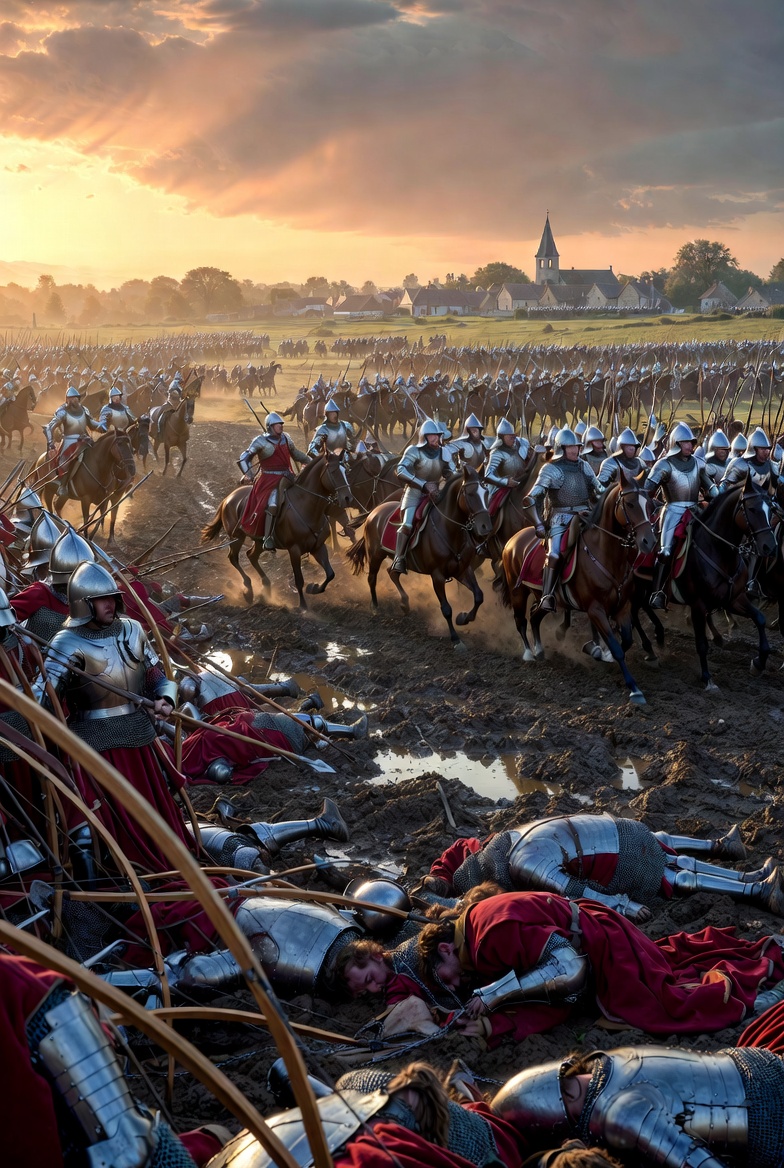 - **Mercy in the Aftermath (Consolidate Humanely):** Joan comforted the wounded enemy. After routing a personal demon (procrastination streak, bad habit), reflect on the human cost without self-flagellation. Note one lesson learned compassionately, then pivot to the next objective (Reims coronation equivalent: your next big milestone). This prevents burnout and builds resilient character.
**Your 7-Day Vanguard Charge Sprint (Unique, Battlefield-Ready Plan):**
Day 1: Scout – Log one stag cry and name your current "English retreat" (biggest stalled goal).
Day 2: Vanguard – Execute one imperfect forward action on it.
Day 3: Flank – Identify and hit a side vulnerability.
Day 4: Pursue – Chain two follow-ups.
Day 5: Adapt – If resistance stiffens, reposition like the French scouts.
Day 6: Consolidate – Review wins, show mercy to setbacks.
Day 7: Crown – Celebrate the "Reims" equivalent (public commitment or small ritual) and plan the next campaign.
Repeat cycles, scaling the "army" size. This isn't 30-day transformations or guru wisdom; it's asymmetric warfare for your life – quick strikes leveraging chaos, just as Patay proved possible against seemingly invincible foes. The English had the longbows and stakes; the French had the charge. History favored the chargers. So will you.
- **Mercy in the Aftermath (Consolidate Humanely):** Joan comforted the wounded enemy. After routing a personal demon (procrastination streak, bad habit), reflect on the human cost without self-flagellation. Note one lesson learned compassionately, then pivot to the next objective (Reims coronation equivalent: your next big milestone). This prevents burnout and builds resilient character.
**Your 7-Day Vanguard Charge Sprint (Unique, Battlefield-Ready Plan):**
Day 1: Scout – Log one stag cry and name your current "English retreat" (biggest stalled goal).
Day 2: Vanguard – Execute one imperfect forward action on it.
Day 3: Flank – Identify and hit a side vulnerability.
Day 4: Pursue – Chain two follow-ups.
Day 5: Adapt – If resistance stiffens, reposition like the French scouts.
Day 6: Consolidate – Review wins, show mercy to setbacks.
Day 7: Crown – Celebrate the "Reims" equivalent (public commitment or small ritual) and plan the next campaign.
Repeat cycles, scaling the "army" size. This isn't 30-day transformations or guru wisdom; it's asymmetric warfare for your life – quick strikes leveraging chaos, just as Patay proved possible against seemingly invincible foes. The English had the longbows and stakes; the French had the charge. History favored the chargers. So will you.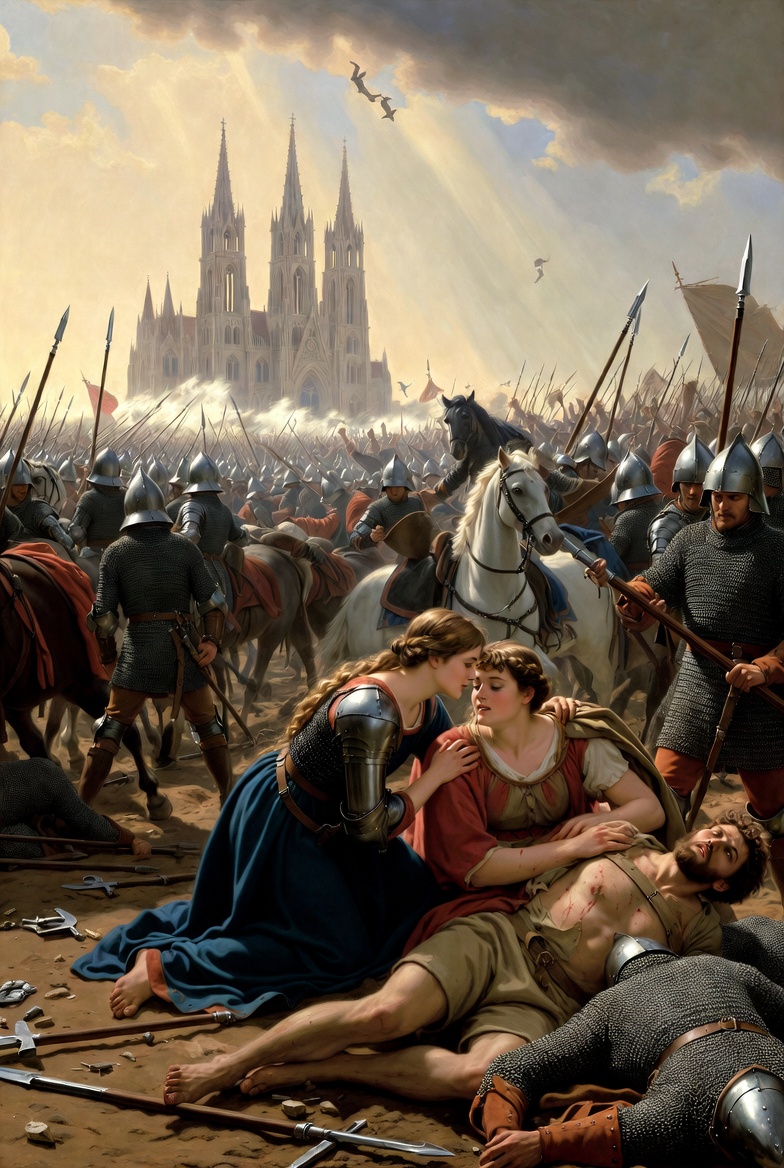 Patay reminds us that empires shift on single afternoons of audacity. Your life can too. Ride boldly. The guidance is there – you just have to spur the horse.