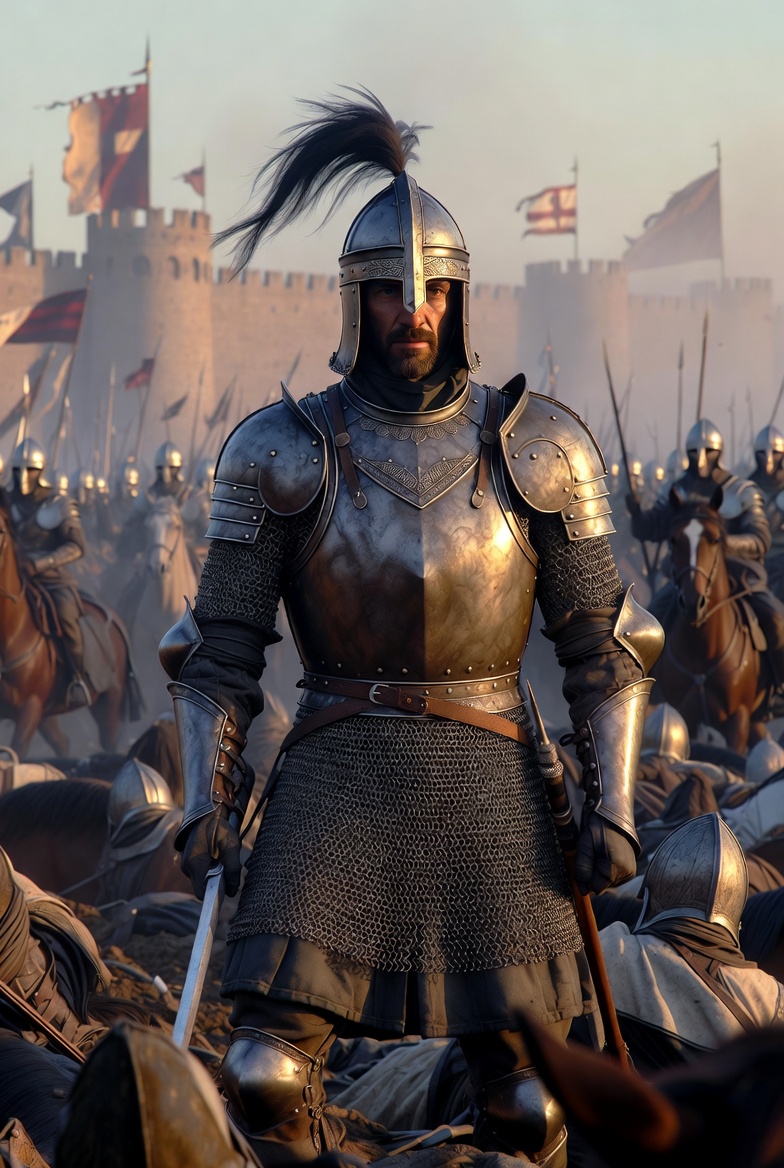

In the sweltering hills near the ancient city of Nicomedia—modern-day Maltepe, Turkey—on June 10 and 11, 1329, a weary Byzantine emperor led one of the empire’s final serious attempts to reclaim its Asian heartlands. What unfolded wasn’t a grand Hollywood clash of thousands upon thousands in shining armor, but a gritty, morale-shattering rout that perfectly encapsulated the slow, inexorable decline of one of history’s greatest empires. This wasn’t the dramatic fall of Constantinople in 1453; it was the quiet, almost anticlimactic moment when the writing appeared unmistakably on the wall. The Battle of Pelekanon (or Pelecanum) marked the last time a Byzantine emperor personally confronted an Ottoman leader in the field—and the consequences echoed for centuries. Picture this: The once-mighty Byzantine Empire, heir to Rome itself, had been hemorrhaging territory for decades. By the time Andronikos III Palaiologos ascended in 1328 after a messy civil war, its Anatolian holdings had shriveled dramatically. Forty years earlier, Byzantium controlled vast swaths of western modern-day Turkey. Now? Scattered coastal outposts along the Aegean, a fragile core province hugging Nicomedia (about 150 km from Constantinople), and the looming threat of energetic Turkic beyliks gobbling up the rest. The Ottomans, under the capable Orhan Ghazi (son of the founder Osman I), had just captured the strategic prize of Prusa (Bursa) in Bithynia. Nicomedia and Nicaea—the old imperial capital—were under siege or imminent threat. Andronikos III, ambitious and energetic despite the empire’s woes, decided enough was enough. He would lead a relief force himself.This wasn’t some half-hearted expedition. Andronikos scraped together roughly 4,000 men—the largest force he could realistically muster in those lean times. Accompanying him was his trusted Grand Domestic (essentially top general and advisor), John Kantakouzenos, a brilliant statesman and future emperor in his own right. They marched along the shores of the Sea of Marmara toward Nicomedia, hoping to break the Ottoman stranglehold and stabilize the frontier. It was a classic “Hail Mary” play for a fading superpower: project strength, relieve key cities, deter further incursions, and maybe buy enough breathing room to reorganize. On the other side stood Orhan Ghazi with around 8,000 warriors—lightly armed but highly mobile Turkoman cavalry archers, raiders, and irregulars forged in the nomadic traditions of the steppes. These weren’t the polished Janissaries of later Ottoman glory; this was the early, hungry phase of Ottoman expansion, fueled by ghazi warriors (Islamic frontier fighters), tribal levies, and opportunistic allies. Orhan’s forces had already proven adept at hit-and-run tactics, sieges, and exploiting Byzantine weaknesses. They positioned themselves strategically on the hills overlooking the road to Nicomedia at a place called Pelekanon, blocking the Byzantine advance and dictating the terms of engagement. The battle kicked off on June 10. Orhan, playing the clever tactician, sent forward about 300 cavalry archers down the slopes as bait—to lure the Byzantines uphill into disadvantageous terrain. The Byzantines, maintaining discipline initially, drove them off but wisely (or perhaps cautiously) refused to pursue aggressively into the hills. Skirmishes followed: probing attacks, arrow volleys, and inconclusive clashes that dragged on through the heat of the day. The Byzantine troops— a mix of professional soldiers from Constantinople, Thracian levies, and whatever else could be cobbled together—were heavily armored and trained in traditional formations. But fatigue, the unfamiliar terrain, and the relentless harassment wore them down. As night fell, the Byzantines prepared to withdraw in good order. That’s when things unraveled spectacularly. The Ottomans pressed the advantage, refusing to let them disengage cleanly. Panic spread like wildfire when rumors (exaggerated or not) circulated that Emperor Andronikos III had been killed or mortally wounded. Both the emperor and Kantakouzenos were in fact only lightly injured, but in the fog of battle and pre-modern communications, whispers turned to roars of despair. What started as an organized retreat devolved into a full-blown rout. Heavily armed Byzantine infantry and cavalry, symbols of imperial might, fled before the lighter, more agile Turkic forces. Casualties were heavy on the Byzantine side; Kantakouzenos eventually managed to evacuate the survivors by sea back toward Constantinople.
Historians often note that Pelekanon wasn’t a cataclysmic slaughter on the scale of, say, Manzikert in 1071. But its psychological and strategic impact was devastating. It was the first (and only) direct field encounter between a reigning Byzantine emperor and an Ottoman bey. The “heavily armed and disciplined” Romans of the East had been psychologically bested by “lightly armed irregulars.” Morale in Constantinople plummeted. No further serious attempts were made to reclaim or even meaningfully defend the Asian territories. Nicaea fell in 1331, İzmit (Nicomedia) in 1337. With the annexation of other beyliks like Karasi by 1336, the Ottomans consolidated Bithynia and northwestern Anatolia into a formidable base. From there, their expansion would prove unstoppable, culminating in the conquest of Constantinople itself over a century later. The battle highlighted deeper Byzantine vulnerabilities: chronic civil wars draining resources, overreliance on expensive mercenaries or depleted native levies, difficulties adapting to highly mobile cavalry-archer tactics honed by steppe warriors, and the sheer exhaustion of empire after centuries of pressures from multiple fronts (Seljuks, Crusaders, Bulgars, Serbs, and now Ottomans). Andronikos III’s campaign was brave but symptomatic of an empire that had lost the initiative. Orhan’s forces, by contrast, embodied the vitality of a rising power—flexible, motivated by faith and plunder, and quick to exploit opportunities. Zoom out, and Pelekanon fits into the grand tapestry of Byzantine-Ottoman interactions. The empire had survived the catastrophic loss at Manzikert, the depredations of the Fourth Crusade (which sacked Constantinople in 1204), and endless internal strife. Yet by the early 14th century, the writing was on the wall. The Palaiologos dynasty, which had reclaimed Constantinople in 1261, presided over a diminished “empire” that was more a collection of cities and claims than a contiguous power. Andronikos III himself was a reformer at heart—trying to rebuild the navy, army, and administration—but external threats and internal divisions proved too much. His co-commander Kantakouzenos would later seize power in another civil war, further weakening the state. What makes Pelekanon uniquely compelling—and funny in a darkly ironic historical sense—is the mismatch of expectations versus reality. Here was the emperor of the Romans, direct successor to Constantine and Justinian, personally leading troops against what many in Constantinople probably viewed as upstart barbarians. The Byzantines brought the weight of classical military tradition: heavy cataphract-style cavalry, disciplined infantry phalanxes or tagmata, siege expertise, and the prestige of imperial command. The Ottomans brought mobility, archery from horseback, knowledge of the local terrain, and the unyielding drive of conquerors on the ascent. The result? A tactical draw turning into strategic disaster because of panic and rumor. It’s the ultimate reminder that battles are won (or lost) as much in the mind as on the field. One false whisper about the boss going down, and elite troops scatter like startled pigeons.
The humor lies in the absurdity of imperial hubris meeting gritty pragmatism. Imagine the emperor’s camp the night before: maps unrolled, speeches about restoring Roman glory, perhaps some Byzantine court intrigue simmering in the background. Then reality hits—a few arrows, some feints, exhaustion, and boom—rout. It’s like showing up to a heavyweight boxing match in full plate armor only to get outmaneuvered by nimble street fighters who know the alleys better. History is full of such moments where the “civilized” power underestimates the adaptable “barbarian.” The Ottomans didn’t just win at Pelekanon; they exposed the fragility of Byzantine power projection across the Bosphorus. This single engagement accelerated the Ottoman consolidation of Anatolia. It freed Orhan to focus on further expansion without immediate Byzantine interference. By securing the region, the Ottomans built the demographic, economic, and military foundation for crossing into Europe (Gallipoli in 1354) and eventually dominating the Balkans. For Byzantium, it was the effective end of meaningful resistance in Asia Minor. The empire retreated behind the walls of Constantinople, relying increasingly on diplomacy, tribute, and hoping for Western aid that rarely materialized effectively. The fall, when it came in 1453 to Mehmed II, was the culmination of processes set in motion long before—including that hot June day in 1329. Yet even in decline, Byzantium’s story is one of remarkable resilience. It preserved classical knowledge, law, and Orthodox Christianity through dark ages. Its art, theology, and administration influenced the Renaissance and beyond. Pelekanon doesn’t diminish that legacy; it humanizes it. Empires don’t fall in a day—they erode through a thousand small defeats, bad decisions, and missed opportunities. Andronikos III’s courage in personally leading the force speaks to a ruler unwilling to surrender without a fight, even if the odds were stacked. Kantakouzenos’s evacuation of survivors shows competent leadership amid chaos. These were capable men dealing with structural rot. Now, fast-forward to today. What does a dusty 14th-century skirmish in Anatolia possibly offer a modern person navigating their own battles—career setbacks, personal doubts, health struggles, financial pressures, or creative slumps? Plenty, if you extract the timeless principles without the romantic gloss. The outcome at Pelekanon teaches the power of adaptability, the danger of panic, the necessity of realistic assessment, and the value of learning from routs to stage comebacks. Here’s how you apply it specifically to your individual life, in sharp, actionable bullet points that cut through generic self-help noise: - **Embrace Terrain and Timing Like Orhan**: Instead of charging headlong into unfavorable conditions (hills, heat, enemy advantages), scout your personal “battlefield” ruthlessly. Before launching a big project, job hunt, fitness overhaul, or relationship move, map the actual ground—market conditions, your energy levels, competitors’ strengths. Orhan didn’t fight on Byzantine terms; he forced them onto his. You benefit by choosing when and where to engage fully. Specific: If job hunting, don’t blanket-apply everywhere—target 5-10 roles where your skills give you high ground, prepare tailored “feints” (networking messages), and conserve energy for interviews. This prevents burnout and turns “retreats” into repositioning.
- **Build Mobility Over Heavy Armor**: Byzantine heavy gear looked impressive but hindered flexibility in rough terrain. In life, overcommitment to rigid plans or identities (e.g., “I must follow this exact career path” or “I have to grind 12-hour days”) can lead to immobility when things shift. Cultivate versatile skills and light-footwork habits. Benefit: Quicker recovery from failures. Plan element: Dedicate 20% of weekly effort to “scout skills”—learn one adjacent competency (e.g., if in sales, study basic data analysis; if writing, experiment with video). This mirrors Ottoman adaptability and prevents total routs when primary strategies falter. - **Kill Rumors Before They Cause Panic**: The Byzantine collapse accelerated on unverified whispers about the emperor. In your life, unchecked negative self-talk or external noise (social media comparisons, one bad review) can snowball into paralysis. Counter by instituting a “fact-check protocol”: When doubt hits, pause for 10 minutes, list verifiable evidence for and against the fear, consult one trusted source or metric. This keeps retreats orderly. Unique twist: Treat your inner circle like Kantakouzenos—designate 1-2 “evac advisors” you text during crises for reality checks, turning potential routs into calculated withdrawals. - **Learn from the Rout, Don’t Dwell in It**: Pelekanon ended Byzantine Asian ambitions but didn’t erase the empire overnight. Use defeats as data. After a failure (lost deal, rejected pitch, health setback), conduct a no-blame debrief within 48 hours: What terrain misread? What mobility lacked? What rumor amplified? Then pivot resources. Benefit today: Accelerated growth. Unlike generic “fail forward” platitudes, make it tactical—log it in a simple “Pelekanon Notebook” with three columns: Enemy Advantage Exploited, My Rigid Mistake, Next Mobility Move. Review quarterly to build institutional memory in your one-person empire. - **Consolidate Your Core Before Expanding**: Post-Pelekanon, Byzantium hunkered in its defensible core (Constantinople). For you, after a big push fails, secure your personal “capital”—core health, key relationships, primary income stream—before new campaigns. Specific: Post-setback, enforce a 7-day “consolidation protocol”: Prioritize sleep/nutrition, one high-value connection outreach, and protecting your main revenue/creative pipeline. This prevents total collapse and sets up stronger future offensives.
**Your Detailed, Quick, Unique “Pelekanon Protocol” Plan – A 30-Day Comeback System Unlike Anything Online** This isn’t vision boards, affirmations, or hustle culture. It’s a battlefield-derived, adaptive campaign for ordinary people facing real erosion. Do it once, iterate forever. It’s designed for quick execution amid chaos—total time investment ~5-7 hours spread over 30 days, with daily micro-actions. **Week 1: Reconnaissance (Assess Without Charging)** - Day 1-2: Map your “Anatolia”—list 3-5 current “sieges” (stuck areas: debt, fitness plateau, stalled project). Rate enemy advantages (external obstacles) and your current forces (skills, resources, energy) honestly on a 1-10 scale. - Day 3-4: Identify one “Pelekanon hill”—a high-ground opportunity you’ve been avoiding due to perceived risk. Scout it: Gather intel (research, talk to one person who succeeded there). - Day 5-7: Run one small “cavalry probe”—a low-stakes test action (e.g., send one targeted email, do one workout variation, prototype one idea). Log outcome without judgment. **Week 2: Adapt Mobility (Build Flexible Formations)** - Daily 10-min drill: Practice “lightening armor”—strip one rigid assumption (e.g., “I need X credential first”) and brainstorm two alternative paths. - Mid-week: Execute one cross-domain skill transfer (e.g., apply history-reading habits to financial analysis). - End of week: Simulate a “rumor drill”—write down your biggest current fear, debunk it with facts, and plan a counter-move. **Week 3: Orderly Retreat and Reposition (If Needed)** - Identify any failing push: Execute a controlled pullback (e.g., pause a draining commitment gracefully). Redirect energy to core defenses. - Conduct full debrief using the three-column log. Celebrate the data gained. - Launch one repositioned action based on intel (e.g., new angle on project leveraging fresh mobility). **Week 4: Consolidate and Prepare Next Campaign** - Secure base: Audit and fortify personal fundamentals (one health win, one relationship nurture, one resource buffer). - Plan the next offensive: Choose one target informed by Pelekanon lessons—mobile, terrain-aware, rumor-resistant. Set micro-milestones for the following 30 days. - Reflection ritual (30 mins): Write a one-page “dispatch” to your future self on what the “empire” (your life) learned. Burn or save it symbolically. Repeat monthly, scaling ambition. Track “territories held” (wins) vs. “lost but learned” to measure progress. This protocol is unique because it treats life as ongoing asymmetric warfare against entropy—emphasizing intelligence, adaptability, and disciplined emotion over brute force or positivity theater. It turns historical humiliation into personal tactical superiority. Pelekanon reminds us that even titans stumble, but the smart ones (or their successors) rise by evolving. Your life isn’t an empire destined for fall—it’s a dynamic realm where one well-analyzed rout can fuel centuries of resurgence. On this anniversary of that distant June clash, charge forward lighter, smarter, and unafraid of the hills. The Ottomans built an empire from such moments. So can you.
Share: