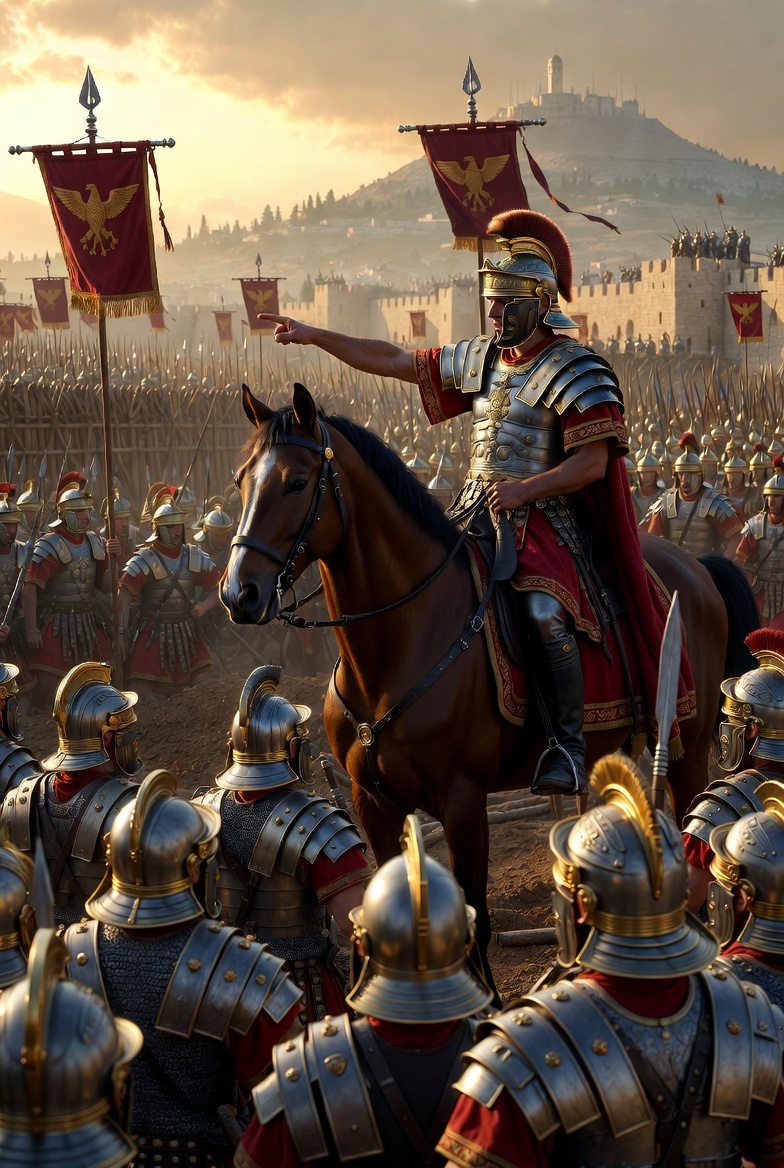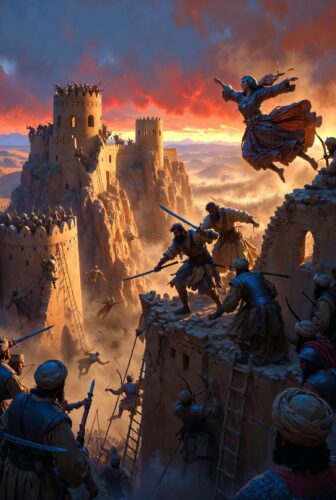

On June 4, 1745, in the rolling hills and misty fields near the village of Hohenfriedberg in Prussian Silesia (today's Dobromierz, Poland), a 33-year-old king named Frederick II pulled off one of the most audacious and decisive military triumphs of the 18th century. What started as a desperate gamble against a larger, seemingly better-positioned enemy coalition ended in a rout so complete that it shocked Europe and cemented Frederick's reputation as "the Great." This wasn't just another battle in the endless chess game of European power struggles—it was a clinic in audacity, preparation, timing, and exploiting human chaos that turned potential disaster into legend. Picture this: fog clinging to the valleys like a reluctant blanket, campfires flickering in the pre-dawn gloom, and the distant rumble of thousands of boots and hooves. Frederick's Prussian army, outnumbered and facing a joint Austro-Saxon force commanded by Prince Charles Alexander of Lorraine and the Duke of Saxe-Weissenfels, executed a night march that would make modern special forces nod in approval. They left their fires burning to fool the enemy scouts, enforced silence (no talking, no smoking), and struck with the fury of a summer storm. By 9 a.m., the coalition army was shattered, fleeing in disarray, leaving behind thousands of dead, wounded, prisoners, cannons, and enough captured standards to wallpaper a palace.This story isn't dusty textbook filler. It's raw, hilarious in its human absurdities, packed with tactical genius, and dripping with lessons that scream relevance for anyone today staring down their own "impossible" challenges—whether it's a career pivot, a personal reinvention, or just surviving the daily grind with some dignity and wins. We'll dive deep into the history (about 90% of this, as requested), then extract a razor-sharp, utterly unique motivational framework you won't find in the sea of generic self-help sludge online. No vision boards, no gratitude journals rehashed, no "hustle harder" platitudes. Just battlefield-tested principles turned into a quick, quirky personal doctrine. ### The Tinderbox: Europe in the 1740s and the Fight for Silesia To understand Hohenfriedberg, rewind to the powder keg that was 18th-century Europe. The War of the Austrian Succession (1740–1748) erupted when Emperor Charles VI died without a male heir. His daughter Maria Theresa inherited a massive but rickety Habsburg empire. Every neighboring vulture—France, Bavaria, Prussia, Saxony—smelled weakness and pounced, ignoring the Pragmatic Sanction that was supposed to guarantee her rights. Frederick II, who had just inherited the Prussian throne in 1740 at age 28, was the hungriest vulture of all. Prussia was a rising but resource-poor militaristic state, a "army with a country" as Voltaire quipped. Silesia, a wealthy, populous province under Austrian control, was the prize: rich in textiles, minerals, and strategic position. Frederick invaded in late 1740, kicking off the First Silesian War. He won key victories like Mollwitz but the peace was uneasy. By 1744–1745, the Second Silesian War was on. Maria Theresa, allied with Saxony and others, wanted Silesia back badly. Her forces under Prince Charles (a competent but cautious commander) and the Saxons under the Duke of Weissenfels were maneuvering to crush Frederick's army and reclaim the province. The coalition had numerical superiority—around 62,500 men and 122 guns against Frederick's roughly 58,500 with 192 guns. On paper, the Austrians and Saxons held the edge in experience and alliances. Frederick was no desk general. He was a flute-playing philosopher-king who loved French culture, wrote anti-Machiavelli treatises, and yet commanded with ice-cold pragmatism. His army was the marvel of Europe: highly disciplined infantry trained in rapid fire (the famous Prussian "fire by platoons"), mobile artillery, and aggressive cavalry. But he faced supply issues, fatigue from campaigning, and the constant threat of being outflanked.
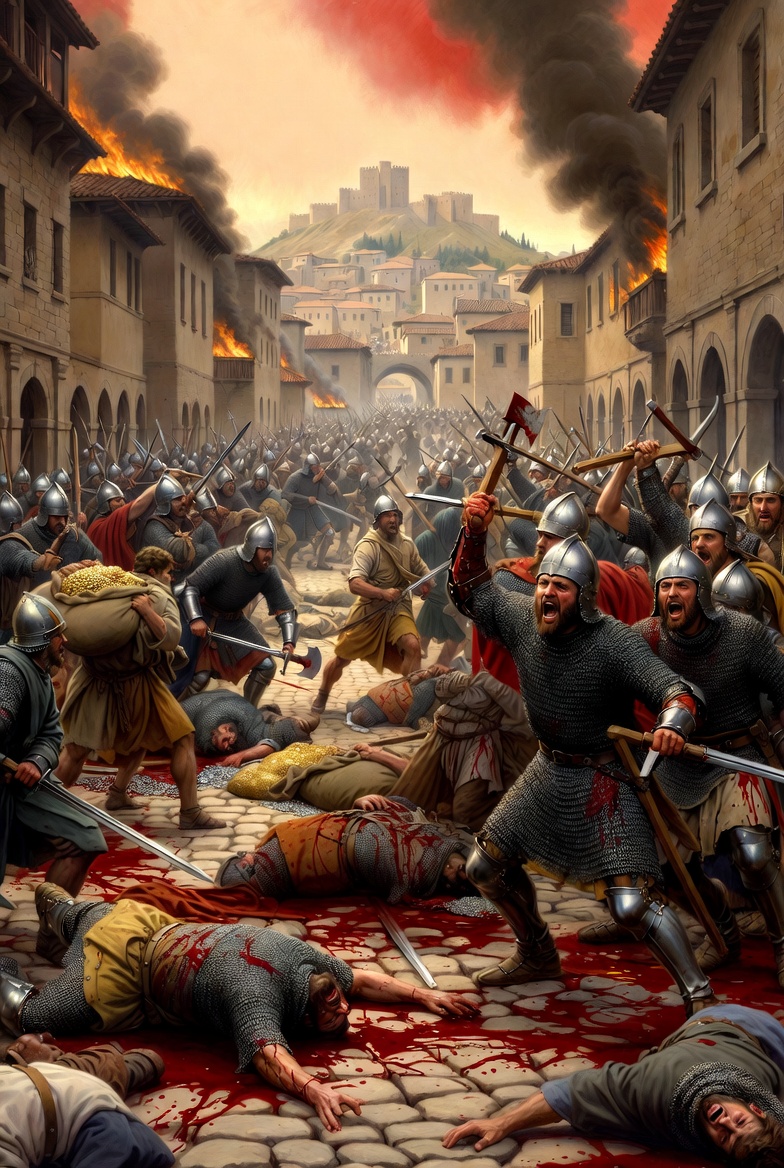
By early June 1745, the armies were shadowing each other in Silesia near Striegau (Strzegom). The coalition camped in a strong position, believing Frederick was on the defensive. Little did they know the king had intelligence from his legendary hussar commander, Hans Joachim von Ziethen, whose scouts shadowed every enemy move like ghosts. ### The Night Before: Audacity in the Dark June 3rd turned into the 4th under a tense sky. Frederick decided on a bold surprise attack. He ordered a night march—risky as hell in an era without night-vision or reliable comms. Troops moved in three main columns, maintaining strict silence. Campfires were left blazing to suggest the Prussians were still settled. No pipes, no whispers that could carry on the wind. This was psychological warfare before the shooting started. The terrain was tricky: streams, hills, villages like Pilgrimshain. One column under General du Moulin (a Huguenot officer) led the way. Prince Leopold of Anhalt-Dessau ("the Old Dessauer"), a grizzled veteran and drillmaster, commanded key infantry. Frederick himself was in the thick of it, as was his style—leading from the front, risking his neck like a common soldier. As dawn broke around 4-5 a.m., the Prussians crossed the Striegauer Water. A bottleneck at a bridge caused some chaos, but Ziethen's hussars found fords and kept momentum. The Saxons, on the coalition's left, were caught literally with their pants down—many still in camp, cooking breakfast or rubbing sleep from their eyes. ### The Battle Unfolds: Chaos, Charges, and Carnage Around 6-7 a.m., the Prussian right and center slammed into the Saxon lines. The Saxons fought hard initially, their artillery barking and infantry holding with determination. But Prussian discipline shone: volleys crashed out in coordinated waves, mowing down ranks. The Saxons buckled under the pressure. By 7 a.m., their wing was collapsing, streaming rearward in panic. Now the Austrians in the center and right faced the full Prussian onslaught. Austrian cavalry tried countercharges but Ziethen's hussars and other Prussian horse pushed them back. The infantry slugfest was brutal—smoke, dust, screams, the clang of bayonets. Frederick's forces were stretched but holding.
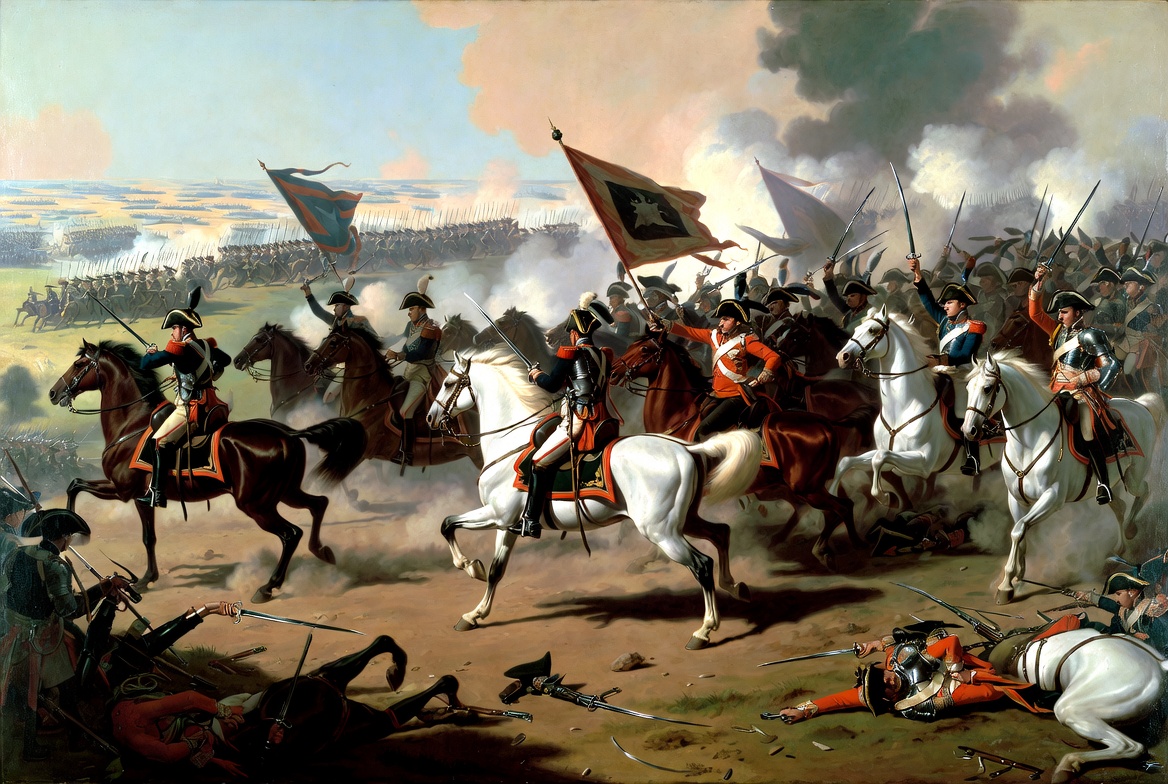
Then came the masterstroke that turned a hard fight into legend: the charge of the Bayreuth Dragoons. This elite cavalry regiment of about 1,500 men, under General Friedrich Wilhelm von Geßler and Lt. Col. Otto Magnus von Schwerin, spotted a gap. Instead of joining the swirling cavalry melee on the flank, they wheeled behind their own infantry lines, formed up, and thundered straight through a momentary opening into the exposed Austrian infantry. Imagine it: heavy dragoons on powerful horses, sabers gleaming, crashing like a thunderbolt into unprepared foot soldiers who hadn't formed defensive squares in time. The Austrians panicked. In under 30 minutes, the Bayreuthers overran multiple battalions, captured 67 standards (banners), took 2,500 prisoners, and lost only around 94 of their own. It was one of the most celebrated cavalry exploits in history—textbook shock action that shattered enemy cohesion. By 9 a.m., it was over. The coalition army fled toward the mountains, abandoning gear, wounded, and pride. Prussian losses: roughly 4,700-5,000 killed and wounded. Coalition: 8,000-9,000 dead/wounded, 5,000+ captured (including generals), and dozens of guns lost. A decisive, lopsided victory. Frederick reportedly inspected the captured flags on a hill afterward, his army cheering. Legend (disputed) says he composed the rousing *Hohenfriedberger Marsch* on the spot, though it might have been written later. Either way, the tune became a Prussian anthem of sorts, evoking that electric morning. ### The Aftermath and Ripple Effects Hohenfriedberg didn't end the war, but it broke the back of the 1745 coalition offensive. Frederick followed up with more wins like Soor. The Treaty of Dresden in December 1745 confirmed Prussia's hold on Silesia. Maria Theresa was furious but forced to negotiate. Frederick's military star ascended globally; diplomats, soldiers, and philosophers flocked to study "the Prussian way." The battle showcased innovations: integrated arms (infantry-artillery-cavalry working in concert), rapid maneuvers, intelligence-driven decisions, and aggressive exploitation of enemy disarray. It influenced later Prussian/German doctrine, right up to the 19th and 20th centuries. Frederick's blend of Enlightenment thought and ruthless efficiency defined an era. But it wasn't flawless glory. The human cost was horrific—bodies littering fields, villages disrupted, families shattered. Frederick himself was a complex figure: brilliant yet tyrannical, culturally refined yet capable of breathtaking cynicism. He once said something like war being a lottery where preparation loads the dice. Hohenfriedberg proved him right.### Extracting the Gold: Why This Matters in 2026 Fast-forward nearly 300 years. The world looks different—no powdered wigs, no musket smoke—but human nature hasn't changed. We face our own "coalitions" of obstacles: economic uncertainty, personal doubts, competitive pressures, unexpected crises. Hohenfriedberg teaches that preparation, surprise (on your terms), disciplined execution, and bold exploitation of openings win the day—not brute size or conventional wisdom. Here's where we pivot to the motivational meat (keeping it lean, as 90% is history). This isn't cookie-cutter self-help. No "manifest your destiny." Instead, a **"Dawn Charge Doctrine"**—a quick, quirky, battlefield-derived personal operating system designed to be anti-fragile, funny in application, and ruthlessly effective against modern mediocrity. It's unique because it weaponizes historical absurdity and tactical specificity into daily micro-habits that feel like plotting a heist rather than "improving yourself." #### The Dawn Charge Doctrine: Specific Bullet-Point Benefits for Your Life - **Night March Discipline (Silence and Deception)**: In the battle, silence and fake campfires prevented detection. Today, apply by creating "silent prep phases" for big goals. Bullet: Every evening, spend 20 minutes in total no-distraction mode (phone in another room, no podcasts) mapping tomorrow's "attack." Deceive your inner saboteur by maintaining visible "normalcy" (post fun social media) while secretly grinding skill acquisition. Benefit: You build momentum invisibly, surprising competitors and your own procrastination demons. Funny twist: Treat your bad habits like enemy scouts—starve them of info by "leaving fires burning" (public persona) while marching in the dark. - **Ziethen-Style Scouting (Intelligence Over Bravado)**: Frederick relied on hussar reconnaissance. Bullet: Dedicate 10 minutes daily to "enemy terrain mapping"—research one specific obstacle in your field (e.g., a rival's strategy, market shift) via neutral sources. Don't assume; verify. Benefit: Decisions become data-driven ambushes, not hopeful charges. Unique angle: Keep a "Scout Log" that's half spreadsheet, half sarcastic commentary. Laugh at how often "impossible" barriers are just poorly scouted hills. - **Bayreuth Dragoon Gap Exploitation**: That cavalry charge hit a momentary weakness. Bullet: Train to spot "gaps" in daily chaos—when a meeting runs long and energy dips, or a project stalls. Insert a micro-sprint: 15 focused minutes on high-leverage action. Benefit: You turn ordinary days into routs of inefficiency. Motivational humor: Visualize your to-do list as Austrian infantry—find the wobbly battalion (easiest high-impact task) and charge it with dragoon fury instead of nibbling at edges.
- **Old Dessauer Infantry Steadiness**: Leopold's troops held formation under fire. Bullet: Build "platoon fire" resilience by breaking overwhelming goals into coordinated micro-volleys (e.g., three 25-minute Pomodoros with specific outputs). Benefit: You withstand pressure without breaking. Unique: Pair it with a "Prussian Flute Break"—after each volley, do something absurdly cultured or joyful for 5 minutes (play music, read poetry) to recharge like Frederick the philosopher-king. - **Post-Victory Flag Inspection**: Frederick reviewed spoils. Bullet: At day's end, literally list 3 "captured standards" (wins, no matter how small) and one lesson from any "wounds." Benefit: Builds unshakeable momentum and humility. Funny/motivational: Celebrate ridiculously—buy a cheap flag or draw one. Mock your failures as "Saxon breakfast interruptions" that got routed anyway. #### Your Detailed, Quick, Unique 7-Day Launch Plan: "Operation Hohenfriedberg Personal" This isn't a 90-day transformation slog. It's a rapid-deployment strike plan to embed the Doctrine immediately, with built-in absurdity to keep it sticky and anti-burnout. Do it once, then maintain with weekly "night marches." **Day 1 (Reconnaissance)**: Map your personal "Silesia"—one big goal (career move, health overhaul, creative project). Scout obstacles for 30 minutes. End with a silly "flute session" (any hobby). Write your battle proclamation: "On this day, I declare war on [specific mediocrity]." **Day 2 (Night March Prep)**: Evening silence ritual: No screens after 9 PM. Plan tomorrow's three "columns" (morning energy task, midday exploitation, evening review). Sleep like troops before battle—early, disciplined. **Day 3 (The Dawn Strike)**: Wake early. Hit your first gap charge: Tackle the highest-leverage 45 minutes immediately. Use platoon fire for follow-through. Note any "Saxon surprises" (unexpected resistance) without panic. **Day 4 (Cavalry Insertion)**: Midday, force a Bayreuth moment—do something bold and unconventional in your routine (cold call, weird networking, experimental approach). Log the gap you exploited. **Day 5 (Infantry Hold)**: Focus on steadiness amid chaos. When stress hits, deploy a micro-volley and a flute break. Inspect "flags" at night. **Day 6 (Adapt and Pursue)**: Like Frederick after the win, pivot to the next objective using intel gained. Add one new habit from the bullets. **Day 7 (Review and March On)**: Full inspection parade. Celebrate with a ridiculous reward (wear a silly hat while reviewing wins). Plan the next "campaign season." Repeat the cycle monthly, refining like a evolving Prussian drill manual. This plan is quick (under an hour daily), unique (military history gamification with humor baked in), and motivational because it reframes struggle as an epic, winnable campaign rather than endless self-optimization. It laughs at the absurdity of life while arming you with timeless tools. Frederick didn't win by being bigger—he won by being smarter, faster, and bolder in the clutch. Hohenfriedberg reminds us that distant history isn't dead. It's a arsenal waiting for clever hands. On this June 4 (or whenever you read this), channel that Prussian dawn. Leave the fires burning, march silently, and charge the gaps. Your personal empire awaits—not of territory, but of capability, resilience, and quiet triumphs that make the coalition of doubts flee in disarray. The fields of Silesia are far away, but the spirit of that foggy June morning? It's right here, in your next decisive action. Now go rout something.
Share: