Imagine a young nation so broke and disorganized that its citizens literally clipped buttons off their coats to use as currency. That's not hyperbole—that was everyday America in the late 1780s. After winning independence, the United States had no reliable money of its own. Spanish pieces of eight, British guineas, French louis d'or, Portuguese joes, and a mishmash of state-issued paper that depreciated faster than you could spend it ruled the day. Merchants carried scales to weigh every coin because edges were shaved ("clipped") to steal precious metal, counterfeits flooded markets, and trust in any transaction was razor-thin. The Constitution granted Congress power "to coin Money, regulate the Value thereof, and of foreign Coin," but for years after ratification in 1788, nothing happened. Economic chaos threatened to undo the Revolution's gains.
Enter March 3, 1791. On that unassuming Tuesday, President George Washington signed into law "An Act establishing a mint, and regulating the Coins of the United States." This wasn't fireworks or speeches—it was pragmatic legislation born from necessity, pushed hard by Treasury Secretary Alexander Hamilton. Hamilton had submitted his "Report on the Establishment of a Mint" to Congress on January 28, 1791, a dense, technical document drawing on earlier ideas from Thomas Jefferson, Robert Morris, and others under the Confederation Congress. Hamilton argued for a bimetallic standard (gold and silver), precise coin specifications, and a federal mint to produce uniform currency. His vision: end dependence on foreign coins, curb counterfeiting, stabilize trade, and assert national sovereignty over the economy.
The act itself was straightforward but revolutionary. It authorized a mint in Philadelphia (then the capital), funded by Congress. Key officers included a Director (first: David Rittenhouse, the renowned astronomer), Treasurer, Assayer, Chief Coiner (Henry Voigt), and Engraver. Coins would include gold eagles ($10), half-eagles ($5), quarter-eagles ($2.50); silver dollars, half-dollars, quarters, dismes (10 cents), half-dismes (5 cents); and copper cents and half-cents. Purity standards were set: gold at 11/12 fine (with 1/12 copper alloy for durability), silver at 1485/1664 fine (roughly 89.24% pure). The dollar was defined as 371.25 grains of pure silver or 24.75 grains of pure gold, creating a fixed ratio of about 15:1 silver-to-gold. Debates in Congress were fierce but low-key compared to the Bank of the United States fight raging around the same time. Some feared centralization; others worried about costs (the mint would be expensive to build and operate initially). Hamilton's report addressed counterarguments head-on: foreign coins were unreliable, state banks issued inflationary paper, and without national coinage, commerce suffered. Jefferson had earlier proposed a decimal system (which Hamilton adopted), and Morris had experimented with coin designs. Hamilton synthesized these, insisting on federal control to prevent the "clipping" and debasement that plagued Europe.
Construction began in 1792 on Seventh Street near Arch in Philadelphia—a modest brick building with horse-powered presses at first. Imported machinery from Europe filled gaps in American tech. The first coins struck were half-dismes in July 1792 (legend says using silver from Washington's tableware, though evidence is thin). Official production ramped slowly: copper cents and half-cents in 1793, silver dollars in 1794 (the famous Flowing Hair dollar), gold eagles in 1795. Early output was minuscule—only a few thousand pieces yearly—due to bullion shortages (people hoarded foreign coins) and technical glitches. Workers hand-hammered blanks, leading to inconsistencies.
Debates in Congress were fierce but low-key compared to the Bank of the United States fight raging around the same time. Some feared centralization; others worried about costs (the mint would be expensive to build and operate initially). Hamilton's report addressed counterarguments head-on: foreign coins were unreliable, state banks issued inflationary paper, and without national coinage, commerce suffered. Jefferson had earlier proposed a decimal system (which Hamilton adopted), and Morris had experimented with coin designs. Hamilton synthesized these, insisting on federal control to prevent the "clipping" and debasement that plagued Europe.
Construction began in 1792 on Seventh Street near Arch in Philadelphia—a modest brick building with horse-powered presses at first. Imported machinery from Europe filled gaps in American tech. The first coins struck were half-dismes in July 1792 (legend says using silver from Washington's tableware, though evidence is thin). Official production ramped slowly: copper cents and half-cents in 1793, silver dollars in 1794 (the famous Flowing Hair dollar), gold eagles in 1795. Early output was minuscule—only a few thousand pieces yearly—due to bullion shortages (people hoarded foreign coins) and technical glitches. Workers hand-hammered blanks, leading to inconsistencies.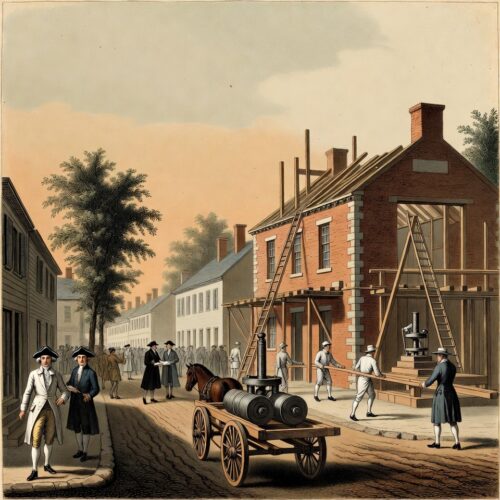 Yet the mint's creation paid dividends. By the early 1800s, U.S. coins circulated more reliably, reducing reliance on Europe. It weathered crises: the 1812 British burning of Washington (the mint survived), yellow fever epidemics that shut it down temporarily, and constant funding battles in Congress. Innovations followed—steam-powered presses in 1836, electric in the 20th century. The mint moved to new facilities in 1833, then 1901 (the current Philadelphia Mint). Today, it produces billions of coins yearly, from circulating quarters to proof gold eagles.
This event's significance? It wasn't flashy like battles or declarations, but it was foundational. The U.S. Mint symbolized economic independence. Before 1791, America was economically colonial—using everyone else's money. After, it minted its own fate, literally. This quiet act helped stabilize the young republic, enabled westward expansion (coins funded land purchases), and laid groundwork for the dollar's eventual global dominance.
Yet the mint's creation paid dividends. By the early 1800s, U.S. coins circulated more reliably, reducing reliance on Europe. It weathered crises: the 1812 British burning of Washington (the mint survived), yellow fever epidemics that shut it down temporarily, and constant funding battles in Congress. Innovations followed—steam-powered presses in 1836, electric in the 20th century. The mint moved to new facilities in 1833, then 1901 (the current Philadelphia Mint). Today, it produces billions of coins yearly, from circulating quarters to proof gold eagles.
This event's significance? It wasn't flashy like battles or declarations, but it was foundational. The U.S. Mint symbolized economic independence. Before 1791, America was economically colonial—using everyone else's money. After, it minted its own fate, literally. This quiet act helped stabilize the young republic, enabled westward expansion (coins funded land purchases), and laid groundwork for the dollar's eventual global dominance.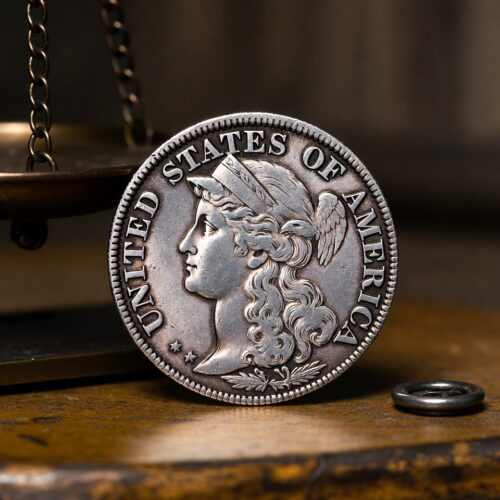 Humor in the hardship: Early mint workers dealt with impure bullion, broken dies, and theft attempts. One 1790s assayer quit because fumes from mercury amalgamation made him sick—literally poisoning himself for the dollar. Congress grumbled about costs; Hamilton defended it as investment. Picture lawmakers debating alloy ratios while farmers bartered with buttons. Absurd, but necessary.
Now, apply this dusty, button-clipping history to your life today. You're probably not trading coat buttons, but your personal "economy" is likely chaotic: borrowed motivation from podcasts, willpower shaved by notifications, habits debased by "just one more scroll." Distractions counterfeit your focus; inconsistent routines inflate procrastination. Like pre-1791 America, you're sovereign in name but dependent in practice—relying on external "foreign coins" of inspiration that fluctuate wildly.
The mint teaches: Build your own institutional framework. Don't chase viral hacks; forge a federal-level system for your behavior—consistent, durable, self-produced. This isn't "rise and grind" bro-motivation or 30-day challenges that fizzle. It's slow, deliberate minting: assay your raw material, construct one secure facility, strike proof coins in low volume, guard against counterfeiters (your own excuses), and audit the treasury regularly.
Humor in the hardship: Early mint workers dealt with impure bullion, broken dies, and theft attempts. One 1790s assayer quit because fumes from mercury amalgamation made him sick—literally poisoning himself for the dollar. Congress grumbled about costs; Hamilton defended it as investment. Picture lawmakers debating alloy ratios while farmers bartered with buttons. Absurd, but necessary.
Now, apply this dusty, button-clipping history to your life today. You're probably not trading coat buttons, but your personal "economy" is likely chaotic: borrowed motivation from podcasts, willpower shaved by notifications, habits debased by "just one more scroll." Distractions counterfeit your focus; inconsistent routines inflate procrastination. Like pre-1791 America, you're sovereign in name but dependent in practice—relying on external "foreign coins" of inspiration that fluctuate wildly.
The mint teaches: Build your own institutional framework. Don't chase viral hacks; forge a federal-level system for your behavior—consistent, durable, self-produced. This isn't "rise and grind" bro-motivation or 30-day challenges that fizzle. It's slow, deliberate minting: assay your raw material, construct one secure facility, strike proof coins in low volume, guard against counterfeiters (your own excuses), and audit the treasury regularly.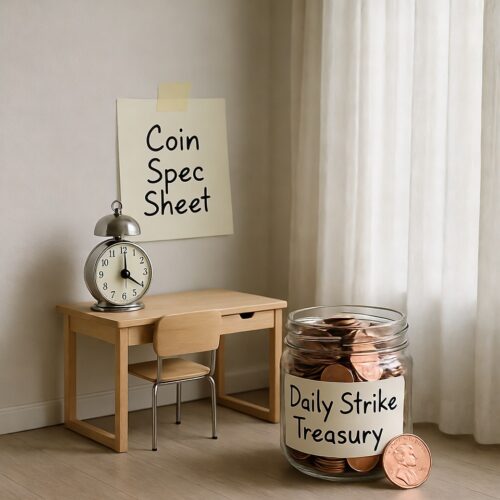 **Your 14-Day "Personal Mint" Forge – Button-Proof, Anti-Hustle Blueprint**
This plan expands the original 7 days into a fuller setup, mimicking the mint's multi-year ramp-up. Unique twists: physical tokens over apps, humor-infused barriers, alloy blending for reinforcement, and "emergency bullion" reserves for chaos.
- **Days 1-2: Raw Ore Assay – Weigh Your Chaos**
Get brutally honest. List every daily "currency" leak: phone time, junk food, doom-scrolling, skipped workouts. Use a literal scale—phone (grams + estimated yearly hours lost), coffee cup (caffeine dependency cost), etc. Assign "purity grades" to three core assets you want to mint: e.g., Mental Clarity (90+ min deep work daily), Physical Resilience (strength training + 8k steps), Relational Gold (one undistracted conversation). Define non-negotiable specs: Clarity = no phone in room, timer-locked; Resilience = progressive overload tracked in notebook. This is your Coinage Act—write it on cardstock, sign it like Washington.
- **Days 3-4: Mint Site Selection & Construction**
Designate ONE spot as "Federal Mint HQ." Not bed, not couch—a desk, garage shelf, or cleared table corner. Strip it bare except tools. Add a sign: "U.S. Personal Mint – Operations in Progress – Clipping Punished by Self." Stock it: mechanical kitchen timer (no screens), small metal jar ("Daily Strike Treasury"), pennies/washers as tokens, handwritten "Spec Sheet" taped up. Why physical? Tactile feedback beats digital dopamine. Funny ritual: On day 4, drop your "first strike" token (a 1791-style penny if you can find one) while saying, "No more button economics."
- **Days 5-7: Die Engraving & Proof Strikes**
Engrave "dies" (tools): 1) Spec Sheet with metrics. 2) Timer for exact intervals. 3) Token jar. Run low-volume proofs: one standard only per day (e.g., Day 5: 60-min Clarity block, token if hit). Fail? Note the "impurity" (e.g., "clipped by email") without guilt—early mints had misstrikes too. Celebrate tiny: verbal "Eagle struck!" No big rewards; intrinsic value only. By Day 7, combine two (Clarity + Resilience: work block then walk). Alloy test: Does one strengthen the other? Adjust ratios (shorten work if walk suffers).
**Your 14-Day "Personal Mint" Forge – Button-Proof, Anti-Hustle Blueprint**
This plan expands the original 7 days into a fuller setup, mimicking the mint's multi-year ramp-up. Unique twists: physical tokens over apps, humor-infused barriers, alloy blending for reinforcement, and "emergency bullion" reserves for chaos.
- **Days 1-2: Raw Ore Assay – Weigh Your Chaos**
Get brutally honest. List every daily "currency" leak: phone time, junk food, doom-scrolling, skipped workouts. Use a literal scale—phone (grams + estimated yearly hours lost), coffee cup (caffeine dependency cost), etc. Assign "purity grades" to three core assets you want to mint: e.g., Mental Clarity (90+ min deep work daily), Physical Resilience (strength training + 8k steps), Relational Gold (one undistracted conversation). Define non-negotiable specs: Clarity = no phone in room, timer-locked; Resilience = progressive overload tracked in notebook. This is your Coinage Act—write it on cardstock, sign it like Washington.
- **Days 3-4: Mint Site Selection & Construction**
Designate ONE spot as "Federal Mint HQ." Not bed, not couch—a desk, garage shelf, or cleared table corner. Strip it bare except tools. Add a sign: "U.S. Personal Mint – Operations in Progress – Clipping Punished by Self." Stock it: mechanical kitchen timer (no screens), small metal jar ("Daily Strike Treasury"), pennies/washers as tokens, handwritten "Spec Sheet" taped up. Why physical? Tactile feedback beats digital dopamine. Funny ritual: On day 4, drop your "first strike" token (a 1791-style penny if you can find one) while saying, "No more button economics."
- **Days 5-7: Die Engraving & Proof Strikes**
Engrave "dies" (tools): 1) Spec Sheet with metrics. 2) Timer for exact intervals. 3) Token jar. Run low-volume proofs: one standard only per day (e.g., Day 5: 60-min Clarity block, token if hit). Fail? Note the "impurity" (e.g., "clipped by email") without guilt—early mints had misstrikes too. Celebrate tiny: verbal "Eagle struck!" No big rewards; intrinsic value only. By Day 7, combine two (Clarity + Resilience: work block then walk). Alloy test: Does one strengthen the other? Adjust ratios (shorten work if walk suffers). - **Days 8-10: Alloy Hardening & Security Protocols**
Blend all three standards in sessions. Introduce "counterfeit detection": pre-session ritual—deep breath, read Spec Sheet aloud like a mint oath. Barriers: phone in Faraday pouch (or another room), door sign with joke fine ("$5 fine for interruptions—paid in tokens"). Identify personal clippers: inner voice saying "tomorrow," notifications, energy vampires. Treat them like 1790s counterfeiters—banish ruthlessly. Humor hack: Name your distractions (e.g., "Sir Doomscroll" gets exiled).
- **Days 11-13: Production Ramp-Up & Emergency Reserves**
Increase volume: full triple-standard days. Build "bullion reserve"—extra tokens for tough weeks (travel, illness). If chaos hits (like mint's yellow fever shutdowns), dip into reserve without breaking system. Track weekly output in notebook ledger. Add one "special issue" coin: e.g., "Kindness Dime" (daily generous act, token drop). This diversifies your treasury—resilience isn't just physical.
- **Day 14: Full Treasury Audit & Expansion Charter**
Count tokens. No fanfare—quiet acknowledgment: "Mint operational." Calculate "yield" (e.g., tokens vs. goals hit). Decide next "denomination" (new habit). Schedule monthly audits at mint spot. Long-term: jar becomes visual proof of sovereignty. When life throws inflation (stress, setbacks), your system endures because it's institutionalized.
The payoff? Months in, your internal economy stabilizes. No more clipping edges off your potential. You become like post-1791 America: sovereign, reliable, compounding value. Distractions lose power; consistency becomes default. Laugh at old chaos—"Remember when I used motivational YouTube as currency? Pathetic."
March 3, 1791, wasn't dramatic, but it changed everything quietly. Your personal mint can too. Strike the first coin today. The press is yours. No buttons required.
- **Days 8-10: Alloy Hardening & Security Protocols**
Blend all three standards in sessions. Introduce "counterfeit detection": pre-session ritual—deep breath, read Spec Sheet aloud like a mint oath. Barriers: phone in Faraday pouch (or another room), door sign with joke fine ("$5 fine for interruptions—paid in tokens"). Identify personal clippers: inner voice saying "tomorrow," notifications, energy vampires. Treat them like 1790s counterfeiters—banish ruthlessly. Humor hack: Name your distractions (e.g., "Sir Doomscroll" gets exiled).
- **Days 11-13: Production Ramp-Up & Emergency Reserves**
Increase volume: full triple-standard days. Build "bullion reserve"—extra tokens for tough weeks (travel, illness). If chaos hits (like mint's yellow fever shutdowns), dip into reserve without breaking system. Track weekly output in notebook ledger. Add one "special issue" coin: e.g., "Kindness Dime" (daily generous act, token drop). This diversifies your treasury—resilience isn't just physical.
- **Day 14: Full Treasury Audit & Expansion Charter**
Count tokens. No fanfare—quiet acknowledgment: "Mint operational." Calculate "yield" (e.g., tokens vs. goals hit). Decide next "denomination" (new habit). Schedule monthly audits at mint spot. Long-term: jar becomes visual proof of sovereignty. When life throws inflation (stress, setbacks), your system endures because it's institutionalized.
The payoff? Months in, your internal economy stabilizes. No more clipping edges off your potential. You become like post-1791 America: sovereign, reliable, compounding value. Distractions lose power; consistency becomes default. Laugh at old chaos—"Remember when I used motivational YouTube as currency? Pathetic."
March 3, 1791, wasn't dramatic, but it changed everything quietly. Your personal mint can too. Strike the first coin today. The press is yours. No buttons required.