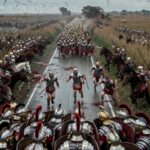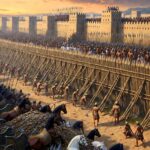

On April 15, 1450, in a muddy Norman field near the sleepy village of Formigny, something seismic cracked open the medieval world. No kings dueled in single combat. No legendary heroine waved a banner. Just a few small bronze tubes belching smoke and iron, a desperate English defensive line of longbowmen, and the thunderous arrival of Breton cavalry that turned a standoff into a slaughter. The Battle of Formigny wasn’t the flashiest clash of the Hundred Years’ War, but it was the one that proved the old ways were dead. English archers—who had terrorized France for generations with their yew bows and bodkin arrows—found themselves outmaneuvered, outgunned, and enveloped by a French force that had finally learned to fight smarter, not just harder. By nightfall, thousands of English lay dead or captured, Normandy was sliding irreversibly back into French hands, and the age of gunpowder had announced itself on a European battlefield like a drunk uncle crashing a wedding.This wasn’t some inevitable march of progress. It was the payoff of years of French grit, innovation under a once-mocked king, and a willingness to ditch tradition when the enemy refused to evolve. And here’s the delicious, motivational kicker for you reading this in 2026: that same cocktail of adaptation, timely reinforcements, and decisive envelopment can be your personal weapon against the “longbow habits” holding you back today—those comfy, proven routines that worked in 2015 but now leave you pinned down while the world marches past with better tools. Stick around for the history (because 90 percent of this story deserves the deep dive it rarely gets), and then we’ll hit you with a hyper-specific, military-flavored 7-day plan that no generic self-help guru online is peddling. No vision boards. No “rise and grind.” Just a Formigny-style tactical envelopment protocol that turns your life’s Normandy into liberated territory. Let’s rewind the clock properly. The Hundred Years’ War wasn’t really a hundred years of nonstop fighting—it was a dynastic brawl laced with plague, politics, and periodic truces that stretched from 1337 to 1453. By the 1440s, the English had been clinging to their continental toeholds in Normandy and Gascony like a landlord refusing to accept eviction papers. Henry V’s stunning victories at Agincourt in 1415 had made the English feel invincible; the longbow, that six-foot yew monster capable of punching through plate armor at 200 yards, was their signature terror weapon. English armies of yeoman archers could loose 10-12 arrows a minute, turning French charges into pincushions. But by 1429, the tide had turned. Joan of Arc’s improbable relief of Orléans and the subsequent French victories at Patay had injected a shot of nationalistic adrenaline into the Valois cause. Charles VII—the Dauphin who had once been dismissed as the “King of Bourges,” hiding in the south while his kingdom crumbled—began the slow, unglamorous work of state-building. Charles wasn’t flashy. He was shrewd. He centralized taxation, curbed the worst feudal excesses, and—most crucially—professionalized the army. No more ragtag feudal levies showing up whenever their lords felt like it. In 1445 he created the *compagnies d’ordonnance*, permanent companies of men-at-arms paid by the crown, drilled, and loyal. But the real game-changer was artillery. Enter the Bureau brothers: Jean Bureau, the master gunner born around 1390, and his sibling Gaspard. These guys weren’t noble knights; they were engineers and logisticians who treated cannons like a startup treats code. They standardized calibers, improved gunpowder mixes, cast lighter bronze culverins and serpentines that could be hauled on campaign rather than just parked outside castle walls for sieges. Under their direction, French gunners learned to mass fire, reposition quickly, and use smoke and noise as psychological weapons. By 1449, this new French army was ready to roll.
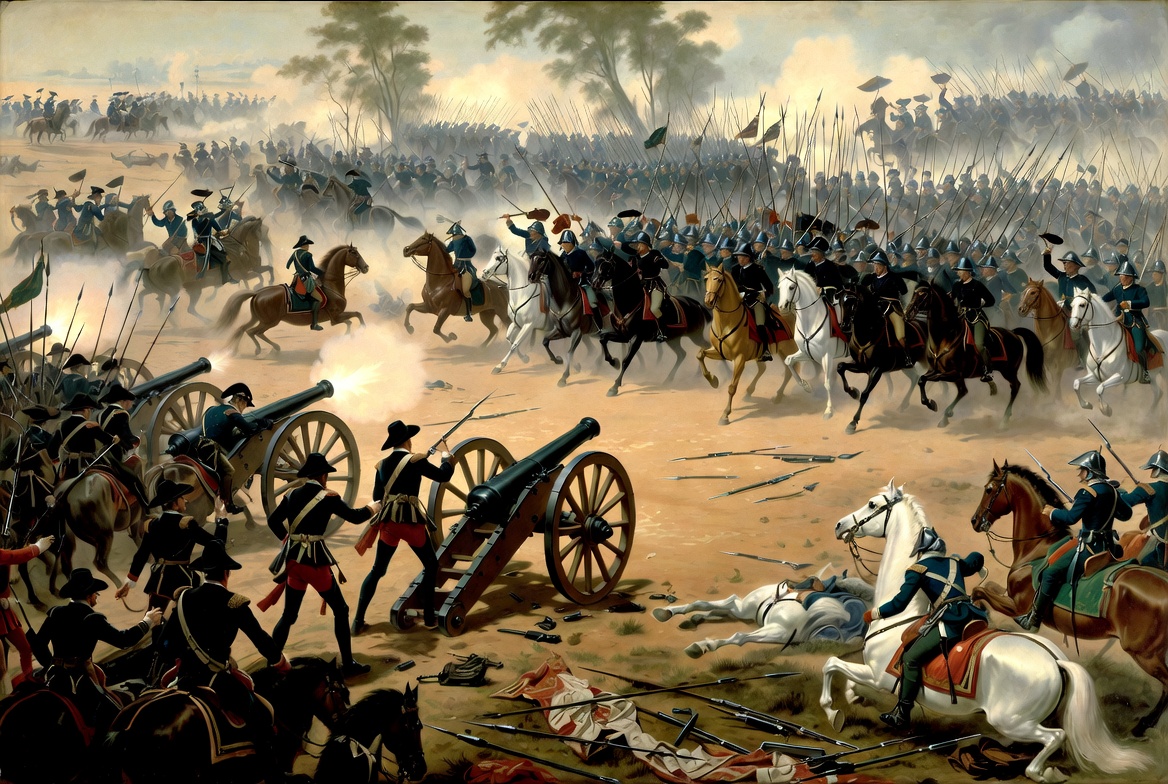
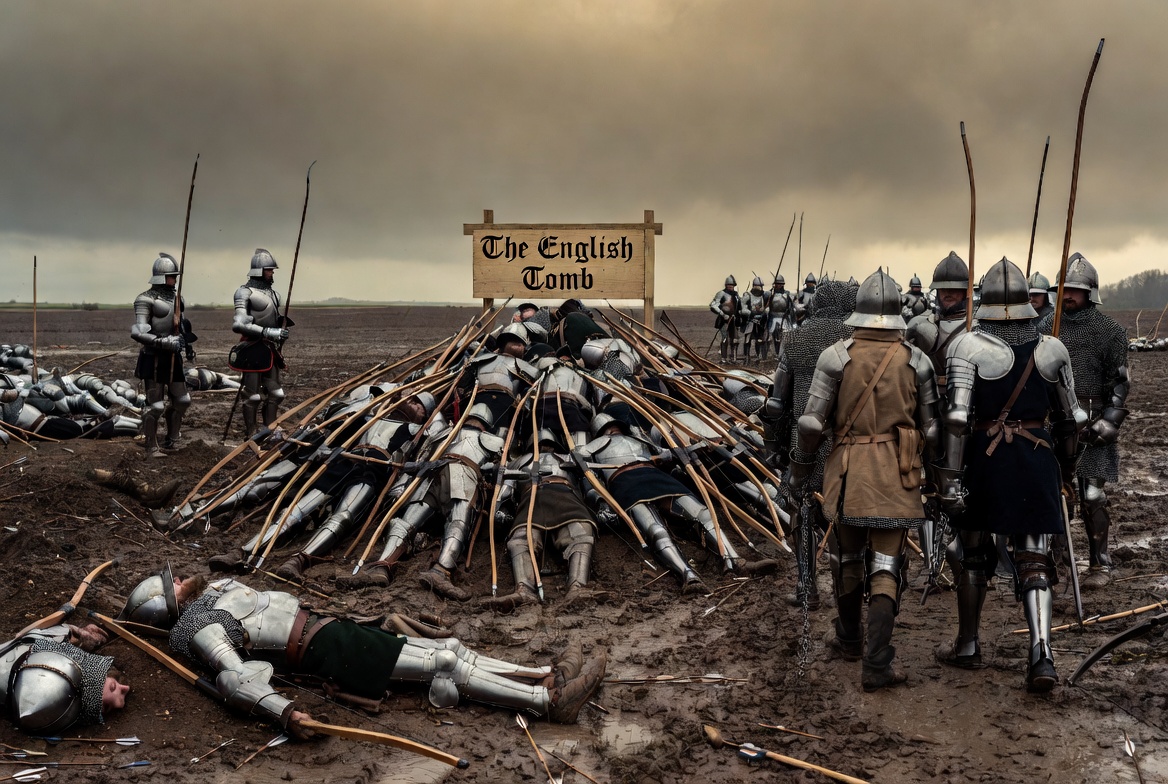
The English, meanwhile, were rotting from within. Henry VI was a pious, weak-willed king more interested in founding colleges than funding expeditions. Parliament balked at endless war taxes. Noble factions squabbled, foreshadowing the Wars of the Roses that would erupt in 1455. In Normandy, English garrisons were understrength, underpaid, and demoralized. When Charles VII’s forces launched their 1449 offensive, the results were swift and brutal. Rouen, the ducal capital, fell in October after a siege. Harfleur, Honfleur, Fresnoy—town after town surrendered or was stormed. By early 1450, only Caen and a few scattered strongholds remained. The English scraped together one last relief force in Portsmouth under Sir Thomas Kyriell, a competent but not brilliant knight from Kent. Kyriell landed at Cherbourg on March 15, 1450, with about 2,500 men. He was supposed to link up with local garrisons and march to relieve Caen, but money and morale were so low that his troops had lynched a royal pay official back in England just months earlier. Still, he pressed on, capturing Valognes after a short siege on March 27 and skirmishing his way southeast. By April 12, Kyriell had reached Carentan with roughly 4,000-4,300 men—mostly longbowmen, some men-at-arms, and a handful of cavalry. The French commander in the area, John II, Count of Clermont (later Duke of Bourbon), shadowed him with about 3,000 troops but wisely refused open battle until reinforcements could arrive. On April 14, Kyriell camped near Formigny, a small village straddling the Carentan-Bayeux road, with his back to a tributary of the River Aure and a makeshift ditch for protection. He had no time to plant the usual forest of anti-cavalry stakes that had served English archers so well at Crécy, Poitiers, and Agincourt. The next morning—April 15—Clermont attacked. The battle opened in classic fashion. Clermont dismounted his men-at-arms and sent them forward in two “battles” across the open ground. Kyriell’s archers, positioned in two main blocks behind the ditch, unleashed their signature hail of arrows. The French assaults were repulsed with heavy losses; English longbows still packed a punch at close range. Clermont tried cavalry probes on the flanks—same result. Stalemate. Then came the innovation that changed everything. French gunners wheeled forward a pair of culverins—light, mobile field pieces cast by the Bureau brothers’ teams. These weren’t the massive bombards used for siege walls; they were battlefield weapons, firing iron or stone shot with enough force to punch holes in formations from beyond effective bow range. The English, sensing an opportunity, charged out to capture the guns, momentarily exposing themselves. The cannons didn’t win the fight alone—their real value was psychological and tactical. The noise and smoke carried for miles, alerting the one man whose arrival would decide the day: Arthur de Richemont, Constable of France and claimant to the Duchy of Brittany. Richemont had been marching with 1,200 cavalry and 800 infantry from Saint-Lô. He arrived around 7 p.m., crossing the Aure south of the English position and slamming into their exposed flank like a mailed fist. Pierre de Brézé, one of Charles VII’s most trusted captains, was with him and helped coordinate the envelopment. Clermont renewed the frontal assault while Breton horsemen swept in from the side. The English line buckled. Kyriell tried to shift forces to meet the new threat, but it was too late. His army splintered into desperate knots of resistance. Longbowmen who had held firm for hours now found themselves hacked down in the open or trampled by cavalry. Sir Matthew Gough escaped with a tiny band toward Bayeux, but most did not. Contemporary accounts claim 3,744 English bodies were buried in a field later called “The English Tomb.” Modern estimates put English dead or captured at 2,500–4,000, with Kyriell himself taken prisoner. French and Breton losses were light—perhaps a few hundred at most.
The aftermath was merciless and swift. With the last major English field army in Normandy annihilated, Charles VII’s forces mopped up. Caen fell on June 12 after a short bombardment. Cherbourg surrendered on August 12. By late 1450, Normandy was French again. The war would drag on until 1453 and the final cannonade at Castillon—another Bureau brothers masterpiece that killed the legendary English commander John Talbot—but Formigny was the psychological and strategic death knell for English continental ambitions outside Calais. France emerged unified, centralized, and on the cusp of becoming a great power. England turned inward, fractured, and eventually lost everything but the memory of Agincourt. What makes Formigny so deliciously educational is the layered irony and the quiet revolution it represented. For over a century, the English had perfected a system—professional archers, defensive positions, disciplined firepower—that no one could match. Yet when the French stopped trying to copy it and instead invented a new paradigm (professional standing army + standardized mobile artillery + coordinated combined arms), the old supremacy evaporated in an afternoon. The longbow didn’t suddenly become useless; it was simply outranged, outmaneuvered, and psychologically outgunned by something louder, newer, and better supported. Richemont’s timely arrival wasn’t luck—it was the payoff of French diplomatic and logistical reforms that kept allied Breton forces marching on schedule. Kyriell’s men fought bravely with the tools they knew, but bravery without adaptation is just expensive nostalgia. Zoom out further and you see the human stories that make history addictive. Charles VII, once a timid prince hiding behind Joan of Arc’s charisma, had spent the 1430s and ’40s methodically rebuilding. The Bureau brothers weren’t romantic knights; they were the original tech bros of warfare, tinkering with powder ratios and carriage designs while nobles sneered. Richemont, a Breton duke with one eye on French service and one on regional autonomy, showed up anyway because the bigger cause demanded it. On the English side, the morale collapse—lynching pay clerks, half-hearted expeditions—mirrors every failing organization that clings to past glory while the bills pile up. Even the post-battle massacre of captured archers (some accounts say 500 were executed despite protests) reminds us that victory in the medieval world was rarely clean or chivalrous. This single day in 1450 didn’t just end a campaign; it accelerated the shift from feudal melee to early modern combined-arms warfare. Field artillery, once a siege curiosity, became a battlefield decider. Within decades, gunpowder would reshape every European conflict. France’s professional army model influenced military thinking for centuries. And England? It learned the hard way that resting on longbow laurels while your rival innovates is a recipe for strategic extinction. Now, fast-forward to your life in 2026. You’re probably not commanding archers at Formigny, but you’re almost certainly defending some personal “Normandy”—a career rut defended by outdated skills, a fitness plateau guarded by the same stale workout, a relationship or side hustle still relying on 2018 tactics while the world deploys AI, remote tools, and networked alliances. The outcome of Formigny screams one timeless truth: when the environment changes, the side that adapts fastest with new technology, better logistics, and decisive reinforcements wins. The English didn’t lose because they lacked courage; they lost because they lacked culverins and didn’t see the flanking cavalry coming. You don’t have to lose either.
Here’s exactly how that 1450 lesson pays off in your individual life today, delivered in razor-sharp bullet points: - **Upgrade from longbows to culverins in your toolkit**: Just as French gunners replaced massed arrow volleys with mobile cannons, audit one “proven” habit or skill you’ve defended for years and replace it with a higher-leverage alternative. Example: if your job still runs on endless email chains, deploy a simple automation tool or AI assistant to handle 70 percent of the grunt work—freeing you to think strategically like Clermont coordinating with Richemont. - **Position defensively but prepare for envelopment**: English archers held a strong line until flanked. Build your daily routines as a solid defensive ditch—consistent sleep, core habits—but always scan for flanking opportunities. That unexpected networking coffee could be your Breton cavalry. - **Signal reinforcements early**: Richemont didn’t appear by magic; French coordination made it happen. Identify one “ally” in your life (mentor, accountability partner, expert) and script a specific ask this week instead of hoping they magically show up when you’re pinned down. - **Embrace the noise of innovation**: The culverins’ smoke and roar alerted help and panicked the enemy. Your bold experiments—publicly sharing a new project, launching a micro-product, posting that vulnerable update—will create the psychological momentum that draws support and scatters old obstacles. - **Bury the dead archers quickly**: After Formigny, the French didn’t dwell on their initial repulses; they pressed the advantage. When a habit or project fails, conduct a 10-minute after-action review and move on—no endless post-mortems that turn into excuses. These aren’t fluffy affirmations. They’re tactical doctrine drawn straight from the battlefield. Now for the part no other self-help article online is offering: **The Formigny Envelopment Protocol**—a detailed, quick, 7-day action plan that turns the battle’s lessons into a military-style campaign against one specific area of stagnation in your life. It’s unique because it’s framed as a literal tactical operation: scout, position, innovate, reinforce, envelop, review. No vague “habits,” no 30-day challenges that fizzle. This is a one-week blitz you can run anytime, on any goal—career pivot, health overhaul, creative project—complete with quirky historical metaphors and measurable outputs. Execute it once and you’ll feel like you just watched the culverins roar in your own backyard. **Day 1: Scout the Terrain (Identify Your Normandy)** Map the exact “province” you’re defending with outdated longbows. Write down one specific stuck area (e.g., “my side hustle still relies on cold emails that get 2% response”). List three “longbow tactics” that used to work but no longer do. Burn 30 minutes max. Output: one-page terrain sketch. **Day 2: Dig the Ditch (Build Defensive Basics)** Reinforce your current position so it doesn’t collapse while you innovate. Set three non-negotiable micro-habits tied to the goal (e.g., 20-minute daily deep work block). Do it like Kyriell forming his line—solid but not permanent. Funny rule: if you skip, you owe yourself a “culverin fine” (donate $10 to a cause you hate).
**Day 3: Wheel Forward the Culverins (Acquire One New Weapon)** Research and deploy one disruptive tool or skill the French would approve of—Notion template, AI prompt library, 15-minute online tutorial on a relevant tech. Spend no more than 90 minutes learning and integrate it immediately into one task. Feel the psychological boom. **Day 4: Signal the Constable (Call Reinforcements)** Reach out to one specific ally with a scripted message modeled on Richemont’s march: “I’m at Formigny—here’s my position, here’s the exact help I need for 15 minutes this week.” Use email, DM, or call. No vague “let’s catch up.” Track the response. **Day 5: Launch the Flank Attack (Envelop One Obstacle)** Use your new culverin + reinforcement to hit the problem from an unexpected angle. Example: instead of more cold outreach, have your ally introduce you to one warm contact. Measure progress with a simple metric (emails sent vs. replies gained). Celebrate like the French hearing those cannon shots. **Day 6: Press the Advantage (Full Envelopment)** Combine everything into a decisive push. Spend 2–3 focused hours executing the new system on your goal. Document wins and friction points in a battlefield log. If resistance appears, remember: the English line held until the flank arrived—keep the pressure. **Day 7: Bury the Dead and Claim the Field (After-Action Review)** Review the week like a 15th-century chronicler. What worked? What got massacred? Adjust one thing and declare victory over that specific Normandy slice. Schedule the next 7-day run for the following week if momentum is high. Reward: something ridiculous and French-inspired (croissant run or good wine). Run this protocol and you won’t just “improve”—you’ll execute a coordinated envelopment that leaves old limitations dead on the field and your future marching toward Caen. The men at Formigny didn’t know they were witnessing the birth of modern warfare. You now know exactly how to weaponize that lesson. History doesn’t repeat, but it rhymes with cannon fire. On April 15, 1450, the French proved that innovation plus alliance plus relentless pressure beats tradition every time. Your life is no different. Load the culverins. Signal the reinforcements. Envelop the stagnation. The field is yours. Go make some thunder.
Share: