Picture this: it’s April 16, 1457 BC, and the dust of the Jezreel Valley is already thick enough to choke a chariot horse. A 30-something pharaoh named Thutmose III – fresh off years of playing second fiddle to his stepmom/aunt the formidable Hatshepsut – stands at the mouth of a narrow, winding ravine called Aruna. His generals are sweating bullets under their linen kilts. “My lord,” they plead, “the enemy expects us on the safe roads. This pass is so tight our chariots will go single-file like drunk donkeys in a market alley. One ambush and we’re finished.” Thutmose, eyes gleaming with that divine-kingship sparkle, basically tells them to hold his beer – or rather, his falcon-standard – and charges straight into the choke point anyway.
What happens next is the first battle in human history with a blow-by-blow, day-by-day account carved in stone so detailed it makes modern war correspondents look lazy. The Battle of Megiddo wasn’t just a skirmish; it was the military masterclass that launched Egypt’s greatest empire, introduced the world to recorded tactics, composite bows, body counts, and enough captured sheep to feed a small city for a year. And because it happened on today’s date – April 16 – we get to dust off the Karnak Temple annals, smell the horse sweat and bronze polish, and steal every lesson for our own lives. Ninety percent of what follows is pure, gritty ancient history. The last ten percent is the anti-self-help plan no guru has ever dared write because it involves pretending your to-do list is a Canaanite coalition and besieging it like a pharaoh on a deadline.
Let’s rewind. Thutmose III wasn’t born into easy mode. He inherited the throne as a kid around 1479 BC (dates wiggle a bit in the 18th Dynasty, but historians pin the Megiddo campaign to Year 23, first month, day 21 – our April 16). His father Thutmose II died young, leaving the boy-pharaoh under the regency of Hatshepsut, his father’s principal wife and thus his stepmother/aunt. Hatshepsut didn’t just babysit; she declared herself full pharaoh, grew a fake beard in statues, and ruled like a boss for over twenty years. Thutmose spent his teens and twenties training as a soldier, priest, and athlete while she built obelisks and traded with Punt. He wasn’t sidelined in some basement – Egyptian records show he commanded armies in minor campaigns and learned the arts of war, but the big throne stayed just out of reach.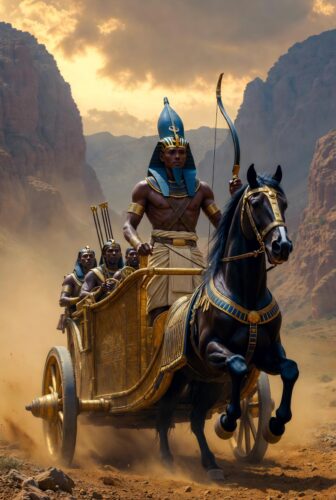 Then, around 1458 BC, Hatshepsut dies (or is politely removed from the historical record). Thutmose explodes onto the world stage like a coiled cobra. The Levant – that strip of Canaan, modern-day Israel, Lebanon, Syria – had been Egyptian vassal territory since his grandfather’s time, paying tribute in timber, gold, and loyalty. But vassals are like teenagers: as soon as Mom (Hatshepsut) is gone, they throw a party. The King of Kadesh, a slick operator up north near the Orontes River, smells weakness and stitches together a massive coalition of over 300 Canaanite city-states. Megiddo, perched on the edge of the Jezreel Valley astride the Via Maris trade route, becomes the rebel HQ. Control Megiddo and you control the highway between Egypt and the superpowers of Mitanni and the Hittites. The coalition fields maybe 10,000–15,000 warriors, 1,000 chariots, and enough attitude to make any pharaoh’s ka (soul) itch for revenge.
Thutmose III doesn’t blink. He assembles an army of 10,000–20,000 men at the border fortress of Tjaru (Sile), the last Egyptian outpost before Sinai. Chariots – the Bronze Age tanks – are the stars: lightweight, two-man vehicles with six-spoked wheels, pulled by two horses, crewed by a driver and an archer wielding the new composite bow. This bow, layered wood, horn, and sinew, could punch an arrow through bronze armor at 200 yards. Infantry carry axes, spears, shields, and khopesh sickle-swords that look like they could open a can of whoop-ass and then slice the lid into a necklace. Logistics? Donkeys haul grain, water skins, and tents. Scribes like Tjaneni ride along with papyrus and ink, because Thutmose wants every detail carved later in the Temple of Amun-Re at Karnak for eternity and tax purposes.
The march north is no Sunday drive. Ten days to Gaza (called “That Which the Ruler Seized”), one rest day, then eleven more to the town of Yehem south of the Carmel mountain range. Total: about 250 miles in three weeks – impressive for an army that size without trucks. At Yehem the scouts report: the enemy is camped at Megiddo, expecting the Egyptians on the two obvious routes around the mountains – north through Yokneam or south via Taanach. Both wide, safe, and slow. But there’s a third: the Aruna road, a narrow defile twisting through the hills like a badger’s intestine. Generals: “It’s suicide, my lord. We’ll stretch out single-file for miles. If they hit us in the middle, the head can’t help the tail.” Thutmose’s reply, preserved in the annals, drips with pharaonic swagger: “My majesty will proceed upon this Aruna road! Let him of you who wishes proceed upon these roads you speak of, and let him of you who wishes follow my majesty. For they – the enemy – will think, ‘Is His Majesty going upon another road? He fears us!’ Thus will they think.” Translation: I’m not just the king; I’m the surprise party they never saw coming.
Then, around 1458 BC, Hatshepsut dies (or is politely removed from the historical record). Thutmose explodes onto the world stage like a coiled cobra. The Levant – that strip of Canaan, modern-day Israel, Lebanon, Syria – had been Egyptian vassal territory since his grandfather’s time, paying tribute in timber, gold, and loyalty. But vassals are like teenagers: as soon as Mom (Hatshepsut) is gone, they throw a party. The King of Kadesh, a slick operator up north near the Orontes River, smells weakness and stitches together a massive coalition of over 300 Canaanite city-states. Megiddo, perched on the edge of the Jezreel Valley astride the Via Maris trade route, becomes the rebel HQ. Control Megiddo and you control the highway between Egypt and the superpowers of Mitanni and the Hittites. The coalition fields maybe 10,000–15,000 warriors, 1,000 chariots, and enough attitude to make any pharaoh’s ka (soul) itch for revenge.
Thutmose III doesn’t blink. He assembles an army of 10,000–20,000 men at the border fortress of Tjaru (Sile), the last Egyptian outpost before Sinai. Chariots – the Bronze Age tanks – are the stars: lightweight, two-man vehicles with six-spoked wheels, pulled by two horses, crewed by a driver and an archer wielding the new composite bow. This bow, layered wood, horn, and sinew, could punch an arrow through bronze armor at 200 yards. Infantry carry axes, spears, shields, and khopesh sickle-swords that look like they could open a can of whoop-ass and then slice the lid into a necklace. Logistics? Donkeys haul grain, water skins, and tents. Scribes like Tjaneni ride along with papyrus and ink, because Thutmose wants every detail carved later in the Temple of Amun-Re at Karnak for eternity and tax purposes.
The march north is no Sunday drive. Ten days to Gaza (called “That Which the Ruler Seized”), one rest day, then eleven more to the town of Yehem south of the Carmel mountain range. Total: about 250 miles in three weeks – impressive for an army that size without trucks. At Yehem the scouts report: the enemy is camped at Megiddo, expecting the Egyptians on the two obvious routes around the mountains – north through Yokneam or south via Taanach. Both wide, safe, and slow. But there’s a third: the Aruna road, a narrow defile twisting through the hills like a badger’s intestine. Generals: “It’s suicide, my lord. We’ll stretch out single-file for miles. If they hit us in the middle, the head can’t help the tail.” Thutmose’s reply, preserved in the annals, drips with pharaonic swagger: “My majesty will proceed upon this Aruna road! Let him of you who wishes proceed upon these roads you speak of, and let him of you who wishes follow my majesty. For they – the enemy – will think, ‘Is His Majesty going upon another road? He fears us!’ Thus will they think.” Translation: I’m not just the king; I’m the surprise party they never saw coming.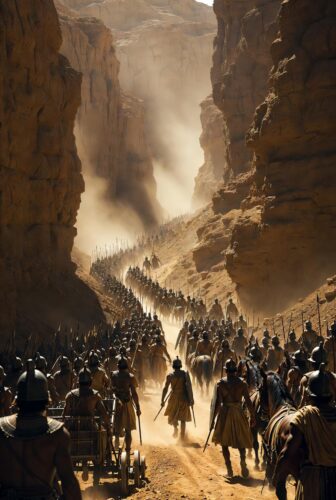 The army votes with their sandals and follows. Thutmose leads personally, light infantry and mounted bowmen clearing the way. The pass is so tight soldiers have to lead horses, chariots disassembled and carried, men single-file. Imagine 10,000 guys muttering “this had better be worth it” while rocks clatter and the sun bakes the limestone walls. They emerge unscathed into the Jezreel Valley north of the enemy camp. The coalition, focused on the other roads, is caught flat-footed. Thutmose sets up camp and lets the men rest – smart generalship, no exhausted troops into battle.
Dawn, April 16. The Egyptians form up in a concave crescent: left wing, center (Thutmose himself in his golden chariot, wearing the blue khepresh war crown), right wing. The pharaoh charges the enemy’s southern (left) flank like a falcon diving on a hare. Composite bows sing. Arrows darken the sky. Chariots thunder. The Canaanites break. Panic spreads faster than a rumor in a harem. The coalition routs toward Megiddo’s gates, kings and nobles scrambling up the walls using ropes made of their own clothing. Egyptian troops, instead of pursuing, stop to loot the abandoned camp – classic ancient brain-fart. They grab gold, weapons, 924 chariots, 200 suits of mail armor, 502 bows, 2,041 mares, 191 foals, six stallions, 1,929 cattle, 22,500 sheep, and the King of Megiddo’s own tent poles, armor, and chariot. The annals list it all like a Bronze Age Amazon receipt. But the city gates slam shut. The kings of Kadesh and Megiddo are hauled up the walls like sacks of grain.
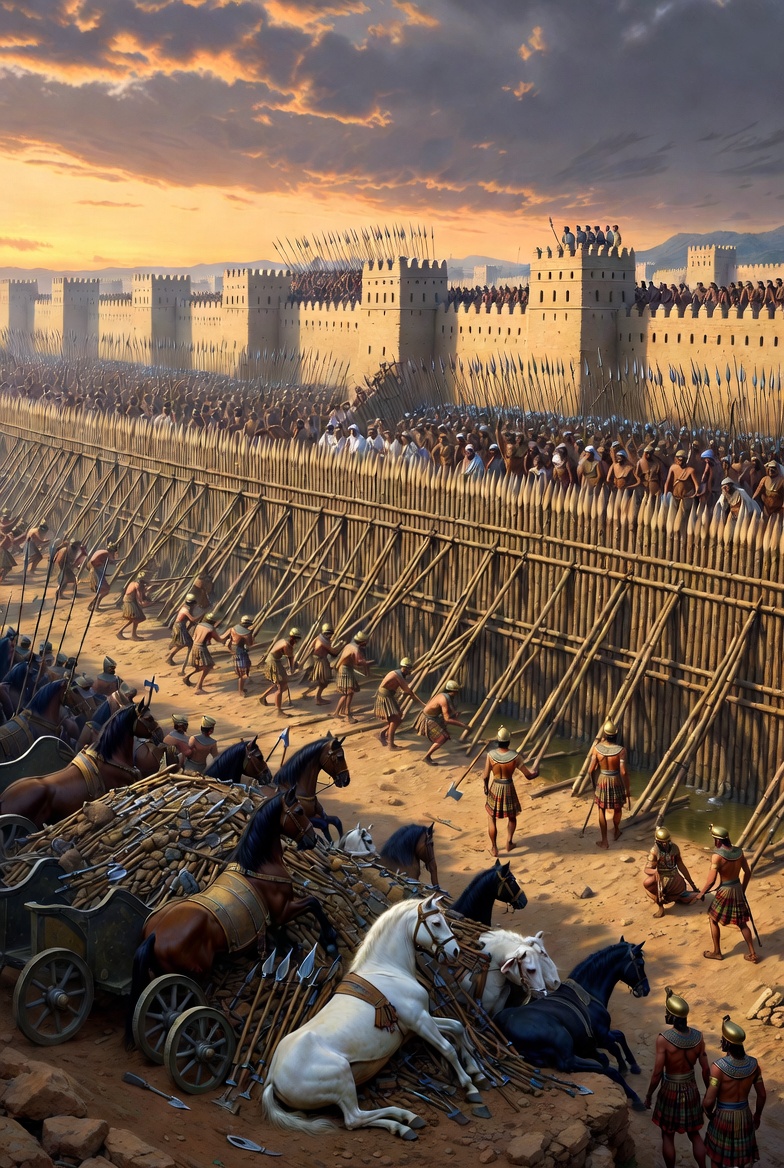
Thutmose isn’t amused. He orders a wooden palisade and moat thrown around the city. Seven long months of siege. No dramatic assaults – just patient strangulation. The annals say the people of Megiddo “were starving and came out to beg bread.” Finally, surrender. Thutmose spares the civilians (good PR), but the loot flows south: 340 prisoners of note, plus the sons of the defeated kings shipped to Egypt for re-education in the palace school. Those kids grow up Egyptianized and return as loyal puppet rulers. Brilliant long-game move.
The army votes with their sandals and follows. Thutmose leads personally, light infantry and mounted bowmen clearing the way. The pass is so tight soldiers have to lead horses, chariots disassembled and carried, men single-file. Imagine 10,000 guys muttering “this had better be worth it” while rocks clatter and the sun bakes the limestone walls. They emerge unscathed into the Jezreel Valley north of the enemy camp. The coalition, focused on the other roads, is caught flat-footed. Thutmose sets up camp and lets the men rest – smart generalship, no exhausted troops into battle.
Dawn, April 16. The Egyptians form up in a concave crescent: left wing, center (Thutmose himself in his golden chariot, wearing the blue khepresh war crown), right wing. The pharaoh charges the enemy’s southern (left) flank like a falcon diving on a hare. Composite bows sing. Arrows darken the sky. Chariots thunder. The Canaanites break. Panic spreads faster than a rumor in a harem. The coalition routs toward Megiddo’s gates, kings and nobles scrambling up the walls using ropes made of their own clothing. Egyptian troops, instead of pursuing, stop to loot the abandoned camp – classic ancient brain-fart. They grab gold, weapons, 924 chariots, 200 suits of mail armor, 502 bows, 2,041 mares, 191 foals, six stallions, 1,929 cattle, 22,500 sheep, and the King of Megiddo’s own tent poles, armor, and chariot. The annals list it all like a Bronze Age Amazon receipt. But the city gates slam shut. The kings of Kadesh and Megiddo are hauled up the walls like sacks of grain.
Thutmose isn’t amused. He orders a wooden palisade and moat thrown around the city. Seven long months of siege. No dramatic assaults – just patient strangulation. The annals say the people of Megiddo “were starving and came out to beg bread.” Finally, surrender. Thutmose spares the civilians (good PR), but the loot flows south: 340 prisoners of note, plus the sons of the defeated kings shipped to Egypt for re-education in the palace school. Those kids grow up Egyptianized and return as loyal puppet rulers. Brilliant long-game move.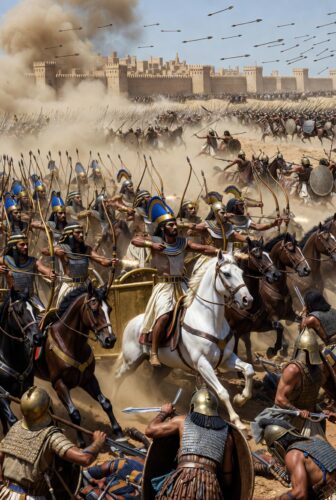 The victory ripples. Thutmose spends the next 20 years on 14 more campaigns, turning the Levant into an Egyptian protectorate. Tribute pours in: lapis lazuli from Afghanistan, timber from Lebanon, gold from Nubia. Foreign kings send gifts – even the Mitanni and Hittites start sending “diplomatic” presents instead of armies. Egypt becomes the first true empire with international clout, cultural exchange, and a standing army that scares the Bronze Age world straight. Megiddo itself becomes legendary; its Hebrew name “Armageddon” later inspires apocalyptic imagery because this was the place where empires clashed for control of the world’s oldest highway.
Archaeologically, Megiddo (Tel Megiddo in Israel) has been excavated for over a century. Layers upon layers show the battle’s aftermath: Egyptian-style fortifications, scarabs of Thutmose, horse stables, and trade goods from across the known world. The Karnak annals – 200+ feet of hieroglyphs – remain the gold standard for military historiography. No other ancient battle before this has a daily journal, casualty estimates (Egyptians claim light losses; enemy heavy), and itemized booty. Thutmose wasn’t just a conqueror; he was the first documented war nerd who made sure history would remember exactly how he did it.
Fast-forward 3,500 years. Why should a random Tuesday in 2026 care about a guy in a nemes headdress who died before the invention of pants? Because the core outcome of Megiddo wasn’t just territory – it was proof that one calculated, audacious risk taken against unanimous “safe” advice can shatter a coalition of problems and build an empire that lasts centuries. Thutmose ignored the conventional routes, endured the uncomfortable squeeze of Aruna, struck with overwhelming focused force, then patiently sieged the remnants until surrender. That sequence turned a rebellious backwater into the engine of Egyptian greatness.
Here’s exactly how that ancient victory hands you a cheat code for modern life – no crystals, no 75 Hard challenges, no “manifest your destiny” vision boards that gather dust next to your unused Peloton.
**Specific Bullet-Point Benefits You Steal Today:**
The victory ripples. Thutmose spends the next 20 years on 14 more campaigns, turning the Levant into an Egyptian protectorate. Tribute pours in: lapis lazuli from Afghanistan, timber from Lebanon, gold from Nubia. Foreign kings send gifts – even the Mitanni and Hittites start sending “diplomatic” presents instead of armies. Egypt becomes the first true empire with international clout, cultural exchange, and a standing army that scares the Bronze Age world straight. Megiddo itself becomes legendary; its Hebrew name “Armageddon” later inspires apocalyptic imagery because this was the place where empires clashed for control of the world’s oldest highway.
Archaeologically, Megiddo (Tel Megiddo in Israel) has been excavated for over a century. Layers upon layers show the battle’s aftermath: Egyptian-style fortifications, scarabs of Thutmose, horse stables, and trade goods from across the known world. The Karnak annals – 200+ feet of hieroglyphs – remain the gold standard for military historiography. No other ancient battle before this has a daily journal, casualty estimates (Egyptians claim light losses; enemy heavy), and itemized booty. Thutmose wasn’t just a conqueror; he was the first documented war nerd who made sure history would remember exactly how he did it.
Fast-forward 3,500 years. Why should a random Tuesday in 2026 care about a guy in a nemes headdress who died before the invention of pants? Because the core outcome of Megiddo wasn’t just territory – it was proof that one calculated, audacious risk taken against unanimous “safe” advice can shatter a coalition of problems and build an empire that lasts centuries. Thutmose ignored the conventional routes, endured the uncomfortable squeeze of Aruna, struck with overwhelming focused force, then patiently sieged the remnants until surrender. That sequence turned a rebellious backwater into the engine of Egyptian greatness.
Here’s exactly how that ancient victory hands you a cheat code for modern life – no crystals, no 75 Hard challenges, no “manifest your destiny” vision boards that gather dust next to your unused Peloton.
**Specific Bullet-Point Benefits You Steal Today:**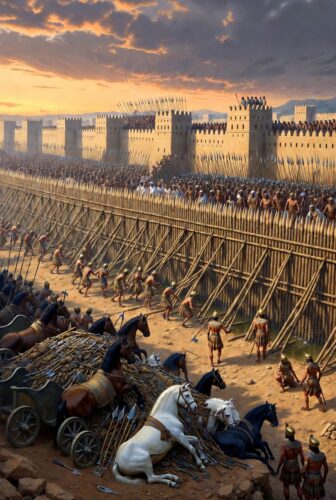 - **You stop defaulting to the wide, safe roads everyone else takes.** In your career, that means ditching the 200 LinkedIn applications and instead sending one handwritten note (or modern equivalent) directly to the decision-maker who can open the door no algorithm touches. The Aruna Pass is uncomfortable and lonely – that’s why it works.
- **You learn to lead from the front even when your own “generals” (doubt, family, coworkers) scream caution.** Thutmose rode point through the ravine. You stop waiting for perfect conditions or consensus before launching that side hustle, asking for the raise, or having the hard conversation. Boldness is contagious; hesitation multiplies.
- **You document your campaigns like Tjaneni the scribe.** Every small win, every captured “sheep” (metric, habit streak, revenue dollar) gets inscribed in your personal annals – a simple evening note app or notebook. Over months it becomes undeniable proof you’re building an empire, not just surviving.
- **You turn sieges into strategy instead of frustration.** Most people quit when the city gates slam shut (project stalls, weight loss plateaus, relationship friction). Thutmose built the wall and waited seven months. You build daily systems – micro-habits, accountability loops – that starve resistance until surrender feels inevitable.
- **You educate the “sons of the defeated.”** After victory, Thutmose took enemy heirs and turned them into allies. In life: after you crush a bad habit or toxic dynamic, you repurpose the energy – the late-night scrolling time becomes reading, the anger becomes fuel for creation. Nothing wasted.
- **You start thinking in empire time.** One battle doesn’t make an empire. Thutmose followed Megiddo with 13 more campaigns. Your one bold Aruna move today becomes the first of a lifetime series that compounds into the version of you that looks back and says, “I built that.”
Now the part no other self-help article has ever written: the **Aruna Assault Protocol** – a dead-simple, seven-day ritual (one day per month of the siege, nod to ancient efficiency) that is weirdly specific, hilariously pharaonic, and nothing like the generic “journal and meditate” noise online. It’s designed to be done once, then repeated quarterly like a military campaign season. You don’t need apps, retreats, or $97 masterclasses. Just paper, a pen, and the willingness to feel ridiculous for seven days straight.
- **You stop defaulting to the wide, safe roads everyone else takes.** In your career, that means ditching the 200 LinkedIn applications and instead sending one handwritten note (or modern equivalent) directly to the decision-maker who can open the door no algorithm touches. The Aruna Pass is uncomfortable and lonely – that’s why it works.
- **You learn to lead from the front even when your own “generals” (doubt, family, coworkers) scream caution.** Thutmose rode point through the ravine. You stop waiting for perfect conditions or consensus before launching that side hustle, asking for the raise, or having the hard conversation. Boldness is contagious; hesitation multiplies.
- **You document your campaigns like Tjaneni the scribe.** Every small win, every captured “sheep” (metric, habit streak, revenue dollar) gets inscribed in your personal annals – a simple evening note app or notebook. Over months it becomes undeniable proof you’re building an empire, not just surviving.
- **You turn sieges into strategy instead of frustration.** Most people quit when the city gates slam shut (project stalls, weight loss plateaus, relationship friction). Thutmose built the wall and waited seven months. You build daily systems – micro-habits, accountability loops – that starve resistance until surrender feels inevitable.
- **You educate the “sons of the defeated.”** After victory, Thutmose took enemy heirs and turned them into allies. In life: after you crush a bad habit or toxic dynamic, you repurpose the energy – the late-night scrolling time becomes reading, the anger becomes fuel for creation. Nothing wasted.
- **You start thinking in empire time.** One battle doesn’t make an empire. Thutmose followed Megiddo with 13 more campaigns. Your one bold Aruna move today becomes the first of a lifetime series that compounds into the version of you that looks back and says, “I built that.”
Now the part no other self-help article has ever written: the **Aruna Assault Protocol** – a dead-simple, seven-day ritual (one day per month of the siege, nod to ancient efficiency) that is weirdly specific, hilariously pharaonic, and nothing like the generic “journal and meditate” noise online. It’s designed to be done once, then repeated quarterly like a military campaign season. You don’t need apps, retreats, or $97 masterclasses. Just paper, a pen, and the willingness to feel ridiculous for seven days straight. **Day 1 – The Council of War (Scout the Terrain):** Write down your current “Megiddo” – the one big goal or problem coalition staring you down (debt mountain, stalled career, health fortress). List the three “roads” everyone recommends: the safe, slow, obvious ones. Then invent the Aruna Pass – the narrow, scary, direct route no one (including your inner generals) wants to take. Example: instead of “network more,” the Aruna is “cold-DM the exact three people who can change everything and offer them something valuable first.”
**Day 2 – The March Through Aruna (Execute the Uncomfortable):** Do the first scary action on that narrow path. No half-measures. Post the risky content, make the call, delete the app, sign the contract. Feel the single-file squeeze. Write the exact physical sensations in your annals like Tjaneni would: “Heart rate: chariot gallop. Sweat: Nile flood. Regret level: zero after 30 seconds of motion.”
**Day 3 – The Concave Formation Charge (Focused Strike):** Attack the weakest flank of your problem with everything you’ve got for one focused hour. If it’s fitness, destroy a workout that targets the lagging muscle. If business, make the sales calls no one else will. Celebrate with an itemized “booty list” – three specific things you captured today.
**Day 4 – The Looting Pause (Harvest the Low-Hanging Wins):** Deliberately stop and catalog every tiny victory from the first three days. Count them like sheep and cattle. This prevents the ancient mistake of getting distracted by shiny loot while the enemy regroups.
**Day 5 – Build the Palisade (Fortify the Siege):** Create one unbreakable daily system that walls off your Megiddo. Could be “no email before 9 a.m.,” “one page written before coffee,” or “walk 10k steps or the pharaoh gets angry.” Make it wooden-and-moat simple – nothing fancy.
**Day 6 – Educate the Hostages (Repurpose the Past):** Take one piece of your old defeated self – a limiting belief, a bad habit trigger, an old failure story – and rewrite it as a lesson that now works *for* you. Turn “I always quit” into “I’m the guy who once charged Aruna and now sieges like a pro.”
**Day 7 – Inscribe the Annals at Karnak (Legacy Ritual):** Write a one-page “Karnak Report” as if you’re Thutmose boasting to Amun-Re. Detail the campaign, the booty, the lessons. Read it aloud (yes, really – the ancient Egyptians loved dramatic recitation). Then schedule the next quarterly campaign date in your calendar like a pharaoh declaring the next regnal year.
Do this once and you’ll feel the shift: problems stop feeling like endless mountains and start feeling like cities whose gates you already know how to crack. Repeat it every three months and you’re not just managing life – you’re carving your own empire into the stone of time, one audacious, narrow-pass day at a time.
Thutmose III died around 1425 BC after 54 years on the throne, buried in the Valley of the Kings with more conquests than any pharaoh before or after. His mummy, found in 1881, still looks like a man who knew exactly what he was doing. On April 16 every year the sun rises over the same Jezreel Valley where chariots once thundered. The lesson hasn’t changed: the safe roads are crowded for a reason. The narrow path is empty because it requires a pharaoh’s nerve.
You don’t need a divine bloodline or a composite bow. You just need to decide, right now, on today’s date, that your personal Megiddo doesn’t get to stand forever. Grab the reins, ignore the generals, charge the Aruna Pass, and start building the empire that future-you will one day read about in your own carved annals.
The valley is waiting. What’s your first narrow road?
**Day 1 – The Council of War (Scout the Terrain):** Write down your current “Megiddo” – the one big goal or problem coalition staring you down (debt mountain, stalled career, health fortress). List the three “roads” everyone recommends: the safe, slow, obvious ones. Then invent the Aruna Pass – the narrow, scary, direct route no one (including your inner generals) wants to take. Example: instead of “network more,” the Aruna is “cold-DM the exact three people who can change everything and offer them something valuable first.”
**Day 2 – The March Through Aruna (Execute the Uncomfortable):** Do the first scary action on that narrow path. No half-measures. Post the risky content, make the call, delete the app, sign the contract. Feel the single-file squeeze. Write the exact physical sensations in your annals like Tjaneni would: “Heart rate: chariot gallop. Sweat: Nile flood. Regret level: zero after 30 seconds of motion.”
**Day 3 – The Concave Formation Charge (Focused Strike):** Attack the weakest flank of your problem with everything you’ve got for one focused hour. If it’s fitness, destroy a workout that targets the lagging muscle. If business, make the sales calls no one else will. Celebrate with an itemized “booty list” – three specific things you captured today.
**Day 4 – The Looting Pause (Harvest the Low-Hanging Wins):** Deliberately stop and catalog every tiny victory from the first three days. Count them like sheep and cattle. This prevents the ancient mistake of getting distracted by shiny loot while the enemy regroups.
**Day 5 – Build the Palisade (Fortify the Siege):** Create one unbreakable daily system that walls off your Megiddo. Could be “no email before 9 a.m.,” “one page written before coffee,” or “walk 10k steps or the pharaoh gets angry.” Make it wooden-and-moat simple – nothing fancy.
**Day 6 – Educate the Hostages (Repurpose the Past):** Take one piece of your old defeated self – a limiting belief, a bad habit trigger, an old failure story – and rewrite it as a lesson that now works *for* you. Turn “I always quit” into “I’m the guy who once charged Aruna and now sieges like a pro.”
**Day 7 – Inscribe the Annals at Karnak (Legacy Ritual):** Write a one-page “Karnak Report” as if you’re Thutmose boasting to Amun-Re. Detail the campaign, the booty, the lessons. Read it aloud (yes, really – the ancient Egyptians loved dramatic recitation). Then schedule the next quarterly campaign date in your calendar like a pharaoh declaring the next regnal year.
Do this once and you’ll feel the shift: problems stop feeling like endless mountains and start feeling like cities whose gates you already know how to crack. Repeat it every three months and you’re not just managing life – you’re carving your own empire into the stone of time, one audacious, narrow-pass day at a time.
Thutmose III died around 1425 BC after 54 years on the throne, buried in the Valley of the Kings with more conquests than any pharaoh before or after. His mummy, found in 1881, still looks like a man who knew exactly what he was doing. On April 16 every year the sun rises over the same Jezreel Valley where chariots once thundered. The lesson hasn’t changed: the safe roads are crowded for a reason. The narrow path is empty because it requires a pharaoh’s nerve.
You don’t need a divine bloodline or a composite bow. You just need to decide, right now, on today’s date, that your personal Megiddo doesn’t get to stand forever. Grab the reins, ignore the generals, charge the Aruna Pass, and start building the empire that future-you will one day read about in your own carved annals.
The valley is waiting. What’s your first narrow road?