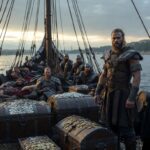

Picture the Seine River in late March 845, swollen with spring melt, its banks lined with sleepy Frankish villages still recovering from winter. The air carries the faint scent of woodsmoke from hearth fires and the distant lowing of cattle. Then, slicing through the mist like knives through silk, comes the rhythmic creak of oars and the low hum of hundreds of voices chanting in Old Norse. One hundred and twenty longships, sleek dragon-prowed vessels packed with over five thousand battle-hardened Danish warriors under the command of a chieftain named Reginherus—possibly the very same Ragnar Lodbrok of later saga legend—glide upstream. This isn't a polite visit. This is the moment a bold, opportunistic strike exposes the soft underbelly of one of Europe's mightiest realms, and it all kicks off right around March 28, 845. What follows is a masterclass in medieval audacity, cultural clash, and the brutal economics of power that reshaped the Viking Age and the Carolingian world forever.To understand why this raid hit like a thunderbolt from Thor himself, we have to rewind the tape on the crumbling Carolingian Empire. Charlemagne, the legendary unifier who had forged a vast domain stretching from the Pyrenees to the Elbe through sheer military genius and administrative savvy, died in 814. His son Louis the Pious inherited the throne and spent his reign desperately trying to hold the whole thing together while juggling three ambitious sons and a restless nobility. Civil wars erupted—bitter, bloody family feuds that tore the empire apart like wolves on a carcass. By 843, the Treaty of Verdun sliced the empire into three chunks: Lothair got the middle strip (Middle Francia), Louis the German claimed the east, and Charles the Bald—yes, that's his actual historical nickname, earned either from a literal receding hairline or the stress of constant crises—took West Francia, roughly modern France west of the Rhine. Charles was no weakling; he was a shrewd politician and warrior in his own right, grandson of the great Charles the Hammer who had stopped the Muslims at Tours over a century earlier. But his kingdom was fractured: rebellious counts, Viking-friendly local lords chasing silver, and an army that was smaller and less coordinated than the old imperial legions. The Franks were still reeling from earlier hit-and-run Viking probes that had started as early as 799 but exploded in the 830s and 840s. Vikings—mostly Danes from Jutland and the islands—weren't mindless barbarians in horned helmets (that trope came later). They were master shipbuilders, traders, and raiders who had honed their craft in the fjords and Baltic. Their longships were engineering marvels: shallow-draft vessels, often 60-80 feet long, with flexible keels that let them skim rivers like the Seine without grounding, oars for speed in calm waters, and sails for open sea. Crewed by 40-50 warriors each, these ships carried not just fighters but supplies, loot sacks, and even livestock for sustained campaigns. The men were a mix of farmers, merchants, and professional warriors seeking glory, land, and especially silver— "red gold" as they called it—to buy status back home or fund bigger ventures. Raids weren't random; they were calculated responses to Frankish weakness. Internal Scandinavian power struggles pushed chieftains like Reginherus outward, and news of Carolingian infighting traveled fast via traders and spies. Reginherus himself had history with Charles. Around 841, the Frankish king had granted him land in Turholt (in Flanders) as a bribe to keep the peace or perhaps co-opt him. But the deal soured—Reginherus lost the territory and the king's favor, breeding resentment. Revenge, profit, and opportunity converged in 845. His fleet—120 ships strong, carrying at least 5,000 men—slipped into the mouth of the Seine earlier in March. They didn't dawdle. They struck Rouen hard on the way upriver, plundering the rich port town and sending shockwaves downstream. Word reached Charles in Paris (then a modest settlement centered on the fortified Île de la Cité, the island in the Seine that would one day become the heart of a great city but was still more monastery and market than metropolis). Determined to shield the royal Abbey of Saint-Denis—laden with treasures and symbolic of royal prestige—Charles scrambled an army. But here's where Frankish disorganization bit them: he split his forces into two smaller contingents, one on each bank of the river. Divide and conquer? More like divide and get conquered.
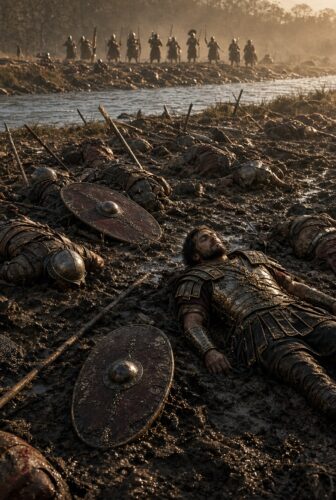
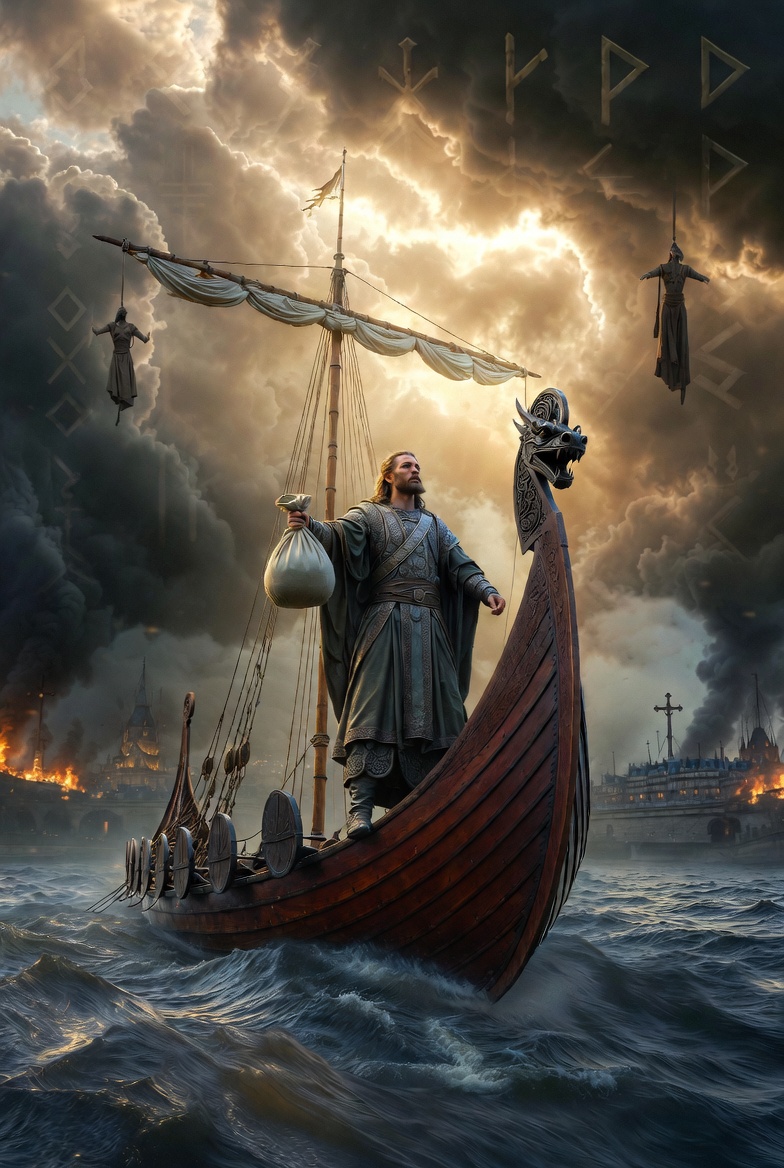
The Vikings, unified and mobile, exploited the mistake with ruthless efficiency. They slammed into one of the Frankish divisions, routed it in a sharp engagement, and took 111 prisoners. To maximize terror and honor their gods, they hauled the captives to an island in the Seine and hanged them in a grim display dedicated to Odin—the Allfather who himself hung from the world tree for wisdom. The psychological blow landed. The surviving Franks on the other bank watched in horror, morale shattered. No heroic stand, no unified front—just panic and retreat. The Viking fleet pressed on, oars dipping in perfect rhythm, shields gleaming along the gunwales. They arrived at the outskirts of Paris right around March 28-29, with Easter Sunday (March 29) marking their triumphant entry. The city wasn't a sprawling metropolis yet; its heart was the island citadel, protected by old Roman walls but lightly garrisoned against this scale of threat. Inhabitants had fled or barricaded themselves, leaving churches, monasteries, and markets ripe for plunder. The Vikings poured in, looting silver chalices, gold reliquaries, fine linens, spices, and whatever else glittered. Paris fell without a prolonged siege—more a swift occupation than a drawn-out battle. But the gods, or fate, threw a curveball: a plague erupted in the Viking camp. Imagine the scene—warriors coughing, fevered, tents stinking of sickness amid the spoils. These pagan Danes first turned to their own deities, sacrificing and praying to Thor or Odin for relief. No dice. Then, a Christian prisoner among them—perhaps a captured monk or local—offered advice drawn from his faith: try fasting and appealing to the Christian God instead. Desperate, the Vikings gave it a shot. The plague subsided. Chroniclers later spun this as divine intervention, with some Vikings attributing survivors' deaths to the wrath of Saint Germain of Paris after they had desecrated his abbey. Reginherus himself, according to later tales, supposedly collapsed in tears back home boasting of the raid's ease but crediting the "long-deceased saint" for the only real resistance. Cultural mash-up at its finest: Norse pragmatism meets Frankish piety in the middle of a loot-fest.
Charles the Bald, facing revolts at home, noble grumbling, and the reality that his split army couldn't dislodge the invaders without risking total collapse, chose the pragmatic out. He negotiated. After a short standoff, he paid up: a staggering ransom of 7,000 livres (French pounds) of gold and silver—roughly 2,570 kilograms, or over 5,670 pounds. That's a king's ransom literally, equivalent to a massive drain on the treasury, paid in coin, plate, and bullion hauled from royal vaults, abbeys, and taxes squeezed from an already strained populace. To put it in perspective, this was the first major "Danegeld"—the tribute payments that would become a recurring Frankish headache, happening thirteen times in total over the decades. Some historians see the payment as partial compensation for Reginherus's lost land grant years earlier; others as pure extortion. Either way, it worked. The Vikings loaded their ships with the haul and withdrew down the Seine. But they weren't done playing. On the return voyage, they pillaged more sites, including the wealthy Abbey of Saint Bertin, squeezing extra value from the chaos. The immediate aftermath rippled outward. In East Francia, the sack of Hamburg that same year by other Vikings prompted Louis the German to dispatch Count Cobbo to Danish King Horik I with demands for submission, reparations, and an end to raids. Horik, dealing with his own internal rivals like Olof of Sweden, played along—promising peace, embassies, gifts, and the return of captives and treasure. Back in Denmark, Reginherus's men returned flush with silver. Some chroniclers claim Horik, spooked by tales of the saint's power, even executed a few survivors and freed Christian prisoners. Christian missionaries like Ansgar found warmer receptions afterward. For the Franks, the raid exposed fatal vulnerabilities: weak central command, over-reliance on divided forces, and the temptation of short-term payoffs over long-term fortification. Paris got a breather, but the precedent was set. Vikings returned in force in the 860s, and by 885-886 a much larger siege would test newly strengthened bridges and walls—marking a turning point where Franks finally learned to fight smarter. This wasn't just a one-off heist; it was the culmination of Viking expansion into the West and the beginning of a new era of riverine raiding that terrorized Europe for generations. The Annals of Saint-Bertin, a near-contemporary Frankish chronicle, records the ransom matter-of-factly, underscoring the humiliation. Later historians like those cited in modern analyses (drawing from 9th- and 10th-century sources) paint the Vikings as opportunistic predators thriving on Frankish disunity. Reginherus's possible link to the legendary Ragnar Lodbrok— the hero of sagas who supposedly conquered Paris in a bathtub or whatever wild tales—adds mythic flair, though scholars debate the identification; the historical chieftain matches the timing and feats closely enough to fuel the legends. Economically, that 7,000-livre payload funded farms, ships, and status back in Scandinavia, fueling the Viking diaspora to England, Ireland, and beyond. Militarily, it proved river navigation and hit-and-run tactics could humble even Charlemagne's heirs. Politically, it weakened Charles's prestige at a time when he needed every ounce to consolidate West Francia against brothers and rebels. The plague story? A hilarious footnote in the clash of worlds—pagan raiders fasting like monks to survive, blending faiths in crisis. Imagine the Viking chieftain muttering runes while his Christian captive whispers prayers: survival over dogma every time. The Franks' passive defense and quick payoff bought temporary peace but sowed seeds for more demands. Vikings didn't see it as weakness to exploit; they saw opportunity. Charles's split army mirrored the empire's fractures—post-Verdun divisions left no single strong front. The timing around Easter was likely no accident: churches brimmed with offerings, pilgrims, and treasures, making Paris a fat target when guards were lax and holy days distracted. The hanging of the 111 captives wasn't mere cruelty; it was psychological warfare, invoking Odin's sacrificial wisdom while signaling "we own this river." And the withdrawal with extra pillage? Classic raider economics: take the big score, then nibble on the way out. Zoom out further for the full educational sweep. The Viking Age (roughly 793-1066) kicked off with the Lindisfarne raid in 793, driven by population pressures, trade ambitions, and warrior culture. Longships allowed "hit the weak, grab the gold, sail home" efficiency that land armies couldn't match. Frankish society, meanwhile, was feudalizing: kings granting land to counts for military service, but loyalty was fickle amid civil wars. Charles the Bald (reigned 840-877, later Holy Roman Emperor) spent his life firefighting—literally in some chronicles, as he dealt with fires set by raiders. His nickname, whether from baldness or metaphor for stripped resources, stuck in later histories as a wry commentary on his burdens. Paris in 845? A cluster of churches, a palace, markets on the island—defensible but not impregnable without bridges (which came later). The ransom's weight—using the livre d'estelin standard of about 367 grams—equaled years of royal income, forcing taxes and church contributions that bred resentment.
Broader impacts? The raid accelerated the militarization of Frankish defenses: bridges over the Seine in the 860s, fortified towns, and a shift from buying peace to building it. It also spread Christianity's influence among Vikings through captives and pragmatic conversions. For Scandinavia, silver inflows boosted economies and power struggles. This single event on March 28-29, 845, wasn't the bloodiest or longest siege (the 885 one lasted months), but it was the bold prototype: deep inland penetration, negotiated exit, and proof that audacity trumps numbers when the opponent is divided. Now, fast-forward 1,181 years. That same audacity, mobility, and refusal to pay endless "ransom" to problems can transform your individual life today. The Vikings didn't sit behind walls waiting for trouble; they rowed straight into it, exploited cracks, timed their strike, adapted mid-crisis, and extracted maximum value before vanishing stronger. The Franks' reactive split-and-pay strategy left them poorer and more vulnerable. Apply that outcome personally: you stop being the fractured empire endlessly tributing bad habits, toxic loops, or external chaos, and start becoming the unified longship fleet that raids opportunity with precision. No vague "manifest your best life" fluff—this is tactical, historical-honed strategy that delivers measurable plunder in career, health, relationships, finances, and mindset. Here's how that historical fact benefits you today, in very specific, actionable ways: - **In your career or business "Seine"**: Just as the Vikings scouted the river's weak points instead of assaulting the strongest fortress head-on, you identify one overlooked opportunity (a side project, negotiation, or skill gap) and strike with focused intensity. Result? You extract "danegeld" in the form of a raise, promotion, or client win without burning out on endless defense against office politics or market noise—Vikings left richer in 66 days; you can net tangible gains in weeks. - **In personal health and habits**: The plague hit the Vikings, but they adapted fast with a countermeasure that worked. You treat "invading" issues like procrastination or junk food cravings the same: don't split your efforts across ten diets or apps; unify your "fleet" around one bold daily raid (e.g., a 20-minute high-intensity block) and demand ransom from your body in visible energy and strength. No more paying tribute to sluggishness—you sail away with momentum. - **In relationships and inner circle**: Charles split his army and lost cohesion; the Vikings stayed a tight, loyal crew. You audit your "crew" ruthlessly—hang the 111 excuses or energy-drainers (negative influences) on the metaphorical island—and forge unified alliances. Benefit: stronger bonds that amplify your raids rather than divide your resources, turning friends or family into oar-mates who help extract shared victories. - **In finances**: The massive silver haul came from one decisive negotiation after preparation. You stop leaking "livres" to impulse buys or subscription traps (the modern Danegeld) and launch a targeted financial raid—negotiate one bill down, flip one asset, or invest in one high-return skill. Outcome: your personal treasury swells instead of draining, mirroring how the Vikings funded future fleets. - **In mindset and resilience**: Easter timing and the saint's "resistance" taught adaptability across cultures. You time your strikes for high-reward moments (post-setback rebounds) and blend tools from anywhere—ancient discipline with modern apps. Result? You bounce from adversity like the fleet after plague, emerging not just surviving but boasting plunder and inspiring your own "Horik" network.
To make this hyper-practical and unlike any recycled self-help drivel online (no gratitude journals, no "hustle harder" platitudes, no vision boards), here's your detailed, quick, unique plan: **The Ragnar Longship Blitz**—a 7-day tactical campaign to conquer one specific personal "Paris" (pick your target challenge: stalled project, health plateau, financial leak, whatever). It's modeled exactly on the 845 raid's phases—scout, assemble, strike, adapt, extract, withdraw stronger, celebrate the haul—with Viking lingo for memorability and zero fluff. Execute it as a military op, not meditation. Commit to one goal only; treat it like rowing 120 ships upriver. **Day 1: Scout the Seine (Terrain Recon)** – Map your target like the Vikings charted the river. Spend exactly 45 minutes listing 3 vulnerabilities in your "Paris" (e.g., for a career stall: ignored networking contact, outdated skill, weak pitch). No brainstorming—pure intel. Then, note 2 "Frankish splits" (your current divided efforts, like multitasking apps or half-committed routines) that weaken you. Burn the list into your phone wallpaper as a reminder. End with a single "rune" decision: choose your primary strike vector. **Day 2: Assemble the Fleet (Crew and Longships Ready)** – Gather your 5,000-man equivalent: tools, people, resources. Physically prep 3 "ships"—one digital (app or doc for tracking), one physical (gear or workspace cleared), one human (text one accountability ally with a binding "oath": "Row or walk the plank—update me daily or buy coffee"). Stock "provisions" (block 2 hours tomorrow uninterrupted). Channel the shallow-draft design: keep it light and mobile—no overpacking. **Day 3: Launch and Row Upstream (The Bold Strike)** – Hit at "dawn" (your peak energy hour). Execute the first high-impact action: raid like they took Rouen—e.g., send that bold email, do the full workout circuit, or negotiate one bill. Use "oar rhythm": 25 minutes focused effort, 5-minute row-break (walk or stretch while chanting a personal war-cry like "Odin's plunder!"). Hang 111 excuses publicly—post one on social or tell your ally: "Drowned the old delay tactic today." Move fast; no half-measures. **Day 4: Exploit the Weak Division (Divide-and-Conquer Reversal)** – Target the split you identified. Unify your forces: if it's health, combine nutrition + movement in one session. If finance, merge tracking + one cut. Defeat the "one bank" of resistance (e.g., kill the distraction phone in a drawer). If opposition arises, terrorize it psychologically—visualize hanging it on the island. Measure progress: log one quantifiable "captive" (win metric). **Day 5: Weather the Plague (Adapt or Die)** – Crisis will hit—setback, temptation, doubt. Do exactly what the Vikings did: first try your "Norse" tools (original plan), then borrow a "Christian captive" hack (one external tip from a podcast, book, or friend). Fast from one weakness (skip the trigger entirely for 24 hours). If it lifts, credit the blend. If not, pivot: shorten the oar stroke but keep rowing. Document the adaptation for your saga. **Day 6: Demand the Danegeld (Extract and Negotiate)** – Time for ransom. Claim your value: for career, ask for the raise or feedback; for health, reward with a specific trophy (new gear, not junk food); for whatever, extract tangible proof—deposit the savings, track the metric jump. Negotiate boldly like Charles had no choice: "This is what I deserve after the raid." Pillages on return: apply one spillover win (e.g., extra task conquered en route). **Day 7: Withdraw Victorious and Boast (Haul Home and Horizon Scan)** – Review the loot: list 3 measurable gains and 1 lesson. Celebrate with a "feast" (non-food reward tied to goal—concert ticket, tool upgrade). Share the saga with your ally or journal: "Sacked my Paris; next river?" Then scout the horizon for the next raid (repeat cycle monthly). The fleet returns stronger, silver in holds, legends growing. This Blitz isn't motivational wallpaper—it's a repeatable campaign that turns history's lesson into muscle memory. The Vikings left Paris richer and emboldened; you will too. No empire auctions its future when it can raid instead. Row out on March 28 (today's date, echoing history) and claim your silver. The Seine of your life is wide open—make it yours.
Share: