
Imagine it’s March 26, 1812. The Venezuelan sun is beating down like a blacksmith’s hammer on an anvil. It’s Maundy Thursday, the day before Good Friday, and Caracas—proud, colonial, half-asleep in its siesta rhythm—is humming with church bells and the scent of incense. Families are shuffling toward the Cathedral for evening services. Priests are polishing their sermons. Independence fighters, fresh off declaring a republic less than a year earlier, are nursing bruises from early royalist skirmishes. Then, at exactly 4:37 p.m., the earth decides to throw the biggest tantrum in Venezuelan history.A 7.7-magnitude quake rips along the Boconó and San Sebastián faults. Two brutal shocks hit within thirty minutes. The first one levels Caracas. Adobe walls crack like eggshells. Balconies tumble into streets. Church towers collapse onto worshippers mid-prayer. Dust clouds swallow the sky. The second shock slams Mérida in the Andes, turning rivers into mudslides and flooding valleys with filthy water. La Guaira’s port crumbles into the sea. Barquisimeto, San Felipe—entire towns reduced to rubble. A brand-new lake forms in Valecillo where none existed. The Yurubí River dams itself. Estimates put the dead at 15,000 to 20,000—maybe more—in a city of maybe 40,000 souls. Bodies piled so high the stench lingered for weeks. Survivors clawed through debris with bare hands while aftershocks kept the ground rolling like a drunk sailor’s deck. This wasn’t just a natural disaster. It was a political earthquake during the Venezuelan War of Independence, and the royalists pounced like vultures on a fresh corpse. The Spanish Crown’s supporters and the Catholic clergy wasted no time spinning it as divine payback. “God has spoken,” they thundered. The Archbishop of Caracas, Narciso Coll y Prat, stood amid the ruins and declared it “the terrifying but well-deserved earthquake,” proof that the rebellious patriots had angered heaven just like the impious cities of Babylon, Jerusalem, and the Tower of Babel. Royalist propaganda flooded the streets: pamphlets, sermons, whispers in the surviving plazas. The quake hit hardest in republican strongholds. Whole patriot regiments were crushed in their barracks. Morale plummeted. Superstition spread faster than the dust. If God Himself was siding with King Ferdinand VII, why keep fighting?
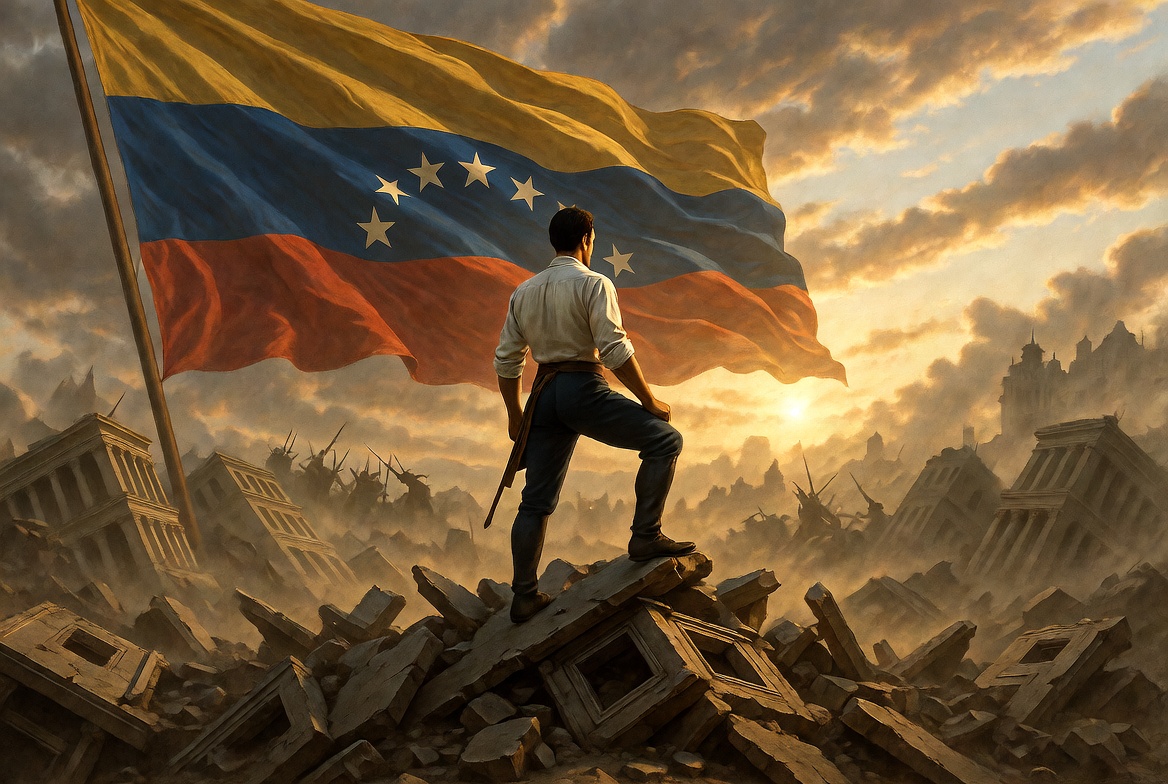
Enter Simón Bolívar, then a fiery 28-year-old colonel who had already lost his wife to yellow fever and his fortune to the revolution. He wasn’t some distant general barking orders from a safe hill. He was in the thick of it, sleeves rolled up, climbing broken masonry in San Jacinto Square. Royalist eyewitness José Domingo Díaz—hardly a Bolívar fan—left the single most vivid account we have. Díaz had just escaped his own collapsing house. He scrambled to higher ground and there was Bolívar, face streaked with dust and despair, hauling survivors from the rubble. Their eyes met. Bolívar spat out the line that has echoed through Latin American history ever since: “If Nature opposes us, we shall fight Nature and make it obey.” No hand-wringing. No kneeling for forgiveness. Just pure, sleeves-rolled defiance. While priests were blaming rebels, Bolívar was digging them out. That moment didn’t save the First Republic on the spot. In fact, the quake accelerated its collapse. But it planted a seed in Bolívar’s mind that would bloom into the campaigns that freed half a continent. Today, on March 26, 2026—exactly 214 years later—that same defiant roar is the perfect antidote to every “natural” disaster life throws at you: the layoff that feels like tectonic plates shifting under your career, the health scare that levels your plans, the relationship aftershock that leaves everything in ruins. Bolívar didn’t pray for the ground to stop moving. He grabbed it by the throat and told it who was boss.
To understand why this one day in 1812 matters so much, we have to rewind the tape on Venezuela’s colonial powder keg. Spain had ruled the Captaincy General of Venezuela since the 16th century like a distant, greedy uncle who only showed up for the cacao and coffee harvests. Caracas was the administrative heart—grand colonial mansions, plazas lined with orange trees, a society rigidly split between peninsulares (Spain-born officials) and criollos (American-born whites like Bolívar). The economy ran on enslaved labor for plantations and a growing merchant class that chafed under trade monopolies. Enlightenment ideas trickled in via smuggled books: Rousseau, Locke, Montesquieu. The American and French revolutions lit fuses. But the real spark was Napoleon. In 1808 Napoleon invaded Spain, deposed King Ferdinand VII, and installed his brother Joseph Bonaparte. Spanish America exploded with juntas—local governments claiming to rule “in the name of the captive king.” Venezuela’s junta formed on April 19, 1810, after a bloodless coup in Caracas. Simón Bolívar, fresh from European travels and still grieving his young wife, threw himself into the cause. He sailed to London to beg for British support (got none officially, but recruited the aging revolutionary Francisco de Miranda). Back home, a National Congress met in 1811. On July 5 they declared full independence—the first Spanish colony to do so. The new republic’s flag went up. Cockades were pinned. Speeches flowed like rum. But the First Republic was born fragile. Royalist strongholds in the interior refused to submit. A brutal civil war erupted. Miranda, the old hero, was named dictator in 1812 when things got dicey. Bolívar commanded Puerto Cabello, a key fortress. Supplies ran short. Spanish blockades bit. Internal betrayals multiplied. Then Mother Nature crashed the party on March 26. Picture the exact moment. The sky was cloudless, the heat oppressive. Many were in church—Maundy Thursday services packed with the faithful praying for Holy Week peace. At 4:37 p.m. the ground heaved with a roar like a thousand cannonades. The first shock lasted maybe a minute but felt eternal. Stone churches pancaked. The Cathedral’s towers toppled. People inside were buried alive under altars and pews. Streets became obstacle courses of fallen balconies and crushed carriages. Díaz described climbing to safety only to see the city transformed into a smoking ruin. A second tremor hit soon after, finishing off what was left in Mérida and beyond. Rivers jumped their banks. The stench of death mixed with the dust. Mass graves were dug because proper funerals were impossible. The sea at La Guaira turned rough; rescue ships couldn’t land easily. Royalists seized the narrative faster than dust could settle. Captain Domingo Monteverde, a minor Spanish officer who suddenly became a folk hero, marched on republican positions. Clergy preached that the quake proved God favored the king. Patriots who had been lukewarm suddenly defected. Morale cracked like the buildings. The republic, already cash-strapped and divided, couldn’t recover. By July 1812 Miranda sued for peace. Bolívar, disgusted, helped arrest the old general to stop him fleeing (Miranda ended up in a Spanish dungeon for life). The First Republic fell. Bolívar fled to Cartagena in New Granada (modern Colombia) and wrote his famous Cartagena Manifesto, brutally analyzing the failures: fanaticism, superstition, lack of unity—and implicitly the quake’s demoralizing blow. Yet here’s the twist that makes March 26, 1812, legendary rather than just tragic. Bolívar didn’t slink away defeated. In exile he studied, plotted, and returned with the Admirable Campaign in 1813. He retook Venezuela, earned the title El Libertador, and spent the next decade crisscrossing the Andes, liberating Colombia, Ecuador, Peru, and Bolivia. The man who once stared down a collapsing city went on to stare down empires. The quake didn’t break him; it forged the unbreakable core of his leadership style: relentless action over fatalistic prayer. He treated every setback—military defeats, betrayals, even his own failing health—like another aftershock to be outrun and outfought. Geologically, the event was no mystery. Northern Venezuela sits on the grinding boundary between the Caribbean and South American plates. Lateral sliding and compression built pressure along the Boconó Fault system. The quake ruptured segments offshore Caracas and inland—modern seismologists peg the main shock at around magnitude 7.4–7.7. But in 1812 science was the last thing on anyone’s mind. To the royalists it was theology. To Bolívar it was physics he could bend to his will. The international footnote is deliciously ironic. The United States Congress, watching from afar, voted unanimously to send five ships loaded with flour—$50,000 worth—to feed the starving survivors. It was the first recorded instance of American humanitarian aid abroad. Even as Spain and its allies spun divine wrath, the young republic across the sea saw human suffering and acted. History’s first foreign-aid convoy sailed into a ruined port. Fast-forward through Bolívar’s later triumphs: the Battle of Carabobo in 1821 that sealed Venezuelan independence, the Congress of Angostura, the liberation of Peru, the creation of Gran Colombia. He died in 1830, exhausted and disillusioned by the very republics he birthed, but the defiance born in that San Jacinto Square rubble outlived him. Streets in Caracas still bear names of quake survivors. Statues show him with rolled sleeves. Venezuelan schoolkids learn the quote the way American kids learn “Give me liberty or give me death.”
Now, here’s where the 1812 quake stops being dusty textbook fodder and starts being your personal operating system upgrade. The outcome of that day wasn’t just the temporary fall of a republic. It was proof that when the ground literally drops out from under you—when every external force (nature, politics, bad luck) lines up against your dreams—you have exactly two choices: accept the priests’ verdict that you somehow deserved it, or roll up your sleeves, climb the rubble, and declare war on the disaster itself. Bolívar chose the second. And because he did, half a continent eventually walked free. Apply that to your individual life and the payoff is immediate, practical, and ridiculously empowering. You don’t need crystals, vision boards, or 75-step morning routines. You need the Bolívar mindset: treat every personal quake like a temporary geological event you are biologically wired to outlast and outsmart. - When a project you poured months into collapses overnight (funding pulled, client ghosts you, market shifts), you don’t journal about “lessons from failure” for three weeks—you roll up your sleeves that same afternoon and start hauling survivors (the reusable code, the contacts, the half-finished prototypes) out of the wreckage. Nature (or the economy) opposed you; now you make it obey by rebuilding smarter and faster. - When health or family news hits like a second shock 30 minutes later, you skip the “why me” spiral that the 1812 clergy would have loved. You diagnose the fault lines (stress, habits, environment), then issue the Bolívar order: “We fight Nature and make it obey.” One small defiant action—doctor appointment booked, meal plan started, support network activated—becomes the first brick in the new structure. - When a relationship or partnership ends in sudden rubble, you refuse to let royalist-style blame (“I must have deserved this divine punishment”) paralyze you. You climb the emotional debris, rescue what’s salvageable (shared memories turned into wisdom, not bitterness), and declare the aftershocks over. New alliances form faster when you lead with that same dust-covered, sleeves-up energy. - In career plateaus that feel like the entire city of Caracas sinking, you remember the US flour ships: sometimes external help arrives if you broadcast the need clearly instead of hiding in the ruins. But you never wait passively—Bolívar was digging while the priests preached. Update the résumé, message the network, launch the side hustle the same week the quake hits. - For creative or entrepreneurial dreams stalled by “acts of God” (algorithm changes, supply-chain meltdowns, inspiration droughts), the 1812 template is gold. Map the fault (what actually broke?), roll up sleeves (daily micro-rescue missions on the work), and issue the quote aloud if needed. Nature opposes? Make it obey—one paragraph, one prototype, one cold email at a time. The beauty is how concrete and anti-fluffy this is compared to every other self-help noise online. No manifestation. No toxic positivity. Just historical-grade defiance calibrated for 21st-century rubble. Here is your detailed, quick, unique plan—call it the **Bolívar Rubble Rebellion Protocol**. It’s a 72-hour micro-campaign (not a 30-day slog) designed to be run the moment any life-quake strikes. Nothing like the generic “resilience worksheets” or “gratitude journals” clogging the internet. This is sleeves-up, dust-in-your-eyes action modeled on an actual 1812 rescue operation. **Hour 0–6: Fault-Line Audit (Map the Quake, Don’t Worship It)** Grab a notebook or phone notes. Write three columns: What physically collapsed (the project, the health metric, the relationship pillar). What external force (Nature) actually caused it—no self-blame. What is still salvageable in the rubble (skills, contacts, half-built assets). Bolívar didn’t stand around asking why God was mad; he assessed the damage while climbing. Do the same. Takes 20 minutes. No feelings, just facts. This kills the royalist propaganda voice in your head instantly. **Hour 6–24: Sleeve-Rolling Ritual + First Defiant Dig (One Concrete Rescue Mission)** Physically roll up your sleeves (yes, literally—do it at your desk or kitchen table). Pick ONE survivor from the audit and haul it out today: draft the email, book the appointment, ship the prototype, text the friend you’ve been avoiding. Quote Bolívar out loud while doing it: “If Nature opposes us…” The ritual sounds ridiculous until you realize it short-circuits paralysis. One dig proves the ground can be made to obey. Mock the clergy by refusing to interpret the setback as cosmic judgment. **Hour 24–48: Aftershock Blockade (Prevent Secondary Collapse)** Identify the two most likely aftershocks (the follow-up bill, the self-doubt spiral, the competitor who will pounce). Build a barricade for each: automate a payment, schedule a 10-minute daily “defiance walk” where you repeat the quote while moving your body, pre-draft a response to the doubters. Bolívar didn’t stop after one rescue; he kept the republic’s remnants from total disintegration. You do the same in miniature. **Hour 48–72: Rebuild Proclamation + External Aid Request (Declare Victory and Call for Flour Ships)** Write a one-paragraph “Cartagena Manifesto” to yourself: what you learned, what new structure you’re building, and why this rubble will produce a stronger republic than before. Then broadcast the need—post the half-finished project on LinkedIn, ask the network for introductions, apply for the grant. The 1812 US aid arrived because Venezuela didn’t hide its suffering. You won’t either. End the 72 hours by physically marking the new foundation (buy the domain, schedule the first team meeting, frame the audit page).
Run this protocol once and it becomes muscle memory. Next quake—because life is seismically active—you’ll move faster than the priests can even open their Bibles. The 1812 Caracas earthquake didn’t end the revolution; it clarified who the real revolutionaries were. The ones who fought Nature instead of blaming it. You are now one of them. So on this March 26, 2026, while the rest of the internet scrolls past another “on this day” factoid, remember the man in the dust with rolled-up sleeves. Nature opposes you? Grab a shovel. Make it obey. Your personal republic is waiting to be rebuilt—stronger, freer, and gloriously defiant. The ground may shake, but you will not fall. You will climb, dig, and declare victory from the top of the rubble. That’s not motivation. That’s history you can live.
Share: