Imagine the first light of dawn breaking over the massive walls of Chang'an, the grand capital of the young Tang dynasty. The air is thick with tension, the scent of dew on imperial gardens mixing with the metallic tang of hidden weapons. On July 2, 626 AD—precisely the 4th day of the 6th lunar month in the 9th year of the Wude era—a small but determined group of riders moves silently through the shadows toward the northern Xuanwu Gate, the critical entrance to the Palace City. This isn't a routine patrol or a ceremonial procession. It's a meticulously planned ambush that will reshape an empire, eliminate rival heirs, and propel one of history's most capable rulers onto the throne. What unfolded that morning was no random act of violence but a calculated masterstroke born of intense sibling rivalry, military genius, and high-stakes palace intrigue. Its outcome would usher in the zenith of the Tang dynasty, a period of prosperity, cultural brilliance, and territorial expansion that still echoes through history.
To understand the Xuanwu Gate Incident, we must step back into the chaotic early years of the Tang. The dynasty was founded in 618 AD by Li Yuan, who became Emperor Gaozu, after he and his sons overthrew the crumbling Sui dynasty amid widespread rebellion and famine. Li Yuan had three prominent sons who played pivotal roles in the founding wars: the eldest, Li Jiancheng, named Crown Prince; the second, Li Shimin (Prince of Qin); and the third, Li Yuanji (Prince of Qi). While all contributed to the Tang's rise, Li Shimin stood out as a battlefield prodigy. He had led daring campaigns against formidable foes like the warlord Dou Jiande and Wang Shichong, securing decisive victories that expanded and stabilized the empire. His exploits earned him immense prestige among generals, soldiers, and officials.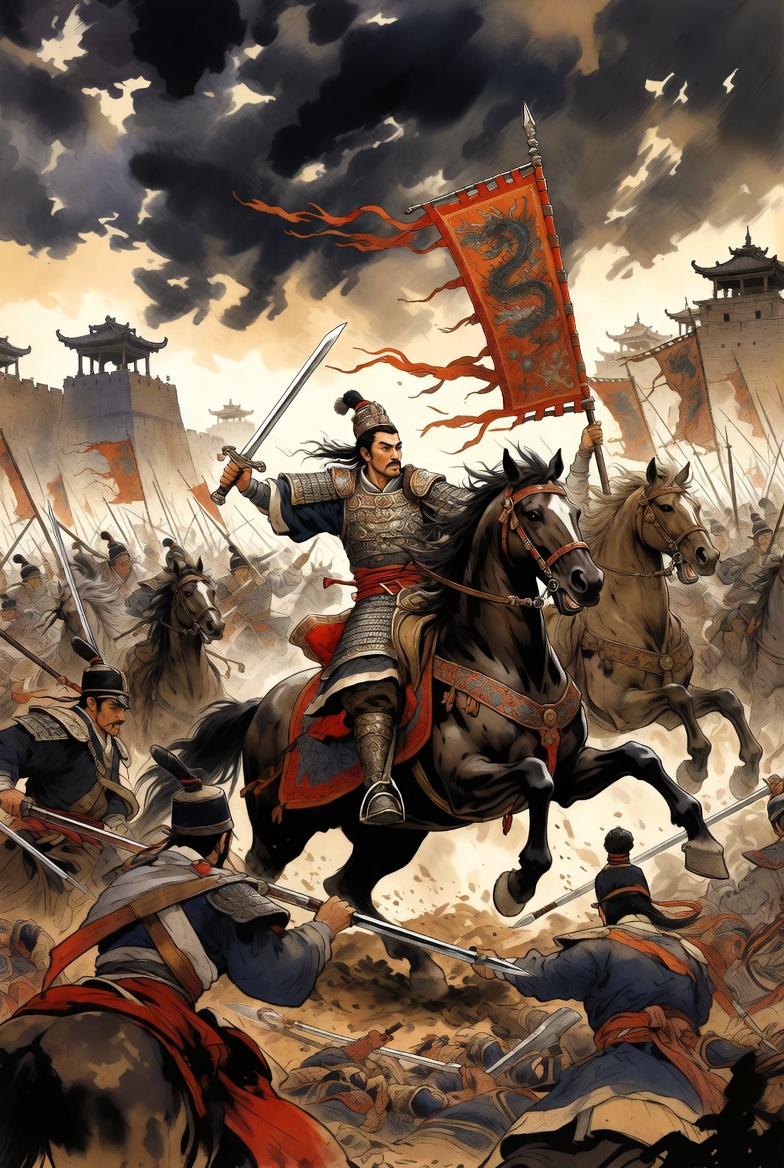 Li Jiancheng, as heir apparent, focused more on administrative duties and guarding the northern frontiers against the formidable Tujue (Göktürks) nomads. This kept him away from the glory of major campaigns, allowing Li Shimin's star to rise higher. Emperor Gaozu, recognizing talent, granted Li Shimin significant authority, including oversight of civil and military affairs in the eastern plains with Luoyang as a base. There, Li Shimin built a formidable network, establishing the College of Literary Studies with eighteen scholars as advisors—a clear sign of his intellectual and political ambitions. Rumors swirled that Li Shimin might challenge the succession. Jealousy festered.
The rivalry escalated into open hostility. Li Jiancheng and Li Yuanji, allied closely, worked to undermine their brother. They allegedly plotted against him, including a possible poisoning attempt that left Li Shimin gravely ill. They influenced Emperor Gaozu to remove key members of Li Shimin's staff, such as the brilliant advisors Fang Xuanling and Du Ruhui. Attempts were even made on the life of Li Shimin's loyal general Yuchi Jingde. Meanwhile, Li Jiancheng bolstered his own power by recruiting over 2,000 men into the Changlin troops stationed near the East Palace. Palace consorts, who held sway with the emperor, often advocated for the elder brothers.
Tensions peaked in early 626 AD when Tujue forces threatened the borders. At Li Jiancheng's suggestion, Li Yuanji was given command of a major campaign, and Li Shimin's best generals and troops were transferred to him—effectively stripping Li Shimin of his military strength. Whispers reached Li Shimin that his brothers planned to assassinate him during the customary send-off for Li Yuanji's departure. Faced with existential threat, Li Shimin consulted his inner circle: Zhangsun Wuji, Fang Xuanling (recalled in disguise as a Taoist priest), Du Ruhui, Yuchi Jingde, Hou Junji, and others. They urged decisive action. Li Shimin bribed Chang He, the commander of the Xuanwu Gate—a man who had previously served under him—to secure control of this vital chokepoint.
The stage was set for July 2. At dawn, Li Shimin and a small force of trusted followers, including about ten key leaders and supporting horsemen, seized the Xuanwu Gate. They concealed troops and waited. Li Jiancheng and Li Yuanji, unaware or perhaps sensing trouble, rode toward the palace to consult Emperor Gaozu. As they approached the gate, Li Shimin emerged, hailing them. Chaos erupted. Li Yuanji fumbled with his bow. Li Shimin fired arrows, striking and killing Li Jiancheng. Yuchi Jingde and seventy horsemen pursued Li Yuanji, shooting him down as he fell from his horse. The ambush was swift and lethal.
Li Jiancheng, as heir apparent, focused more on administrative duties and guarding the northern frontiers against the formidable Tujue (Göktürks) nomads. This kept him away from the glory of major campaigns, allowing Li Shimin's star to rise higher. Emperor Gaozu, recognizing talent, granted Li Shimin significant authority, including oversight of civil and military affairs in the eastern plains with Luoyang as a base. There, Li Shimin built a formidable network, establishing the College of Literary Studies with eighteen scholars as advisors—a clear sign of his intellectual and political ambitions. Rumors swirled that Li Shimin might challenge the succession. Jealousy festered.
The rivalry escalated into open hostility. Li Jiancheng and Li Yuanji, allied closely, worked to undermine their brother. They allegedly plotted against him, including a possible poisoning attempt that left Li Shimin gravely ill. They influenced Emperor Gaozu to remove key members of Li Shimin's staff, such as the brilliant advisors Fang Xuanling and Du Ruhui. Attempts were even made on the life of Li Shimin's loyal general Yuchi Jingde. Meanwhile, Li Jiancheng bolstered his own power by recruiting over 2,000 men into the Changlin troops stationed near the East Palace. Palace consorts, who held sway with the emperor, often advocated for the elder brothers.
Tensions peaked in early 626 AD when Tujue forces threatened the borders. At Li Jiancheng's suggestion, Li Yuanji was given command of a major campaign, and Li Shimin's best generals and troops were transferred to him—effectively stripping Li Shimin of his military strength. Whispers reached Li Shimin that his brothers planned to assassinate him during the customary send-off for Li Yuanji's departure. Faced with existential threat, Li Shimin consulted his inner circle: Zhangsun Wuji, Fang Xuanling (recalled in disguise as a Taoist priest), Du Ruhui, Yuchi Jingde, Hou Junji, and others. They urged decisive action. Li Shimin bribed Chang He, the commander of the Xuanwu Gate—a man who had previously served under him—to secure control of this vital chokepoint.
The stage was set for July 2. At dawn, Li Shimin and a small force of trusted followers, including about ten key leaders and supporting horsemen, seized the Xuanwu Gate. They concealed troops and waited. Li Jiancheng and Li Yuanji, unaware or perhaps sensing trouble, rode toward the palace to consult Emperor Gaozu. As they approached the gate, Li Shimin emerged, hailing them. Chaos erupted. Li Yuanji fumbled with his bow. Li Shimin fired arrows, striking and killing Li Jiancheng. Yuchi Jingde and seventy horsemen pursued Li Yuanji, shooting him down as he fell from his horse. The ambush was swift and lethal.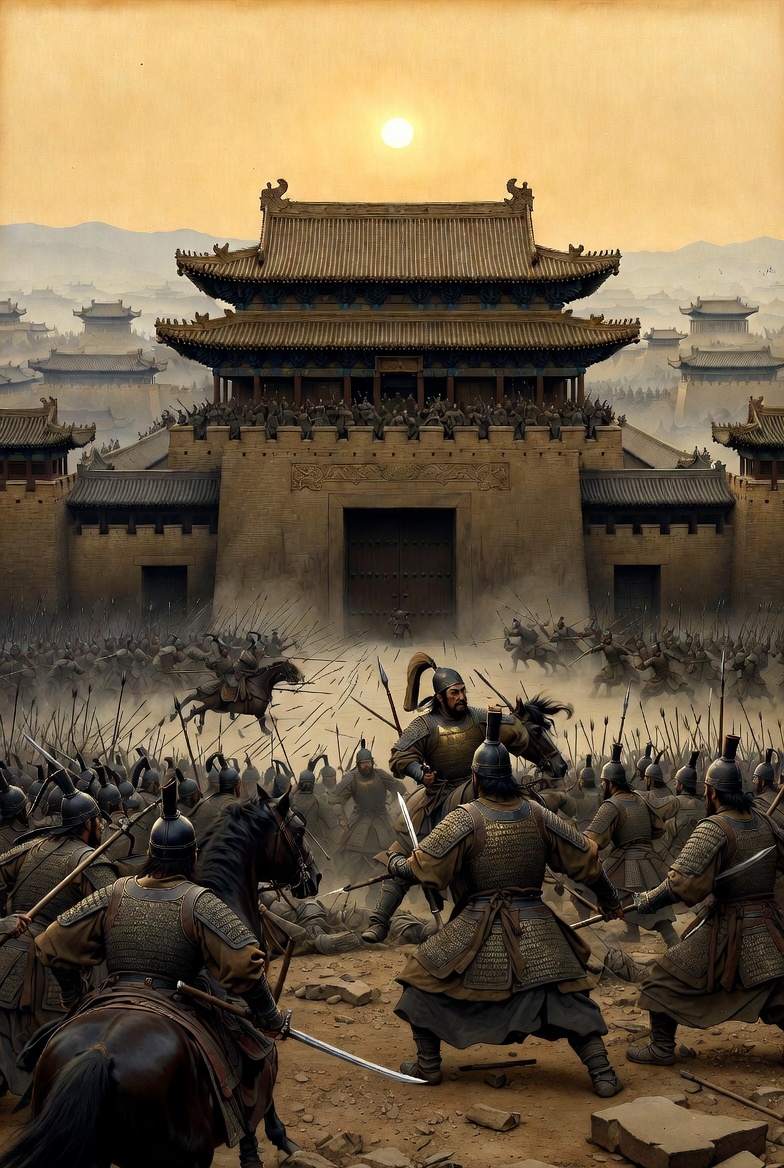 What followed was a rapid consolidation of power. Li Shimin's forces entered the palace. Under duress and amid the shock, Emperor Gaozu was compelled to name Li Shimin as Crown Prince. Just three days after the incident, the transition began. About two months later, on the 9th day of the 8th month, Gaozu abdicated, retiring as Taishang Huang (Retired Emperor). Li Shimin ascended as Emperor Taizong, one of China's most revered rulers. To eliminate future threats, the sons of the slain princes were executed, though many of their subordinates were spared and even integrated.
The Xuanwu Gate Incident was controversial even in its time. Traditional histories, like the *Zizhi Tongjian*, portray it as a necessary act of self-defense against treacherous brothers plotting murder. Revisionist views debate the extent of the brothers' plots—whether the poisoning was real, the degree of Emperor Gaozu's awareness, or if Li Shimin exaggerated threats to justify his coup. Some accounts suggest palace intrigue involved consorts and officials playing both sides. Regardless, the event was bloody family drama at the highest level: brothers turning on brothers in the heart of the empire's power center.
Yet, the true significance lies in what came after. Taizong's reign (626–649 AD) marked the Tang dynasty's golden age. He learned from the incident's lessons, emphasizing merit over bloodlines in governance. He surrounded himself with talented officials like Wei Zheng, who famously remonstrated against him, fostering a culture of open criticism and wise counsel. Taizong's "Zhen Guan" era saw administrative reforms, legal codification, reduced taxation, and agricultural promotion that brought prosperity. The empire expanded militarily: campaigns against the Tujue, Tuyuhun, and others secured borders and Silk Road trade. Chang'an became a cosmopolitan hub, attracting scholars, merchants, and artists from across Asia. Buddhism flourished alongside Confucianism, and poetry, painting, and historiography reached new heights.
Taizong was no saint—he carried the guilt of fratricide. Legends and later accounts, including Dunhuang manuscripts like *The Journey of Emperor Taizong to the Underworld*, depict him haunted by ghosts of his brothers, seeking Buddhist rites for redemption. He reportedly reflected deeply on the event, using it to temper his rule with humility and vigilance against factionalism. His famous "Ten Thoughts" or reflections on governance stressed avoiding arrogance, listening to advisors, and prioritizing the people's welfare. This self-awareness transformed a violent power grab into a foundation for enlightened rule.
Diving deeper into the historical tapestry, the Tang's early years were forged in fire. The Sui collapse left a fractured land with warlords, famines, and nomadic incursions. Li Yuan, a Sui general with imperial Li clan ties (claiming descent from ancient rulers), rose with his sons' help. Li Shimin's military brilliance was evident in battles like the defeat of Xue Ju and the pivotal engagements that captured key territories. His charisma won over defectors and troops. The Xuanwu Gate was strategically chosen because it controlled access to the imperial precincts; securing it isolated opponents and allowed rapid influence over the emperor.
The ambush's details reveal masterful planning. By bribing Chang He and positioning a small elite force, Li Shimin minimized the risk of a larger confrontation in the capital. The dawn timing exploited surprise—brothers arriving for a supposed audience with their father. Post-coup, Taizong moved quickly to legitimize his rule through edicts, alliances, and demonstrations of benevolence, such as pardons and policy adjustments. He even honored some of his brothers' former aides to heal divisions.
What followed was a rapid consolidation of power. Li Shimin's forces entered the palace. Under duress and amid the shock, Emperor Gaozu was compelled to name Li Shimin as Crown Prince. Just three days after the incident, the transition began. About two months later, on the 9th day of the 8th month, Gaozu abdicated, retiring as Taishang Huang (Retired Emperor). Li Shimin ascended as Emperor Taizong, one of China's most revered rulers. To eliminate future threats, the sons of the slain princes were executed, though many of their subordinates were spared and even integrated.
The Xuanwu Gate Incident was controversial even in its time. Traditional histories, like the *Zizhi Tongjian*, portray it as a necessary act of self-defense against treacherous brothers plotting murder. Revisionist views debate the extent of the brothers' plots—whether the poisoning was real, the degree of Emperor Gaozu's awareness, or if Li Shimin exaggerated threats to justify his coup. Some accounts suggest palace intrigue involved consorts and officials playing both sides. Regardless, the event was bloody family drama at the highest level: brothers turning on brothers in the heart of the empire's power center.
Yet, the true significance lies in what came after. Taizong's reign (626–649 AD) marked the Tang dynasty's golden age. He learned from the incident's lessons, emphasizing merit over bloodlines in governance. He surrounded himself with talented officials like Wei Zheng, who famously remonstrated against him, fostering a culture of open criticism and wise counsel. Taizong's "Zhen Guan" era saw administrative reforms, legal codification, reduced taxation, and agricultural promotion that brought prosperity. The empire expanded militarily: campaigns against the Tujue, Tuyuhun, and others secured borders and Silk Road trade. Chang'an became a cosmopolitan hub, attracting scholars, merchants, and artists from across Asia. Buddhism flourished alongside Confucianism, and poetry, painting, and historiography reached new heights.
Taizong was no saint—he carried the guilt of fratricide. Legends and later accounts, including Dunhuang manuscripts like *The Journey of Emperor Taizong to the Underworld*, depict him haunted by ghosts of his brothers, seeking Buddhist rites for redemption. He reportedly reflected deeply on the event, using it to temper his rule with humility and vigilance against factionalism. His famous "Ten Thoughts" or reflections on governance stressed avoiding arrogance, listening to advisors, and prioritizing the people's welfare. This self-awareness transformed a violent power grab into a foundation for enlightened rule.
Diving deeper into the historical tapestry, the Tang's early years were forged in fire. The Sui collapse left a fractured land with warlords, famines, and nomadic incursions. Li Yuan, a Sui general with imperial Li clan ties (claiming descent from ancient rulers), rose with his sons' help. Li Shimin's military brilliance was evident in battles like the defeat of Xue Ju and the pivotal engagements that captured key territories. His charisma won over defectors and troops. The Xuanwu Gate was strategically chosen because it controlled access to the imperial precincts; securing it isolated opponents and allowed rapid influence over the emperor.
The ambush's details reveal masterful planning. By bribing Chang He and positioning a small elite force, Li Shimin minimized the risk of a larger confrontation in the capital. The dawn timing exploited surprise—brothers arriving for a supposed audience with their father. Post-coup, Taizong moved quickly to legitimize his rule through edicts, alliances, and demonstrations of benevolence, such as pardons and policy adjustments. He even honored some of his brothers' former aides to heal divisions.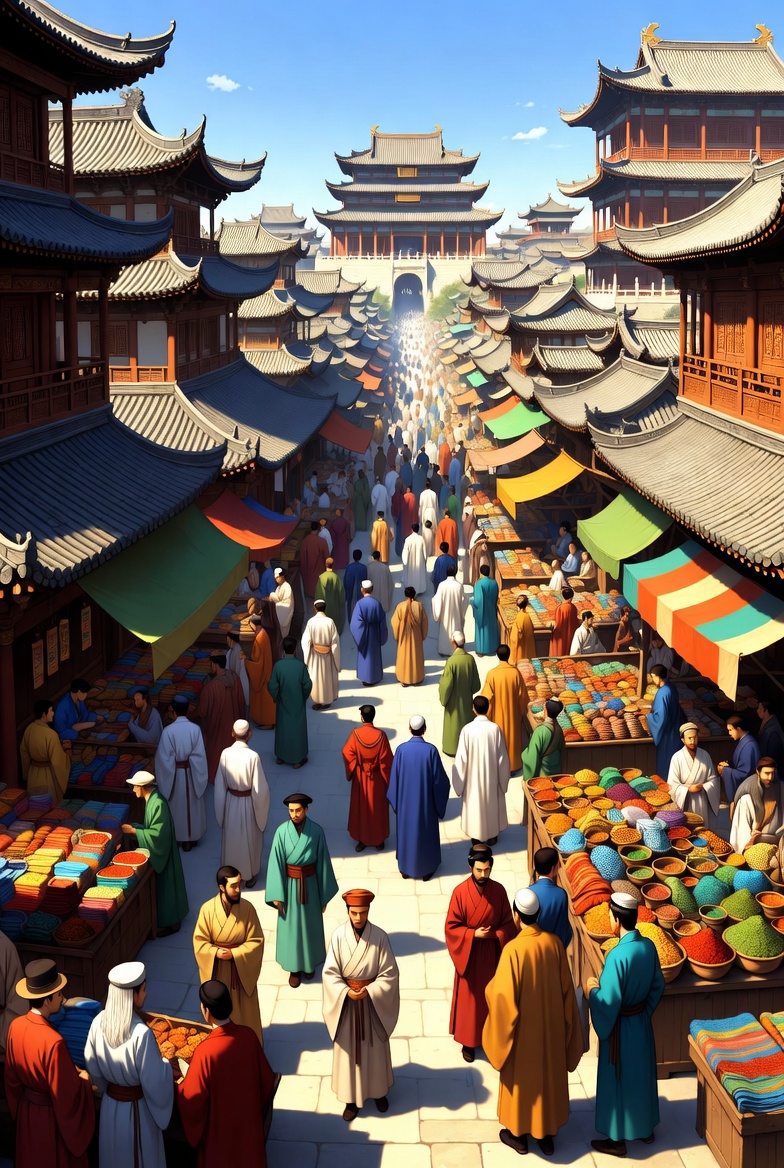 Economically and culturally, Taizong's policies were transformative. He implemented the equal-field system for land distribution, curbed corruption, and promoted infrastructure like canals and granaries. Diplomatically, he married into nomadic alliances and used a mix of force and diplomacy. The Tang became a model for later dynasties, influencing governance in East Asia for centuries. Taizong's *Emperor Taizong's Model for Emperors* and other texts became manuals for rulers.
Funny enough, in the grand theater of history, this deadly family squabble at a palace gate reads like a Shakespearean tragedy crossed with a Chinese epic. Brothers plotting over thrones, arrows flying at dawn, a reluctant father-emperor abdicating under pressure—it's the stuff of operas and novels. Yet, unlike pure tragedy, it birthed renewal. Taizong didn't wallow; he channeled the ruthlessness into righteous governance, proving that even from dark origins, light can emerge if one chooses wisdom over vengeance.
The incident also highlights the precariousness of succession in imperial China. Primogeniture was the norm, but merit and military success often clashed with it. Gaozu's initial favoritism toward Shimin created fault lines. The Tujue threat provided the final catalyst, as mobilizing troops shifted power balances dangerously. Historians debate Gaozu's role—did he play the sons against each other, or was he a weary patriarch caught in the middle? Either way, the outcome stabilized the dynasty at a critical juncture.
Expanding on the broader context, Chang'an was a marvel: a grid-planned metropolis larger than any in Europe at the time, with markets teeming with goods from Persia, India, and beyond. The Xuanwu Gate itself symbolized celestial protection (named after the Black Tortoise warrior deity). Violating it with bloodshed was a profound act, yet Taizong later stabilized the realm so thoroughly that his era is romanticized as a peak of Chinese civilization. His tomb, the Zhaoling Mausoleum, overlooks the landscape he helped shape.
Military historians note Taizong's post-coup campaigns: the subjugation of the Eastern Turks in 630 AD, which expanded influence deep into Central Asia. He reformed the military, emphasizing discipline and logistics. Culturally, he sponsored the compilation of histories and encouraged poetry; figures like Li Bai and Du Fu would later flourish in the Tang's vibrant atmosphere. Buddhism received patronage, with translations and temple building, while Taizong balanced it with Confucian orthodoxy.
Economically and culturally, Taizong's policies were transformative. He implemented the equal-field system for land distribution, curbed corruption, and promoted infrastructure like canals and granaries. Diplomatically, he married into nomadic alliances and used a mix of force and diplomacy. The Tang became a model for later dynasties, influencing governance in East Asia for centuries. Taizong's *Emperor Taizong's Model for Emperors* and other texts became manuals for rulers.
Funny enough, in the grand theater of history, this deadly family squabble at a palace gate reads like a Shakespearean tragedy crossed with a Chinese epic. Brothers plotting over thrones, arrows flying at dawn, a reluctant father-emperor abdicating under pressure—it's the stuff of operas and novels. Yet, unlike pure tragedy, it birthed renewal. Taizong didn't wallow; he channeled the ruthlessness into righteous governance, proving that even from dark origins, light can emerge if one chooses wisdom over vengeance.
The incident also highlights the precariousness of succession in imperial China. Primogeniture was the norm, but merit and military success often clashed with it. Gaozu's initial favoritism toward Shimin created fault lines. The Tujue threat provided the final catalyst, as mobilizing troops shifted power balances dangerously. Historians debate Gaozu's role—did he play the sons against each other, or was he a weary patriarch caught in the middle? Either way, the outcome stabilized the dynasty at a critical juncture.
Expanding on the broader context, Chang'an was a marvel: a grid-planned metropolis larger than any in Europe at the time, with markets teeming with goods from Persia, India, and beyond. The Xuanwu Gate itself symbolized celestial protection (named after the Black Tortoise warrior deity). Violating it with bloodshed was a profound act, yet Taizong later stabilized the realm so thoroughly that his era is romanticized as a peak of Chinese civilization. His tomb, the Zhaoling Mausoleum, overlooks the landscape he helped shape.
Military historians note Taizong's post-coup campaigns: the subjugation of the Eastern Turks in 630 AD, which expanded influence deep into Central Asia. He reformed the military, emphasizing discipline and logistics. Culturally, he sponsored the compilation of histories and encouraged poetry; figures like Li Bai and Du Fu would later flourish in the Tang's vibrant atmosphere. Buddhism received patronage, with translations and temple building, while Taizong balanced it with Confucian orthodoxy.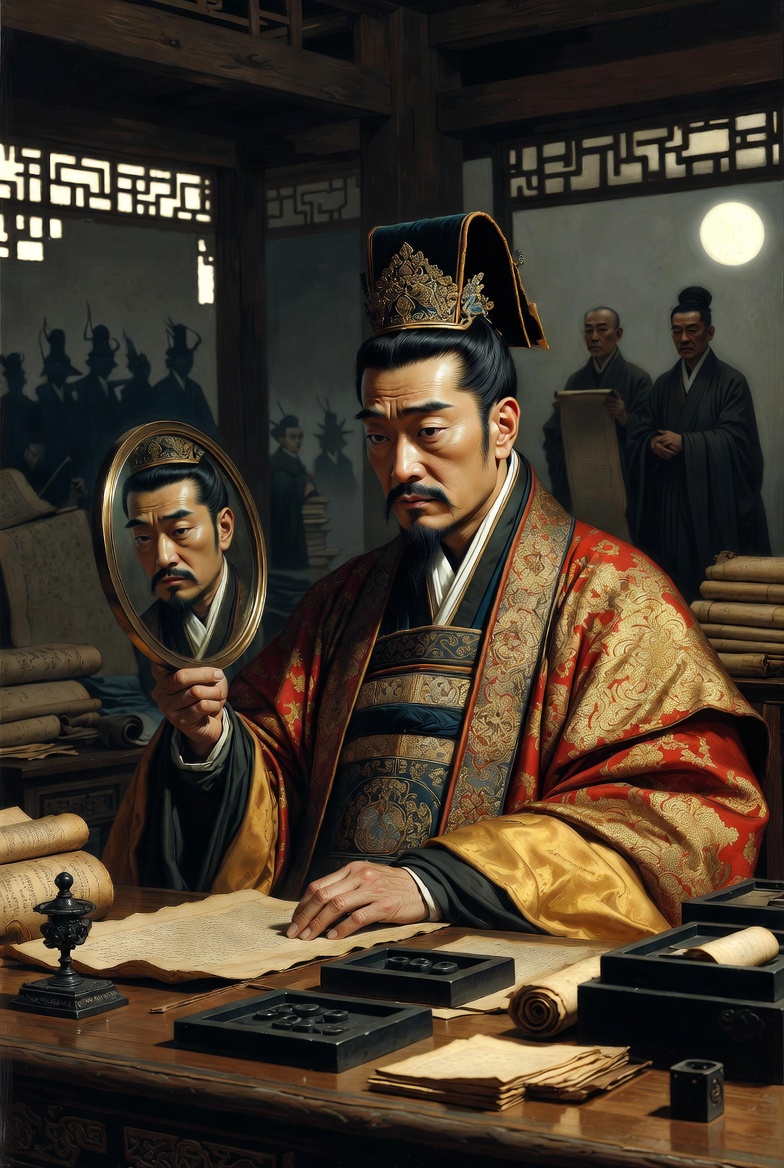 The human cost was real—lives lost, families shattered. Yet the long-term benefits to the empire were immense: decades of relative peace, economic boom, and cultural export that influenced Japan, Korea, and Vietnam. Taizong's willingness to accept criticism, as with Wei Zheng, set a precedent rare in autocracies. He famously said something akin to using history as a mirror to understand gains and losses. That mirror included his own bloody reflection at Xuanwu Gate.
In the centuries that followed, the incident became a cautionary tale and a symbol of decisive leadership. It underscored that true power stems not just from force but from the ability to build consensus and deliver results afterward. Taizong's reign lasted until 649 AD, and the Tang endured for nearly three more centuries, its legacy enduring in modern China's cultural memory.
**Applying the Xuanwu Gate Lesson: Decisive Action in Your Own Life**
While the raw history dominates this tale—as it should for such a pivotal event—the outcome offers timeless wisdom for navigating personal "gates" of crisis and opportunity. Taizong didn't wait passively for fate or his rivals' next move; he seized the initiative with preparation, alliances, and bold execution, then transformed the aftermath into enduring greatness. Here's how you can draw specific, actionable benefits today, far removed from imperial intrigue:
- **Recognize brewing threats early and gather intelligence**: Just as Li Shimin monitored plots and troop movements, audit your own "rivalries"—whether toxic habits, undermining influences at work, or self-doubt. Keep a private journal tracking patterns for a week; note triggers and allies who can provide unfiltered insight. This prevents ambush by your own weaknesses.
- **Build a trusted inner circle of advisors**: Taizong relied on Fang Xuanling, Du Ruhui, and Yuchi Jingde for counsel and execution. Identify 3-5 people in your life (mentors, friends, or professionals) whose skills complement yours. Schedule regular, honest check-ins—perhaps a monthly "strategy breakfast"—and be willing to disguise your intentions (i.e., ask indirect questions) when testing waters on big decisions.
- **Secure the "gate" before striking**: By controlling Xuanwu Gate, Li Shimin controlled access. In modern terms, prepare the battlefield: update your skills/resume before job hunting, build an emergency fund before major life changes, or fortify key relationships. For example, if eyeing a career pivot, quietly network and upskill for 3 months first.
- **Act decisively but minimize collateral damage**: The ambush was swift, but Taizong spared many subordinates and sought legitimacy. When facing a tough choice—like ending a draining commitment—execute cleanly, communicate transparently where possible, and focus on reconciliation or integration afterward to avoid long-term grudges.
- **Turn guilt or setback into reflective governance**: Taizong's later humility and reforms stemmed from the incident's shadow. After any "coup" in your life (quitting a bad job, confronting a flaw), institute personal reforms: weekly self-reviews, seeking feedback, and public accountability (e.g., sharing progress transparently). This builds character and prevents repetition of errors.
- **Leverage the victory for broader prosperity**: Post-coup, Taizong reformed the empire. Use your wins—big or small—to invest outward: after a promotion, mentor others; after overcoming addiction, volunteer. Measure success not by conquest but by sustained positive impact.
The human cost was real—lives lost, families shattered. Yet the long-term benefits to the empire were immense: decades of relative peace, economic boom, and cultural export that influenced Japan, Korea, and Vietnam. Taizong's willingness to accept criticism, as with Wei Zheng, set a precedent rare in autocracies. He famously said something akin to using history as a mirror to understand gains and losses. That mirror included his own bloody reflection at Xuanwu Gate.
In the centuries that followed, the incident became a cautionary tale and a symbol of decisive leadership. It underscored that true power stems not just from force but from the ability to build consensus and deliver results afterward. Taizong's reign lasted until 649 AD, and the Tang endured for nearly three more centuries, its legacy enduring in modern China's cultural memory.
**Applying the Xuanwu Gate Lesson: Decisive Action in Your Own Life**
While the raw history dominates this tale—as it should for such a pivotal event—the outcome offers timeless wisdom for navigating personal "gates" of crisis and opportunity. Taizong didn't wait passively for fate or his rivals' next move; he seized the initiative with preparation, alliances, and bold execution, then transformed the aftermath into enduring greatness. Here's how you can draw specific, actionable benefits today, far removed from imperial intrigue:
- **Recognize brewing threats early and gather intelligence**: Just as Li Shimin monitored plots and troop movements, audit your own "rivalries"—whether toxic habits, undermining influences at work, or self-doubt. Keep a private journal tracking patterns for a week; note triggers and allies who can provide unfiltered insight. This prevents ambush by your own weaknesses.
- **Build a trusted inner circle of advisors**: Taizong relied on Fang Xuanling, Du Ruhui, and Yuchi Jingde for counsel and execution. Identify 3-5 people in your life (mentors, friends, or professionals) whose skills complement yours. Schedule regular, honest check-ins—perhaps a monthly "strategy breakfast"—and be willing to disguise your intentions (i.e., ask indirect questions) when testing waters on big decisions.
- **Secure the "gate" before striking**: By controlling Xuanwu Gate, Li Shimin controlled access. In modern terms, prepare the battlefield: update your skills/resume before job hunting, build an emergency fund before major life changes, or fortify key relationships. For example, if eyeing a career pivot, quietly network and upskill for 3 months first.
- **Act decisively but minimize collateral damage**: The ambush was swift, but Taizong spared many subordinates and sought legitimacy. When facing a tough choice—like ending a draining commitment—execute cleanly, communicate transparently where possible, and focus on reconciliation or integration afterward to avoid long-term grudges.
- **Turn guilt or setback into reflective governance**: Taizong's later humility and reforms stemmed from the incident's shadow. After any "coup" in your life (quitting a bad job, confronting a flaw), institute personal reforms: weekly self-reviews, seeking feedback, and public accountability (e.g., sharing progress transparently). This builds character and prevents repetition of errors.
- **Leverage the victory for broader prosperity**: Post-coup, Taizong reformed the empire. Use your wins—big or small—to invest outward: after a promotion, mentor others; after overcoming addiction, volunteer. Measure success not by conquest but by sustained positive impact.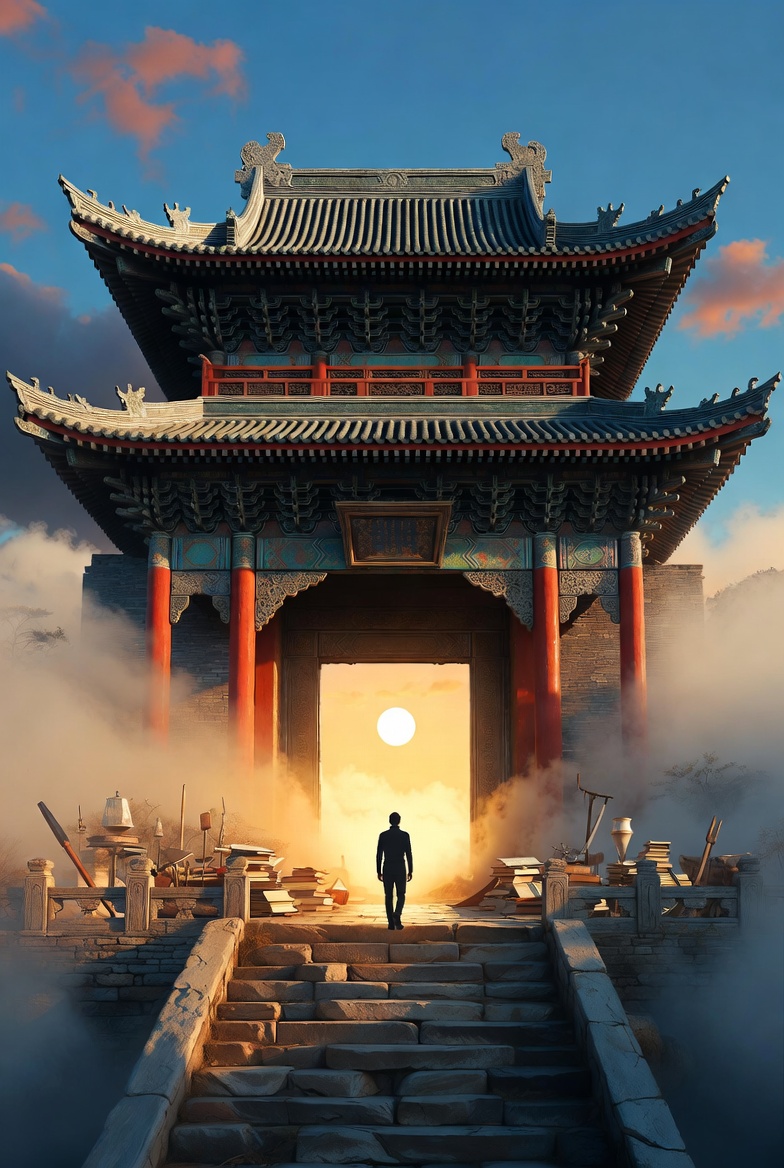 **Your Unique "Xuanwu Protocol" – A Quick, Anti-Self-Help Plan**
Forget generic vision boards or morning routines that fizzle out. This is the Xuanwu Protocol: a battlefield-tested, no-fluff system for personal empire-building inspired directly by July 2, 626, but stripped of mysticism or hustle culture hype. It's mechanical, iterative, and designed for real humans with limited willpower.
**Phase 1: Intelligence & Positioning (1-2 weeks prep)**
Map your "palace"—list 5 current challenges/threats (e.g., debt, procrastination, draining relationship). Rank them by danger. Identify your "Xuanwu Gate": the single leverage point (skill, contact, habit) that controls access to resolution. Recruit your "generals" (trusted circle) and brief them discreetly. Bribe yourself if needed—small rewards for intel gathering.
**Phase 2: The Dawn Ambush (Execution Day)**
Pick a specific "dawn" (date/time). Strike with minimal force: one focused action per threat (e.g., send the email, cancel the subscription, start the 10-minute workout). No overthinking—use a pre-written script or checklist. Document the moment for your personal *Zizhi Tongjian*.
**Phase 3: Consolidation & Golden Reign (Ongoing, 30-90 days)**
Abdicate old habits immediately (retire the Retired Emperor within). Appoint merit-based "officials" (new routines/systems). Hold daily "court" (5-minute review). Every 30 days, invite "Wei Zheng" criticism from your circle. Expand territory: use momentum for one unrelated positive project. Track metrics ruthlessly but forgive lapses like Taizong reflected on his past.
This protocol is unique because it's event-driven and finite, not endless grinding. It acknowledges darkness (ruthless decisions happen) but demands light afterward (reform and service). Apply it once to a major life "coup," and the compounding effects mirror the Tang's flourishing—your personal golden age.
The Xuanwu Gate reminds us that history's sharpest turns often happen in quiet dawns, driven by prepared minds. On this July 2, reflect on that ambush not as distant lore, but as a blueprint: prepare, strike true, then rule wisely. Your empire awaits.
**Your Unique "Xuanwu Protocol" – A Quick, Anti-Self-Help Plan**
Forget generic vision boards or morning routines that fizzle out. This is the Xuanwu Protocol: a battlefield-tested, no-fluff system for personal empire-building inspired directly by July 2, 626, but stripped of mysticism or hustle culture hype. It's mechanical, iterative, and designed for real humans with limited willpower.
**Phase 1: Intelligence & Positioning (1-2 weeks prep)**
Map your "palace"—list 5 current challenges/threats (e.g., debt, procrastination, draining relationship). Rank them by danger. Identify your "Xuanwu Gate": the single leverage point (skill, contact, habit) that controls access to resolution. Recruit your "generals" (trusted circle) and brief them discreetly. Bribe yourself if needed—small rewards for intel gathering.
**Phase 2: The Dawn Ambush (Execution Day)**
Pick a specific "dawn" (date/time). Strike with minimal force: one focused action per threat (e.g., send the email, cancel the subscription, start the 10-minute workout). No overthinking—use a pre-written script or checklist. Document the moment for your personal *Zizhi Tongjian*.
**Phase 3: Consolidation & Golden Reign (Ongoing, 30-90 days)**
Abdicate old habits immediately (retire the Retired Emperor within). Appoint merit-based "officials" (new routines/systems). Hold daily "court" (5-minute review). Every 30 days, invite "Wei Zheng" criticism from your circle. Expand territory: use momentum for one unrelated positive project. Track metrics ruthlessly but forgive lapses like Taizong reflected on his past.
This protocol is unique because it's event-driven and finite, not endless grinding. It acknowledges darkness (ruthless decisions happen) but demands light afterward (reform and service). Apply it once to a major life "coup," and the compounding effects mirror the Tang's flourishing—your personal golden age.
The Xuanwu Gate reminds us that history's sharpest turns often happen in quiet dawns, driven by prepared minds. On this July 2, reflect on that ambush not as distant lore, but as a blueprint: prepare, strike true, then rule wisely. Your empire awaits.