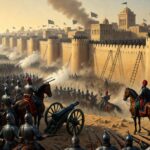
In the misty Ardennes forests of northern France, on May 19, 1643, a battle unfolded that cracked the foundations of European supremacy like a cannonball through an old fortress wall. The Spanish Empire, long the undisputed heavyweight champion of the continent with its legendary tercios—those unbreakable squares of pike-wielding infantry that had dominated battlefields for over a century—met its match against a young French commander barely out of his teens. This wasn't just another skirmish in the endless Thirty Years' War; it was the symbolic death knell for Spanish military invincibility and the spark that lit the fuse for French ascendancy under the Sun King.Picture this: Europe in the 1640s was a powder keg of religious strife, dynastic feuds, and raw power grabs. The Thirty Years' War (1618–1648) had already ravaged Germany and beyond, pitting Catholic Habsburgs (Spain and Austria) against a shifting alliance of Protestants and, crucially, Catholic France under the wily Cardinal Richelieu. France entered the fray openly in 1635 not out of piety but cold calculation—to check Habsburg encirclement. By 1642, Richelieu was dead, and on May 14, 1643, King Louis XIII followed, leaving his four-year-old son Louis XIV on the throne. France teetered on the brink of instability, with a child king, regency intrigue, and a war-weary populace. Enter Francisco de Melo, the Portuguese-born Spanish general commanding the elite Army of Flanders—battle-hardened veterans from the Netherlands campaigns. With around 23,000–26,000 troops, including the cream of Spanish infantry, he crossed into French territory, besieging the strategic border fortress of Rocroi. His goal? Exploit French weakness, threaten Paris, relieve pressure on other fronts like Catalonia, and force a favorable peace. The Spanish tercios were the terror of Europe: dense formations of up to 3,000 men each, mixing pikemen for defense against cavalry with musketeers for firepower, drilled to maintain cohesion even under hellish conditions. They had smashed foes from the Dutch to the Swedes. Victory seemed inevitable. Opposing them was Louis II de Bourbon, Duke d'Enghien (later the Great Condé), a 21-year-old noble with royal blood—cousin to the new king—and a reputation for boldness bordering on recklessness. Appointed by Richelieu before his death, d'Enghien commanded about 23,000 French troops: a mix of infantry, cavalry, and artillery, supported by experienced subordinates like Marshal Jean de Gassion. Older generals advised caution, but d'Enghien, upon learning of the siege and impending Spanish reinforcements, raced to Rocroi. He kept news of the king's death secret to maintain morale and chose a daring approach through a narrow defile between woods and marshes that the Spanish had neglected to block. By May 18, the French were positioned on a ridge overlooking the town. The stage was set for one of history's most dramatic underdog triumphs. De Melo, confident in his superior force and the tercio's legendary discipline, arrayed his army on open farmland south of Rocroi: infantry in the center (elite Spanish tercios forward, mercenaries behind), cavalry on the wings, artillery forward. The French mirrored this but with more flexible formations and aggressive intent. Skirmishing erupted that afternoon, but the real clash awaited dawn.
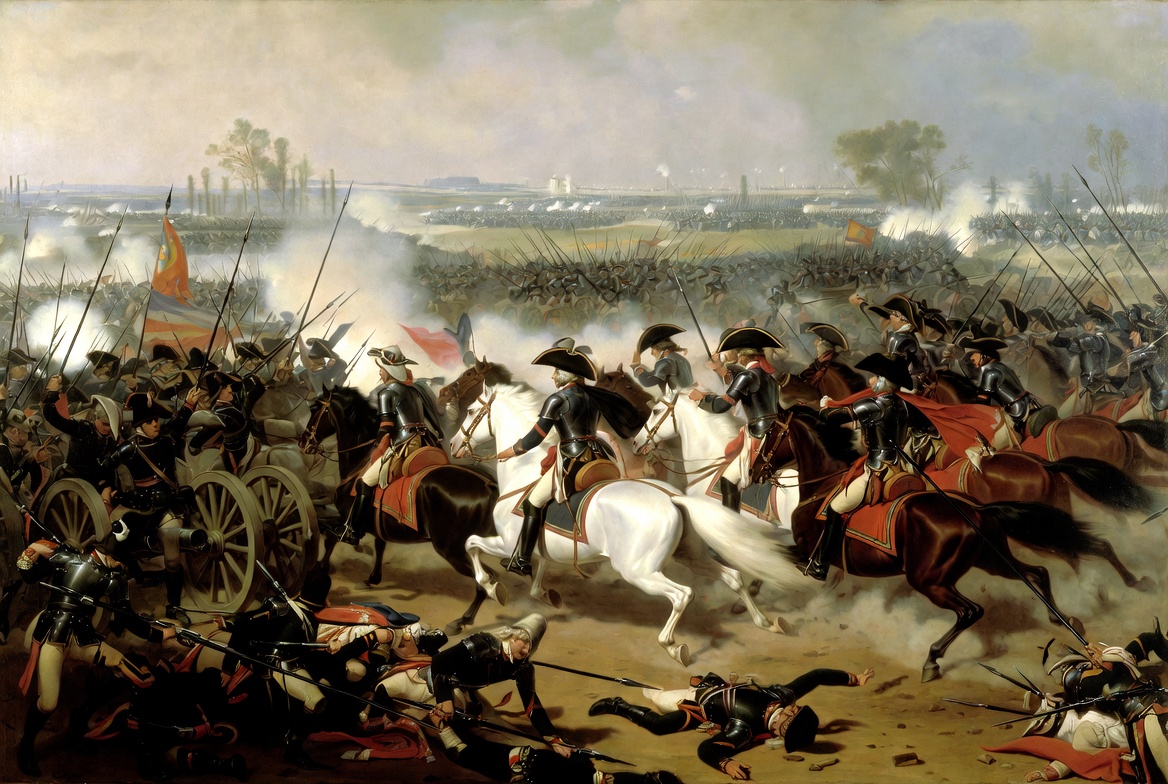
As night fell on May 18, Spanish musketeers slipped into woods on their left to ambush French cavalry. A deserter tipped off d'Enghien, who dispatched 1,500 French musketeers to neutralize them in a brutal pre-dawn forest fight. Come May 19, around 5 a.m., the French artillery opened up, followed by cavalry charges. What happened next was tactical poetry mixed with bloody chaos—a masterclass in adaptability that shattered centuries of military orthodoxy. On the French right, under Gassion and personally led by d'Enghien, cavalry smashed the Spanish left wing. D'Enghien exploited the breakthrough brilliantly, dividing his horsemen: some pursued the routed enemy, others wheeled to hammer the Spanish center's exposed flank. Meanwhile, on the French left, impetuous subordinates attacked without orders against the Spanish right and were repulsed. Spanish cavalry counterattacked, threatening the French center and reserves. For a tense period, the battle hung in the balance—French left and center buckling under pressure. Here came the genius stroke that defines this day. Instead of reinforcing his struggling sectors, the young duke doubled down on his right-flank success. He orchestrated a sweeping cavalry encirclement, riding around the Spanish rear like a thunderbolt. French horsemen crashed into the backs of the Spanish infantry and the right-wing cavalry still engaged with French reserves. Panic rippled through the Spanish lines. Artillery crews fled. Mercenary infantry (Germans, Walloons, Italians) in the center broke and routed. Only the veteran Spanish tercios remained, forming an iron ring of pikes and muskets. They repelled two French cavalry charges with stoic discipline, their commander Paul-Bernard de Fontaines (carried into battle on a sedan chair due to gout) falling in the fray. D'Enghien, impressed by their valor, offered honorable surrender terms akin to a besieged garrison—flags flying, arms intact. The Spanish accepted. But as d'Enghien rode forward to formalize it, some Spaniards, mistaking the approach for another charge amid the smoke and confusion, fired on him. Enraged French forces unleashed a final, merciless assault. The tercios were decimated.
By noon, it was over. French losses: around 4,000 killed and wounded. Spanish: estimates vary wildly, but 7,300 to 15,000 total casualties, with thousands captured, including most of their elite infantry. Only a handful of Spanish units escaped intact. The Army of Flanders was gutted; Rocroi was relieved. D'Enghien's bold maneuvers—flexible cavalry, combined arms, decisive exploitation of breakthroughs—exposed the tercio's rigidity in an era of evolving gunpowder tactics. The ripple effects were seismic. Symbolically, Rocroi ended the myth of Spanish military supremacy that had endured since the 16th century. Spain regrouped but never quite recovered its aura. France, despite domestic woes like the impending Fronde rebellions, gained breathing room. D'Enghien's legend was born; he would rack up more victories, earning the title "Great Condé." Over the following decades, French forces under leaders like Turenne pressed advantages, culminating in the Treaty of the Pyrenees (1659), which humbled Spain and set the stage for Louis XIV's golden age of absolutism and cultural dominance. Europe’s balance of power shifted westward and northward. The tercio evolved or faded, giving way to linear infantry formations that defined warfare into the Napoleonic era. Historians debate exact numbers and who fired first in the final melee, but the outcome was unambiguous: a young commander’s audacity, fused with tactical innovation, toppled an empire’s cornerstone. It wasn’t luck—it was preparation meeting opportunity, rigidity clashing with adaptability, and unyielding discipline ultimately undone by superior maneuver. The Spanish fought like lions to the end, their stand a testament to professional soldiery, but the age of the tercio had passed. This distant thunderclap from 1643 echoes with surprising relevance for anyone staring down personal "invincible" obstacles today. The Spanish tercios weren’t defeated by brute force alone but by a refusal to accept outdated dominance. D’Enghien didn’t wait for perfect conditions or elder approval; he seized the defile, kept secrets for morale, neutralized ambushes preemptively, and pivoted ruthlessly when momentum appeared. That’s not generic hustle—it’s strategic defiance rooted in historical pattern recognition.
**How You Can Channel Rocroi’s Lessons for Tangible Wins in Your Life** - **Audit Your Personal "Tercios"**: Identify the rigid formations in your routines—outdated habits, toxic commitments, or "proven" methods that no longer serve. Like the Spanish squares, they might look formidable but lack flexibility. Spend one focused evening listing three "invincible" barriers (e.g., procrastination loops, unchallenged career paths, relational patterns). Then, map one adaptive pivot, inspired by d’Enghien’s flank maneuver: What small encirclement can you execute this week to expose their weakness? - **Embrace Calculated Youthful Boldness Regardless of Age**: D’Enghien was 21, surrounded by veterans urging caution, yet he charged through the defile and improvised mid-battle. Translate this by setting a "Rocroi Day" quarterly: Pick a stalled goal, ignore the internal "older generals" (doubt, risk-aversion), gather intel (that deserter tip), and launch before reinforcements (excuses) arrive. Specificity: If job hunting, apply to five stretch roles today without perfecting your resume first—momentum compounds. - **Master the Encirclement Pivot**: When one sector of life falters (left flank crumbling), don’t reinforce failure—exploit your strengths elsewhere. Example: Struggling with fitness consistency? Instead of grinding the same failed gym plan, leverage a strong area like morning discipline to "ride around" and attack via evening walks or meal prep integration. Track it in a simple journal: Note the "battle lines" daily, then log one pivot that turns pressure into breakthrough. - **Honor Discipline but Demand Adaptability**: The Spanish tercios’ stand was heroic, yet fatal without evolution. Build iron routines (pike walls for defense) but drill in musketeer firepower—quick experiments. Weekly ritual: Review one core habit. Ask: "Is this tercio still winning, or time for linear reform?" Adjust with artillery support—tools, accountability partners, data tracking—to bombard resistance. - **Keep Secrets for Morale, Reveal for Victory**: D’Enghien hid the king’s death. In your life, shield big goals from naysayers until momentum builds. Share selectively post-breakthrough for alliances. Practical: Draft a "Rocroi Dispatch"—private notes on your ambitions—reviewed only after small wins accumulate. **Your Unique 7-Day Rocroi Breakthrough Plan: The Defile Charge Protocol**
This isn’t recycled vision-board nonsense or 5 a.m. club drivel. It’s a battlefield-derived, asymmetric assault on stagnation, emphasizing preemptive strikes, flank exploitation, and honorable (but firm) closure on outdated elements. Do it once, adapt forever. **Day 1: Recon and Defile Selection** – Map your terrain. List 5 "Spanish armies" besieging your potential (e.g., debt, skill gaps, fear of visibility). Choose one narrow defile (actionable entry point others overlook). Prep intel: Research one precedent or tool others ignored. Evening: Visualize the ridge position—write why victory here shifts your "Europe." **Day 2: Pre-Dawn Ambush Neutralization** – Hit hidden saboteurs. Identify one internal/external threat (distraction, doubter) and neutralize it ruthlessly—block app, have the hard conversation, or delete the tempting file. Like d’Enghien’s musketeers in the woods: swift, decisive, before main engagement. **Day 3-4: Right-Flank Cavalry Charge** – Unleash on strength. Dedicate focused blocks (90 minutes x 3) to your best asset or easiest win. Build momentum: If writing a project, draft wildly without editing. If networking, send 10 bold messages. Exploit early successes to wheel toward the center. **Day 5: Encirclement Maneuver** – Pivot mid-battle. Assess progress. If resistance builds in one area, loop your cavalry (strength) behind it. Example: Stuck on a report? Use a strong skill (data viz) to reframe the whole thing creatively. Force the isolated "tercio" to face combined pressure. **Day 6: Artillery Bombardment** – Mass resources. Gather "captured guns"—feedback, new info, allies—and hammer the core obstacle. No mercy on non-adaptive elements: Cut one draining commitment entirely. **Day 7: Surrender Terms and Aftermath** – Offer "honorable exit" to what must go (old habit, project). Celebrate the field won, document lessons (French adaptability vs. Spanish valor). Plan the next campaign: Rocroi wasn’t the war’s end, but it changed everything. Schedule your next Defile Charge in 30 days. This protocol is lightning-fast, context-specific, and anti-formulaic—rooted in one day’s history but engineered for asymmetric personal dominance. No endless affirmations, just tactical execution that turns distant cannon fire into your daily edge. The tercios fell because they met innovation they couldn’t counter. Your barriers will too, when you charge like d’Enghien—young in spirit, decisive in action, legendary in outcome. History doesn’t repeat, but its patterns arm the wise. On this anniversary of Rocroi, step onto your ridge. The Spanish squares await your maneuver. Charge.
Share: